Posted in Uncategorized

10 Observations After 100 Days of Lockdown

  1. I miss hugs. Shortly before lockdown (when things were just starting to get a bit scary) we met up with friends who were staying nearby. As they arrived at the pub we all just sat down (normally it would be hugs all round). It felt weird. It’s hard on huggers!

2. The contents of my handbag have changed. Not that I go out much, but essential items now include mask, disposable gloves and hand sanitiser.

3. I’d have no social life at all if it wasn’t for Zoom. Regular quiz nights, coffee mornings, choir and ukelele sessions and even a hen party have all been made possible thanks to the joys of video conferencing. Can’t get it to work for me to initiate meetings though – annoying!

4. Our language has changed. Words like lockdown, furlough and social distancing are now part of our everyday conversation. We even sign off e-mails differently …..stay safe.

5. I’ve rediscovered baking (like everyone else) – mainly scones and banana loaf. I have had to add baking powder to plain flour as there was no self-raising available, but that works fine.

6. I miss my hairdresser. I have made a messy attempt to trim my fringe as it was annoyingly in my eyes and out of sheer boredom I dyed my hair pink. Daughter said I was having a mid-life crisis. It was only a temporary colour but I thought it would at least cover my grey roots. Alas no! I’m still having to cover them up with a hairband. The pink is washing out now.

7. I’m drinking more (like everyone else). Not excessively, it’s just that if I go out I’m usually driving. Now all the social activities on Zoom are accompanied by a large gin and tonic!

8. I seem to have fallen out with some of my hobbies – I’ve not picked up knitting needles or crochet hook for weeks and am only blogging occasionally. I’ve done some crafty odds and ends, but struggle to settle to anything.

9. The diary is empty. The number of things that have been cancelled is crazy. Our holiday in North West Scotland, various concerts and shows I had tickets for, and a craft course – all off. Holidays and 2 of the gigs are rearranged for next year. It’s a long wait but at least there’s something to look forward to.

10. I’m ok. I’ve had bad days (like everyone else) but that’s fine. They haven’t been very often. I suppose that after a period of readjustment lockdown became a new normal. I’m pretty lucky, with a supportive family, living in a place I love. Coming out of lockdown will be another readjustment that maybe I’m not quite ready for yet.

How has your life changed under lockdown?

Posted in Uncategorized

A Posh Picnic

I seem to have lost my blogging mojo recently, but had to post about my lovely evening last night. We were celebrating our 33rd wedding anniversary yesterday. In more normal times we would have gone out for a nice meal somewhere, but with all the restaurants still closed we had to be a bit more inventive. Some places are operating a takeaway service so we ordered food from The Potted Lobster in Bamburgh. It’s a lovely place that we’ve visited before, serving delicious food, with an emphasis on fish and shellfish. Their takeaway service is operating at weekends and the menu and ordering details are on the restaurant’s Facebook page.

We packed drinks, glasses and cutlery, picked up our order and drove to a lovely spot overlooking the sea and the Farne Islands to enjoy the view while we ate. You can just make out on the horizon what appeared to be parts of an oil rig or drilling platform being towed by a tug.

There were also stunning views of Bamburgh Castle

We unpacked our posh picnic and it certainly didn’t disappoint! Everyone was well packed in mostly recyclable boxes. We started with chilli squid and spicy pheasant, the moved on to the main course: lobster salad and cod goujons. The portions were generous, so I saved most of my dessert for later. I had passionfruit Eton mess and K had strawberry and white chocolate cheesecake. All very delicious.

We sat and enjoyed the evening sunshine. It was a far cry from the weather earlier in the week. Then the view was obscured by thick coastal fog, which we call sea fret round here.

What a lovely way to celebrate our anniversary.

Have you found alternative ways of celebrating special occasions during lockdown?

Posted in Uncategorized

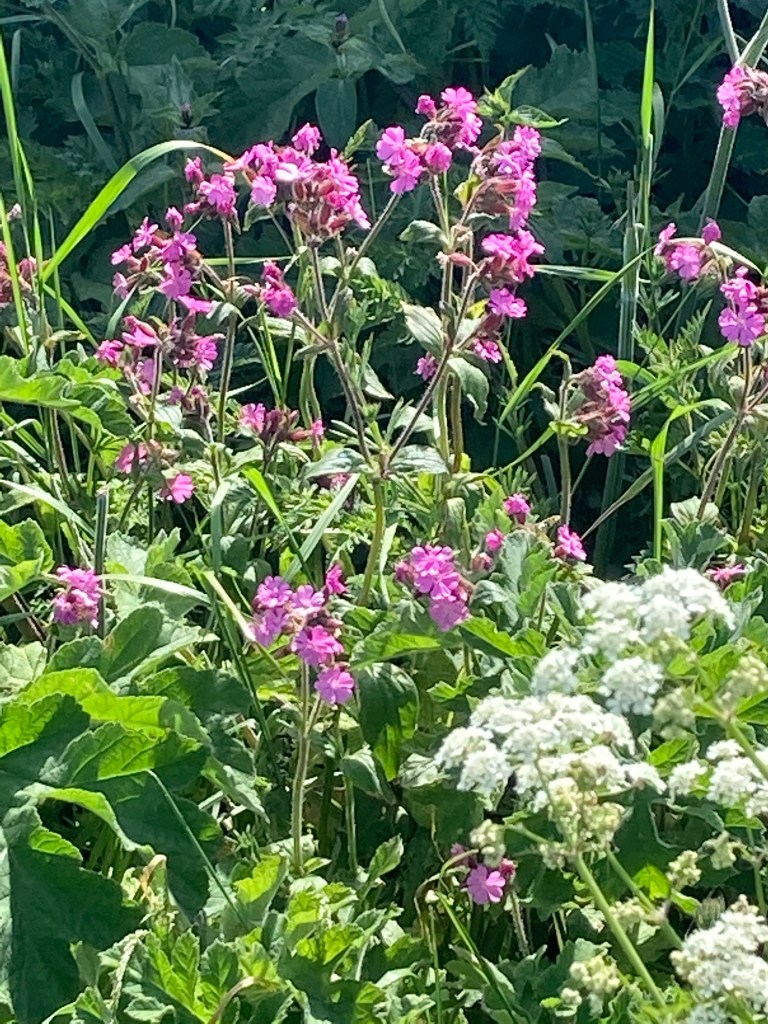
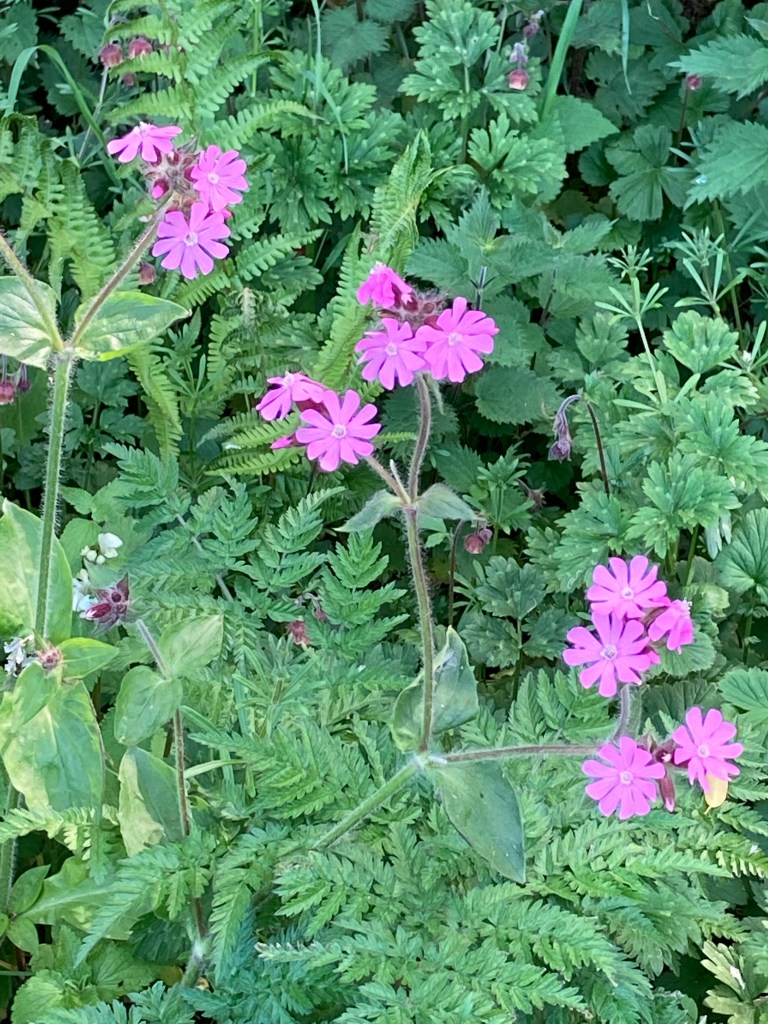
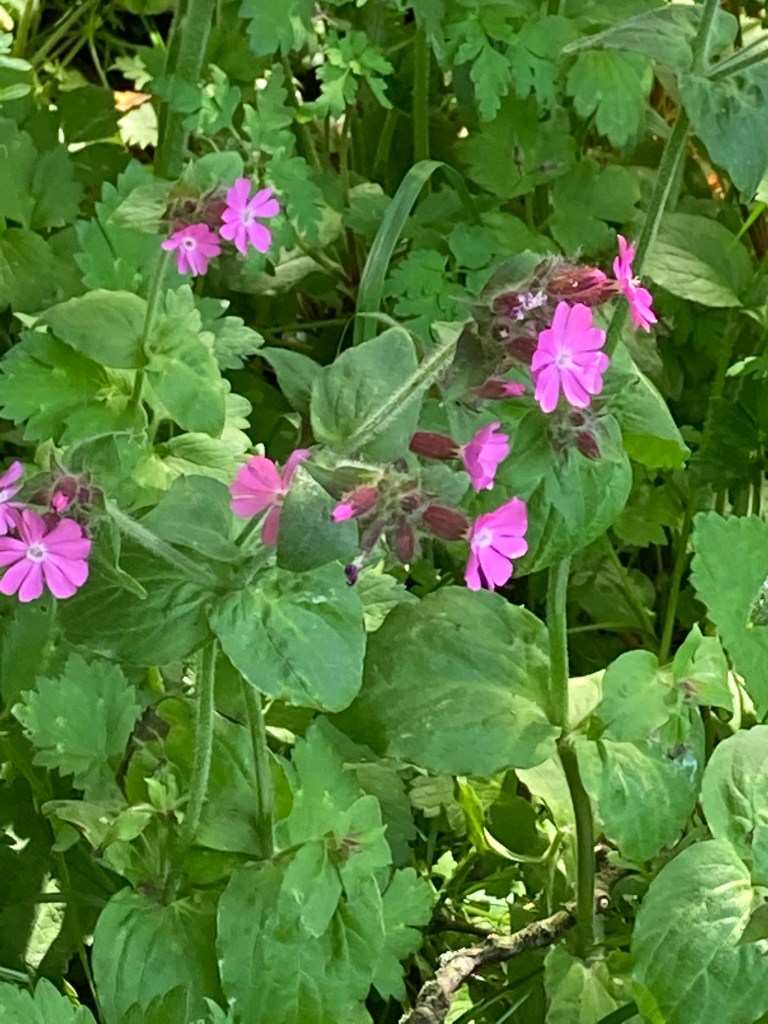
Wildflower of the Week: Red campion.

It’s impossible to miss the tall clumps of pink-red flowers of red campion that are growing in profusion in hedgerows and woods at the moment and will continue to do so until August and well into Autumn and Winter if the weather is mild. This relative of the carnation is a short-lived perennial that produces copious seed that enables it to spread rapidly , especially in fertile soils.

The plant grows up to a metre tall, though usually 30-60cm high. with leaves and stems covered in softly downy hairs. The leaves are pointed oval in shape, carried in pairs on the stems.

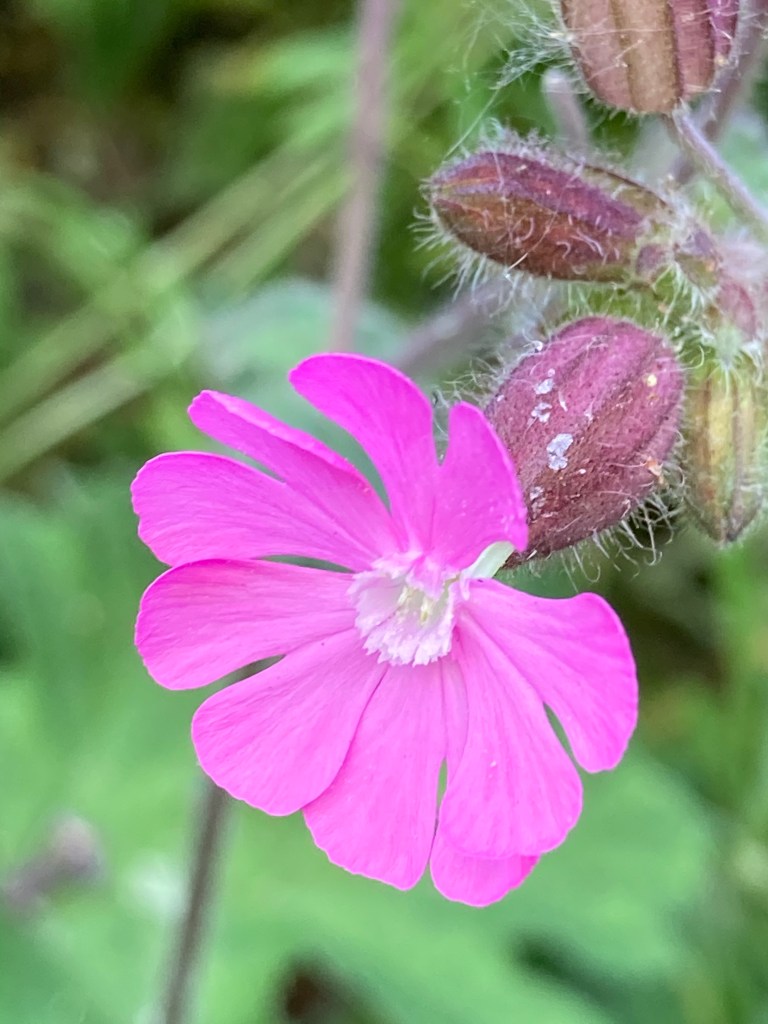
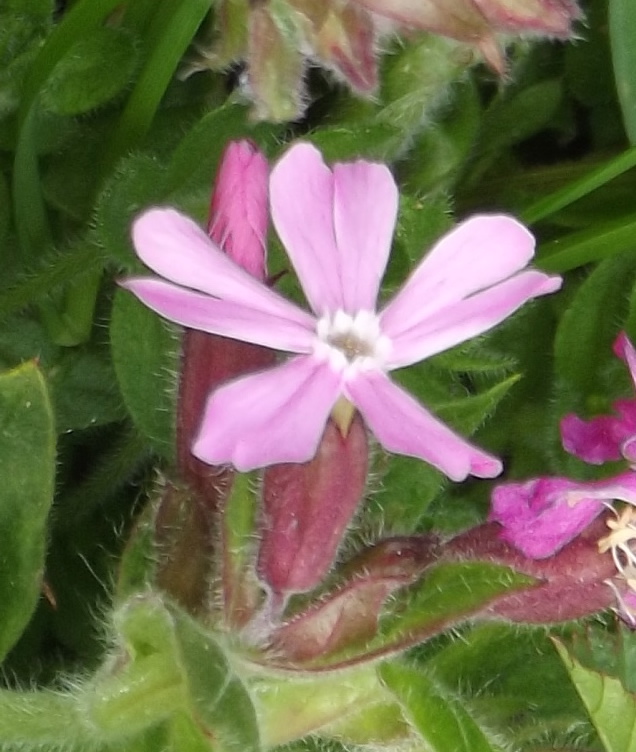
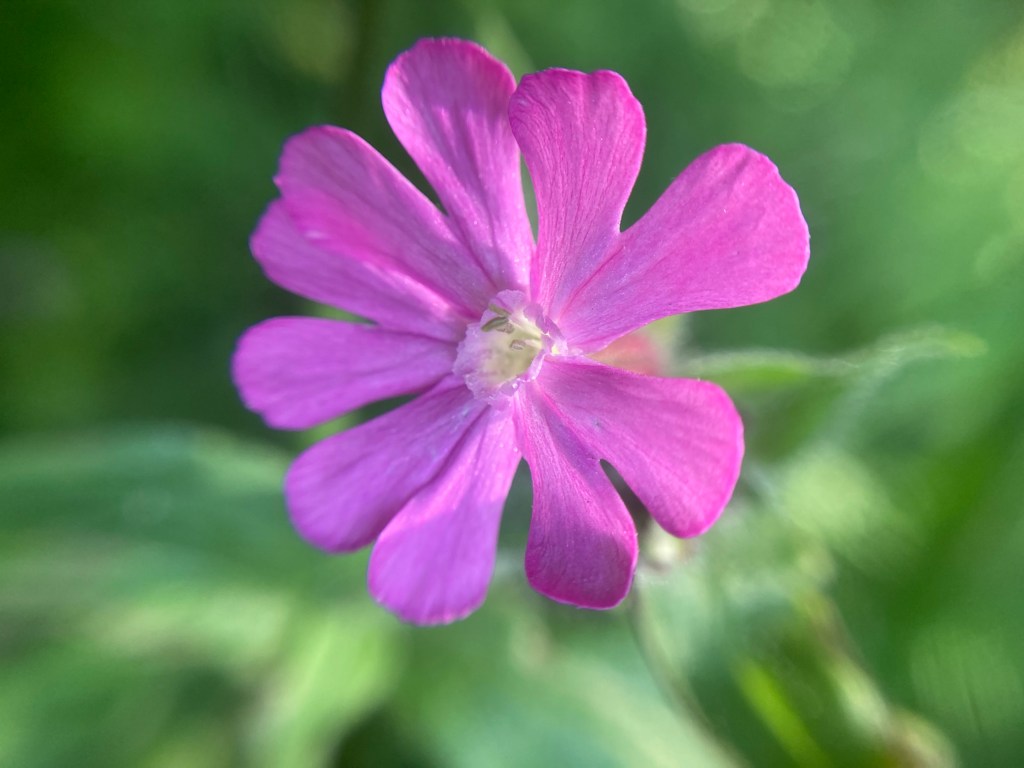
The flowers carried in small groups at the end of the stems. Each has five petals and each petal has a central cleft. the calyx immediately behind the flower is dark red/brown and hairy. The plant is dioecious, that is a single plant carries flowers with either female or male parts, not both as in most flower species. On the female plants the calyx develops into a vase-shaped seed capsule full of tiny black seeds. The female flower produces a sticky substance that causes pollen from visiting insects to stick. The Latin name for the campion family, Silene, may come from the woodland god Silenus or from the word for saliva.

The red campion hybridises freely with the closely related white campion with resulting flowers in a wide range of shades of pink. Though I’ve never noticed this, you may come across flowers with a darker centre. This is caused by a fungal disease known as anther smut, producing dark spores on the reproductive parts of the plant

The plant is sometimes called the Adder Flower from it’s use in folk medicine to treat snakebites (though personally if I was in this situation I would prefer to seek professional medical advice immediately rather than take my chances with the plant!) The roots of plants in the campion family can be used to prepare a soap substitute, though the red campion is less known for this than it’s close relative, soapwort. The 16th Century herbalist, John Gerard said that the hairy stems could be used to make candle wicks. A century later, Nicholas Culpepper described a number of medical uses including the treatment of kidney stones and internal bleeding as well as to “helpeth those that are stung by scorpions or other venomous beasts”.

Another country name is Batchelor’s Buttons as unmarried young men would wear the flower in a buttonhole..

Red campion certainly provides a welcome splash of colour in late spring and throughout the summer.

As always, please remember these guidelines.

  • Don’t touch or pick any plant unless you are ABSOLUTELY CERTAIN that it is safe to use, and not poisonous.
  • Don’t pick anything unless it is abundant
  • Only pick small amounts and no more than you need
  • Don’t pick if there is a risk of pesticide/weedkiller or other contamination, including from traffic or other forms of pollution.
  • Always get permission from the landowner.
  • Avoid areas which may be soiled by animals (wild or farm animals or pets)
  • Wash plants thoroughly
Posted in Uncategorized

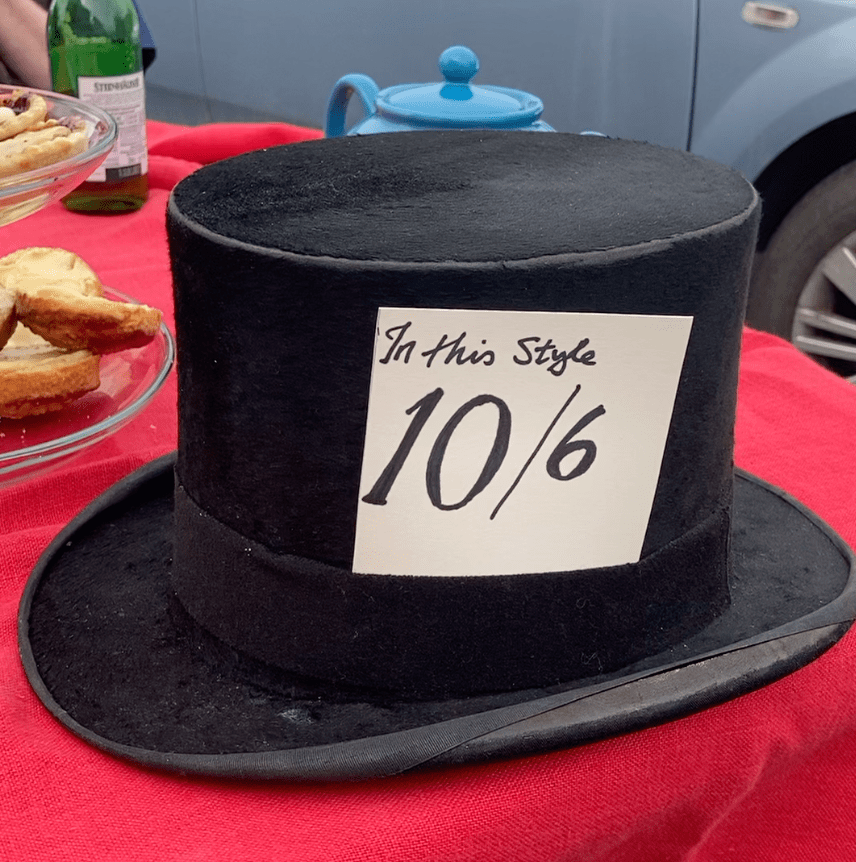
Mad Hatter’s Tea Party

Following the success of our socially distant street party to commemorate the anniversary of VE Day, we decided to hold another one for the bank holiday yesterday. This time we had a Mad Hatter theme.

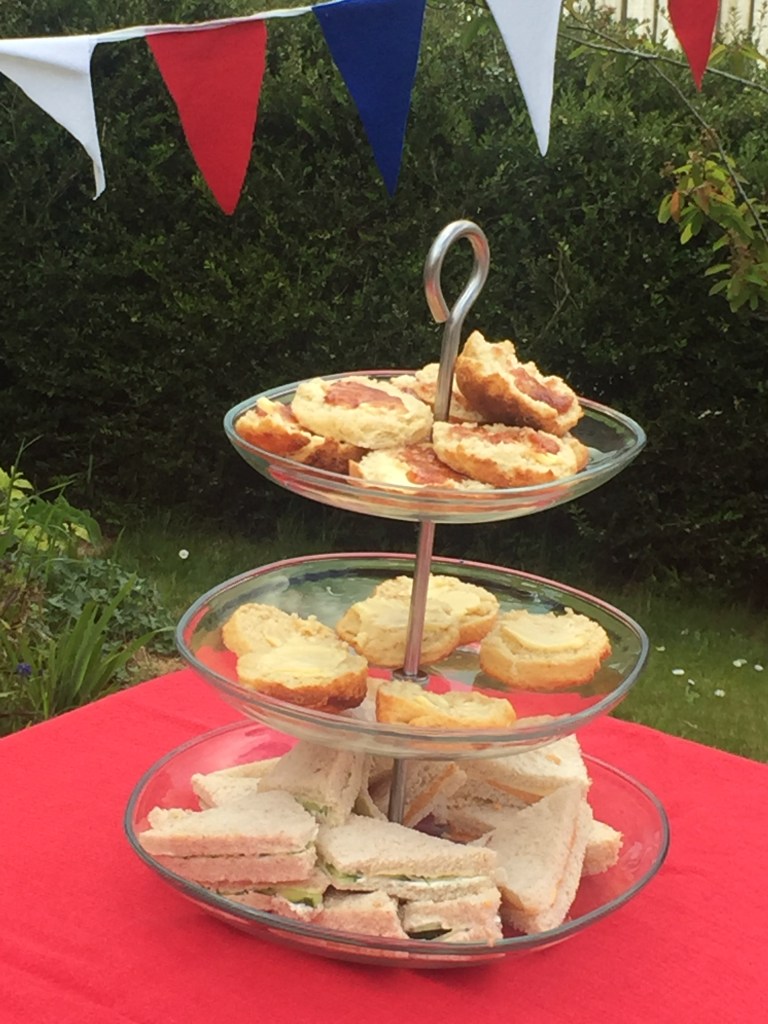
First of all I baked: cheese scones, banana loaf and some jam tarts (like the Queen of Hearts)….I made some cucumber sandwiches too.

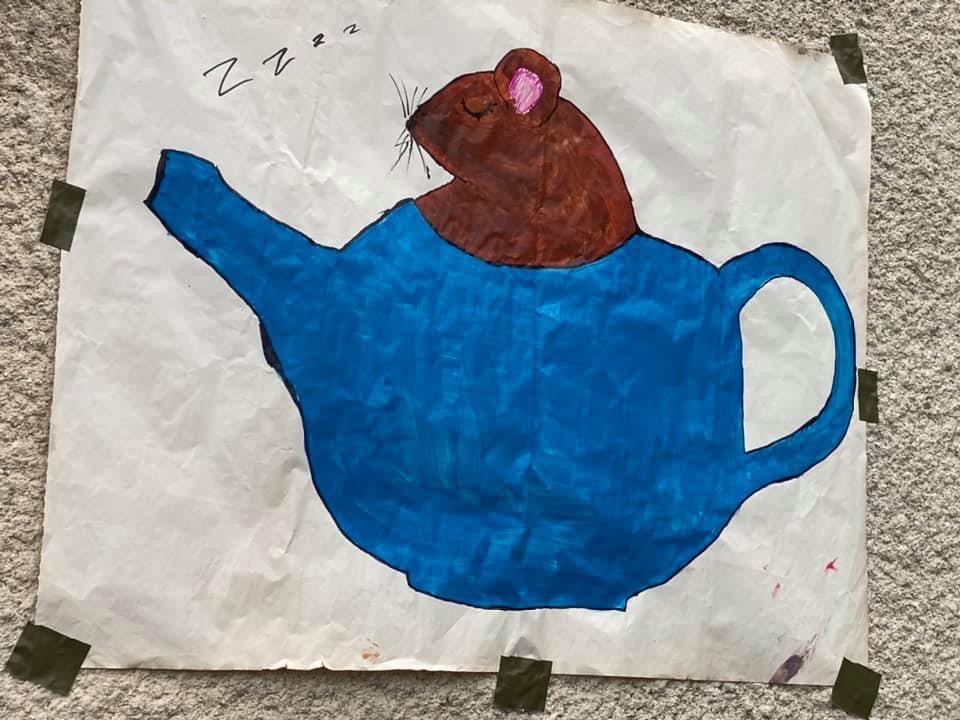
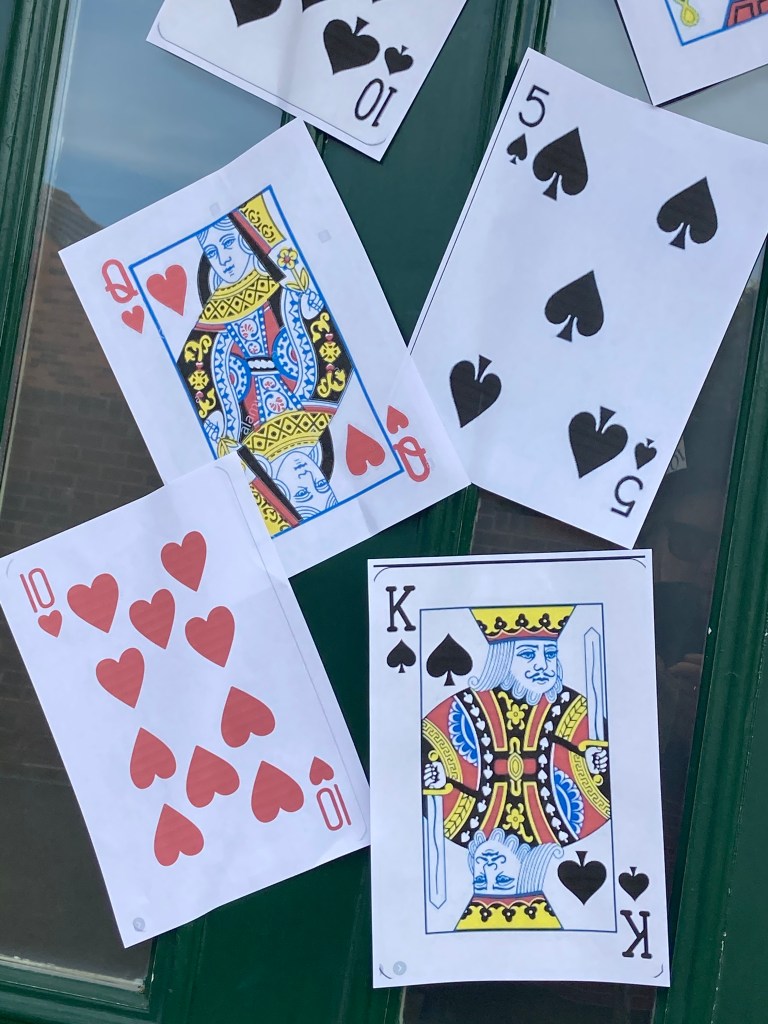
Next, I painted some posters of characters from Alice in Wonderland and printed off some giant playing cards (thank you Google Images) to decorate the front of the house.

All served up with Pimms from a teapot and beer! The sun shone and what a lovely afternoon it was!

Posted in Uncategorized

Wildflower of the Week: Cow Parsley

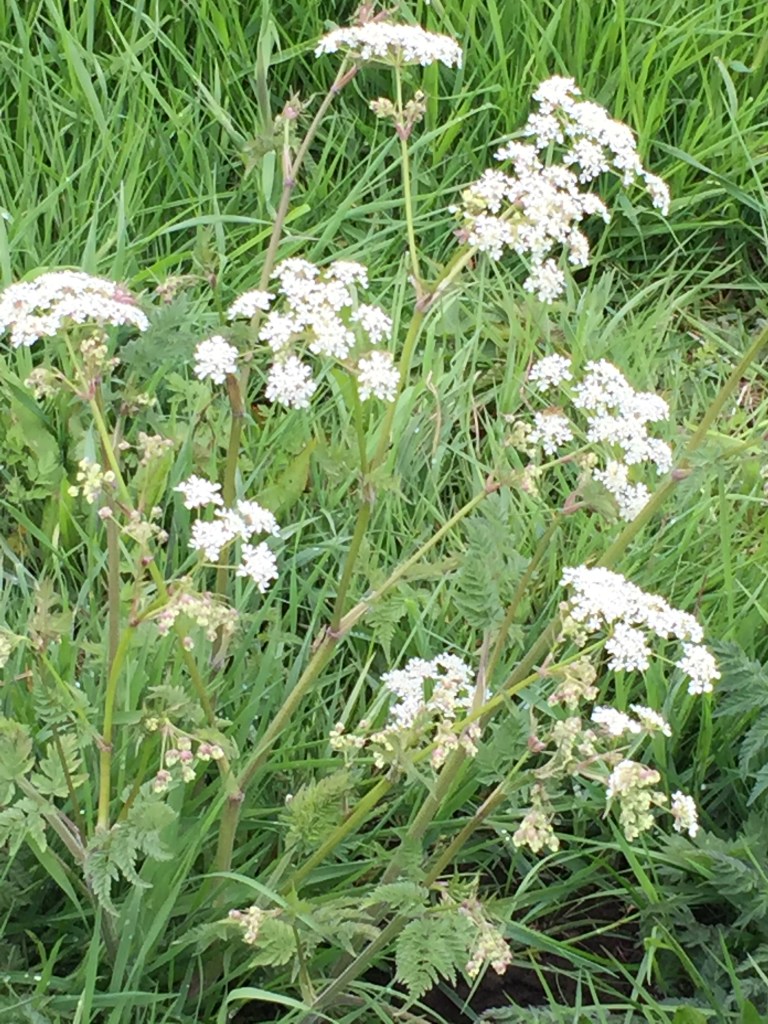
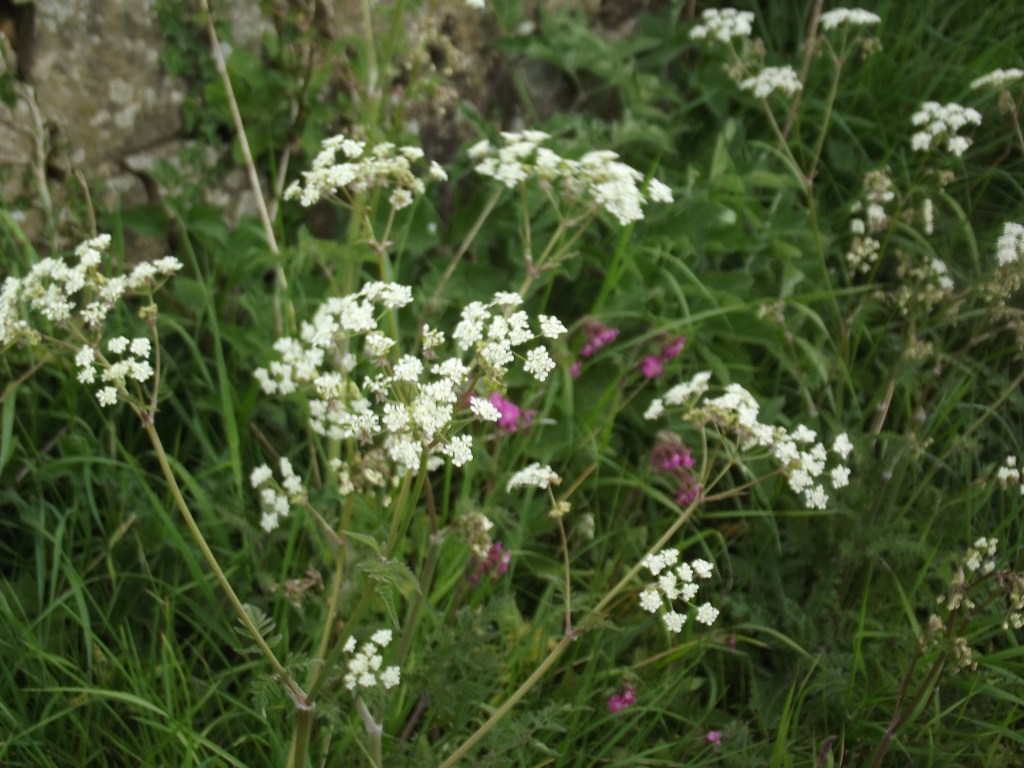
From April to June our hedgerows, road verges and meadows are filled with the frothy white flowers of cow parsley. It is the earliest to flower and one of the most common of a large plant family, the umbellifers, which all have similar shaped flower clusters or umbels, made up of tiny individual flowers on stems radiating from a single point in a sort of umbrella shape. The family includes several food plants and culinary herbs, including carrot, celery and and parsley, but also some extremely poisonous species such as hemlock and fools parsley and also hogweed which has a highly irritant sap that can cause quite severe burns.

The flowers are carried on metre high hollow stems. As they appear quite early in the year, they are are a great food source of both pollen and nectar for insects.

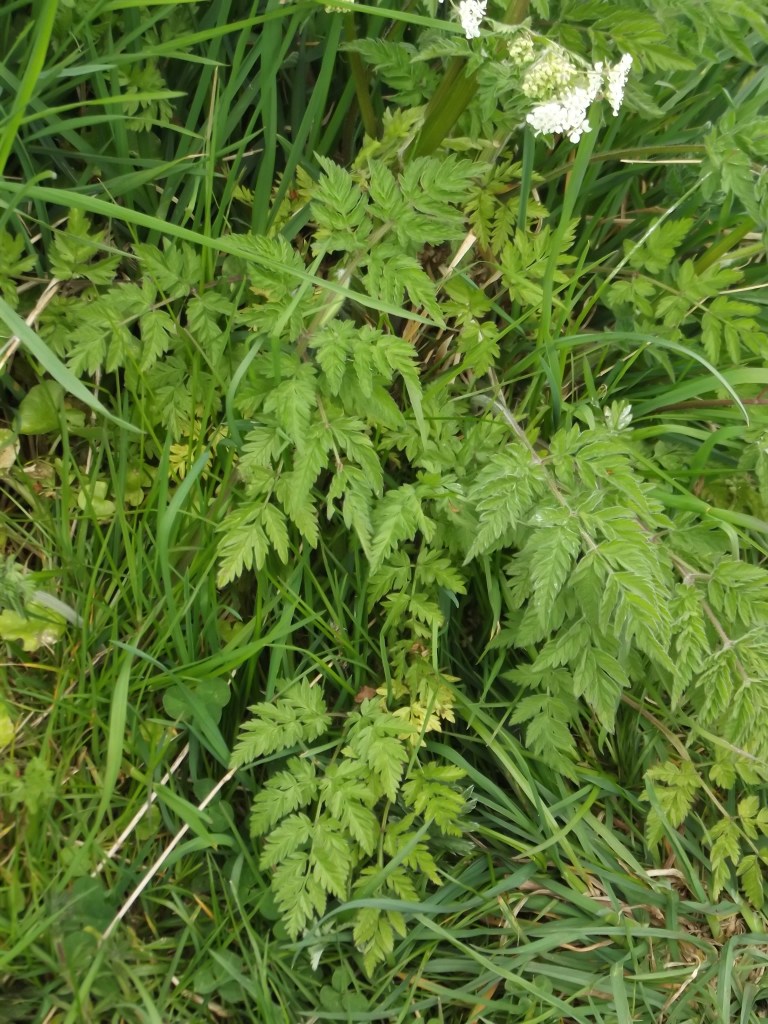
The leaves are arranged alternately along the stems and are fern-like: triangular and finally divided. When crushed they smell of aniseed.

Cow parsley spreads rapidly, producing large quantities of seed and also though spreading rhizomes. It is on the increase in the UK. Like the nettle, it enjoys fertile soil and increased agricultural fertiliser use has benefited it. This may be to the detriment of smaller plants that become smothered out by the taller cow parsley. It is considered an invasive species in parts of the US.

The plant has a variety of old names. including hedge parsley, wild chervil, keck, lady’s lace and Queen Anne’s lace. In some parts of the UK it has the rather gruesome name of mother die or mummy die. Children would be told they would lose their mothers if they brought it in the house – to deter them from picking it and the highly poisonous hemlock that it resembles.

Though cow parsley is edible, eating it or using it medicinally is not to be encouraged in case it is mistaken for its deadly relative. It has also been used as a mosquito repellent.

The lacy flowers certainly make very pretty addition to our hedgerows in late spring and early summer.

Posted in Uncategorized

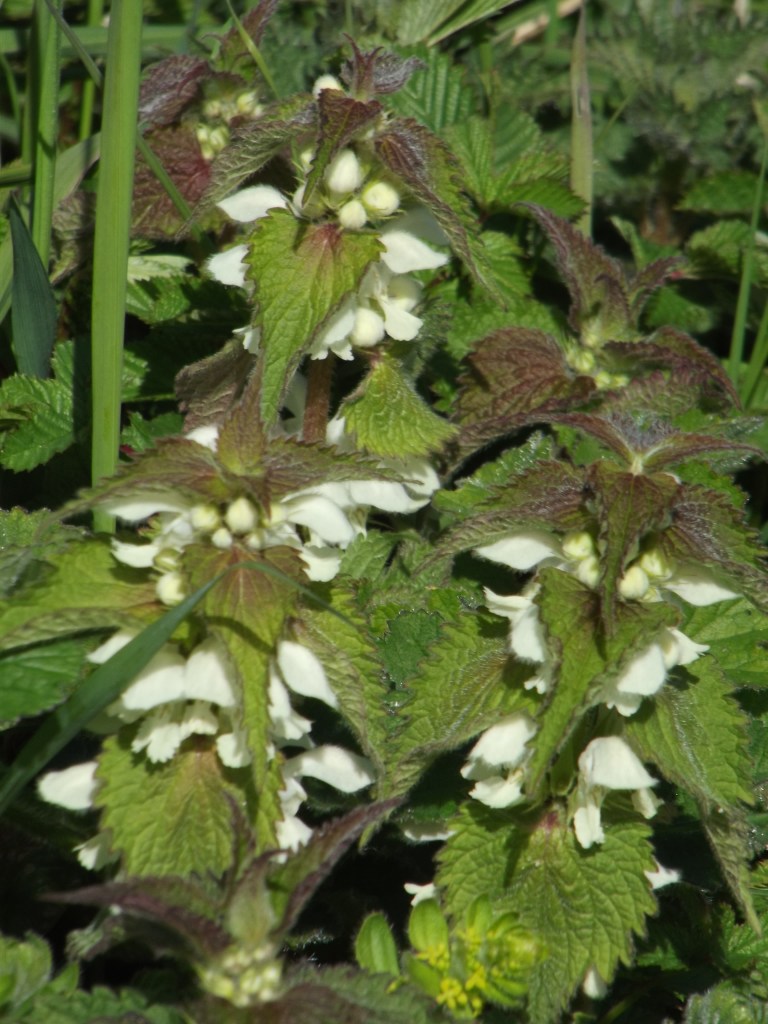
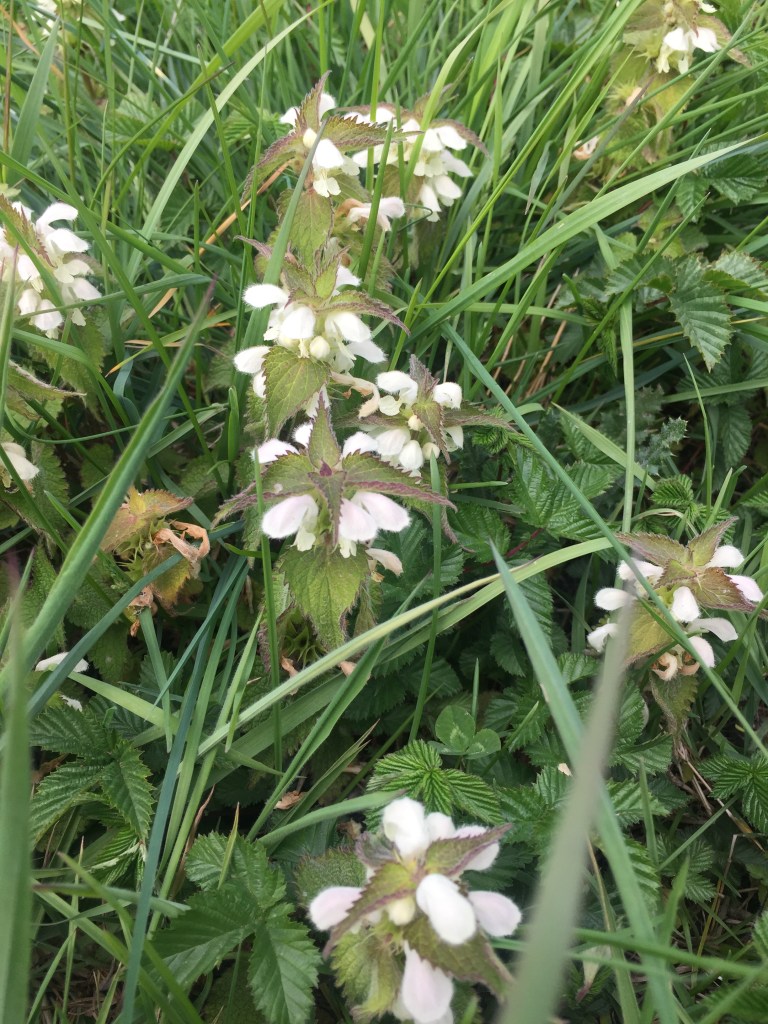
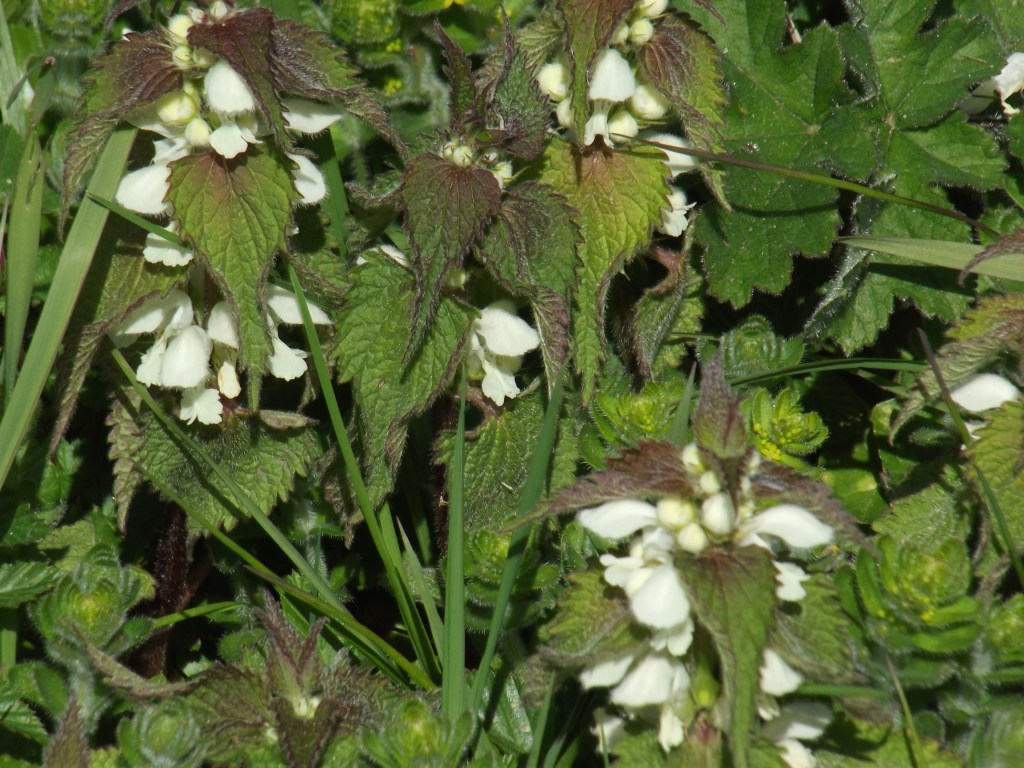
Wildflower of the week: White Dead-Nettle

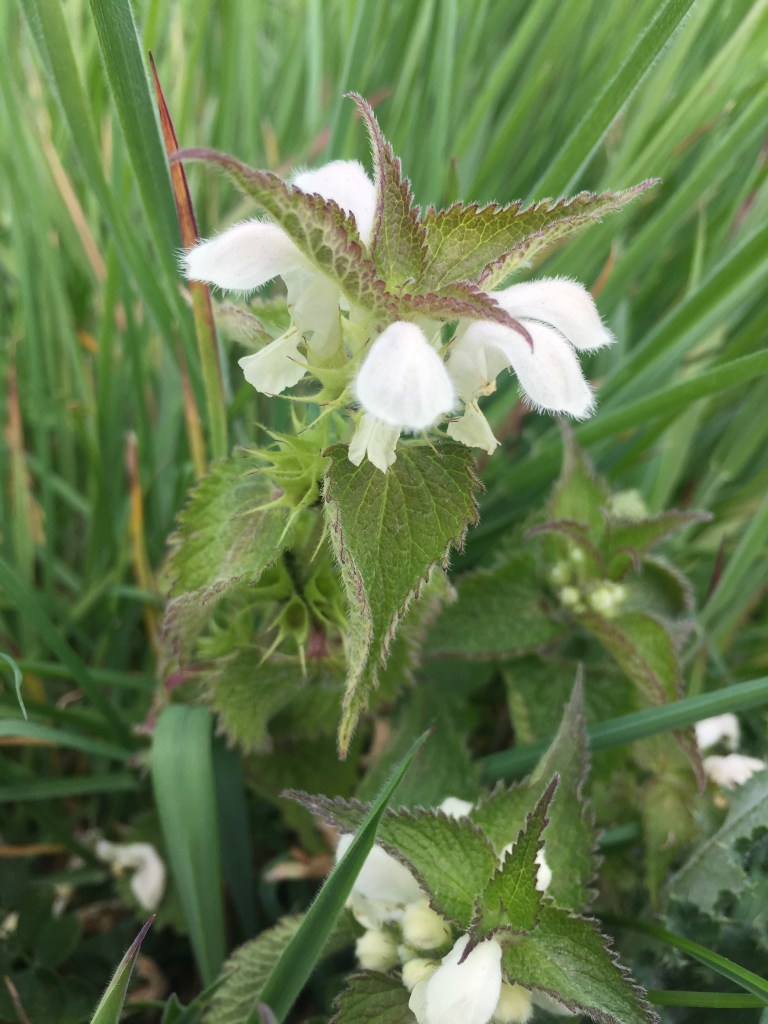
Commonly seen on road verges and on disturbed land, the white dead-nettle resembles the stinging nettle, but, as its name suggests, has no sting. It is a short to medium height perennial. The leaves (closely resembling those of its stinging relative) are heavily veined, toothed, slightly hairy and heart-shaped, arranged in pairs on square, often reddish stems.

The flowers form in whorls round the stems immediately above each pair of leaves. They are lipped and white, slightly tinged with green. A rich source of nectar, the flowers are popular with insects, especially bumblebees. The blooms have evolved to be pollinated by the larger bees – only they have a long enough proboscis to reach the base of the flower where the nectar is and they are the perfect size for their backs to brush against the stamens and stigma of the flower, depositing and collecting pollen as they feed. The nectar is protected by a ring of hairs that stop smaller insects crawling inside, though some reach the nectar by cheating: they bite a hole in the base of the flower!

As the flowers die the calyx of each remains, forming a spiky cup that holds the developing seed.

White dead-nettle’s popularity with bees gave it one of its old names, the bee nettle. It is also known as white archangel as it was said to come into flower around the feast day of Michael the Archangel. From a certain angle the stamens resemble two human figures and this gave rise to the name Adam-and-Eve-in-the-bower.

The flowers and young shoots can be used in salads or the leaves cooked as a vegetable. Traditional medicinal uses for the plant were for staunching wounds, curing haemorrhage, reducing excessive menstrual bleeding, and also as a tonic to lift the spirits.

White dead-nettle has been in bloom since March and will continue until Autumn

Posted in Uncategorized

Scone of the Week Stays At Home

I’ve mentioned before that my street has been organising various activities to keep people amused during lockdown – we’ve been putting things in our windows and front gardens for people, especially children, to spot during daily exercise. First it was frogs, then scarecrows. Last week we had to put something in our windows from a country we’d visited and add the flag to reveal the identity of the country at the end of the week. This week was all things red, white and blue, for the 75th anniversary of VE Day, culminating with a socially distanced street party today, where we all sat in our front gardens for food, drink and a bit of distant socialising with our neighbours.

Of course you have to have a bit of home baking at a street party so yesterday I made scones (my favourite cheese ones of course) I do like baking, but can’t stand for long periods so I always do the ‘rubbing in” part of making scones or pastry in a food processor to save time. My go to cheese scone recipe is adapted from a Delia Smith one, but I add extra cheese, both to the dough and sprinkled on top of the scones before they go in the oven – I use a mixture of cheddar and parmesan. I was pleased with how they turned out.

I had a couple while they were still warm, with plenty of butter of course and they were lovely – really cheesy with a little bit of a spicy bite (I add English mustard powder and a pinch of cayenne pepper to the dough). Son and I delivered a few to my Mum. We are both missing our regular Scone of the Week jaunts to local cafes so there was no way she was missing out on these!

I also made some bunting to decorate the front of the house – I just made a template and used it to cut triangles from some old t-shirts (I found a red one, a white one and a blue one). T-shirt fabric doesn’t really fray so I didn’t need to hem them and I just machine stitched them to some tape, a couple of inches apart.

Today I thought I’d make some plain scones to go with our street party feast (to serve with butter and strawberry jam). I also made some little cucumber sandwiches (triangles with the crusts cut off of course). K had bought a jar of Shipphams salmon paste as he thought that was suitably retro so I made some sandwiches with that too, and , after I’d buttered the cheese scones too, our feast was assembled

Out came the teapot and cups and saucers, but we mixed a jug of Pimms and put that in the teapot! We had a great afternoon enjoying our food and drink and chatting with the neighbours. After the more sombre remembrance of those who died in the war in observing two minutes silence this morning, it was lovely to remember the celebrations that marked the end of hostilities in Europe, even if it was at a distance.

Have you taken part in any VE Day commemorations?
Posted in Uncategorized

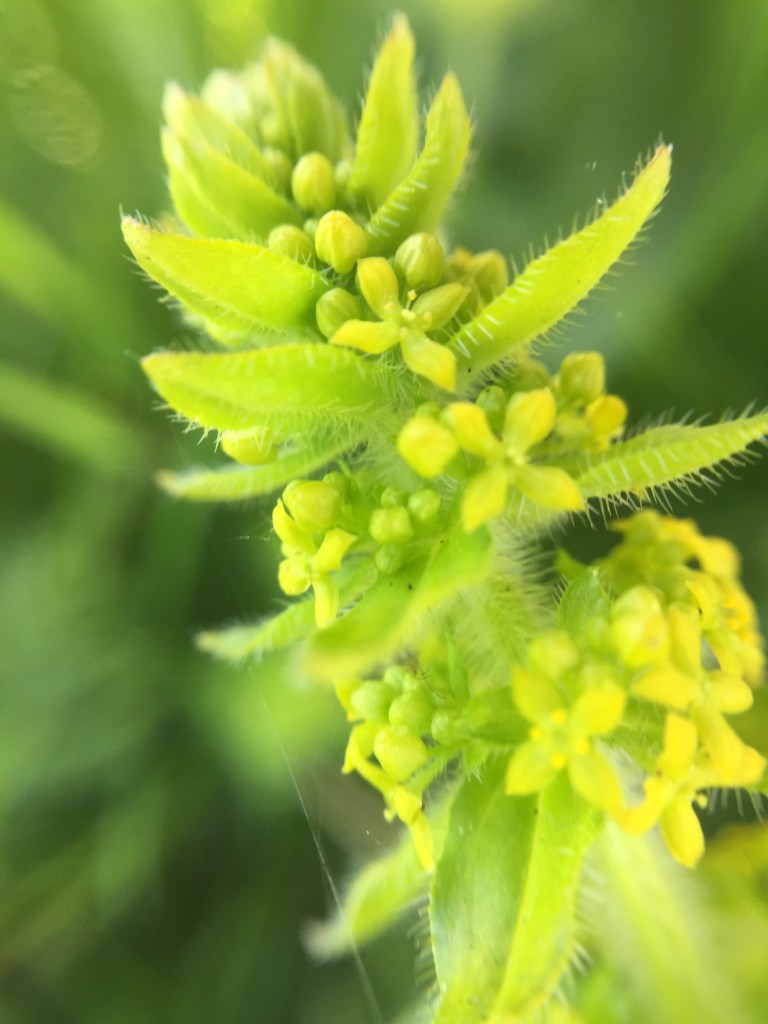
Wildflower of the Week: Crosswort

Crosswort: Cruciata laevipes

Crosswort is one of those wildflowers that seems insignificant at first, but once you spot it, it seems to be growing profusely everywhere. There is a good show at the moment along the grass verges, but as the grass and larger plant grow rapidly they obscure it.

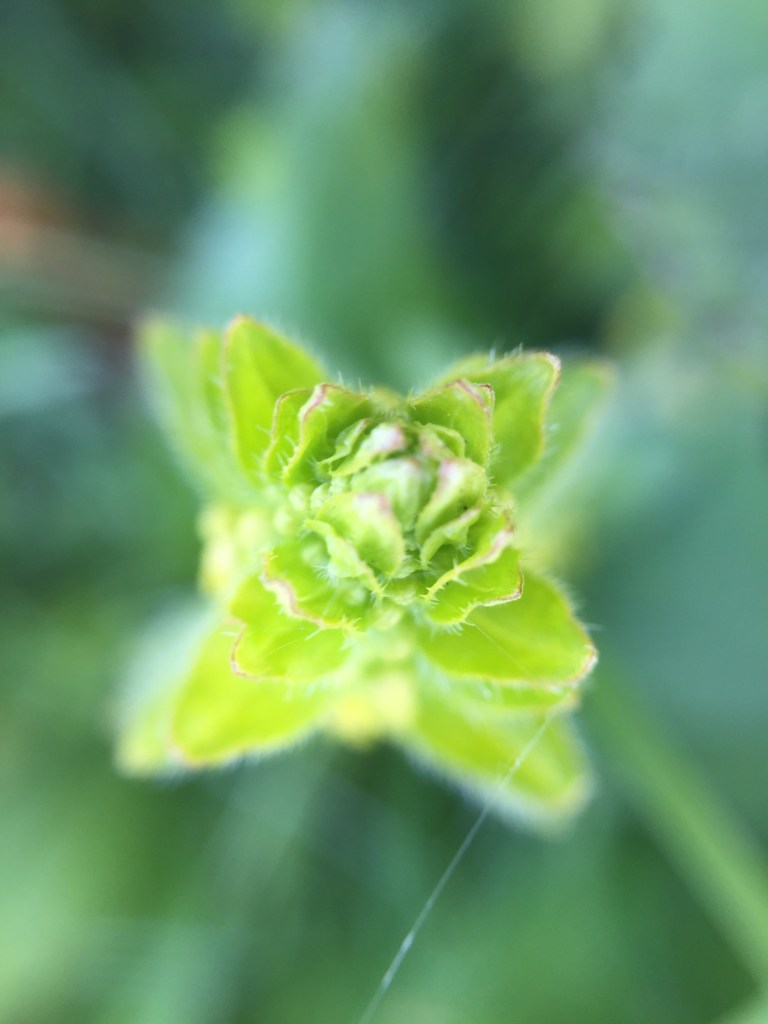
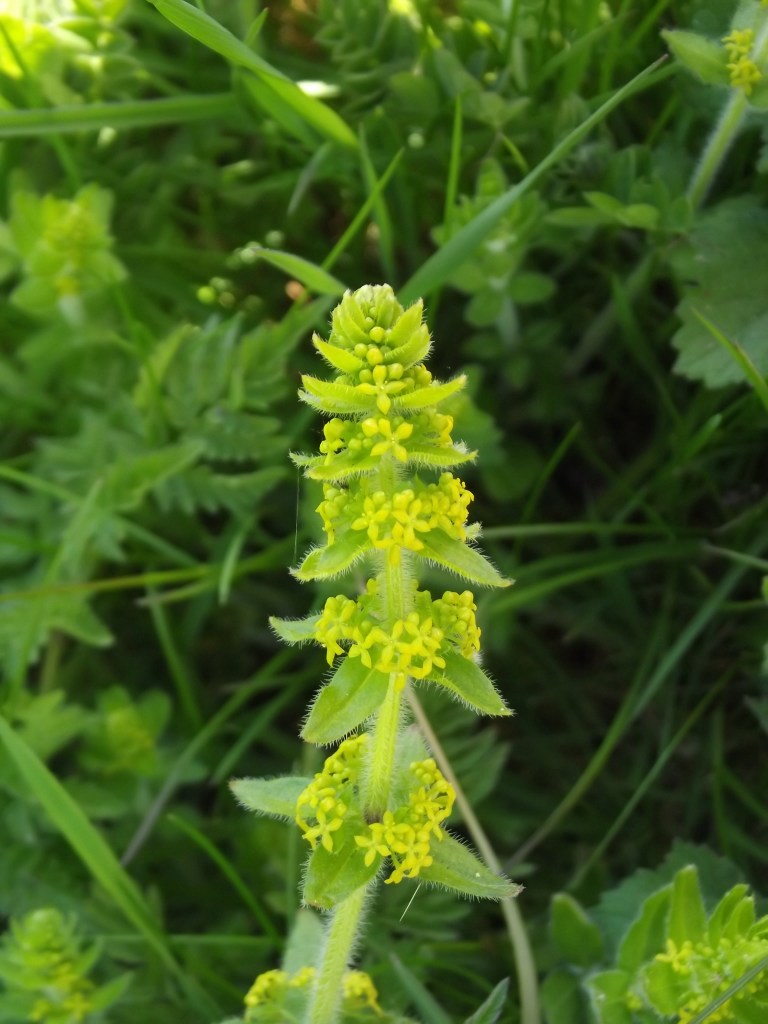
Crosswort is a low growing perennial, that forms rhizomes, underground stems from which the shoots sprout around 4-8 inches high in Spring. The stems are square and unbranched, bearing triangular leaves, both stems and leaves are covered in tiny hairs.

The leaves are arranged in groups of four in a cross-shape, which can be easily seen when viewed from above. This gives rise to the name. It is also known as smooth bedstraw, maywort and maiden’s hair.

The tiny four-petalled yellow flowers also follow a cross shape and smell faintly of honey. They are arranged in clusters around the stem above each group of leaves.

Crosswort isn’t used as a modern culinary or medicinal herb but in the past it was used to treat dropsy, rheumatism and rupture. It was also used to promote would healing and cure headaches. A red dye was extracted from the roots.

Crosswort is found throughout Europe and Asia. In the UK it is less common in Northern Scotland and the far west. It thrives on chalky soils in grassland and roadside verges.

Posted in Uncategorized

Going on a Beer Hunt

We’ve missed our monthly trips to Acklington Park Farm since lockdown. That’s where the Brewery Tap for the Rigg and Furrow Brewery is based. The bar pops up every month in part of one of the barns that has been converted for this purpose. In summer the customers spill out onto the grass where there are benches and blankets to sit on and enjoy the sunshine. It’s child friendly and dog friendly and there’s also delicious street food available from visiting caterers. You can read about a previous visit here.

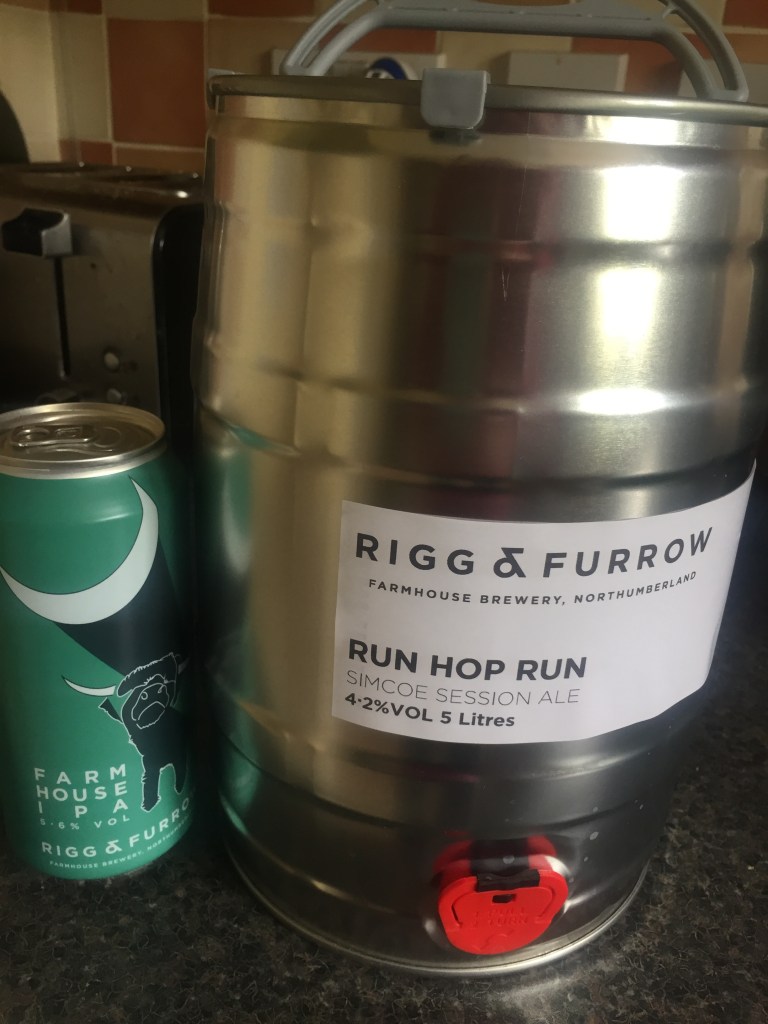
Earlier this week we found out that they were starting a click and collect service. K was delighted – Rigg and Furrow’s Run Hop Run is his favourite beer. So he ordered and paid for a mini-keg and received his instructions for collection. He’s been like a child waiting for Christmas ever since.

Today was collection day – the farm opened its gates for just an hour this morning and with all the anticipation (and the possibility of a trip out and a few minutes freedom) I had to go too. It’s only a few minutes drive away, but it’s a lovely trip through some pretty countryside. It was so nice to have a change of scene for a little while.

Rigg and Furrow had obviously given a lot of thought to their collection process. They operated a one-way system up the farm lane and a queueing system for vehicles, but when we arrived there was only one other car in front – we had been instructed to stay in the car until it was our turn. We then had call our our order number and our beer was brought to a table set up outside the barn- the staff member took a few paces back, then K went to retrieve it – all conducted very safely, contactless and strictly observing social distancing. He stowed the beer in the car and off we went, out the other gate – it was all very well organised.

He’s over the moon with his beer – it’s the little things that make us happy! That should last him a while but as the brewery hope to continue to run this service during the lockdown, so all is well for when he runs out. Well done Rigg and Furrow! It’s goodto be able to support a local business – especially when the beer is this good!

Have any of your favourite local businesses managed to find new ways of working during the Pandemic?

Posted in Uncategorized

Wildflower of the Week: Garlic Mustard

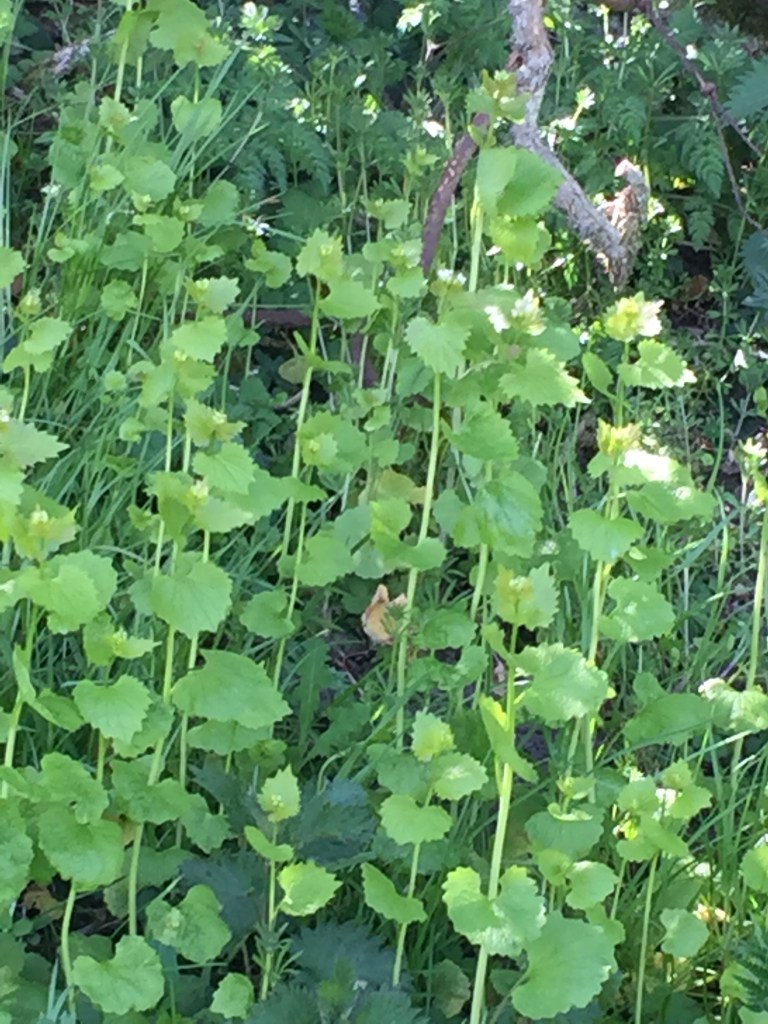
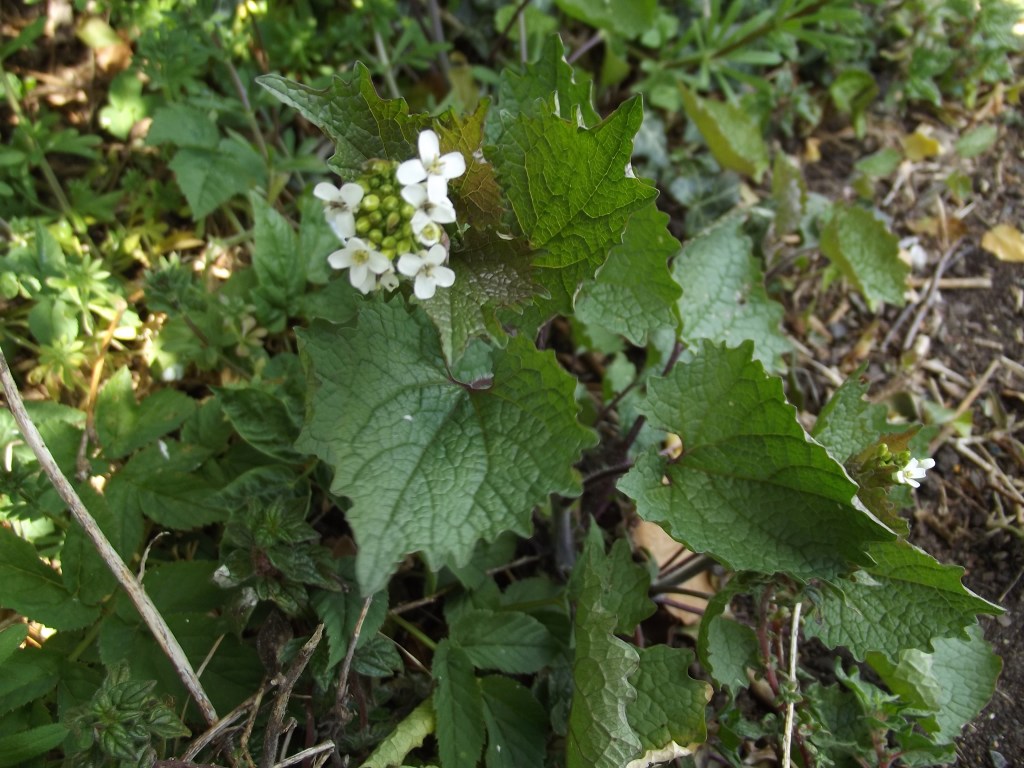
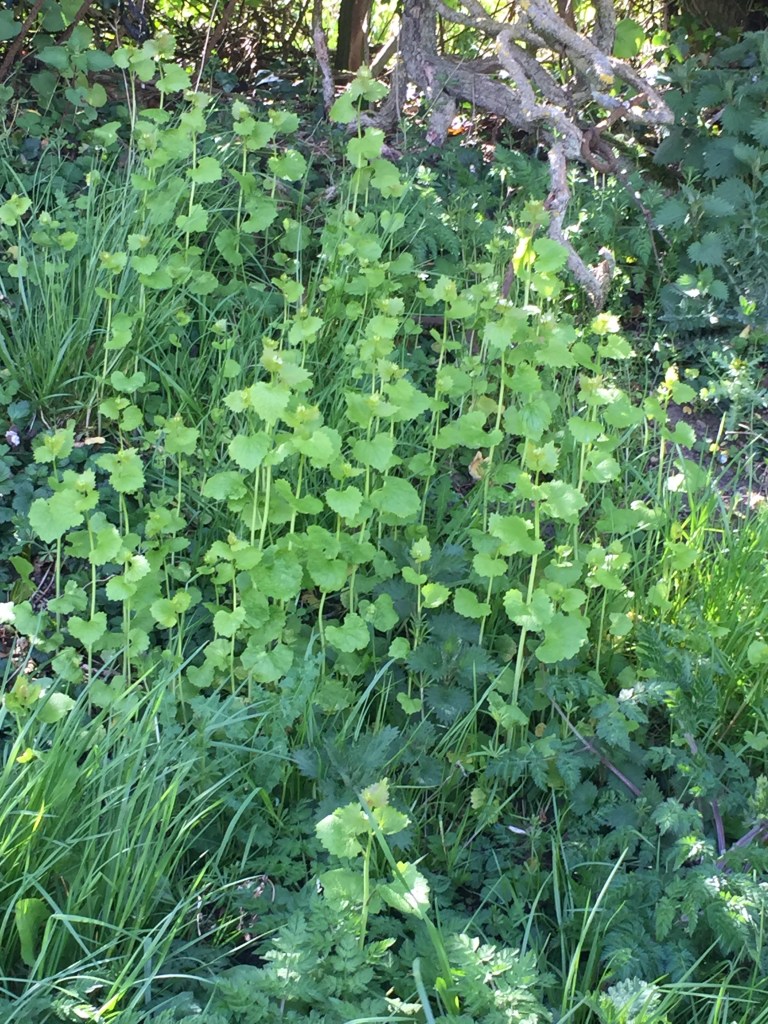
In Spring, tall upright stems with neatly spaced leaves, topped with small clusters of white flowers, appear in the shade of hedgerows, giving this plant its other common names: hedge mustard or jack-by-the-hedge.

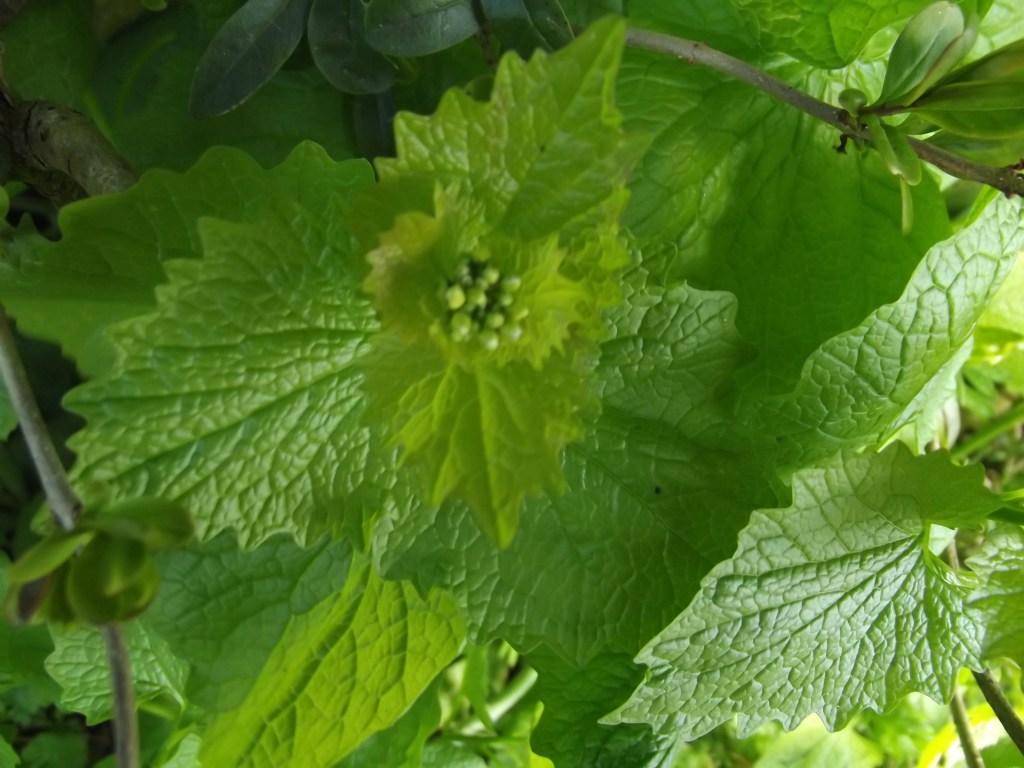
The plant is a biennial, taking two years to complete its life cycle. In its first, non-flowering year the plant forms a low growing cluster of heart-shaped, leaves, heavily veined with serrated edges. In the following year a single upright stem grows up to about 3 feet tall from this base. The leaves become more pointed and almost triangular in shape and are spaced alternately on the unbranched stem. They are a bright, almost lime-green colour, which really makes them show up a in shady areas (where they are growing in sunnier spots the leaves turn a darker green).

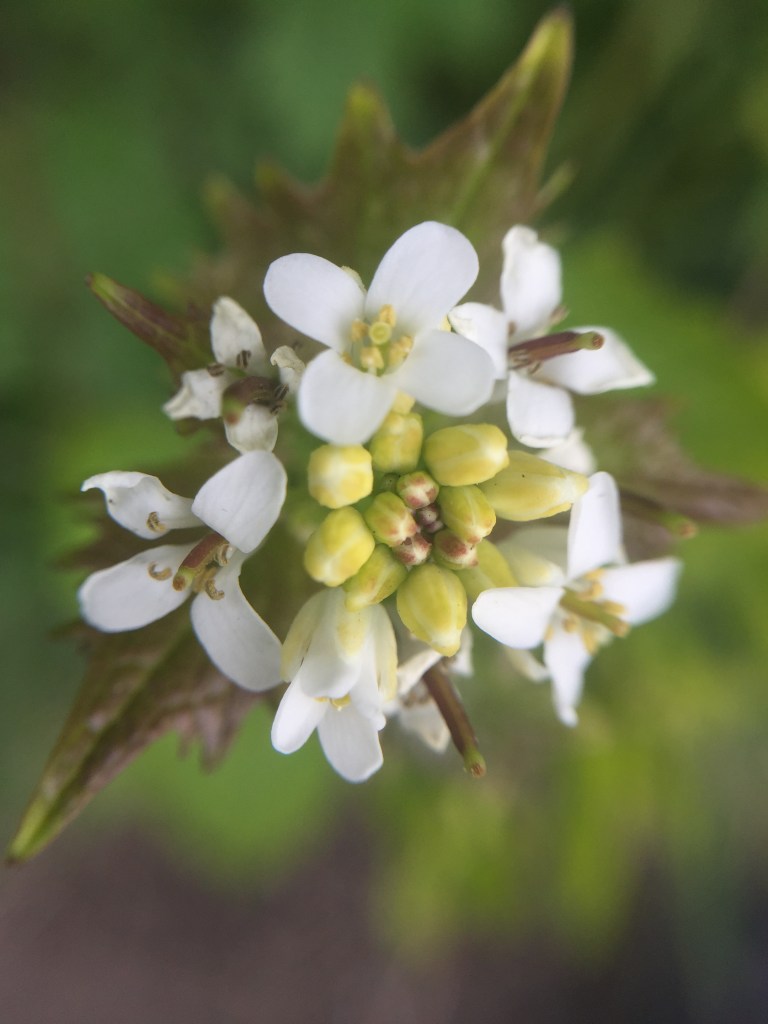
The flowers are tiny, each one with four white petals, arranged in a cross shape. The flower clusters form at the top of the stems and are followed by long seedpods.

Garlic mustard is native to Europe, Asia and parts of North Africa. Here in the UK it is an important food plant for both the orange tip and green-veined white butterflies, which lay their eggs on the plants and the caterpillars feed on the leaves. Introduced to the USA long ago, probably by early settlers for food the plant has become a serious invasive weed in some areas, with no natural predators to keep it in check.

Garlic mustard totally unrelated to garlic (it is a member of the cabbage family. The leaves do smell faintly of garlic when crushed and have a mild garlic flavour. Interestingly, Some people report an unpleasant bitter aftertaste, completely undetected by others. For those who do like the flavour, the young leaves can be chopped and added to salads and used instead of mint to make an alternative sauce to serve with lamb. Historically it was used to make a sauce to accompany sea fish – this gives another old name: sauce-alone. The seeds are mildly peppery and can be used as a mild alternative to commercial mustard.

Herbal and folk medicine has employed garlic mustard to treat asthma and other lung complaints and as an antiseptic. As with all foraged wild plants, it is important to follow some common sense safety guidelines

  • Don’t touch or pick any plant unless you are ABSOLUTELY CERTAIN that it is safe to use, and not poisonous.
  • Don’t pick anything unless it is abundant
  • Only pick small amounts and no more than you need
  • Don’t pick if there is a risk of pesticide/weedkiller or other contamination, including from traffic or other forms of pollution.
  • Always get permission from the landowner.
  • Avoid areas which may be soiled by animals (wild or farm animals or pets)
  • Wash plants thoroughly

One of my favourite sights on a sunny Spring day is to see the shoots of garlic mustard standing to attention in front of a hedge or on a woodland edge, with a pair of orange-tip butterflies fluttering overhead.