
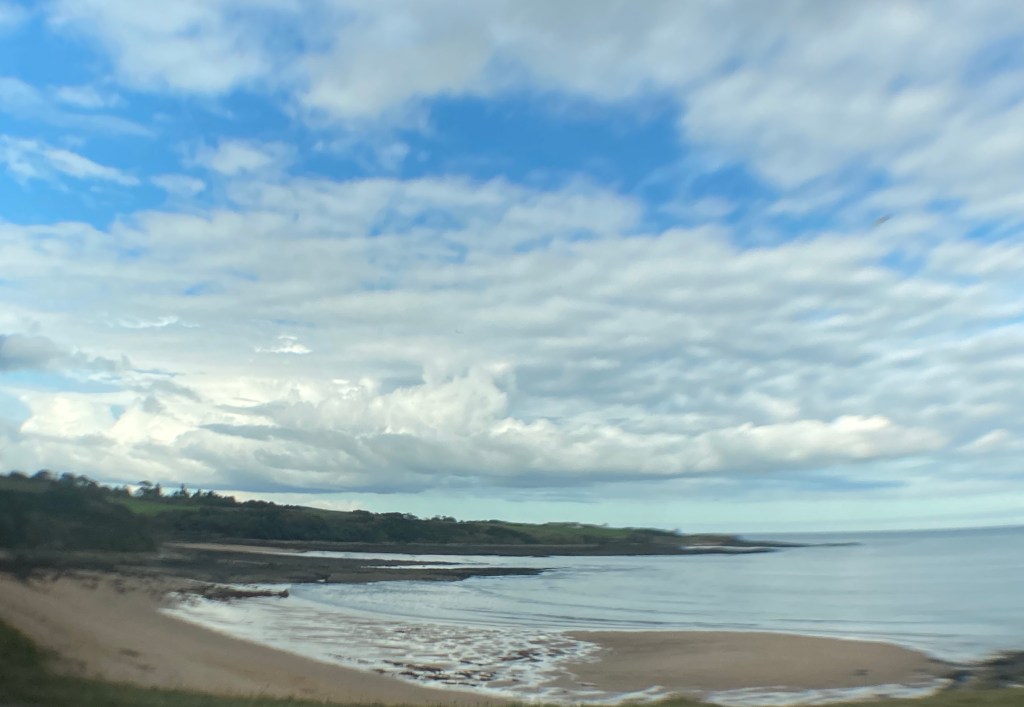
Here in Northumberland we have the most beautiful coastline, with glorious sandy beaches, expansive mud flats and romantic rocky shorelines. Somehow I can never stay away from the sea for long so we had a couple of trips along the coast this week. It’s so much quieter since autumn arrived and the tourists left.
The first took us to Sugar Sands. which I’ve blogged about before. It’s a hidden gem, reachable down a gated farm track. It was pretty deserted apart from a few seabirds and a lone seal that came in quite close to shore.
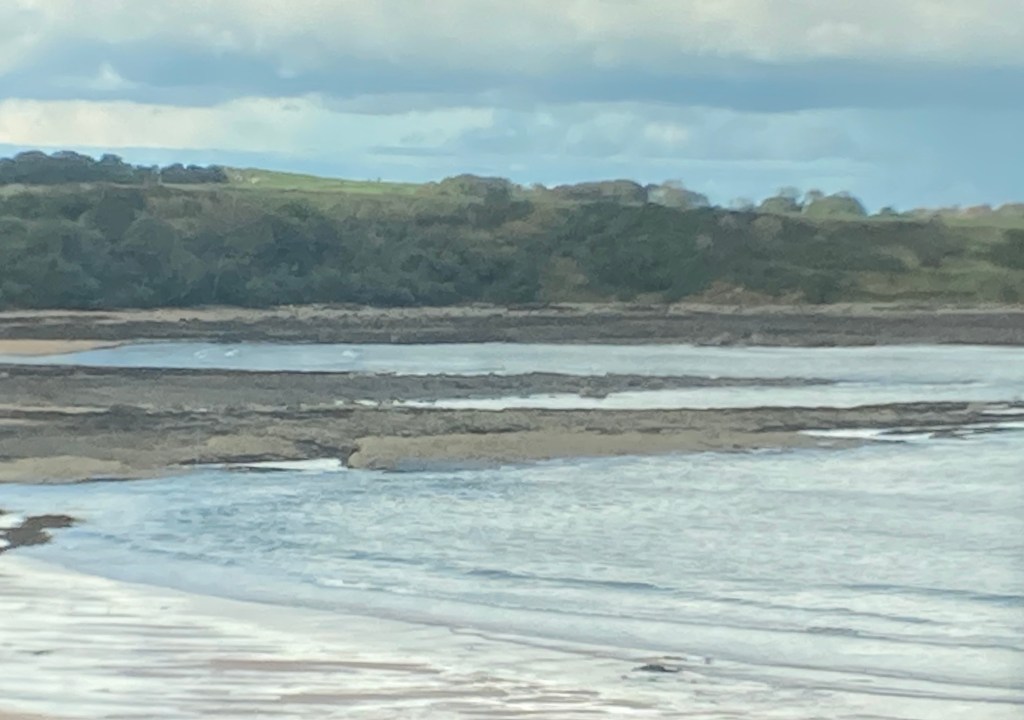
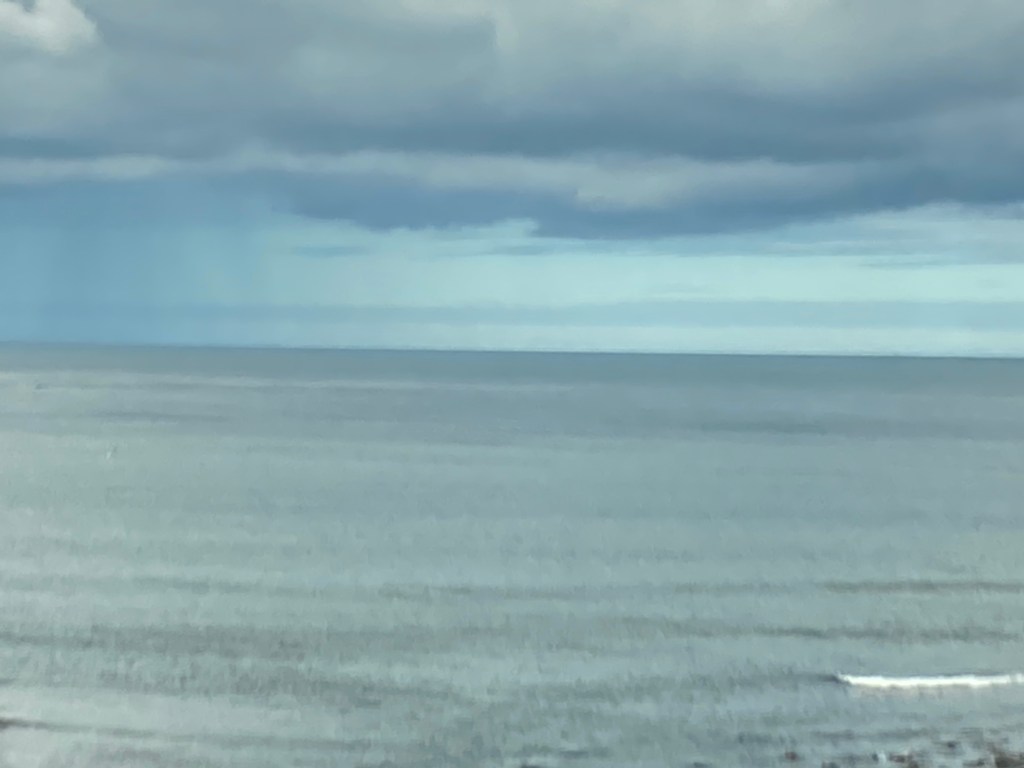
It was day of showery rain with sunny intervals which led to some moody clouds.
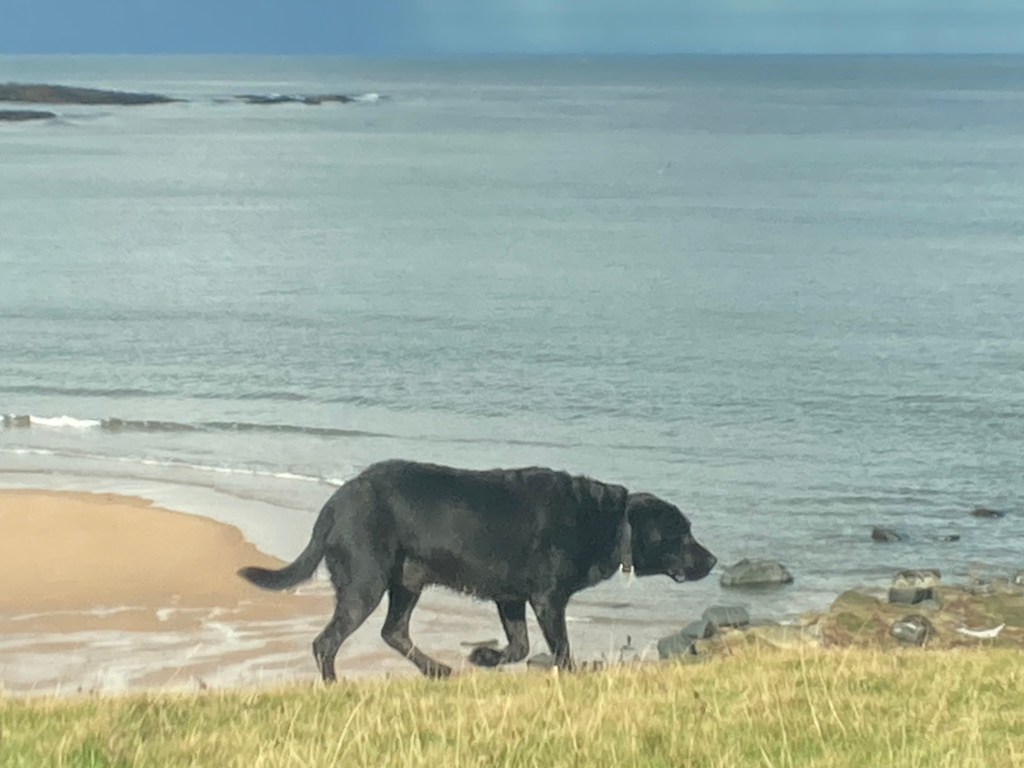
Buddy and K dodged the rain and had a good walk.
Our second trip began early in the morning and took us to the north of Budle Bay. We parked by a gate with a good view towards the coastal mud flats
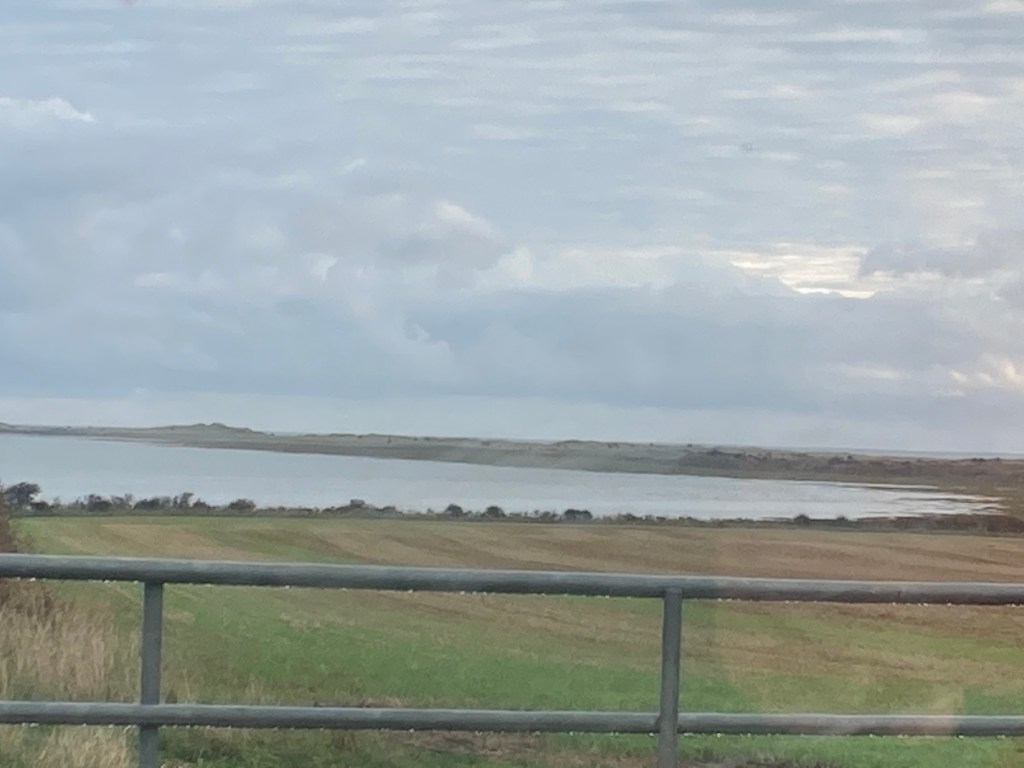
K and Buddy set off for a walk, but before long I had some visitors.
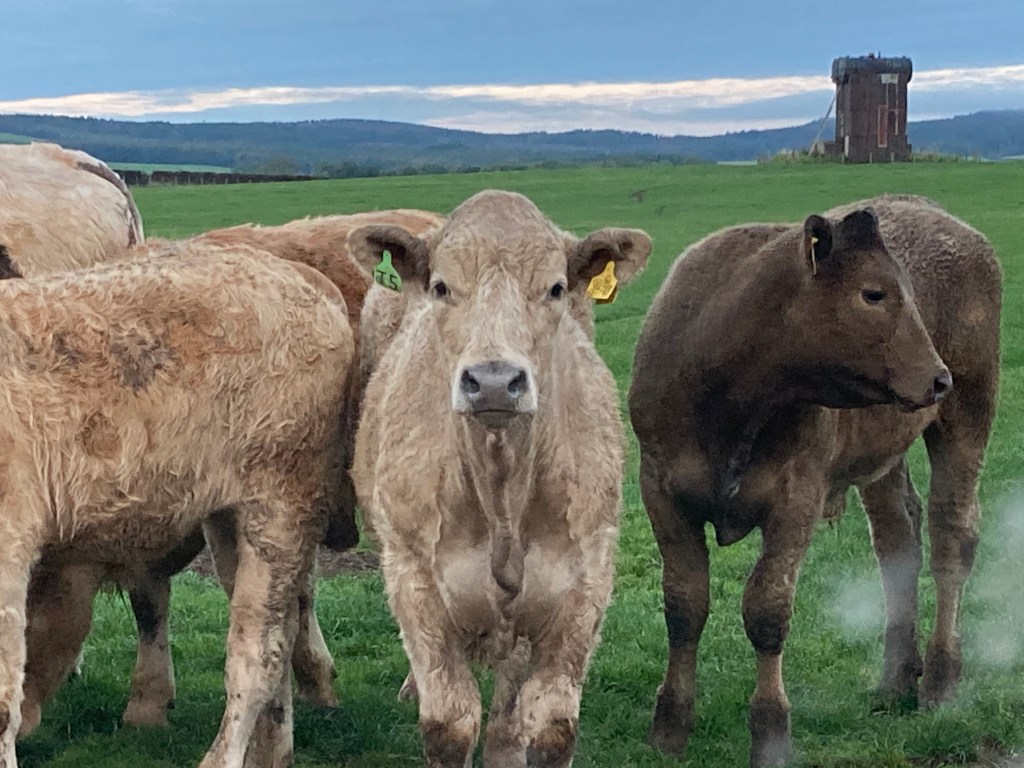
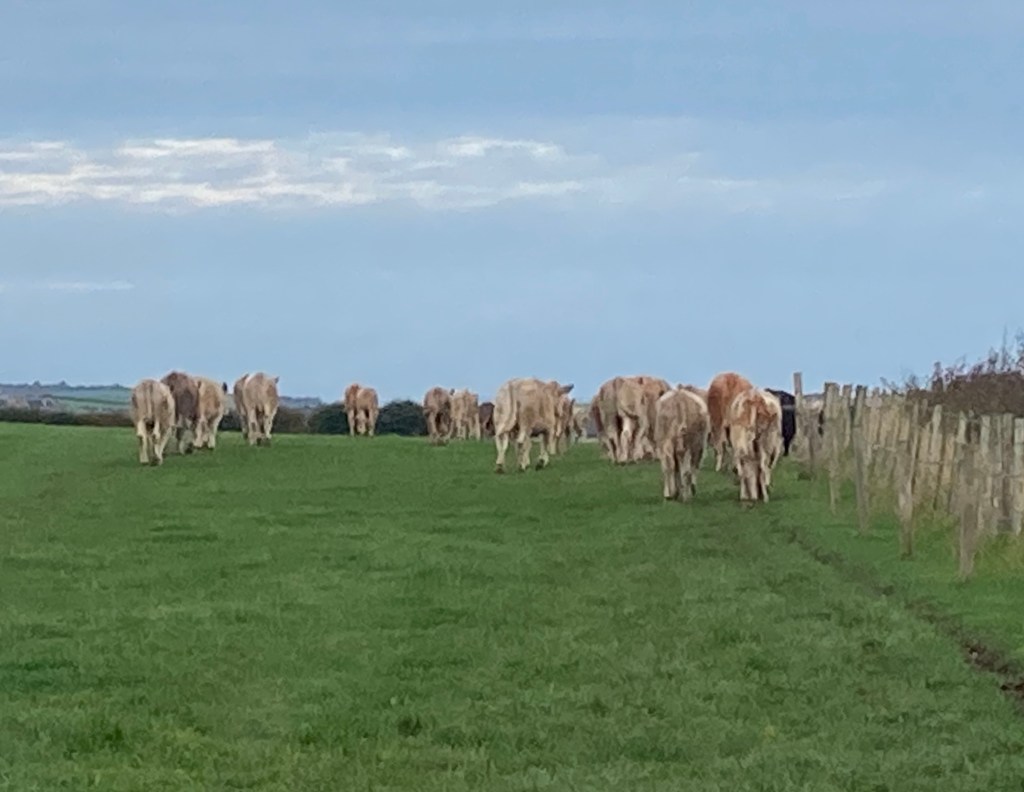
They soon lost interest and wandered off.
We at the peak of the bird migration season right now and the coastal flats and fields are filling up with geese and ducks. You always hear them first, then look up to see the V-shaped formations or skeins of geese far overhead.
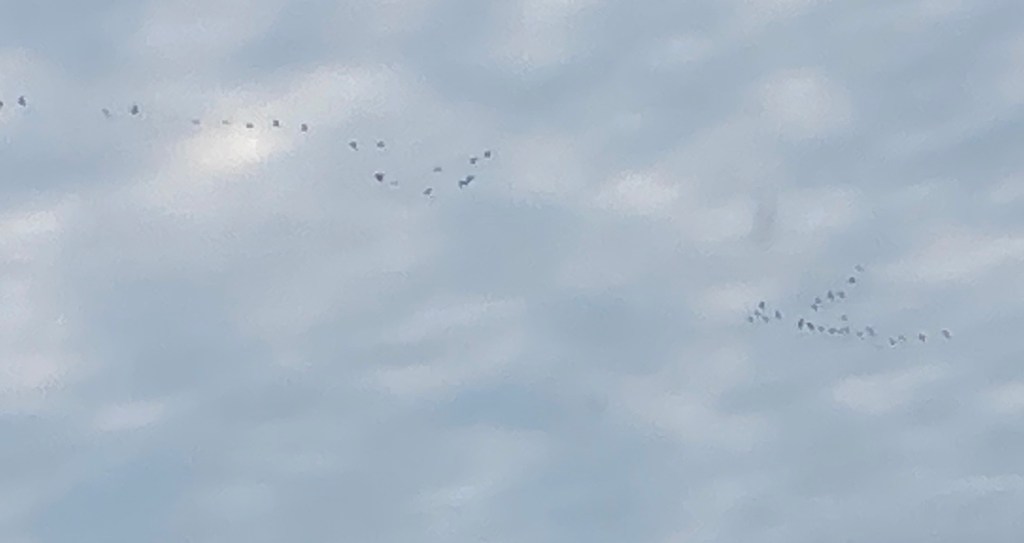
We’ve seen Brent, Barnacle and Pink-footed geese recently. They have been spending the summer in Siberia and Northern Scandinavia and have arrived to spend the winter here.
My next visitor was a hare, than ran up the field towards me.
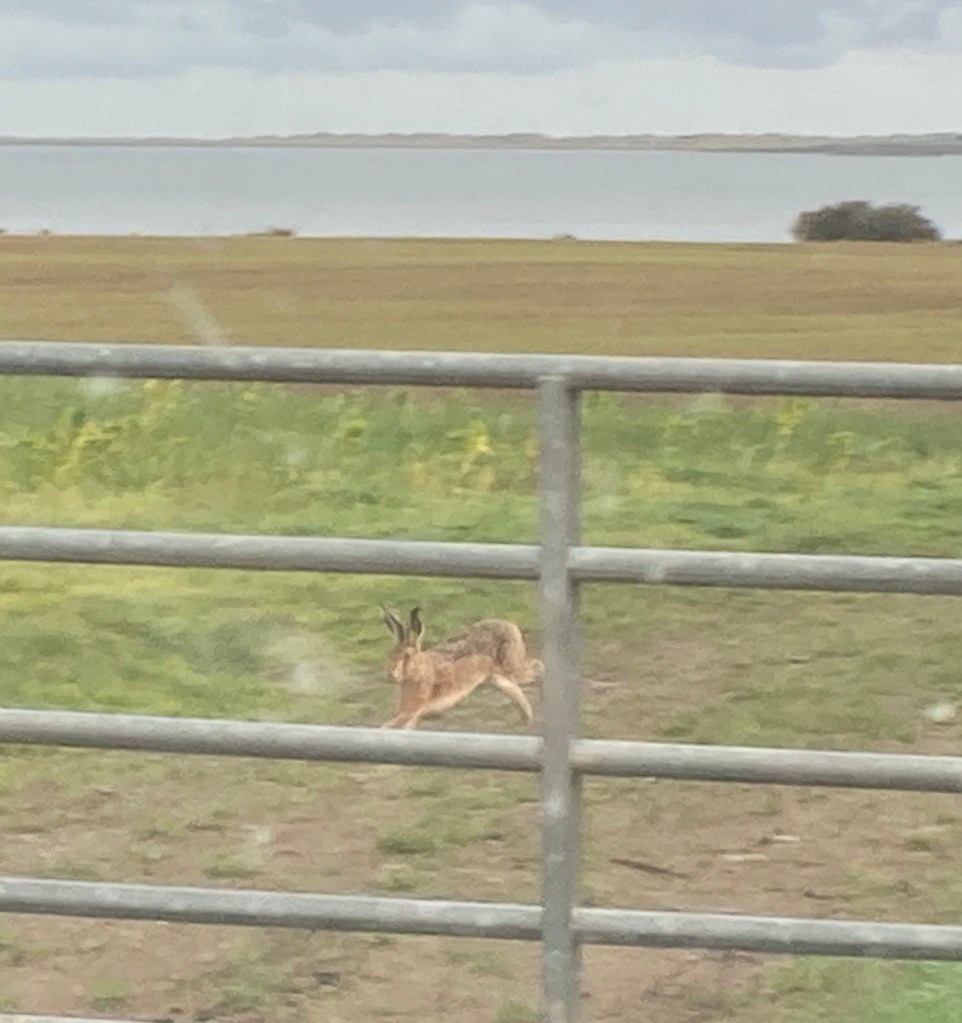
Hares are common here and we see them often. They are easily distinguished from rabbits by their larger size, black-tipped ears and because they run rather than hop. Hares also have the most beautiful big hazel eyes when you see them close up. They seem to stare straight through you and it gives then a strange mystical quality. It is no surprise therefore that the hare features strongly in myth and legend. It is associated with witchcraft, fertility and the moon in folklore from many parts of the world. It is one of my favourite animals.
I also saw this young roe deer.
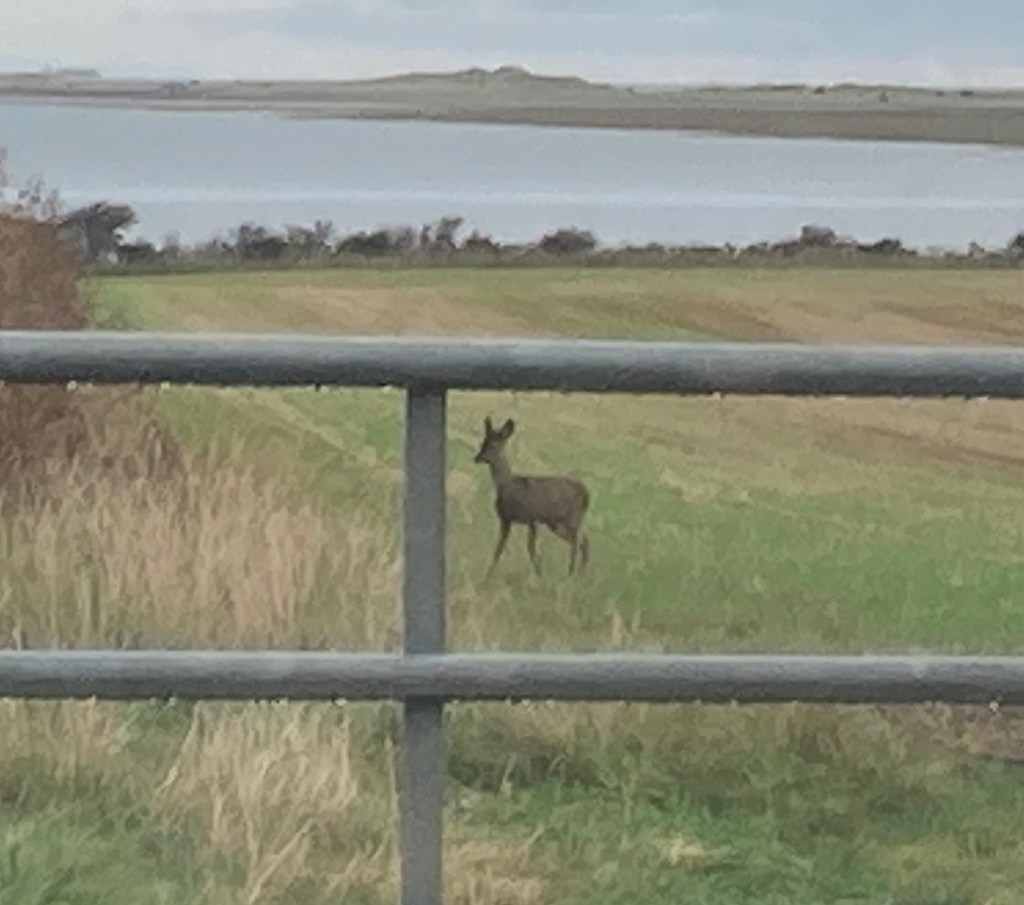
The roe deer is also very common in Northumberland. They seem to be present in even the smallest piece of woodland. We see them more often in winter when they venture into the fields to feed. They can be quite a hazard on the roads at night. Several times I’ve had to brake hard to avoid hitting one. I’ve learnt to drive off very slowly and carefully when this happens as there is always another one! This one eventually left and bounded through the undergrowth on the field margin.
We set off back down the coast, next stopping at Budle Bay. The tide was out leaving a huge area of mud.
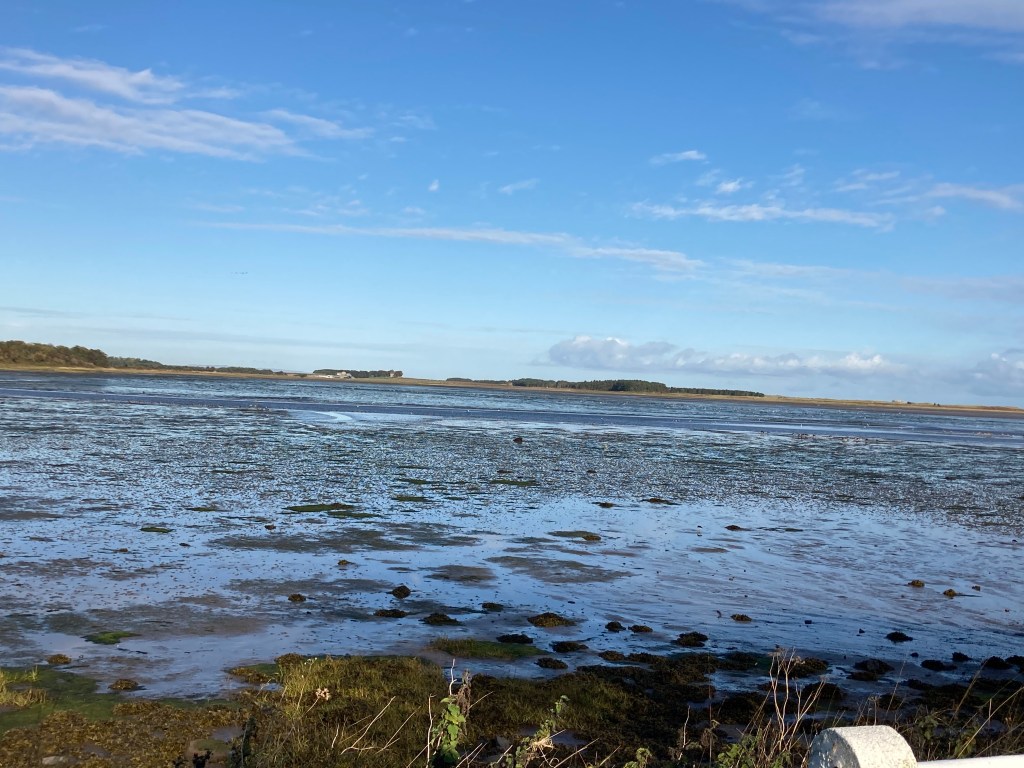
This is an important site for birds, especially waders and waterfowl, that feed on invertebrates in the mud.
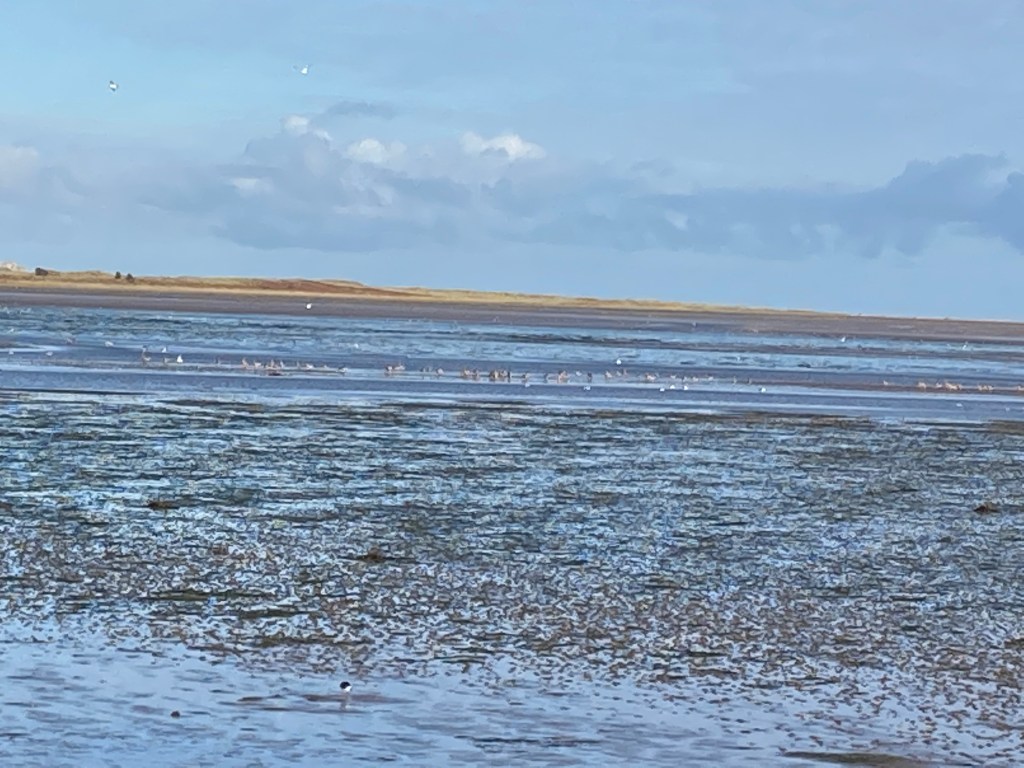
We saw various ducks and geese, swans, gulls, oystercatchers and redshanks. There were huge numbers of shelducks further away. From Budle we headed for Bamburgh andNorthumberland White Hart Rock.
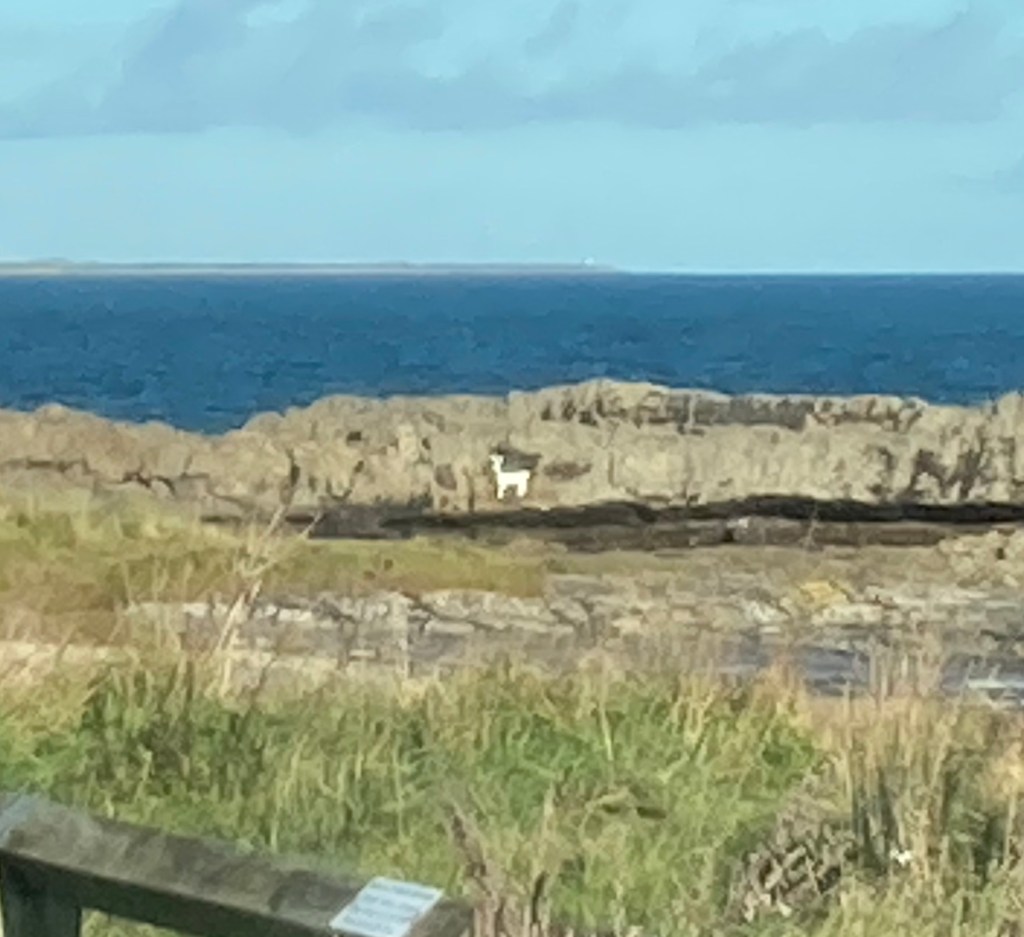
The image of the deer is repainted regularly. Looking south, Bamburgh Castle looked stunning.

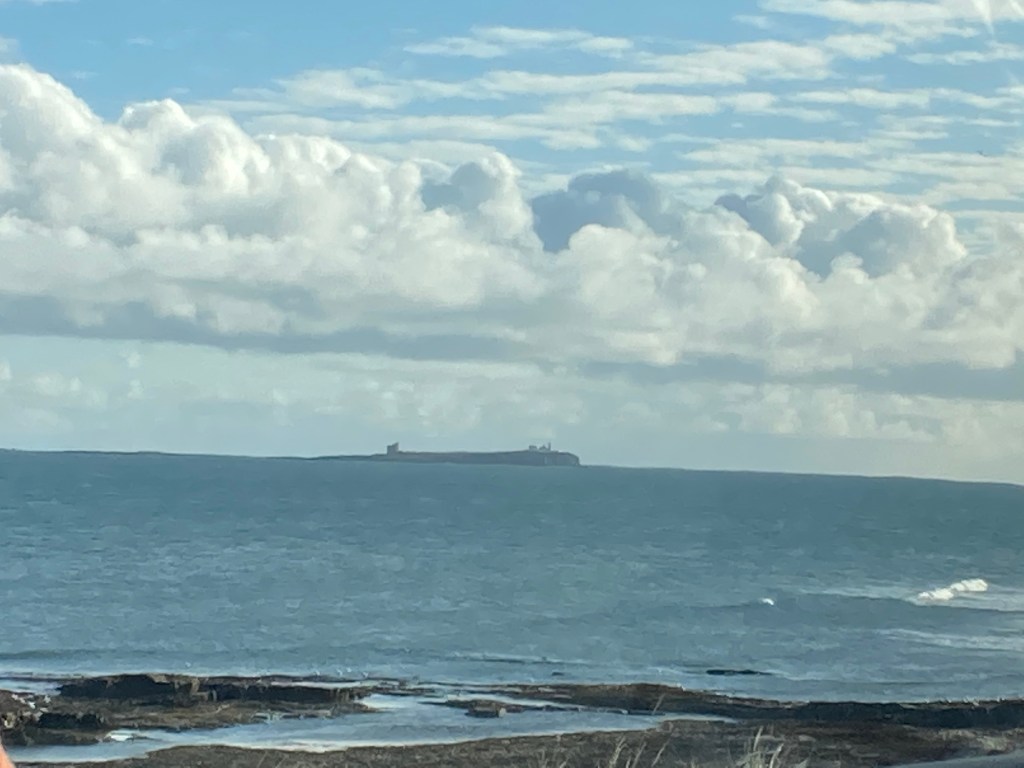
Out to sea, Inner Farne was clearly visible.
Our final stop was at Howick. The sea was calmer than it had been, so we did wonder if we would be able to spot any dolphins, but there were none about. We enjoyed watching a group of gannets feeding.
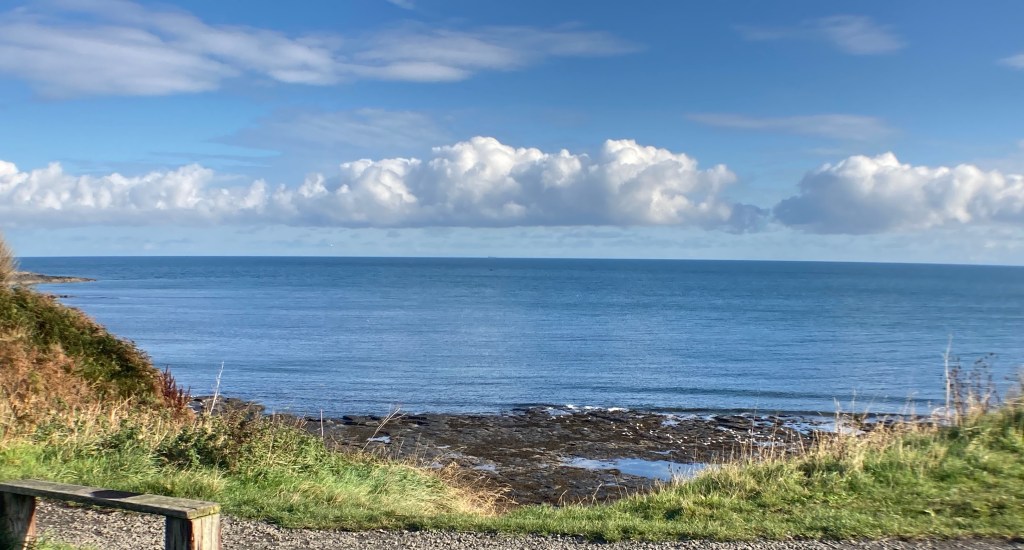
It had turned into a beautiful day. It’s such a privilege to live in such a stunning part of the world.


Wow that is an amazing coastline, I enjoyed your photos! My favorite photo was the cows. How cool to see a castle on your walk!
LikeLiked by 1 person
There spare 70 castle sites in Northumberland. Some with nothing left, others magnificent buildings. An d that is before looking for the numerous Iron Age hill forts
LikeLiked by 1 person
Thank you! This area has a rich history too, and more castles than you would believe. This one, Bamburgh, is one of the most beautiful. The one nearest to where we live is Alnwick Castle, that featured in the first Harry Potter film
LikeLike
I can see a zoom lens being on your Christmas list for all that wildlife you spot, Jackie! Really enjoyed reading this.
LikeLiked by 1 person
Thanks Norma.
LikeLike
It is indeed a stunning part of the world. I’m impressed you know the name of so many species.
I love the Northeast coast. Hopefully, we will be able to visit again soon.
LikeLiked by 1 person
Thank you. Feel so lucky to live here.
LikeLike
😊
LikeLike
Lovely pictures and commentary- you spot so much! Watching nature, even when second hand through your blog, can be so uplifting. Thanks
LikeLike
Thanks Jane. I know it does me good getting out there and we are lucky to live in such a beautiful area.
LikeLike