Posted in Uncategorized

Wildflower of the Week: Primrose

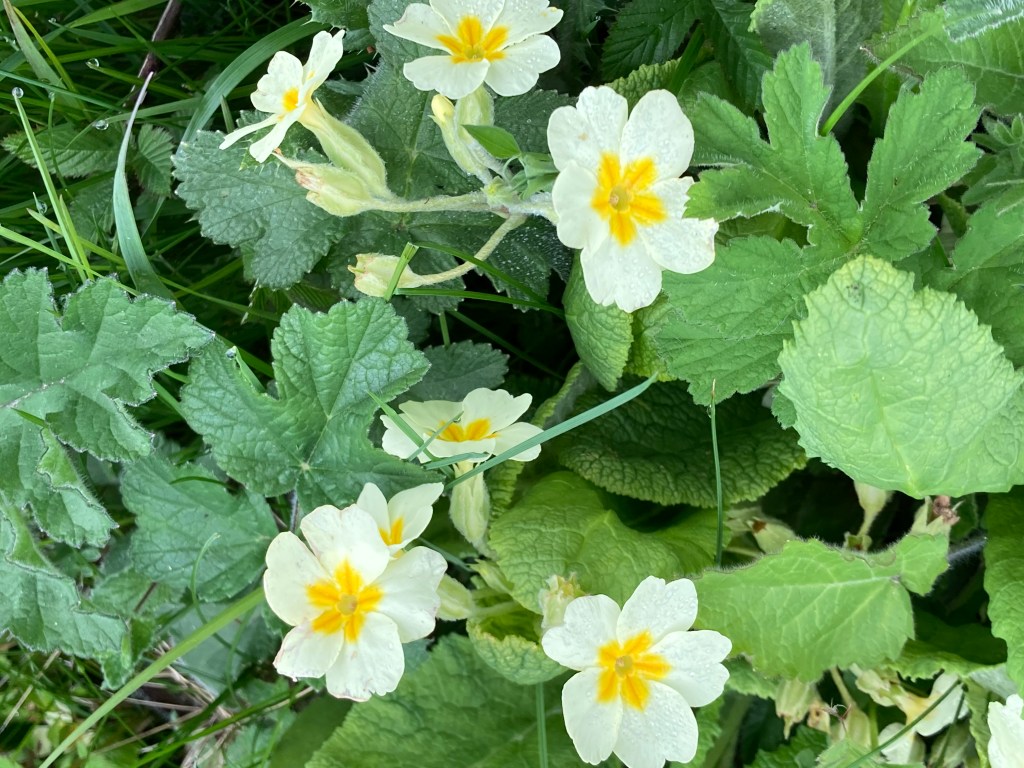
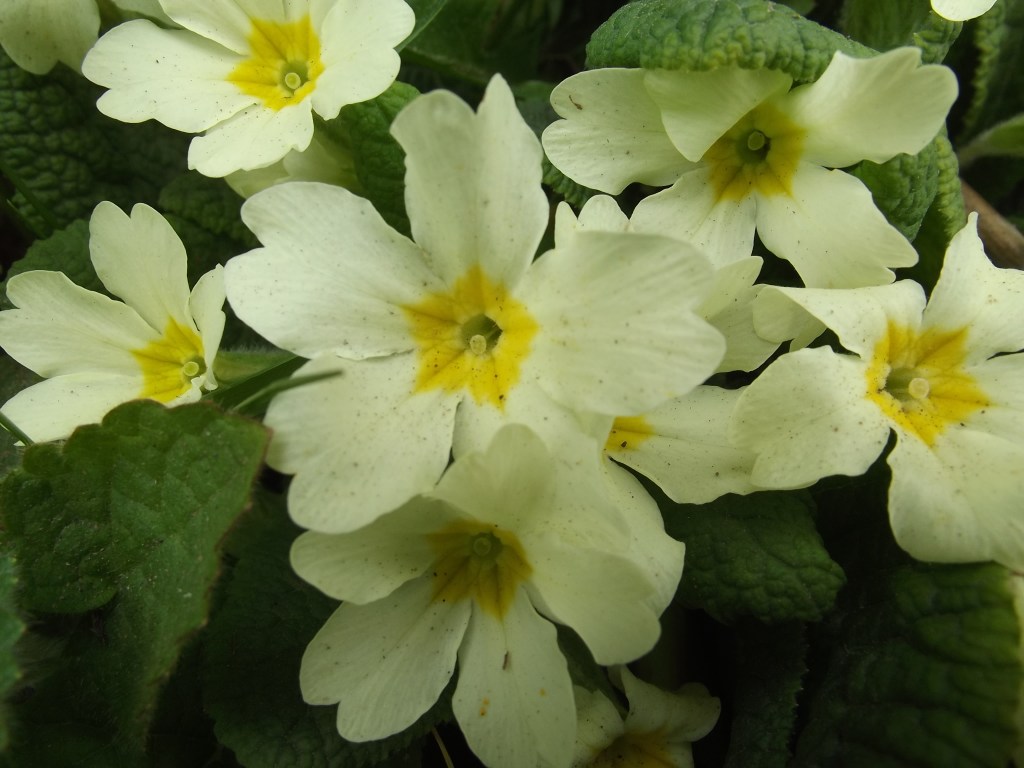
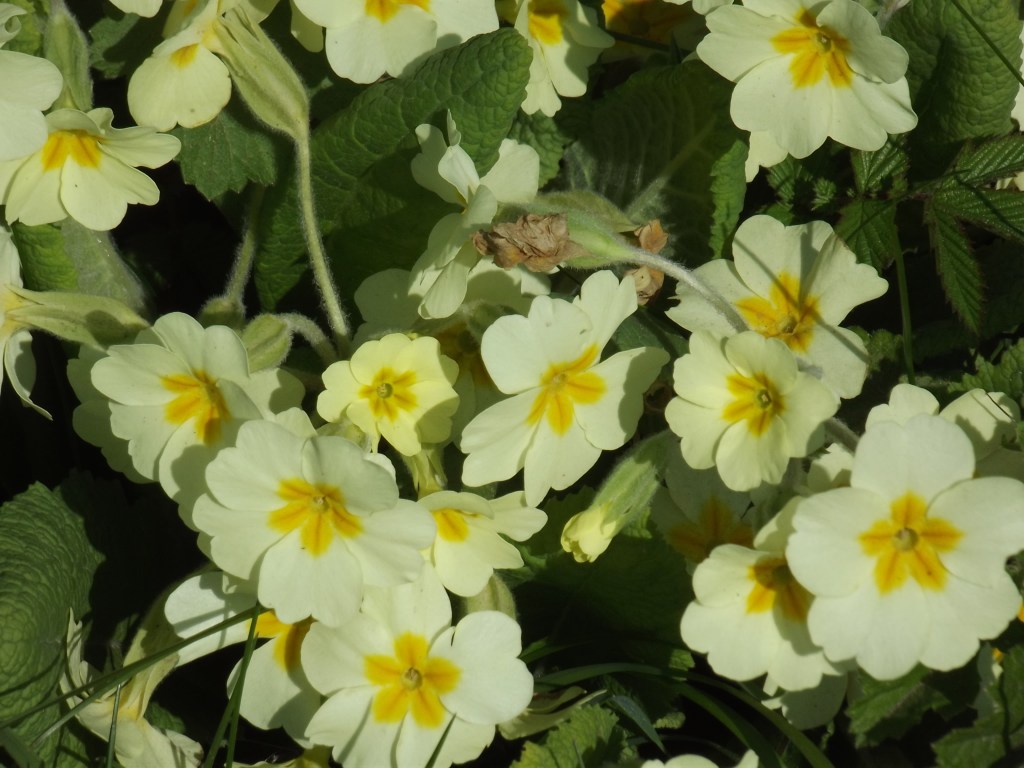
The primrose (Primula vulgaris) is my favourite sign of Spring and the last of the flowers are now beginning to fade as Summer approaches.

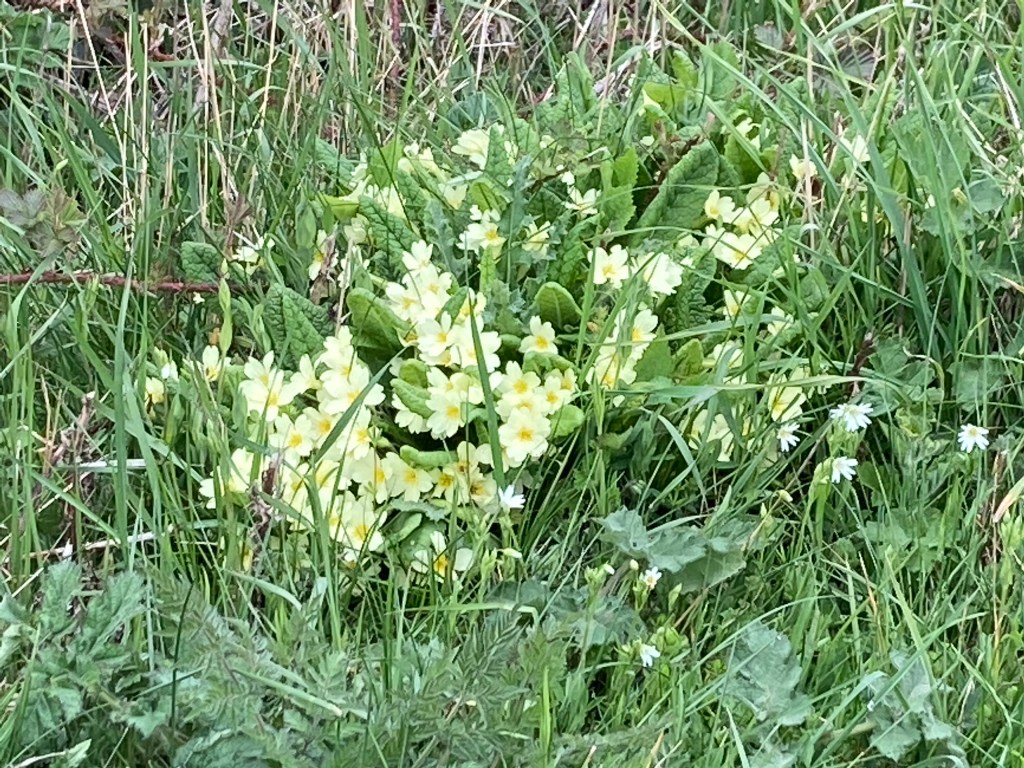
This perennial plant is native throughout Europe and can be found in woodland, under hedges and on steep road verges. Though the flowers may appear as early as December in milder areas, in most places they flower from February/March to May.
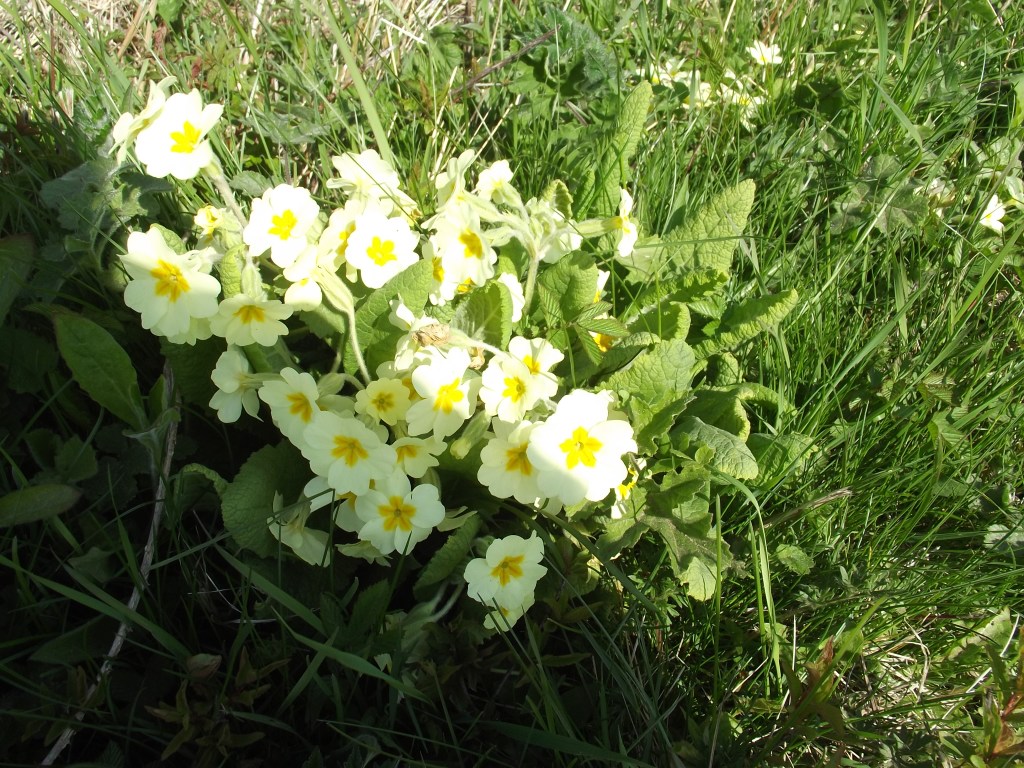
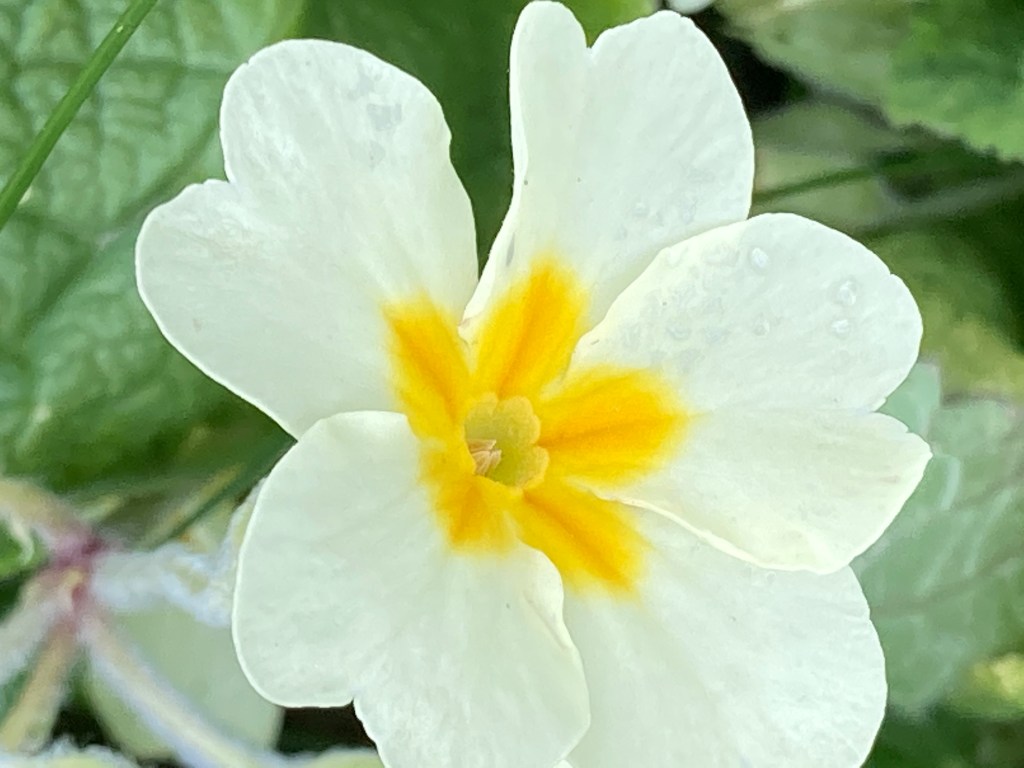
The pale lemon yellow flowers are 2-3cm in diameter and each has five notched petals.and deeper yellow centres. The flowers are carried singly on hairy stems above a rosette of oval leaves, wrinkled and heavily veined, each leaf up to 30cm long. The flower gives way to a capsule containing many small brown seeds. These require a cold spell to stimulate germination.
The nectar of the primrose is a valuable food source for long-tongued insects like butterflies, including emerging hibernating small tortoiseshells. It is also the food plant for the caterpillars of the rare Duke of Burgundy Fritillary butterfly.
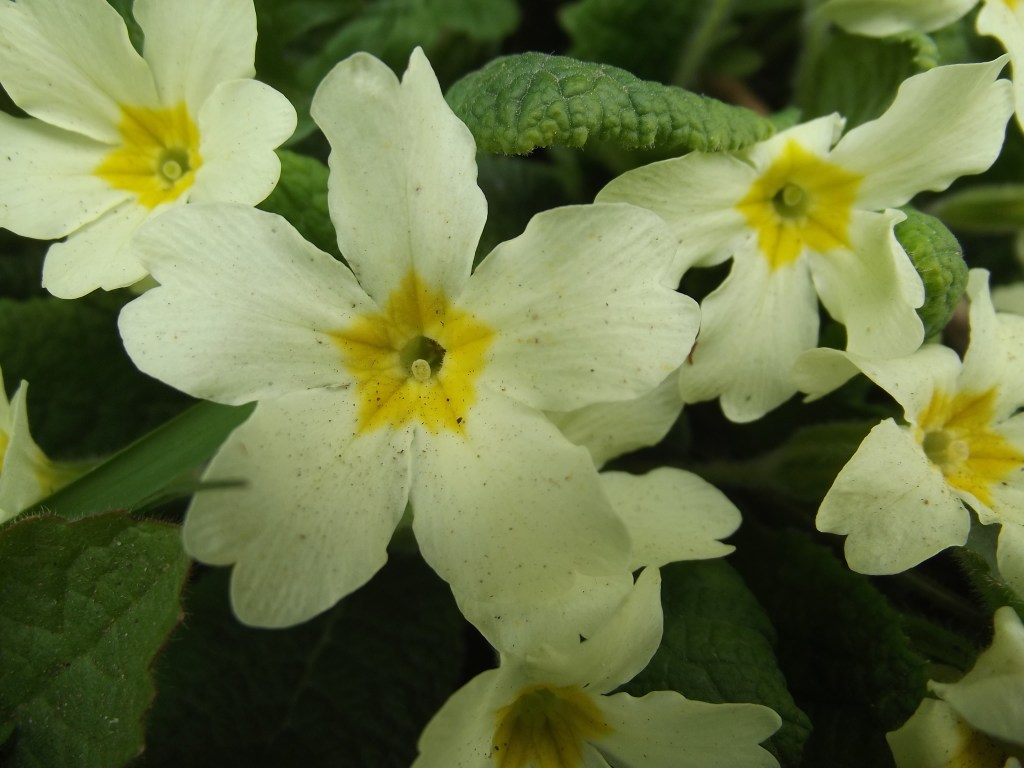
The name primrose is derived from the Latin prima rosa: first rose, as an early Spring flower. Other names include Lent rose, butter rose,Easter rose, though not a member of the rose family at all. In folklore the flower was associated with fairies. A patch of primroses marks a portal into the fairy realm. Placed on a doorstep the flowers bring a fairy blessing. Druids used primroses for protection from evil during rituals. A primrose garland would be placed on the body of a young woman who had died ‘in the springtime in her life” . Primroses would also be used to decorate the bed of newly weds, probably because of the association with, Spring, new life and fertility.
The name Butter Rose may come from an old practice of rubbing the flowers on cows’ udders to ensure good butter production from the milk. A poor show of primroses was said to be a sign that hens would lay fewer eggs.
Thomas Culpeper, the 17C herbalist, recommended primrose for its wound healing properties. It has also been used to treat gout, rheumatism, paralysis, toothache and skin problems.

Queen Victoria was said to have sent primroses to her Prime Minister, Benjamin Disraeli regularly. On Primrose Day, April 19th, the flowers are placed on his grave and on the statue of him in Westminster Abbey.
It remains one of my favourite wildflowers and a true harbinger of Spring
Posted in Uncategorized

Wildflower of the Week: Blackthorn

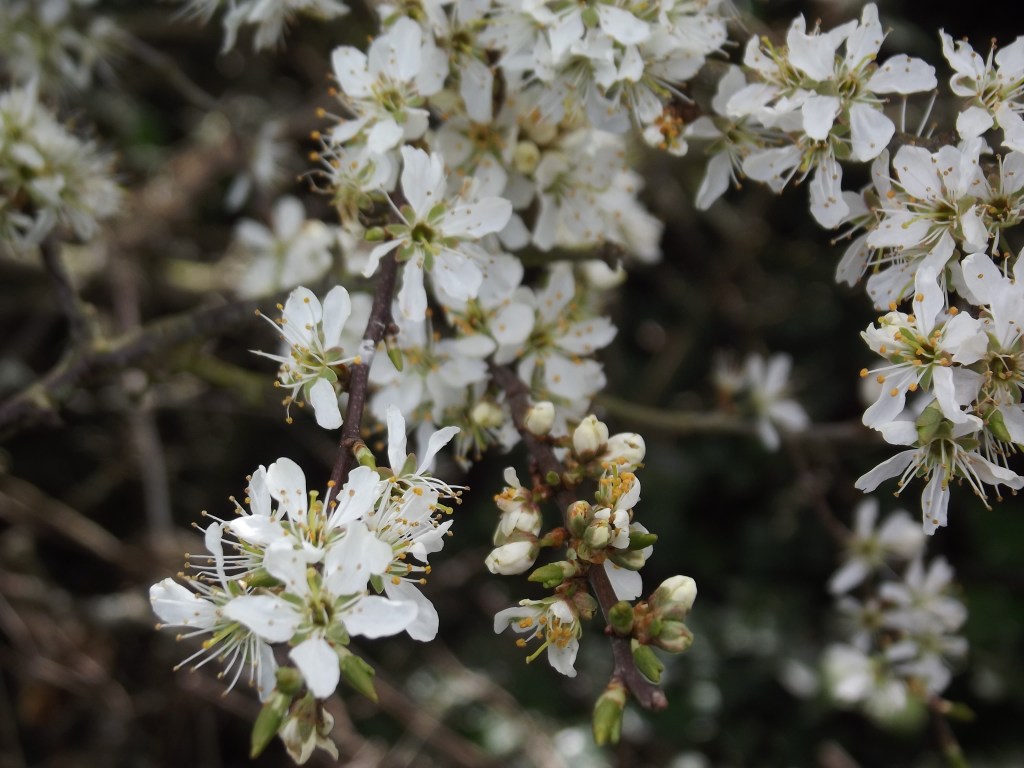
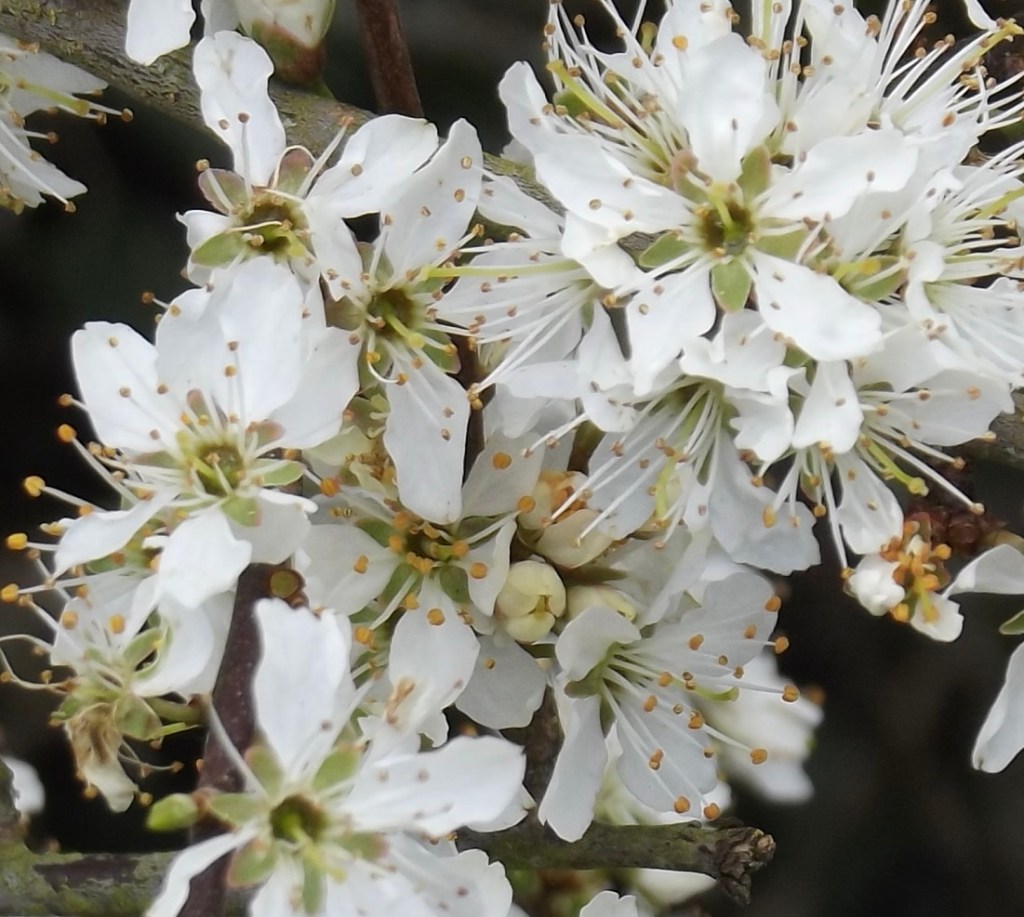
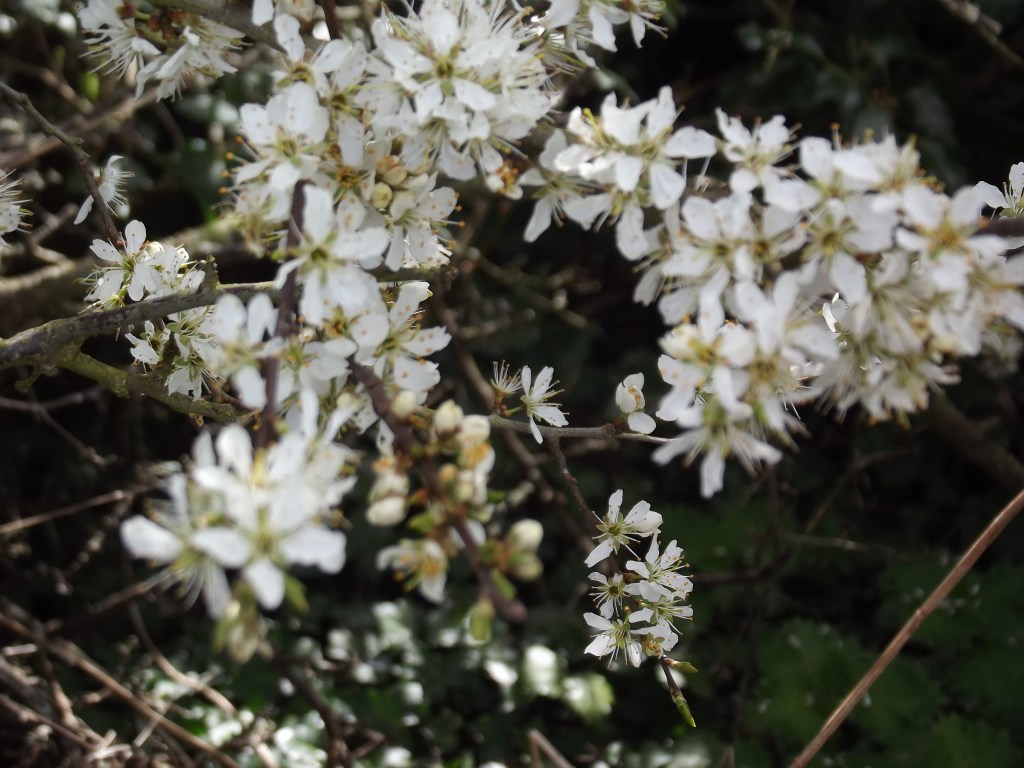
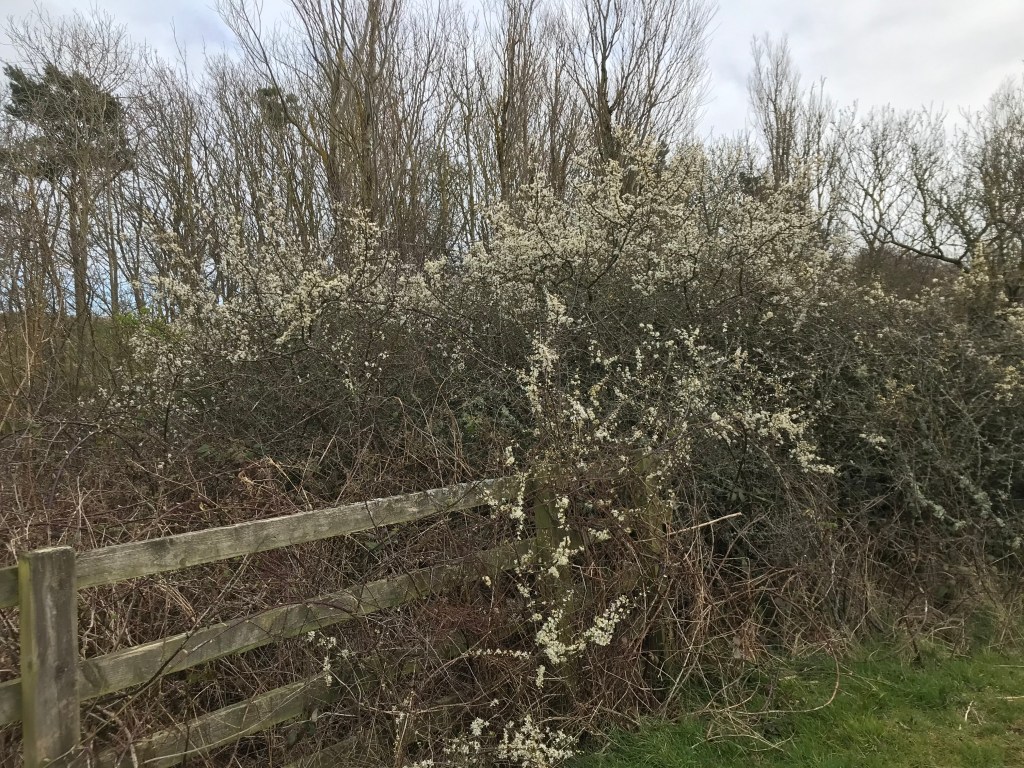
The frothy white blossom of the blackthorn has been in flower for the last month, standing out against the blackish twigs and branches, which have yet to come into leaf.

This shrub can grow to 4m or more and can be found in woodland or scrub, practically anywhere that the soil is not acid, but mainly grows in hedgerows, where the dense, thorny growth makes it an impenetrable barrier and protective nest sites for birds.

A member of the rose family and closely related to the plum and damson, the blackthorn is a native to Europe and Western Asia.

The flowers are hermaphrodite, each bearing both male and female parts and with five petals. They are the first flowers to appear in our hedgerows, arriving before the leaves and a welcome source of pollen and nectar for bees and other insects early in the year.

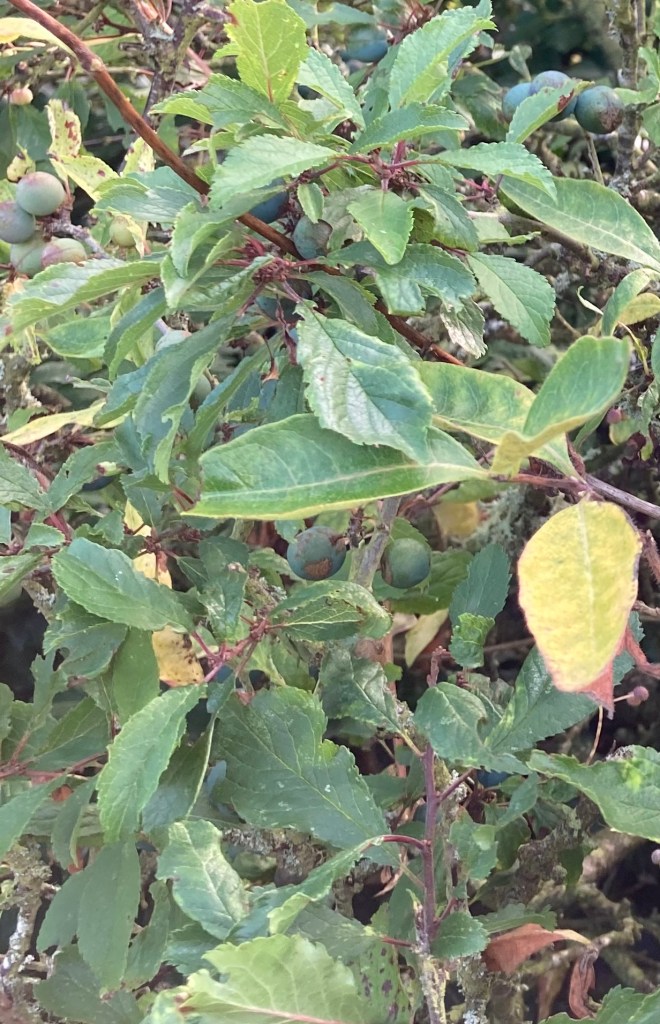
The small leaves are narrow and oblong shaped, tapering to a point and with toothed edges. They are the food plant for the caterpillars of several species of moths and butterflies, including the rare black hairstreak butterfly. In autumn they turn bright yellow.

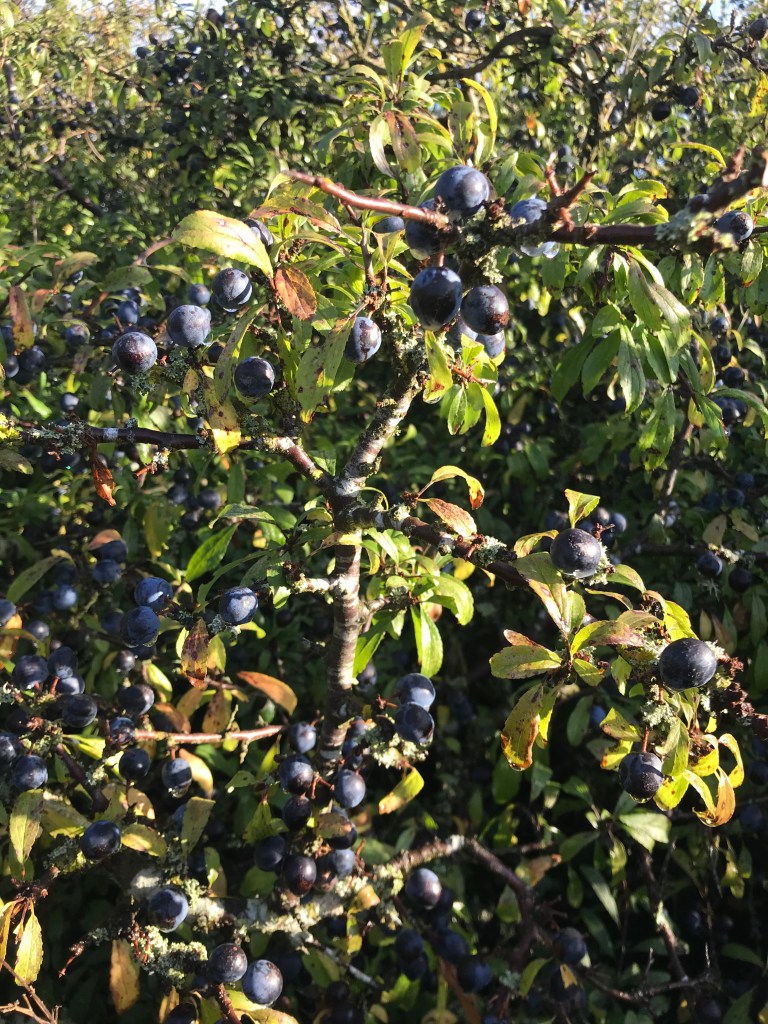
Also appearing in autumn are the sloes, round purple-black fruit with a bloom that gives them a blue tinge, each about 1cm in diameter. The sloe has a large stone and little flesh, but they do provide a valuable food source for birds, particularly for members of the thrush family.

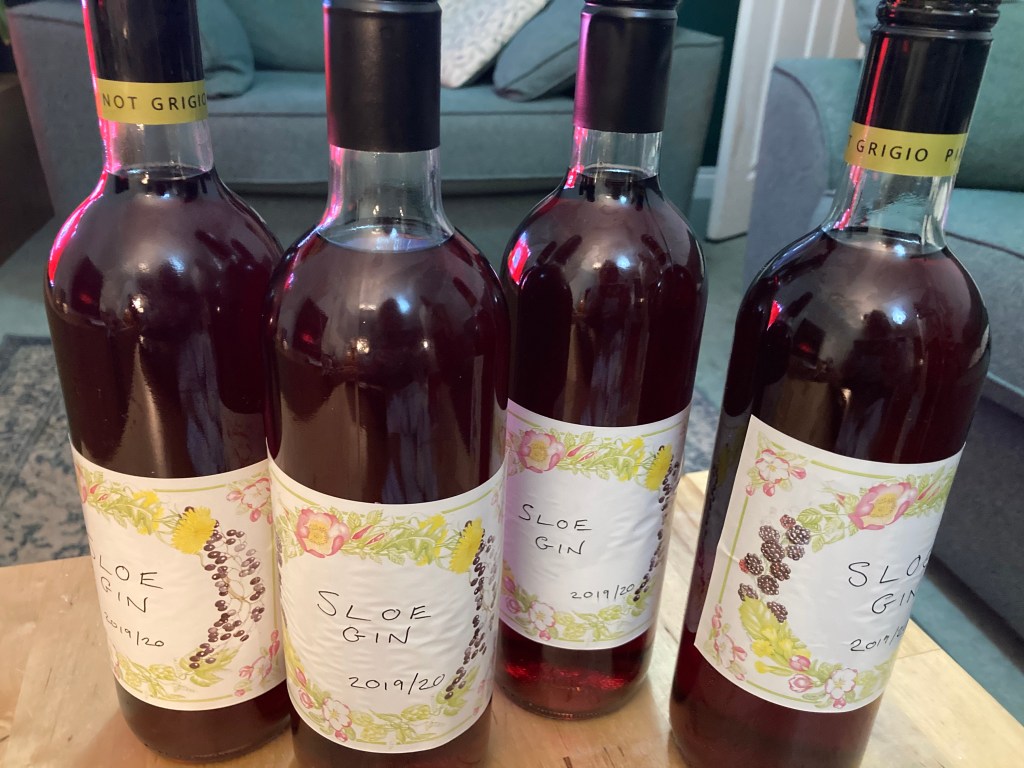
Sloes are incredibly sour, but sweeten slightly after the first frosts. In years where frosts damage the flowers and prevent the fruit from setting (or it is too cold for pollinating insects) the sloe crop is scarce. The fruit are used in sloe gin and can also be made into jams and jellies. You can read about how we make our own sloe gin here . If you have the patience to remove the stones from the fruit after they have been strained out of sloe gin (by which time they have absorbed a fair amount of alcohol, the flesh can be stirred into melted chocolate and left to set on a baking tray: delicious!

The wood of the blackthorn burns well and as it grows straight is used for walking sticks and tool handles. It was also said to be the wood of choice for witches’ staffs and wands and had an association with witchcraft.

Traditional medicine has used preparations of the plant used for cleansing the blood, for digestive disorders and rheumatism.

I always look out for the first blackthorn blossom to appear every spring, with the hope of a good crop to make sloe gin later in the year.

Don’t forget the following when picking any parts of a wild plant.

  • Don’t touch or pick any plant unless you are ABSOLUTELY CERTAIN that it is safe to use, and not poisonous.
  • Don’t pick anything unless it is abundant
  • Only pick small amounts and no more than you need
  • Don’t pick if there is a risk of pesticide/weedkiller or other contamination, including from traffic or other forms of pollution.
  • Always get permission from the landowner.
  • Avoid areas which may be soiled by animals (wild or farm animals or pets)
  • Wash plants thoroughly


Posted in Uncategorized

Wildflower of the Week: Bramble

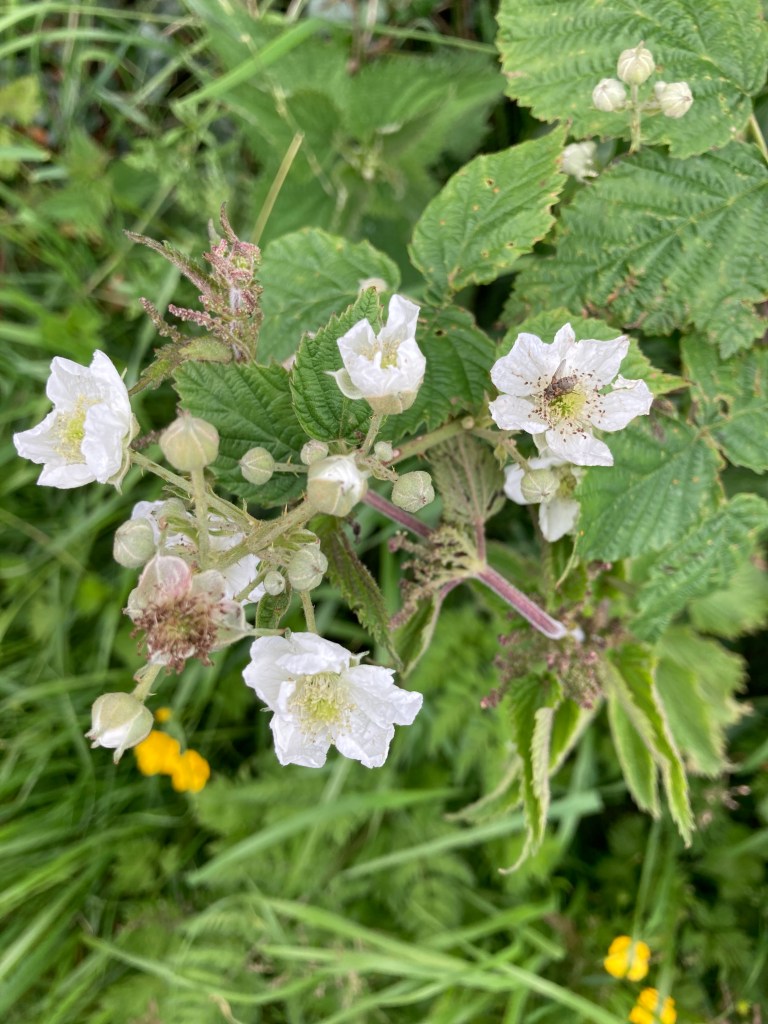
The bramble or blackberry is a member of the rose family and not actually a single species, but an aggregate of some 2000 very similar micro species. It is a scrambling perennial shrub that is commonly found in hedgerows, woodlands and waste ground. It is happy in poor soil and quickly colonises untended or ungrazed land and is difficult to eradicate from a neglected garden. The shoots may grow to 6m long or even more.

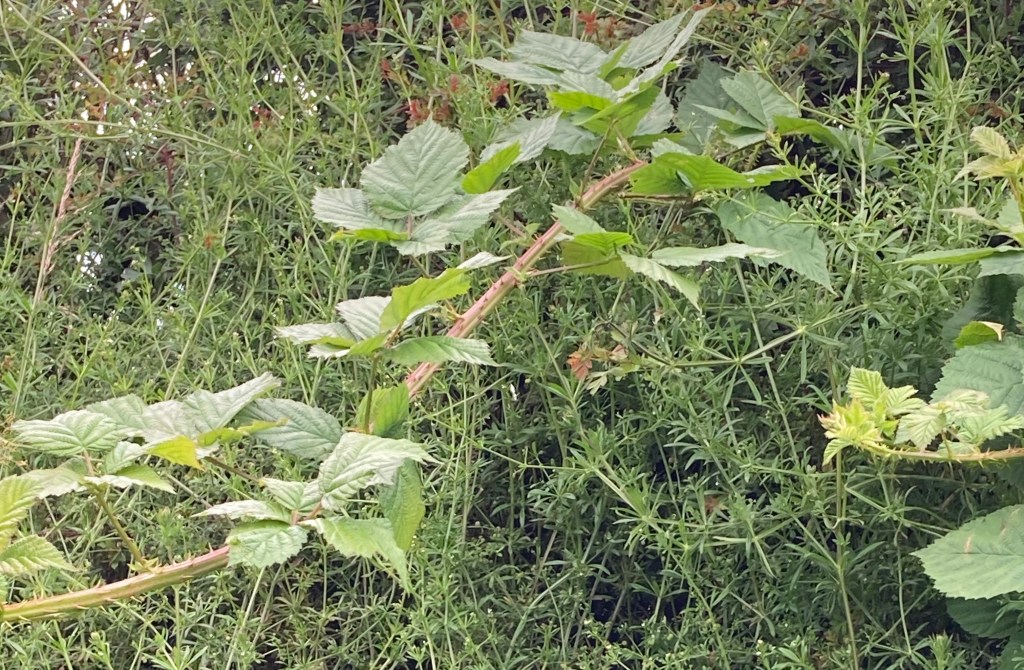
The plant sends out viciously prickly biennial arching shoots that grow vigorously without flowering in their first year, bearing prickly toothed leaves, comprising 5-7 toothed and heavily veined leaflets. The shoots take root wherever they touch the ground.

In the shoot’s second year it does not grow in length, but produces flowering side shoots and smaller leaves comprising 3-5 leaflets.

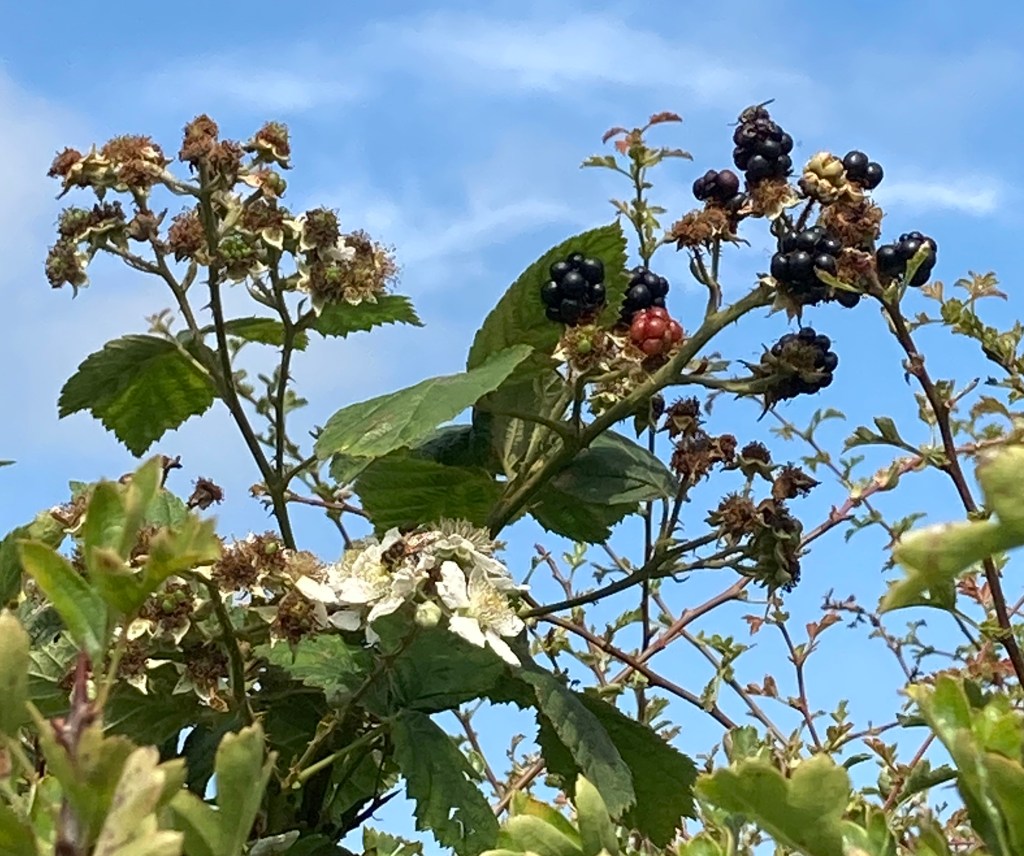
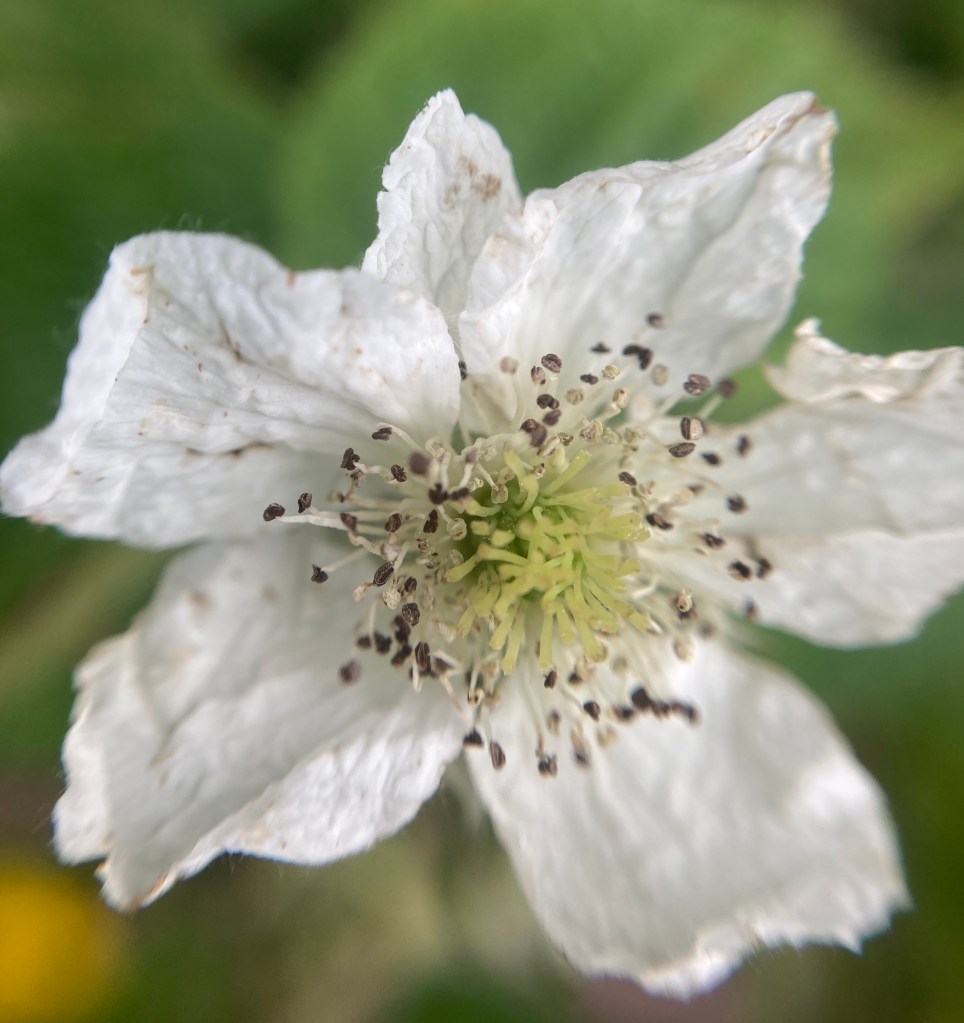
The flowers, which appear from June onwards in groups on the side shoots, usually have 5 white or pale pink petals.

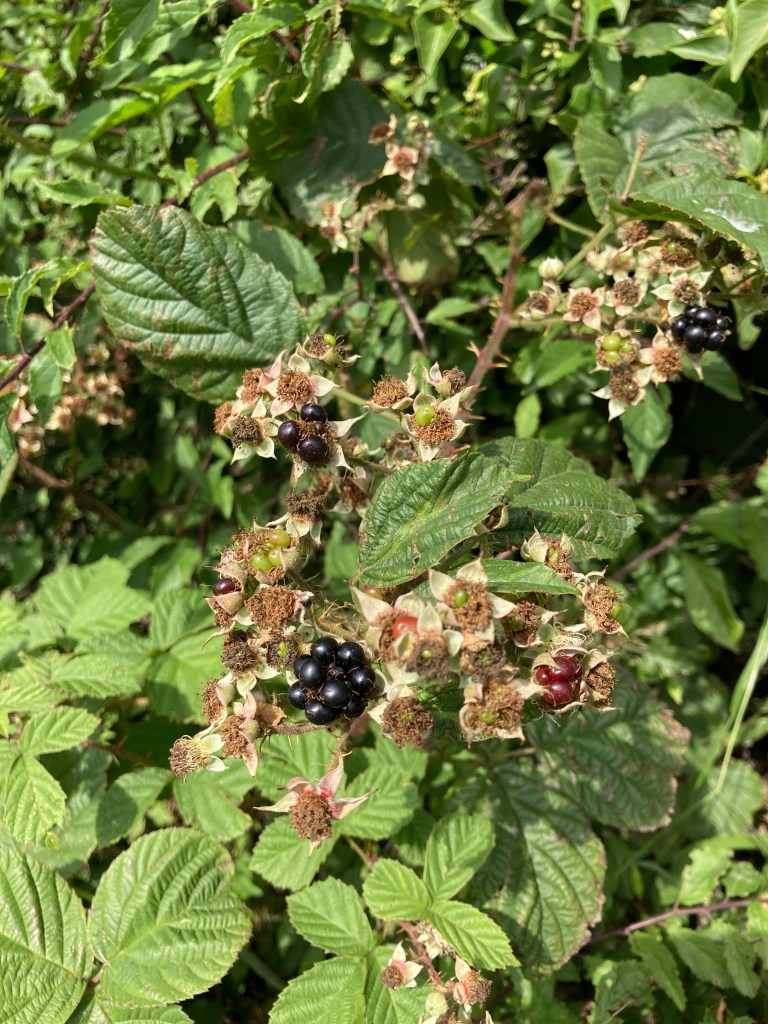
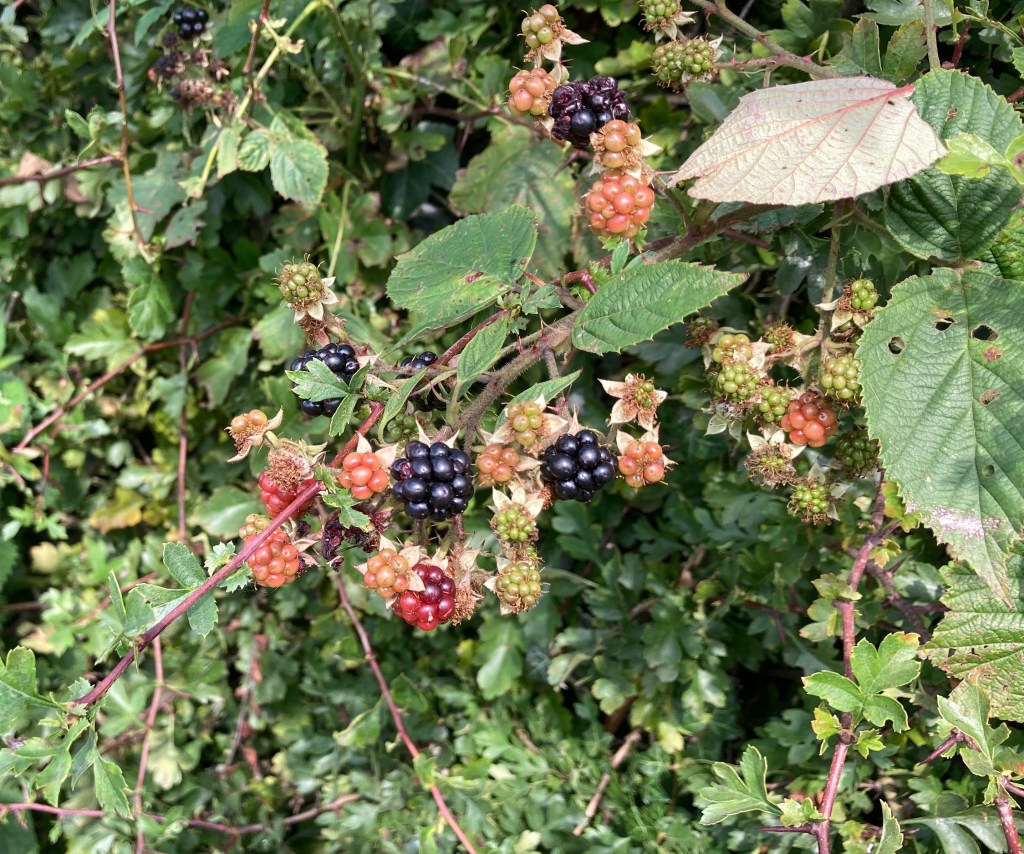
These are followed by the blackberries – technically not a fruit, but a cluster of drupes. These are green as they begin to develop, turning red through purple to black as they ripen. The ruit are easy to distinguish from the raspberry when they are picked – the raspberry detaches from the plant leaving its core behind on the plant so each picked berry has a hollow centre. The white core or torus of the blackberry detaches with the the fruit.

The plant is very important to wildlife. The flowers are popular with bees and the leaves are food for several species of caterpillars and deer enjoy grazing on them. The fruit are eaten by many species of birds and mammals who disperse the seeds in their droppings. The dense bramble thickets provide valuable cover and nest sites.

Man has used the bramble extensively too. Though we enjoy gathering the wild berries from our hedgerows, cultivated varieties have been developed to produce larger fruit with better flavour and without those vicious thorns. Preparations of the plant have been used in folk medicine for all manner of ailments: the leaves have been chewed to relieve bleeding gums; a tea made from all parts of the plant has been used to cure whooping cough and the roots used to cure dysentery and diarrhoea. The Ancient Greeks used it as a cure for gout. It has also been used to treat stomach ulcers. The fruit is rich in vitamin C and has been used against scurvy.

The berries leaves and shoot tips can be used for dyeing. Native Americans have used the stems to make rope. The plant also provides an impenetrable barrier to protect stock and property and keep large animals and enemies out.

Blackberrying, or foraging for the berries in late summer or early autumn is a popular pastime – at one time the autumn half-term school holiday was known as Blackberry Week. The fruit makes delicious jams, jellies, pies and crumbles, often in combination with apples. It is also used to make the French liqueur Creme de mur, which is the key ingredient of a bramble – a cocktail which also includes gin, lemon juice and sugar syrup.

Folklore decreed that blackberries must not be picked after Michaelmas Day (October 11th). After this the devil was believed to have spoilt the berries by trampling, fouling or spitting on them. After this time the fruit would often be mouldy or beginning to decompose. It was also traditionally planted on graves, to stop sheep grazing (or some believed to keep the dead in!)

As the blackberries ripen on our local hedgerows I’ll have to pick some. But what to make….jam? jelly? pies? I might even try making blackberry and apple gin liqueur – I tried it a few year back and it was delicious!

Have you picked any blackberries yet this year? What have you made with them?

Posted in Uncategorized

Wildflower Of The Week: Dog Rose

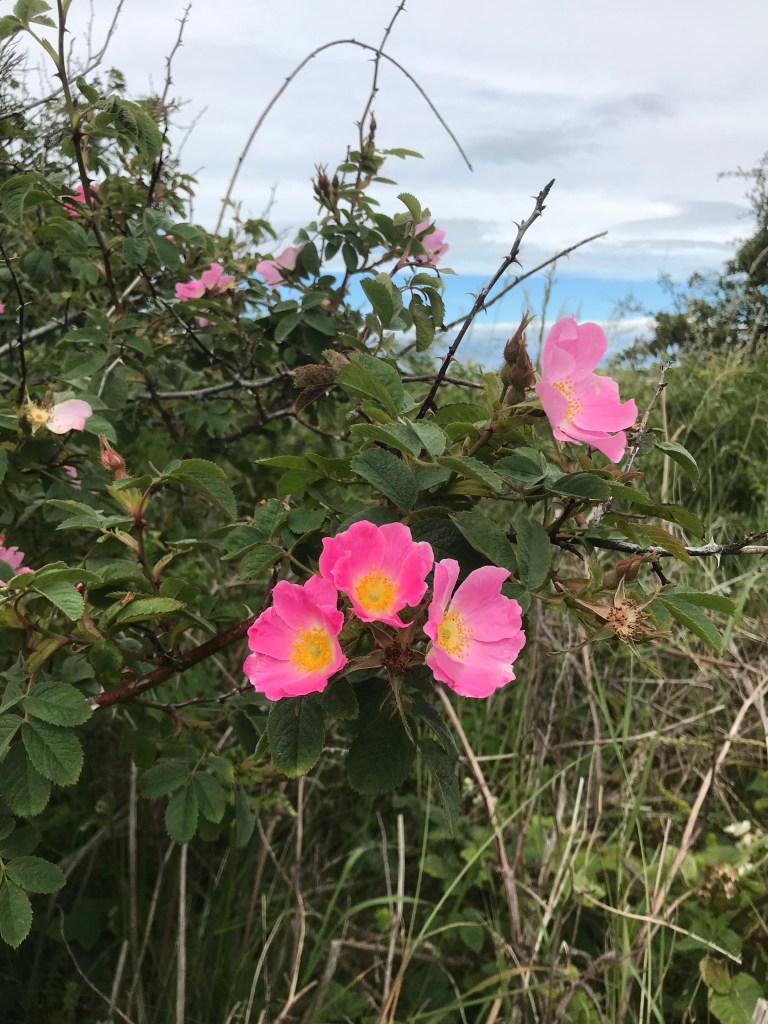
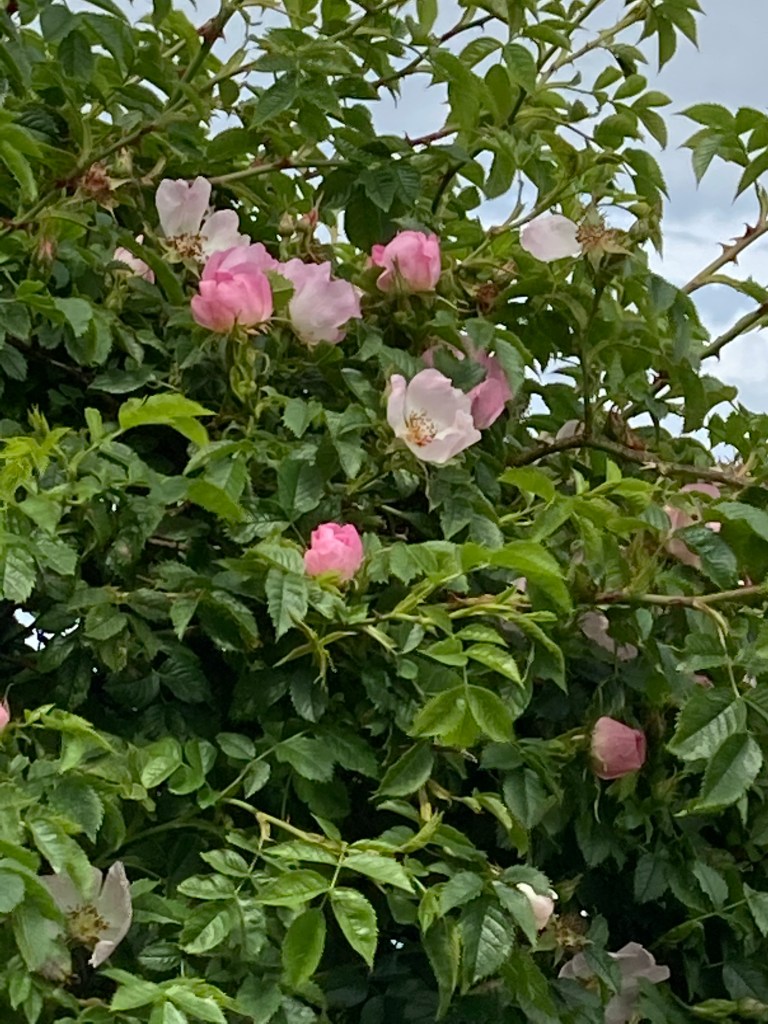
The blossom in the hedgerow shrubs has changed through the seasons, from blackthorn to hawthorn and now to elder and the beautiful dog rose, which blooms throughout June and July. Our dog roses are actually a collection of several virtually indistinguishable species. The large flowers, up to about 50mm across, are white or pink, with golden yellow stamens. They have a mild sweet fragrance.

The leaves are toothed and arranged in two or three pairs along thorny stems. The shrub is straggly and grows to 3m or more if well-supported by surrounding hedge plants.

The roots are used in the horticultural industry in the propagation of garden roses. Shoots of the cultivated varieties are grafted on to dog rose root stocks.

The flowers are followed by oval orange-red fruits or hips. These are rich in vitamin C and can be used to make a tea or syrup. As well as a vitamin source, the syrup has also been used to treat gout, dysentery and as a diuretic. The irritant hairs on hips have been used to make itching powder. The roots were used in folk medicine to cure rabies. The flowers are used in skin preparations.

The flower, or at least a stylised version of it is a common feature in heraldry, often seen on coats of arms. Also known as sweet briar, the rose has symbolised love and beauty for millennia. In Ancient Greece the dog rose was often associated with the Goddess of Love, Aphrodite, who was depicted as wearing a rose crown. The Romans bestowed an association between the dog rose and secrets. Anything said under places where roses were hung, would remain secret, giving rise the the phrase “Sub rosa”.

Occasionally reddish fibrous tangles appear on the stems of dog roses. These are known as Robin’s pincushions. and are caused by a tiny gall wasp laying eggs in in the stem. The gall shelters larvae of the wasp, which feed on the gall over winter to emerge as adult wasps in spring.

The dog roses I see in the hedgerows are a sign that summer is most definitely here!.

Posted in Uncategorized

Wildflower of the Week: Red campion.

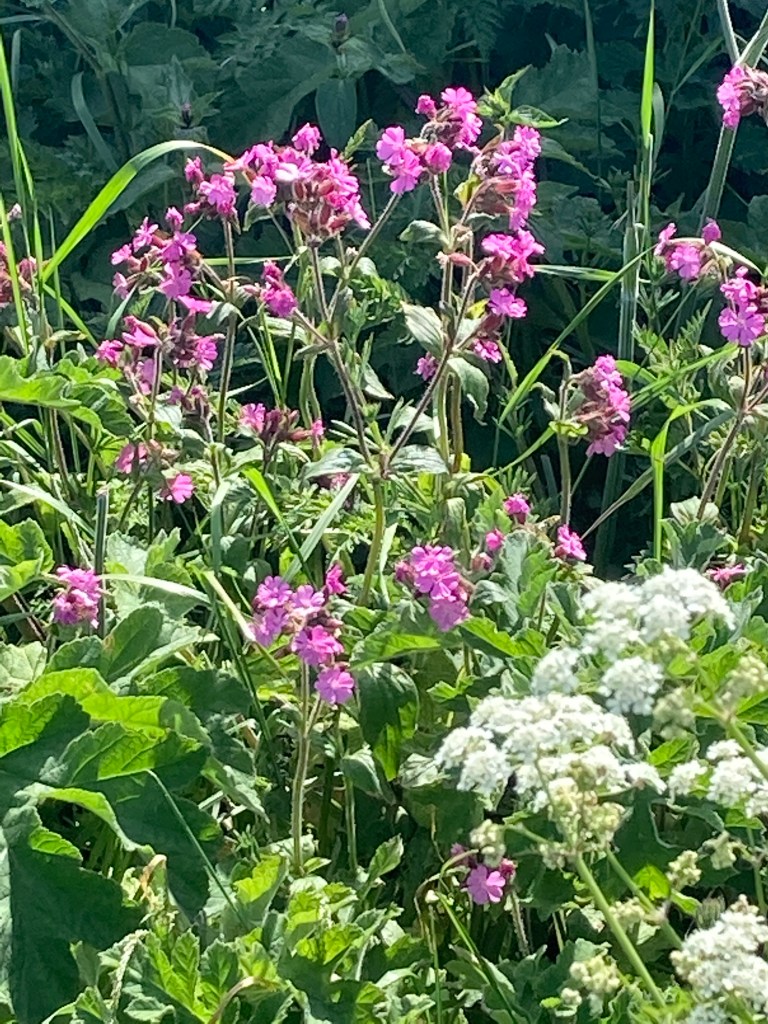
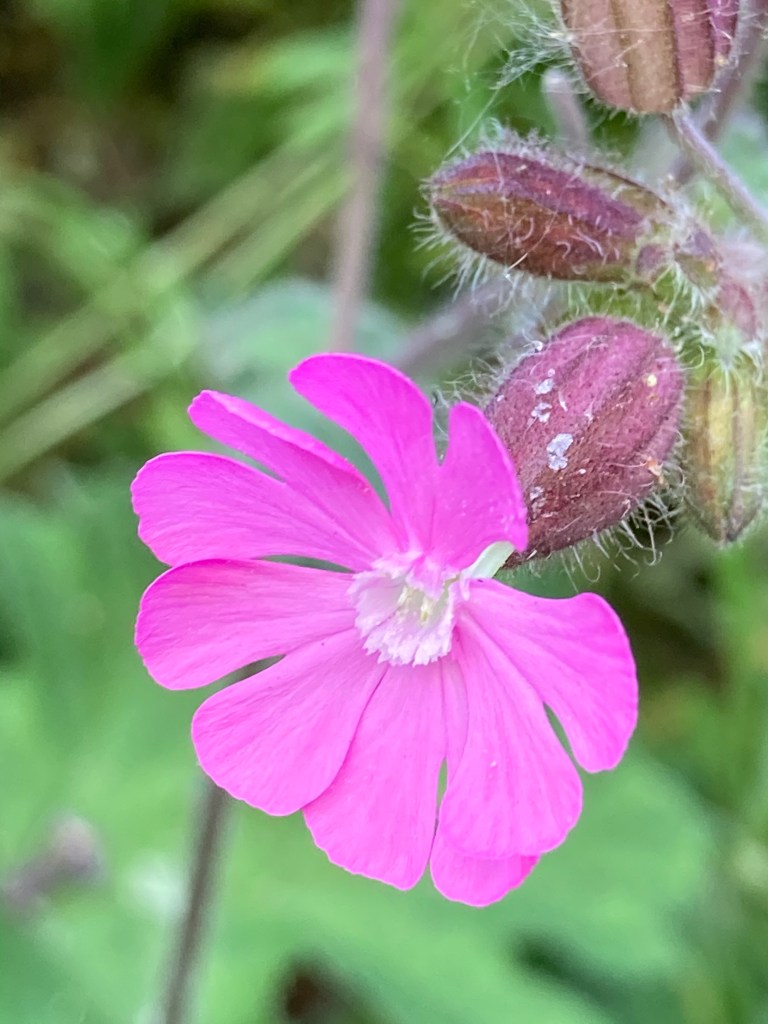
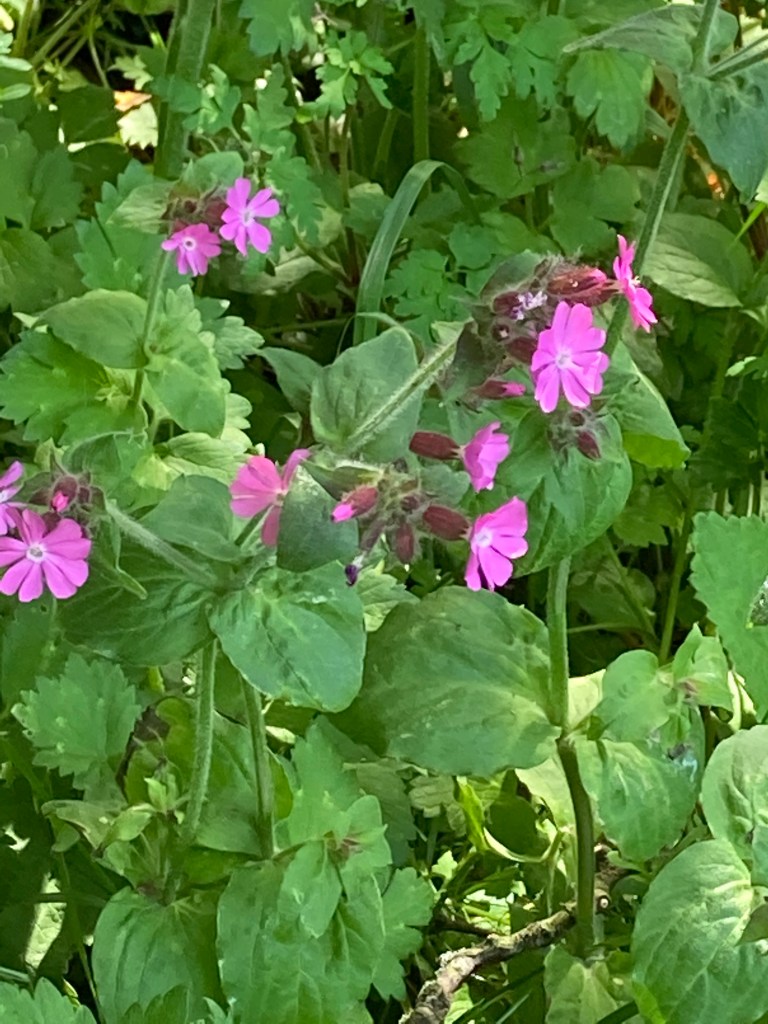
It’s impossible to miss the tall clumps of pink-red flowers of red campion that are growing in profusion in hedgerows and woods at the moment and will continue to do so until August and well into Autumn and Winter if the weather is mild. This relative of the carnation is a short-lived perennial that produces copious seed that enables it to spread rapidly , especially in fertile soils.

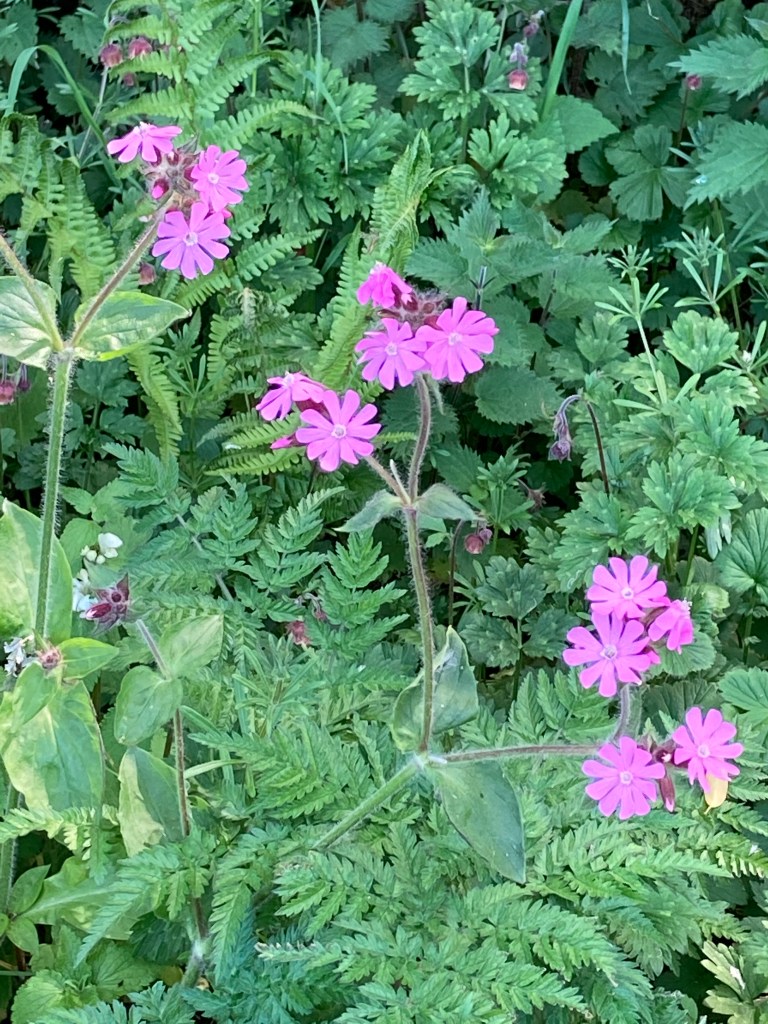
The plant grows up to a metre tall, though usually 30-60cm high. with leaves and stems covered in softly downy hairs. The leaves are pointed oval in shape, carried in pairs on the stems.

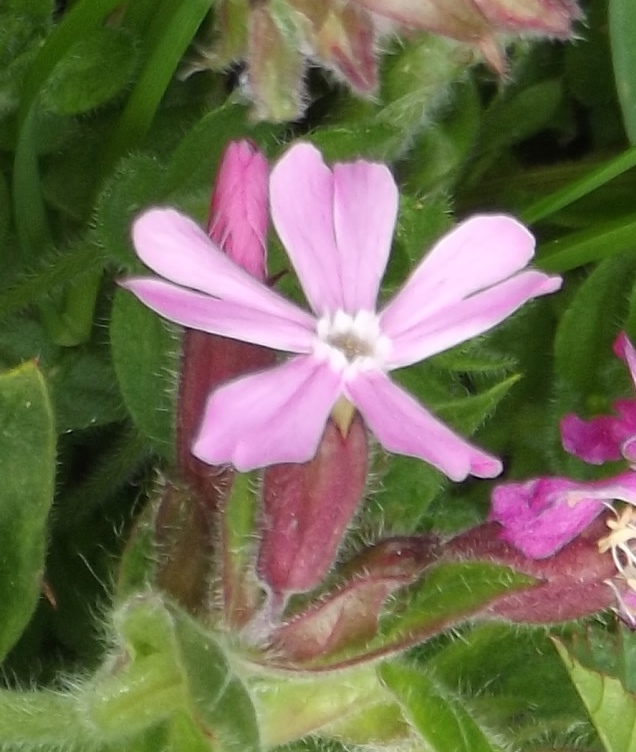
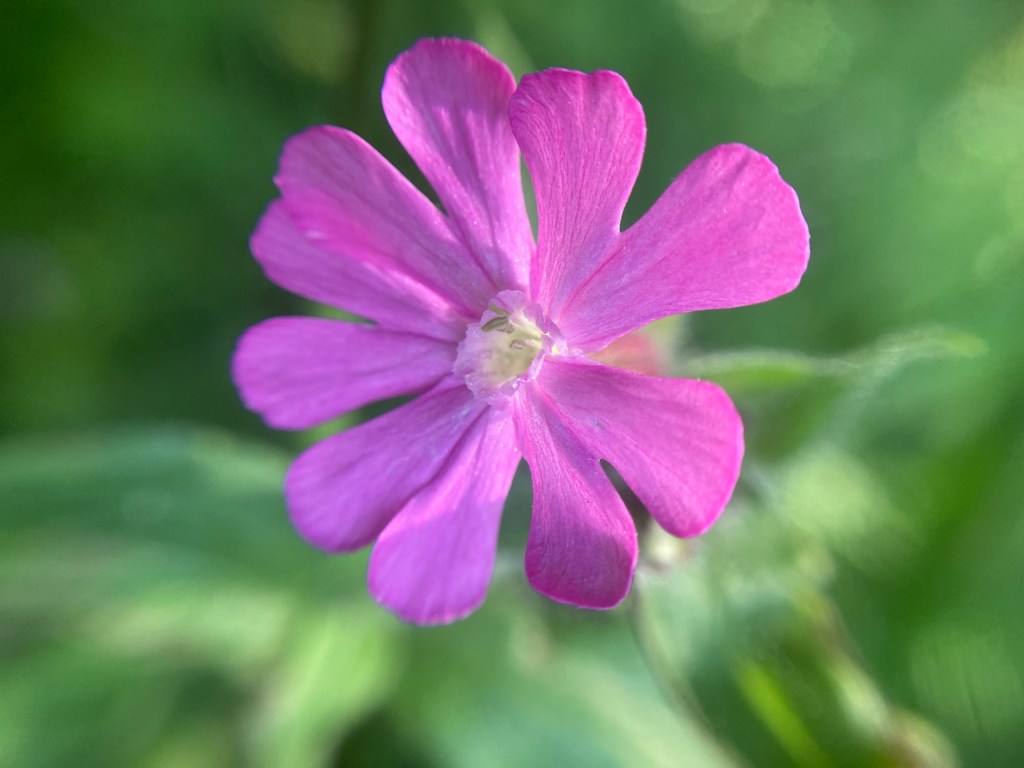
The flowers carried in small groups at the end of the stems. Each has five petals and each petal has a central cleft. the calyx immediately behind the flower is dark red/brown and hairy. The plant is dioecious, that is a single plant carries flowers with either female or male parts, not both as in most flower species. On the female plants the calyx develops into a vase-shaped seed capsule full of tiny black seeds. The female flower produces a sticky substance that causes pollen from visiting insects to stick. The Latin name for the campion family, Silene, may come from the woodland god Silenus or from the word for saliva.

The red campion hybridises freely with the closely related white campion with resulting flowers in a wide range of shades of pink. Though I’ve never noticed this, you may come across flowers with a darker centre. This is caused by a fungal disease known as anther smut, producing dark spores on the reproductive parts of the plant

The plant is sometimes called the Adder Flower from it’s use in folk medicine to treat snakebites (though personally if I was in this situation I would prefer to seek professional medical advice immediately rather than take my chances with the plant!) The roots of plants in the campion family can be used to prepare a soap substitute, though the red campion is less known for this than it’s close relative, soapwort. The 16th Century herbalist, John Gerard said that the hairy stems could be used to make candle wicks. A century later, Nicholas Culpepper described a number of medical uses including the treatment of kidney stones and internal bleeding as well as to “helpeth those that are stung by scorpions or other venomous beasts”.

Another country name is Batchelor’s Buttons as unmarried young men would wear the flower in a buttonhole..

Red campion certainly provides a welcome splash of colour in late spring and throughout the summer.

As always, please remember these guidelines.

  • Don’t touch or pick any plant unless you are ABSOLUTELY CERTAIN that it is safe to use, and not poisonous.
  • Don’t pick anything unless it is abundant
  • Only pick small amounts and no more than you need
  • Don’t pick if there is a risk of pesticide/weedkiller or other contamination, including from traffic or other forms of pollution.
  • Always get permission from the landowner.
  • Avoid areas which may be soiled by animals (wild or farm animals or pets)
  • Wash plants thoroughly