Welcome to my blog. I live, knit, crochet, spin and craft near the Northumbrian Coast (but not too near – the waves won't be splashing my yarn!).There's a story in every stitch, every grain of sand, every blade of grass. I thought I'd blog about it…
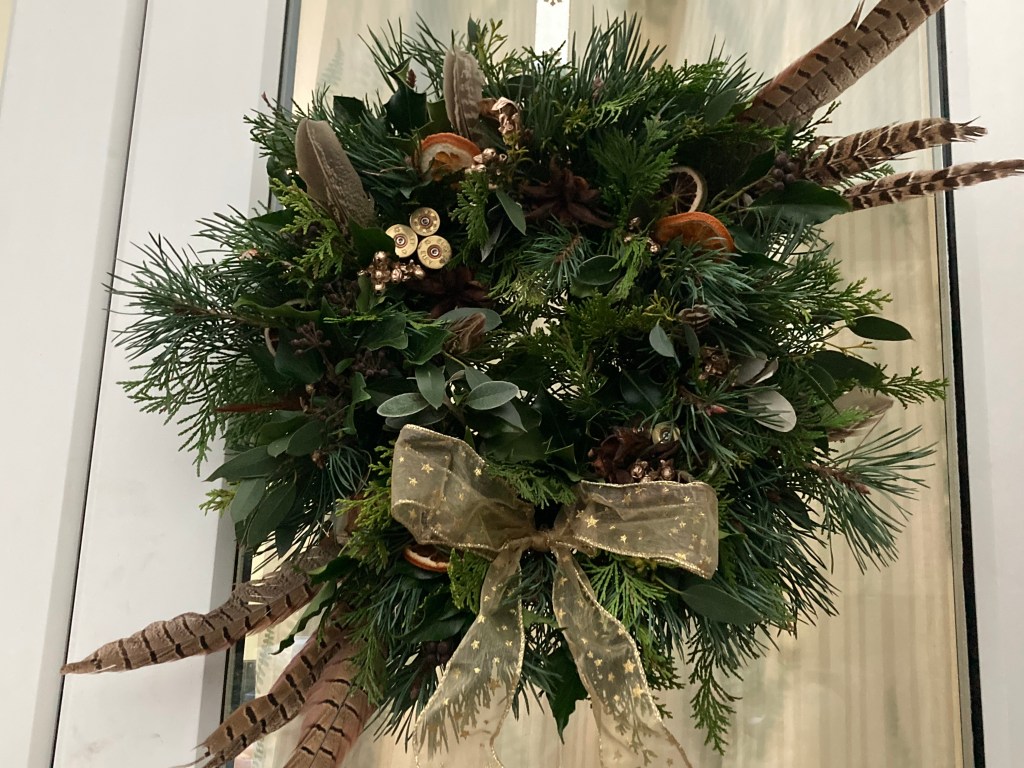
For this week’s Crafty Monday project, Daughter and I made Christmas wreaths. We enjoyed attending a workshop to make these last year, but classes like that are another COVID casualty. One of Daughter’s friends has started a floristry business: Polly’s Petals and makes stunning wreaths and kits with everything needed to make your own. Polly’s family have a large garden and much of the material is sourced from there. She even makes her own dried citrus slices, drying the fruit in the aga. Daughter went to collect the kits we’d ordered yesterday morning and arrived here with two large boxes.
Each included
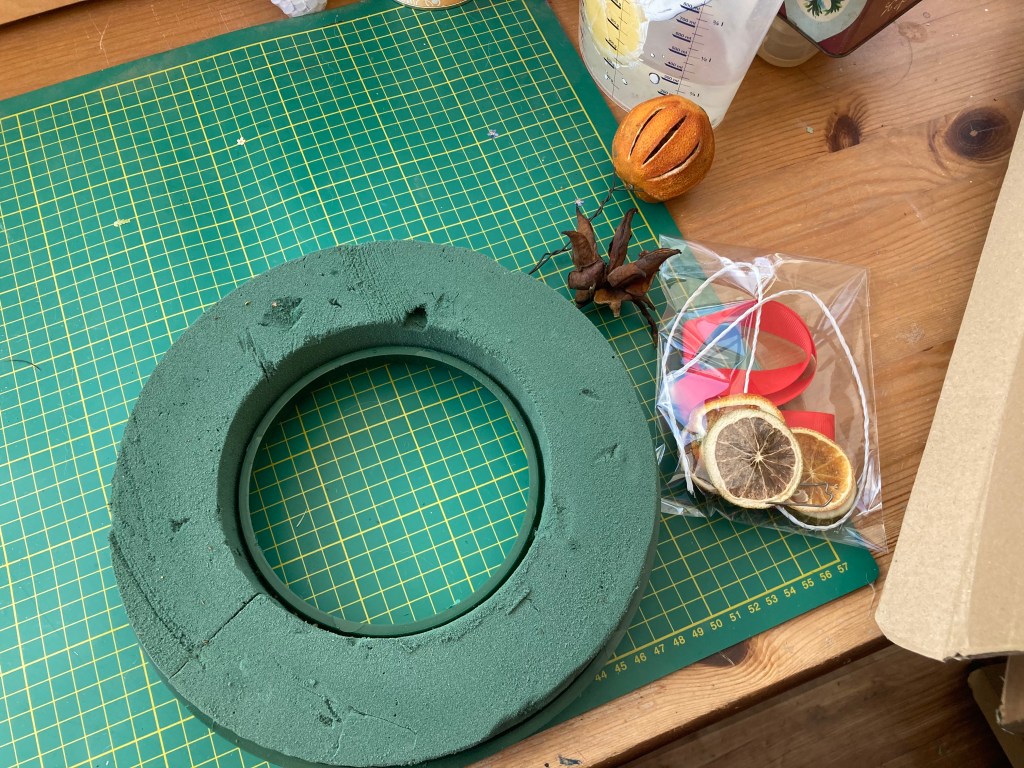
florists foam ring and base
hanging string
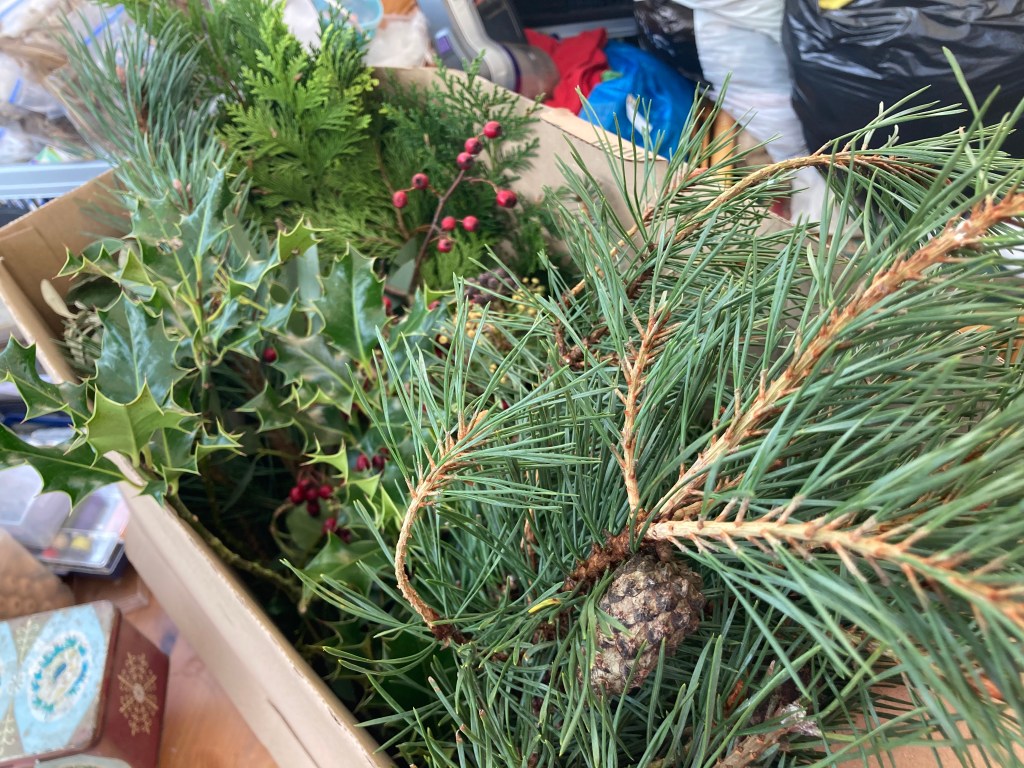
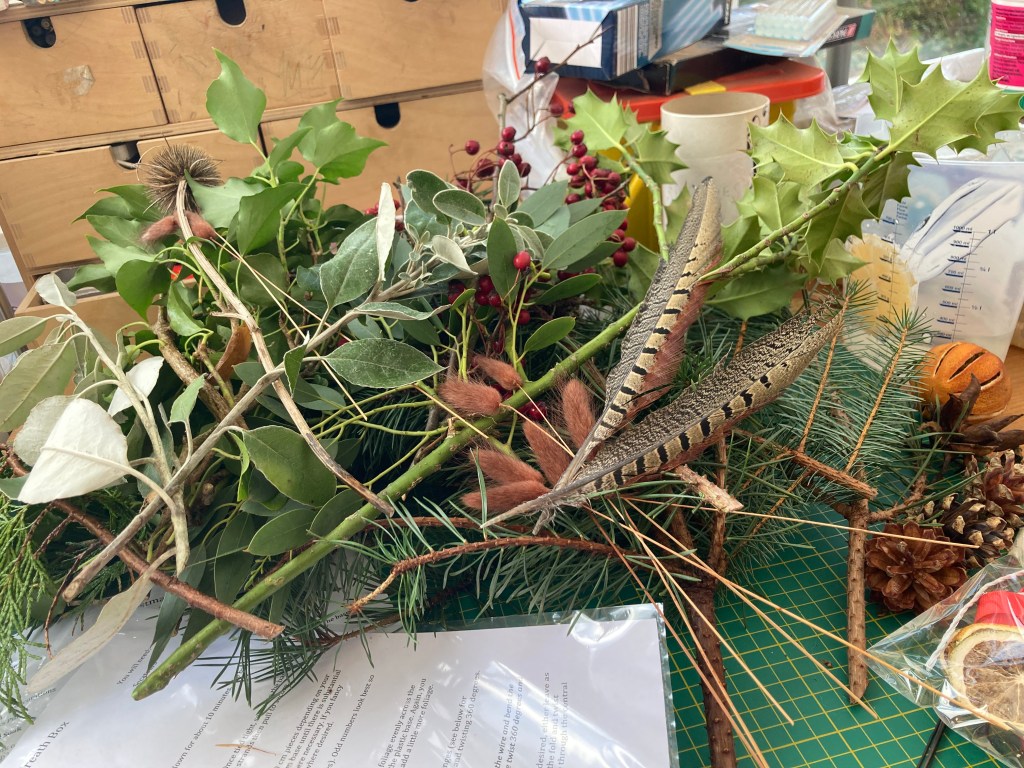
huge amounts of foliage (included cypress, Scots pine, holly, ivy and various other evergreens,
dried seed heads, teasels, grasses, pine cones
dried citrus and cinnamon stick bundles
berries
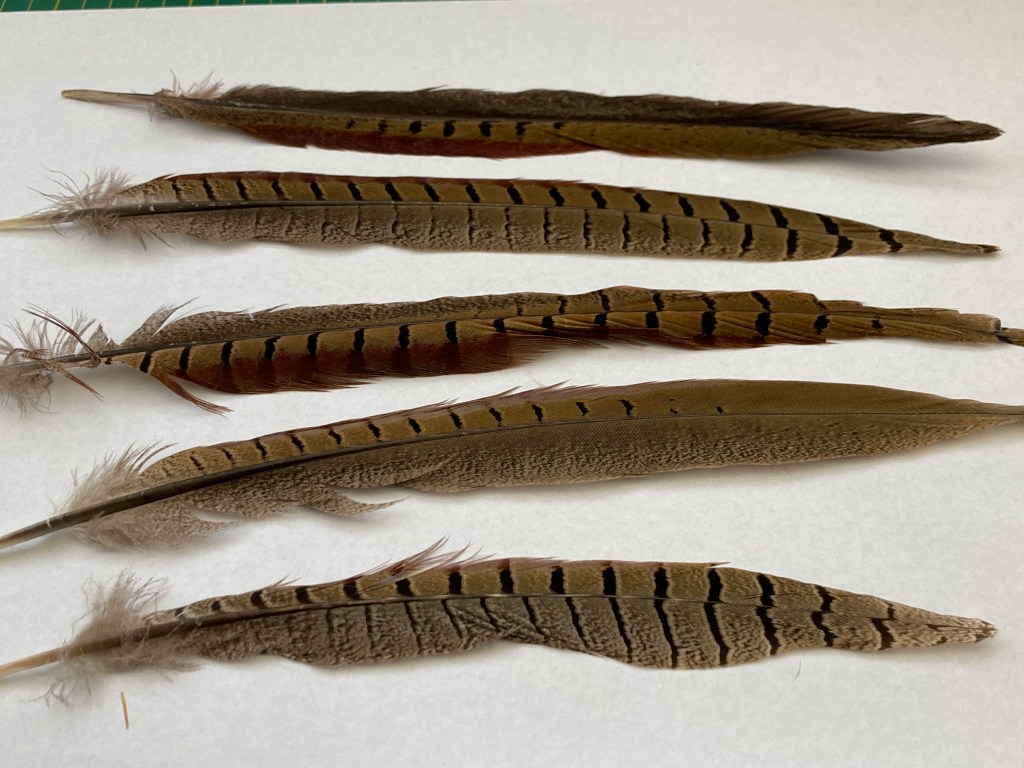
pheasant feathers
ribbon
florists wire
full instructions
There was more than enough in each to make quite a substantial wreath and all we needed to provide were secateurs or strong scissors. We began by soaking the foam in water for ten minutes and attaching a hanging loop.
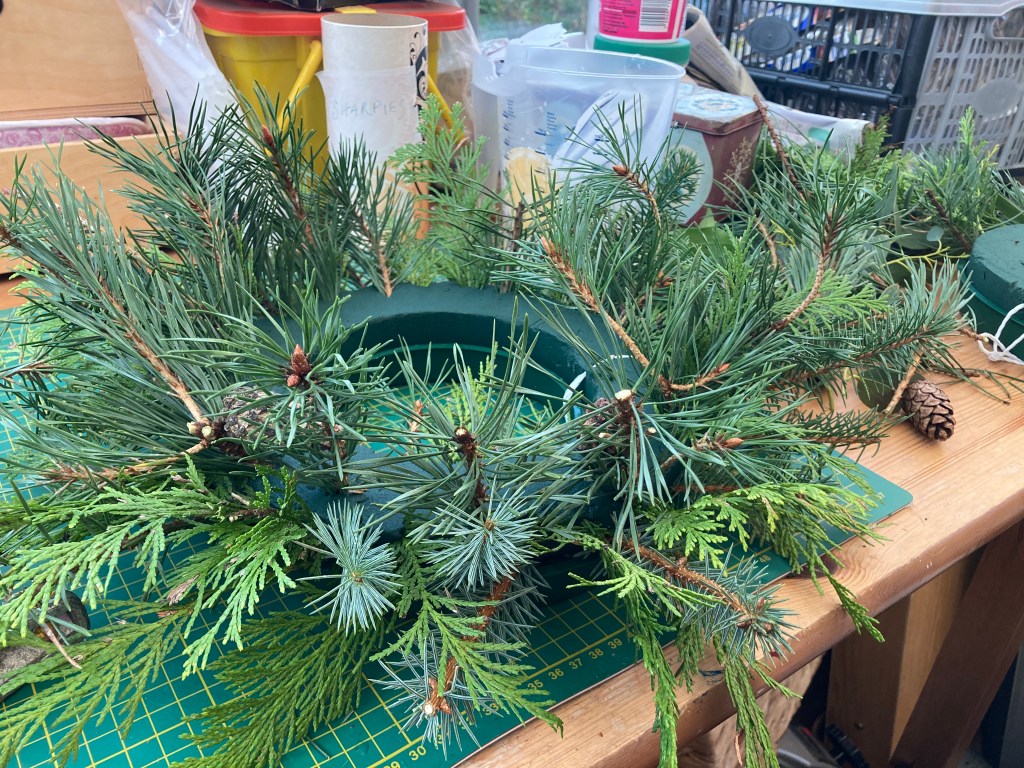
Working from the outside, we began to cut small sprigs of foliage and pushed it into the foam.
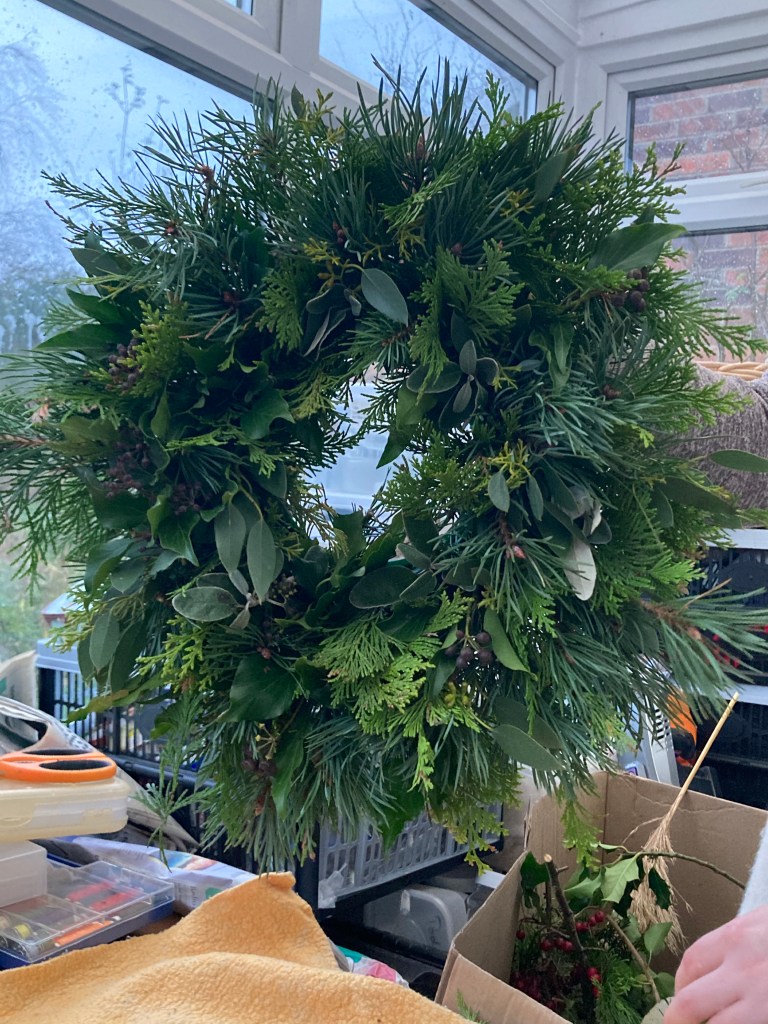
We continued until the whole wreath was covered and no foam was showing.
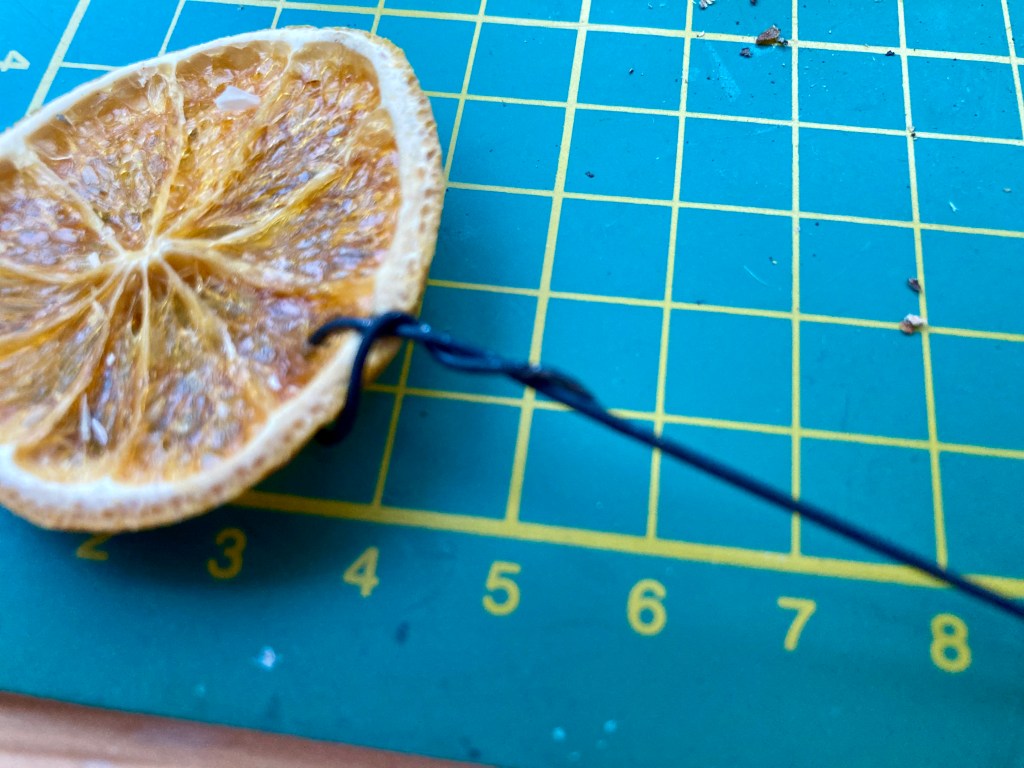
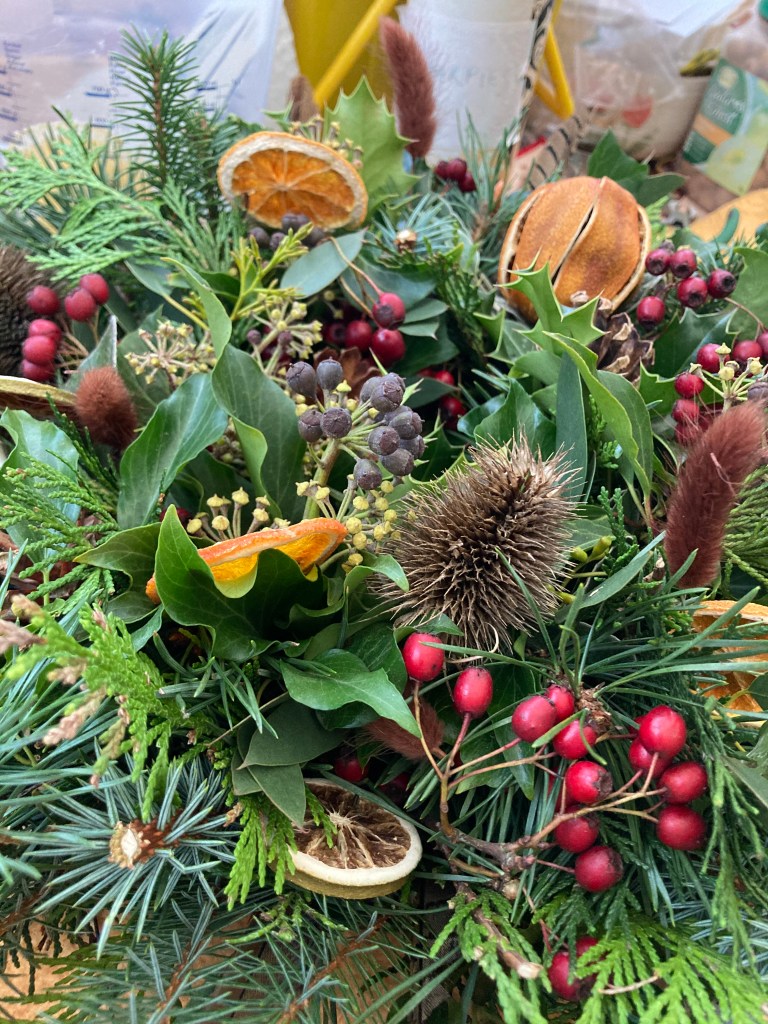
We then added the other items, twisting florists wire round the citrus and cones to make a stem to push in the foam.
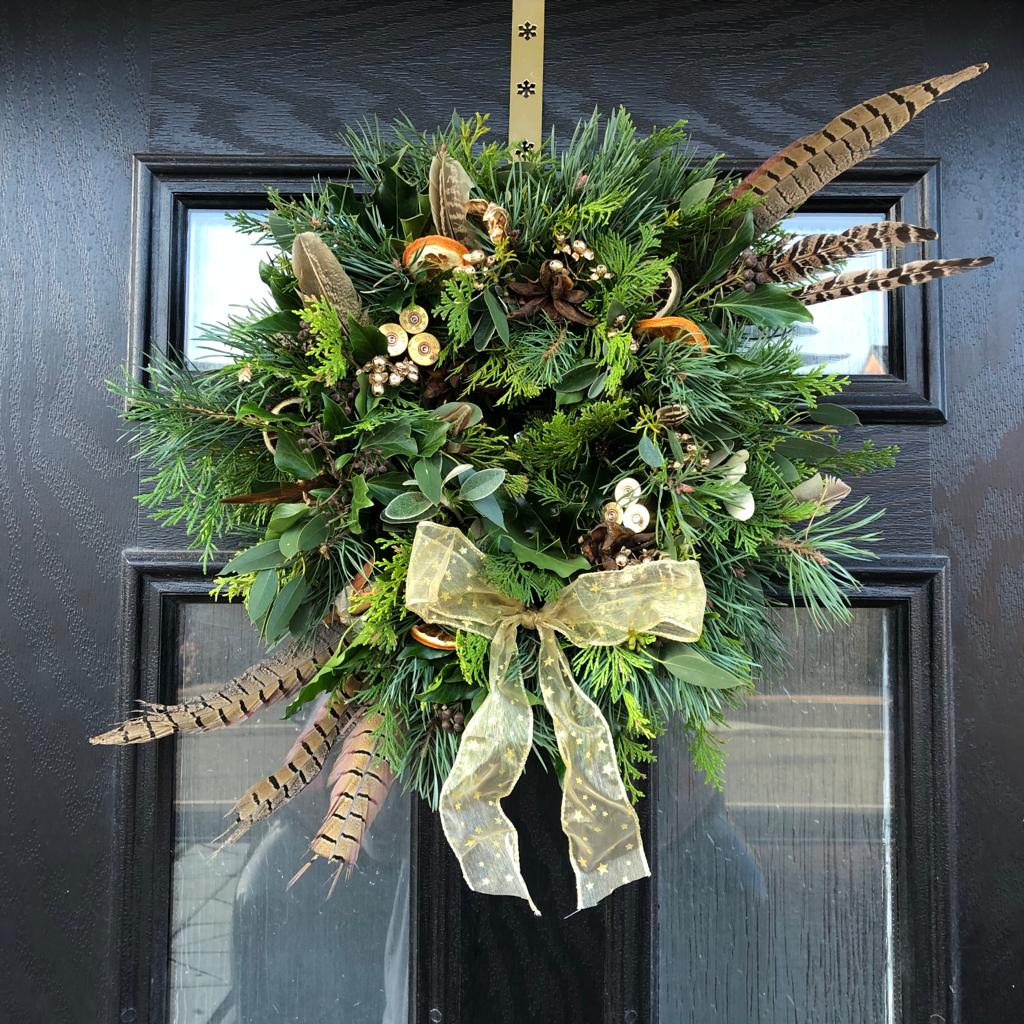
I have vast numbers of feathers so I added some of my own. I looked in the ribbon box and found a length in a pinky peachy shade that looked perfect so I used that instead of what came in the kit.
Daughter added some gun cartridge ends and found some gold ribbon
Even though the kit contents were very similar our wreaths are very different. We love them. Thanks Polly!
Feathers are pretty multifunctional. First of all, they keep birds warm. The soft fluffy down at the base of the feather traps air to provide an insulating layer. by fluffing up the feathers in cold weather, more air is trapped and the bird stays even warmer. This is particularly important in chicks – they are covered in warm down when very young and their proper feathers grow in later.
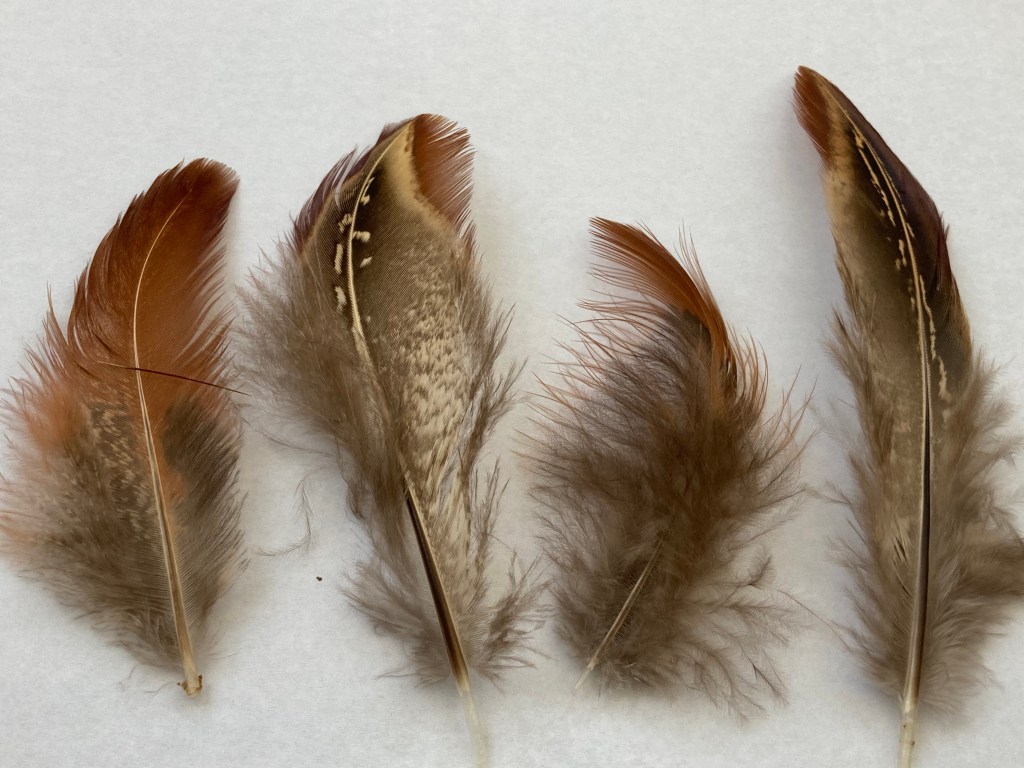
cock pheasant feathers are a rich chestnut colour
They can also keep the bird dry – waterfowl have an oil gland at the base of the tail. The bird spreads the water-repellent oil over the feathers so any water landing on them simply runs off – water off a duck’s back!
Water droplets on a duck feather
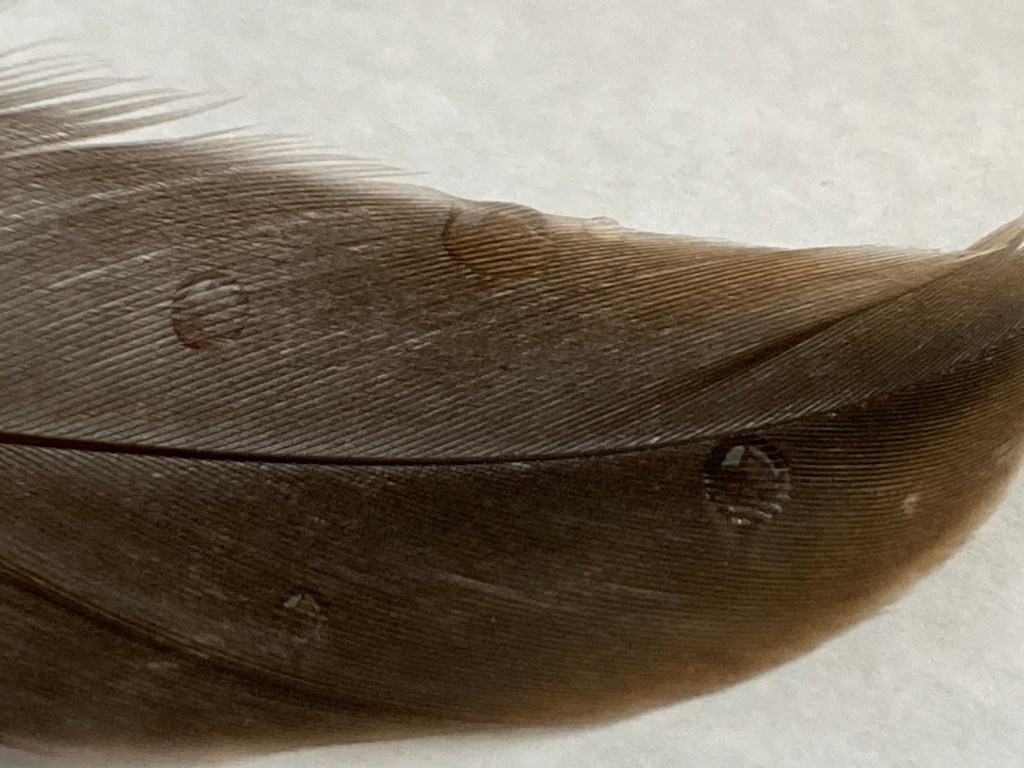
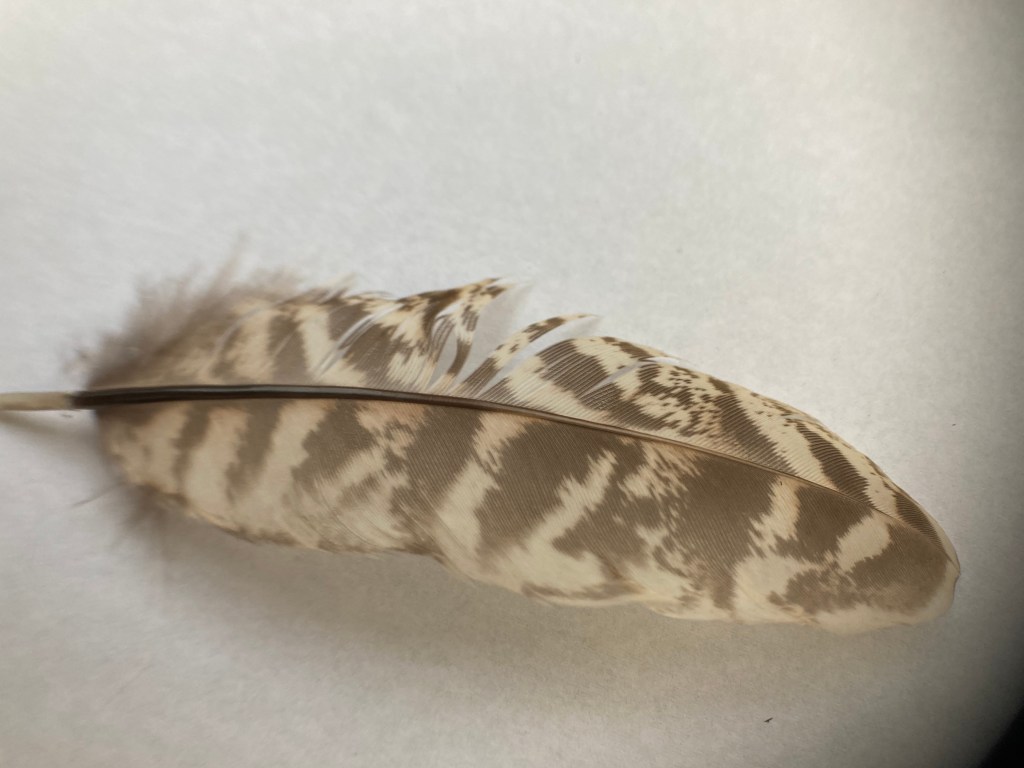
Feathers enable flight. They have a central hollow stem – the vane, with hair-like barbs growing out the sides. each barb has a line of tiny hooks known as barbules that hold the barbs together, rather like velcro. We’ve all played with feathers as children, zipping and unzipping them.
Hen pheasant flight feather with close-up to show interlocking barbs
This structure is strong but very light. The flight feathers, on wings and tail are the strongest of all – they overlap to form the thin rear edge of the wing, angled to gain lift and steer the bird.
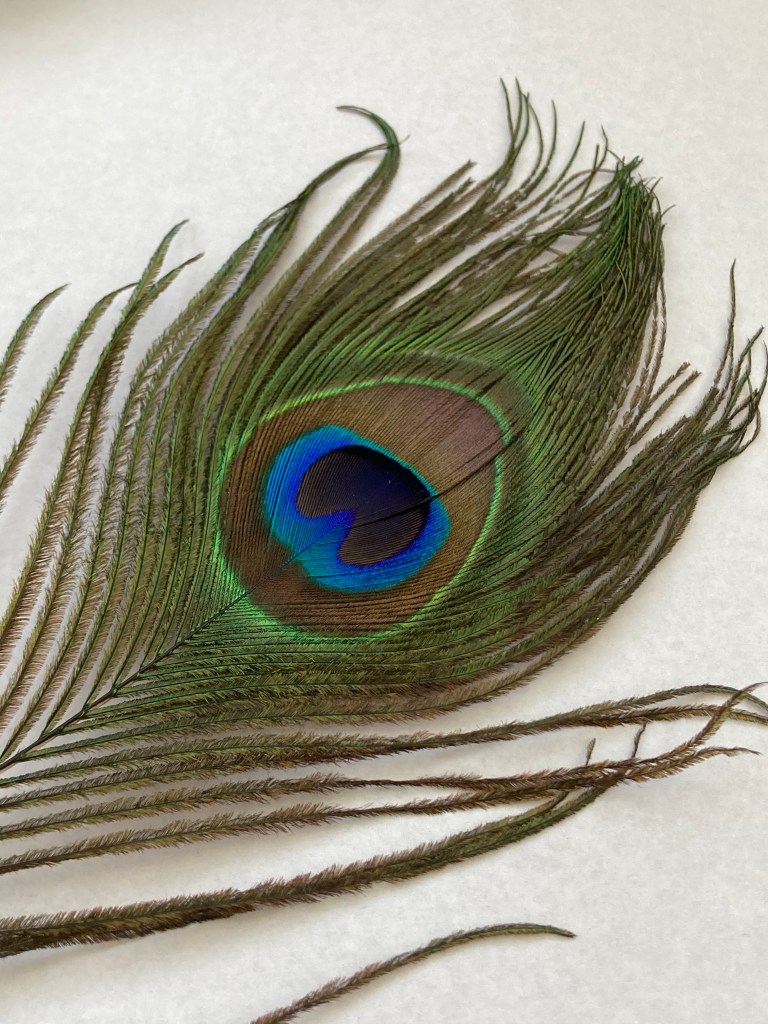
Feather colour varies enormously. It may be dull to camouflage the bird against its background habitat. This is vital to ground nesting birds, to protect them and their eggs and from predators when on the nest. In many species the sexes are different, with the males’ more colourful plumage used to attract a mate. In some cases the feathers might be structurally different too for use in courtship displays. The spectacular fanned tail of the peacock , with shimmering “eyes” is a prime example of this.
Peacock “eye”
Pretty remarkable really. But it doesn’t explain why I have so many!. Well, a few years back I went on a one-day course about making fascinators. I thought I’d make some with pheasant feathers. Now I knew that a local farmer friend has a pheasant shoot on his land, so I asked him if I could have some feathers. He explained that someone comes in after a shoot and plucks and dresses the birds, after which they go off to a game dealer/butcher but he’d be happy to save some tails for me. A while later he told me he had them and brought three sacks full of pheasant and duck tails and wings out of the back of his Landrover! I spent three days cleaning the feathers!
I did make some nice hats and fasinators though.
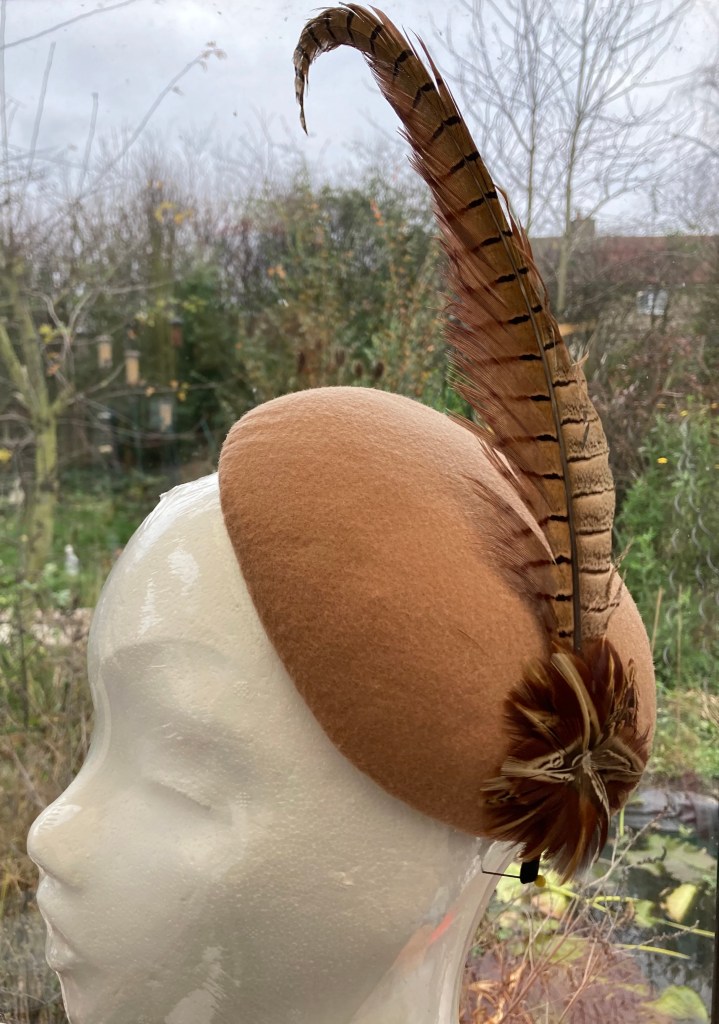
Bolcked felt beret with cock pheasant feather trim
I wore this one for a friend’s wedding.
Fascinator with cock pheasant feathers
My conversation with the farmer was overheard by a lady who asked me if I could make use of peacock feathers too. She explained that there were peacocks living wild where she walks her dog. Apparently someone who used to live nearby had kept them as pets and they escaped – the owner moved away but the peacock colony had become established in a patch of woodland nearby. She was always finding moulted peacock feathers on her dog walks and gave me a few she’d found the next time I saw her. I didn’t see her for a few months, then she phoned me. She’d collected a load more and wondered if I could collect them , which I did. There was a massive armful of them, some almost four feet long!
I have some really generous friends. I will of course never ever be short of feathers for craft projects!




 Stitches by the Sea