Posted in Uncategorized

Saying Goodbye to Mum (3)

A Silver Lining

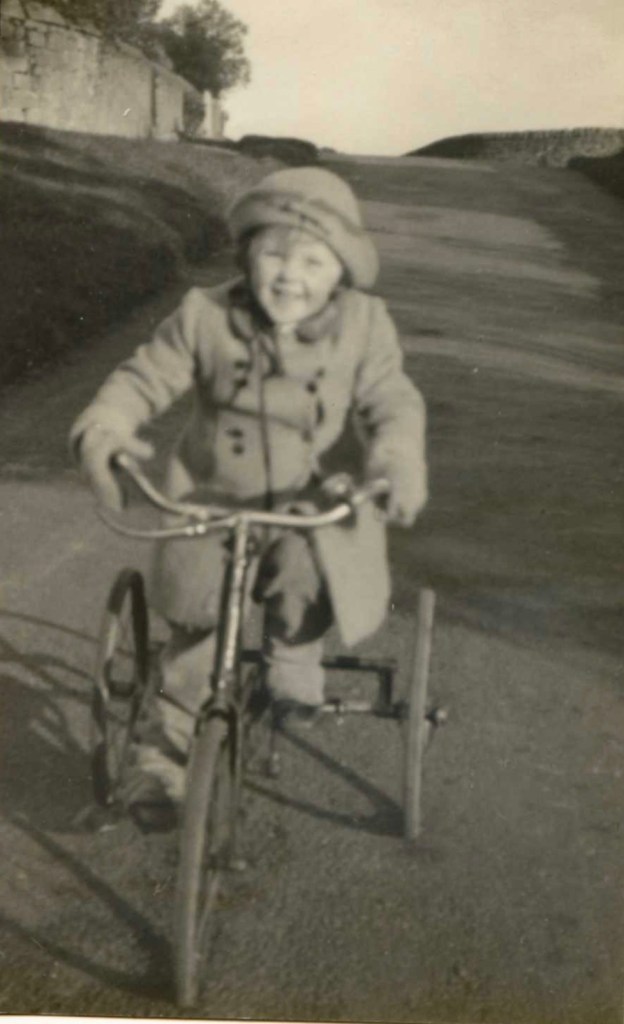
Mum on road by Glen View Cottage

It’s been a horrible few weeks, but something that has been really positive about the whole experience has been reaching out to my extended family. Both my grandparents came from large families so there are a lot of us. Initially this was to let people know that Mum had passed away, then we shared memories of her.

I knew that my Mum, along with her mother, brothers and some of the cousins had been evacuated to the village of Ingoe during World War II, to escape the bombing in Newcastle. Shipyards, engineering works and factories making tanks and guns had made the city into a target.

One of Mum’s cousins, Pat, a lovely lady who I have not seen in years, has been exchanging emails with me. She and her brother, Michael were in Ingoe during the war with Mum. One of her grandchildren had done a school project about wartime evacuation and she’d written about it for him. She sent me this account along with some photographs and has very kindly allowed me to publish them here.
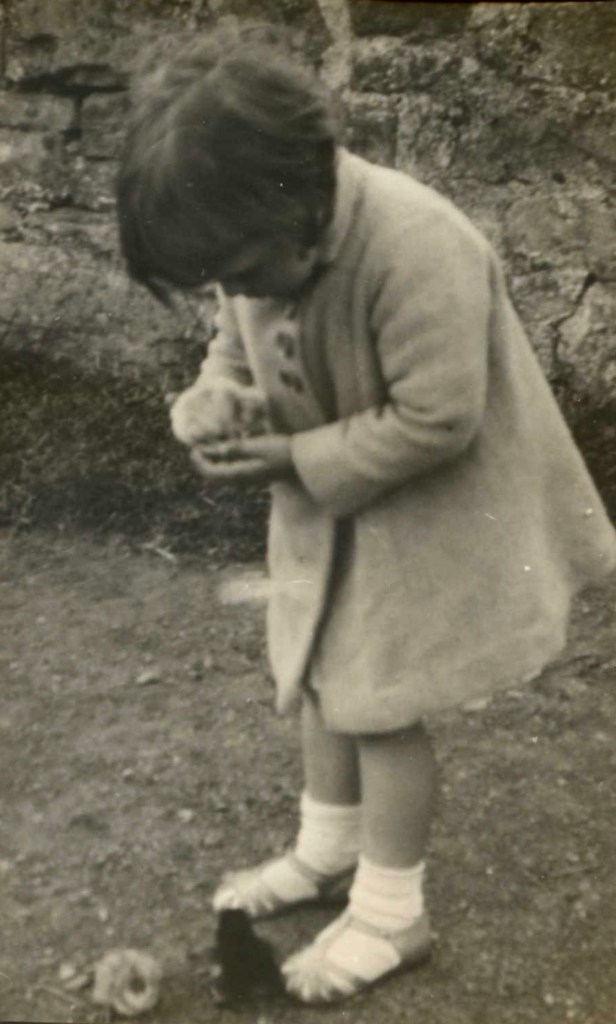
Pat

Evacuation in 1939

I was seven years old when the Second World War began and I lived with my parents and younger brother in Newcastle upon Tyne.  My school had infant, junior and senior departments.  Our parents were given the option to allow us to be evacuated from Newcastle which was thought to be a prime target for German bombers as it had a large shipbuilding industry as well as engineering works and associated factories making armaments.  Railway links with Newcastle running north, south, and west were important and there was a large goods depot where food supplies and necessities were stored and where trains were maintained and repaired.  Throughout England more than 3,000,000 children and adults were evacuated, from cities and towns, to areas which were deemed to be ‘safer’ in a scheme known as Pied Piper.

My mother volunteered to go as a helper with children from the school and my brother came too.  Michael was three years old.  I am sure that there must have been meetings for parents, and certainly information and lists, so that they knew what the children had to take with them, when and where everyone had to assemble but we were not told where we would be taken.  On the morning of the evacuation we all went to school equipped with a case, or bag, containing underclothes, night clothes, slippers, socks, spare shoes, toothpaste and brush, soap, facecloth, towel and some warm clothes and with the all-important gas mask in a box attached to a long string which went around our necks.  I think that we were all wearing warm coats to which a label was pinned giving our names and ages and the name of the school from which we had been sent.  We also carried something to eat on the journey.  

In a very long crocodile we left the school fairly early in the morning and walked to the nearest railway station which was not far away (on Jesmond Road) accompanied by teachers and many helpers.  My mother was not only responsible for Michael and me but she also had several other children to look after during the journey and I do remember that we all managed to fit into one railway compartment.  Many parents accompanied us to the station but could not board the train so stood on the platform watching their children on the train.  I think that there were lots of tears but generally we children were quite excited to be on a train.

The train left Jesmond Station, Newcastle when it was full and took us through Newcastle then, very quickly out west into the countryside.  We must have travelled to Carlisle then south to the Lake District.  It was quite a long journey but most children had a sandwich or piece of bread and cheese.  There was a lot of unemployment on Tyneside and many very poor families so the sandwiches may have contained egg or cheese but there were many children on the trains who had just a piece of bread or a jam sandwich.  Apples came out of many pockets and some had the luxury of a Kit Kat biscuit or another type of biscuit.  We were given water to drink several times during the day and mother had brought some extra food and sweets to share with the children in our carriage.  I think that we fell asleep for a while and in the afternoon we were aware that the countryside was different, we could see high hills and mountains.  The train eventually reached Windermere and, I think that we were then taken, in buses, to Bowness on Windermere which was our destination and we walked to a school where lots of people were waiting for us.  Because Michael and I were accompanied by a parent we were almost last to be allocated a place to stay and by that time we were all very tired. I am sorry that I did not ask my mother, when I was an adult, how she felt about the situation, how she related to the lady with whom we were living and how she felt about being away from her own home.  She was kept very busy because two other children were with us and I know that she did a lot of the cooking and washing.

We were billeted with the head teacher of the primary school who lived in a large house opposite an open piece of land on which brambles grew and where blackberries were ripening in large quantities so that blackberry pies, crumbles and cakes were everyday items on the menu.  We went to school each day but only for half a day as the school could not accommodate the resident population of children plus all the evacuees.  The weather was lovely that September and we would walk down to the lake, paddle in the shallow water for a while, play in the sand and throw pebbles into the lake before walking back to the house for lunch or tea.  There was no bombing during the first few weeks and months of the war and mother decided to take us back to Newcastle for a while.  

I think that Uncle Ken [my grandfather] came to collect us because we made the journey by car and, at that time, my father could not drive because of a badly damaged ankle.  Uncle Ken’s parents had a cottage twenty miles outside Newcastle where our Aunty Wyn [my grandmother] and Gillian [my mum], were already staying and within a few weeks Michael and I went to stay with them.  Mother stayed at home with Dad but mother’s youngest sister (Jean) came with us to help look after us all.  Aunty Jean was still quite young then and living with our Grandmother in Newcastle until she was old enough to join the WRAAF.  The village in which the cottage stood was on a high outcrop of rock with views towards Newcastle and the coast so that on a fine day we could see a silver line on the horizon which was the North Sea. 
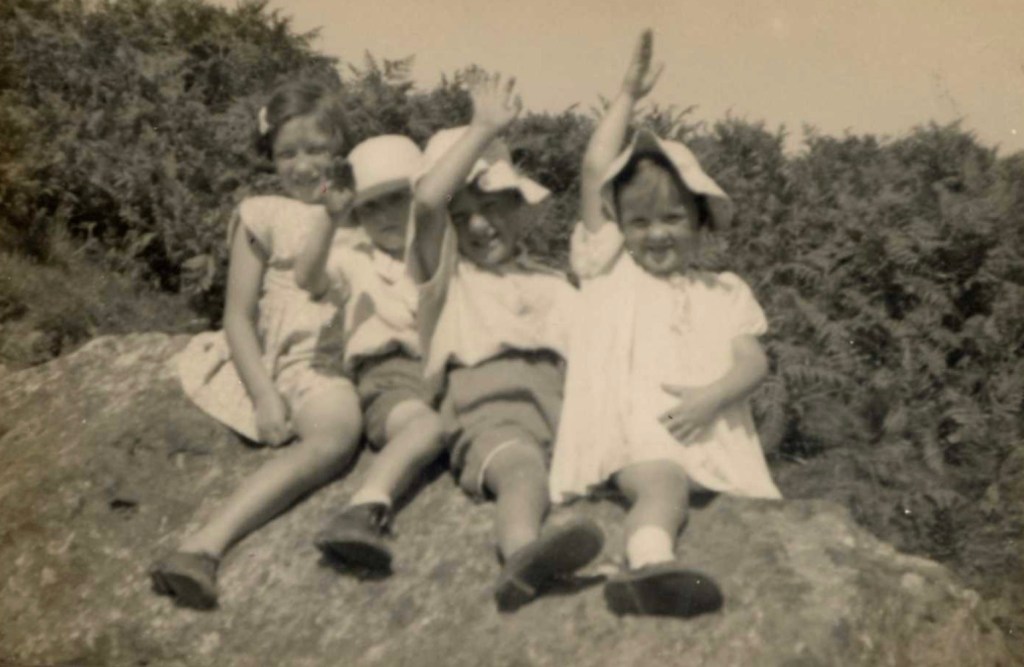
South Crag.L-R: Pat, Michael (Pat’s brother), ?, Mum

There were only about thirty cottages and half a dozen farms in the area plus a Methodist Chapel.  There were no shops but a travelling shop called three times each week and I can still recall the very special smell that came from the back of the van when the driver opened the doors – the mingled smell of bread, meats, apples, vegetables, and paraffin for the lamps was very distinctive and I can still remember it today!  On Thursdays a bus came at 9.30 and took people to Hexham to do their main shopping and brought them back at 3.30., we children never went on the bus. Another smell which reminds me of Ingoe is that of Phlox  because there were clumps of pink Phlox in front of the house, there was also a Beech hedge and when I hear the breeze through the Beech hedge here in Cheltenham I am reminded of Ingoe.  Smells!  Pleasant and not so pleasant!

Outside cottage. Had Tinted? Mum and her cousin Michael with Auntie Jean behind the garden wall

There was a school which took in children from the age of five to fourteen, which was the school leaving age then; the head teacher was Miss Robson and there was an assistant evacuee teacher whose name I cannot remember.  There was only one large classroom for all the children and on the longest wall there was an enormous fire range which kept the room warm and provided us with hot water and sometimes, in the winter, soup for the children who could not go home for lunch.  Many of the children had a long walk to and from school each day; they came from outlying farms and cottages.  The toilets were outside and were very basic, smelly, draughty and cold and they had a distinctive smell too!

The village had no running water into the cottages and farms although some of the farms had wells.  People in the village had to carry every drop of water that was needed from a tapped spring which lay at the bottom of a steep hill (I think that it was called The Pant!) and each child who was capable of doing so had to help to carry at least a little water.  When evening came we lit Tilley (paraffin) lamps and candles so it was always early to bed even for the adults.  
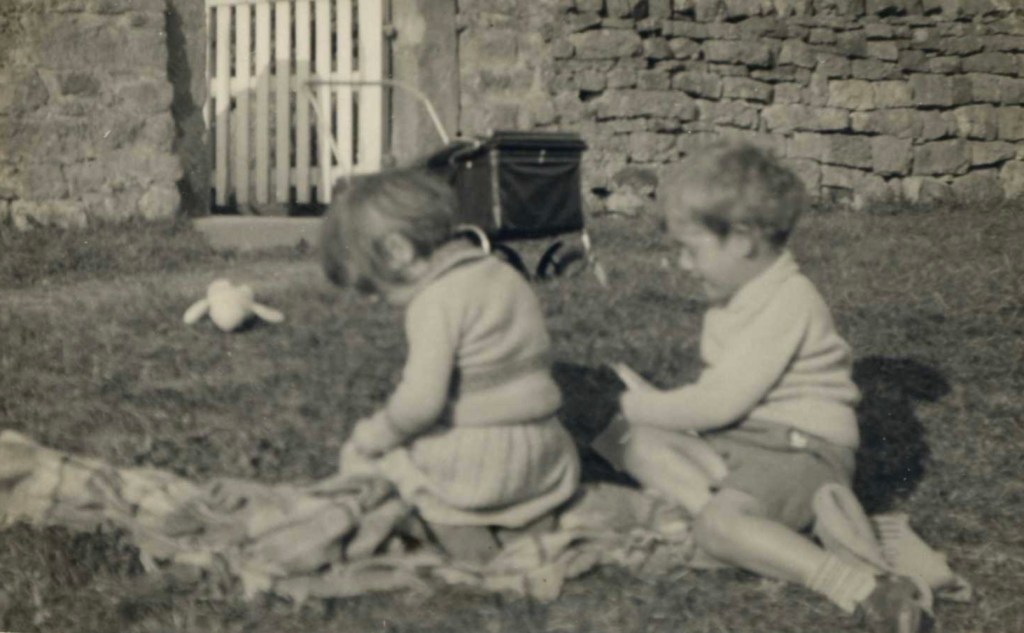
Outside cottage. Mum and Cousin Michael

War seemed a long way away although we did sometimes see air battles in the distance and when there had been a night raid on Newcastle we could see the glow of large fires even though it was so far away.  The night on which the goods station at Manors Railway Station was bombed the blaze was spectacular and could still be seen during the day.  At school we were trained to run to a ditch or hedge and lie down with our hands over our heads and ears when we heard an aeroplane.  Usually the planes were friendly as there was a small air field nearby where new pilots were trained but occasionally there were German planes in the vicinity.

Life must have been very difficult for Aunty Wyn but I don’t remember her being cross with us.  Every house had one or two rainwater butts to collect water from the roofs for washing people and clothes but every drop of drinking water had to be carried in buckets from ‘The Pant’ which was a piped spring at the bottom of the steep road which was the only road into the village.  An adult would carry two buckets and any child capable of carrying water was expected to help.  Neighbours were helpful and generally kind.  There were no indoor bathrooms/toilets; outside, at the back of the house there were two facing rows of cubicles each containing a wooden plank seat with a hole over a bucket!  It was smelly in the summer and bitterly cold in the winter and the holes did seem quite large!  Michael actually managed to lose his grip on the side of the hole and fell down into the bucket.  Poor Aunty!  Fortunately Aunt Florrie was staying at the time and she had to extricate him from the bucket then clean him up!!  She was not amused. There were chamber pots under the beds and we washed in a bowl in the tiny kitchen or had a bath in a tin bath into which hot water from the ‘range’ was poured – sometimes the tin was a bit hot I do remember that!   We had Tilley lamps and candles for lighting and a coal/wood burning range in the living room for heat and for cooking.  There was always a kettle of water on the hob and the oven was usually warm, or hot for cooking.  I don’t remember much about the food except that we had a lot of vegetable soups sometimes flavoured with chicken stock from boiled bones.  

My mother came at the weekends and always brought some ‘goodies’ for us all and clean clothes for three children.  Uncle Ken still had a car so was able to come most weekends and he was the one who had the unenviable task of emptying our toilet bucket!  When we knew that he would be coming we would be outside listening for his car which we could hear before we could see it.  I do remember the utter silence on most days although, of course, there were plenty of farms around the village so there were a few tractors.  Most of the farms still used horses with ploughs and the hay was often still cut by men with scythes although some was cut mechanically.  We bought our milk from Pasture House Farm where Mr and Mrs Temple lived and they became firm friends and were very kind to us.  Sometimes they would give us a couple of free eggs or a few rashers of bacon.  Another farm was Sandyway Heads which was farmed by the son of the largest nearby farm but I can’t remember the name of that farm or of the farmers.

I loved the country and the freedom that I had to roam fields and play in the bracken on the South Crag.  School was very relaxed!   We younger children were often looked after by the older girls who just ‘mothered’ us and read to us – if they could read themselves.  Michael and Gillian were too young to go to school so were looked after by Aunty Wyn.  I wish that I had talked to her too about those days!  I also wish that I had thanked her for her care during the time we were with her.
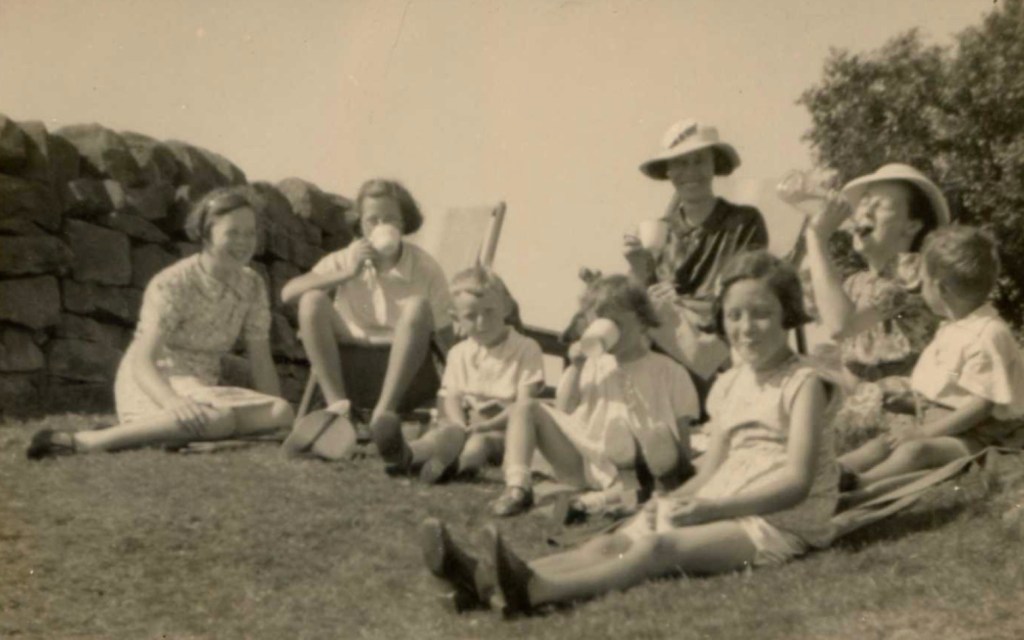
At South Crag. Far right: Michael, looking up at my grandmother (his Aunty Wyn). In front of them ar Pat (R) and Mum next to her drinking from cup

I’m so grateful to Pat for sending me this. She has an incredible memory! It has given me so much insight into what My mother experienced during this time – she was very young (just 2 years old when war broke out), so she could only just remember some of it. Pat has written such an amazing account, not only a fascinating social document, but a piece of my family’s history that I will cherish.

The photos Pat sent include this one of the cottage. It still stands and can be seen on Google Map Street View – little has changed
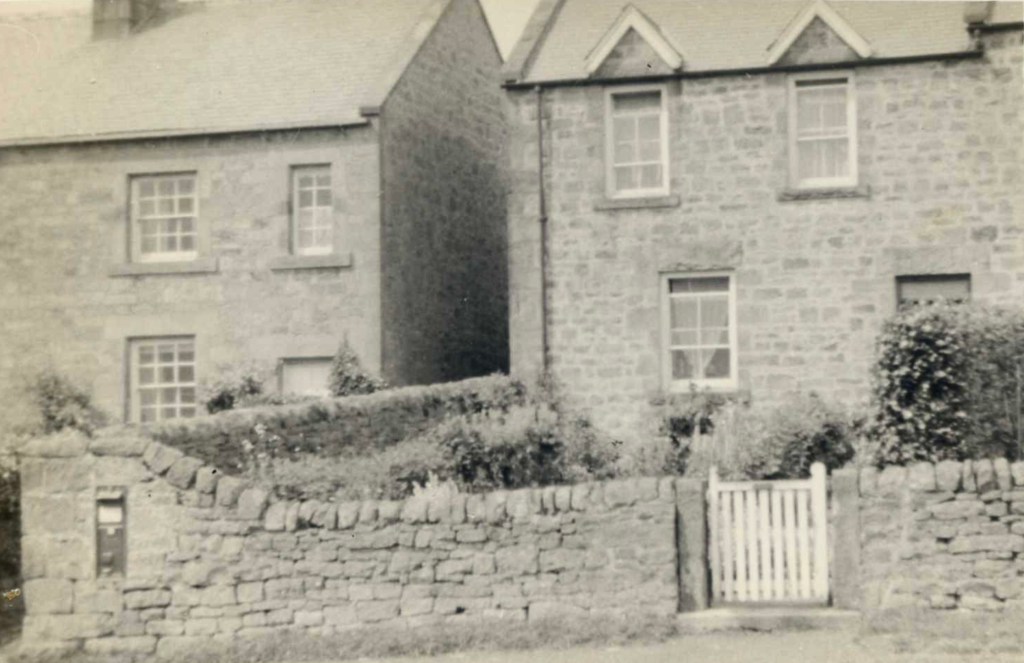
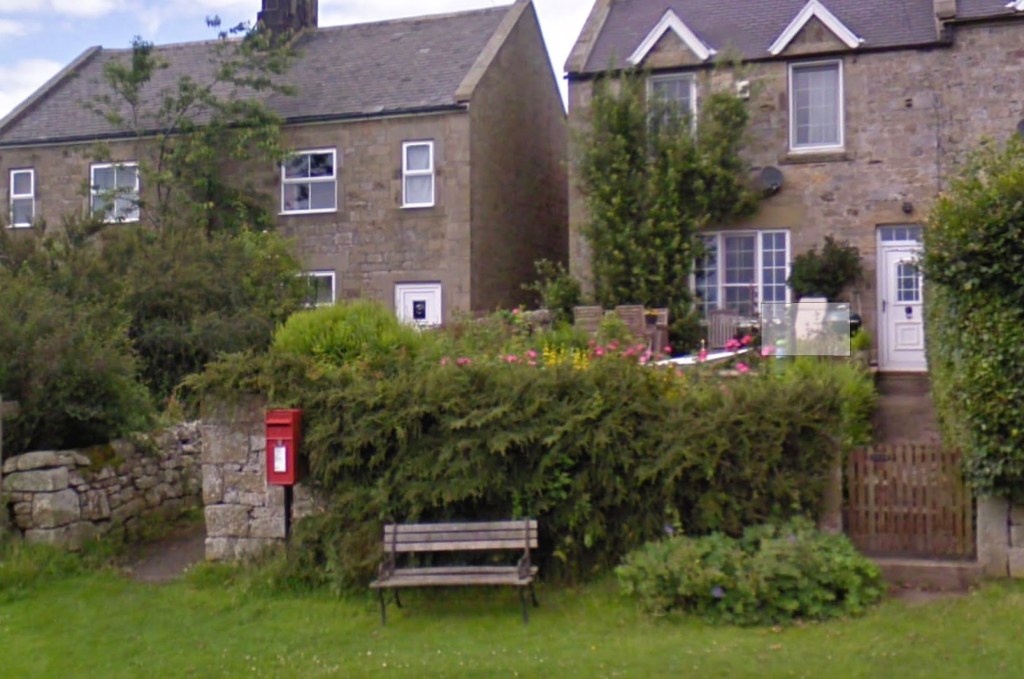
Glen View Cottage
Screenshot from Google Street View

Another unexpected connection that I discovered after the last two blog posts were published is that one of my blog subscribers is the mother-in-law of one of my cousins (Hello Cathy!). She is a keen genealogist and has traced my ancestors several generations back from back from my grandfather (Uncle Ken in Pat’s account). Cathy has offered to send me further details. How amazing is that?

All this is really helping me find something really positive at what has been a very sad time – I’m learning more of my family’s history and it’s so interesting.
Posted in Uncategorized

Knitting With A View: Newton-by-the- Sea in March

Spring is in the air! The birds are singing, the daffodils are in bloom and the first of this year’s lambs are bounding about in the fields. It was a perfect day for K and Daughter, and the dogs, Buddy and Wren, to take a coastal walk and for me to indulge in a bit of scenic knitting.

We initially drove to the fishing village of Craster. I dropped them here and decided to get myself a coffee at the Piper’s Pitch – a small food kiosk in the main car park at the entrance to the village, just next to the Tourist Information Office. They were doing a brisk trade in kipper sandwiches (with the local kippers that Craster is famous for). There’s no waste with these. There’s a sign offering free kipper skins for your dog!.

It was such a nice day I decided to sit at one of the tables – I think this is the first al fresco coffee I’ve had this year.

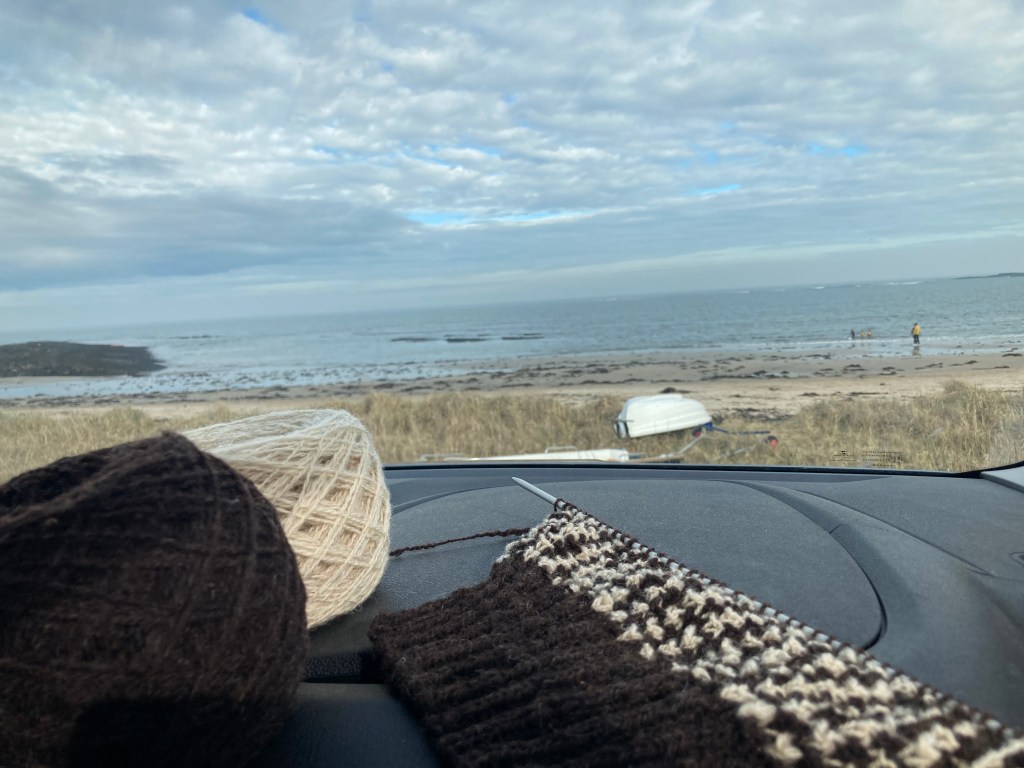
After a quick look to see if there was anything of interest in Tourist Information I drove to Newton-by-the-Sea and parked in the disabled bay overlooking the see. I may have mentioned before on here that to access this you have to remove a heavy chain hung across the road – not very accessible for blue badge holders. Luckily however someone was walking past and kindly moved the chain for me.

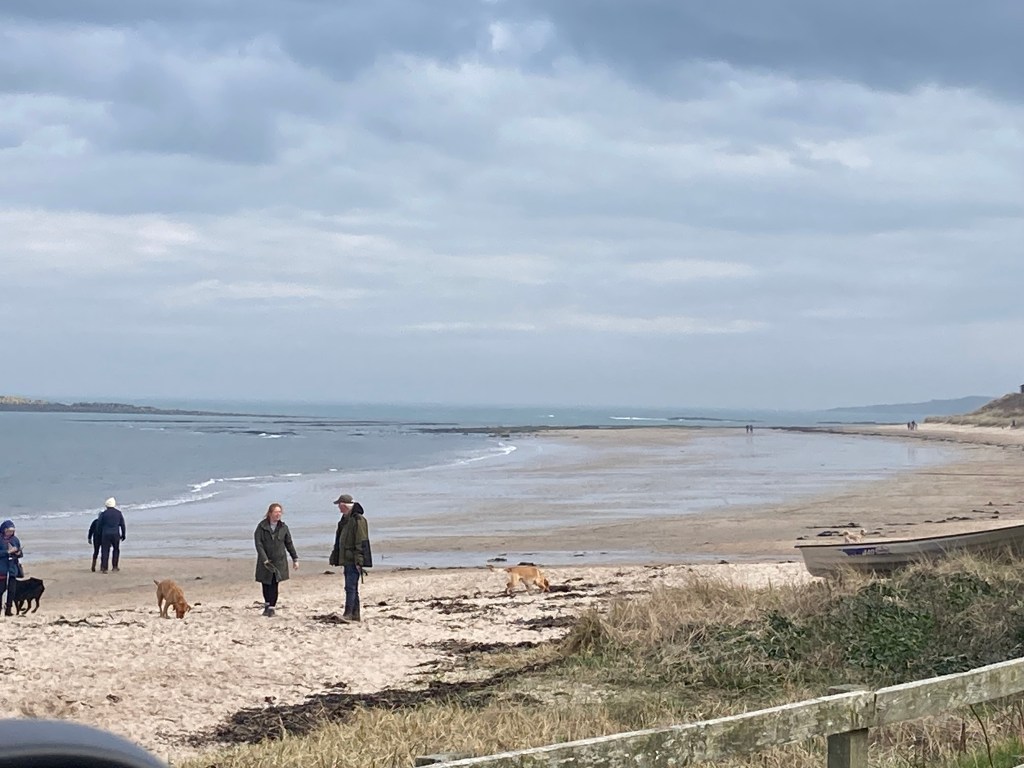
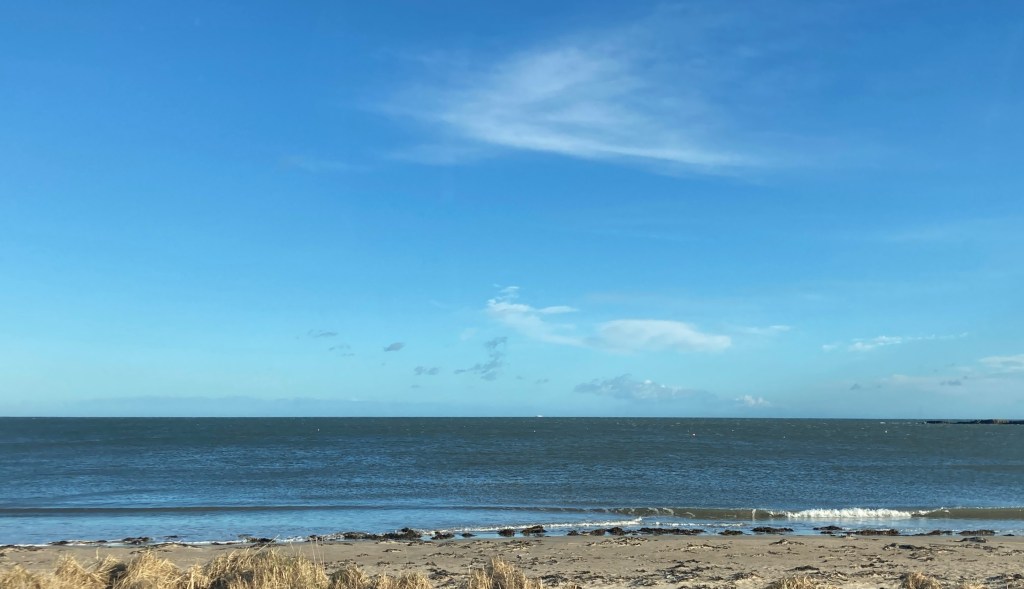
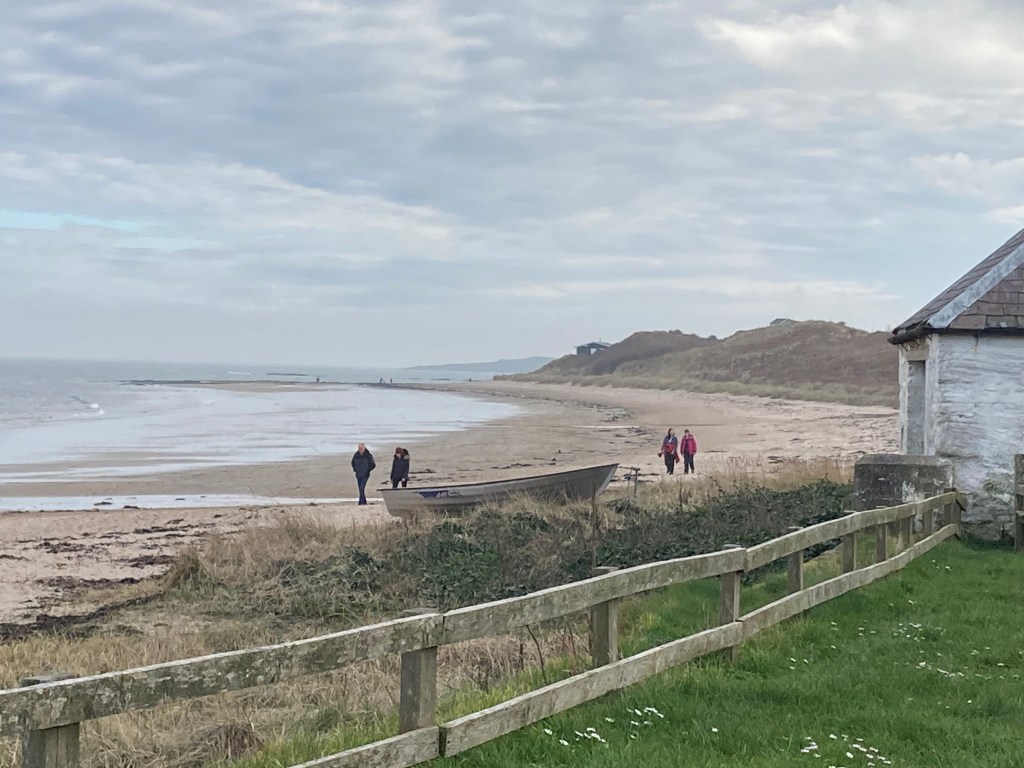
The sea was pretty calm and there were lots of walkers about, Many with dogs. A group of children, sensibly clad in wetsuits and lifejackets were having great fun in the water with their makeshift raft. There was also a kayaker and some sea anglers.

Out to sea I could see the brilliant white and black male eider ducks swimming about. A whinchat was perched on a longer stem of marram grass next to the sand and every so often flitted away to catch an insect.

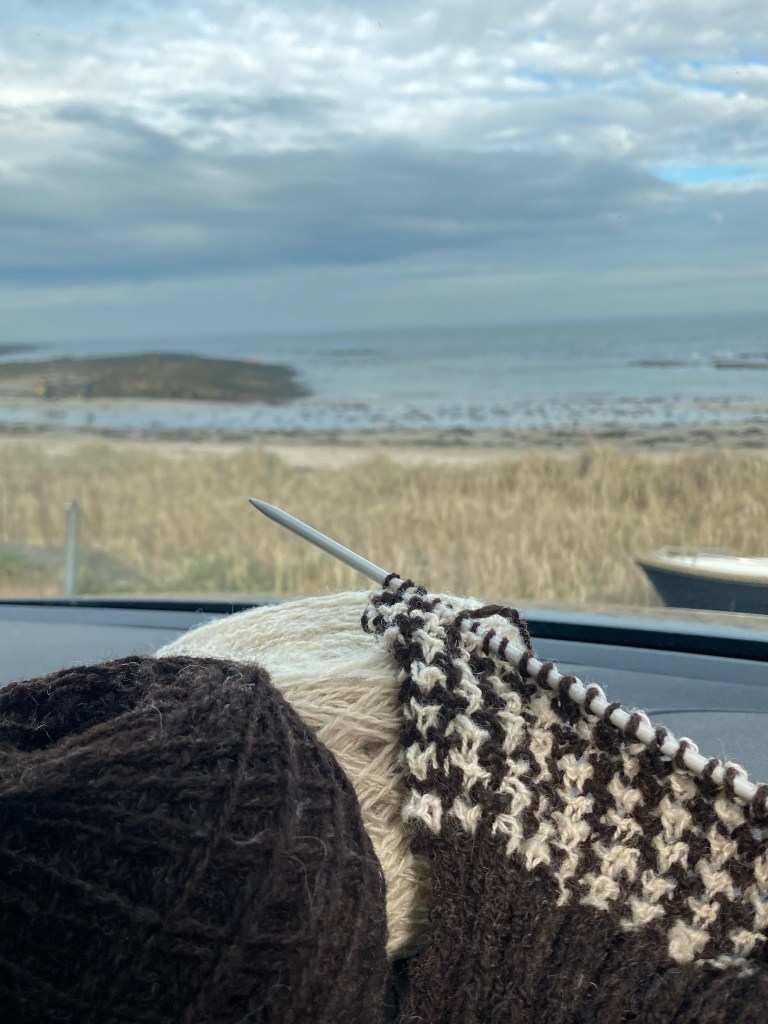
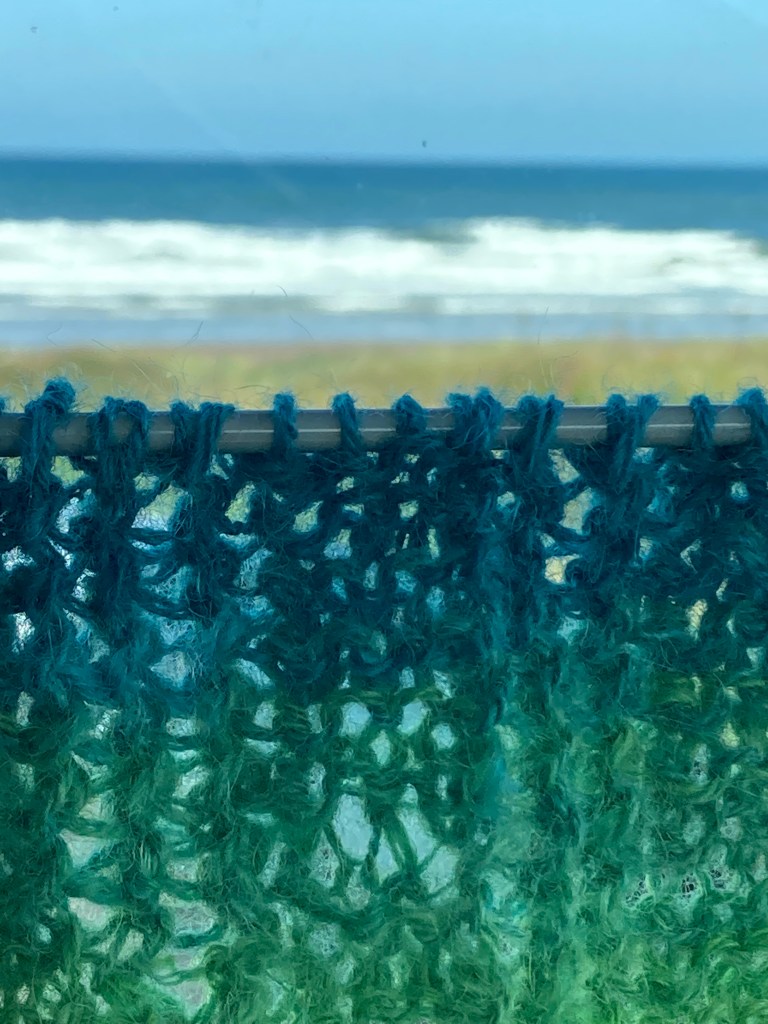
I got on with my current project: a black and white sweater in my handspun Jacob wool.

It wasn’t long until my human and canine companions reappeared further down the beach. They’d had a lovely long walk. We aren’t expecting much activity from the dogs this evening!

Posted in Uncategorized

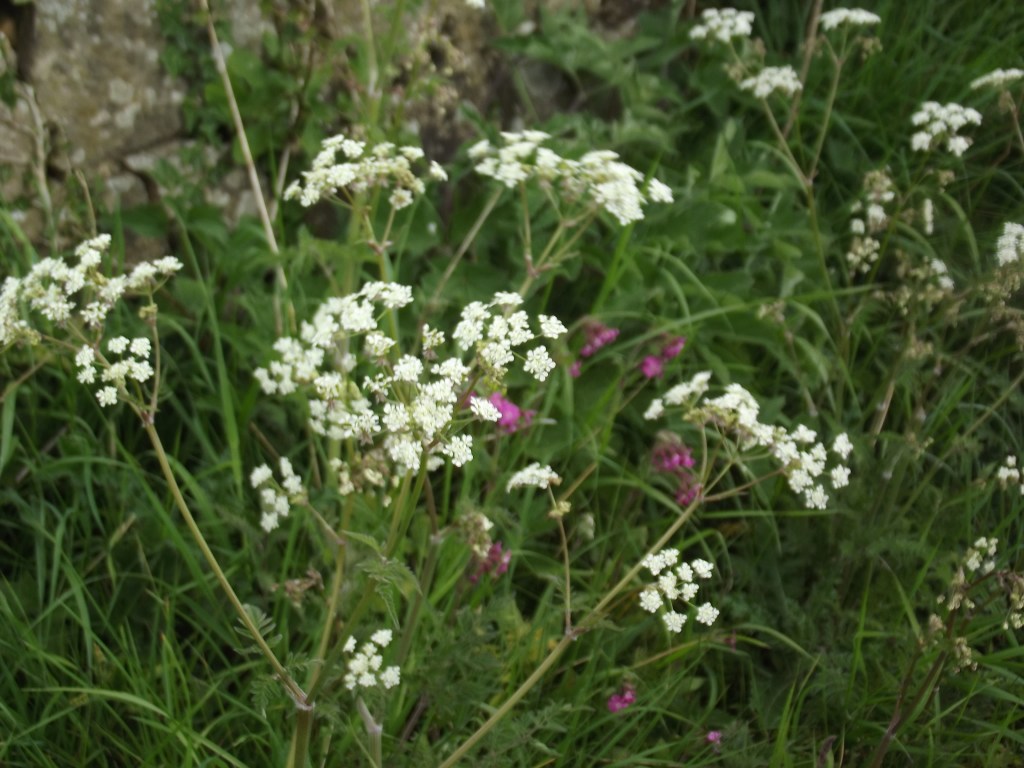
Wildflower of the Week: Cow Parsley

First posted 22 May 2020

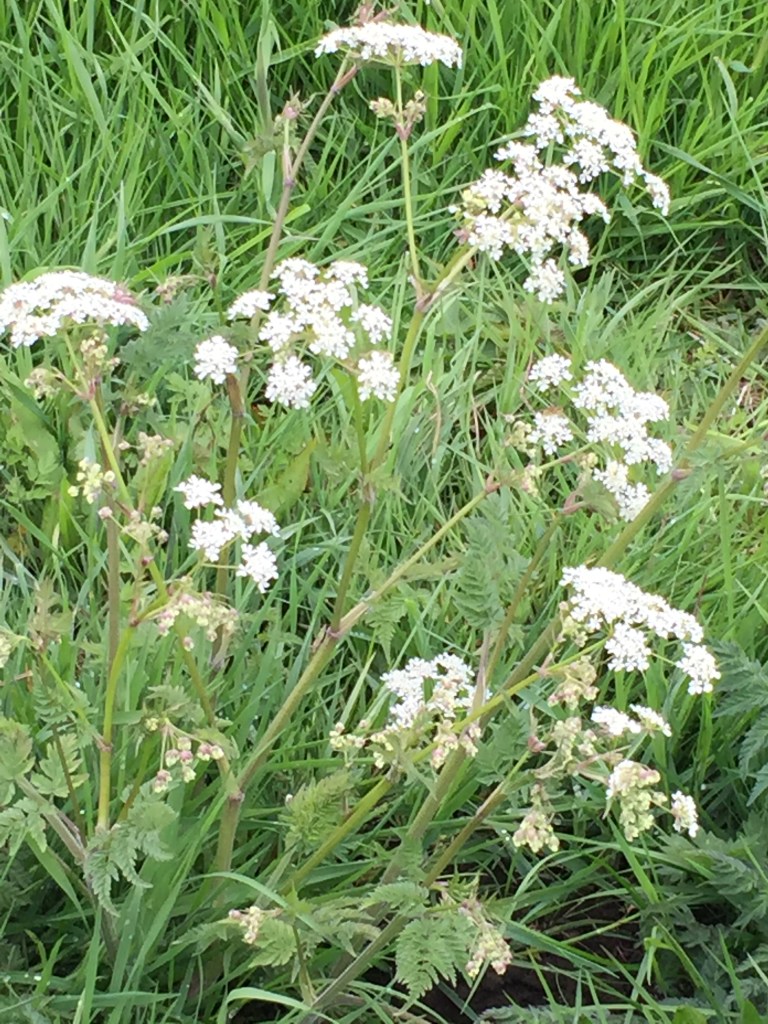
From April to June our hedgerows, road verges and meadows are filled with the frothy white flowers of cow parsley. It is the earliest to flower and one of the most common of a large plant family, the umbellifers, which all have similar shaped flower clusters or umbels, made up of tiny individual flowers on stems radiating from a single point in a sort of umbrella shape. The family includes several food plants and culinary herbs, including carrot, celery and and parsley, but also some extremely poisonous species such as hemlock and fools parsley and also hogweed which has a highly irritant sap that can cause quite severe burns.

The flowers are carried on metre high hollow stems. As they appear quite early in the year, they are are a great food source of both pollen and nectar for insects.

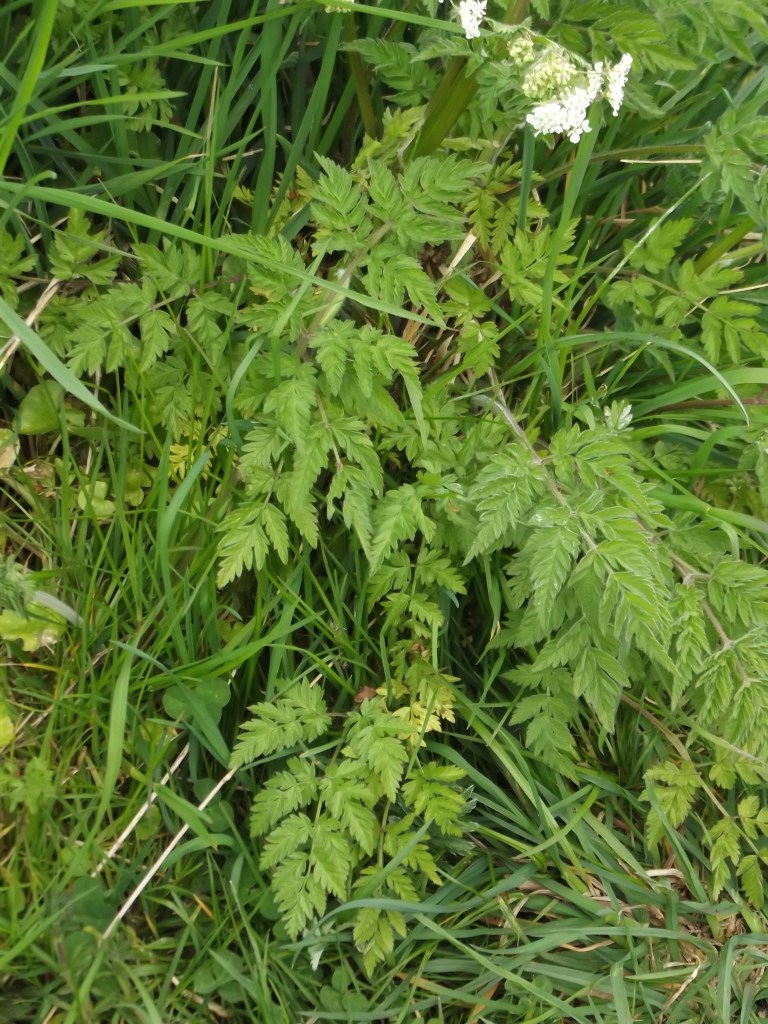
The leaves are arranged alternately along the stems and are fern-like: triangular and finally divided. When crushed they smell of aniseed.

Cow parsley spreads rapidly, producing large quantities of seed and also though spreading rhizomes. It is on the increase in the UK. Like the nettle, it enjoys fertile soil and increased agricultural fertiliser use has benefited it. This may be to the detriment of smaller plants that become smothered out by the taller cow parsley. It is considered an invasive species in parts of the US.

The plant has a variety of old names. including hedge parsley, wild chervil, keck, lady’s lace and Queen Anne’s lace. In some parts of the UK it has the rather gruesome name of mother die or mummy die. Children would be told they would lose their mothers if they brought it in the house – to deter them from picking it and the highly poisonous hemlock that it resembles.

Though cow parsley is edible, eating it or using it medicinally is not to be encouraged in case it is mistaken for its deadly relative. It has also been used as a mosquito repellent.

The lacy flowers certainly make very pretty addition to our hedgerows in late spring and early summer.

Posted in Uncategorized

Up the Tyne Valley, Down Memory Lane

It’s rather chaotic at Stitches By The Sea HQ as we are having some work done on the house. We had an escape last Tuesday, a trip out for what we call a “Because We Can” day. We do this from time to time ever since we retired because, back then, when we were working,…we couldn’t!

Many of our jaunts take us up the Northumberland Coast and into the Borders, but this time we headed south west until we reached the Tyne Valley, then followed it upstream to Corbridge, a place that holds many childhood memories for me.

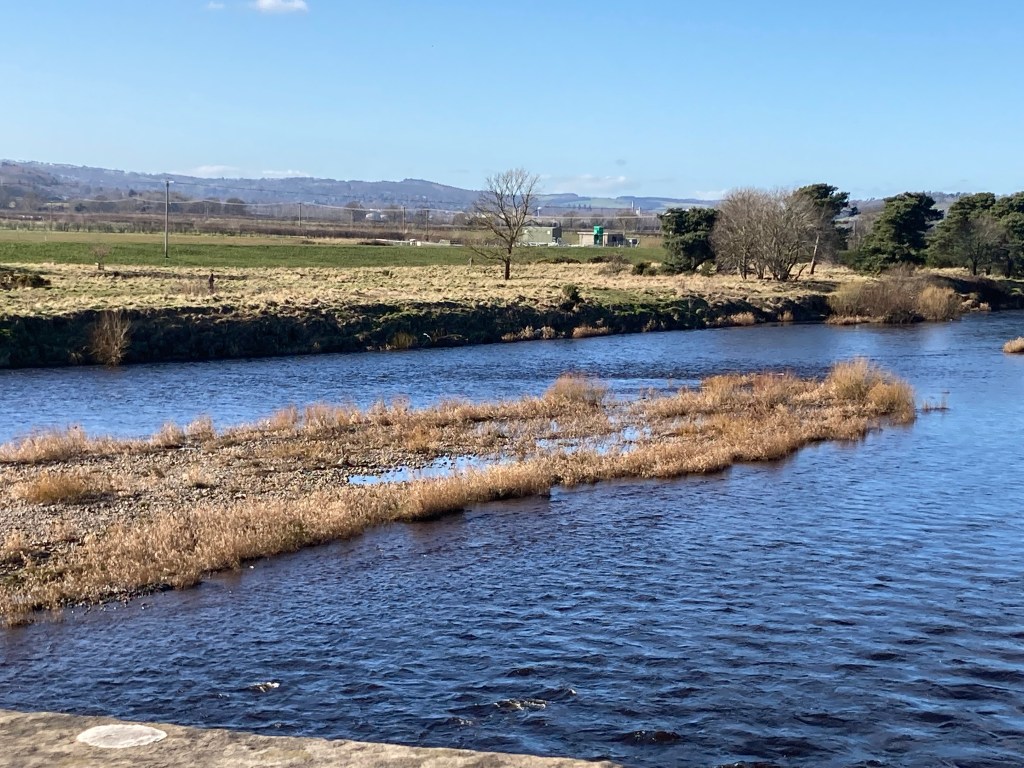
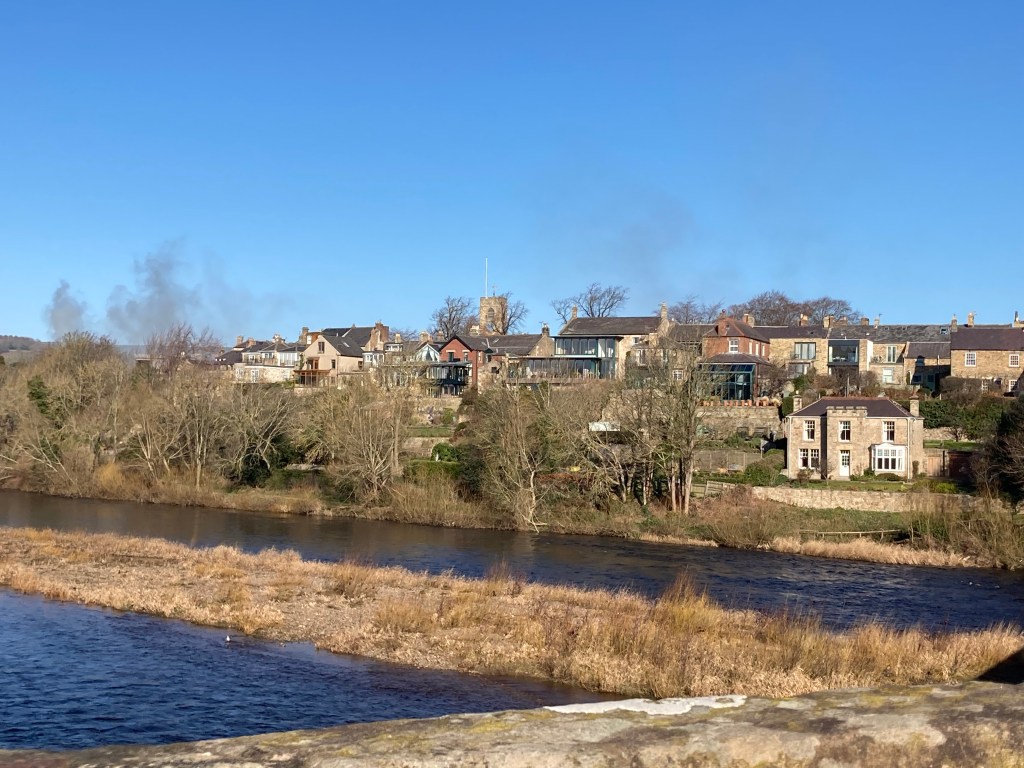
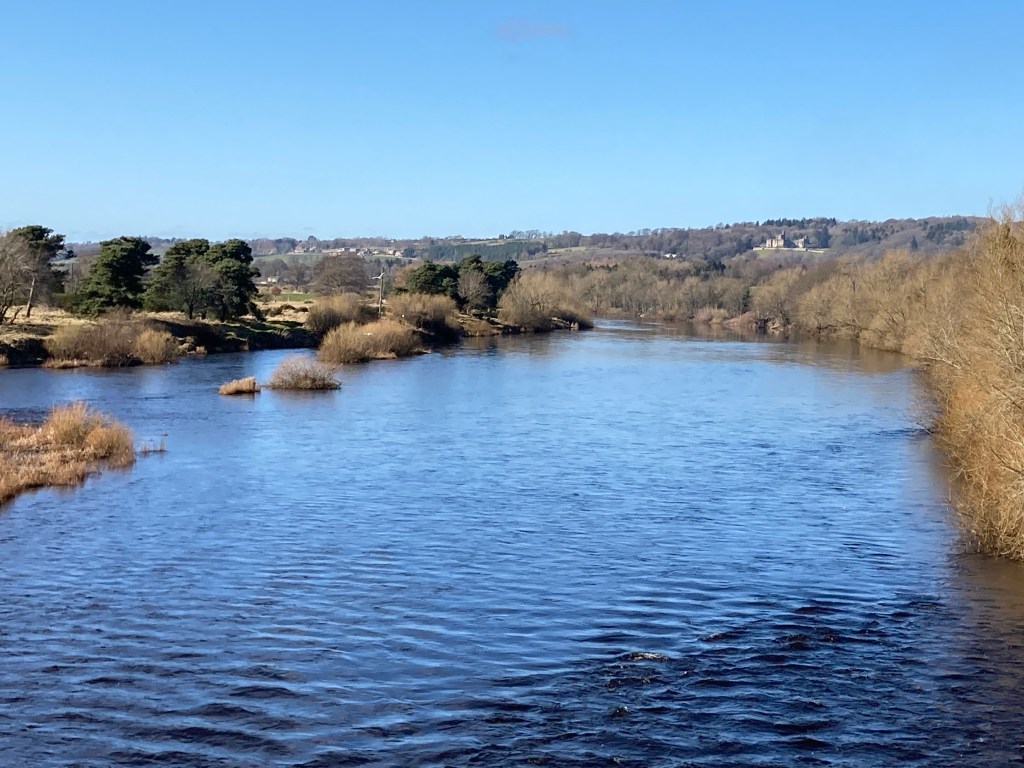
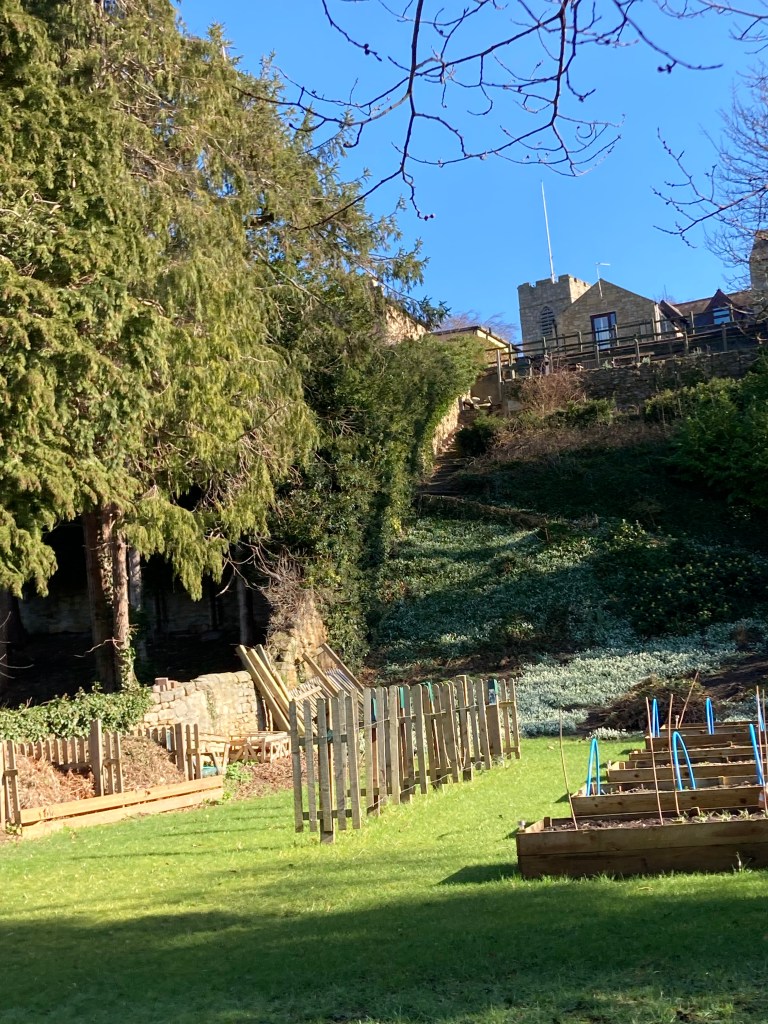
Corbridge is a pretty village, with an old church, and some attractive shops, cafes and pubs. It sits perched on a steep bank overlooking the Tyne, only a fairly short drive from the City of Newcastle, making it a popular destination for visitors. To reduce congestion on the narrow streets, there is a large car park just over the bridge outside the village. Stopping there and walking (or in my case scooting) back over the bridge presents stunning views of the river.

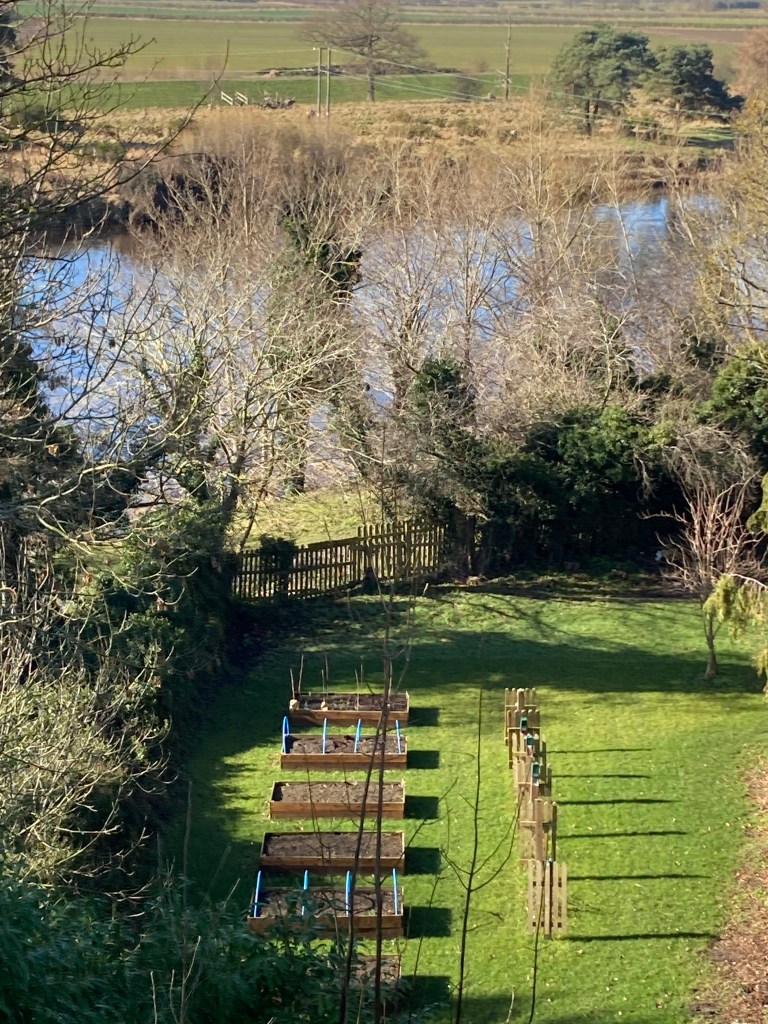
Some of the properties on Front Street have steeply terraced gardens leading down to the riverside footpath. It was in one of these gardens that my paternal grandparents had a caravan.

I went there often as a small child. At the time, the garden belonged to the Tynedale pub. There are other businesses occupying the former pub premises now but the central archway and courtyard remain, from which steep steps descend to the flat area at the bottom of the garden. I was so pleased to see that this is still being used to grow vegetables as Grandpa was a fanatical gardener. Having cultivated his garden at home to grow copious amounts of produce, he ran out of space but managed to plant a few rows of cabbages and beans by the caravan.

The seating in the front of the caravan somehow converted into two double beds, separated by a curtain. At the back, opposite the little kitchen were bunk beds for me and my little brother. It must have been pretty crowded, though I remember that sometimes there was a large tent too. This was igloo shaped, with inflatable ribs that were blown up with a footpump until rigid enough to make the structure stable.

My grandmother (Nan) was a prolific knitter: we grandchildren must have had jumpers, cardigans and hats in every colour of the rainbow. She used the leftover yarn to knit squares that she sewed together into very colourful blankets. There were several of these in the caravan. It was always spotlessly clean, and smelt of TCP. Nan had been a nurse and swore by the stuff: she used it as a household disinfectant, an antiseptic on grazed knees and insect bites and even as a gargle for sore throats.

As we wandered through Corbridge I looked out for the Wheatsheaf Hotel. We would sometimes have Sunday Lunch here back then. I was always fascinated by the dumb waiter that brought food from the kitchen downstairs up to the restaurant. As my grandfather was a regular customer we got know our usual waitress by name. She was an older lady (well to me anyway) named Hilda. She would yell our order down the dumb waiter shaft to the kitchen. “Four soups for Mr Brown!”

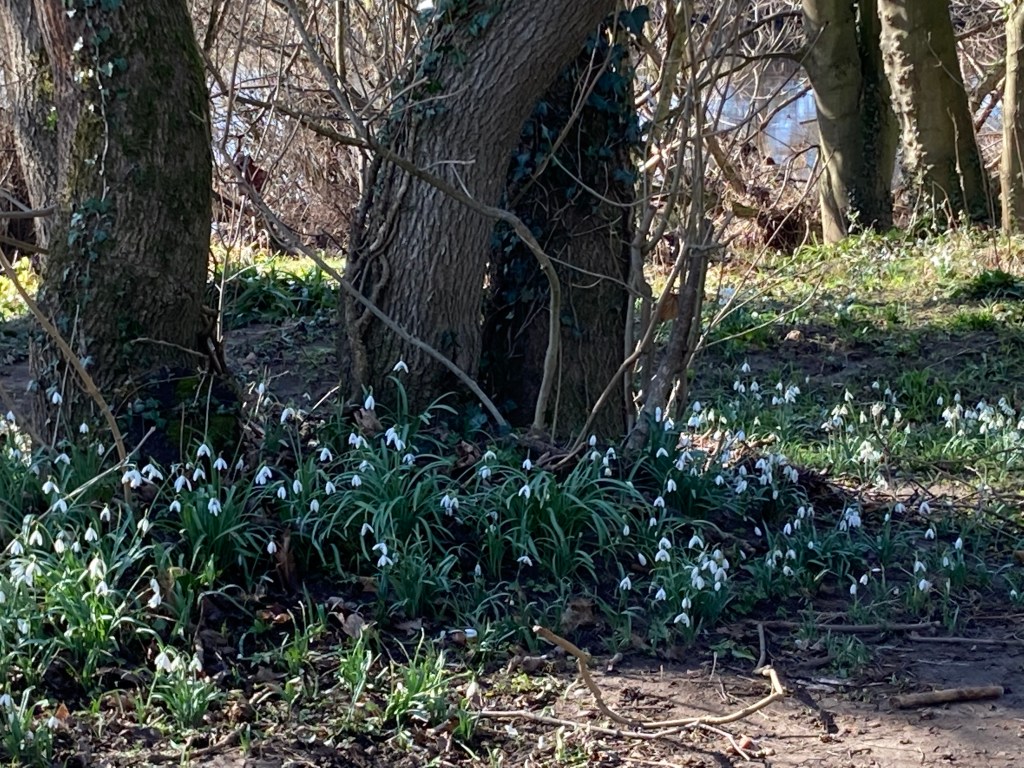
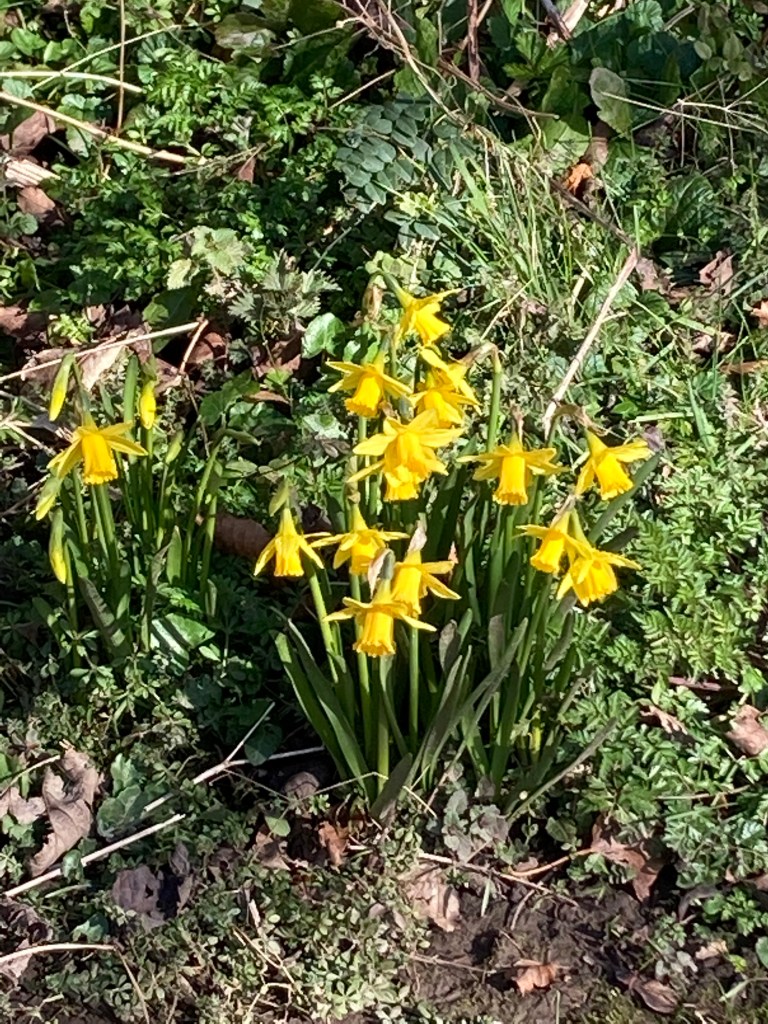
A steep lane leads down to a footpath by the river. It was a little muddy and criss-crossed by tree roots but the scooter coped. There were masses of snowdrops and some early daffodils in flower.

We soon found the garden again. I thought of Grandpa’s constant battle to keep the grass cut. The rich alluvial soil made it grow long and lush At home he had an immaculately mown lawn (which gradually shrank as the vegetable plot grew) but there was no lawnmower here so he was usually to be found stripped to the waist, wielding a hand sickle.

The fence separating the garden from the path looks the same as it ever did – there was a gate that we used to get to the river. The water was quite high and fast flowing, especially as we got near to the bridge where the river narrows slightly. Buddy the Labrador loves the water, but we kept him well away.

The path floods sometimes. I remember years ago hearing that the river had burst its banks, which to my young ears sounded really dramatic – my grandparents had to clean and dry out the caravan afterwards. During the summers I was there, the river was at a much lower level, safe enough for me to play among the rocks in the shallows, fishing for minnows with a shrimp net.

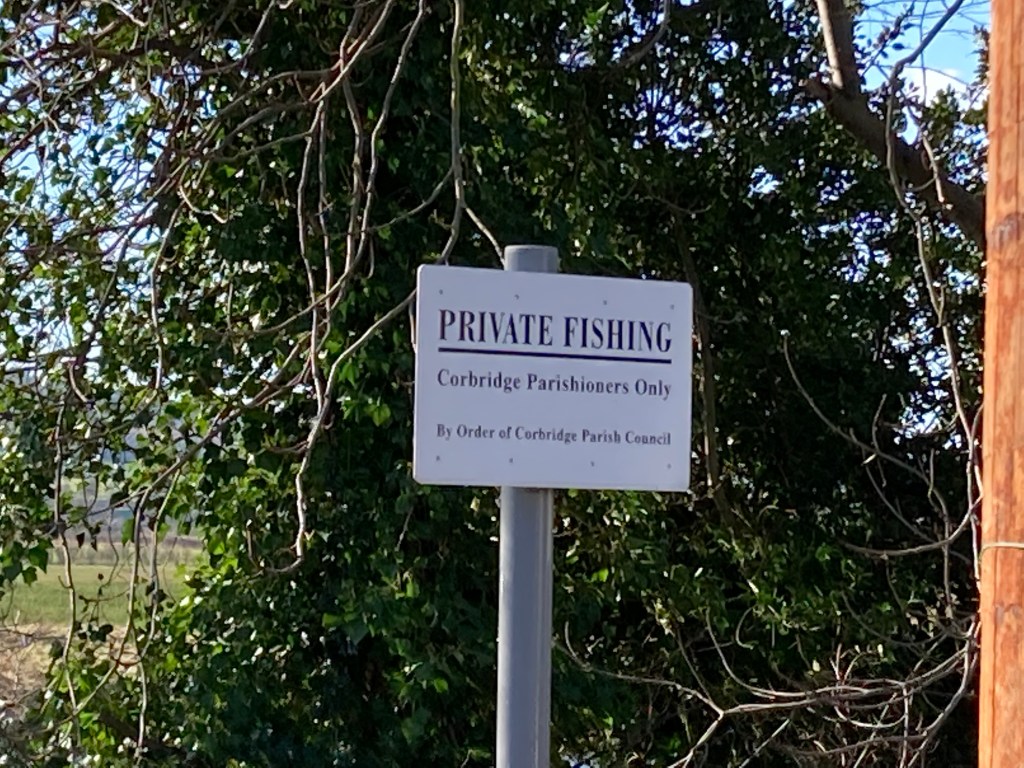
My father told me that when he was a little boy, he wanted to go fishing with his dad but wasn’t allowed and didn’t have a rod of his own. Ever resourceful, Nan used a garden cane, a piece of string and a bent pin to make a rod. line and hook. . Off he went, with a piece of bacon rind to use as bait. According to the story he caught a pike with his homemade gear. I know that fishermen’s tales have a reputation for exaggeration, but whatever did happen that day, it must have inspired my father. He remained a keen angler all his life.

Have you ever revisited a place from your childhood?

Posted in Uncategorized

Snow on the Cheviots

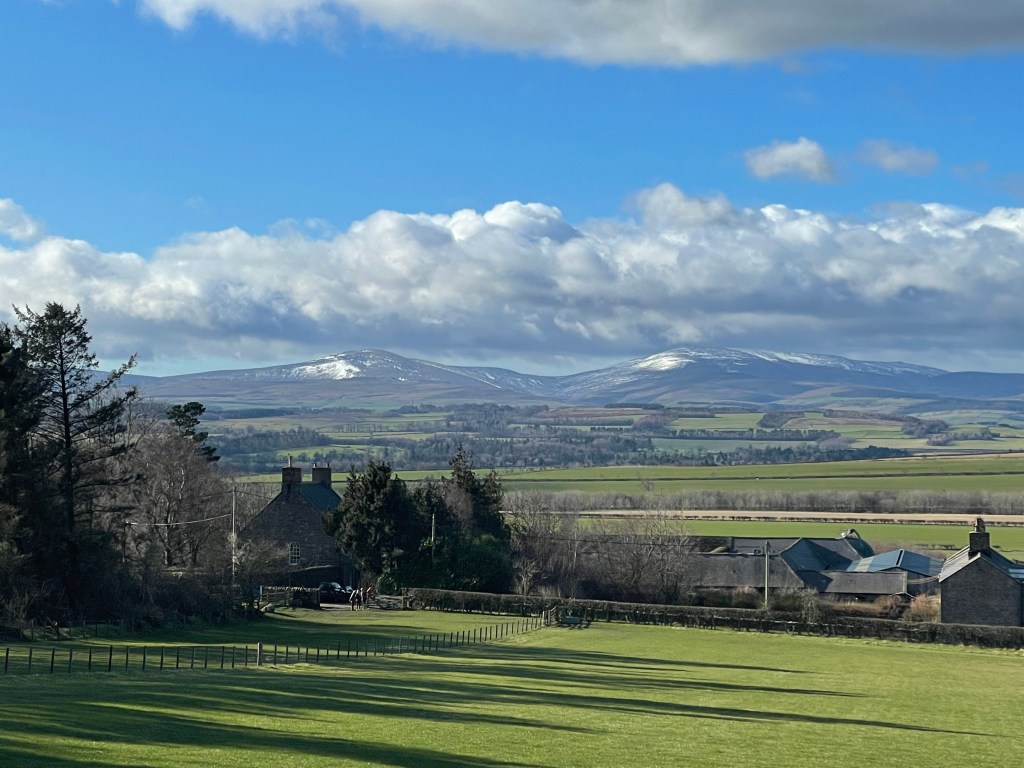
The weather cleared up this morning to give another sunny if blustery day. Driving over the hill between Belford and Chatton there was this stunning view towards the Cheviot Hills, the summits dusted with snow. It’s sights like this that make me feel so thankful to be living insect a beautiful part of the world.

Later on the wind rose again (as Storm Franklin comes this way) and the rain began, but it was still beautiful….and we got rainbows too!

Posted in Uncategorized

Lull Before the Storm

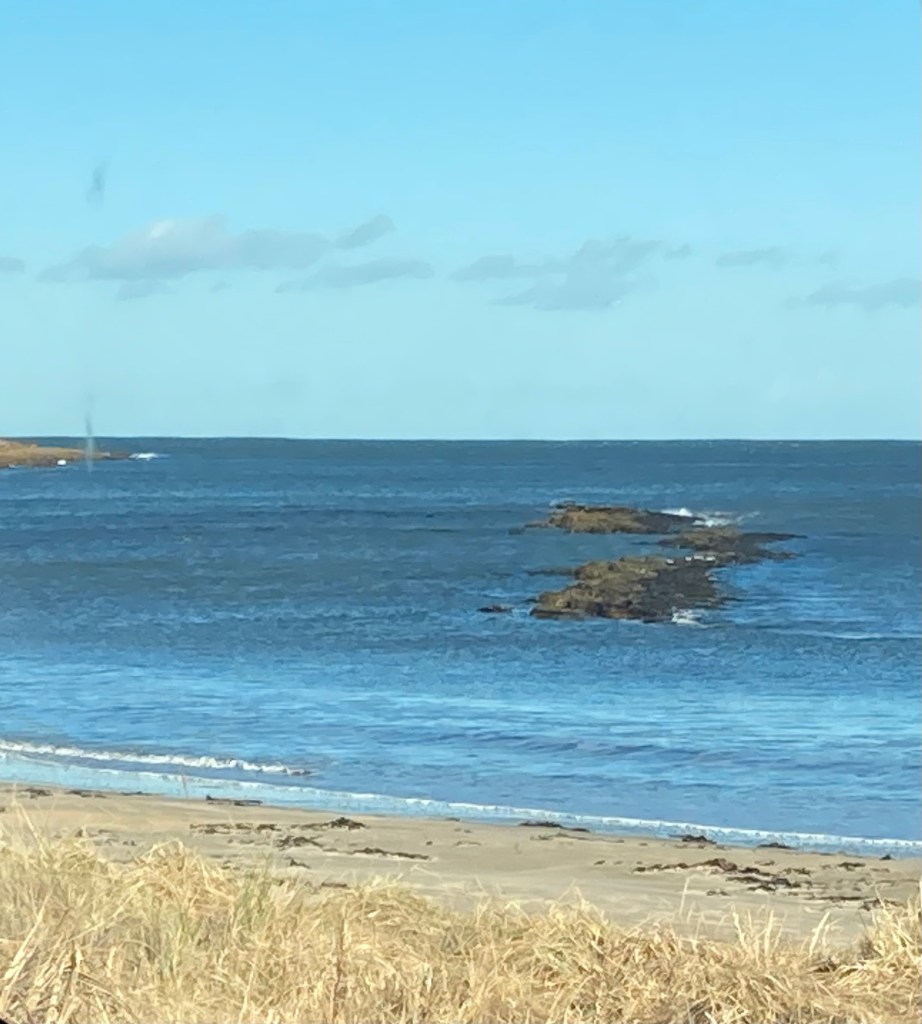
Yesterday we headed up the coast to Newton by the Sea. It was a glorious, if blustery day. K and Buddy set off for a walk along the beach while I stayed in the car with my knitting.
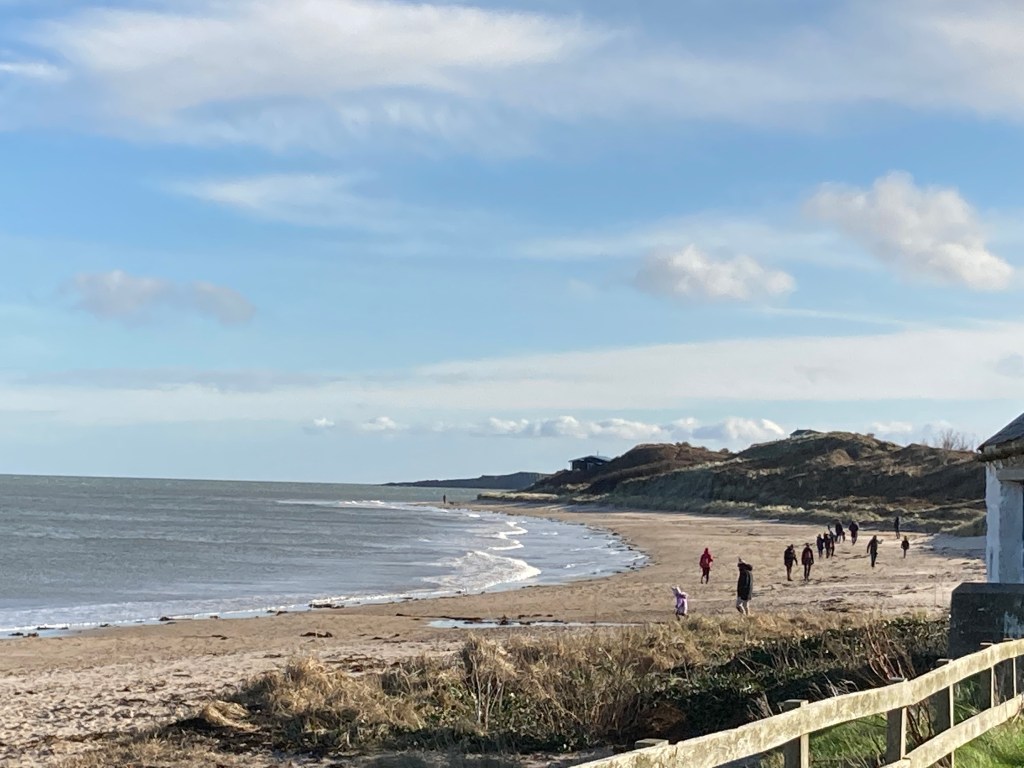
The sunshine had brought people out and the beach was quite busy.

On quieter winter days the shoreline is peppered with wading birds, but not today. There were too many walkers and dogs for that. Several oystercatchers and redshanks had gathered on some rocks just offshore, an altogether safer place.

I also saw a whinchat on the marram grass at the top of the beach. They are quite common on the dunes here and I always love to see them.

When K returned he reported a large raft of ducks, mainly widgeon, at the southern end of the bay. It seems that overwintering wildfowl are beginning to gather prior to the spring migration

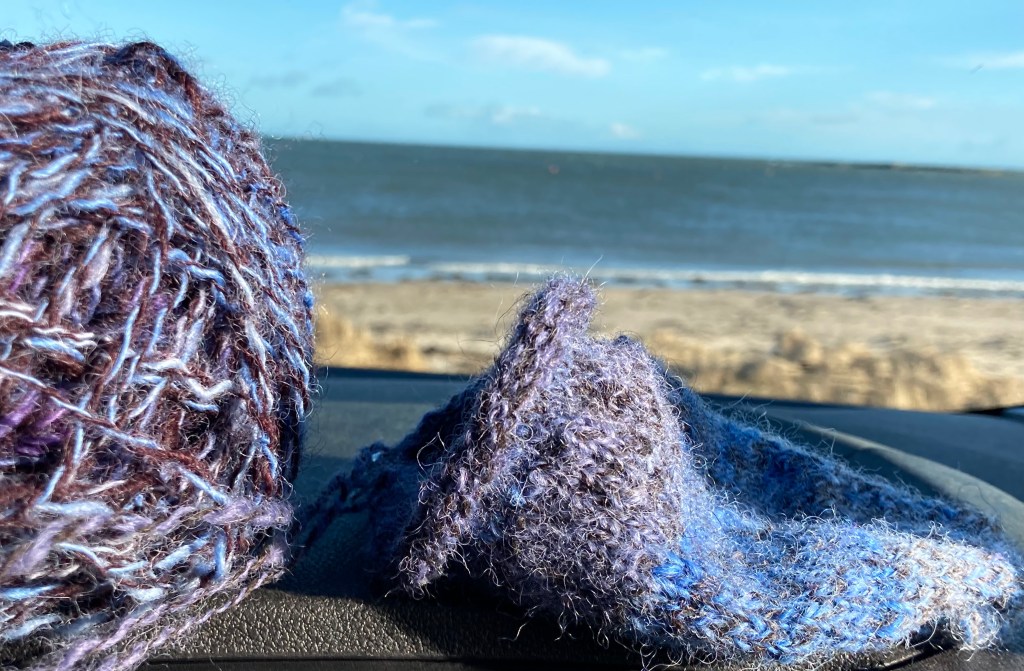
Of course I love to knit with a sea view. Today’s knitting on the dashboard is the second of a pair of toe-up socks in my handspun alpaca and wool.

It felt good to be out on such a beautiful day, in between this week’s storms.

Posted in Uncategorized

A Valentine’s Treat

I hope you all had a wonderful Valentine’s Day and that love was in the air. I was racking my brains for something different to do this year. It is lovely to give and receive flowers, chocolates etc but it is nice to ring the changes now and again.

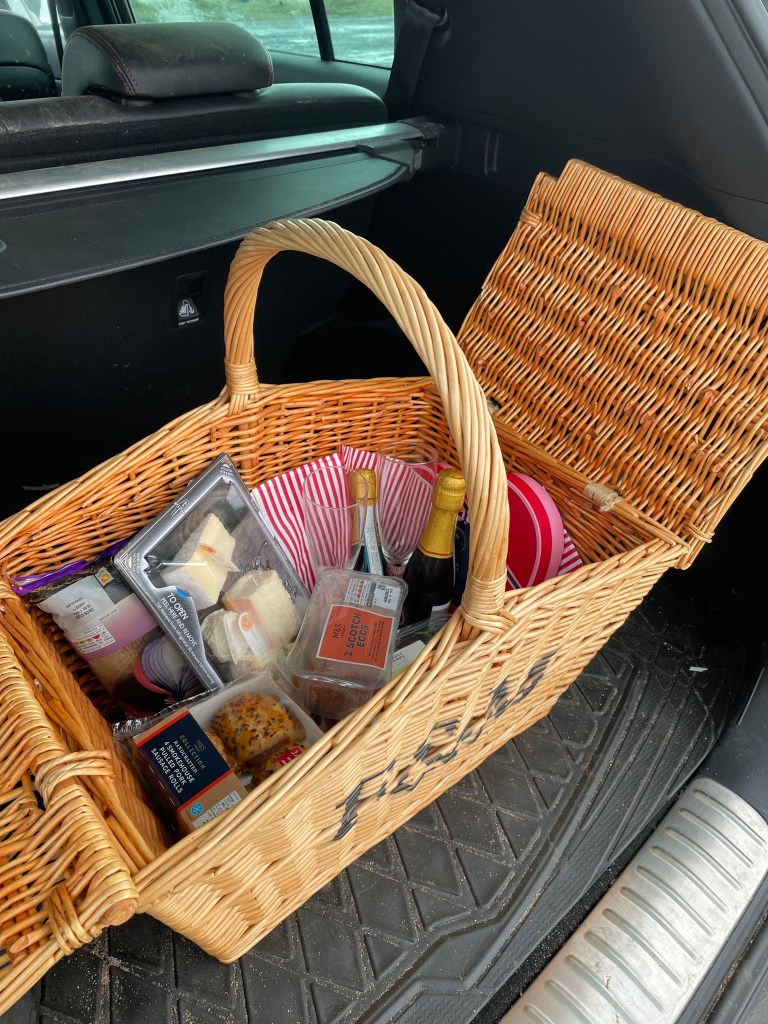
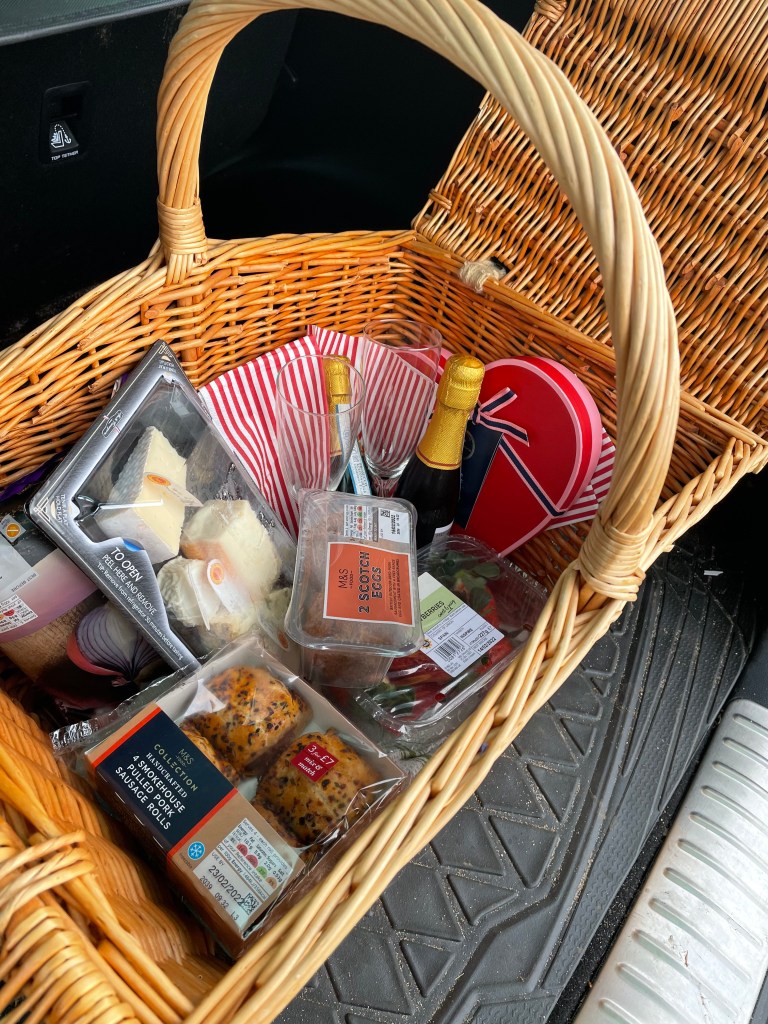
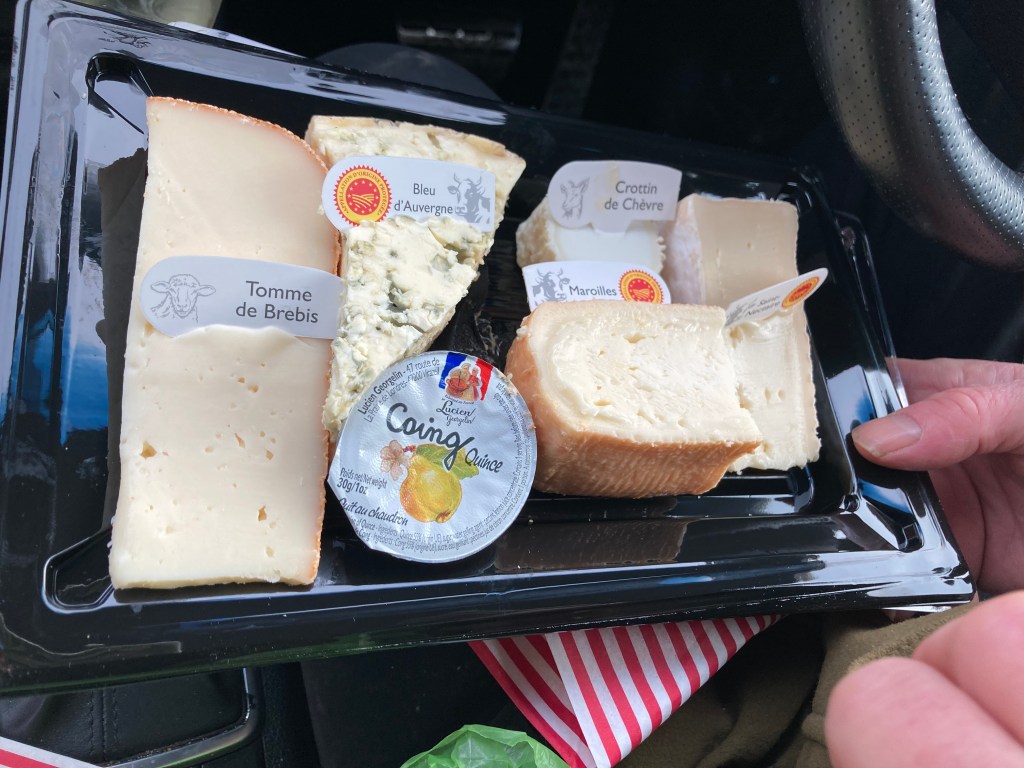
This year I bought some goodies and packed up a gourmet picnic. It included smoked salmon parcels, olives, Scotch eggs, posh sausage rolls, some French cheeses, strawberries , chocolate truffles and Prosecco.

We headed for the beach and parked overlooking Coquet Island. We left Buddy the Labrador at home – true to his breed, he is a greedy dog and the food was frankly too good to share! We unpacked the picnic and poured a small glass of fizz, then tucked in. Food with a view. Perfect!

Drink responsibly!

How did you celebrate St Valentine’s Day?

Posted in Uncategorized

Castles And Coast (With A Bit Of Knitting)

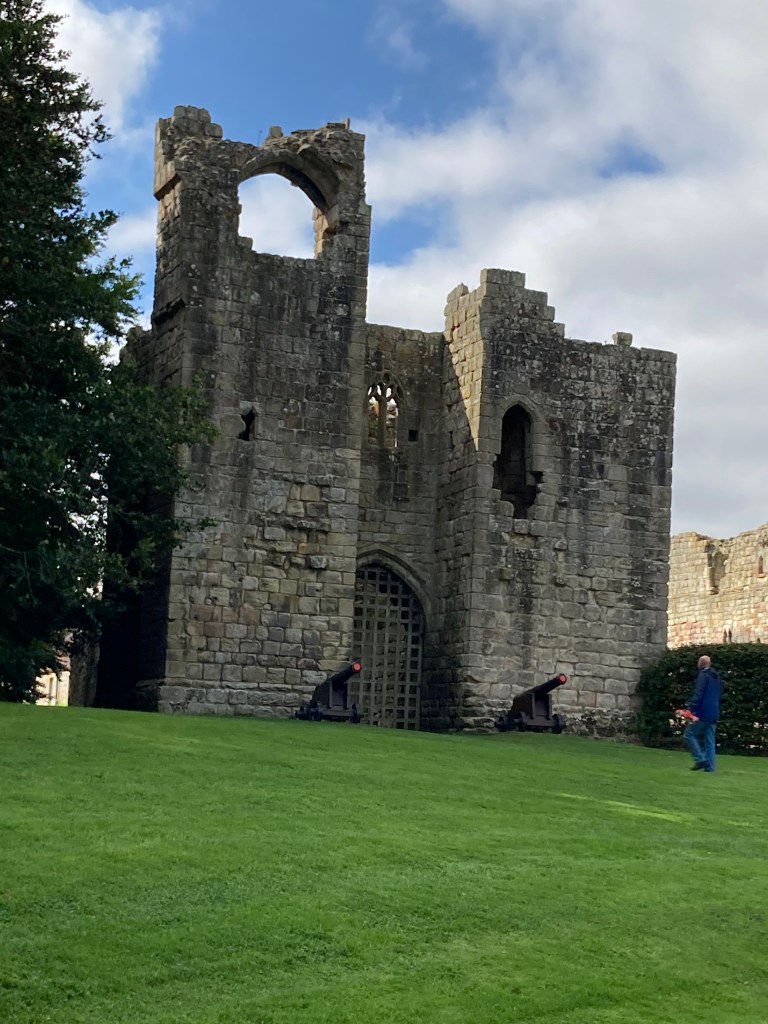
Today’s trip out took us first to the village of Etal. It’s a pretty estate village with a castle, which dates from around the 14th Century. Northumberland has many castles, a reminder of Anglo-Scottish conflict during the region’s violent past

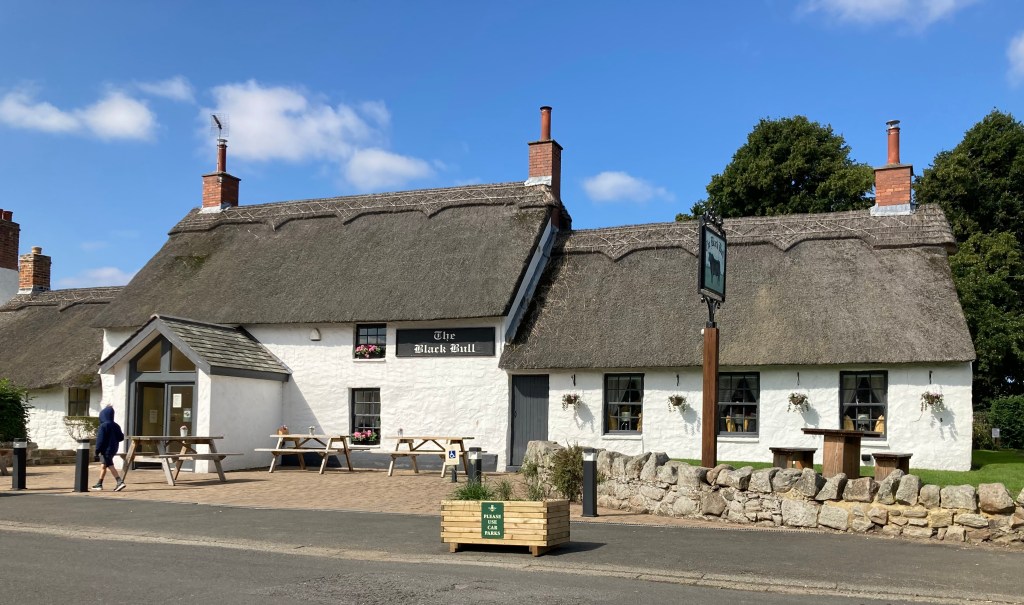
Etal also has a thatched pub – thatched roofs are pretty unusual here in Northumberland.

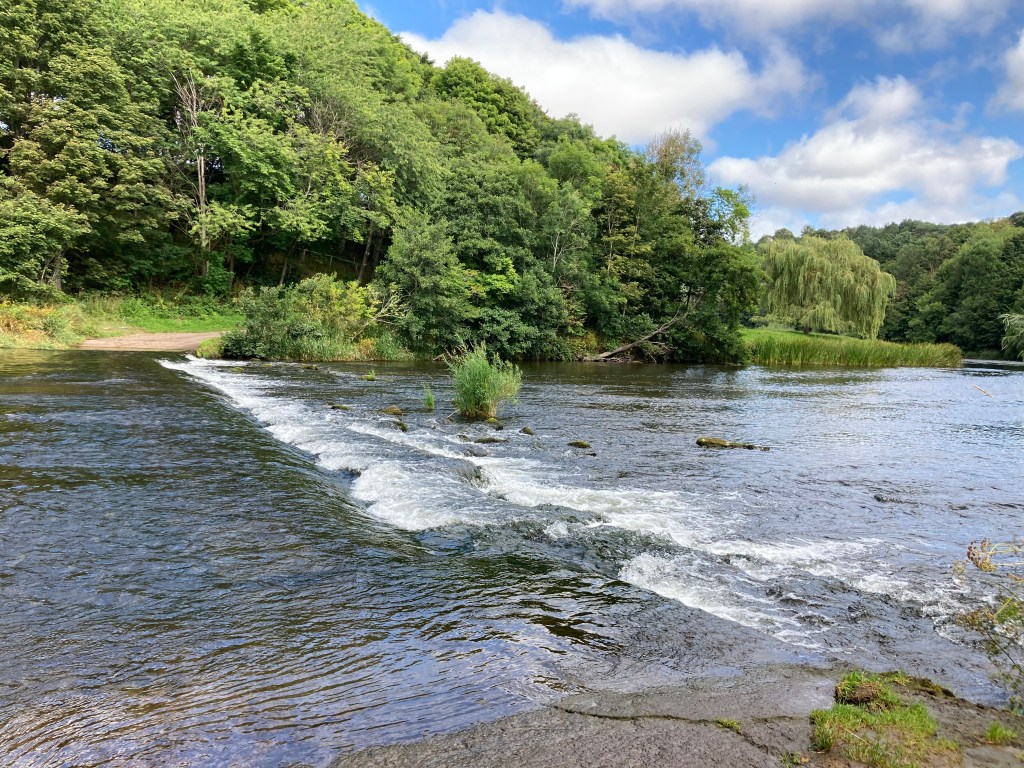
We wandered down the road which ends in a ford over the River Till I’m not sure how safe it is to cross here as the water runs quite swiftly. We certainly didn’t try it!

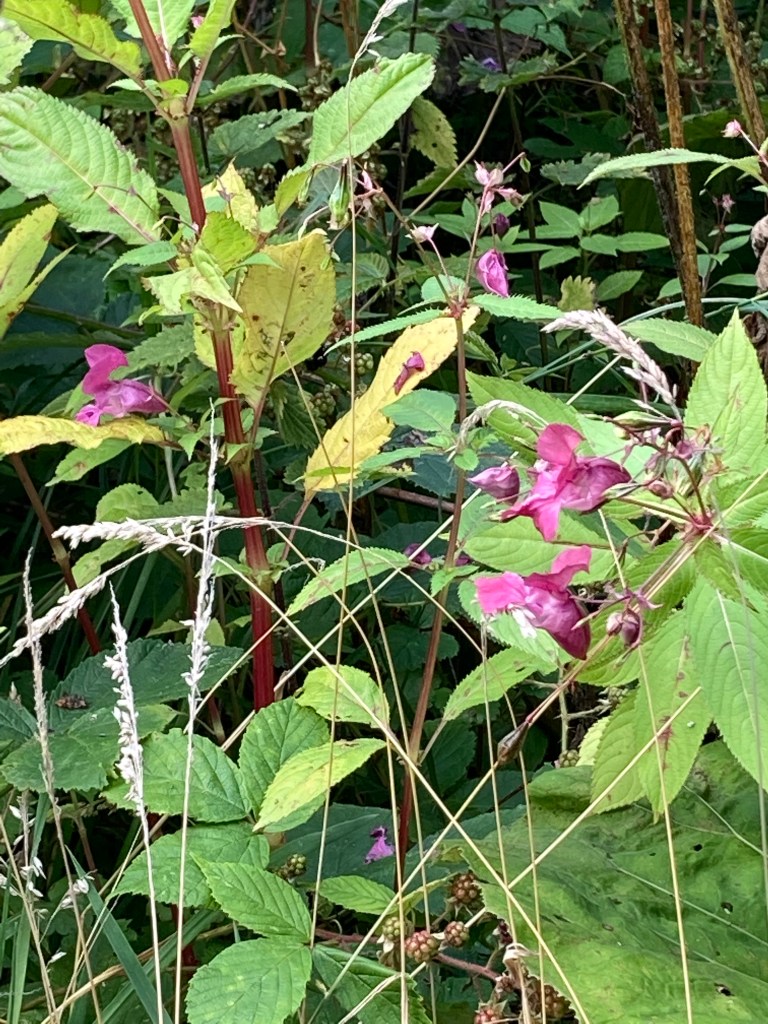
On the riverbank we found Himalayan Balsam. This is an attractive plant with hooded pink flowers, but not a native species. It has become established in many areas (probably initially as a garden escape) and is now an extremely invasive weed. Its success is probably due in part to its method of seed dispersal. The ripe pods burst quite violently, spreading the seeds some distance.

Back in the village we had lunch at the Lavender Tea Rooms. I love the teapot sign! Behind the hedge is a pretty paved garden edged with rose bushes and lavender of course, with tables, so it was a perfect place to eat as we had the dog with us. We’ll not be able to lunch outside for much longer this year as autumn approaches.

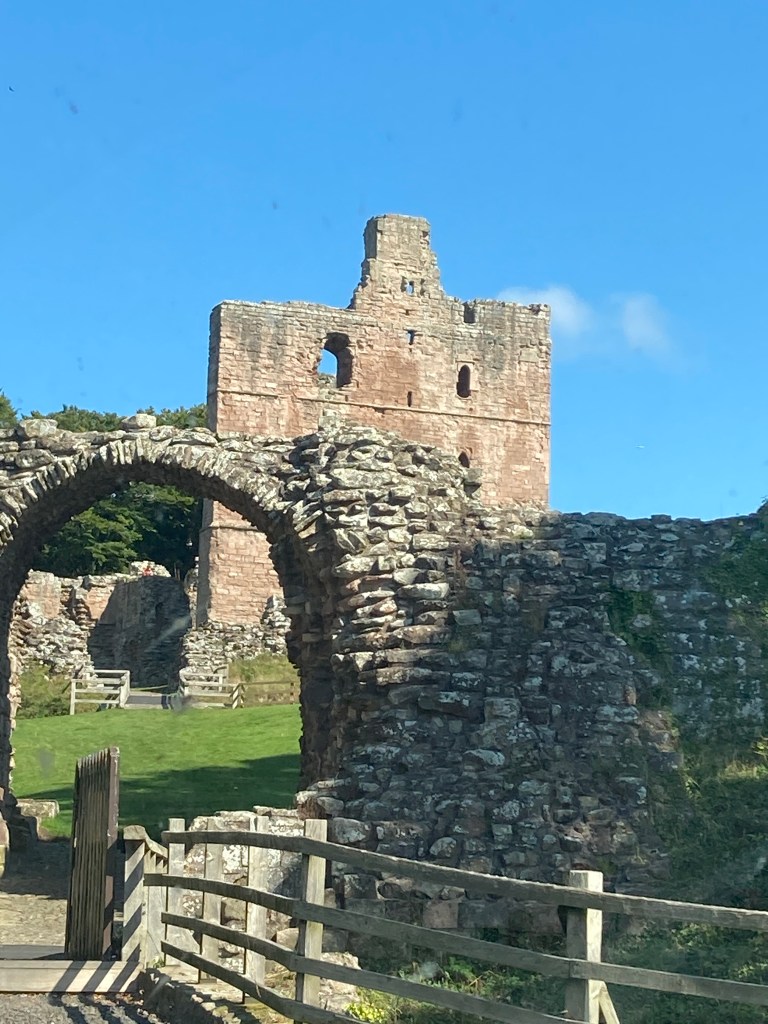
We drove towards the coast in search of a beach walk for Buddy the Labrador. On the way we passed the imposing ruins of 12th Century Norham Castle.

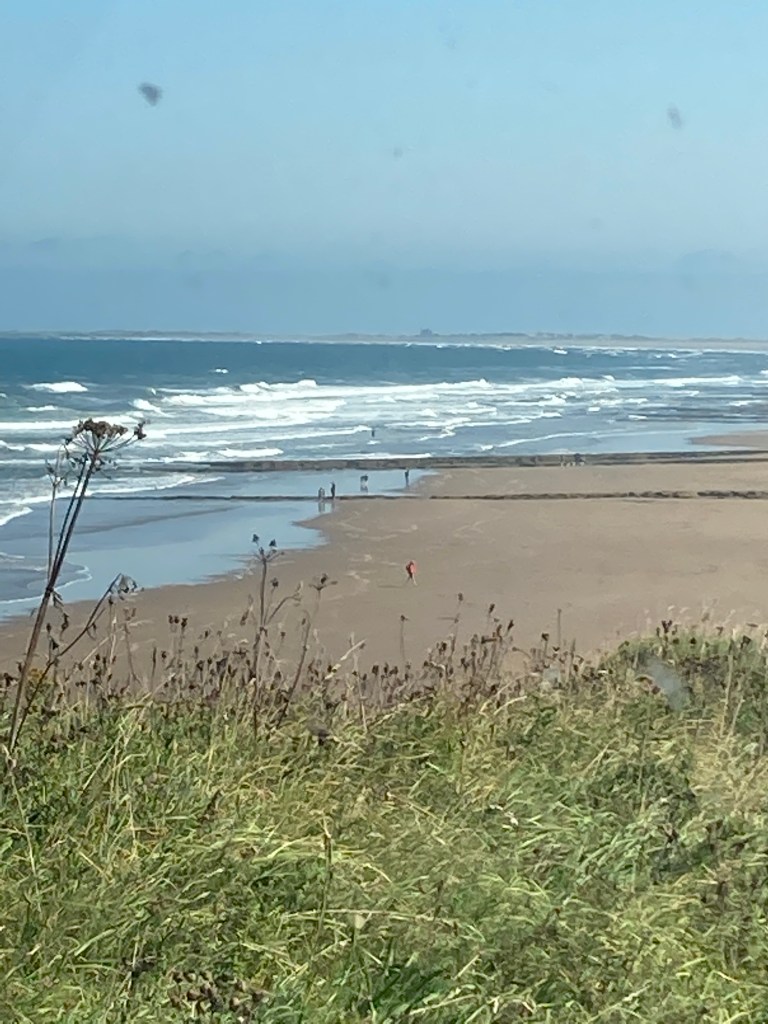
We stopped for a dog walk at Cocklawburn beach.

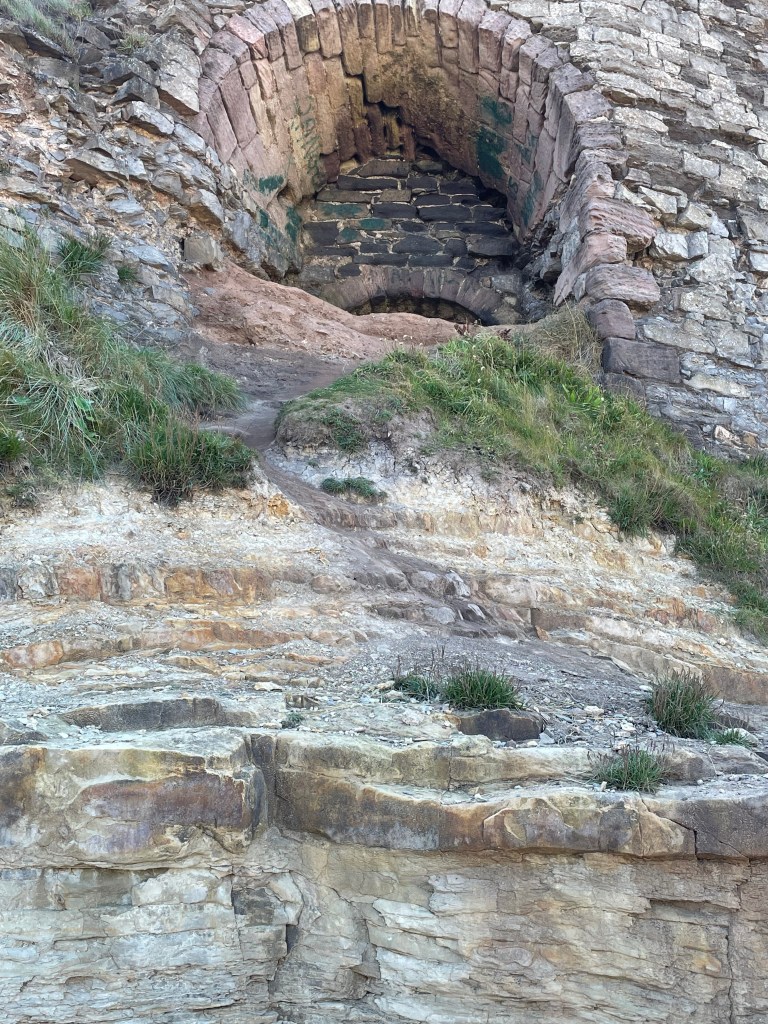
Limestone was once quarried here and there used to be alLimeworks with a railway to transport the lime and workers cottages. The lime kilns can still be seen.

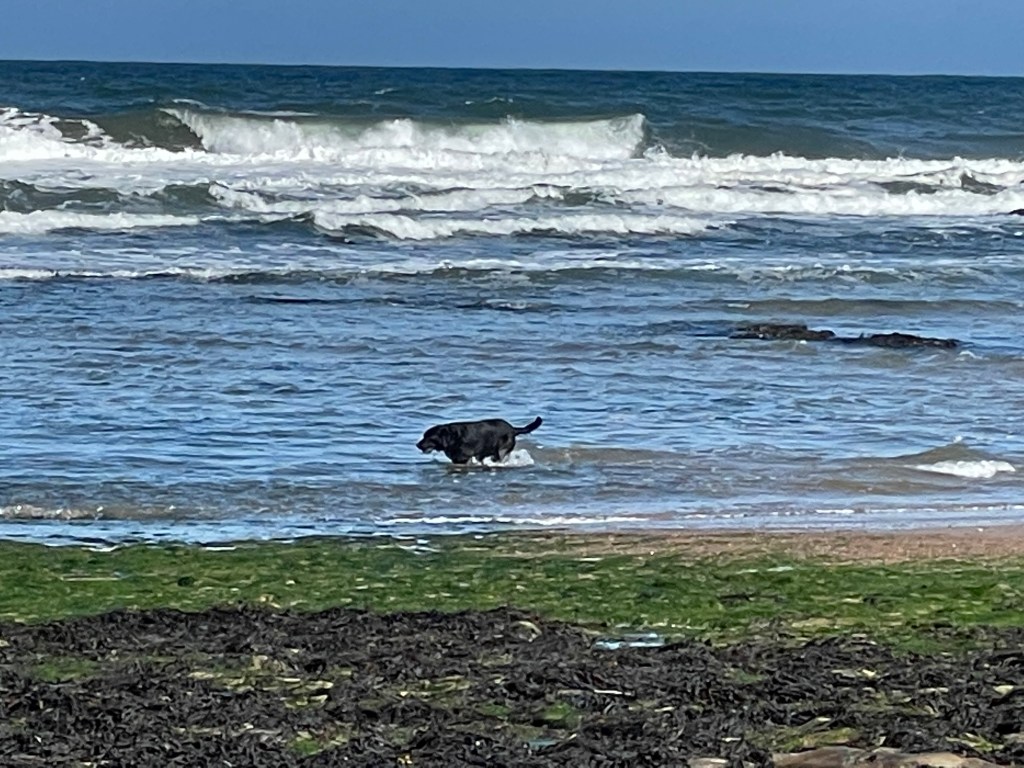
The sea was quite rough with some big breakers but they didn’t deter Buddy.

I got on with some knitting.
Posted in Uncategorized

Druridge Bay in May

We often meet Daughter for a walk at Druridge Bay Country Park. The weather was lovely the other day so off we went, accompanied by Buddy the Labrador of course!

Spring flowers are everywhere and I spotted one I haven’t seen in ages. This is doves-foot cranesbill.

The little pink flowers resemble those of Herb Robert, another member of the cranesbill family, but that has fern-like leaves. Doves-foot craneshill has clumps of round, lobed leaves.

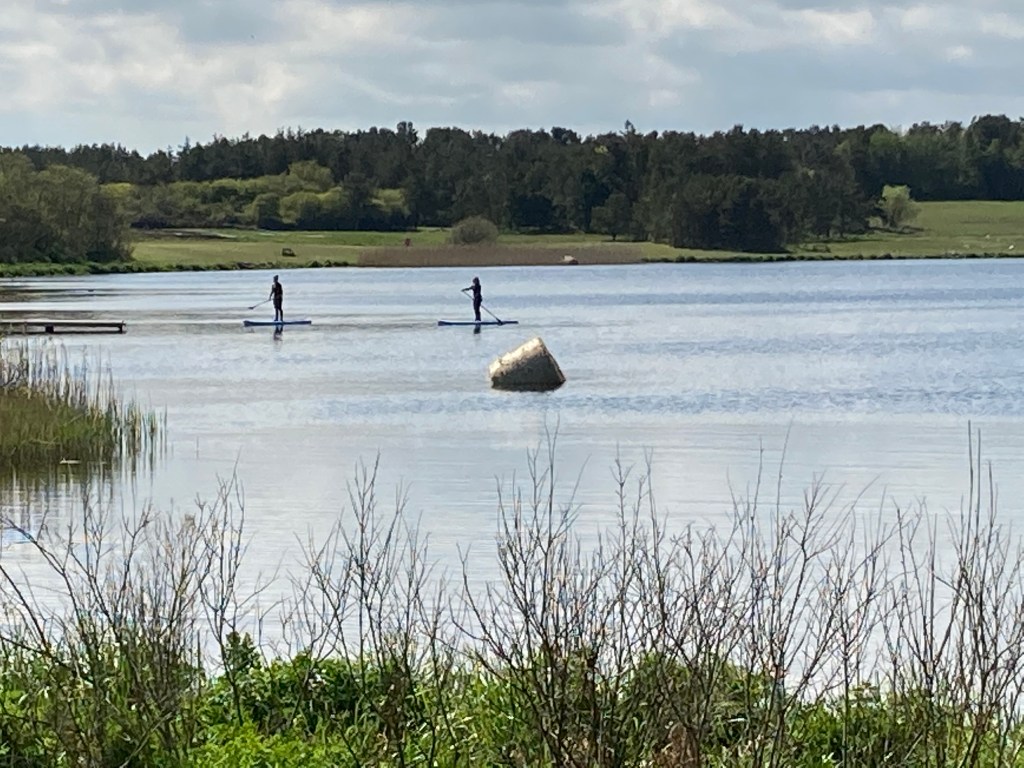
On the lake the paddle boarders were out in force and and a lone windsurfer sailed by . We noticed a straw bale floating in the water. Our first thought was that it had been dumped there, but then we spotted another, then another across the other side. . They had been deliberately placed in the water all around the lake.

We suspect this is being done to control the growth of algae. Straw, especially barley straw, produces substances as it breaks down and these inhibit algal growth. This form of control is preferable to less environmentally friendly chemical herbicides. In the past we’ve seen warning notices posted in the park about toxic blue-green algae. During such an algal bloom people are advised to stay away from the water. Algal toxins can be fatal to dogs so pets should also be kept out of the water. These blooms usually occur in hot dry weather.

Although there were quite a lot of people about, they were spaced out in the park. The only exceptions to this were the children’s play area and the car park. Some people were having their picnic right by their vehicle, which seemed rather sad when there are so many other lovely spots across the park.

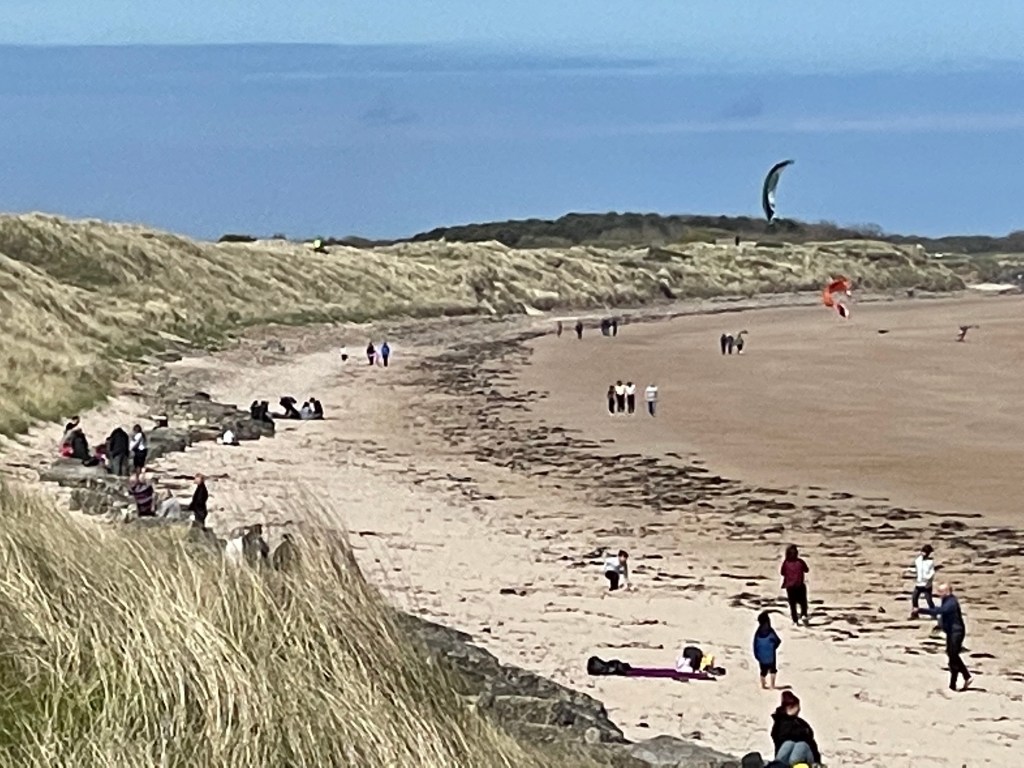
The beach had more people than I’d seen in a while, but was not exactly crowded!

In the visitor centre there was an exhibition of wildlife paintings by local artist Diane Patterson. She paints on wood and the grain inspires the picture, often forming the background landscape. I particularly liked her portraits of hares.

We stopped for a takeaway hot chocolate and then continued on around the lake.

The cowslips have been flowering for a while but we found a huge patch of them which looked quite spectacular.

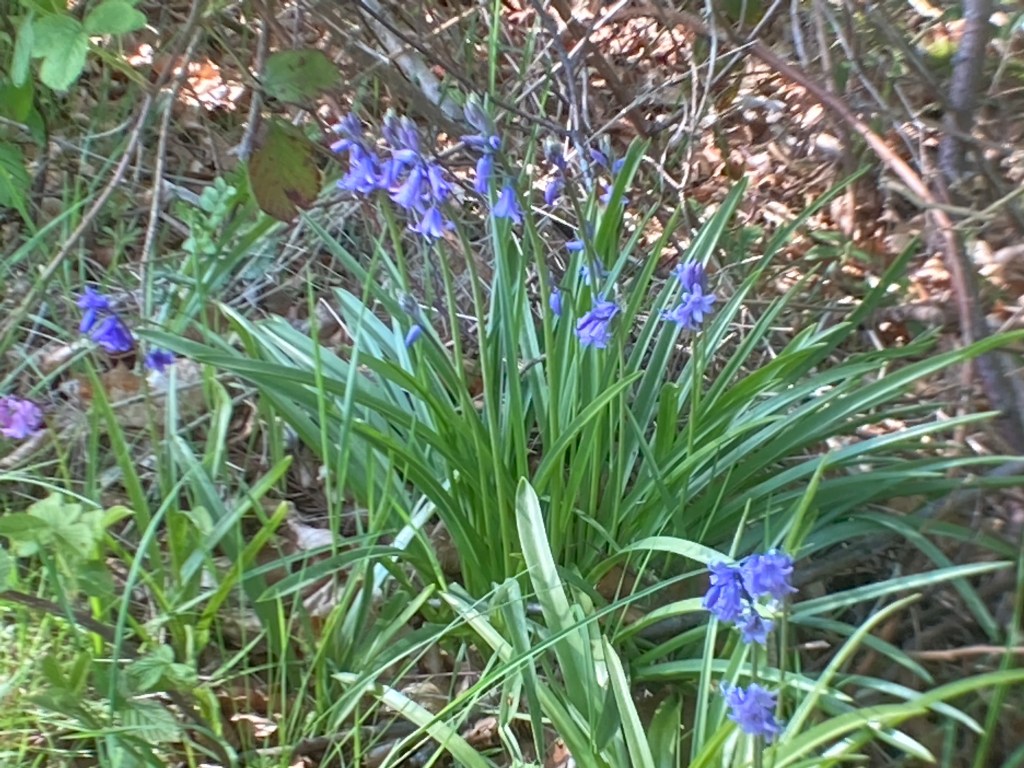
Bluebells are in full bloom on the edge of the wooded areas.

I love our walks at Druridge Bay!Drurid

Posted in Uncategorized

May Wildlife Walk

I haven’t scooted down my regular route in a while so, as the weather was pleasant, we did the local dog walk on Friday. It was cloudy and cool, but not unpleasantly cold.

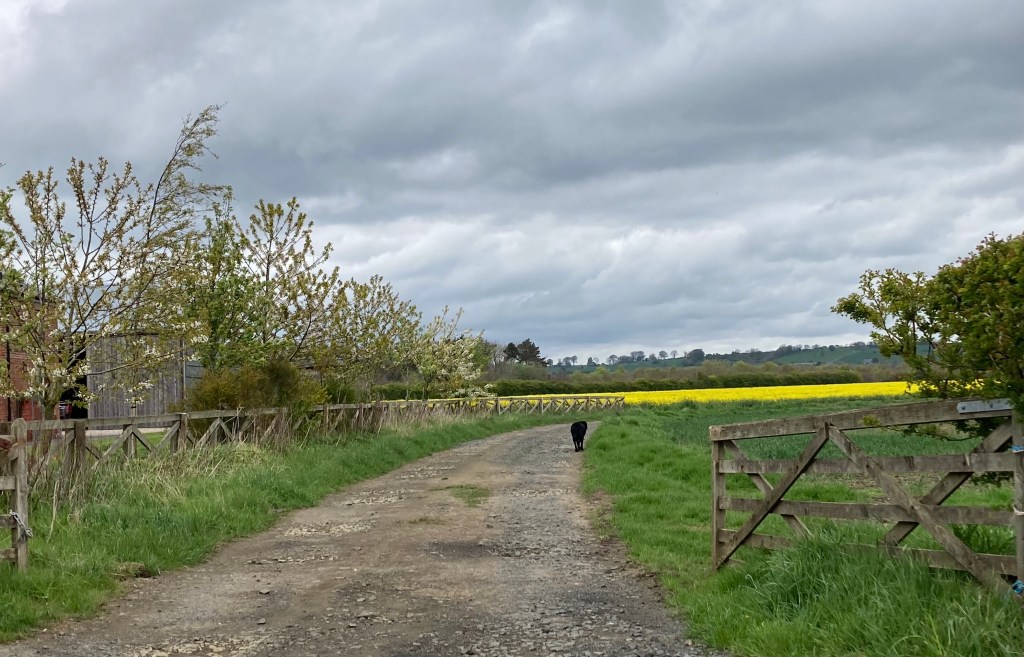
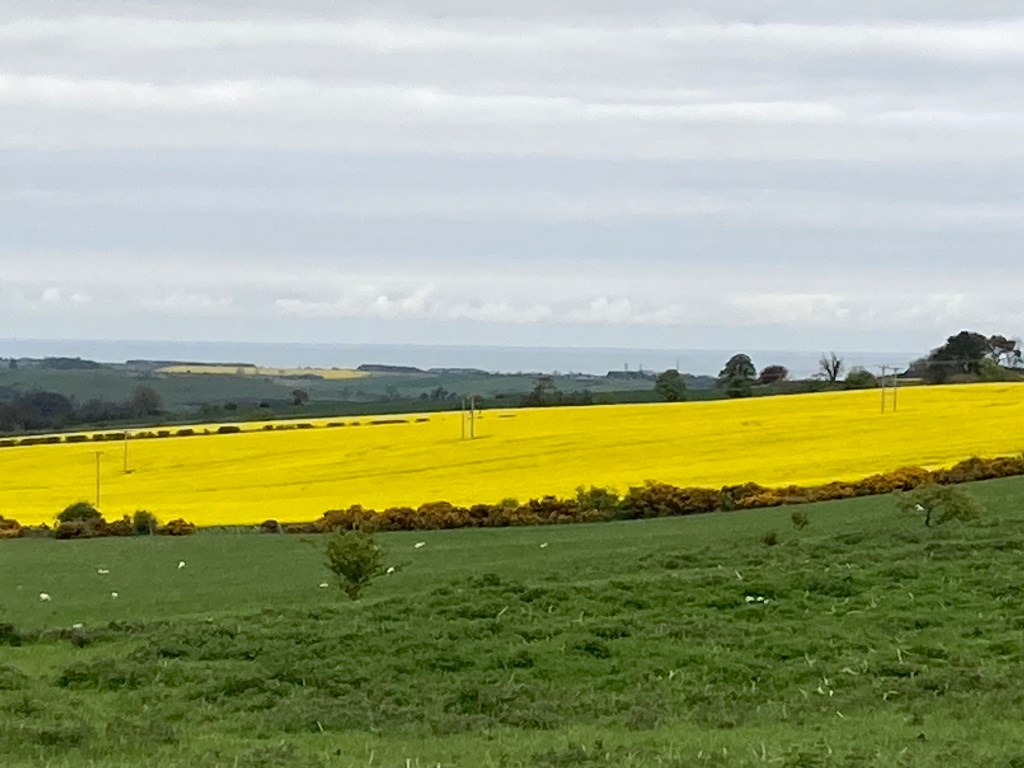
Acid yellow fields of oilseed rape in full bloom really stand out from the rest of the landscape .

Newly emerged arable crops are still so small that the rows are clearly visible.

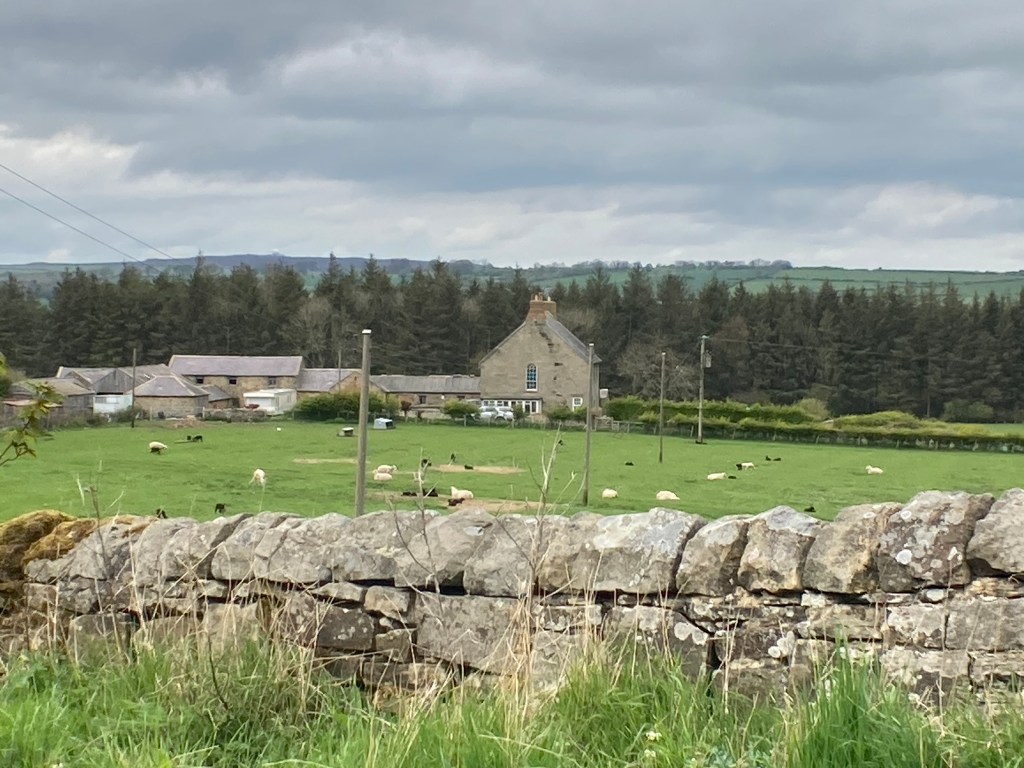
There are plenty of lambs about too.

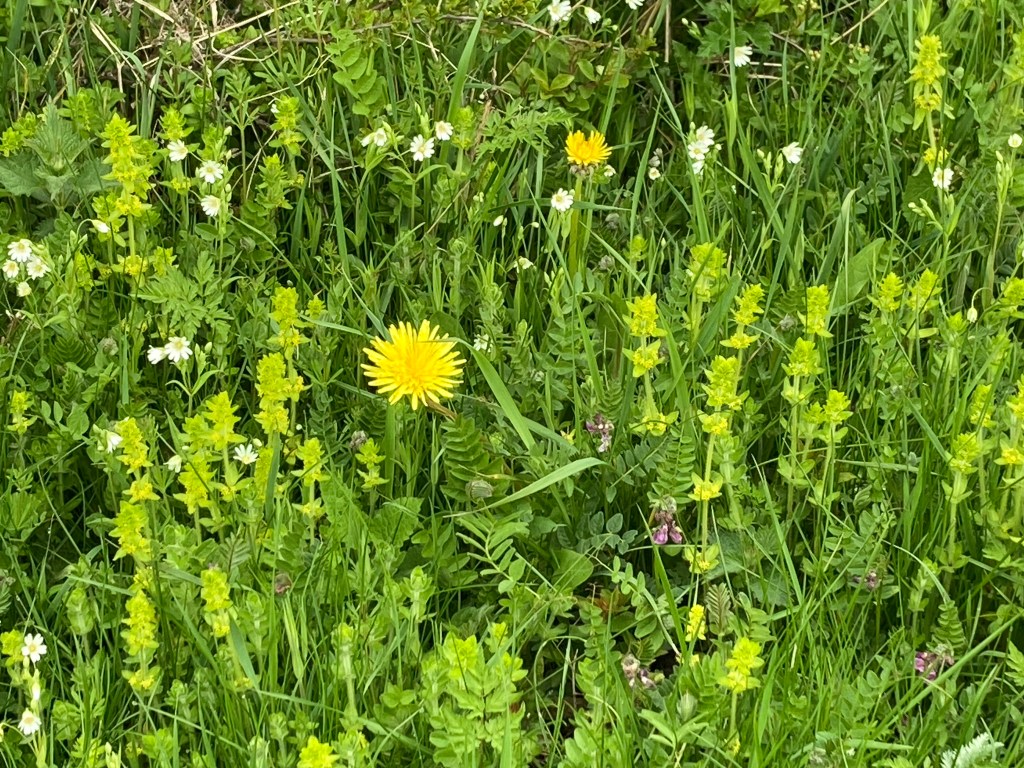
On the verges, dandelions and lime green spikes of crosswort dominate.

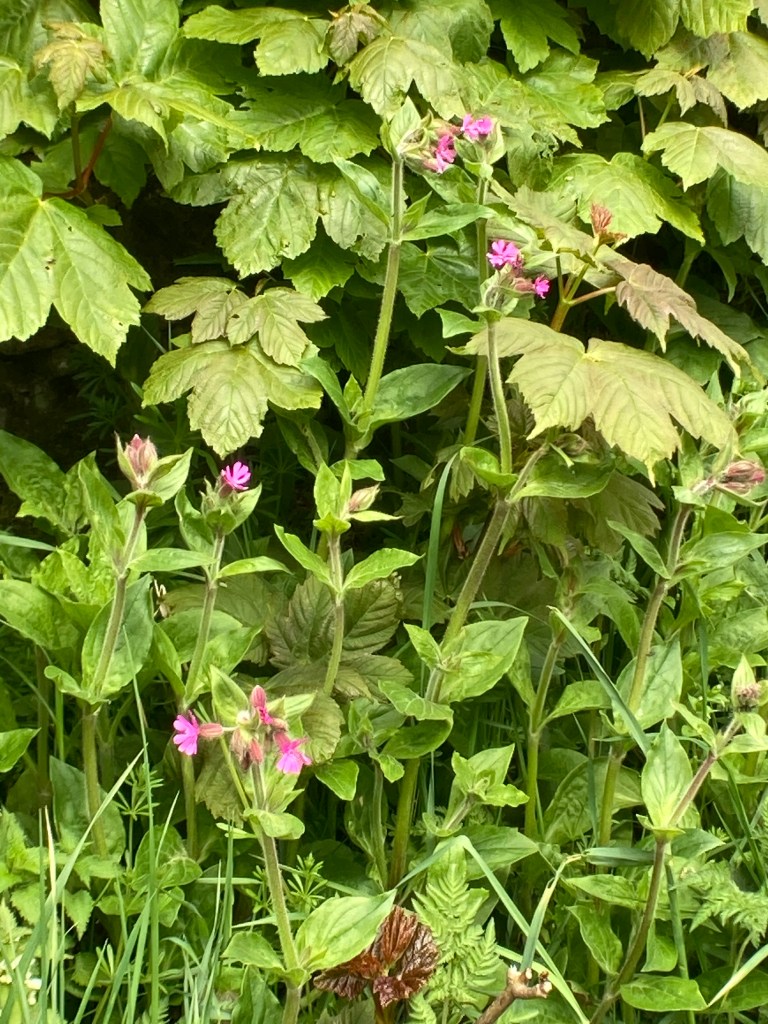
The first red campion flowers have opened. They will flower all summer.

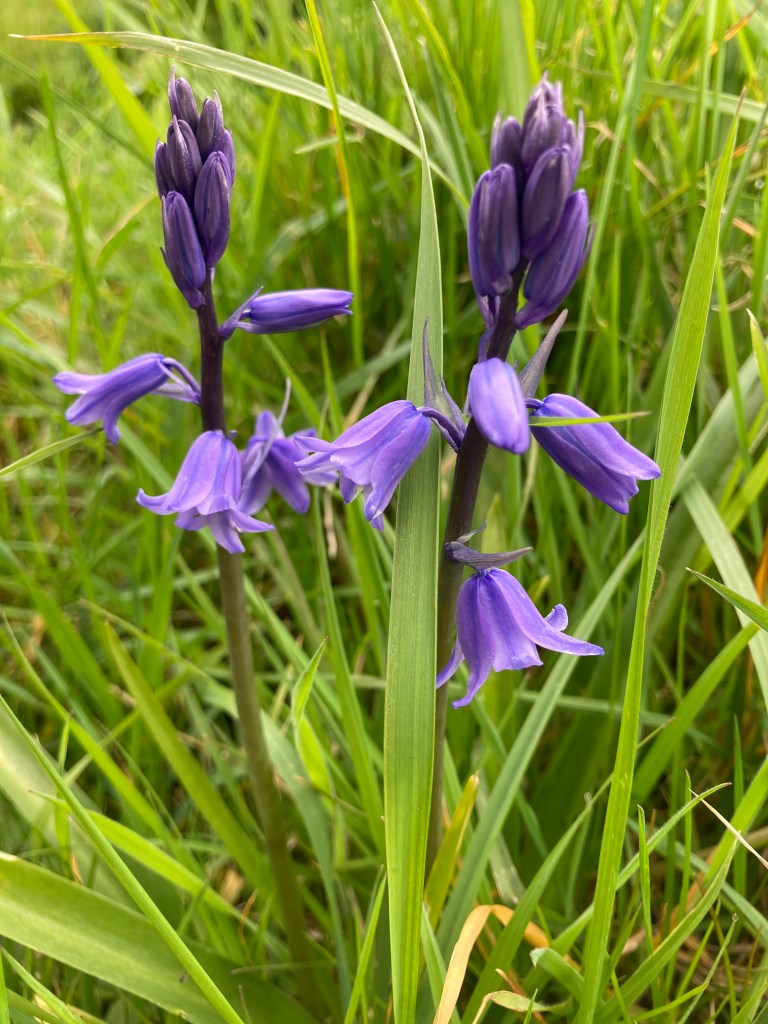
A few bluebells can be seen in the shade of the hedgerows.

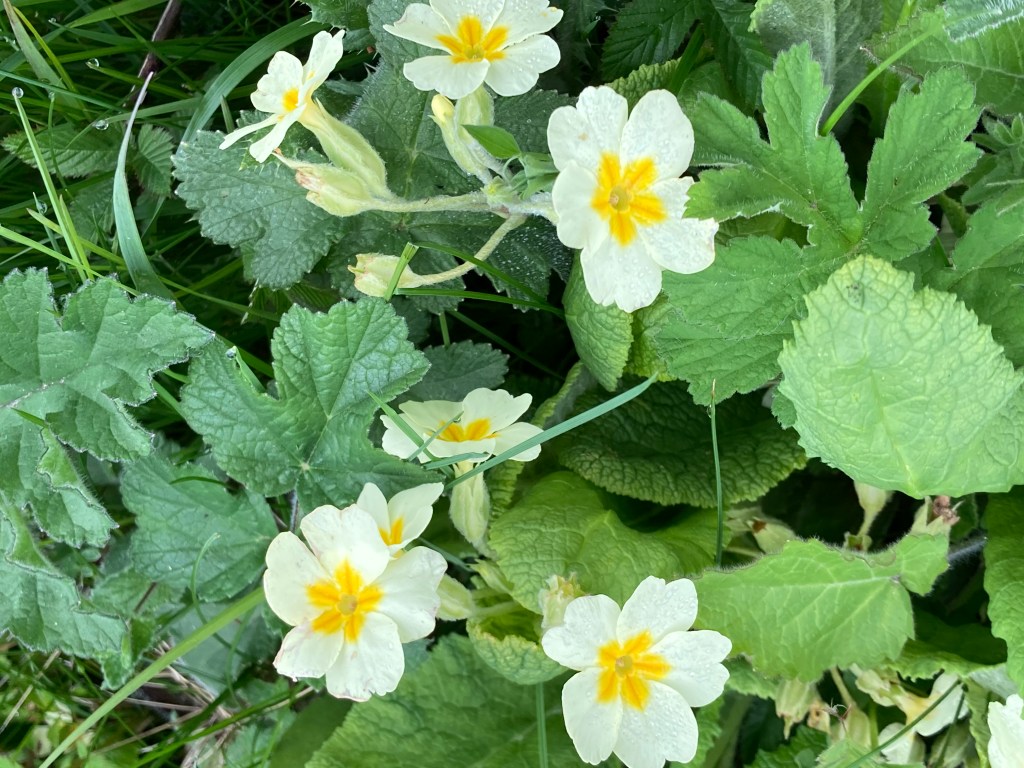
Patches of primroses, my favourite spring flower, are flowering profusely.

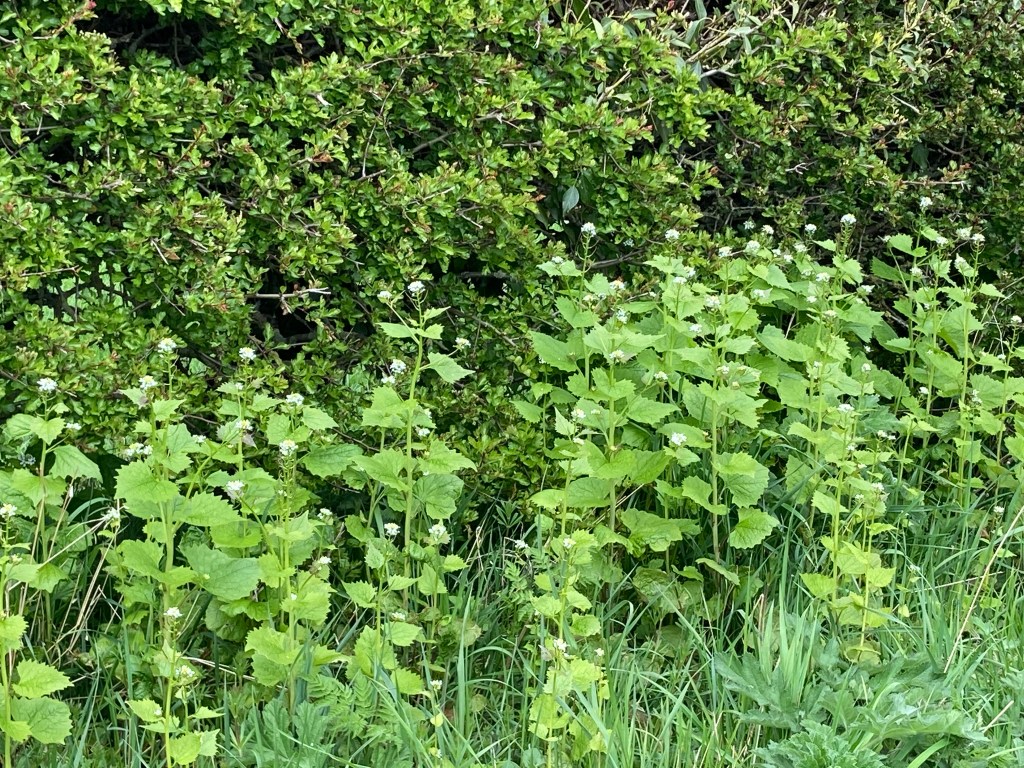
Garlic hedge mustard grows under the hedges too. This is the food plant of the orange tip butterfly. I only saw one. On sunny days there are more.

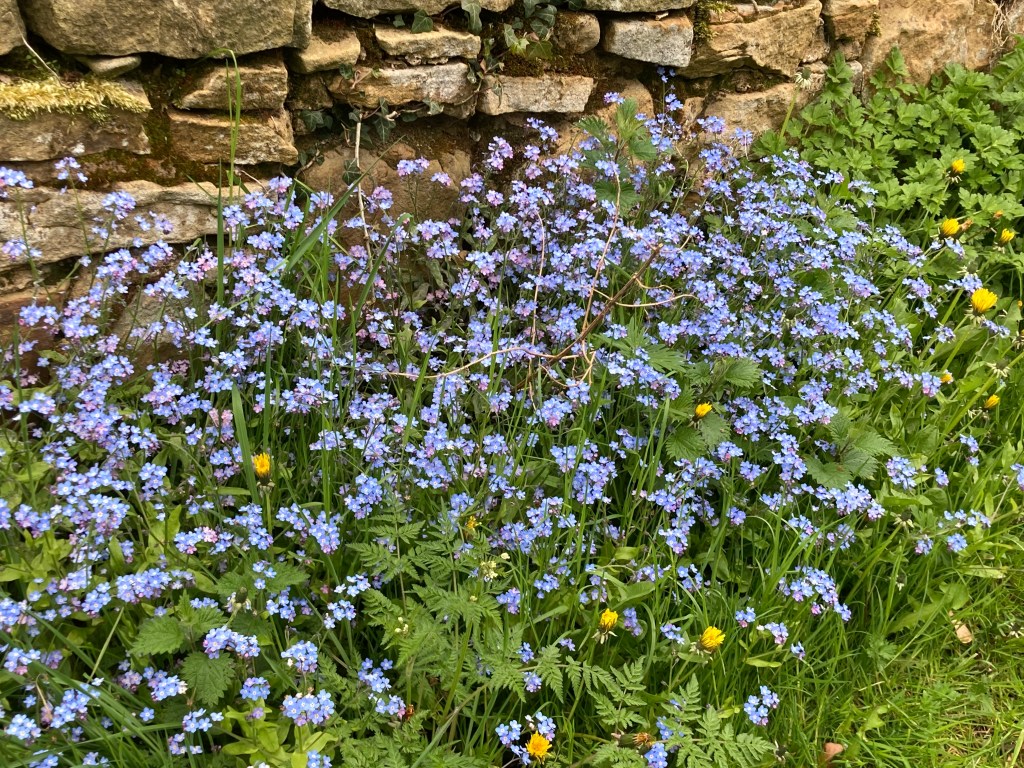
Under the trees the blue of the forget-me-nots stands out

Hawthorn flower buds are just opening. The saying “Cast ne’er a clout till may is out” refers to hawthorn or may blossom rather than the month. It basically means that you shouldn’t shed any clothes (clouts) until the flowers are fully open. I’m keeping the layers on for now!
I could hear lots of birds but no lapwings or skylarks, which usually nest in the fields here. I must listen out for them. I could hear the yellowhammers though. I love their lilting song.

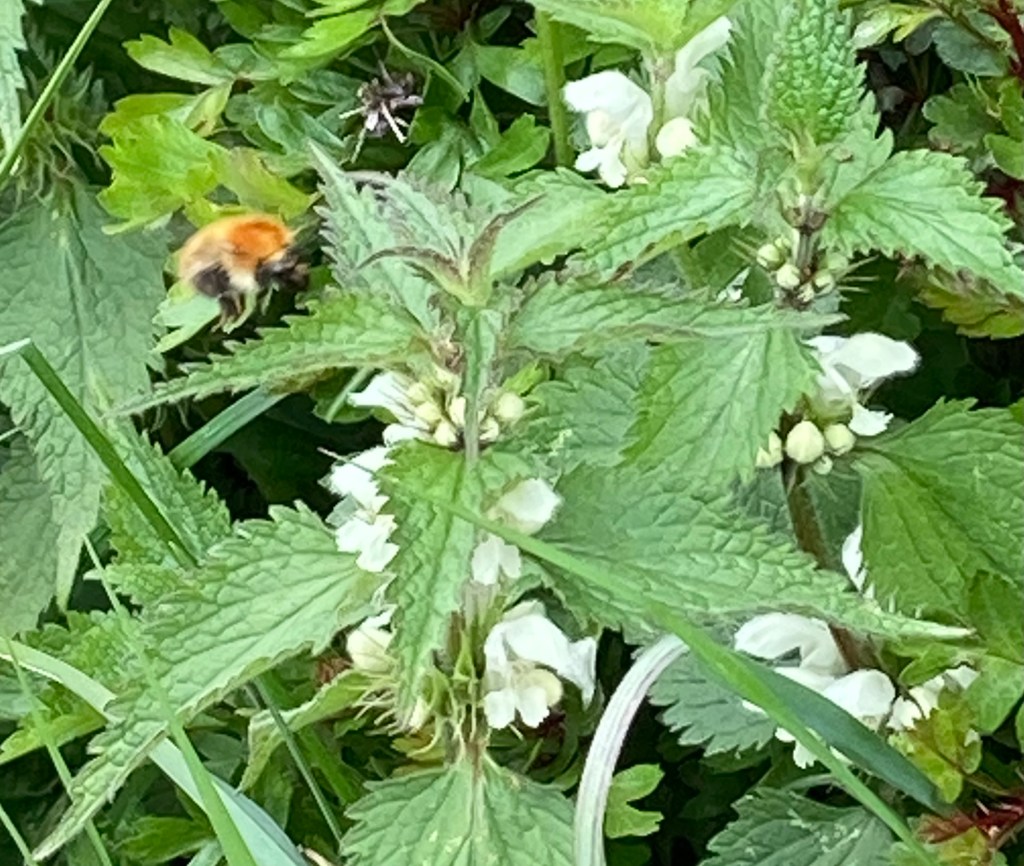
Emerging bumblebees were particularly enjoying the nectar of the white deadnettles

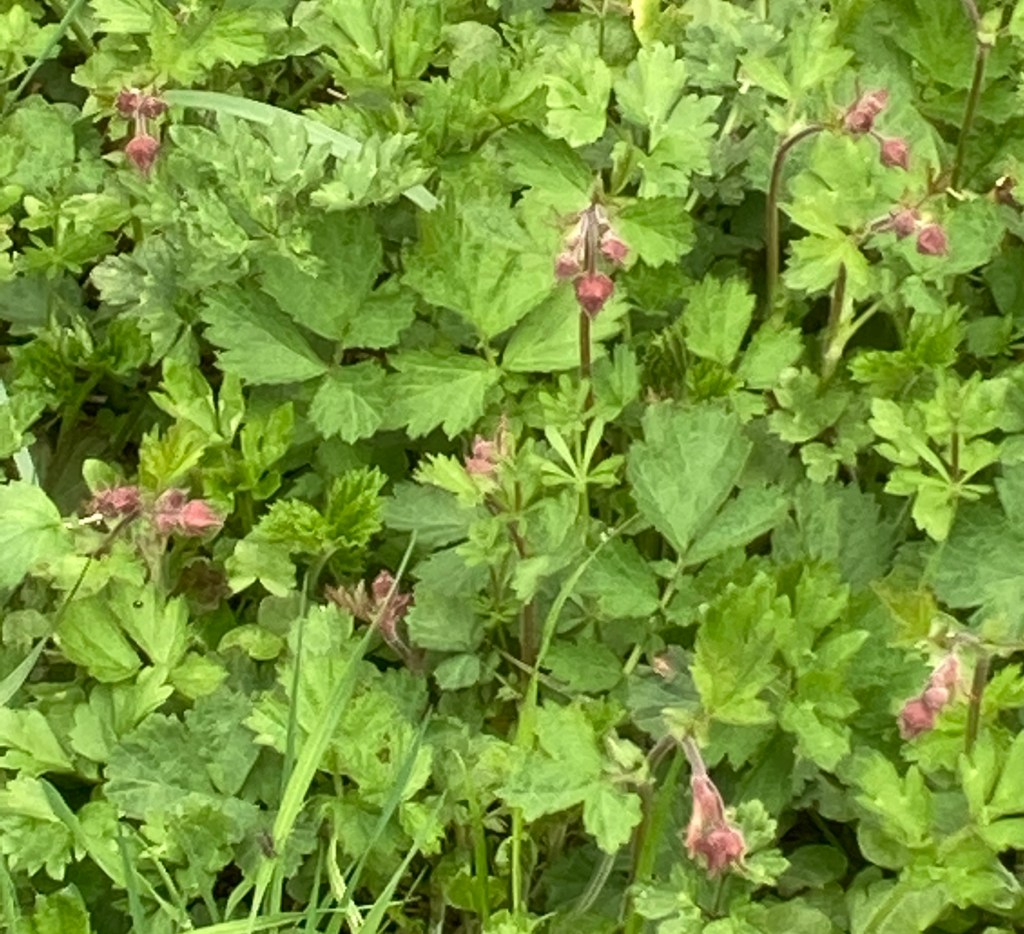
In the woods, by the stream the red stems of water avens flowers are emerging.

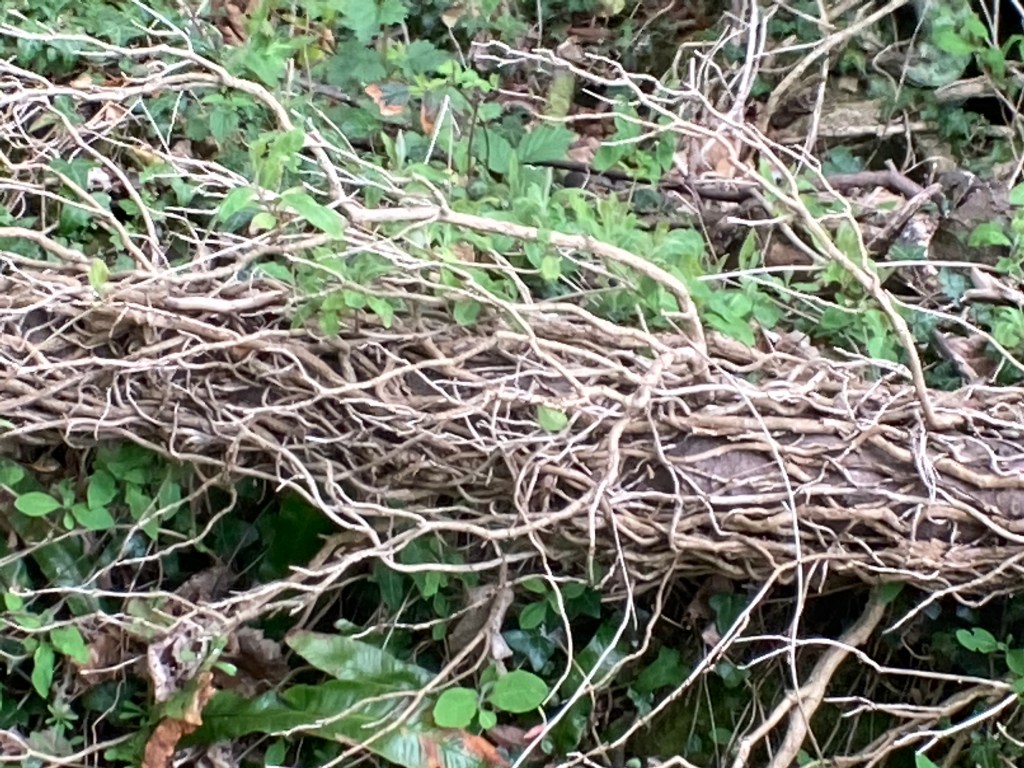
I hadn’t noticed this fallen branch before .It will soon be hidden by foliage, but for now you can see the mesh of honeysuckle stems that have grown around it.

wildlife walks

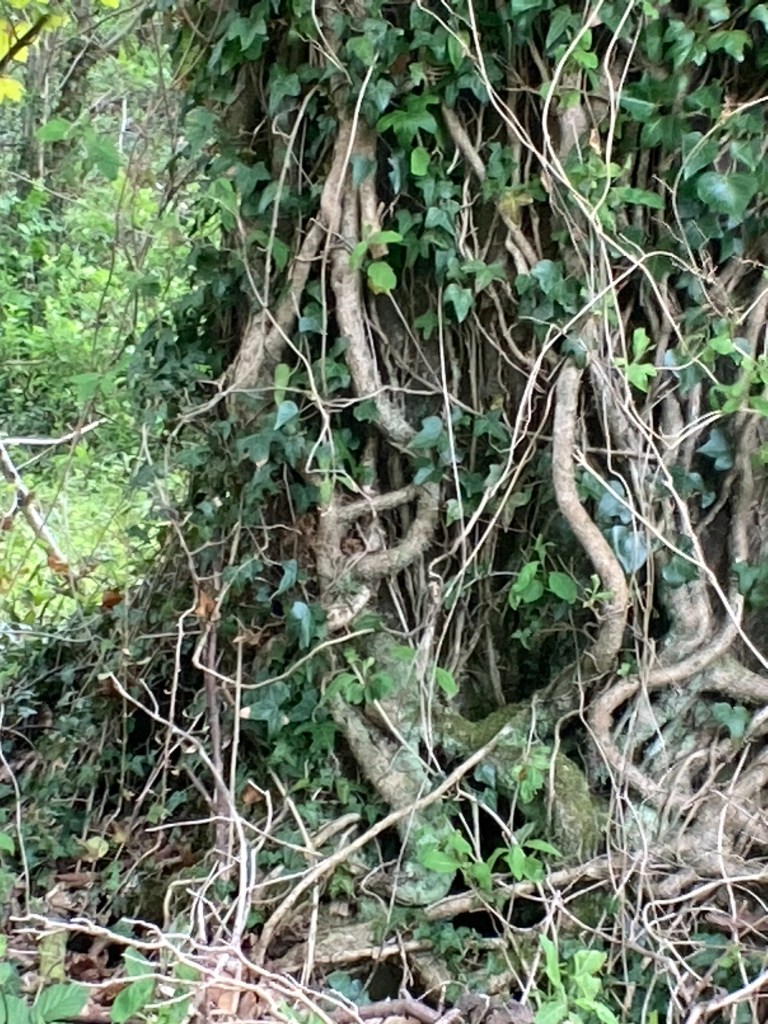
Most of the trees are covered in ivy. The stems at the foot of the trunks are quite old and gnarled, but honeysuckle is starting to grow through these too.

So many signs of spring, with lots of new growth and emerging spring flowers. This is such a hopeful time of year.

What are the spring highlights in your neighbourhood?