Posted in Uncategorized

Christmas Crafts – Crackers from a Kit

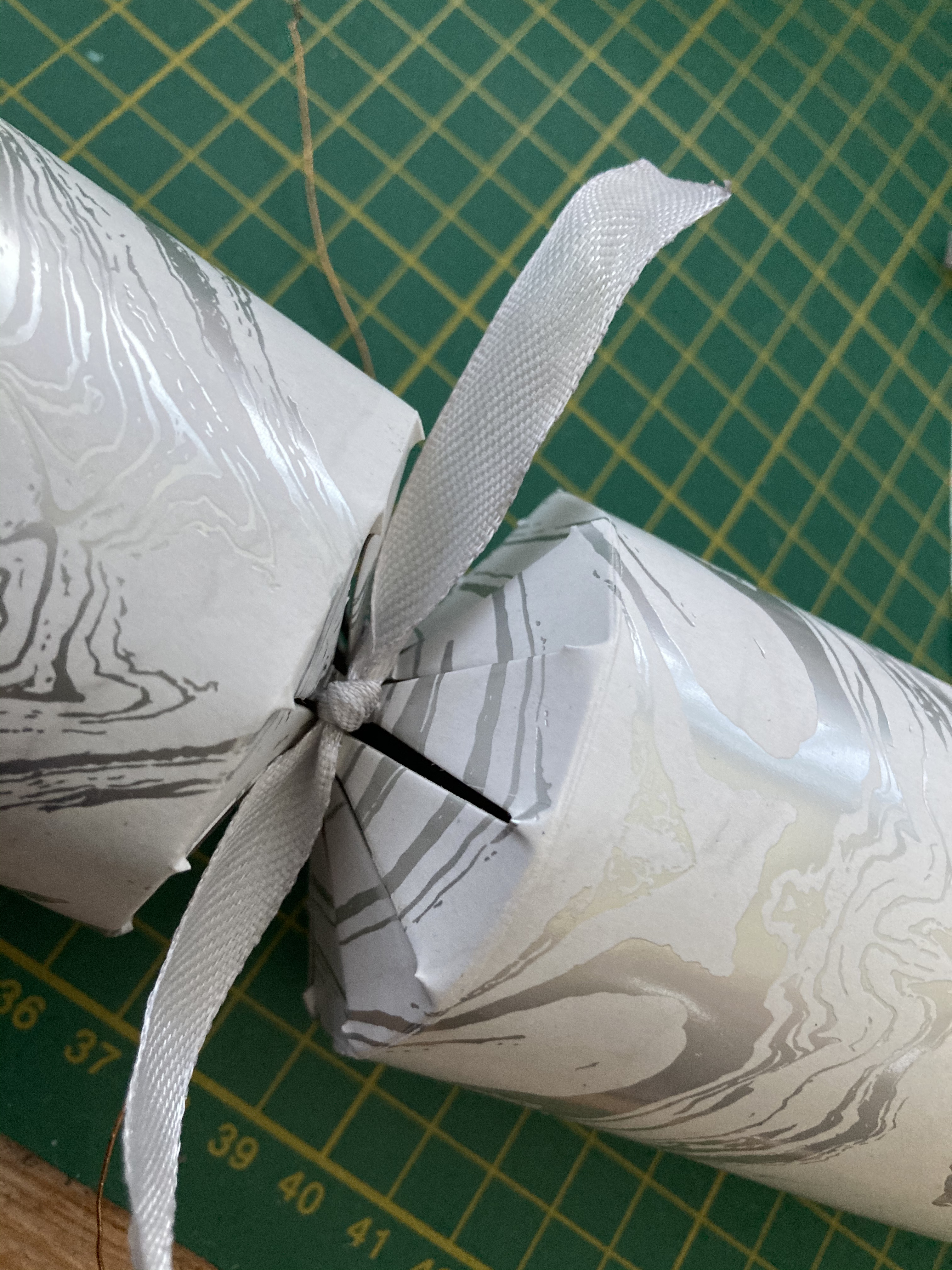
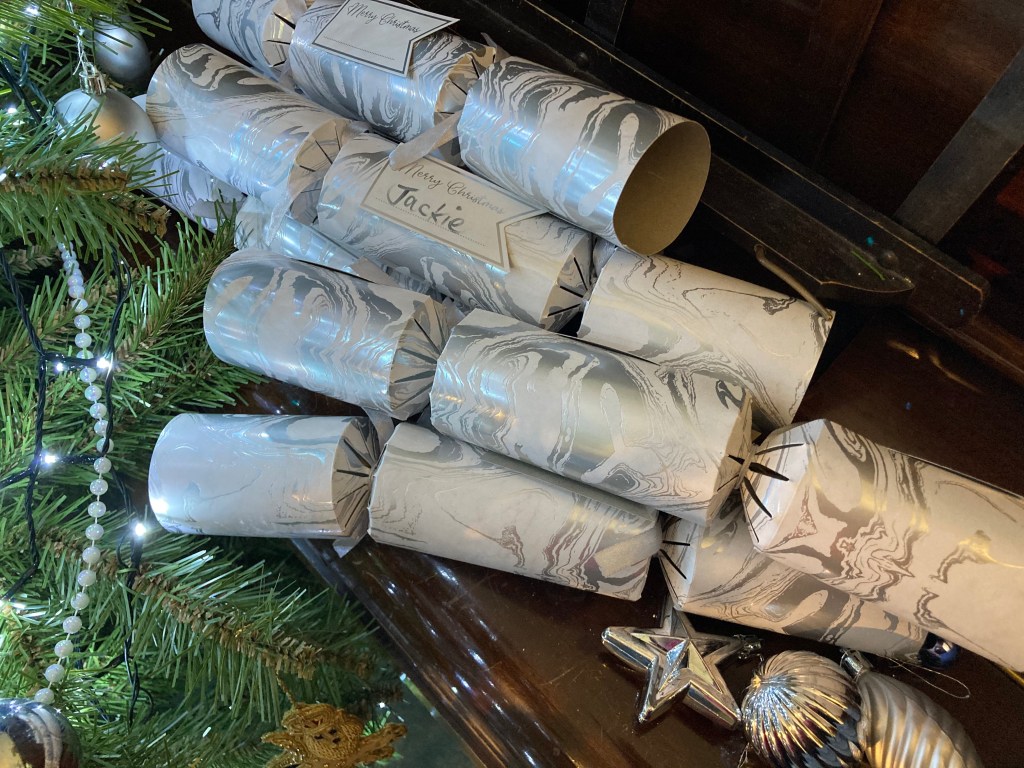
I saw this kit online from The Works and as I hadn’t bought crackers at the time I thought I’d get this kit instead. I chose this silver marbled design though they had others available.
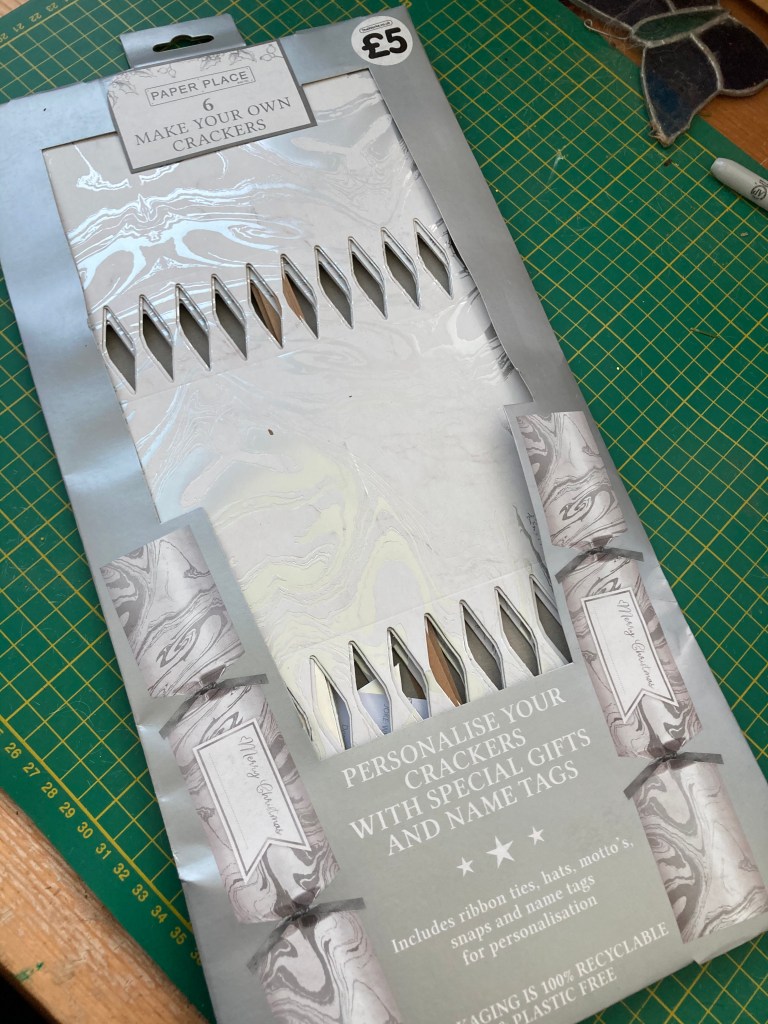
The kit includes the pre-cut cards to make the crackers, which have the snaps already glued to the inside. along with ribbons, paper hats, jokes and name tags. All you need to provide are gifts to go inside (if you want to), so you could add something useful or personal (and the name tags make them perfect for that), After all, the world really doesn’t need any more tiny plastic aeroplanes that are left on the table, to be binned along with the rest of the Christmas dinner debris!
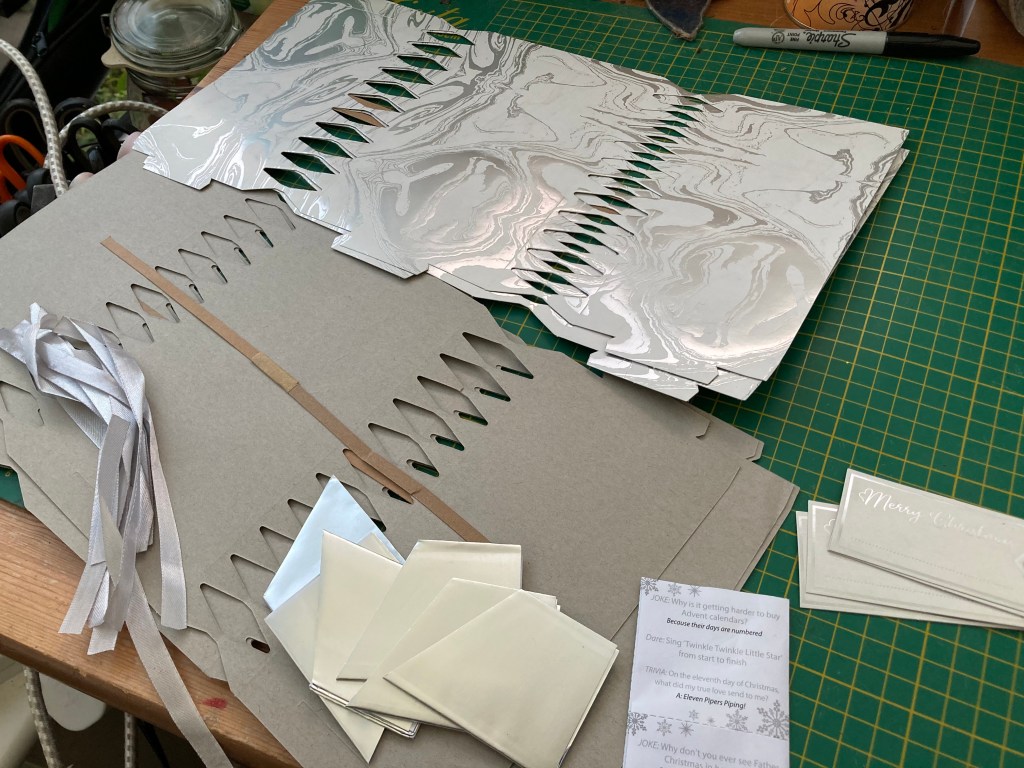
There were instructions on the packaging, including a template so you can see on the pack exactly what the final diameter of the cracker will be. That’s important if you are choosing gifts that will fit inside. I’ve added a few of steps of my own here . The cardboard shapes have very lightly scored lines and I found the crackers held their shape better if I creased along these lines to emphasise the fold points.
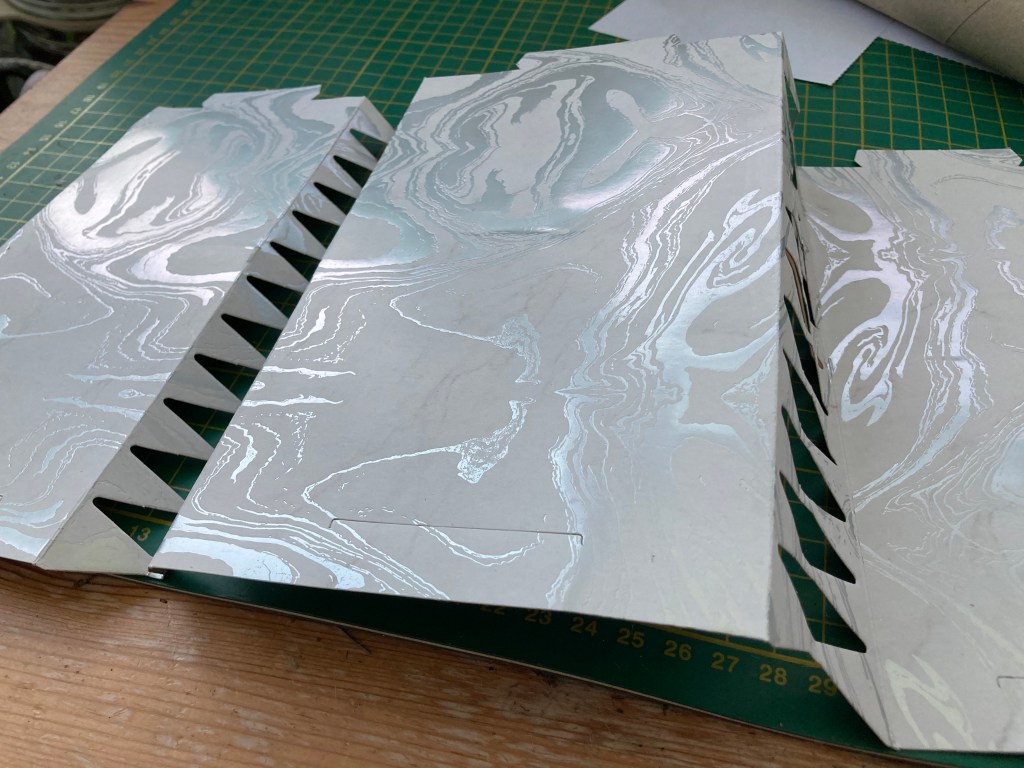
I then opened the card out flat, printed side down and rolled it up. A cardboard tube from inside a kitchen roll was my secret weapon at this stage, It held the shape of the cracker roll for the next stage, so I didn’t squash the whole thing flat.
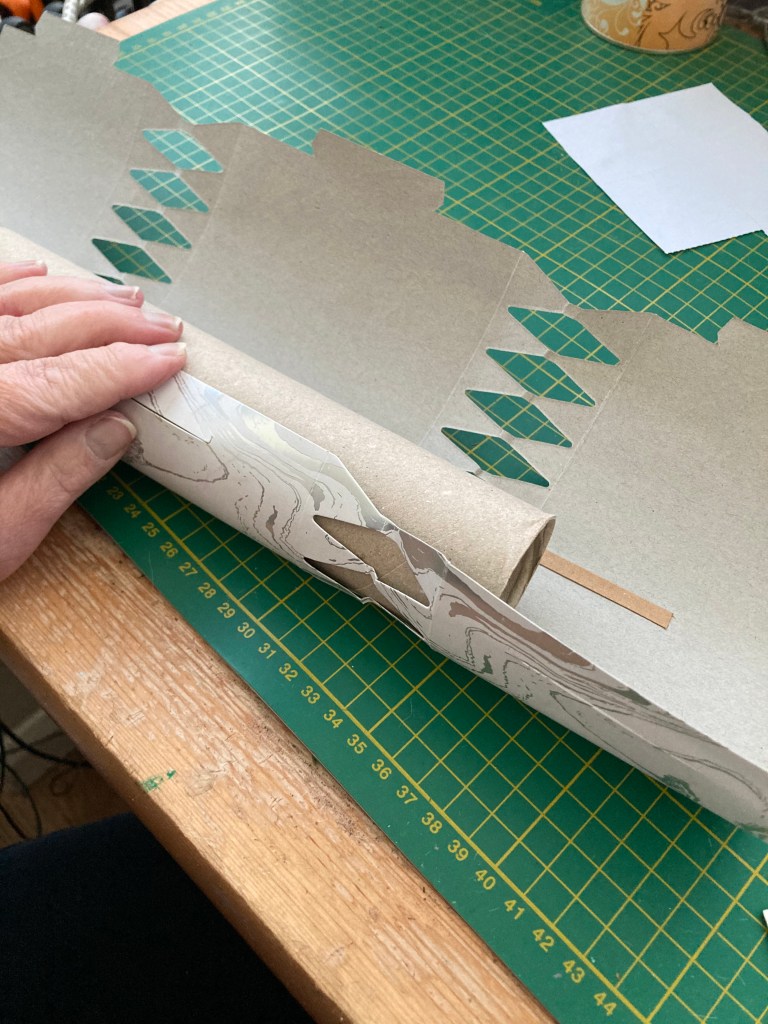
There are three tabs along one long edge that slot into the corresponding slits on the opposite edge. I found it easier to do the middle one first. I simply moved the cardboard kitchen roll tube along as I secured each tab, removing it when all three were in place. It is a bit fiddly but the tabs do fit – just be careful not to tear the card – if you do a small piece of sellotape on the inside will repair it.
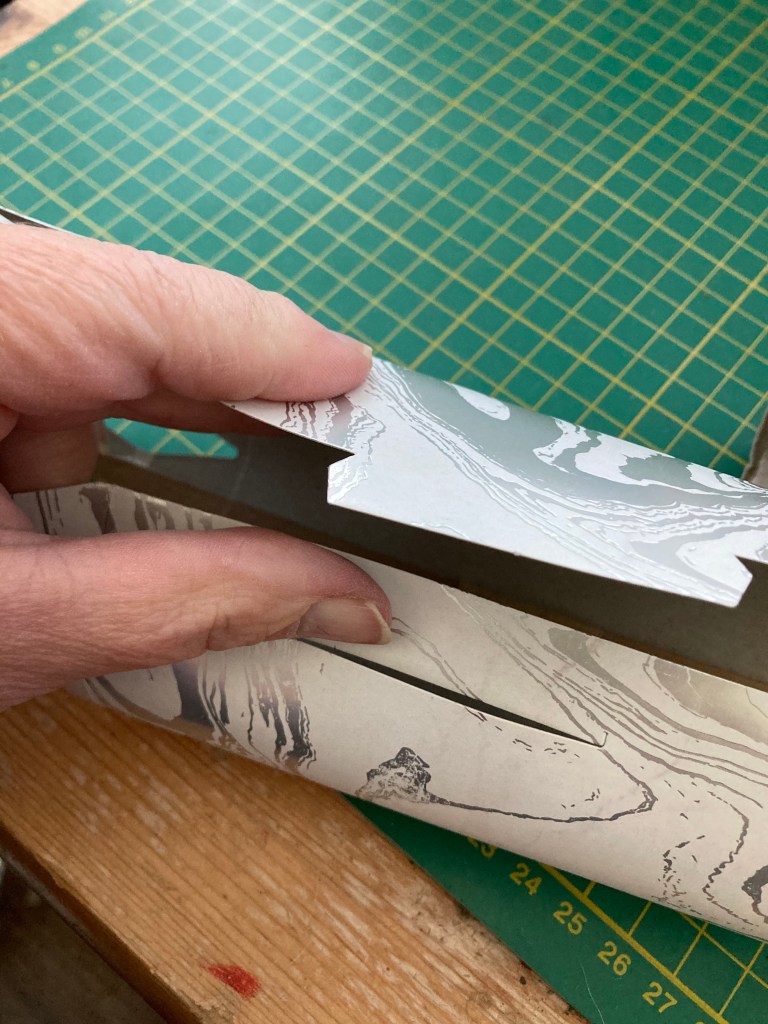
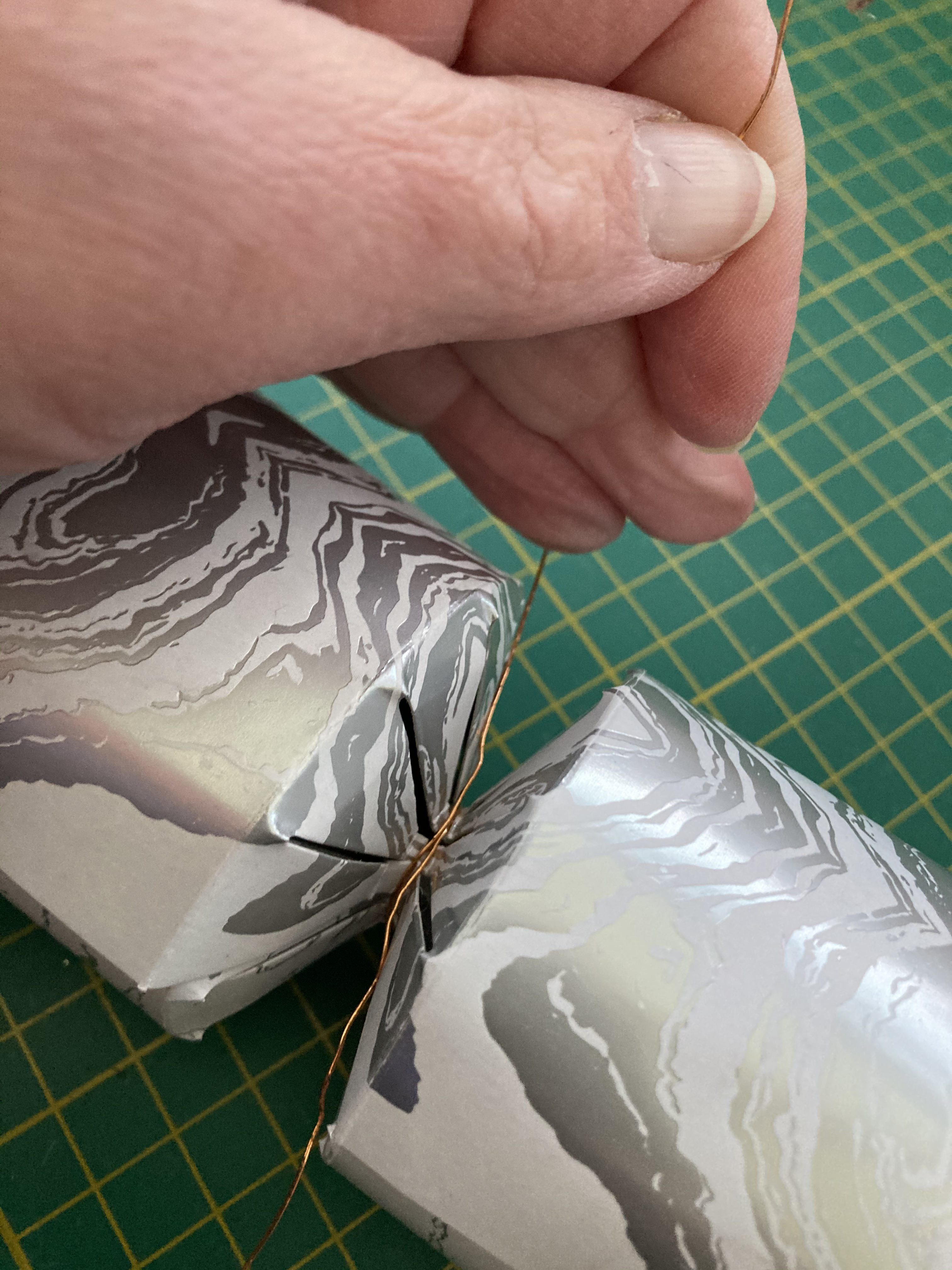
The next stage was crimping one of the ends and tying the ribbon on. Important! Don’t forget to drop the paper hat, motto and gift inside before repeating this step with the the other end of the cracker! I’m so glad I remembered! – I was glad Daughter was around to help (it was one of our Crafty Monday sessions- it was so much easier with two people. We deployed a length of craft wire here to loop around the crimp point, one of us pulling gently on the ends of the wire to form a narrow “waist” and them the other tied one of the pre-cut ribbons in a double knot. You can then gently pull the wire out

The name tag is self adhesive so can easily be attached after you’ve written it

There were materials to make six crackers and they did not take long to assemble, especially with two of us working on them. As you’d expect, the first one took longer, but once you work out how to do it the others take shape pretty quickly.

I’d definitely use these again. I love that they are plastic free and that you can add your own gift. The name tags means that you could use these instead of place cards. They could even be used as an alternative way of wrapping Christmas gifts, especially small, awkward shapes.

That’s something else crossed off my Christmas “to do” list!
Posted in Uncategorized

Christmas Crafts: Door Wreaths

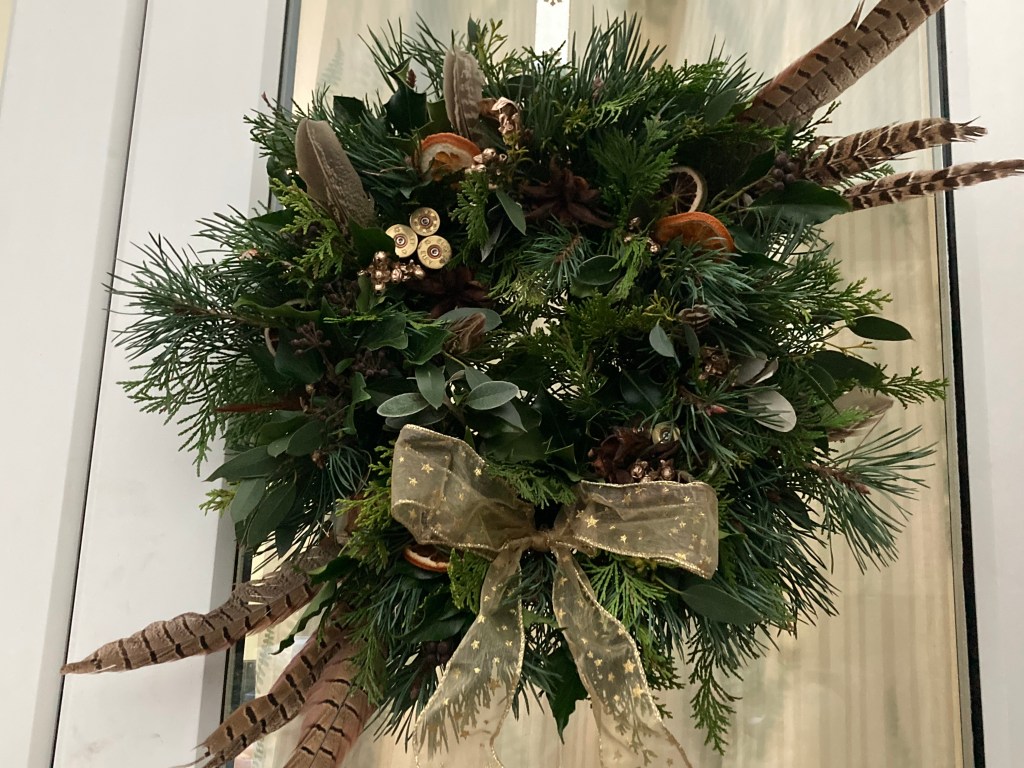
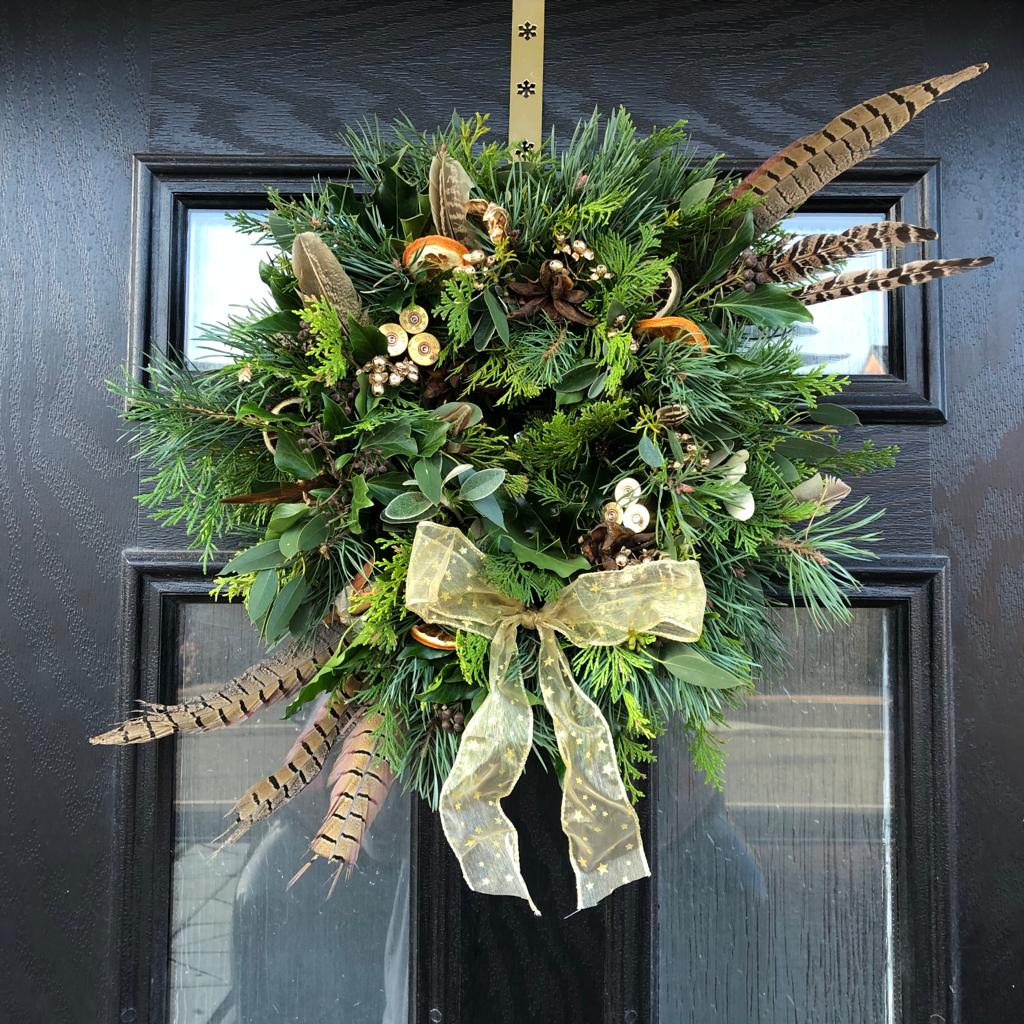
For this week’s Crafty Monday project, Daughter and I made Christmas wreaths. We enjoyed attending a workshop to make these last year, but classes like that are another COVID casualty. One of Daughter’s friends has started a floristry business: Polly’s Petals and makes stunning wreaths and kits with everything needed to make your own. Polly’s family have a large garden and much of the material is sourced from there. She even makes her own dried citrus slices, drying the fruit in the aga. Daughter went to collect the kits we’d ordered yesterday morning and arrived here with two large boxes.

Each included

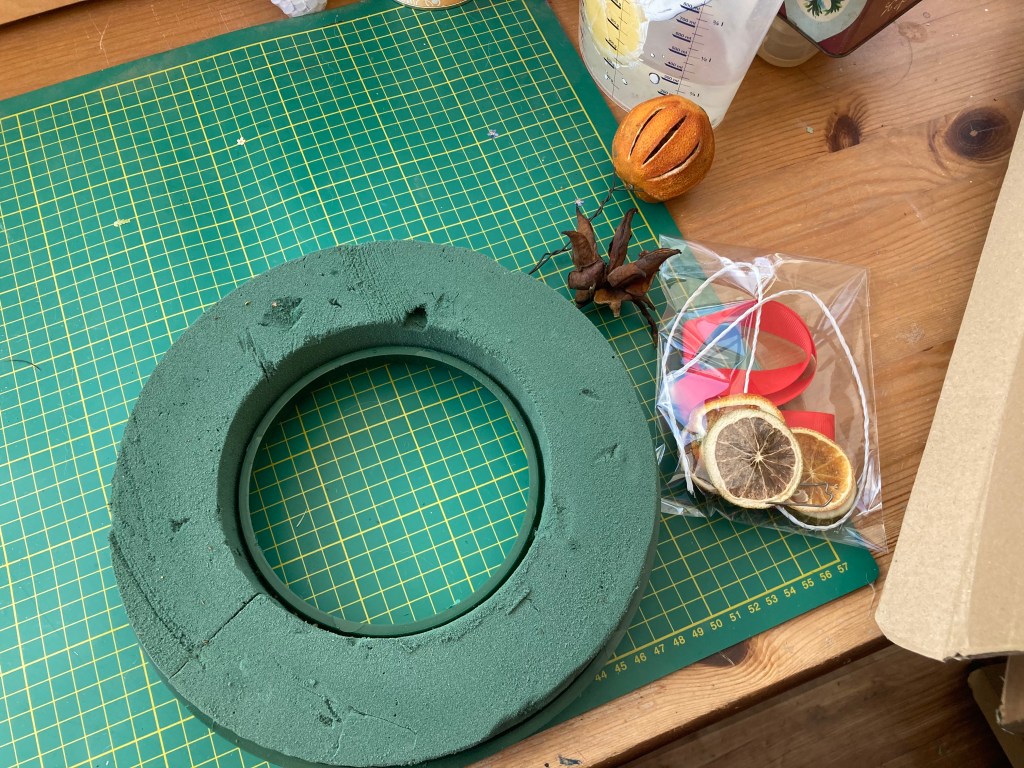
  • florists foam ring and base
  • hanging string
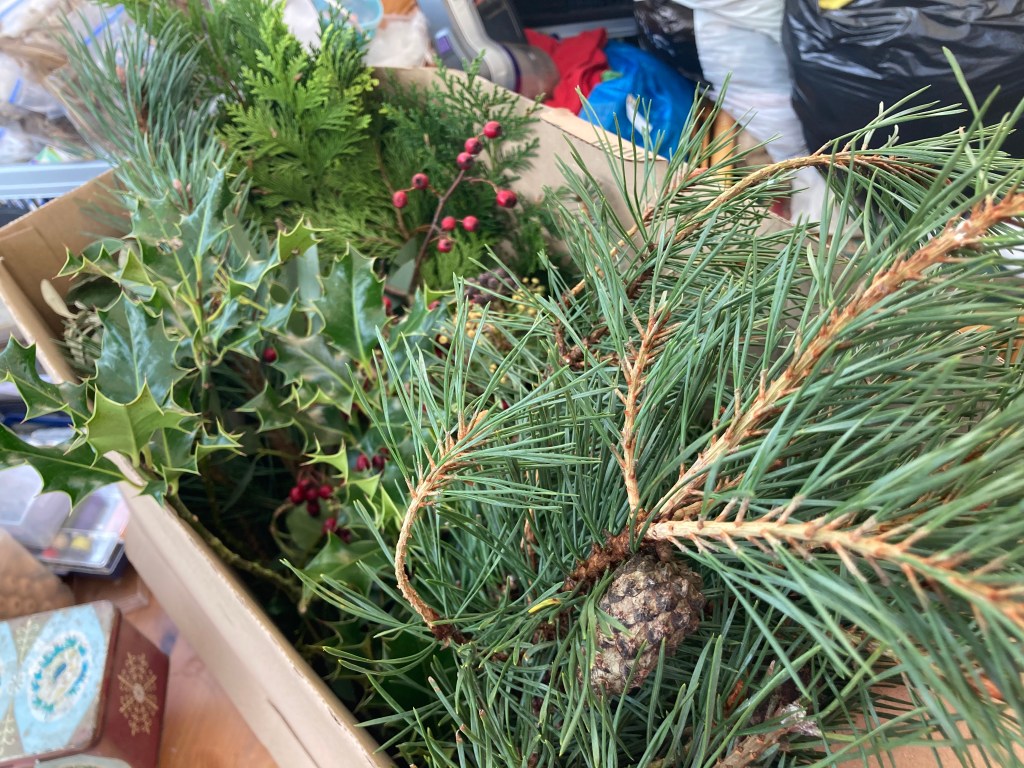
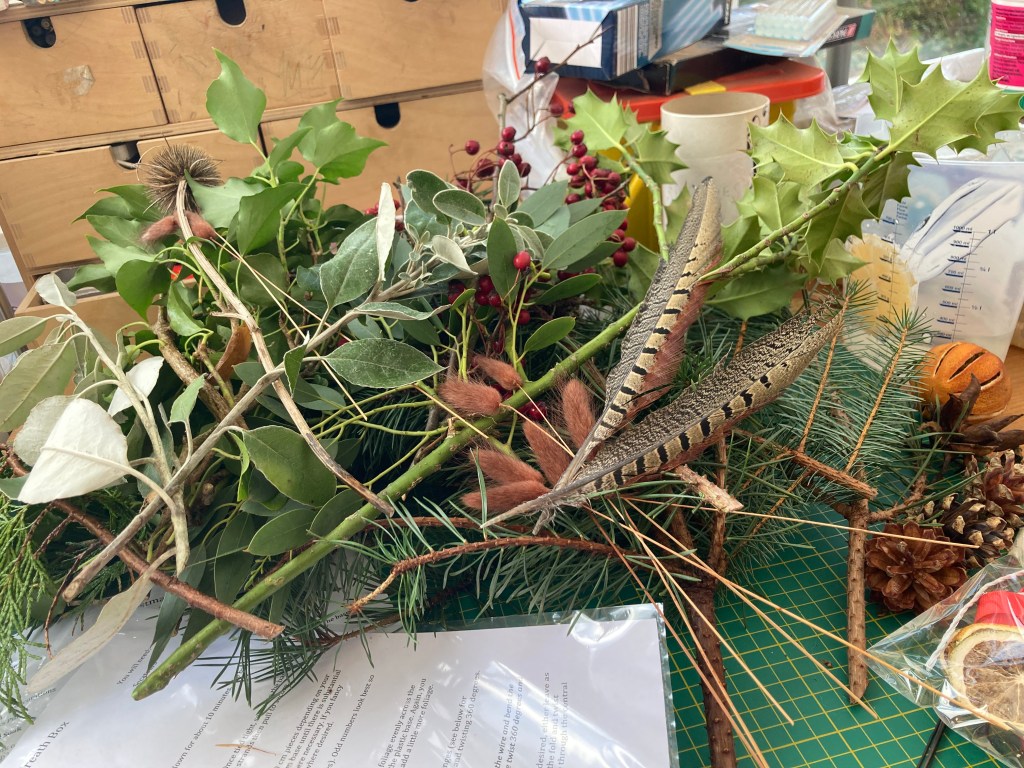
  • huge amounts of foliage (included cypress, Scots pine, holly, ivy and various other evergreens,
  • dried seed heads, teasels, grasses, pine cones
  • dried citrus and cinnamon stick bundles
  • berries
  • pheasant feathers
  • ribbon
  • florists wire
  • full instructions

There was more than enough in each to make quite a substantial wreath and all we needed to provide were secateurs or strong scissors. We began by soaking the foam in water for ten minutes and attaching a hanging loop.

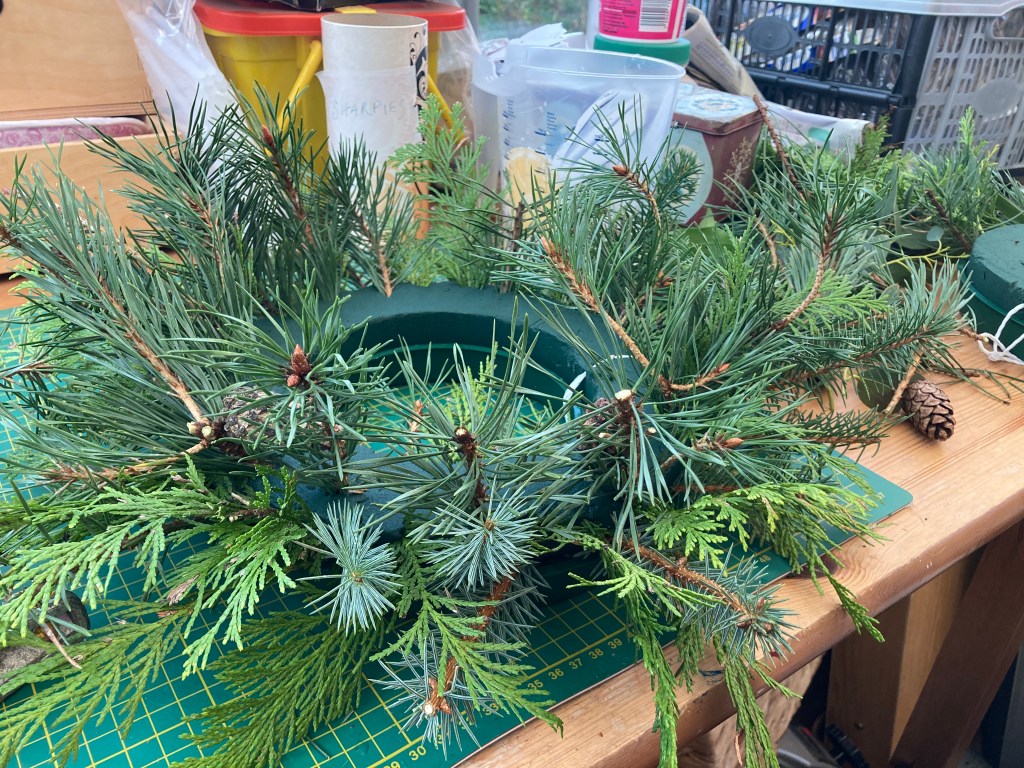
Working from the outside, we began to cut small sprigs of foliage and pushed it into the foam.

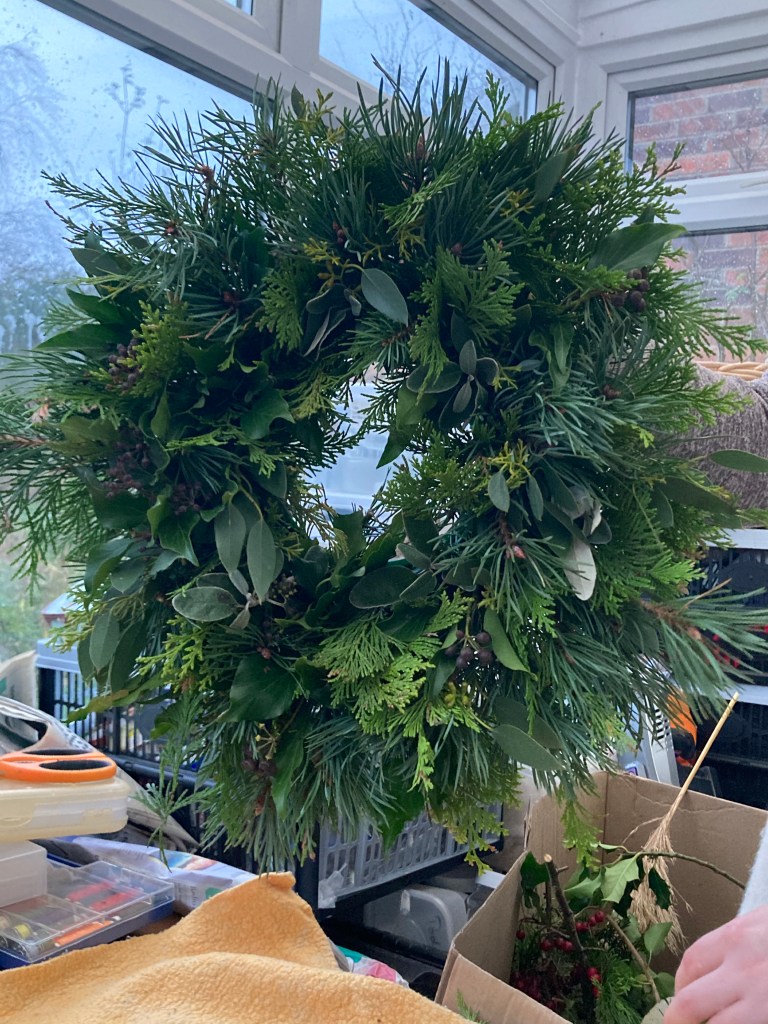
We continued until the whole wreath was covered and no foam was showing.

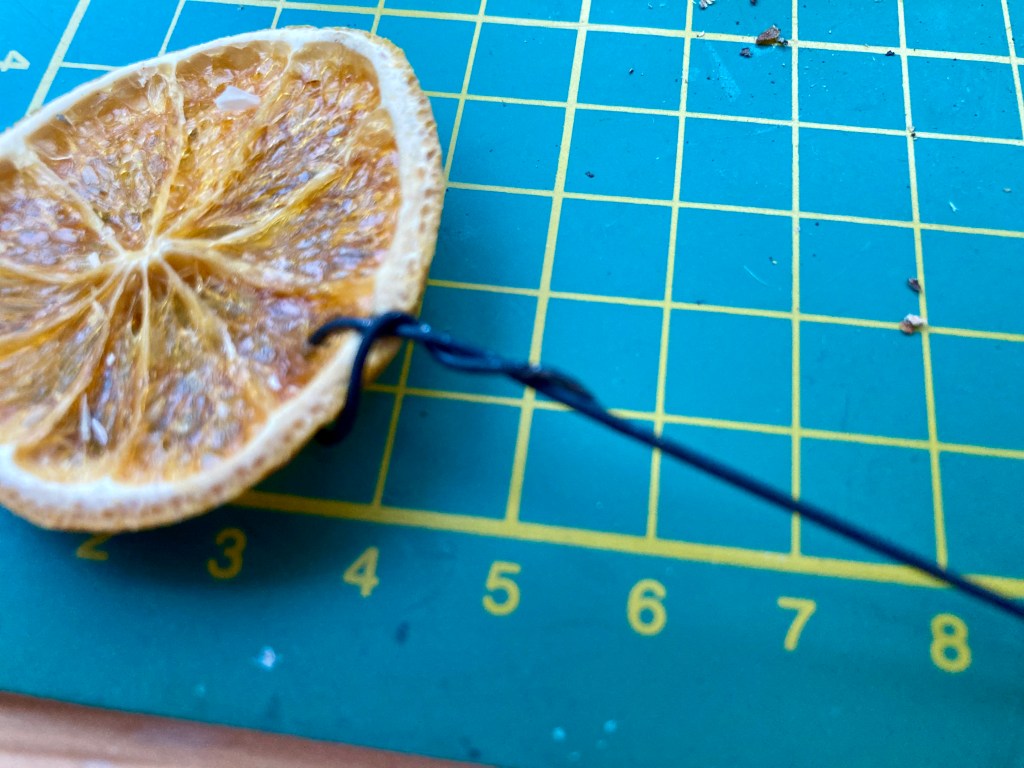
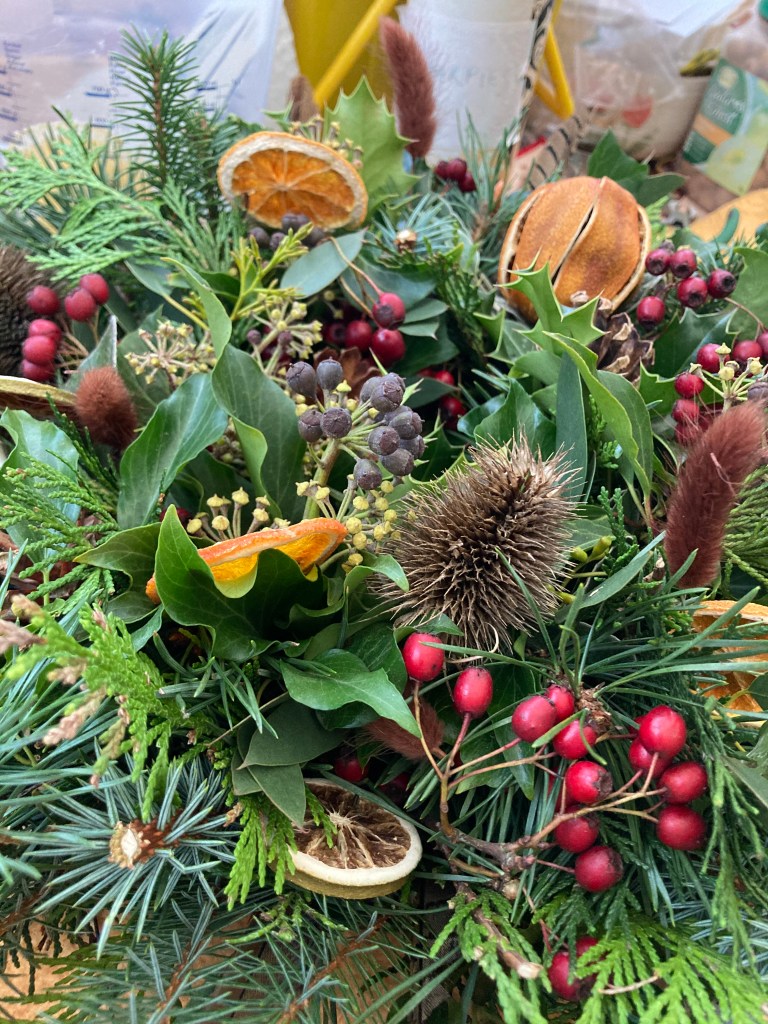
We then added the other items, twisting florists wire round the citrus and cones to make a stem to push in the foam.

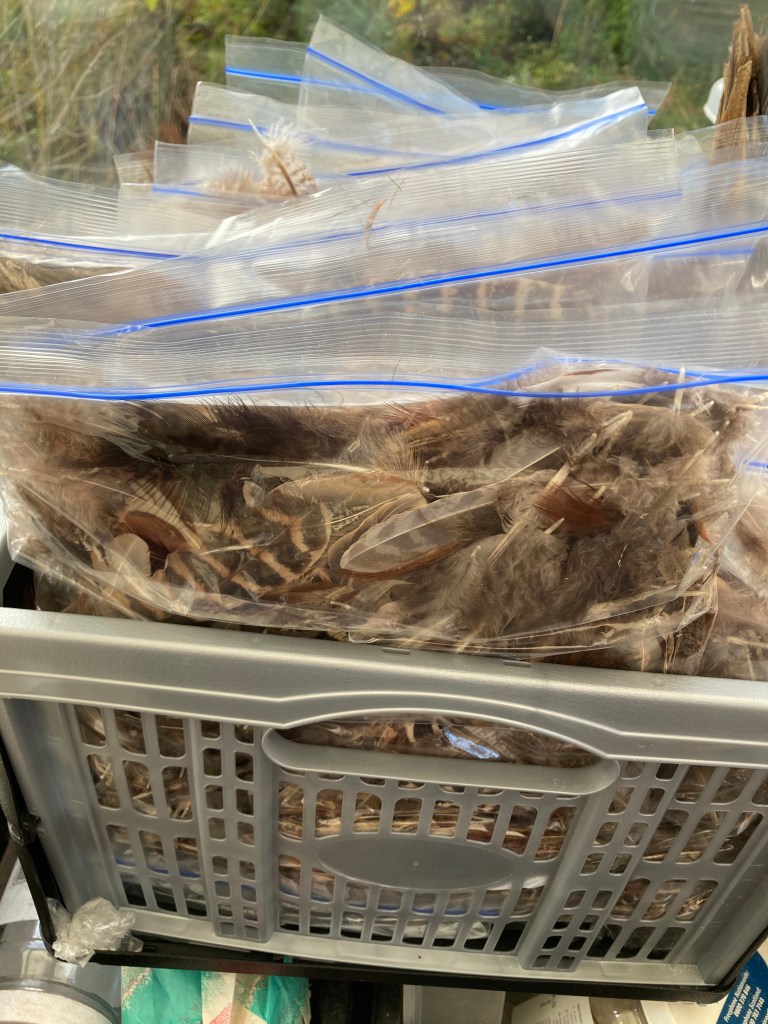
I have vast numbers of feathers so I added some of my own. I looked in the ribbon box and found a length in a pinky peachy shade that looked perfect so I used that instead of what came in the kit.

Daughter added some gun cartridge ends and found some gold ribbon

Even though the kit contents were very similar our wreaths are very different. We love them. Thanks Polly!
Posted in Uncategorized

Lockdown Crafts: Pressed Fern Pictures:

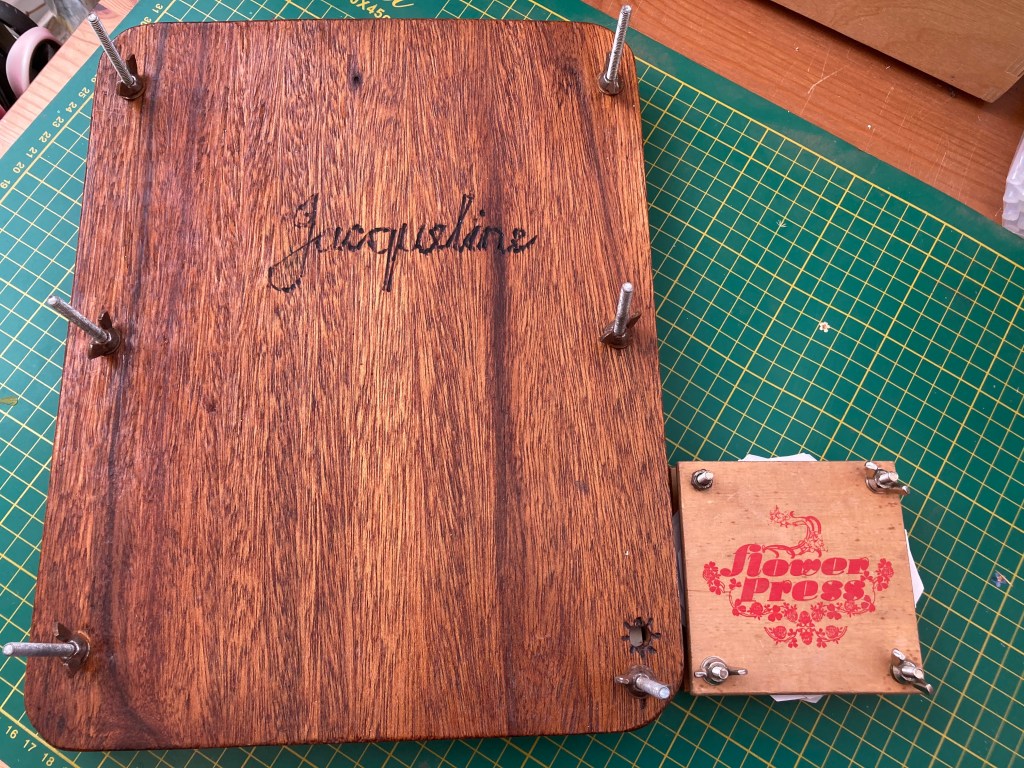
For yesterday’s Crafty Monday session I opened up the flower presses to see what I had. I’ve been pressing flowers since I was a kid, when my lovely grandfather made me a press. He even put my name on it. I also have a tiny flower press that’s ok for smaller items

I’ve made pictures and greetings cards in the past but nothing recently. Earlier in the year I came up with the idea of doing pressed fern pictures as they would look great with the curtains in my living room – the fabric has a fern design.

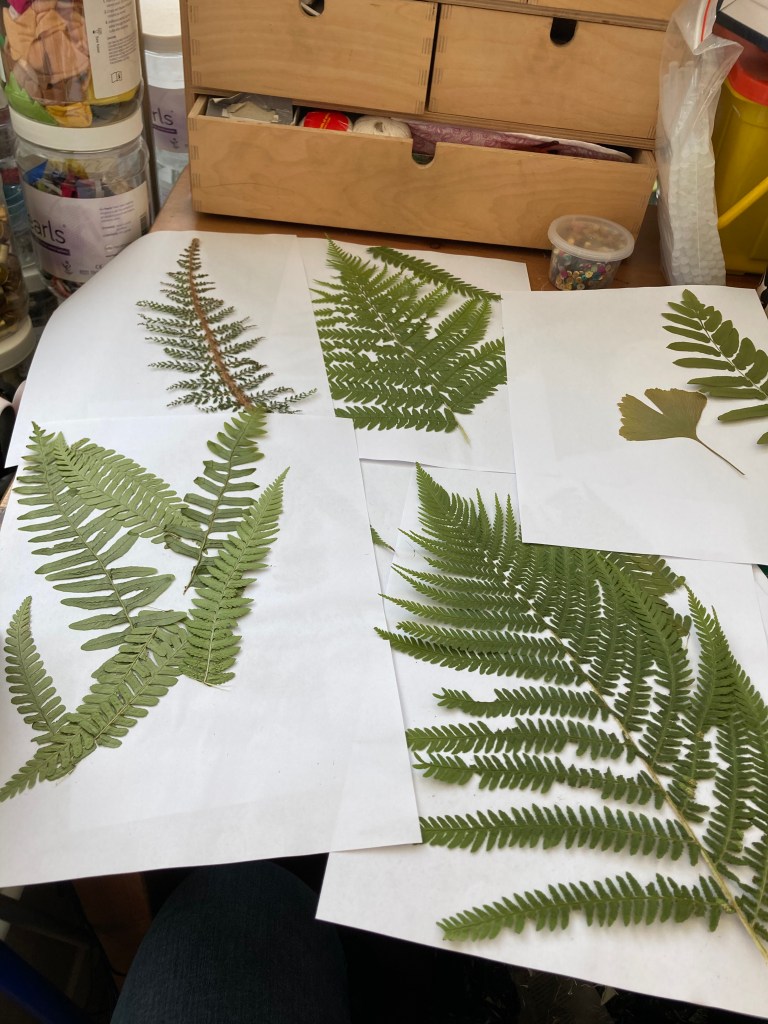
I picked and pressed a few different kinds of fern, mostly from the garden , but also some I’d found growing wild – I’m always careful only to pick what is growing in abundance. For the best results choose perfect specimens, free of insects and completely dry. Most leaves dry quite well. Flowers are more variable. Fragile petals are even more fragile when pressed and very full double flowers such as roses are too three-dimensional to preserve in this way: flat blooms work better. Brightly coloured flowers tend to keep their colour. White ones go brown. You don’t need a flower press – you can press flowers, leaves and ferns inside the pages of a book, preferably weighted under other books. Put the items between sheets of scrap paper to protect your book from pollen or other stains. Within a few weeks the plant material will have dried out and you can use it.

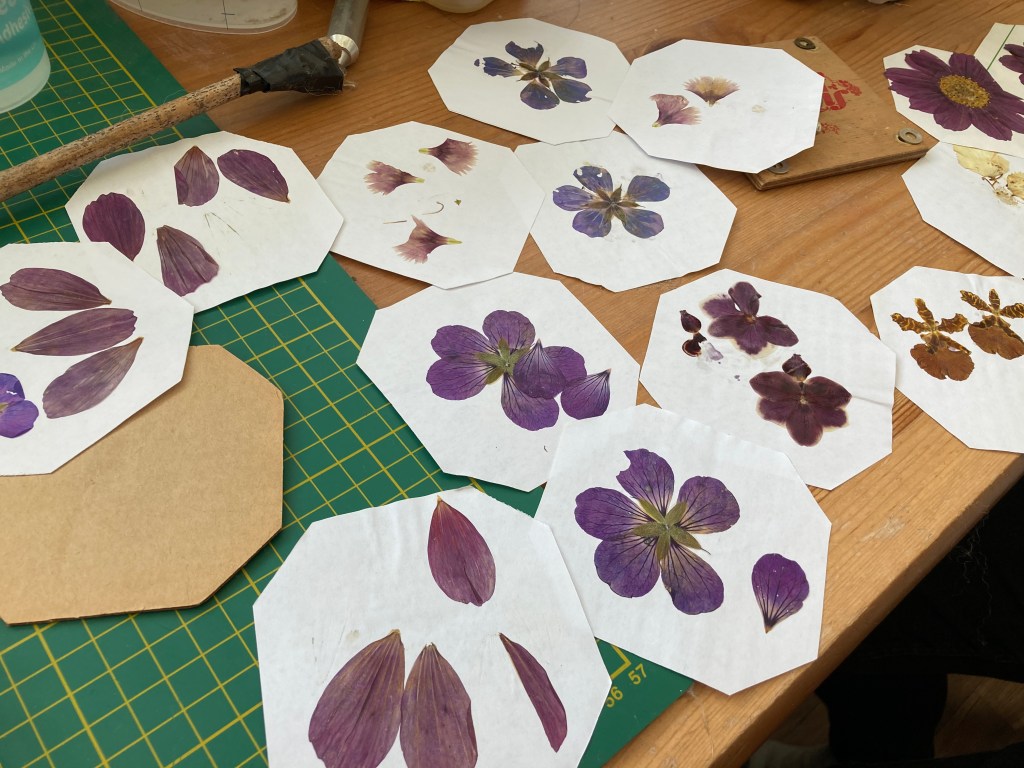
The presses revealed quite a selection. These cranesbills were a bit too fragile and pressing them had separated the petals from the flower centre.

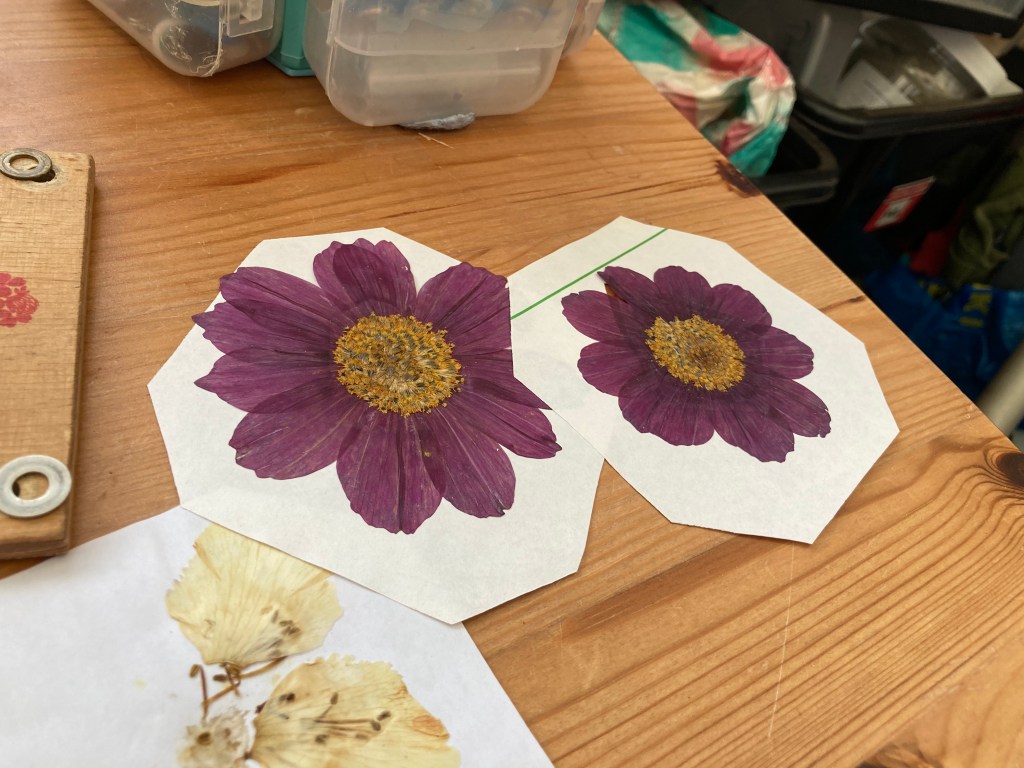
The cosmos worked really well. The centres of these are quite thick so I cut holes out of the centre of several paper sheets to place over these to ensure that both the petals and centres were properly pressed.

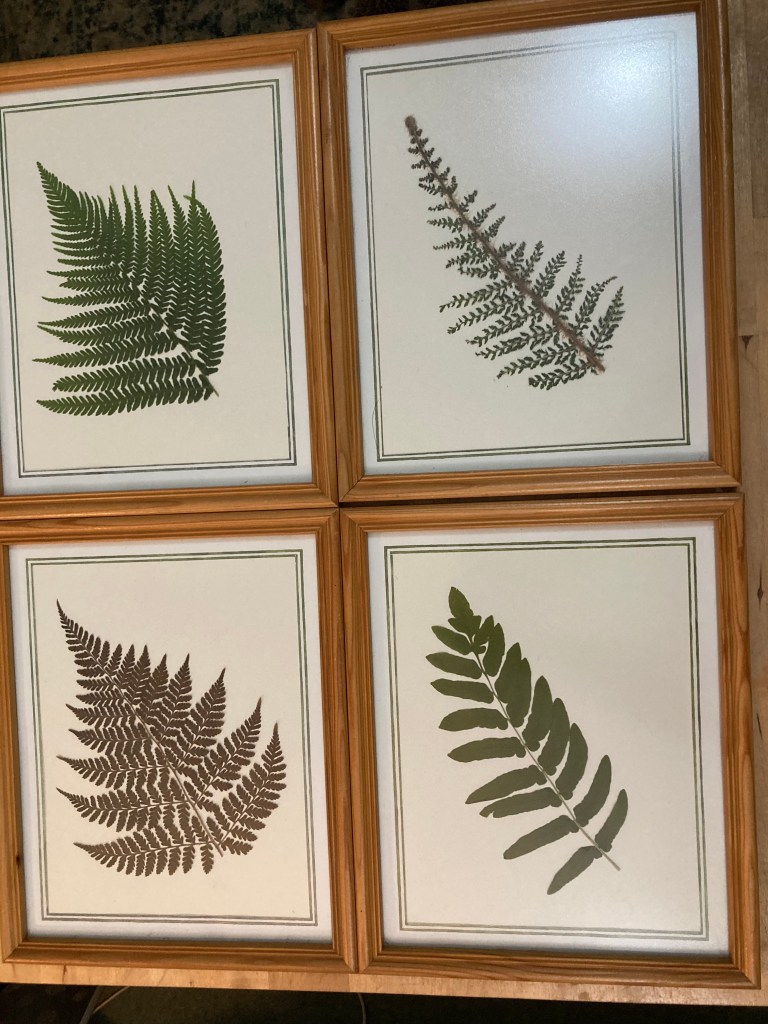
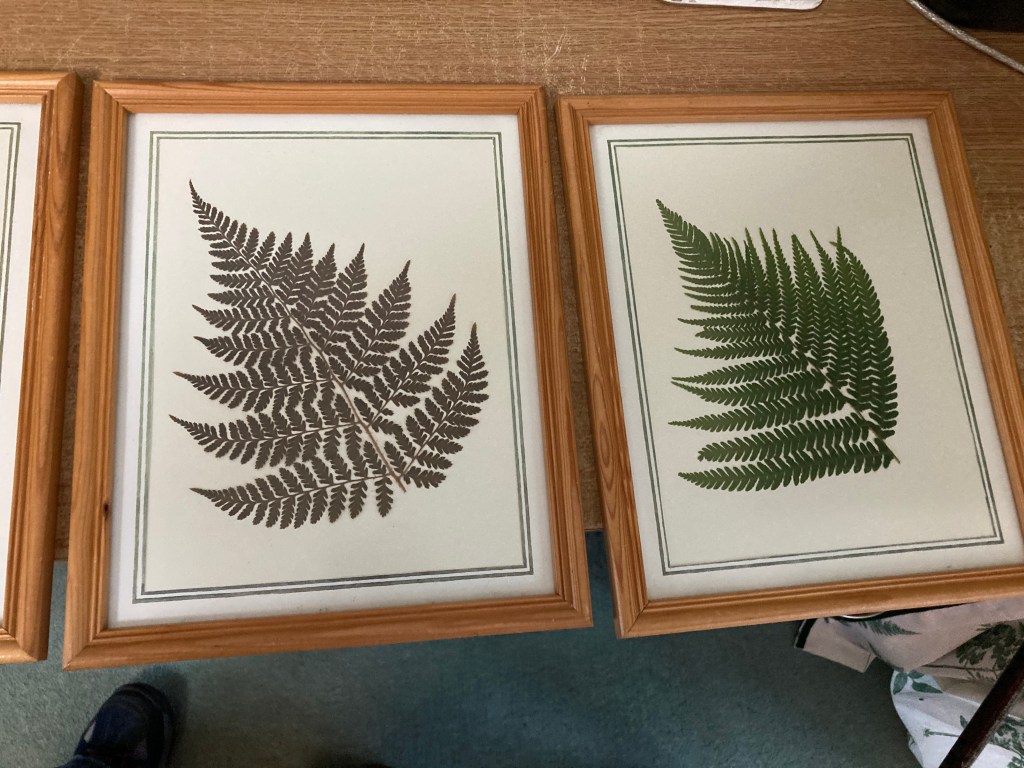
I was really pleased with the way the ferns turned out. They have retained colour well through the pressing process.

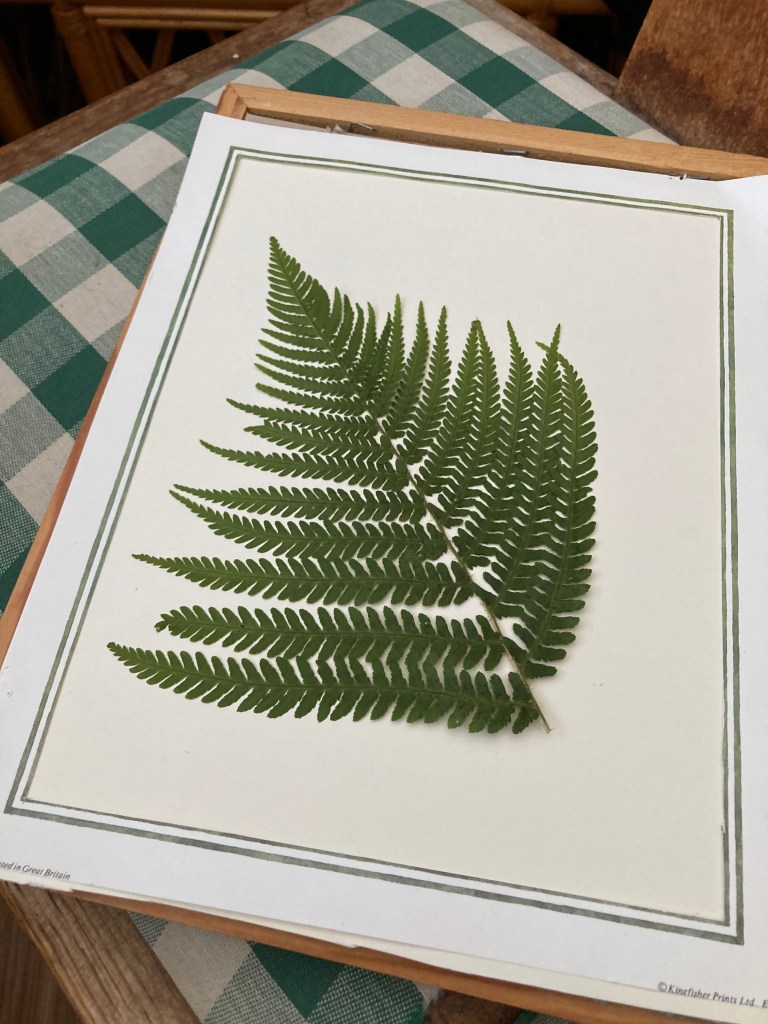
I wanted to recycle the frames and mounts from some prints that I no longer use. I cut sheets of card to size and for each picture I positioned the fern frond until I was happy with the placement within the mount. In some cases I trimmed off the lower part of the fern to get a better fit.

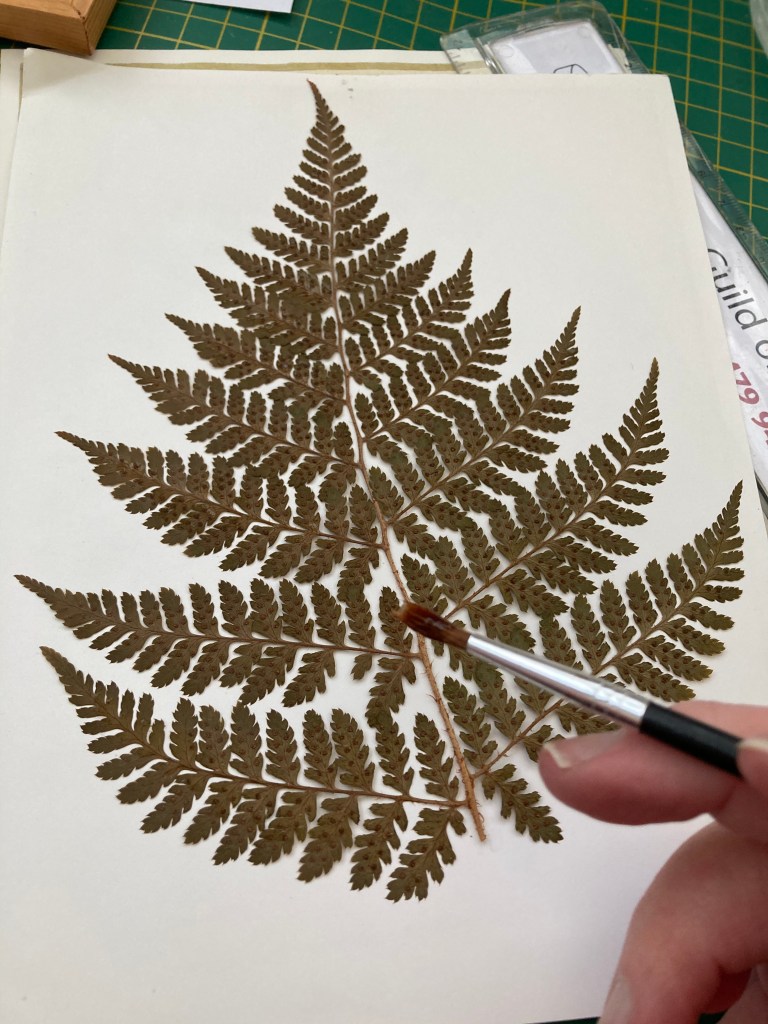
Using a small paintbrush I applied clear PVA glue sparingly to the back of the frond and stuck the fern in place.

I allowed the glue to dry thoroughly before reframed the pictures. Framing always takes me ages. It is so annoying when you seal the picture inside only to find there’s a large speck of something stuck on the inside of the glass! I take the time to make sure everything is clear and free of dust before I close the tabs or tape on the back of the frame.

I’m happy with the way the pictures look. I haven’t decided exactly where to hang them yet but I will put them somewhere out of direct sunlight to help them retain their colour.

They work with the curtains too!

Posted in Uncategorized

Lockdown Crafts: Pheasant Feather Baubles

With Daughter taking Mondays off work (with annual leave allowance to use up by the end of the year), we’ve decided to use those days for a bit of craft activity. Welcome to Crafty Mondays! Unlike the wax melts we made last week, this week’s makes took me until Thursday to finish off. I’m pleased with the result though.

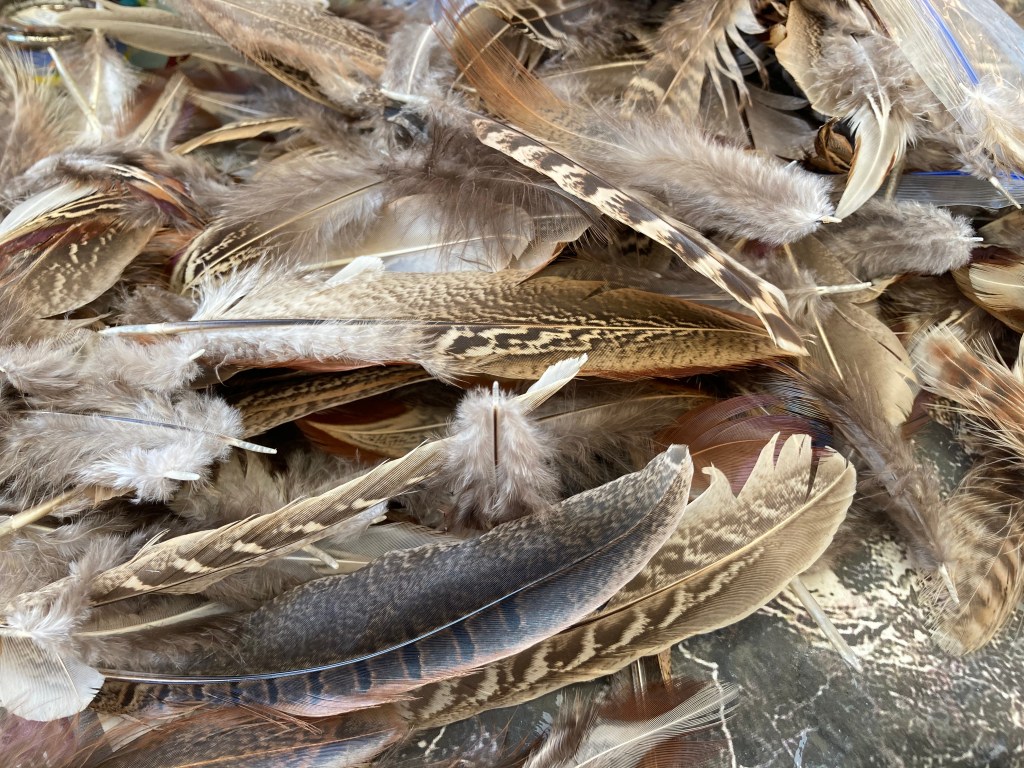
I have quite a collection of feathers, mainly pheasant. How I came to have these is another story.

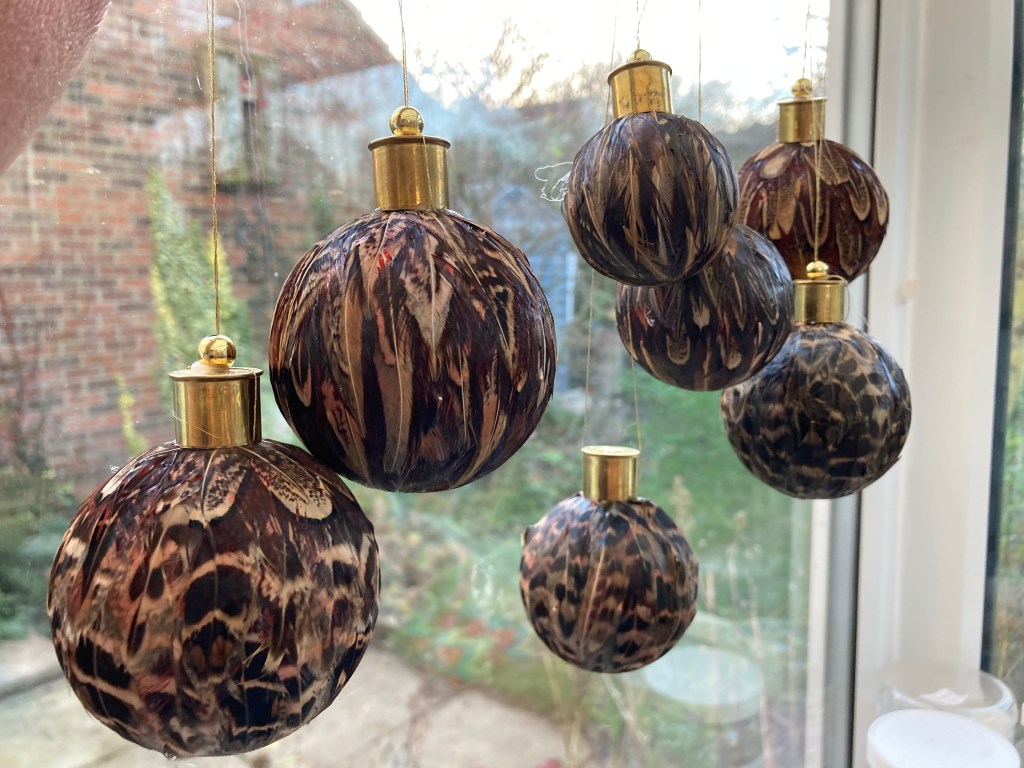
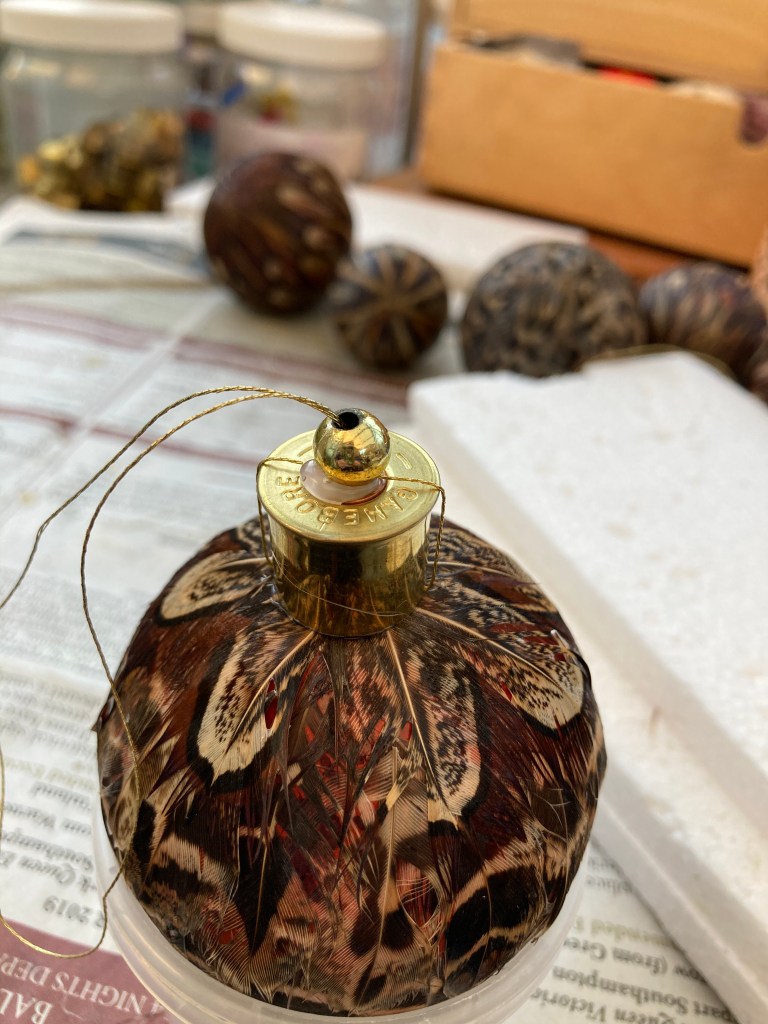
Daughter had seen these Christmas tree decorations on Pinterest and had wanted to try making them for a while. The tops of the baubles are made with the ends of cartridge cases, so she’d asked some friends who shoot for some spent cartridges we could use. The brass part is attached to a plastic tube so I looked online and found a great way to separate the plastic from the metal – you pack the cartridges into a shallow box with the metal parts upwards, proud of the box, then rest an iron on top, turned to the highest heat setting. After a few minutes the metal heats up enough for the plastic to start to melt and the two components pull apart quite easily.

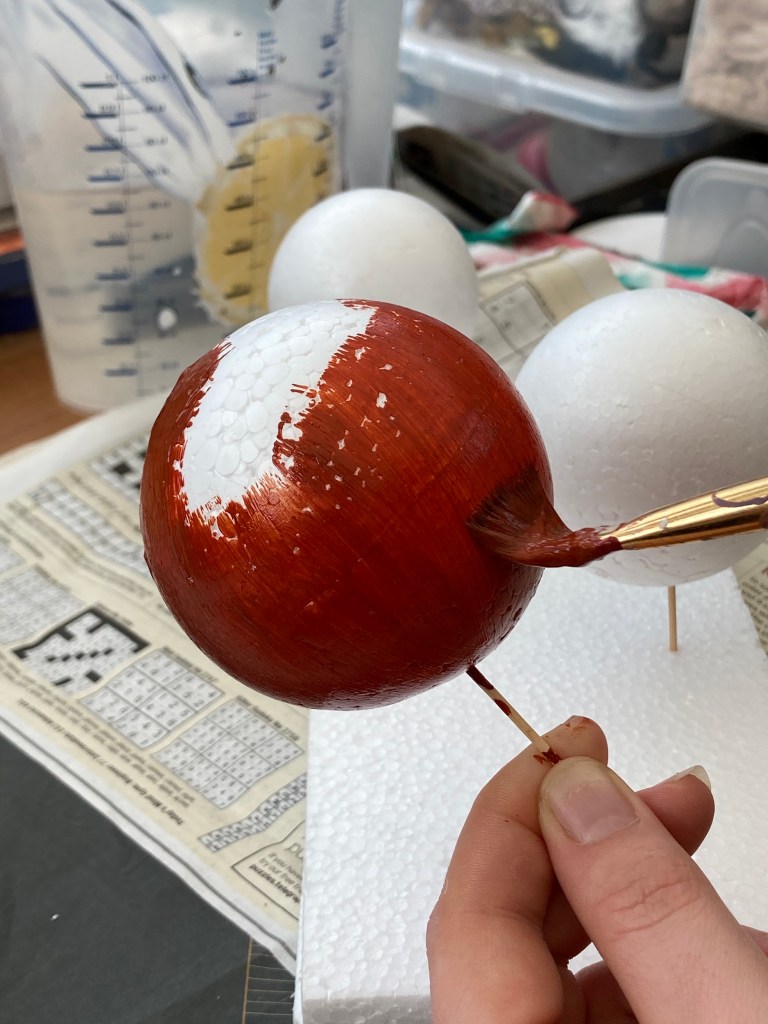
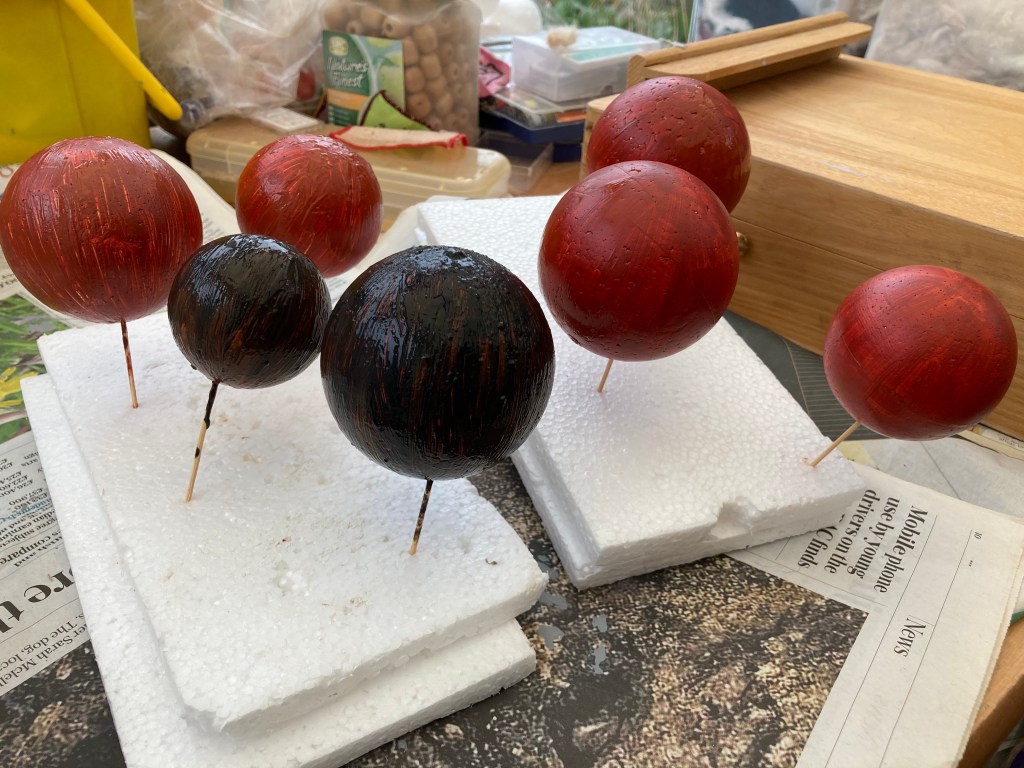
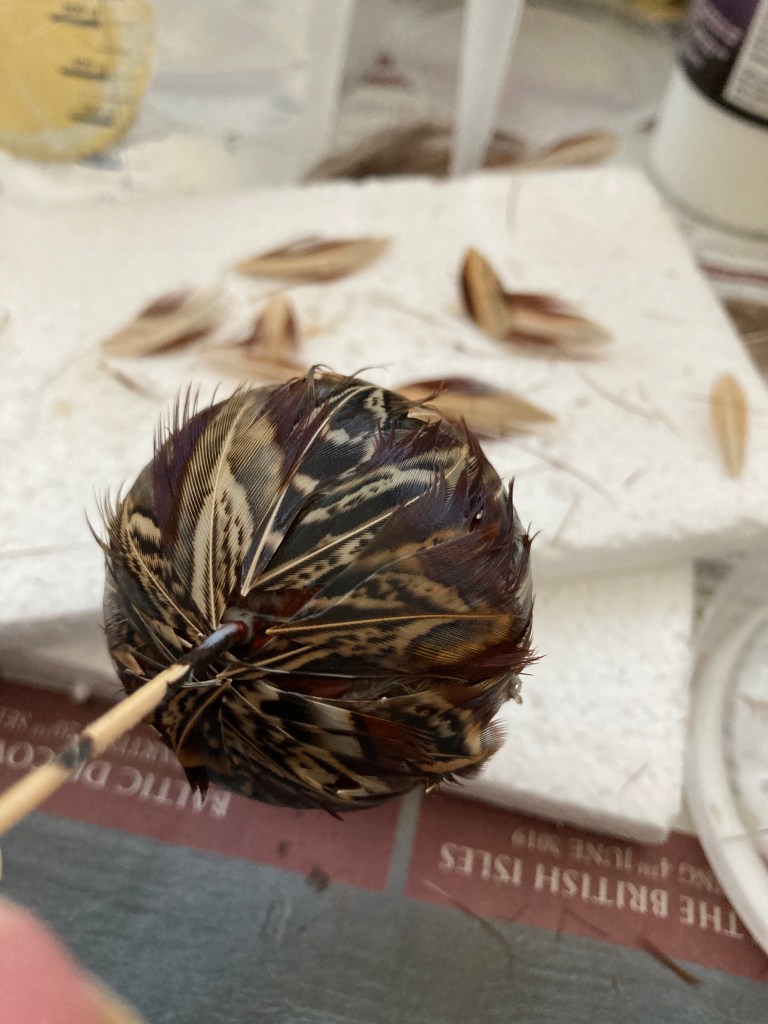
For our decorations we used polystyrene balls as a base. We painted these with acrylics first – the darker ones worked best. I wouldn’t use such a bright tan colour next time as it showed through the feathers. Impaling each ball in a toothpick was the best way to hold each one and these were stuck into a piece of polystyrene packaging to dry.

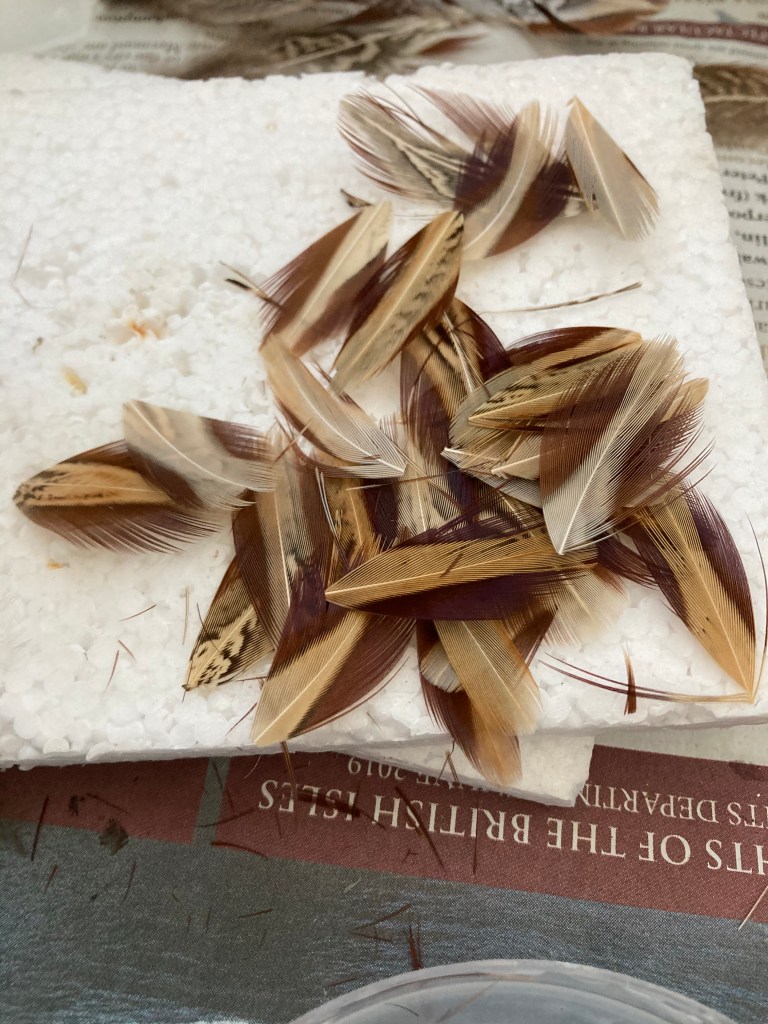
We only used the tip of each feather, snipping off 1-3cm pieces.Further down the feather the central vane is too thick and rigid to bend round the ball shape.

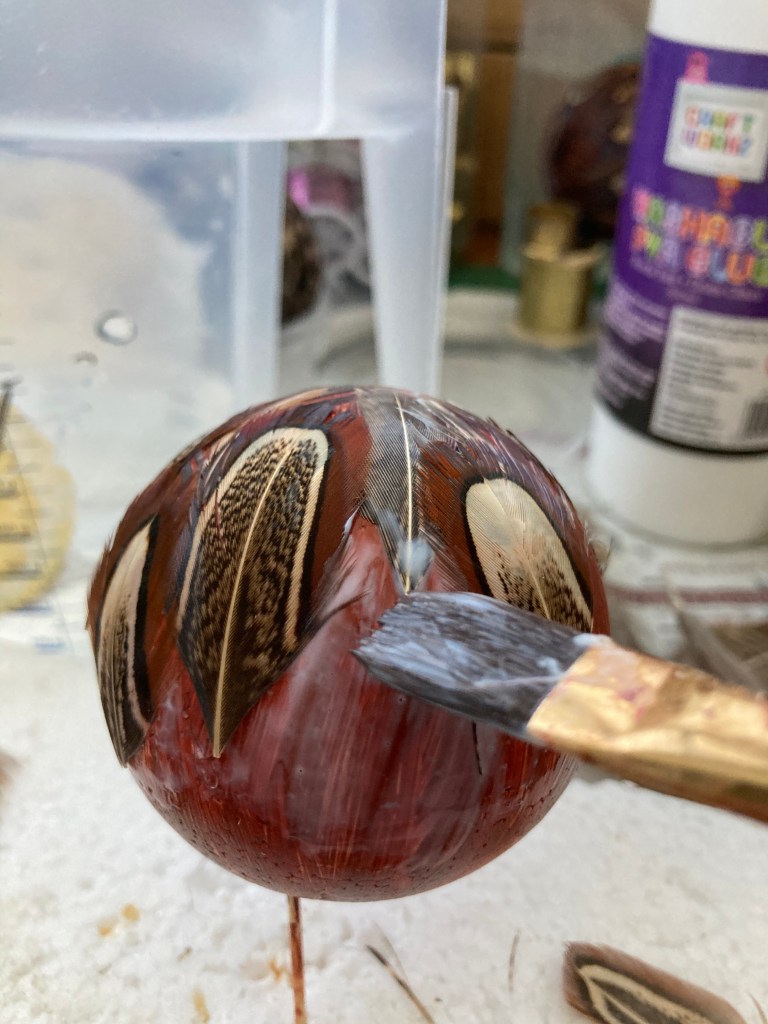
Starting at the lower end, with the smaller feather tips of similar colour, we glued these on in a circle, overlapping slightly with the tips meeting in the middle.

We continued gluing on the feathers (using a light coating of PVA glue, thinned slightly with a drop or two of water). Each circle of feathers overlapped the previous one, covering the cut feather ends.

At the top end the last circle of feathers was glued in place with the cut ends together, close to the toothpick.

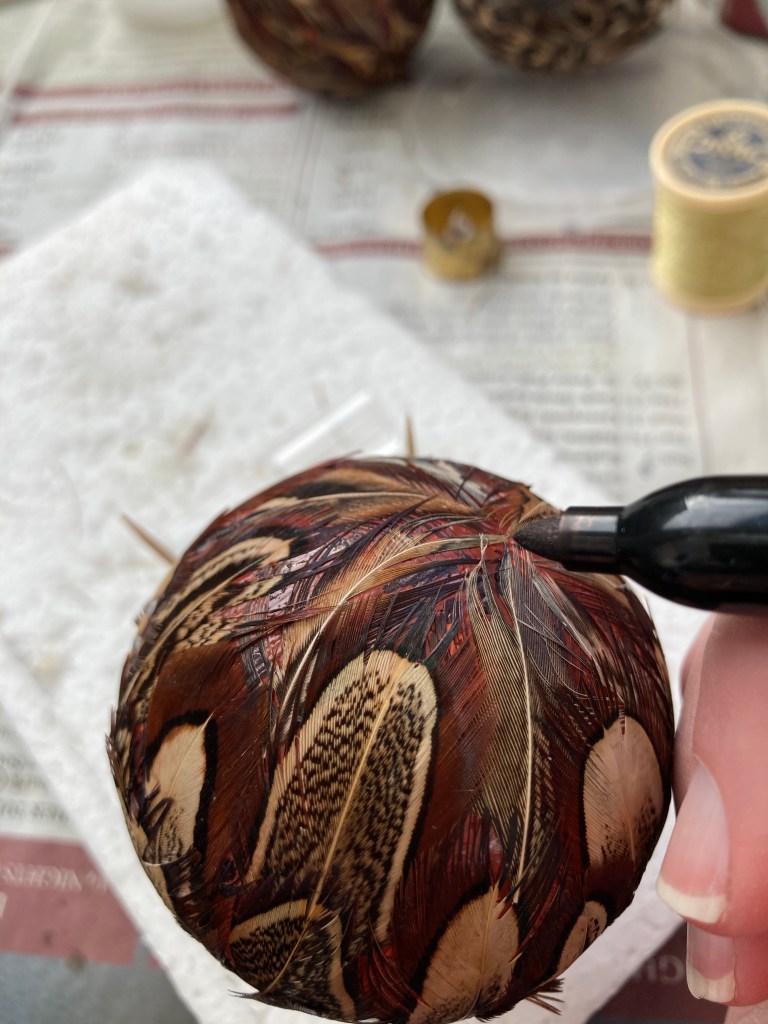
Where there was too much of the base colour showing through, I simply touched this up with a black Sharpie. The feathers were then sealed in place with a thin coat of clear PVA glue.

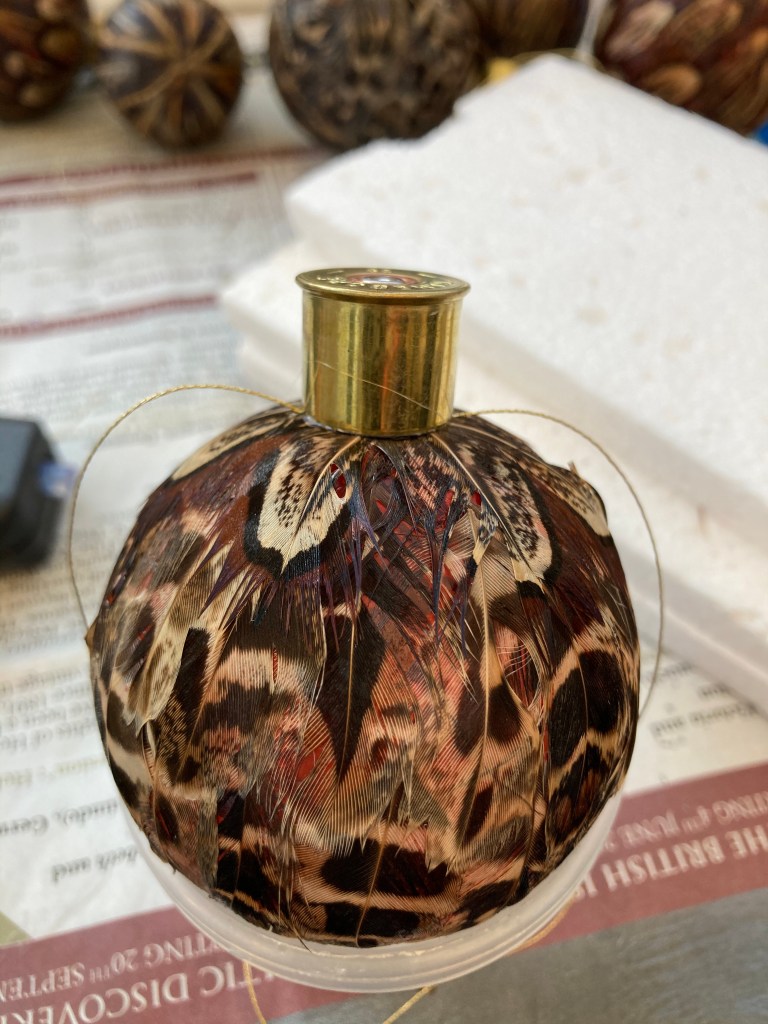
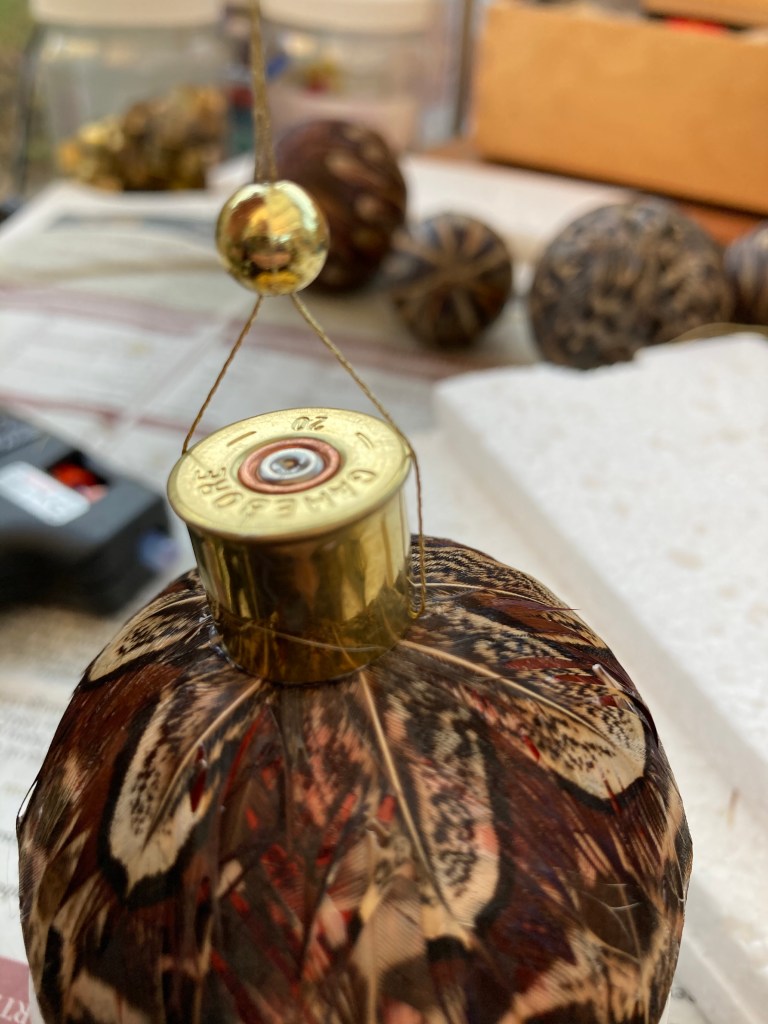
Next we cut about 12 inches of gold thread, knotting the ends together to form a loop. The knot was then glued to the inside of the cartridge end with hot glue. Holding the thread to each side of the cartridge, hot glue was applied along the edge of the cartridge end. It was quickly positioned centrally over the cut feather ends and held firmly in place until the glue set.

The loop was then threaded through a gold-coloured bead which was secured to the top centre of the cartridge with another drop of hot glue.

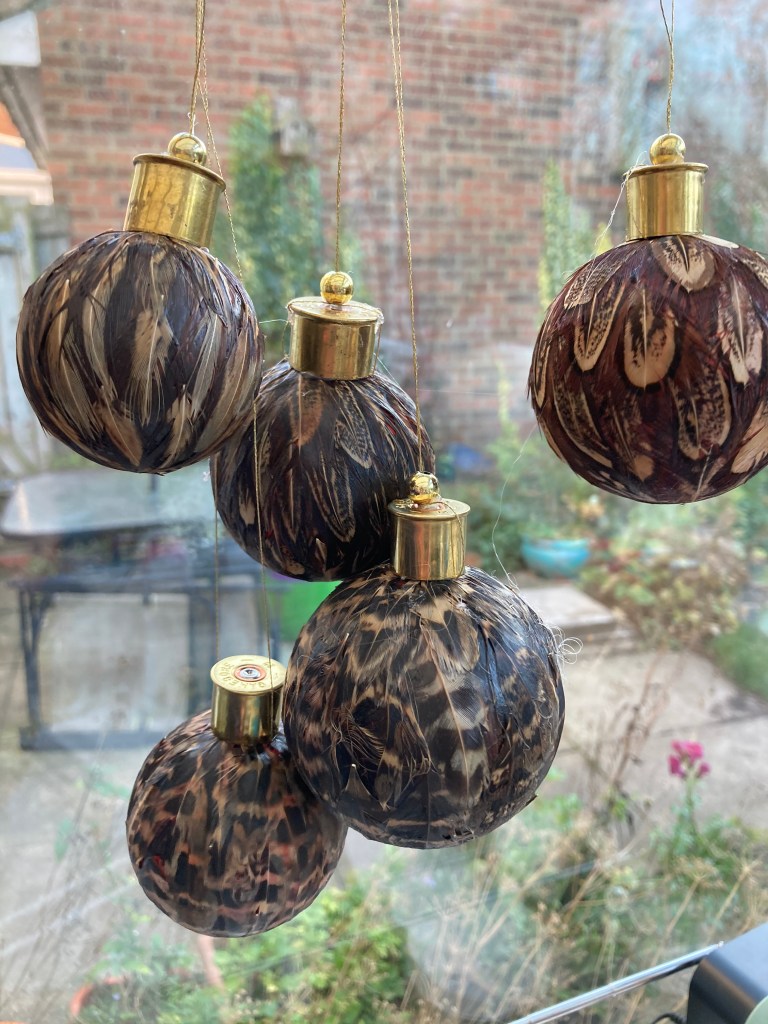
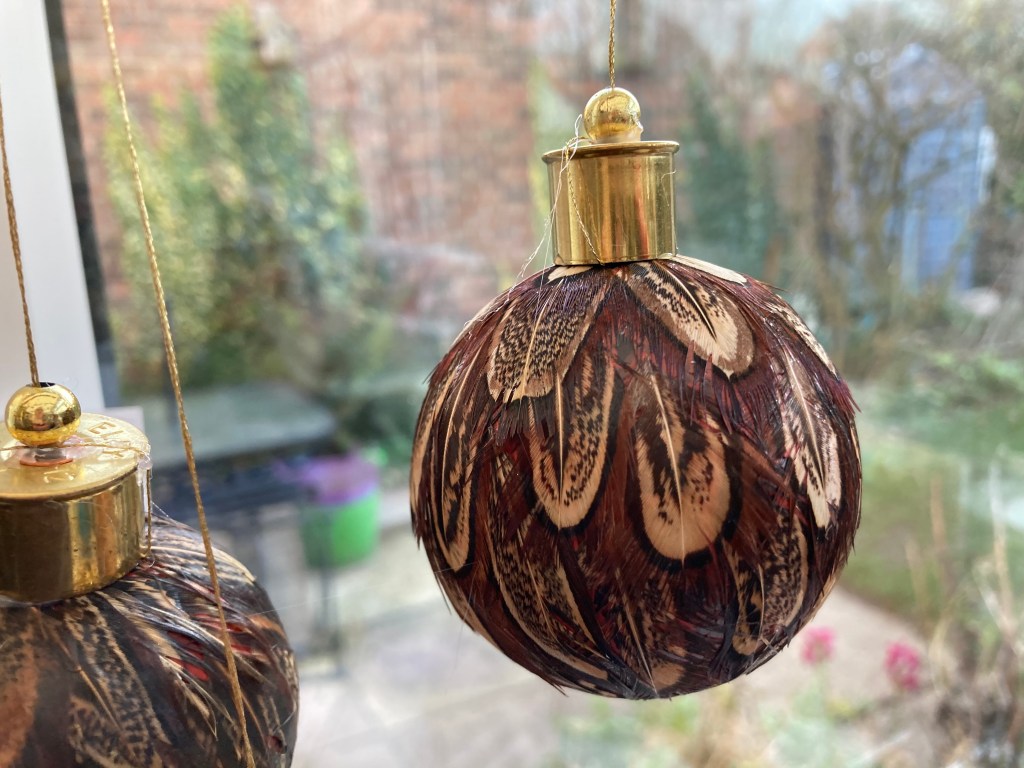
We made seven baubles altogether in different sizes, a couple with the barred dark brown and cream hen pheasant feathers, and the rest with the rich chestnut, black and cream cock pheasant ones. The brass tops go well with them.

I just need the tree up now…maybe at the beginning of December!

Posted in Uncategorized

Lockdown Crafts: Scented Wax Melts for Crafty Monday

I was joined by Daughter the other afternoon. She’s working from home, which can be pretty isolating, but was at a loose end as she has to use some annual leave from her job before the end of the year. She’d reminded me that I still have a load of candle-making gear in the garage and that she wanted to use it to make some wax melts. We had everything we needed and had a lot of fun so (as she is off work for the next few Mondays too) we’ve decided to make this a regular thing. Welcome to Crafty Mondays!

The only specific ingredients are soya wax and fragrance oil (which can both be bought online from craft or candle supply shops). Everything else we used are pretty ordinary kitchen items:

  • old pan (to use as a water bath
  • metal or oven glass jug to melt the wax in
  • a kitchen thermometer
  • measuring jug
  • teaspoon, measuring spoons or cup/syringe used to measure medicine (to measure small quantities of fragrance oil
  • something to stir with – we used a wooden skewer that was thrown away at the end of the session
  • silicone chocolate moulds (we used these, from Lakeland) or ice cube trays (several stores, including IKEA, do silicone ones in interesting shapes)

We weighed out 500g soya wax flakes into a metal jug (which yielded about 500mls molten wax) The jug was stood in a pan containing about 2 inches hot water on the lowest heat. Remember wax burns so never melt the wax directly over the heat. Using a water bath keeps it to a temperature below 100C.

When making scented candles and melts, the temperature at which you add the fragrance and pour into moulds is important. If the fragrance is added when it is too hot, the scent evaporates before it is captured in the hardening wax. Too cold and it won’t mix in properly. The wax must be poured before it starts to set.

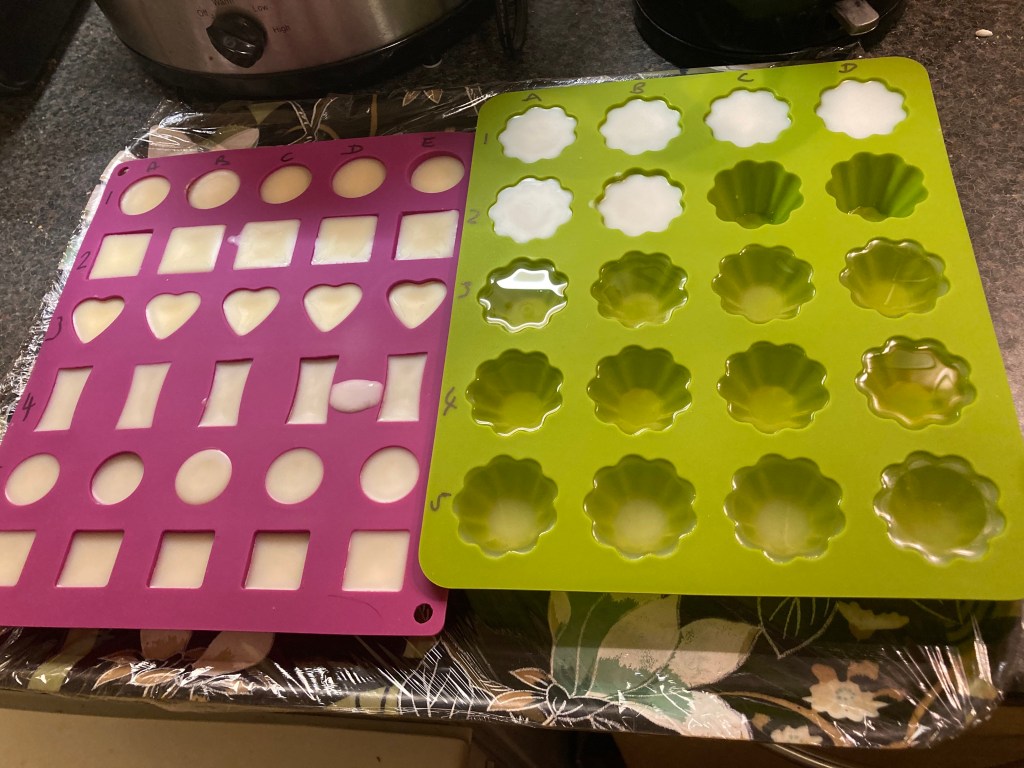
We poured out 100mls melted wax into a measuring jug and when this had cooled to 65C added 6mls fragrance oil, stirring to mix. When the scented liquid wax cooled to 60C it was poured into the moulds.

A couple of handy hints: Put the silicone moulds on a tray so if you have to move them they won’t spill. Also, we numbered the rows and gave a letter to each column so we could make a note of which fragrances were in each location

Each batch of 100mls wax made 15 small or 6 large melts – the measuring jugs and spoons and the thermometer were thoroughly cleaned between fragrances to stop them blending. The whole process was dead easy – much easier than making candles with no wicks to think about. Also pretty economical – a decent sized candle takes a lot of wax and scent oil. The oils can be pricey – HobbyCraft do packs of four themed scents (Christmas, household, fruity etc) at a reasonable price.

We used some of the fragrances we ealready had: orange, vanilla spice, melon and cucumber (used for two batches of 100mls) and lime, basil and mandarin. The specialist candle making suppliers have hundreds to choose from.

We left the melts to set and watched a film on Netflix – if you like a romcom we recommend The Holidate – it was hilarious.

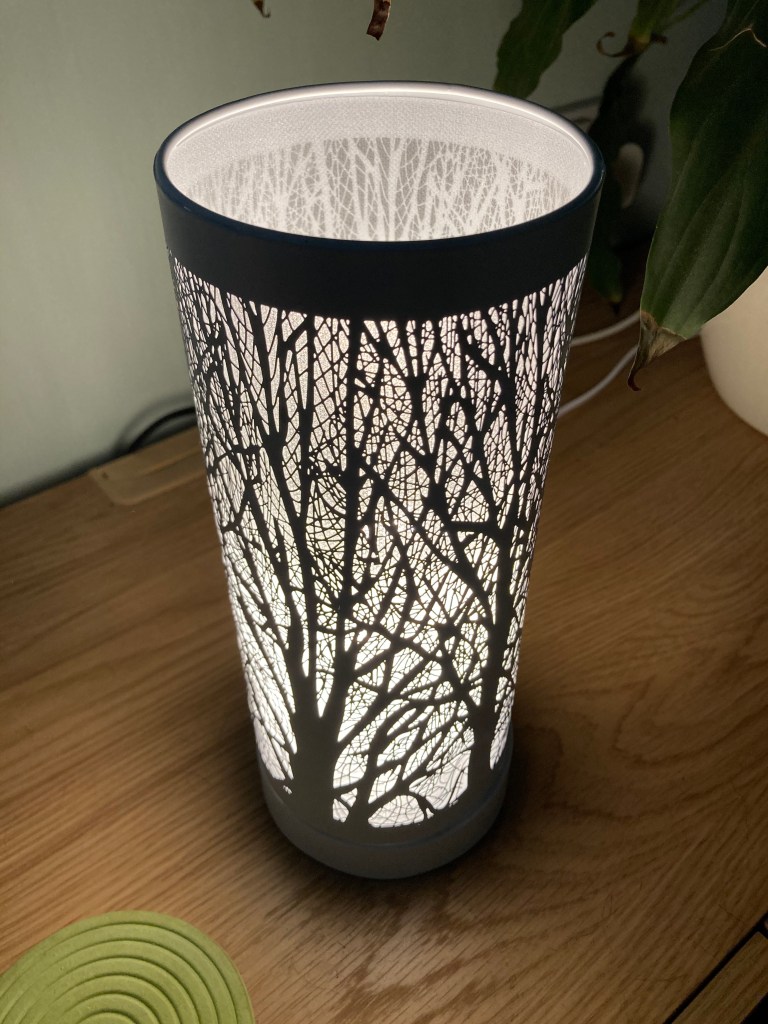
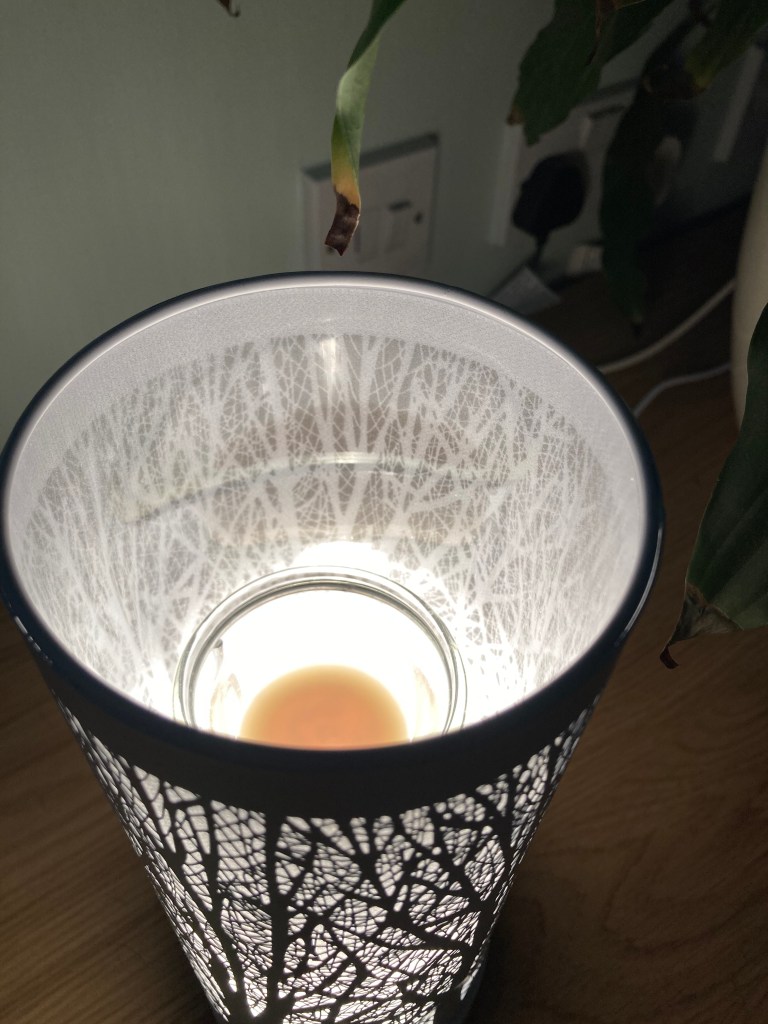
The melts then easily unmoulded and we’ve divided them between us. I have a lamp which incorparates a tiny glass bowl over the bulb, which warms and melts the wax.

I was really happy with the scent “throw” . The fragrance filled a reasonably sized room when the wax had melted.

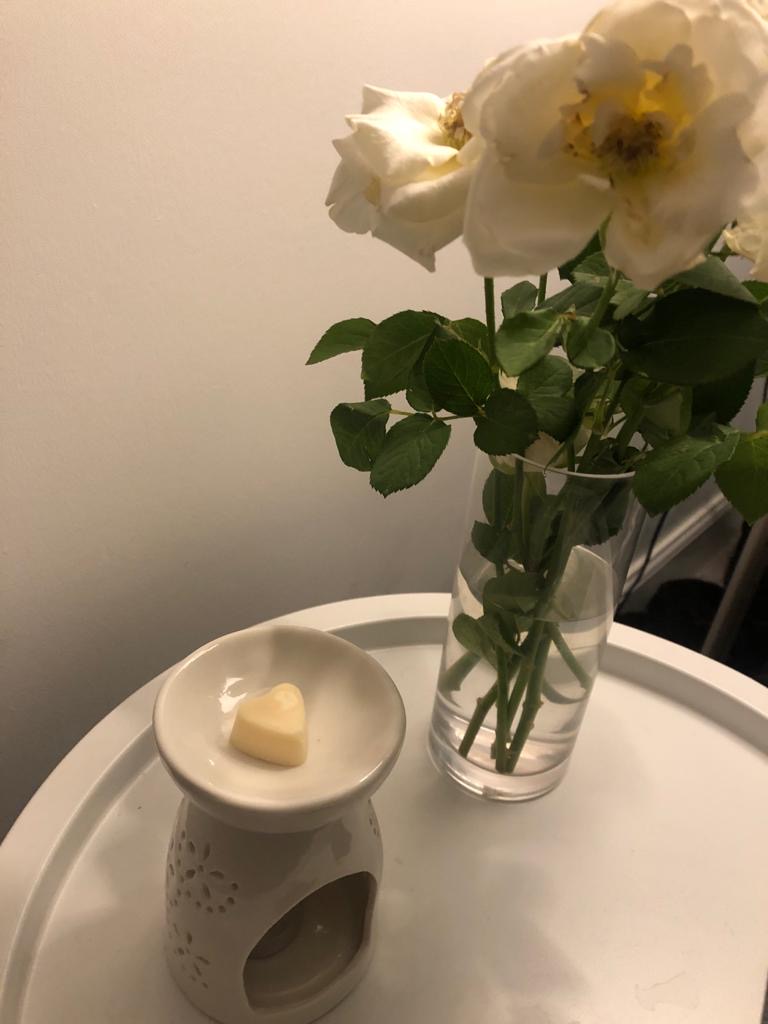
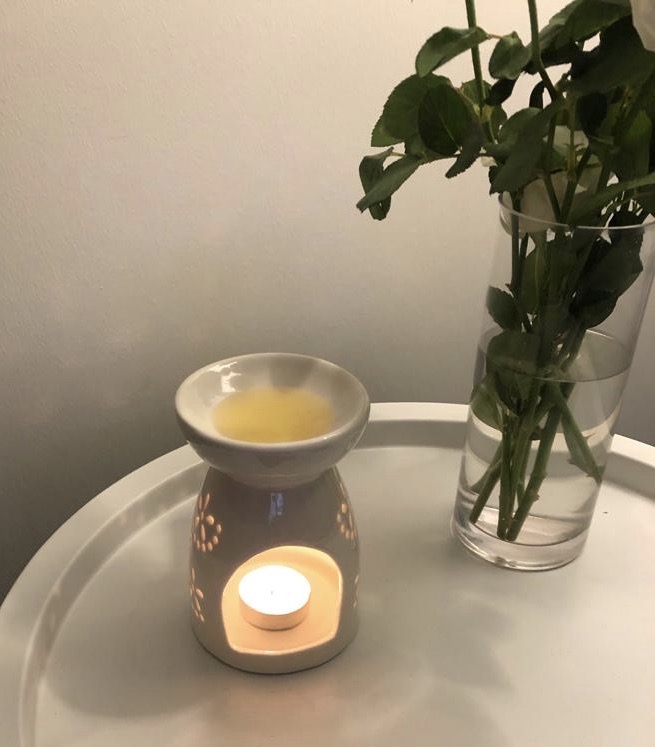
Daughter has a special ceramic burner which is heated by a tea light. Doesn’t it look lovely with the candle burning?

Our first Crafty Monday was a great success!

Posted in Uncategorized

Knit and Natter 30th October

We had our weekly knit and natter session on Zoom yesterday. There may only have been five of us but what a variety of projects were being worked on…..and great conversation as usual.

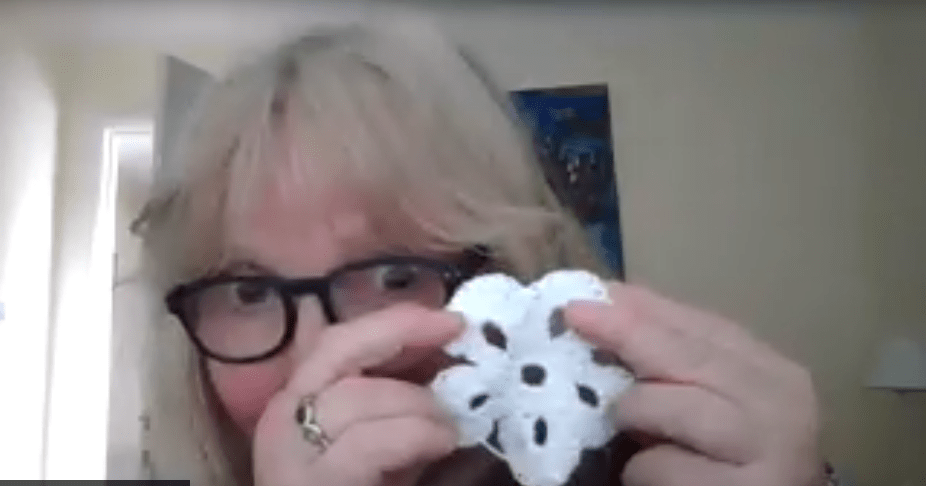
People are already starting to think of Christmas decorations and are raiding all their knitting and crochet books for ideas. Pictured below one of several snowflakes, crocheted from a fine white yarn. They will be starched and pressed, then attached to a string or ribbon to make a garland to decorate the Christmas tree or elsewhere in the home.

One of our Alnwick-based members is making “Santa’s washing line” , complete with tiny pegs holding Santa Claus’ clothes out to dry. She’s just finished knitting his trousers. I’m really looking forward to seeing this when it’s finished.

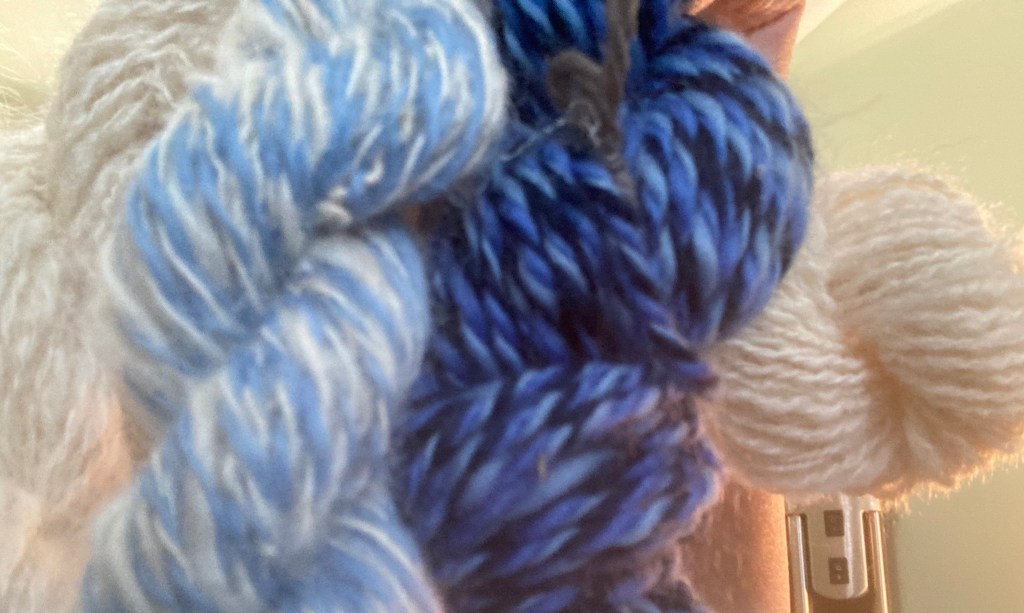
I’ve been working on my spinning. I really need to work out what I’m going to knit with all this!

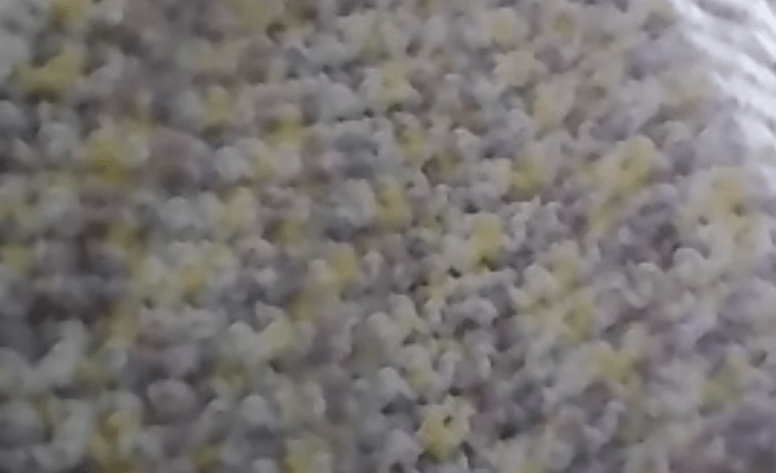
This beautiful crochet baby blanket is nearing completion. It’s going be so cosy.. One of the downsides of Zoom knit and natter is that you can’t touch the projects – and sometimes you just want to feel how soft they are.

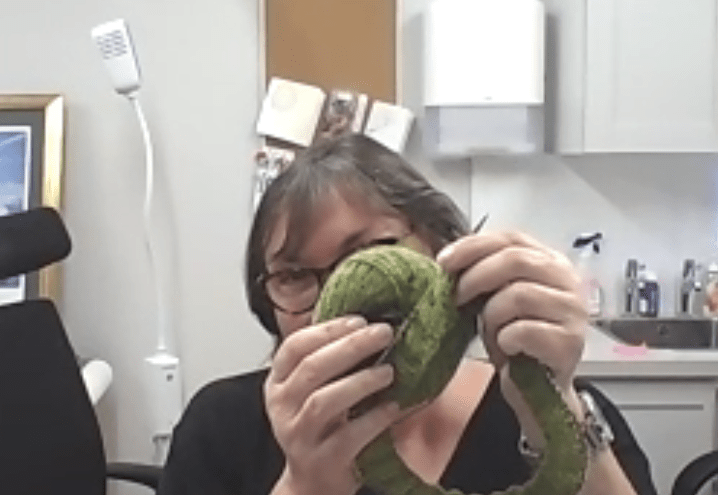
The fifth member of today’s session has begun a hat, knitted in the round. This lovely moss green yarn forms a deep ribbed edge to the hat – the main part of it will be worked in a Fair Isle design. I’m looking forward to seeing which other colours will be used in the pattern.

In no time at all the hour was up and the session came to an end. We’ll be back online next Friday.

Have you done any social knitting this week?

Posted in Uncategorized

Lockdown Crafts: Driftwood Candle Shades

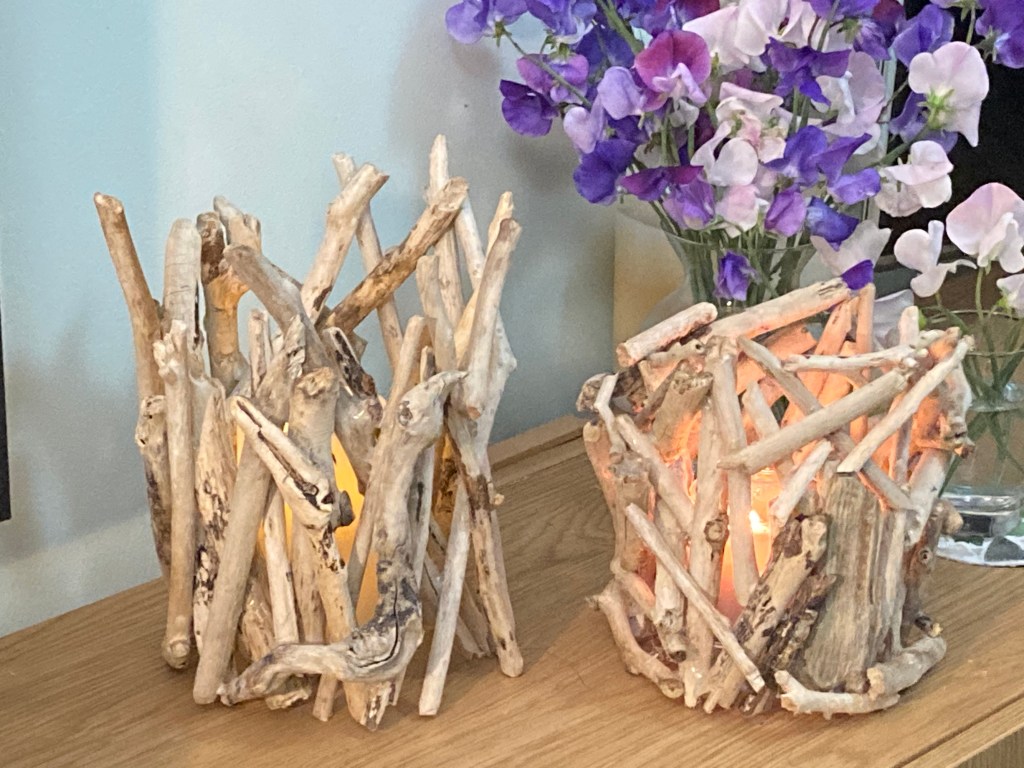
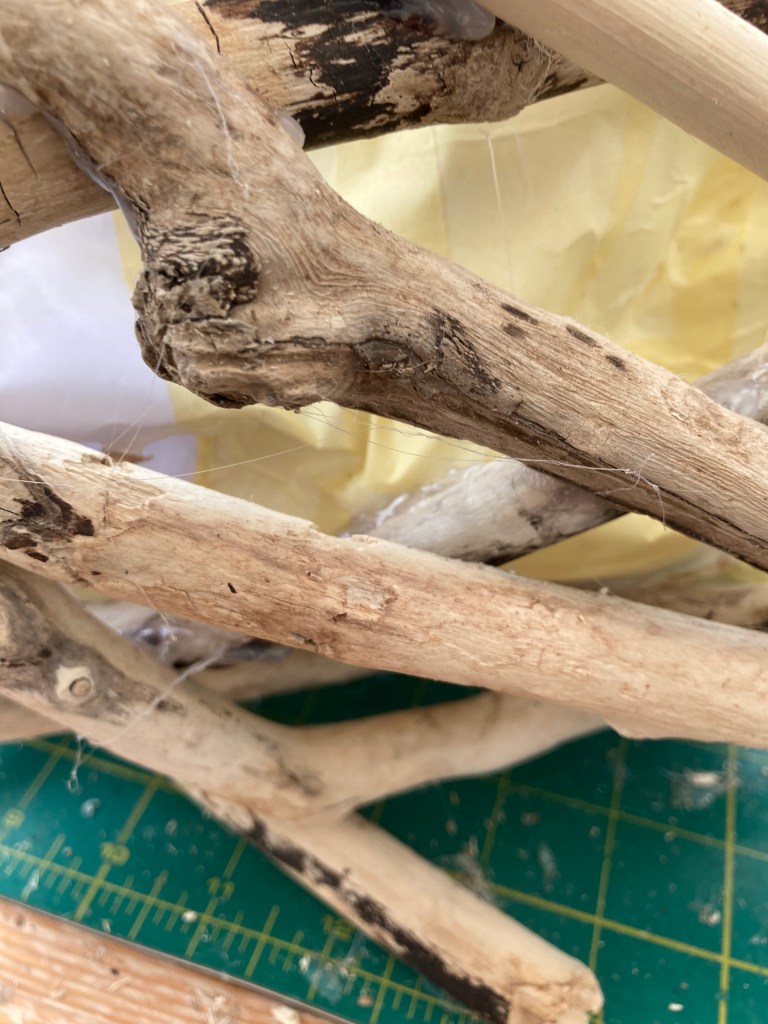
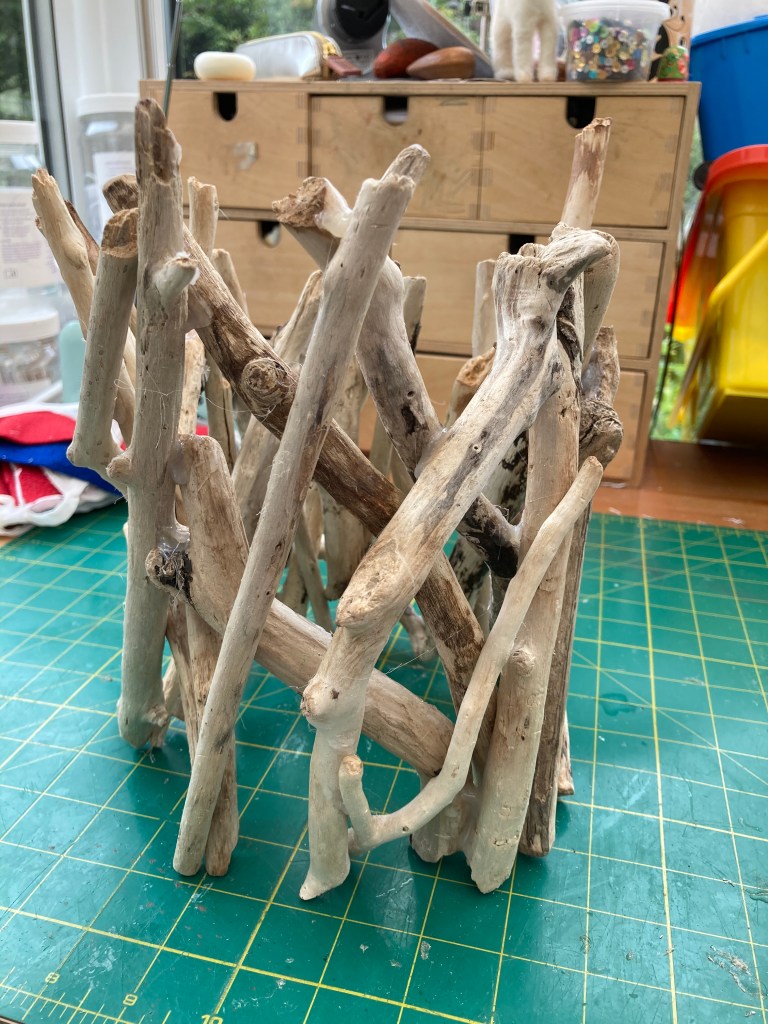
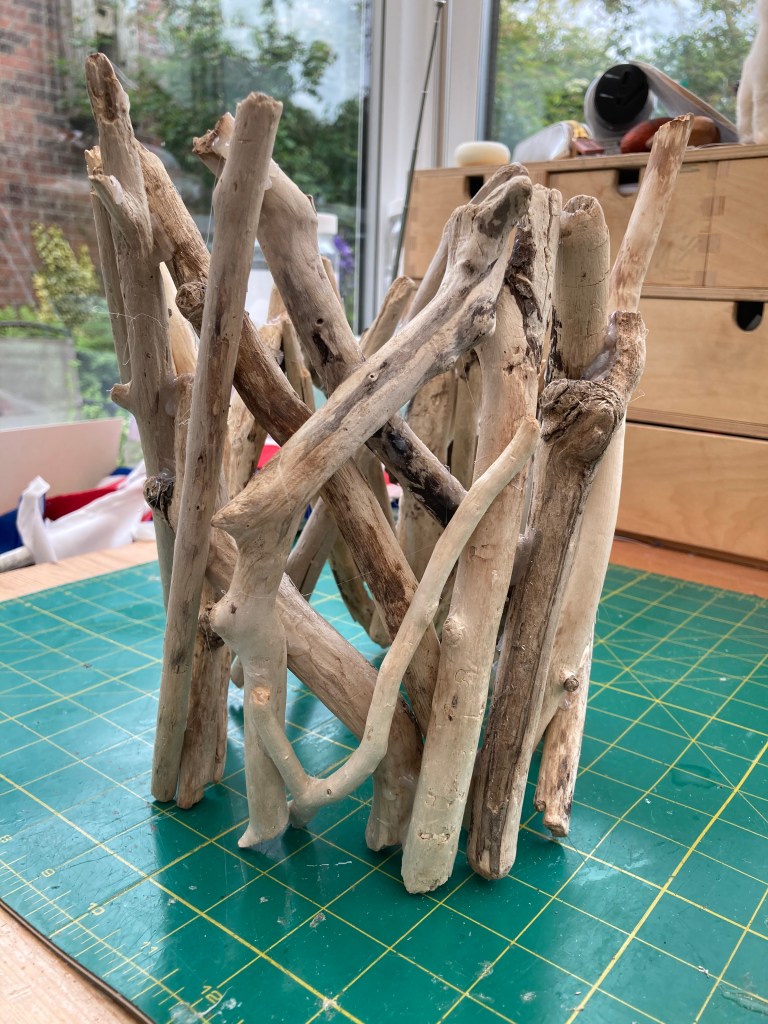
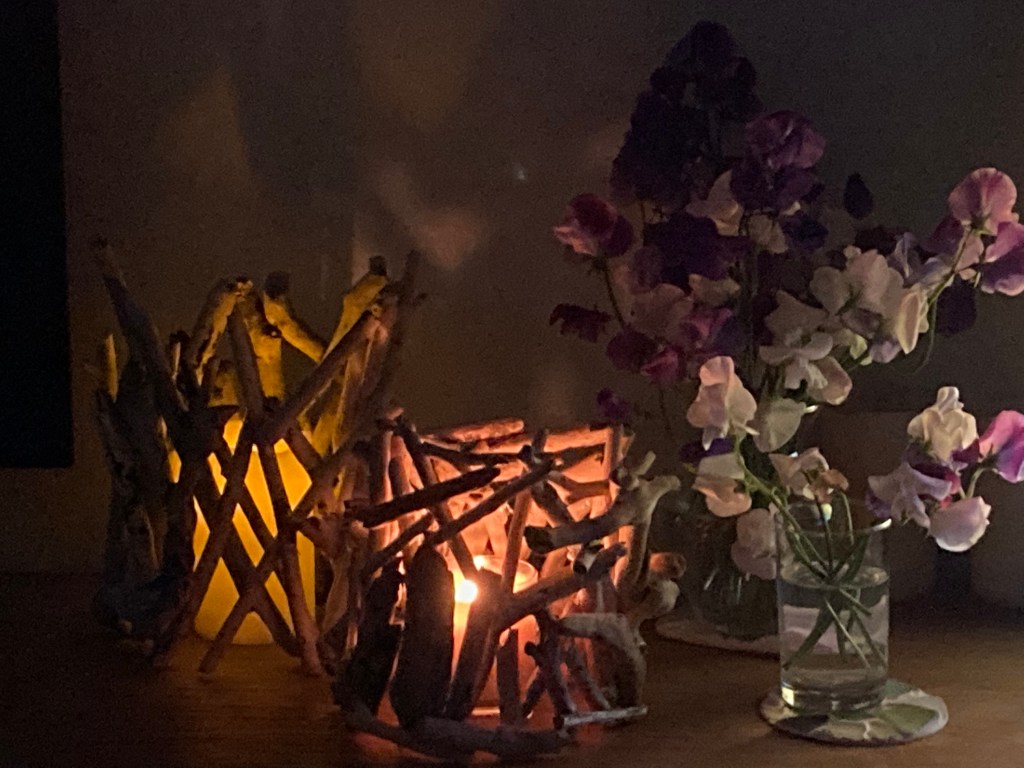
K is always beach combing on daily dog walks and comes home with sea glass, pottery fragments, shells, interesting looking stones and pieces of driftwood. I’ve had a pile of driftwood sitting around waiting for a purpose since last year so today I’ve been using some of the smaller pieces to make these shades to sit over candle jars (I’m always wary of putting something combustible like wood near a naked flame, but it’s safer when there’s glass in between).

First a word about treating the driftwood. I submerged the newly collected pieces in a tub of bleach solution and left it to soak for a couple of weeks, to kill any worms, insects or fungus, then rinsed them with clean water and put them in mesh bags in the airing cupboard to dry out thoroughly.

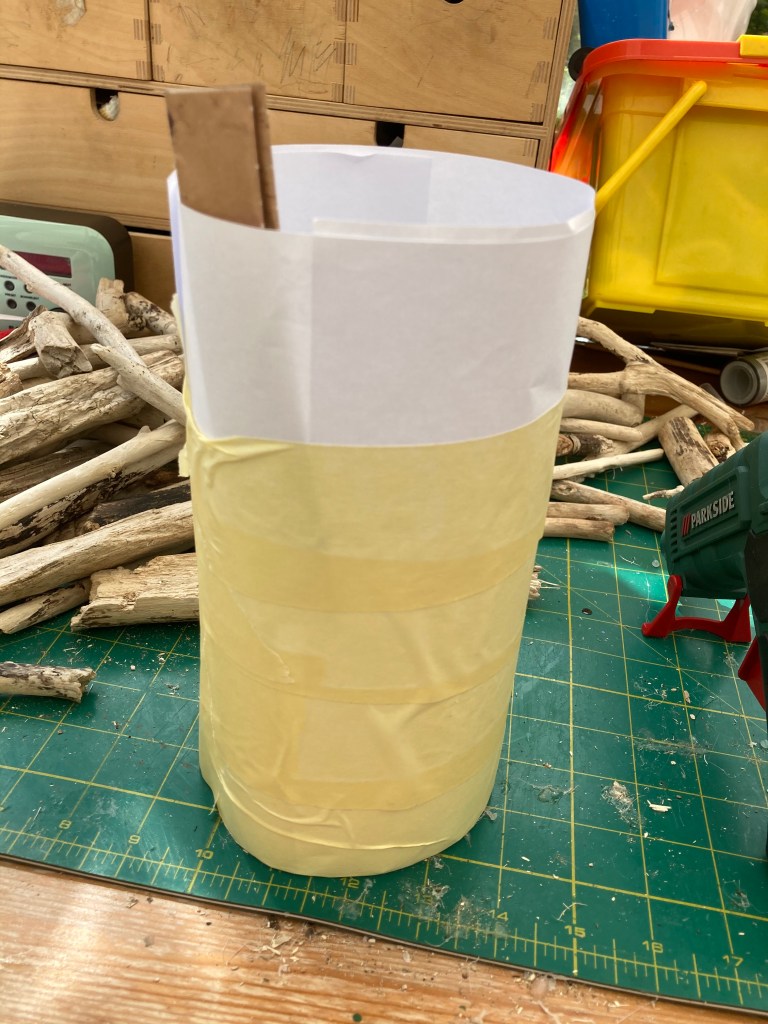
I used a plastic jar as a mould, but needed to find a way to release it from the hot glue, so I began by putting a paper sleeve round it, secured with tape. I put put some strips of folded paper inside the sleeve – the idea was that if I pulled these out first, then the jar would slide out more easily. I found that the hot glue didn’t stick too firmly to the low tack tape so I taped all over the paper sleeve.

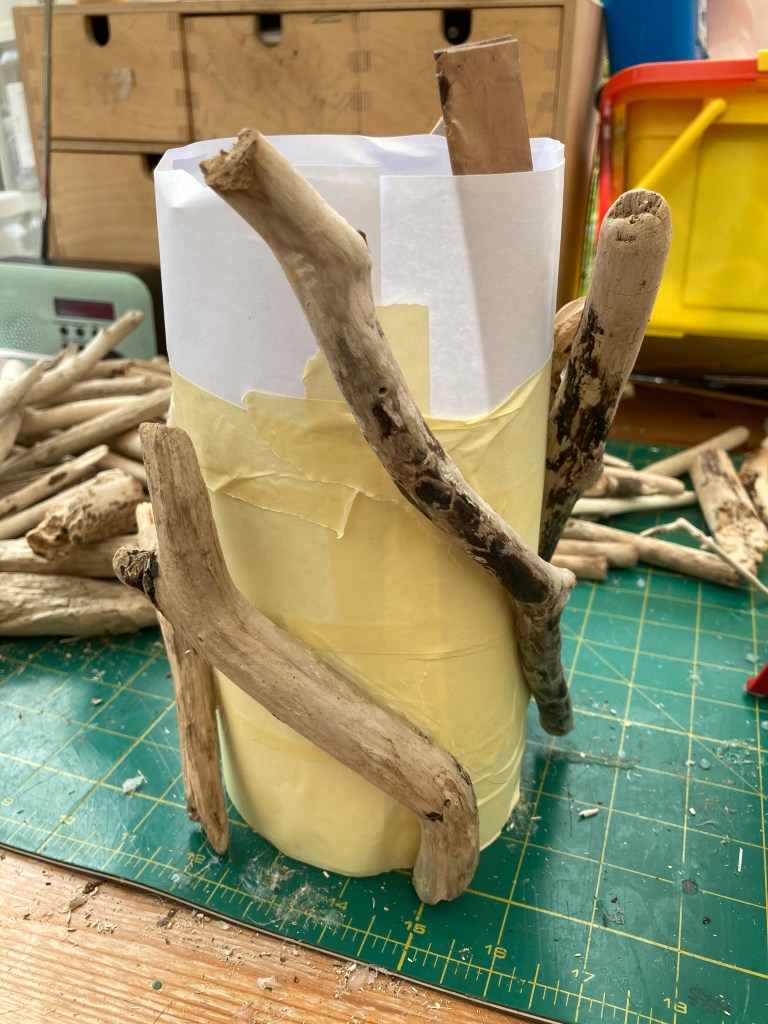
Using the glue gun, I stuck the first layer of driftwood pieces directly on to the mould. I kept the mould on a flat surface and made sure the sticks were touching the table all the way round so the shade would stand up without rocking when complete.

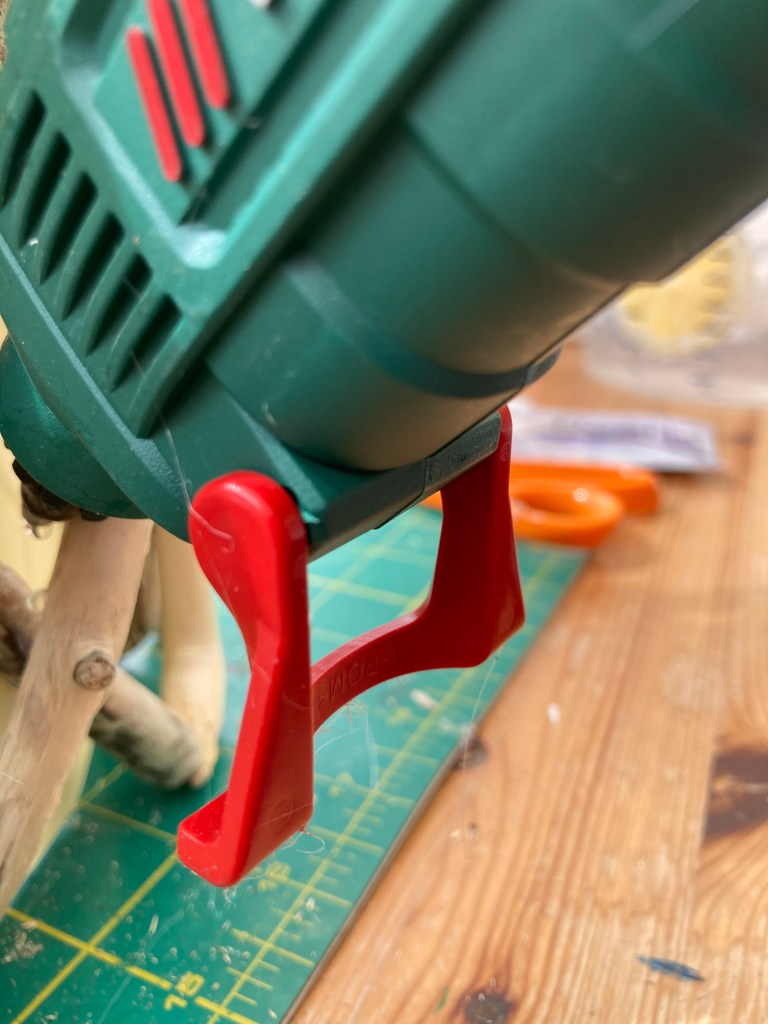
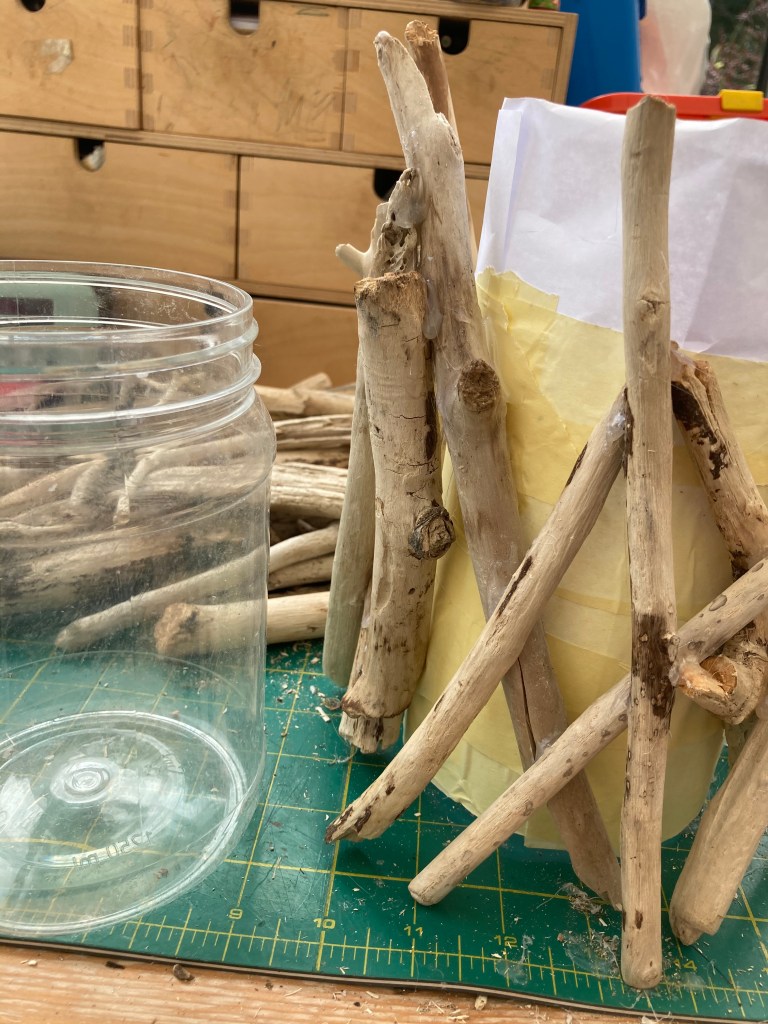
The next layer was stuck on to the sticks in the first layer, ensuring it was glued in at least two places. The second layer pieces were placed at an angle to the first to ensure that all the pieces were locked together. I found the easiest way to apply the glue was to hold the glue gun nozzle over the joint and allow the hot glue to dribble into the gap, then hold the piece in place until the glue hardened.

I continued until the whole mould was covered, then I pulled out the strips of paper to release the sleeve and the jar slid out quite easily. I was then able to gently pull the tape- covered paper away from the glue on the first layer.

I continued to add more driftwood pieces, including some to the inside, until I was happy with the result.

I’ve made two of the shades. I prefer the taller one, where I kept the sticks closer to vertical – the other one was more random. I really must take more care with the glue gun though. Much as I love using it, I have sustained a couple of blisters in the process!

Posted in Uncategorized

Lockdown Crafts: A Trio Of Baskets.

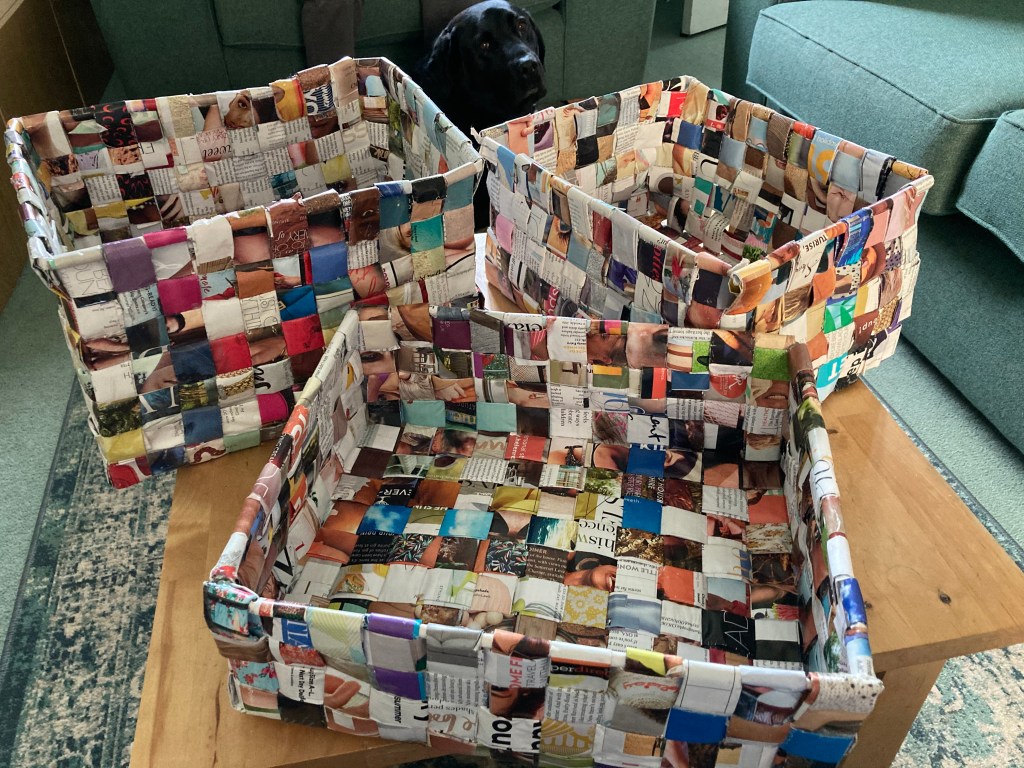
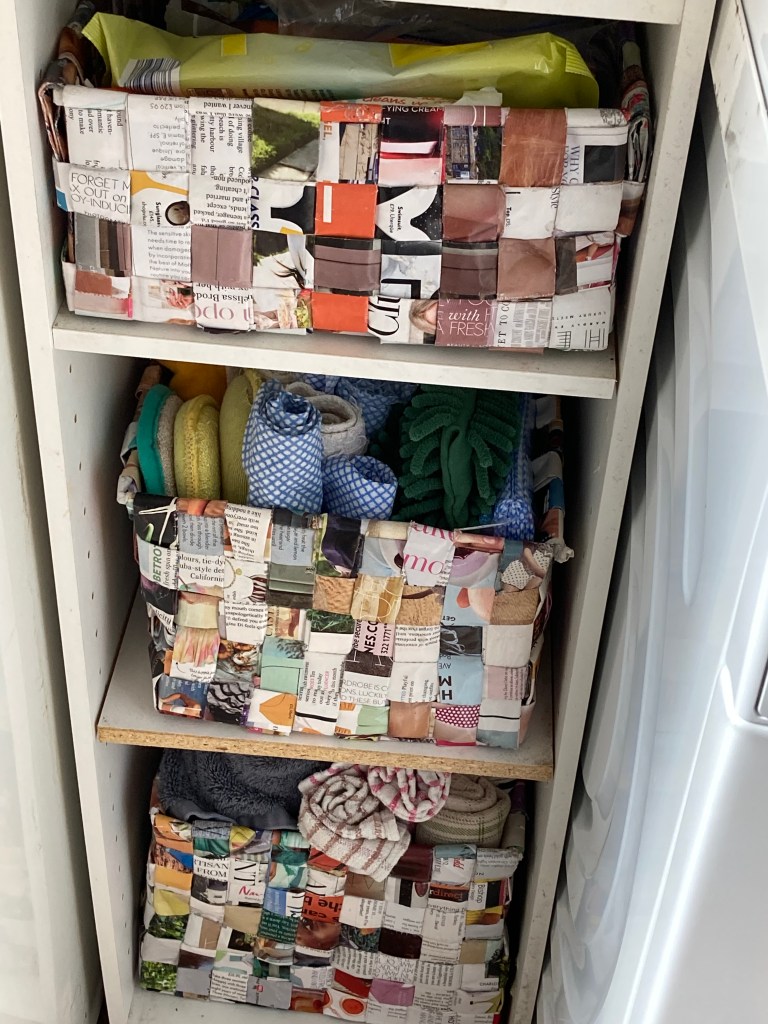
I have a set of shelves in the utility room, where I store things like tea towels, cleaning cloths and freezer bags: not the easiest things to store on shelves, so I was after some baskets, but couldn’t find anything the right size so I decided to make some. All I used were some old glossy magazines and glue (hot glue and PVA). Don’t you just love repurposing things?

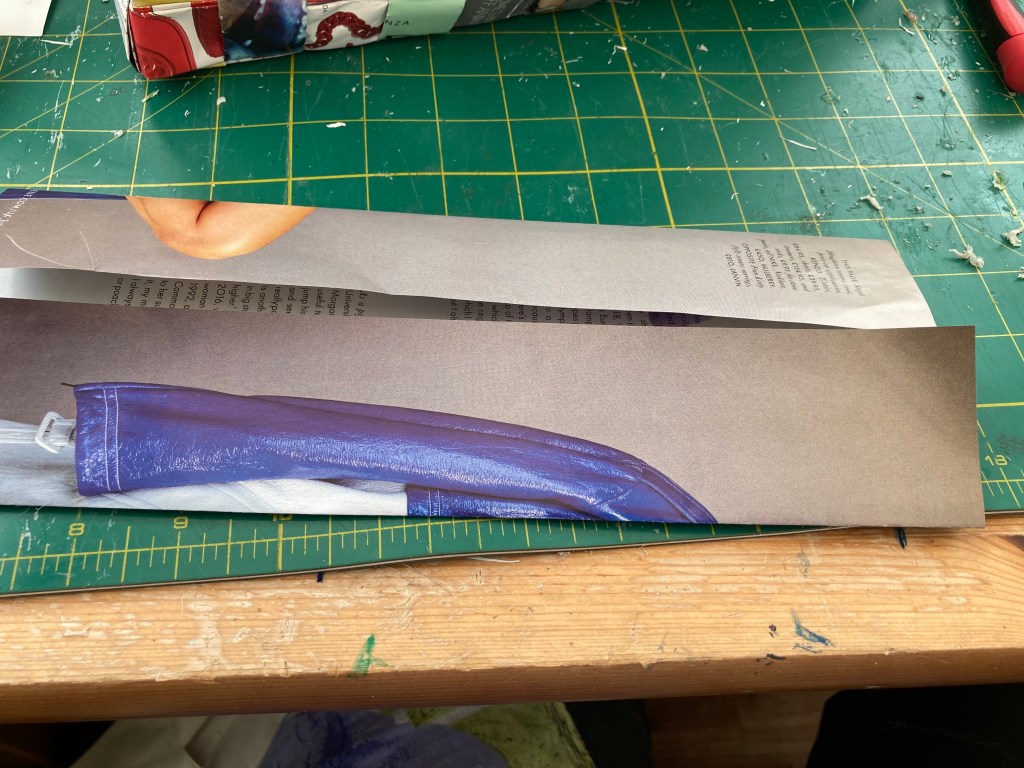
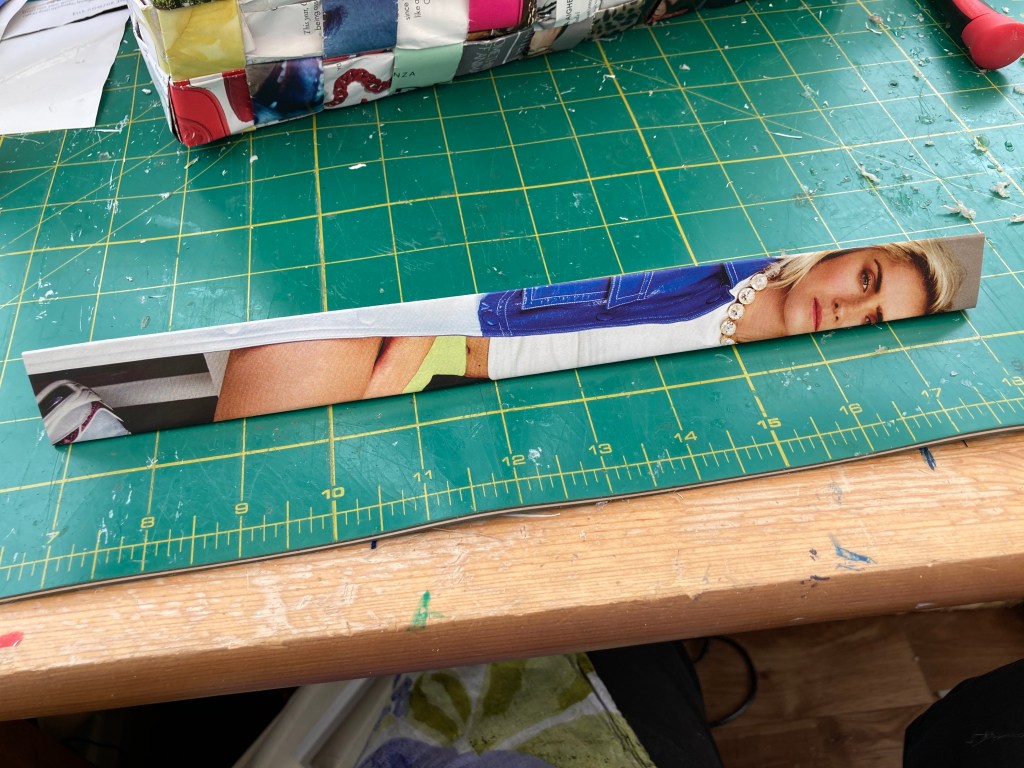
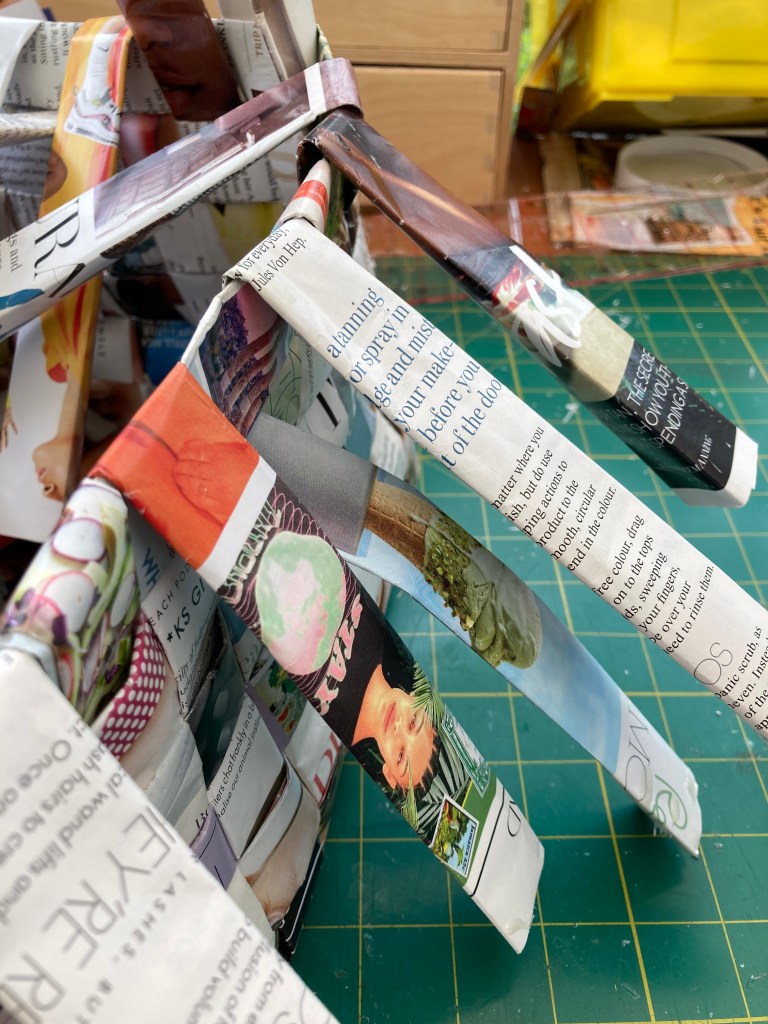
Using a craft blade and a ruler to get a straight edge, I cut the pages out and started by folding them into strips, long edges to the middle, then long edges to the middle again, then in half. Wherever possible I kept the most colourful side to the outside.

When I needed to join strips I either joined two or three sheets together with a thin line of glue before folding or joined two folded strips together by wrapping one round another with 1-2cm overlap and securing with glue.

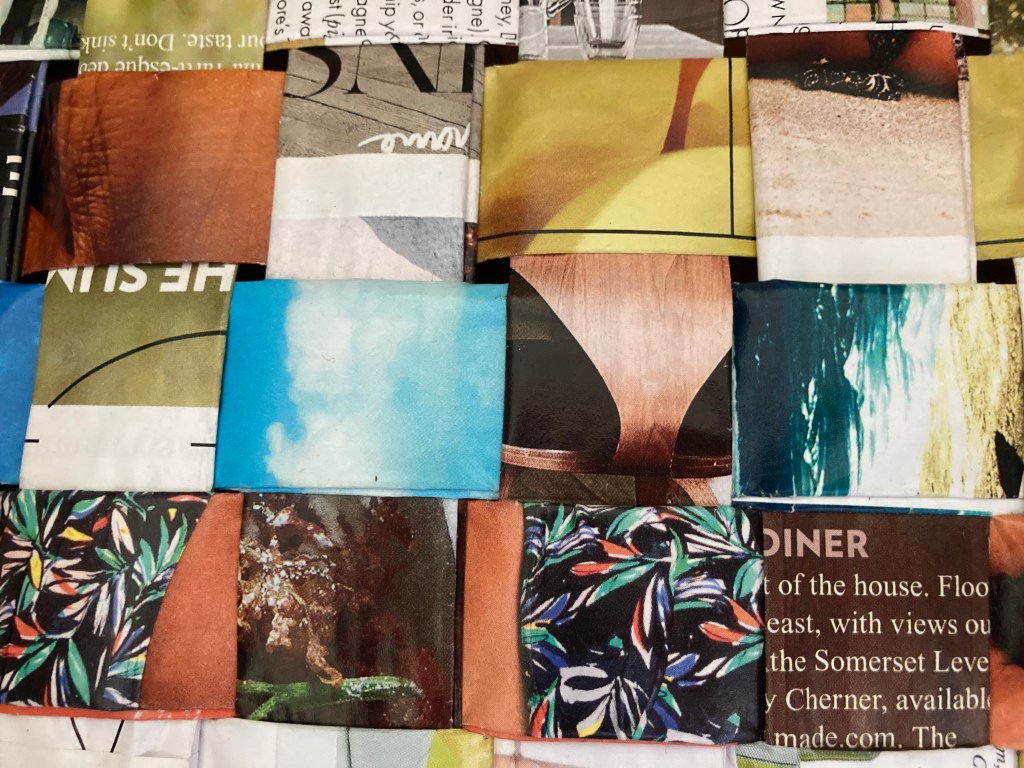
Starting with the basket base, I secured the first few strips to the table with low-tack tape, using the grid lines on my cutting mat to keep them parallel to each other. I then began to weave strips through these, keeping them a right angles to the initial strips and parallel to each other. I tried to keep the weave as tight as possible, applying a dab of hot glue every so often to keep the strips secure.

When the base was the right size I folded the unwoven ends up and began to weave a strip round the basket. I made some strips with magazine covers and attached these to the strips that were forming the corner verticals, for added strength. I joined in new strips as I went, trying to keep joins behind upright strips. When the first round was complete I joined the two ends, making sure that the weave stayed tight and even to avoid the sided of the basket bulging. I also kept the upright strips as straight as possible, easing them into place to forma tight weave and not bulging out. I started each new round in a different place – joints are the weakest part, so I didn’t want to concentrate them all on one side. I found it helped keep things secure if the uprights (apart from the stiffer corner struts) were bent over as I wove the strip round and the upright were also already in the right position for the next round.

When I got to the second last round I found it was important to use as little glue as possible to secure the weave and limit it to the lower edge to allow for tucking ends in.

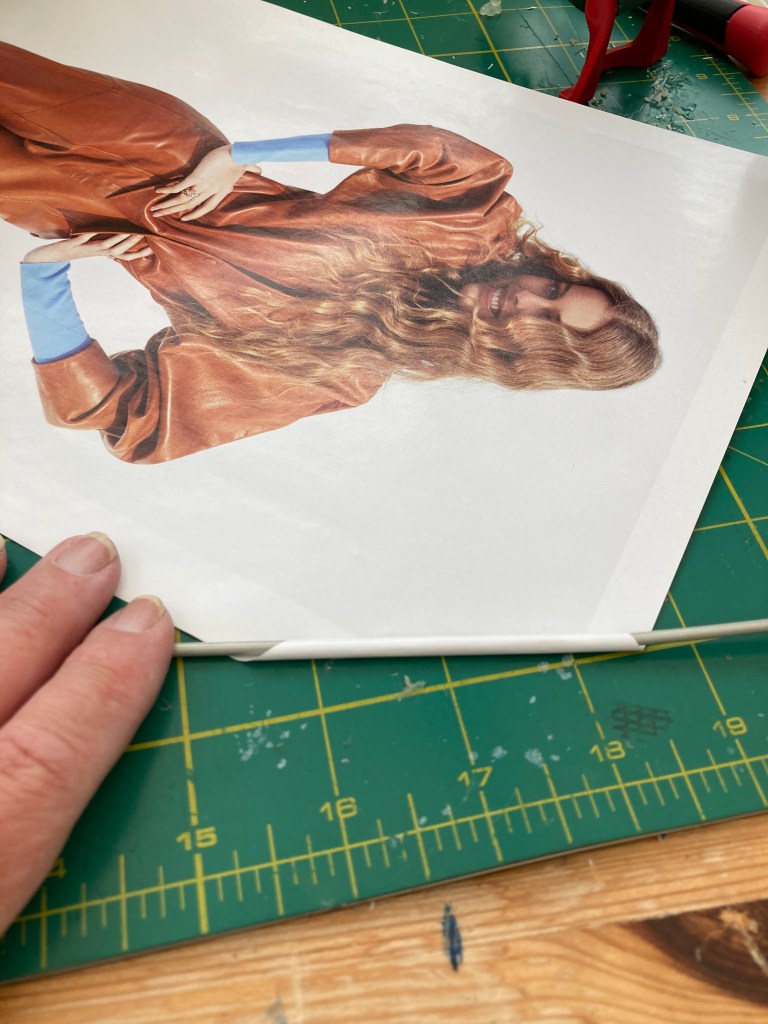
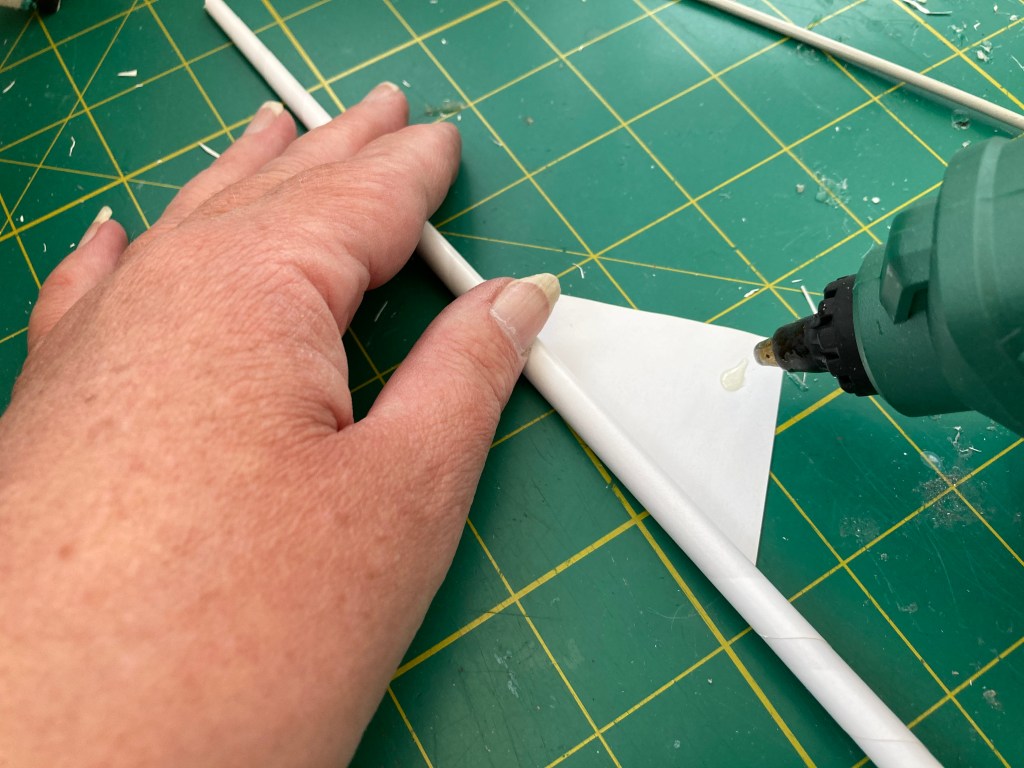
Once the last round of strips was woven in I made some edge supports by rolling a magazine page diagonally into a thin tube (I started it by rolling it around a thin knitting needle) and securing with a dab of hot glue.

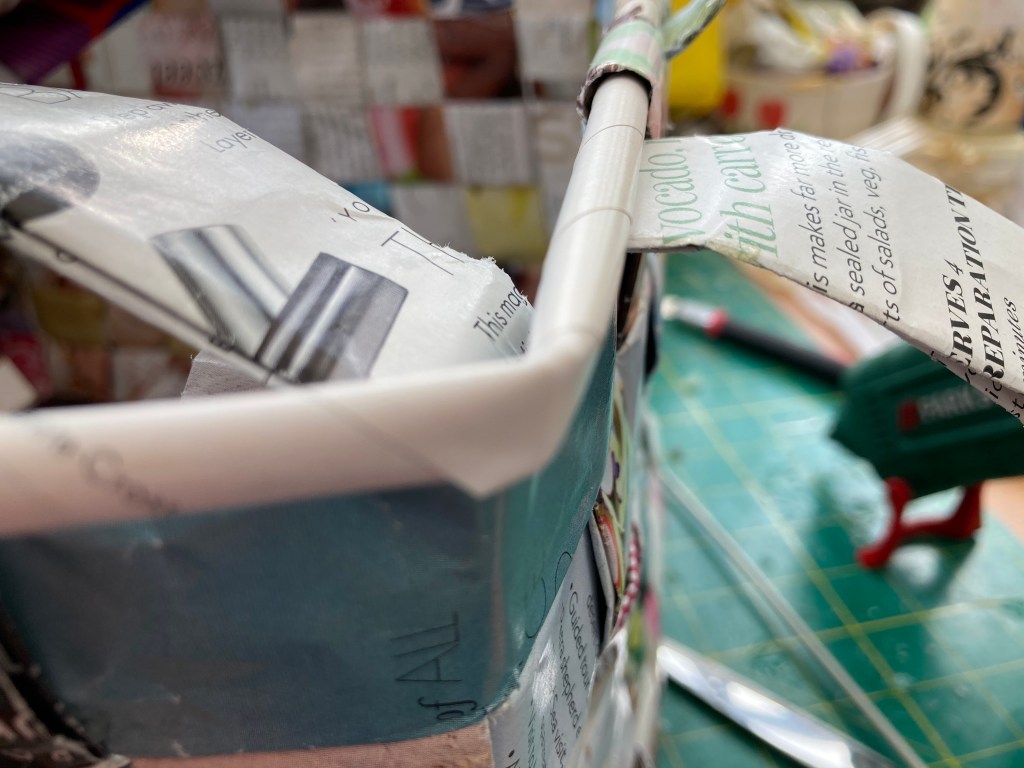
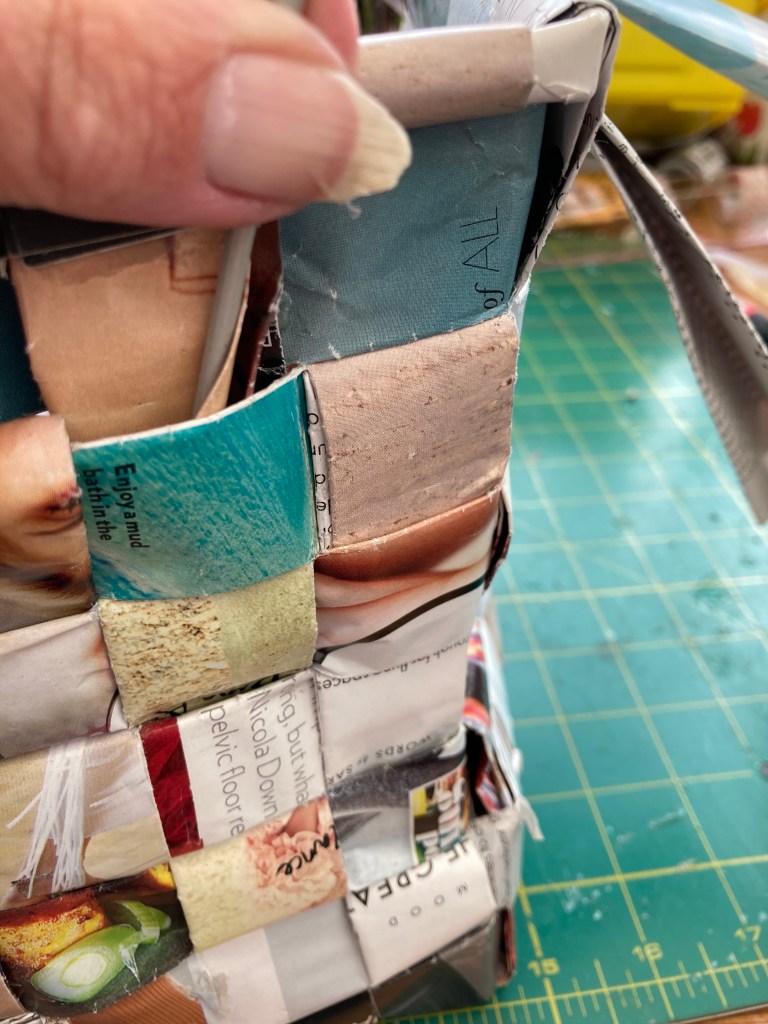
These tubes are surprisingly strong and make a rigid top edge for the basket. I wove the uprights through as if the rod was another round of strips joining them at the corners by inserting the end of one tube into another and securing with a little hot glue (one end of each tube is thicker than the other

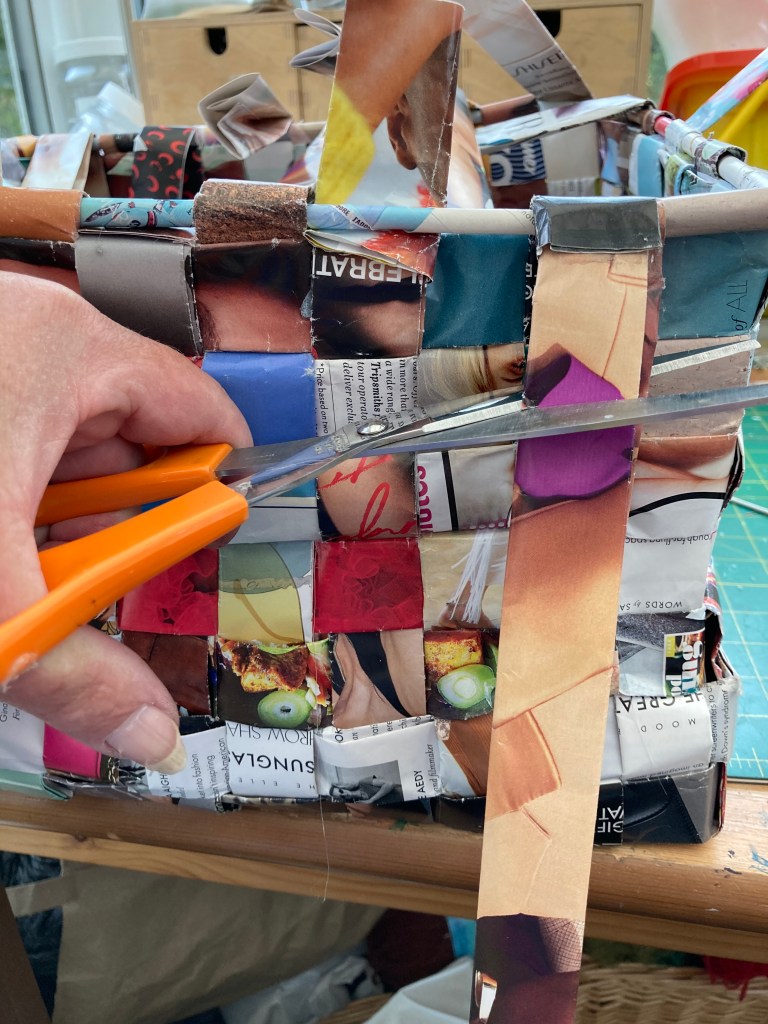
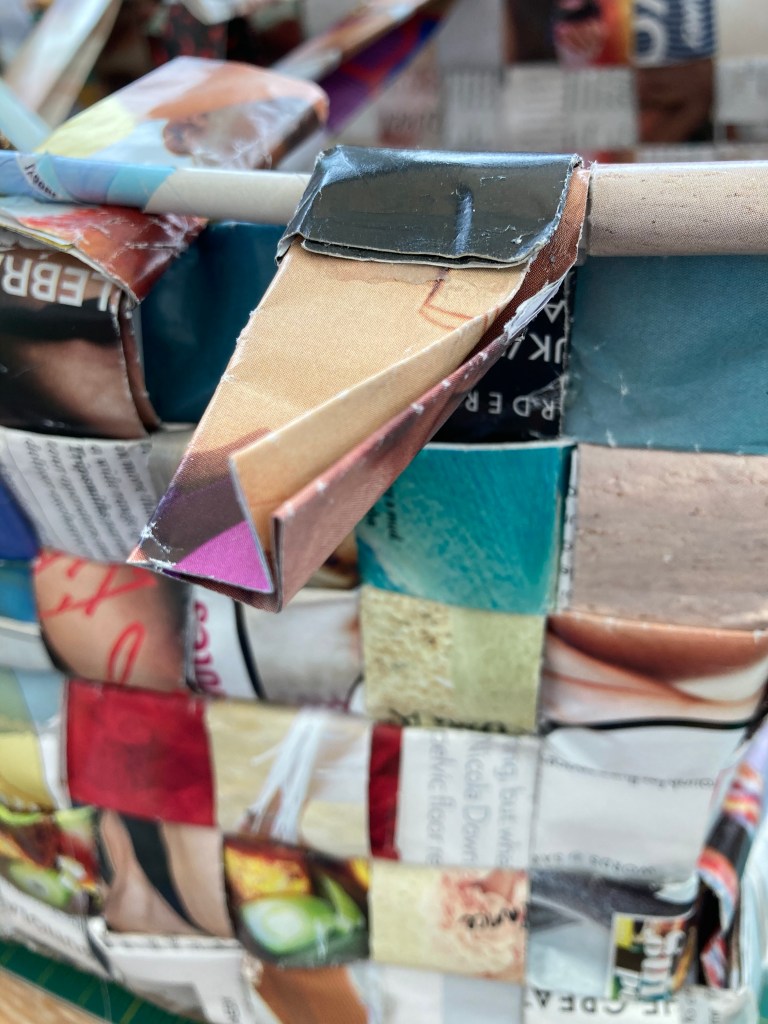
I finished by trimming each upright strip to about 6cm long and tucking it into the second last round of strips. I started with the outside and then did the inside, securing with a little glue around the tube.

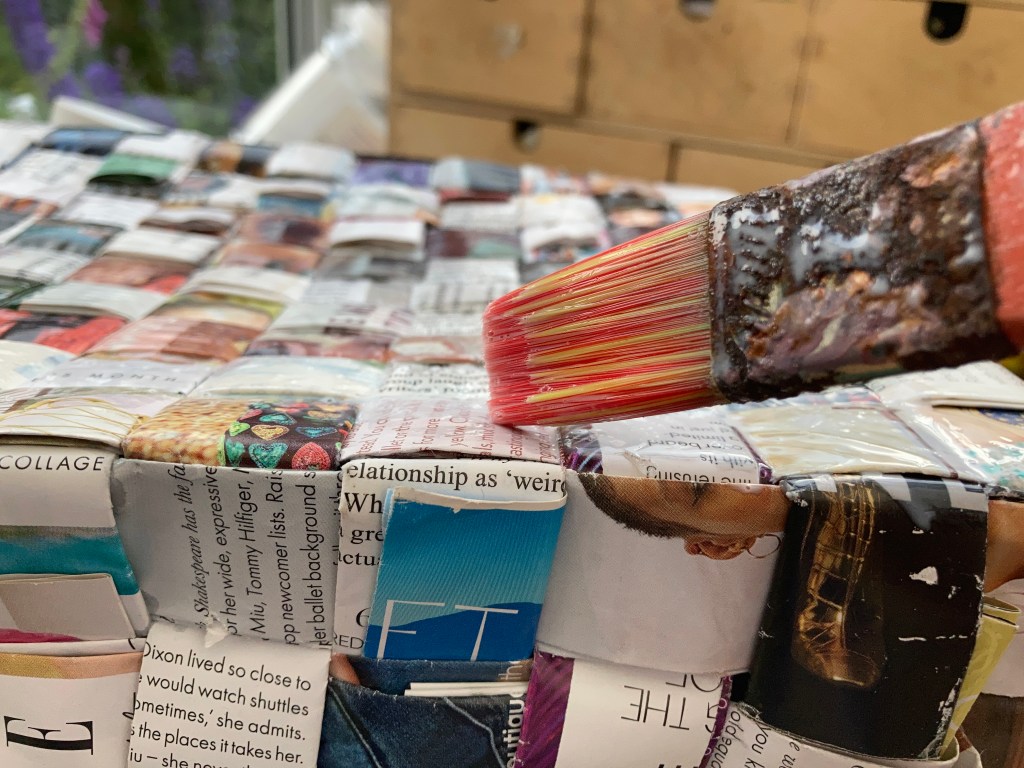
With all the ends tucked in I gave the whole basket a couple of coats of diluted PVA glue, inside and out. This makes the whole basket more rigid as well as sealing the surface.

I’m really pleased with my made to measure baskets. I wouldn’t use them for heavy item storage but they are perfect for lighter things.

Have you tried any new crafts recently?