Posted in Uncategorized

Crafting at Craster

Yesterday I was in the pretty Northumbrian fishing village of Craster. I’ve just gone back to the local craft group recently after a long break. They meet in the village hall in the centre of Craster on a Tuesday morning, from around 10-12, and for the princely sum of £2 we get tea or coffee and biscuits, sometimes delicious home baking from group members too… and, a raffle, not to mention the great company. It’s such a lovely friendly group.

On this occasion I took Buddy the Labrador too. He would have been left home alone otherwise. He’s a chilled old boy, so, although when he enters a room full of people he seems to think he’s arrived at a meeting of his personal fan club (he just loves meeting people), he soon settles and goes to sleep under the table. Fortunately there are a lot of dog lovers in the group who sometimes bring their own. Buddy made friends with Tilly the miniature schnauzer, who wasn’t sure at first (Buddy is huge).

I took some spinning, but there was a lot of knitting as well as crochet, needle felting, and sewing going on.

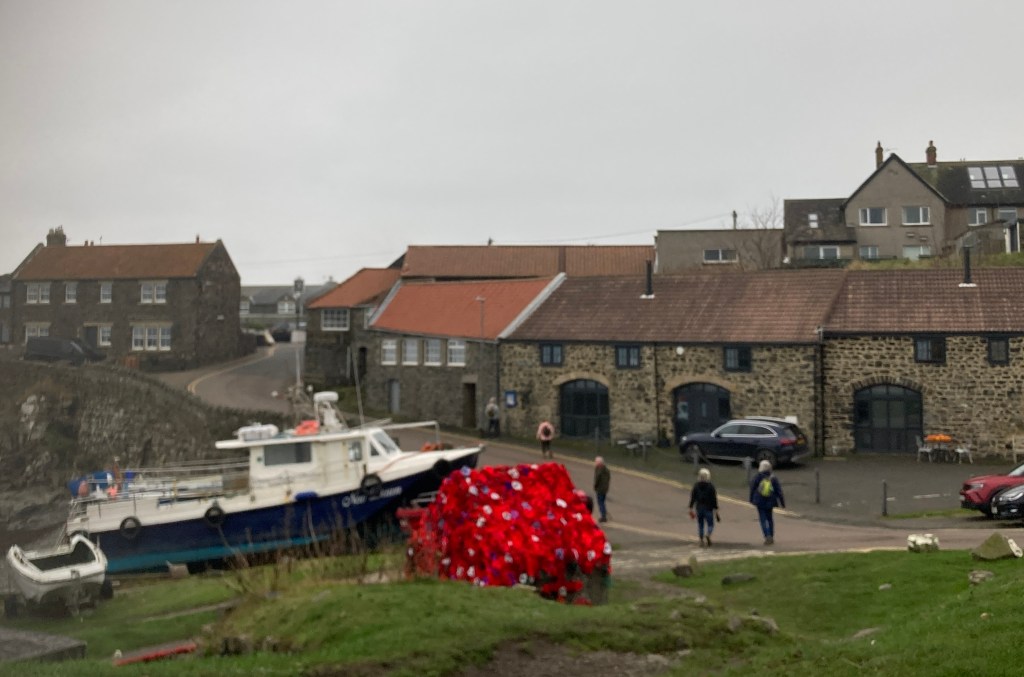
Afterwards I took the opportunity to give Buddy a walk and explore the village – I haven’t done that for years!

Craster is famous for its kippers. These smoked herrings are a real local delicacy: on smoking days you can smell the process and see the smoke emerging from the chimneys of Robsons Smokehouse, just a few yards from where I’d been crafting. The business has been run by the same family for four generations and includes a seafood restaurant.

Buddy stopped for a long drink at the dog bowl outside the Mick Oxley Gallery. We walked towards the harbour, past the village pub, the Jolly Fisherman, which serves excellent food.

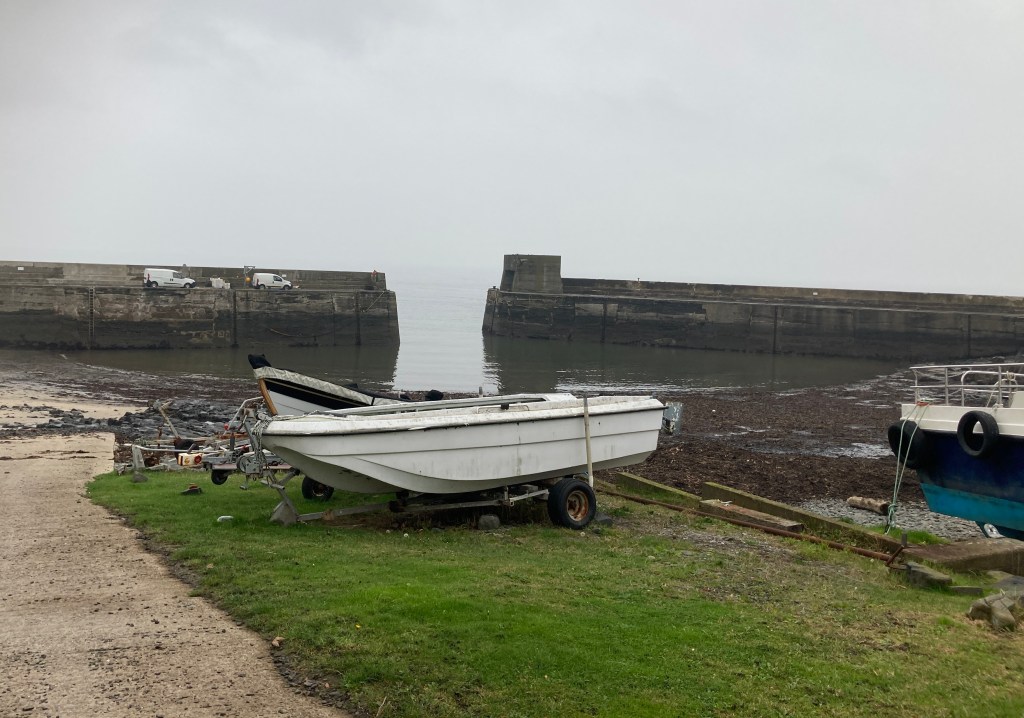
It was a still, rather murky day and the sea was calm as we approached the harbour. This place holds fond childhood memories. When we were small, my brother and I would get damaged and unusable herring from the smokehouse to use as fishing bait, then go fishing for crabs and small fish off the pier.
Close to the harbour the War Memorial has been decorated with knitted and crocheted poppies prior to Remembrance Day on 11th November. These have been made by members of the craft group.
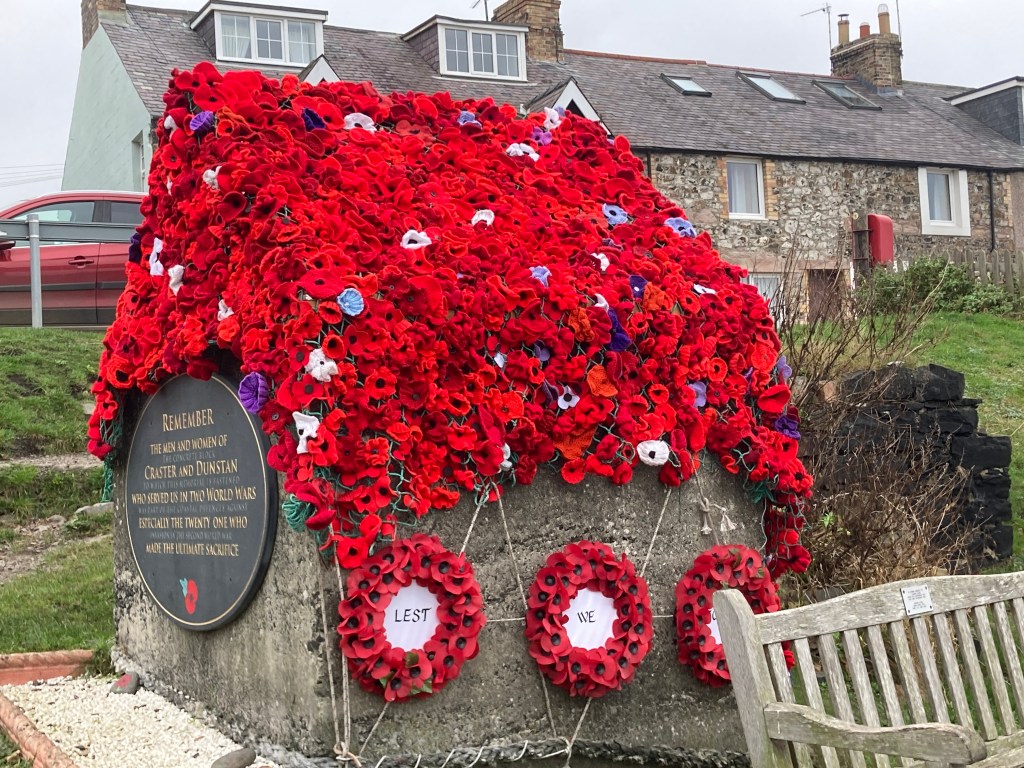
The poppies extend to the adjacent park bench…

…and the railing overlooking the harbour.

Down on the tiny beach, some canoeists were preparing to take to the water.

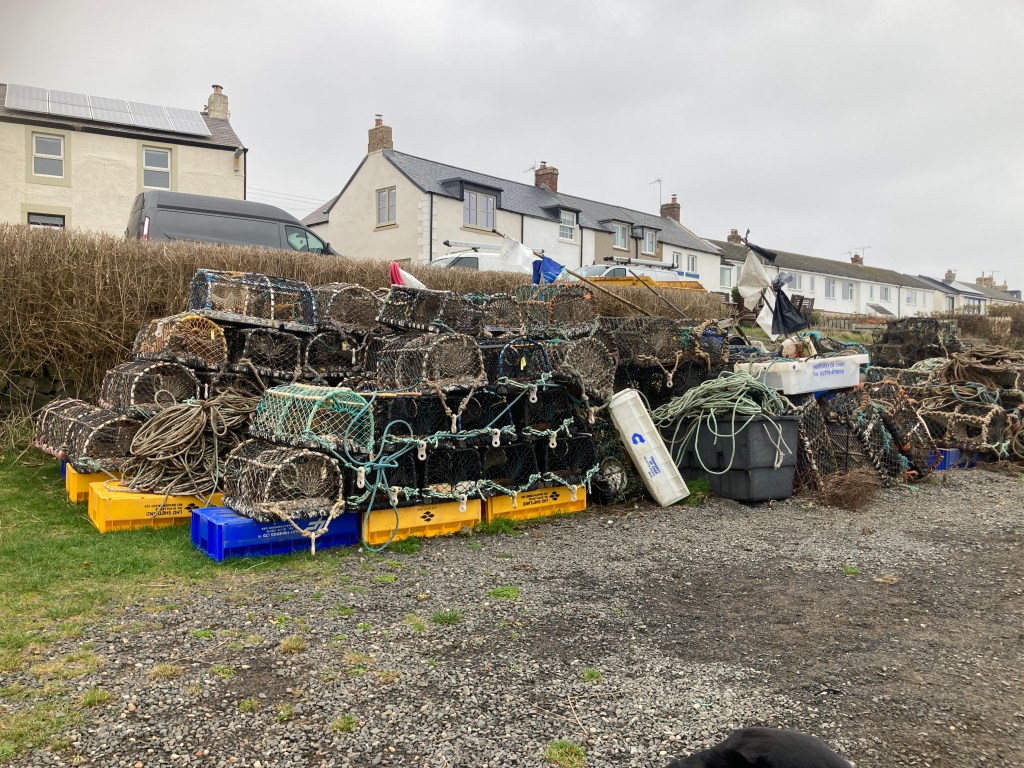
Although Craster is popular with tourists, with many of the dwellings in the village now converted to luxury holiday accommodation, it remains a working fishing port.
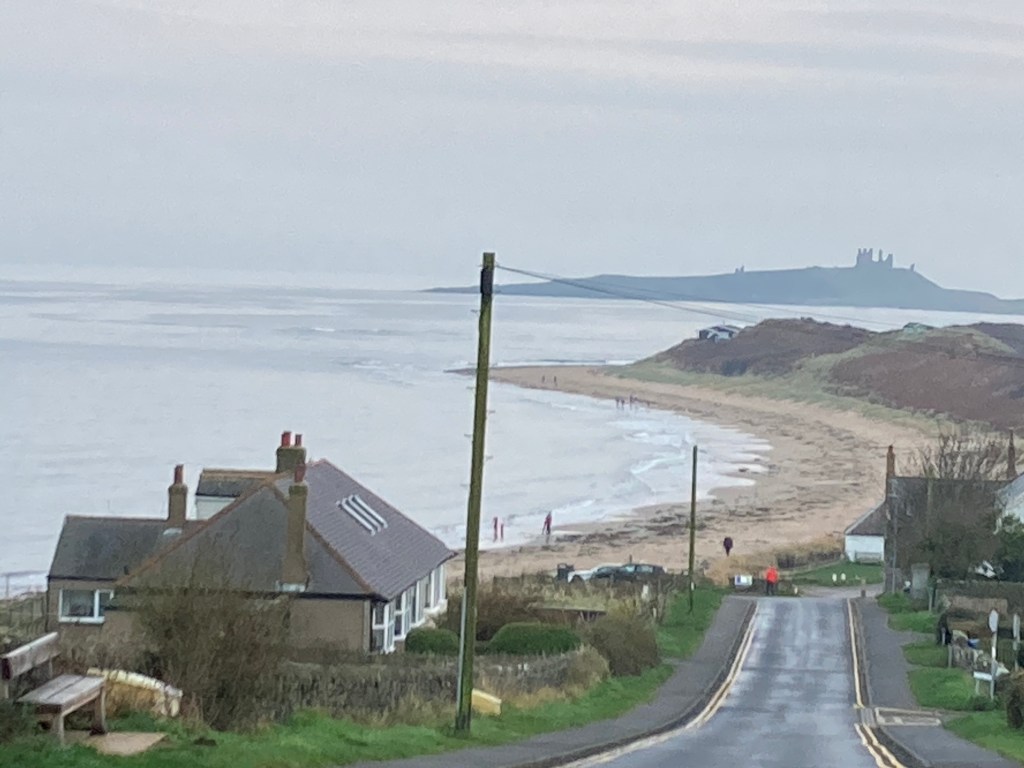
Craster also sits on the Northumberland Coastal Path. Despite the grey day there were still plenty of walkers about. Buddy and I joined them, heading north out of the village, through the gate and along this well-beaten track – dogs must be kept on lead as sheep graze here. Directly ahead, looming eerily from the mist, are the ruins of Dunstanburgh Castle.

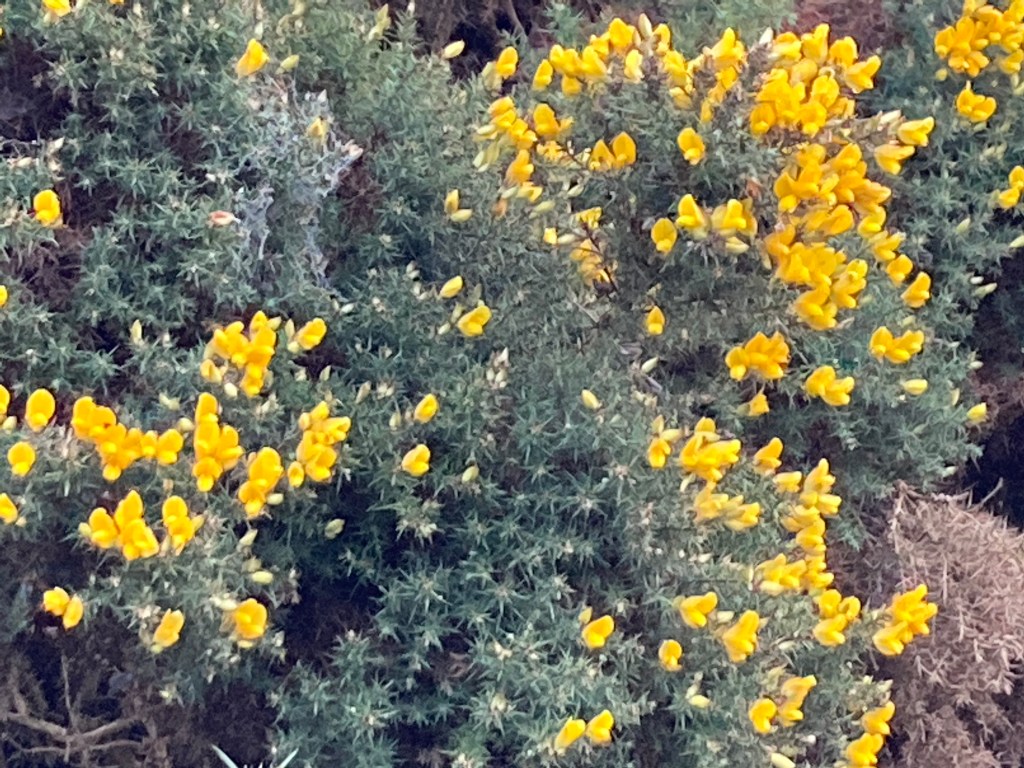
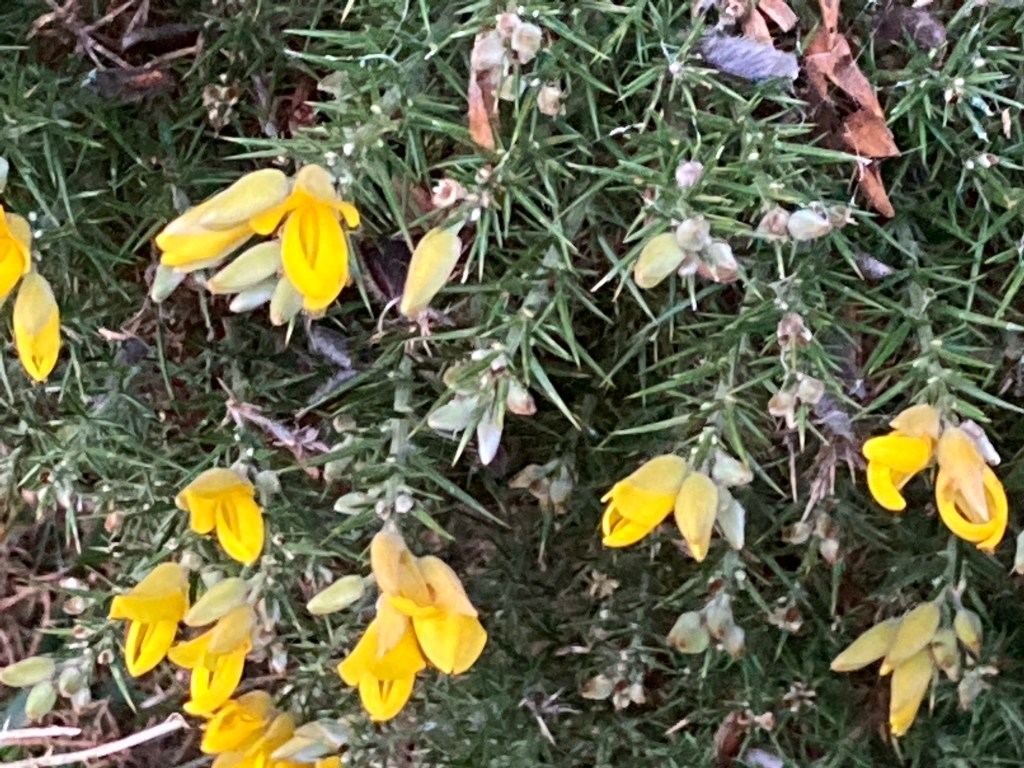
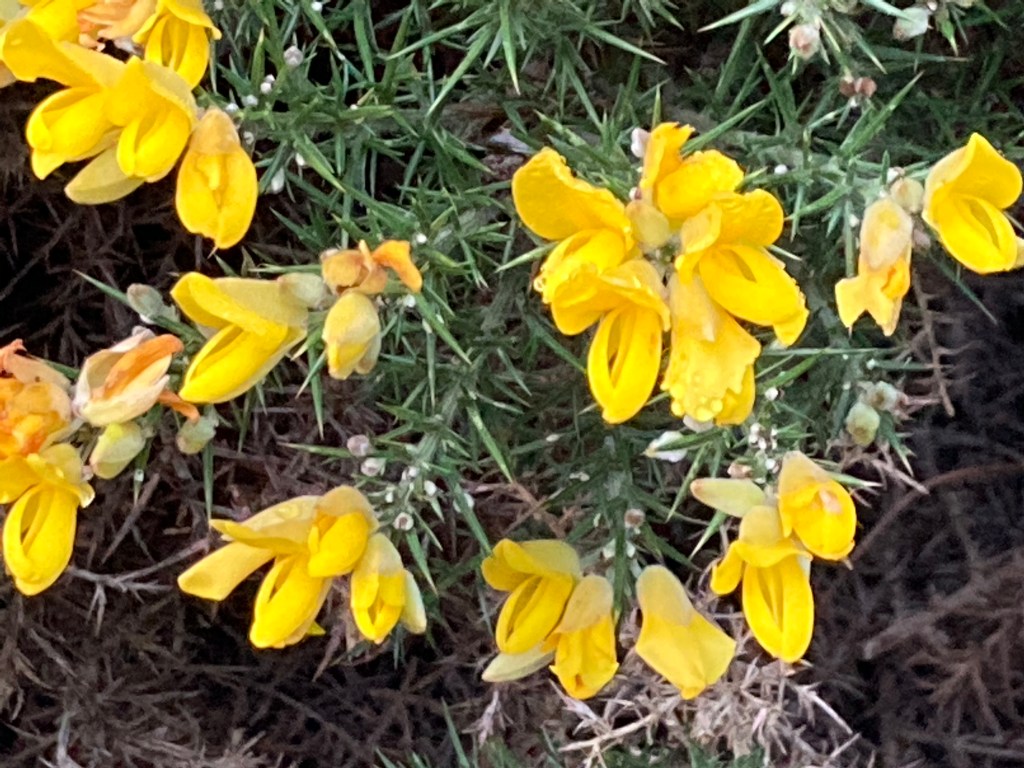
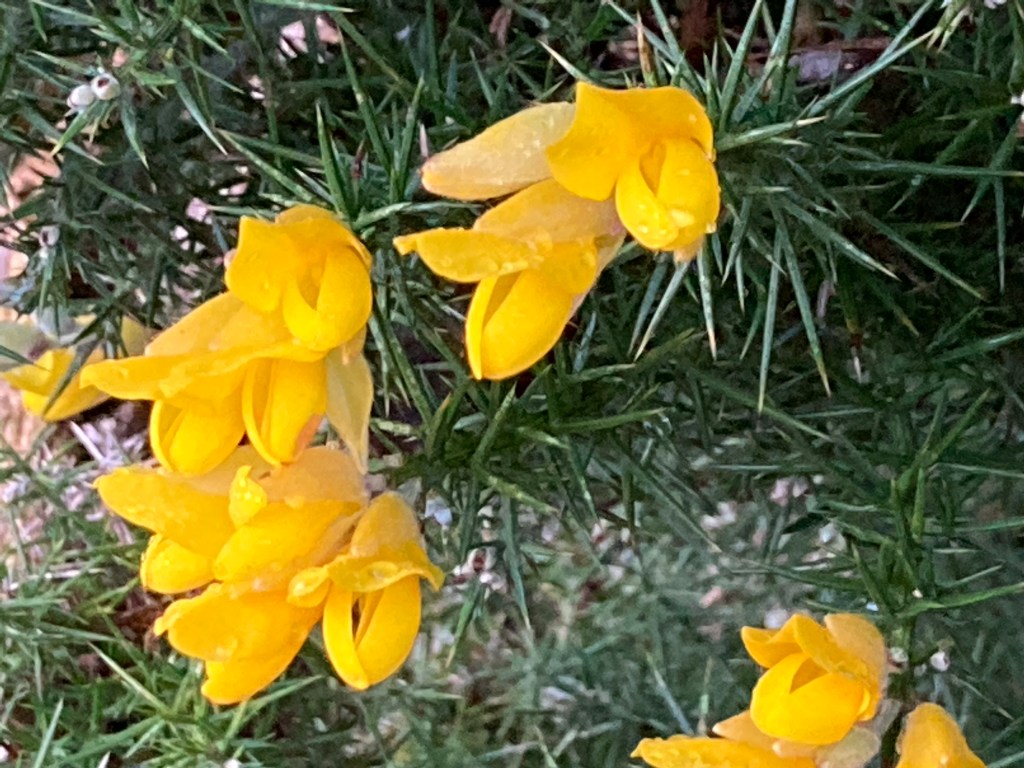
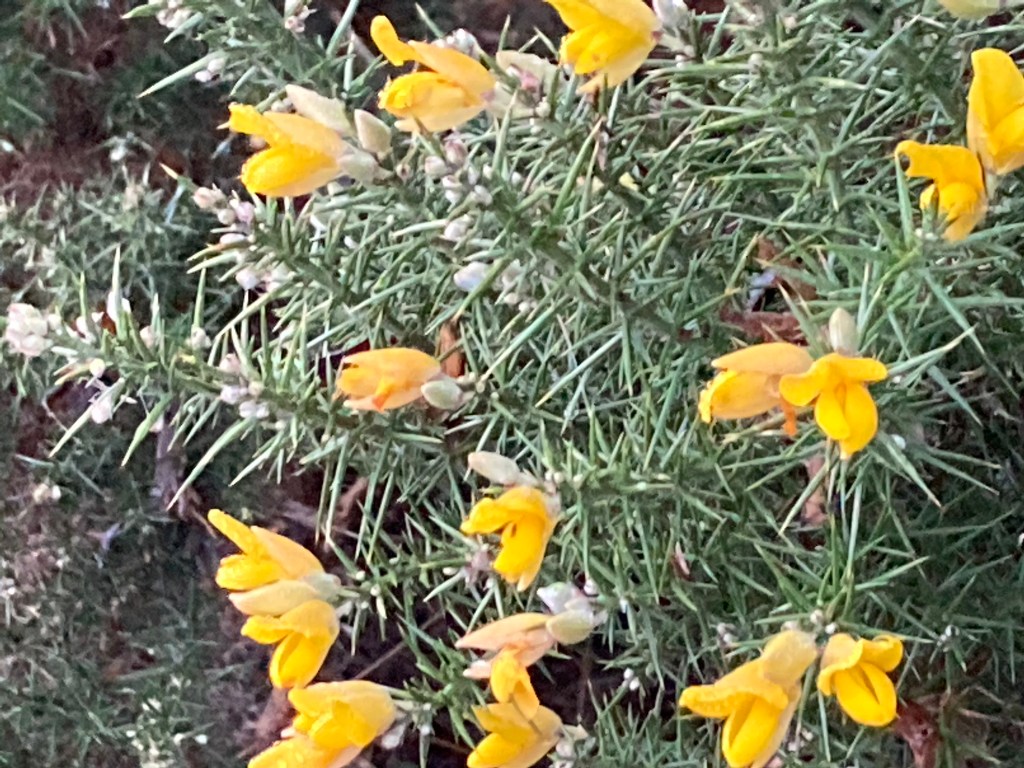
Along the the path, the gorse is still in bloom, adding a welcome splash of colour to the dull day.

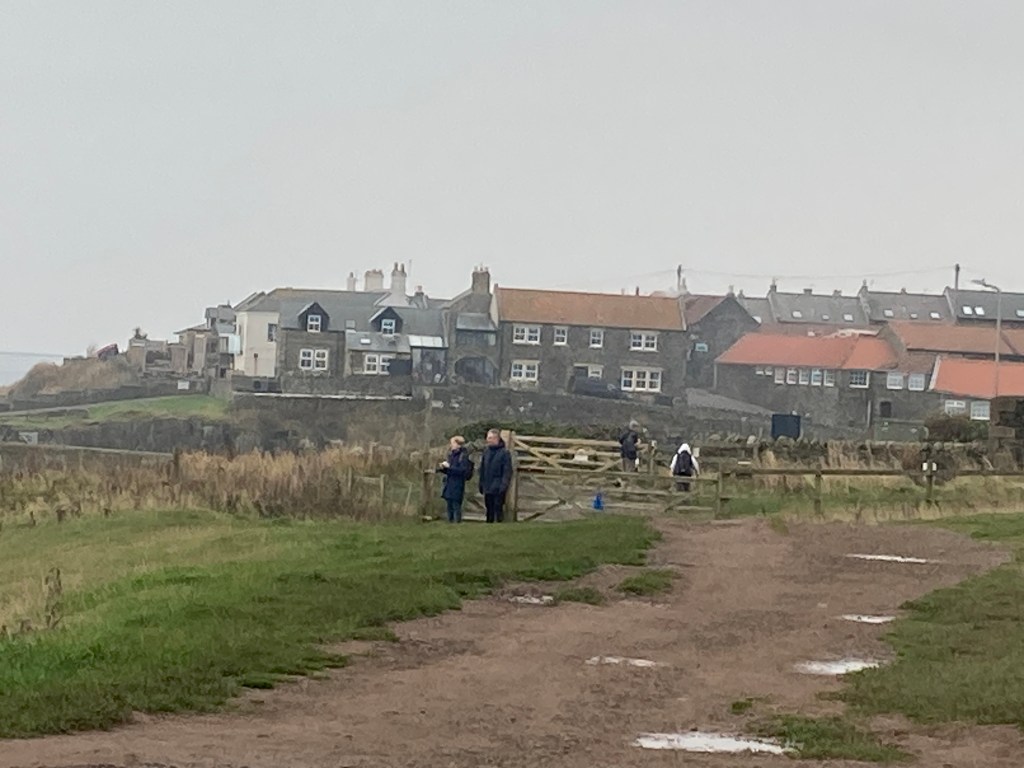
Soon it was time to turn back, switching the view to the village.
What a lovely way to spend a morning!
Posted in Uncategorized

Wildflower of the Week: Gorse

Gorse (Ulex europaeus) is a member of the pea family that grows as a shrub up to 3m tall, and is found on rough ground, moor, heathland and coastal areas. The plant is native to Europe and North Africa, but has become an invasive weed in parts of the USA, Australia and elsewhere. It is also known as furze or whin.

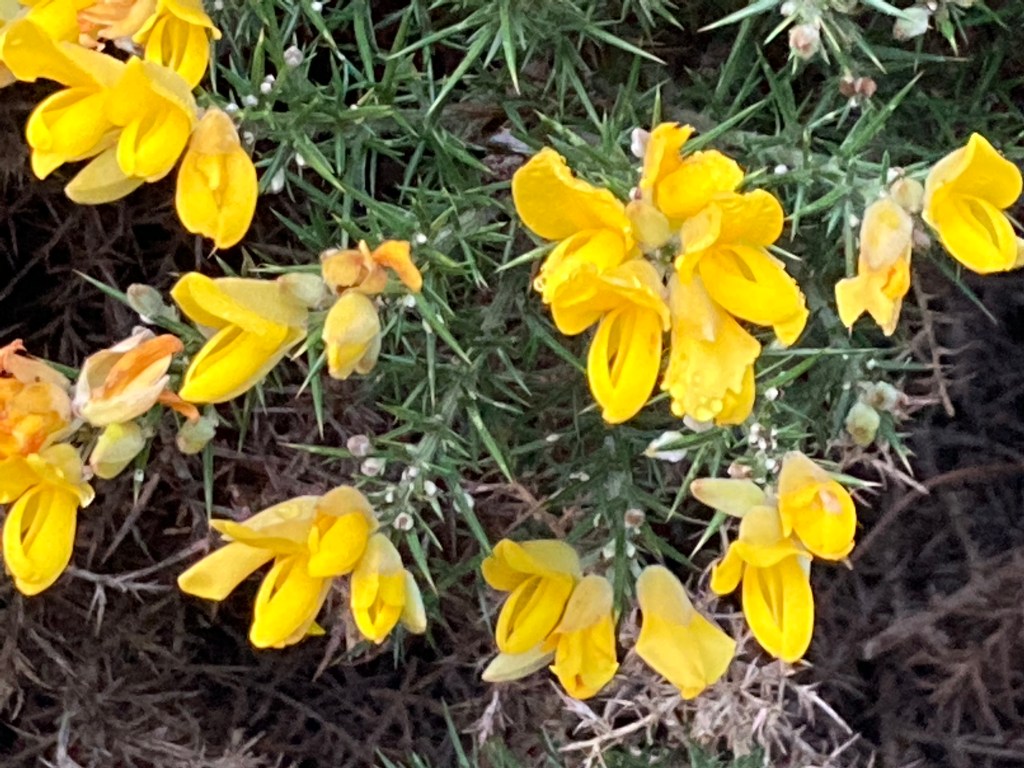
The plant is covered in sharp spines up to 3cm long and can be seen in flower all the year round but is at its peak right now, covered in golden yellow blooms with a keeled structure typical of the pea family. They have a sweet coconut scent and are a valuable source of nectar for bees, butterflies and other insects.

The country saying  “When gorse is out of blossom, kissing’s out of fashion” comes from the year-round flowering habit. A sprig added to a bridal bouquet symbolises fertility.

The flowers are followed by dark brown hairy pods, each carrying about three seeds, which are ejected as the pod splits open.

The spines (which are modified leaves) make gorse an effective hedging plant, forming a dense impenetrable barrier to livestock, but also protective cover for wildlife including nesting birds.

In traditional medicine a tea made from gorse flowers has been used as an antidepressant. 17th Century herbalist, Thomas Culpepper described a decoction of the flowers as effective against jaundice and as a diuretic and cure for kidney stones. The flowers also yield a bright yellow dye. Being edible they can be used in salads and to make a tea or syrup.

The straight stems of gorse wood make good walking sticks. it has also been used to make brooms and chimney sweeping brushes.

The plant burns fiercely with a great heat and was popular for firing bakers ovens and kilns. Gorse fires spread quickly but even when burnt to the ground will regenerate quickly from the roots.

On warm spring days a walk past a gorse hedge certainly fills the senses, with those vivid yellow flowers alive with buzzing bees and the air suffused with that coconut fragrance.

ildflo
Posted in Uncategorized

Sunday Dog Walk: Newton-by-the-Sea

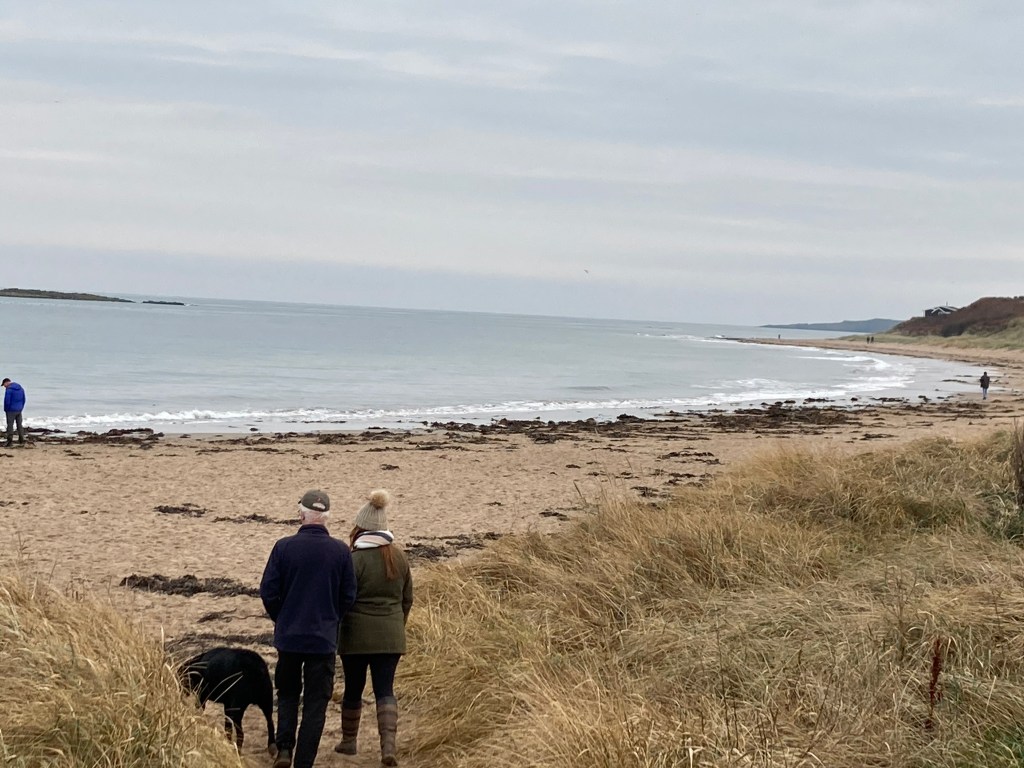
Sunday was a dull, dank sort of a day, but we headed up the coast to Newton-by-the-Sea. Daughter, K and Buddy went along the sand and I took the dune path, which is more scooter friendly.

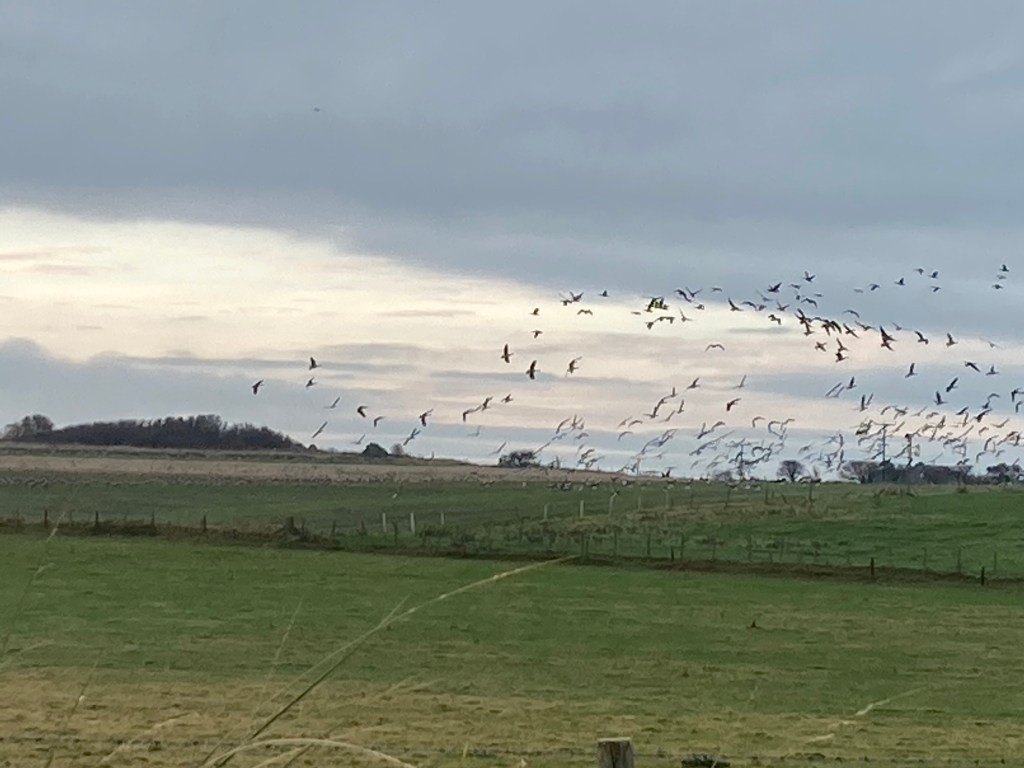
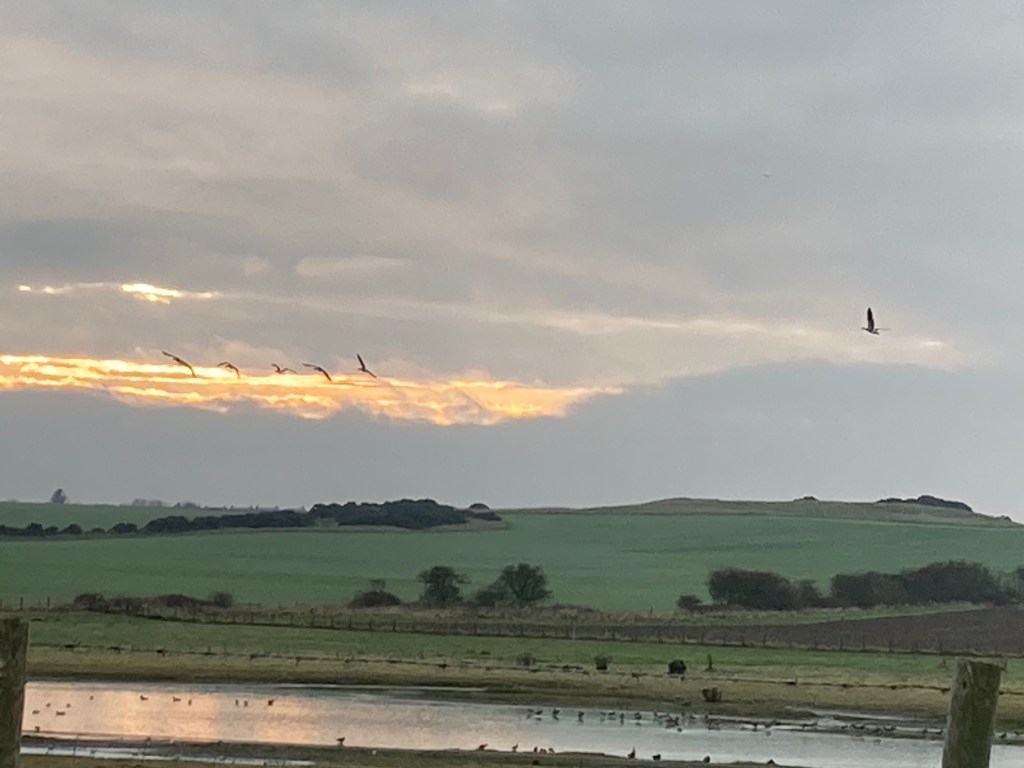
Behind the dunes are a series of ponds that are a magnet for waterfowl. I could hear a flock of geese fly by. As they came down in an adjacent field another flock flew up. What a din they made!

Further on there are reed beds.

The bird hide that overlooks the main pool is locked up at the moment – (another consequence of the pandemic) .

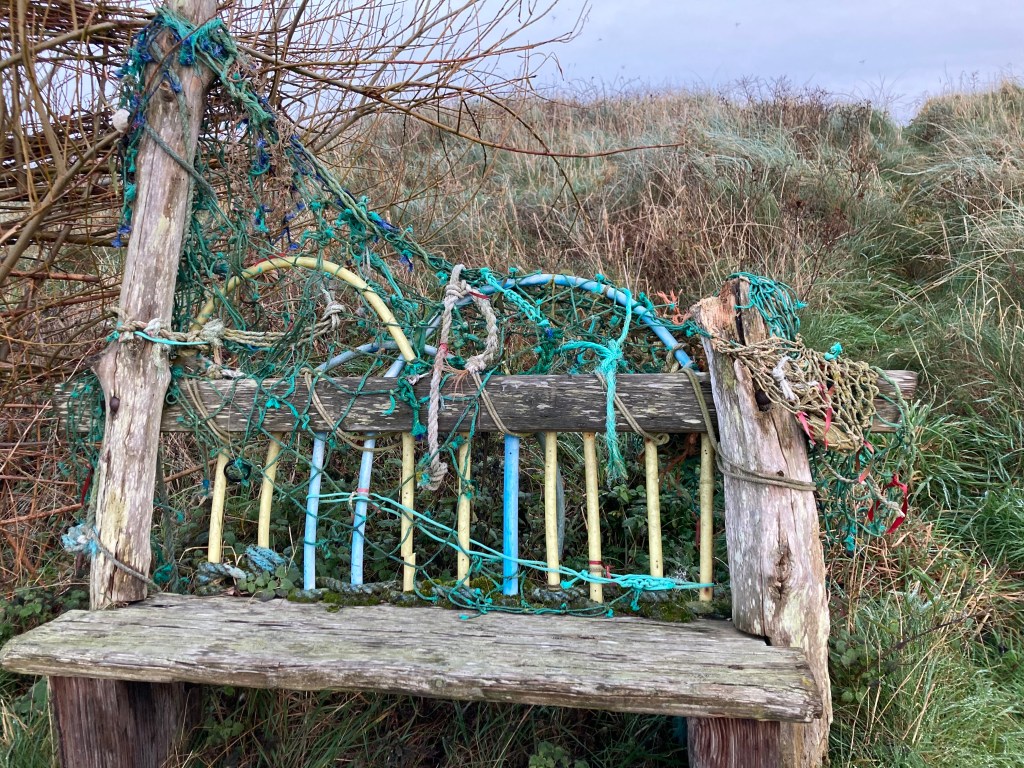
At the side of the path is this rather interesting seat

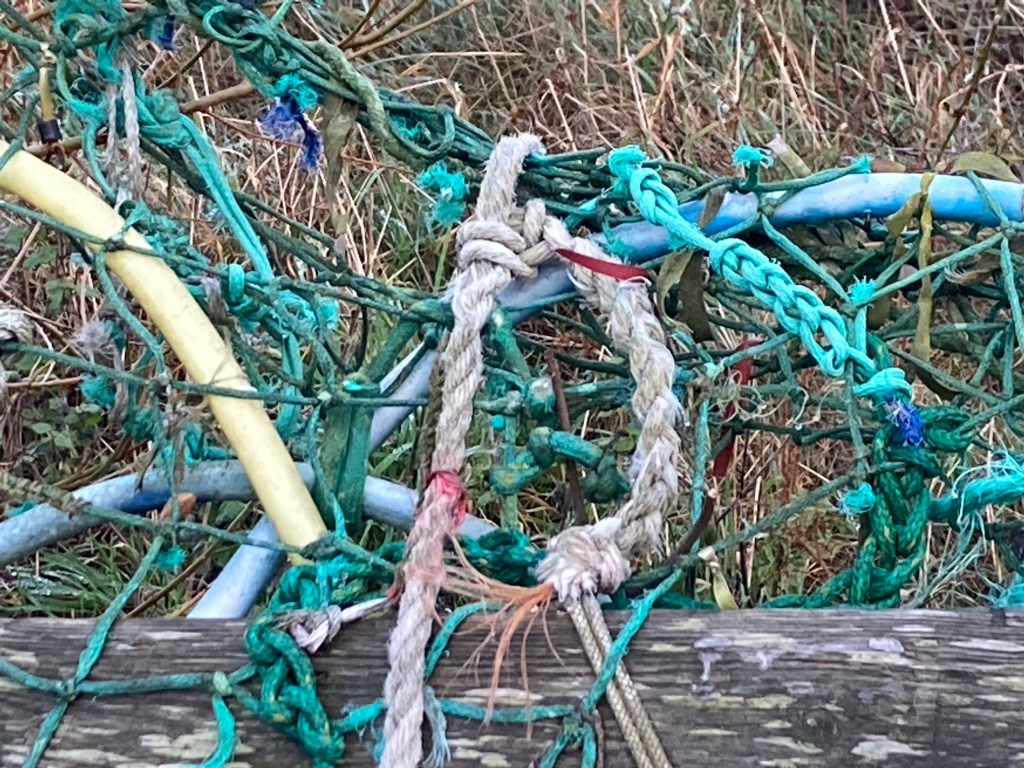
Sheltered by a woven willow screen, a simple bench has been decorated with driftwood and bits of discarded fishing gear washed up on the tide.

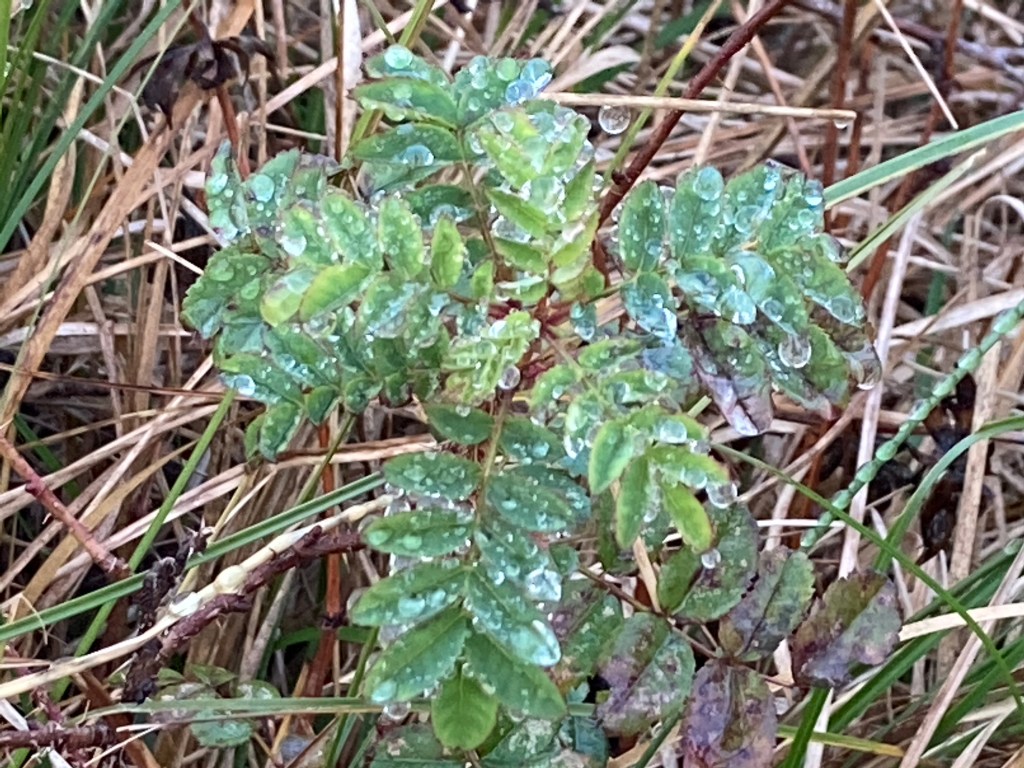
There was so much moisture in the air that dew was condensing on to plants like this Burnet rose.

The cobwebs looked bejewelled with raindrops.

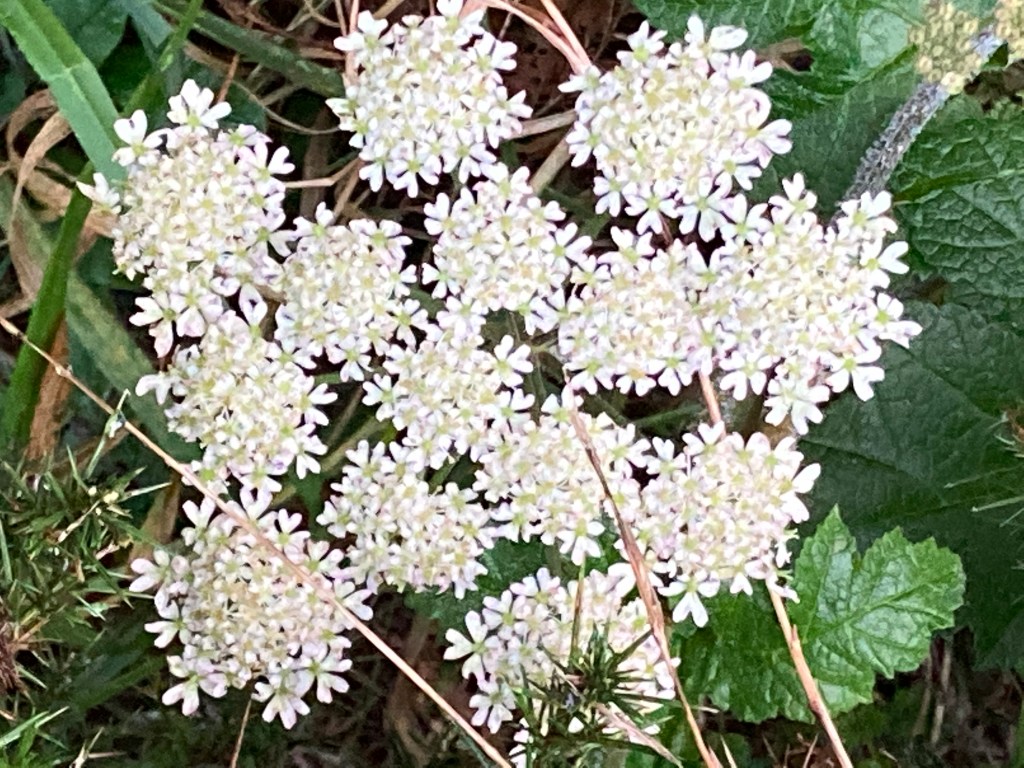
The only wildflowers I saw were an occasional hogweed flower…..

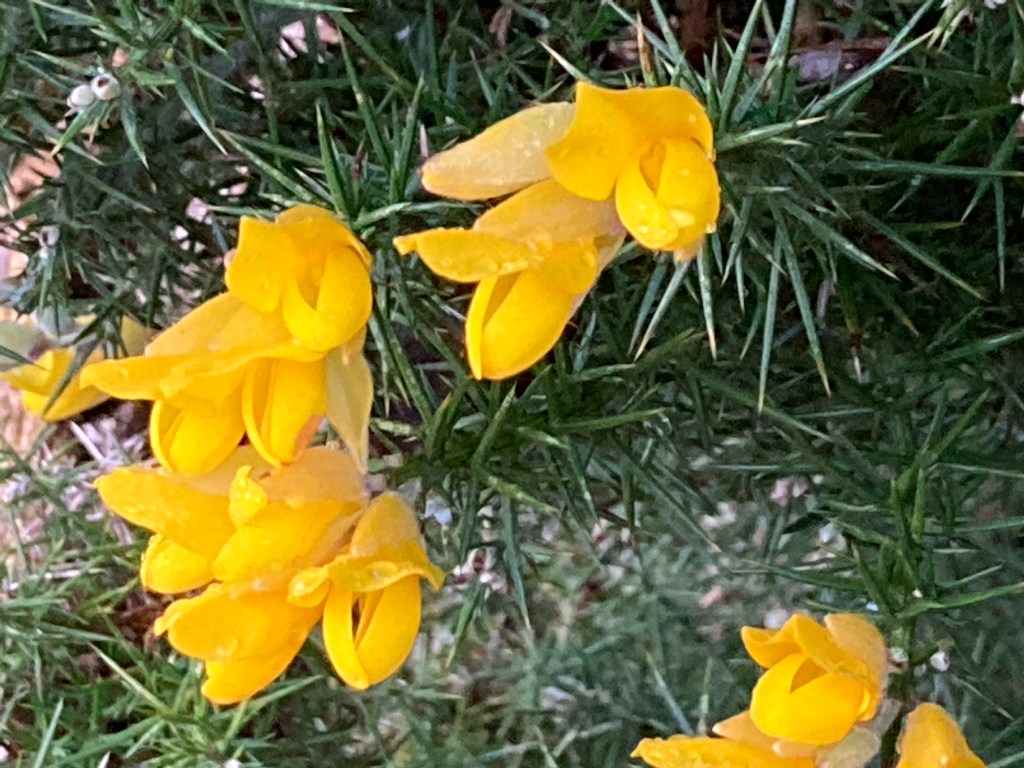
…and bright yellow gorse.

The gorse, known locally as whin, blooms throughout the year. At the end of November it brings a very welcome splash of colour.

Posted in Uncategorized

Thrunton Woods in November

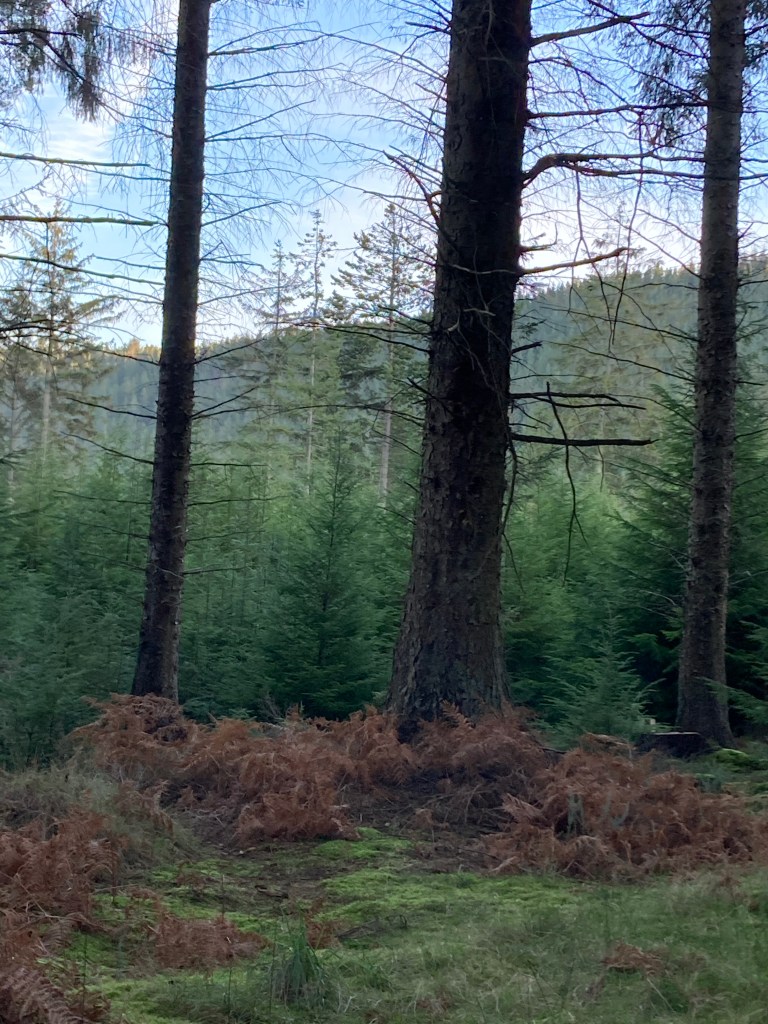
Daughter, K and I took Buddy Dog for a walk in Thrunton Woods yesterday. Last time we were here it was full of Autumn colour and fungi, but the woods have much more of a feel of winter now, though are still very beautiful.

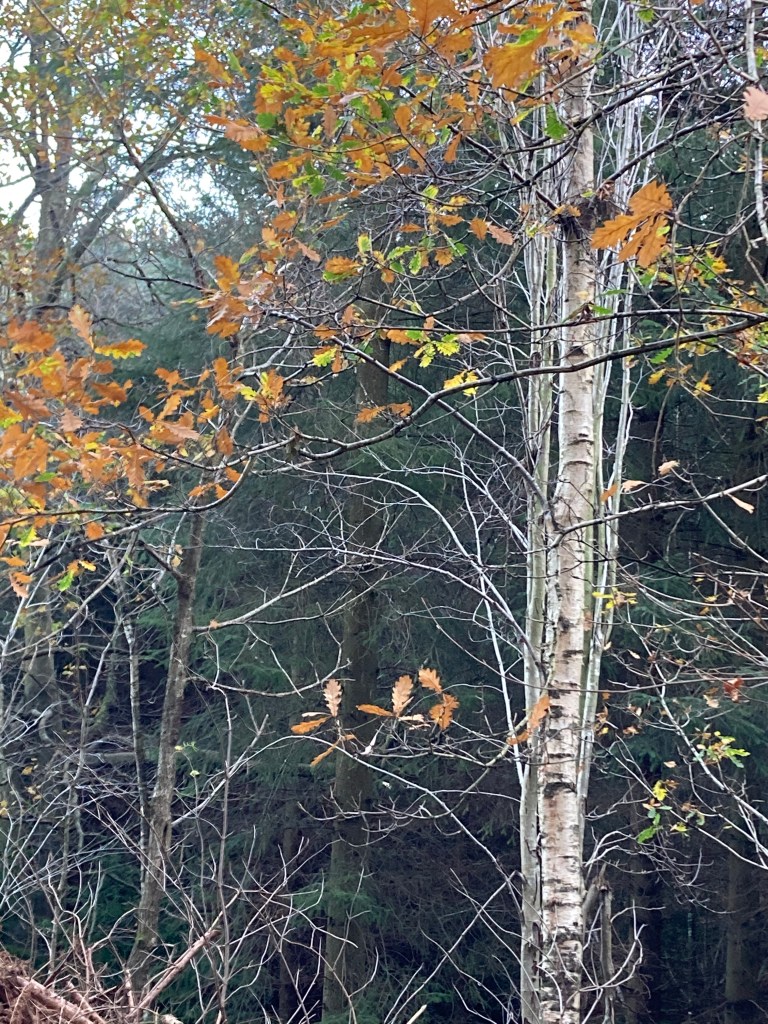
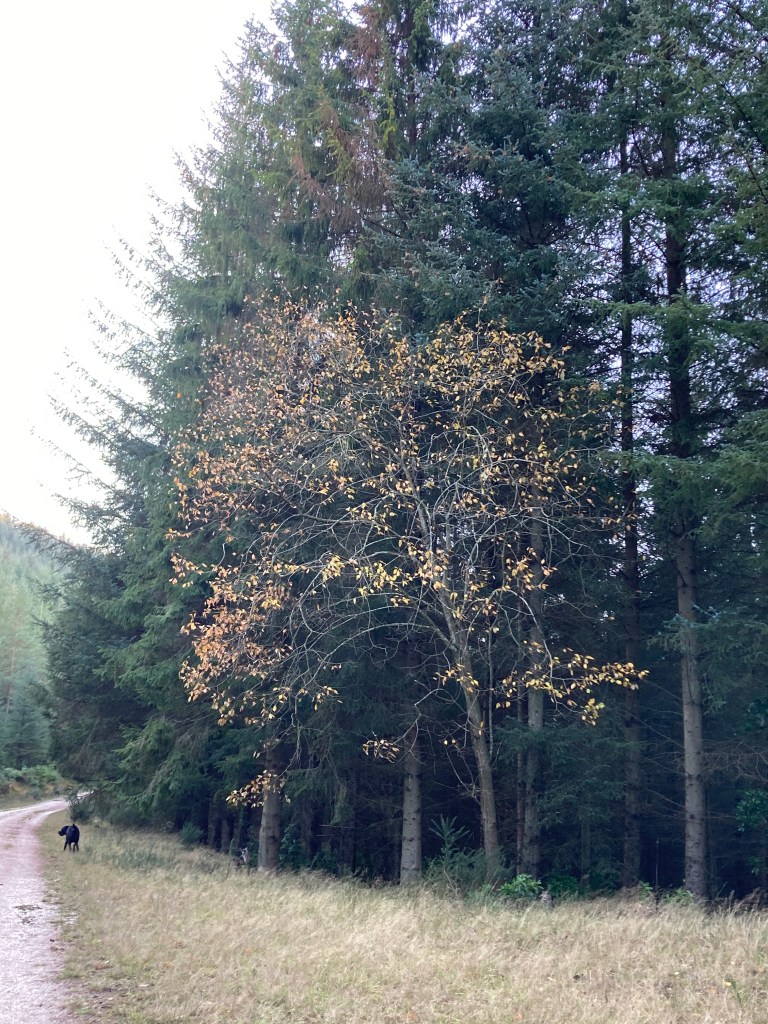
There are some patches of autumn colour on the occasional broadleaved tree than has retained a few leaves in a sheltered spot.

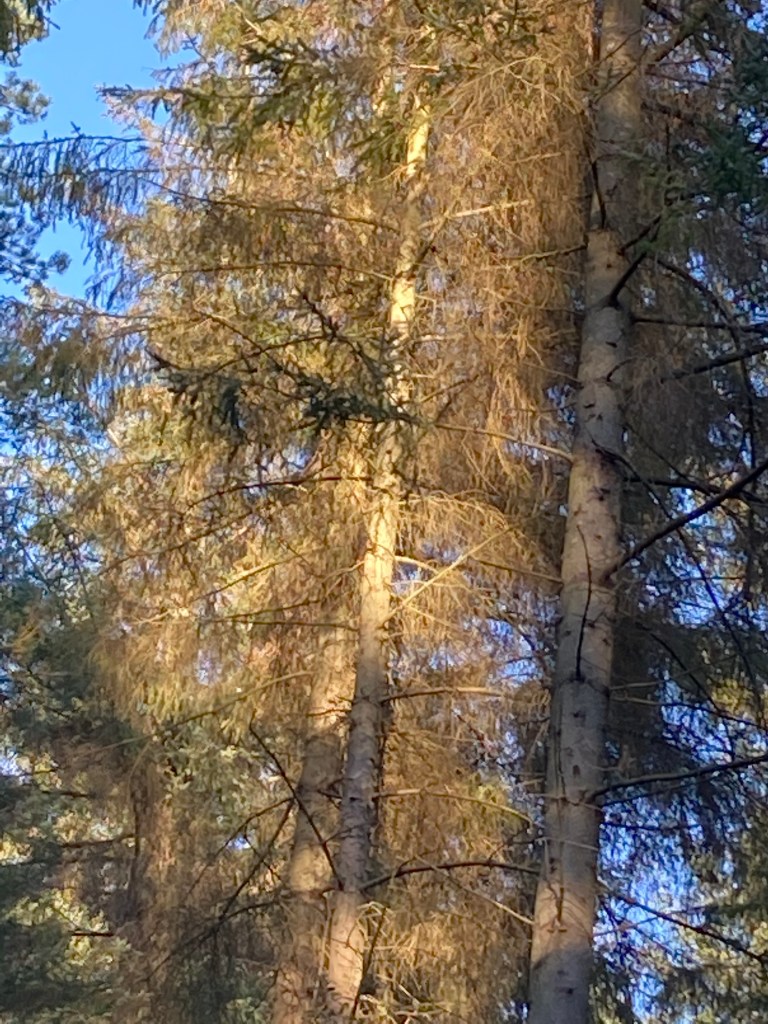
The mustard-yellow needles of larch add a splash of colour.

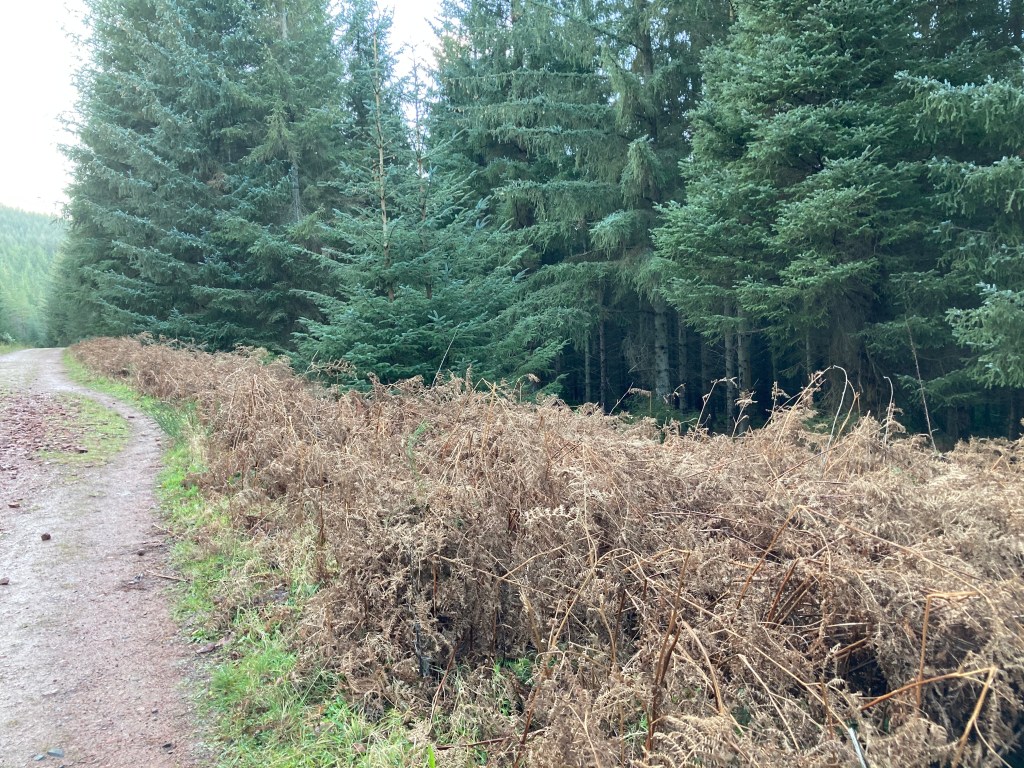
The bracken has taken on a pale russet shade.

The only flowering plant we saw was this solitary yellow hawk bit.

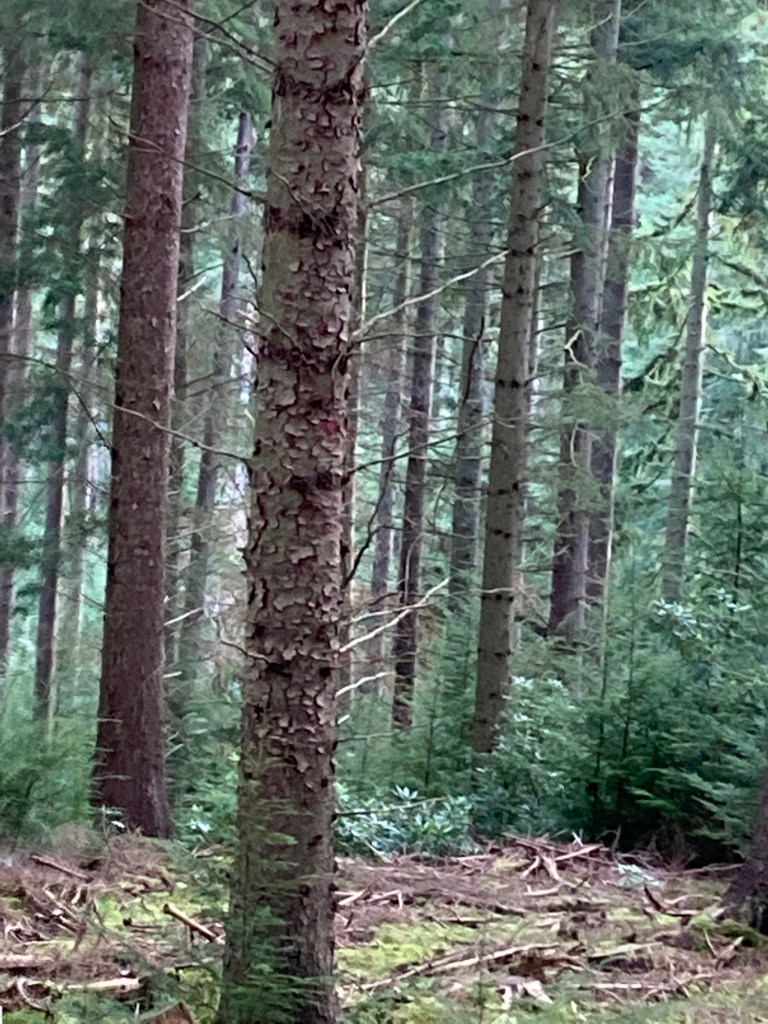
As leaves have fallen, the evergreens take centre stage. Thrunton is primarily a coniferous forest, but even among the conifers there are many shades of green as you can see here in this stand of young trees.

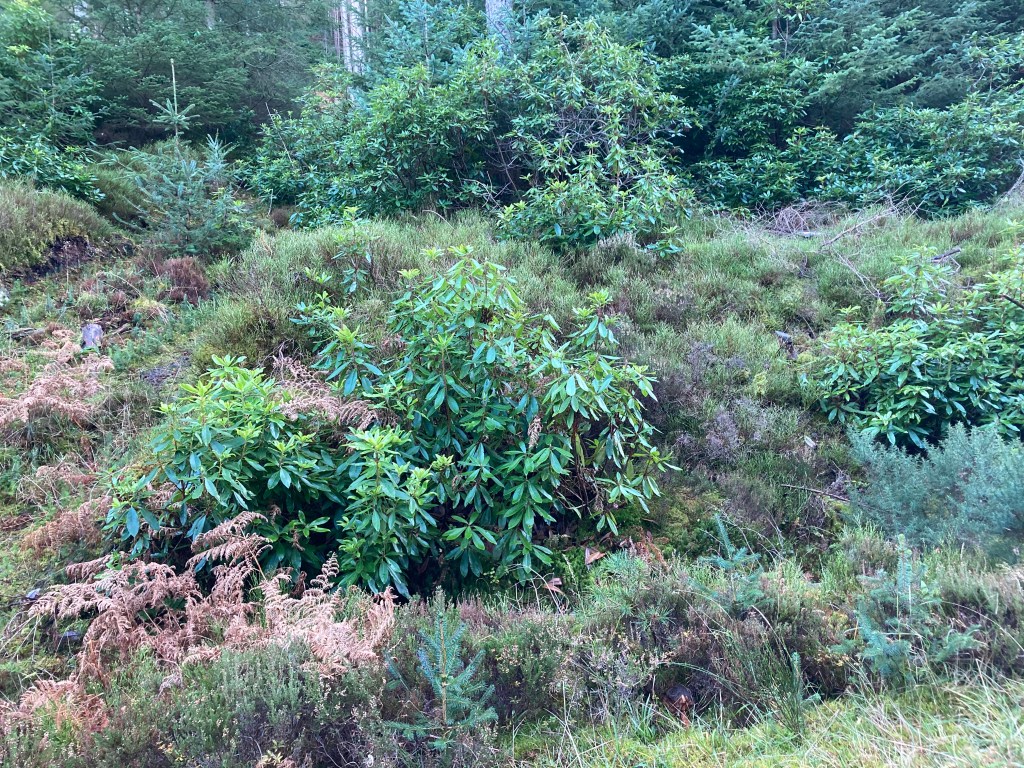
Among the evergreen shrubs is this Rhododendron ponticum. It is an absolute beauty in spring with exotic large lilac-purple flowers, but it is a thug of a plant! It is a non-native that was often introduced into parkland as dense cover for game, but it is so dense that it shades out native ground cover plants. It spreads rapidly by runners and native grazers and insects don’t eat it. Many years ago K and I were members of a conservation group that spent many a happy Sunday “Rhody Bashing” : removing these plants from neglected parts of a country park near where we lived at the time.

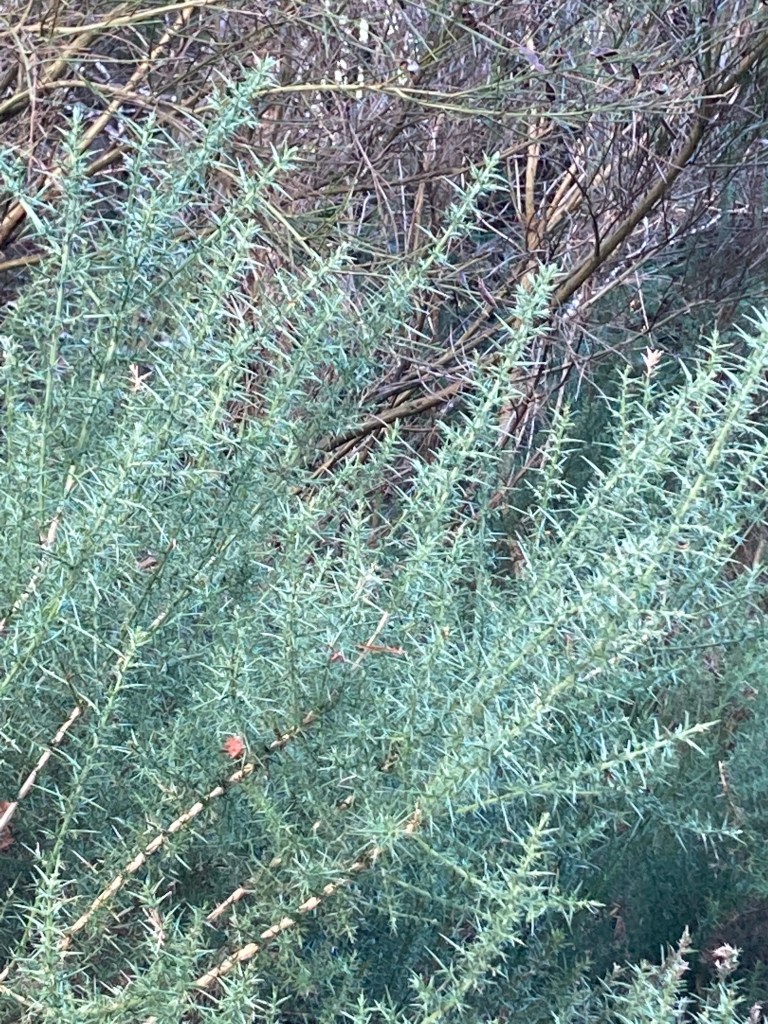
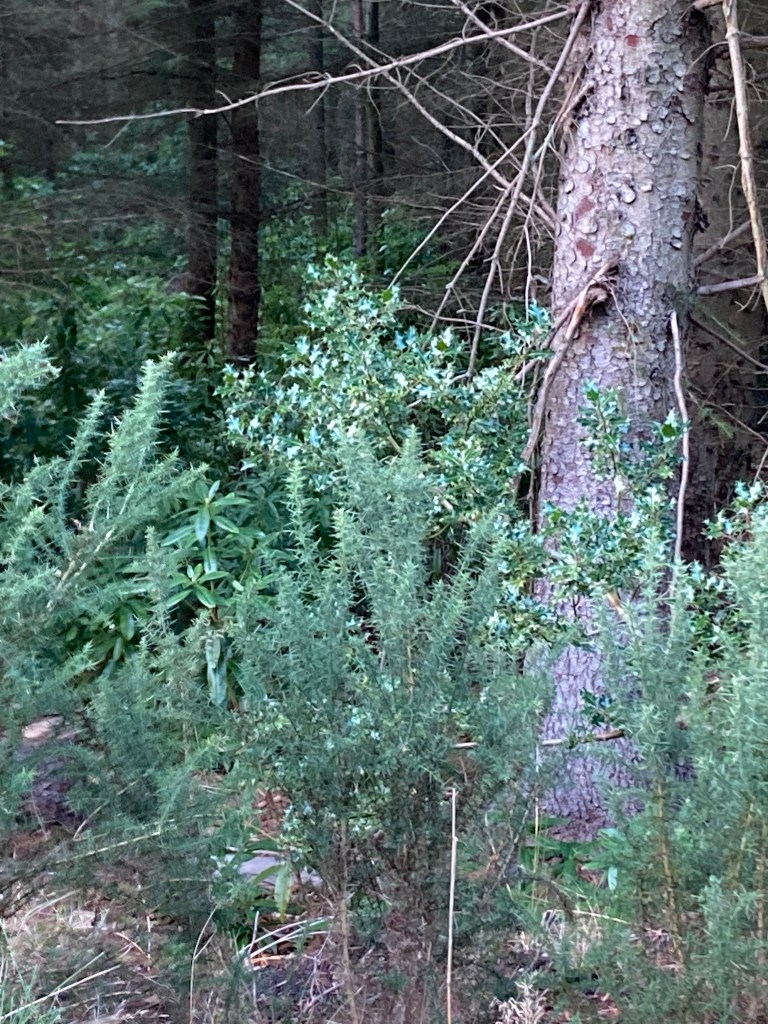
There is also quite a lot of gorse (locally known as whin) with its vicious spines.

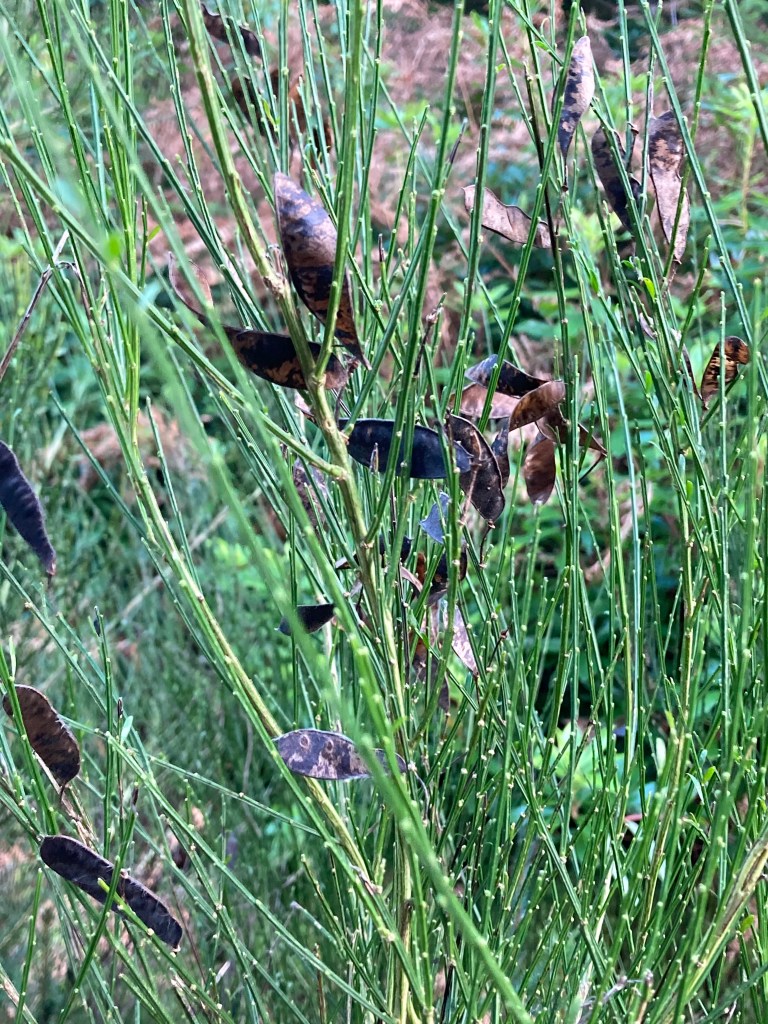
Broom grows on the trail margins too, and some of the bushes have the remains of the seed pods still attached.

There is also an occasional holly bush, like this one hiding behind the gorse.

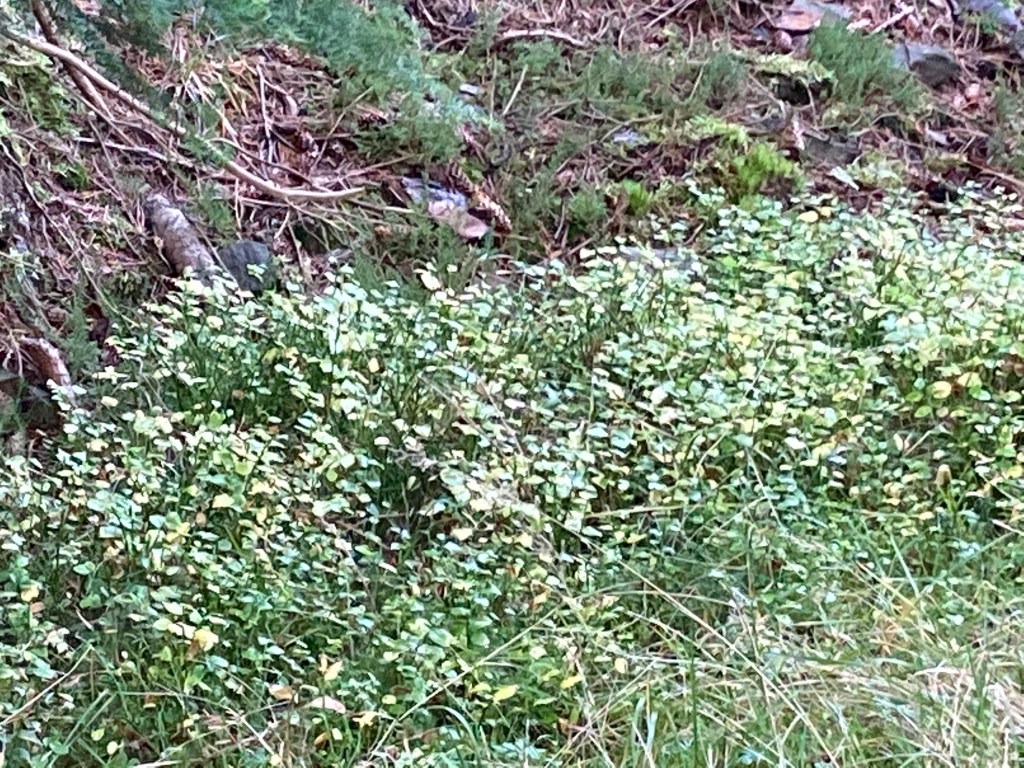
Closer to the ground is wild bilberry, which loves the acidic peaty soil here. They are delicious and make wonderful pies and crumbles, staining your tongue blue if you eat them. Bilberries were available in the shops when I was a child but I have not seen them available commercially for many years. We did try picking them once. The fruit are so tiny that after a couple of hours we only had a small saucerful so haven’t bothered since!

Also associated with the peat is this moss – there are some wonderful mosses in the woods

Although the bracken has gone, some ferns have retained their green fronds.

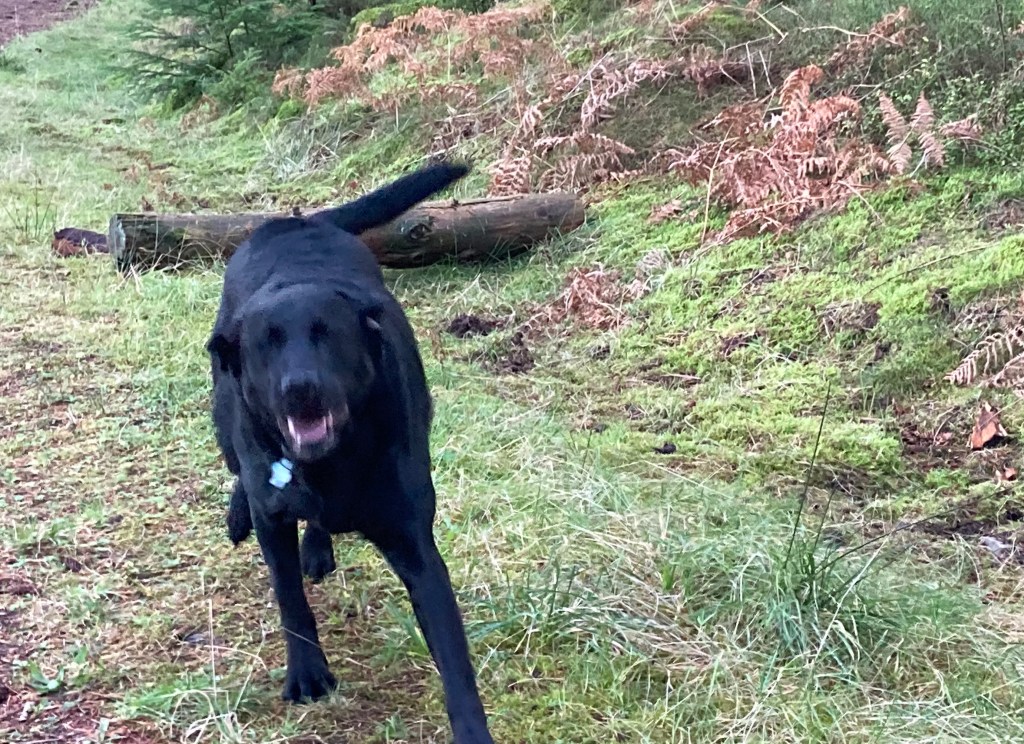
Buddy adores running about the woods. We saw several other walkers, dogs and cyclists too. The car parks were overflowing but this woodland is big enough to accommodate all the visitors easily without seeming at all crowded.

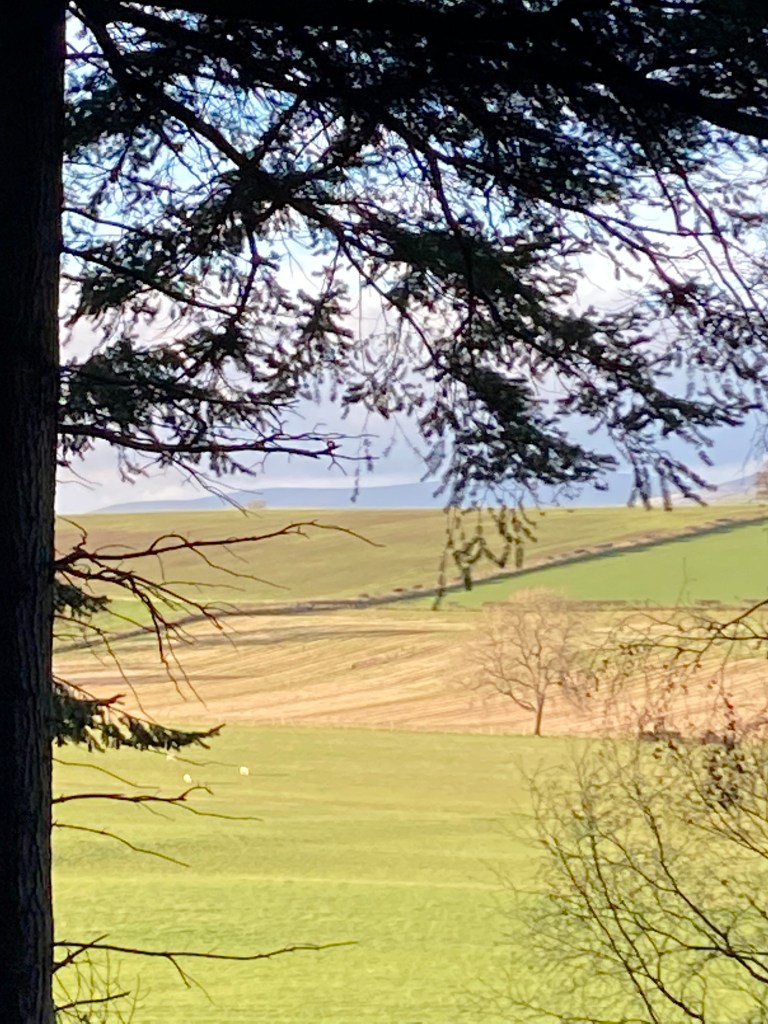
From the woodland edge we could see the farmland below and the Cheviot Hills in the distance.

It was a lovely way to spend an afternoon.