Posted in Uncategorized

Wildflower of the Week: Garlic Mustard

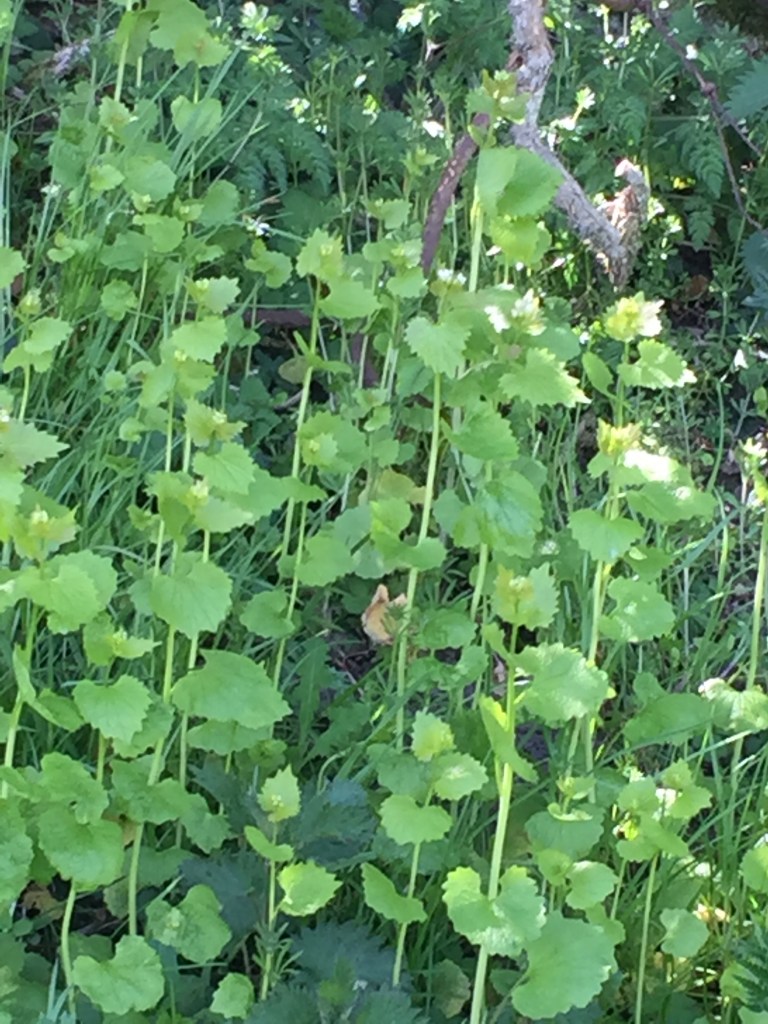
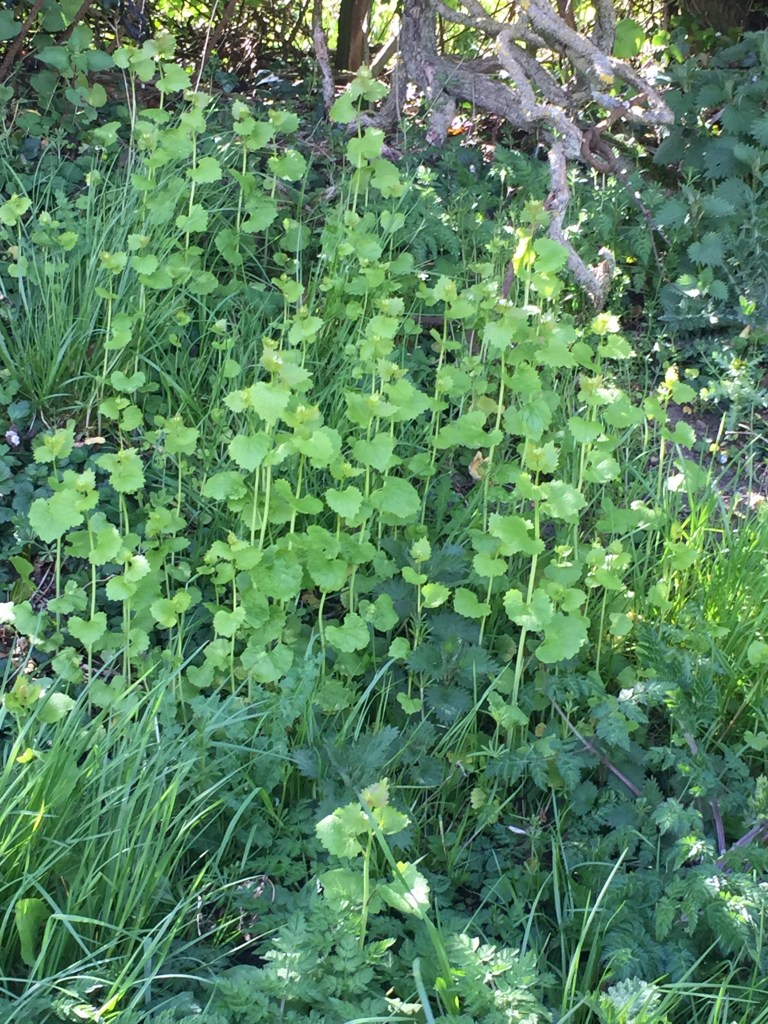
In Spring, tall upright stems with neatly spaced leaves, topped with small clusters of white flowers, appear in the shade of hedgerows, giving this plant its other common names: hedge mustard or jack-by-the-hedge.

The plant is a biennial, taking two years to complete its life cycle. In its first, non-flowering year the plant forms a low growing cluster of heart-shaped, leaves, heavily veined with serrated edges. In the following year a single upright stem grows up to about 3 feet tall from this base. The leaves become more pointed and almost triangular in shape and are spaced alternately on the unbranched stem. They are a bright, almost lime-green colour, which really makes them show up a in shady areas (where they are growing in sunnier spots the leaves turn a darker green).
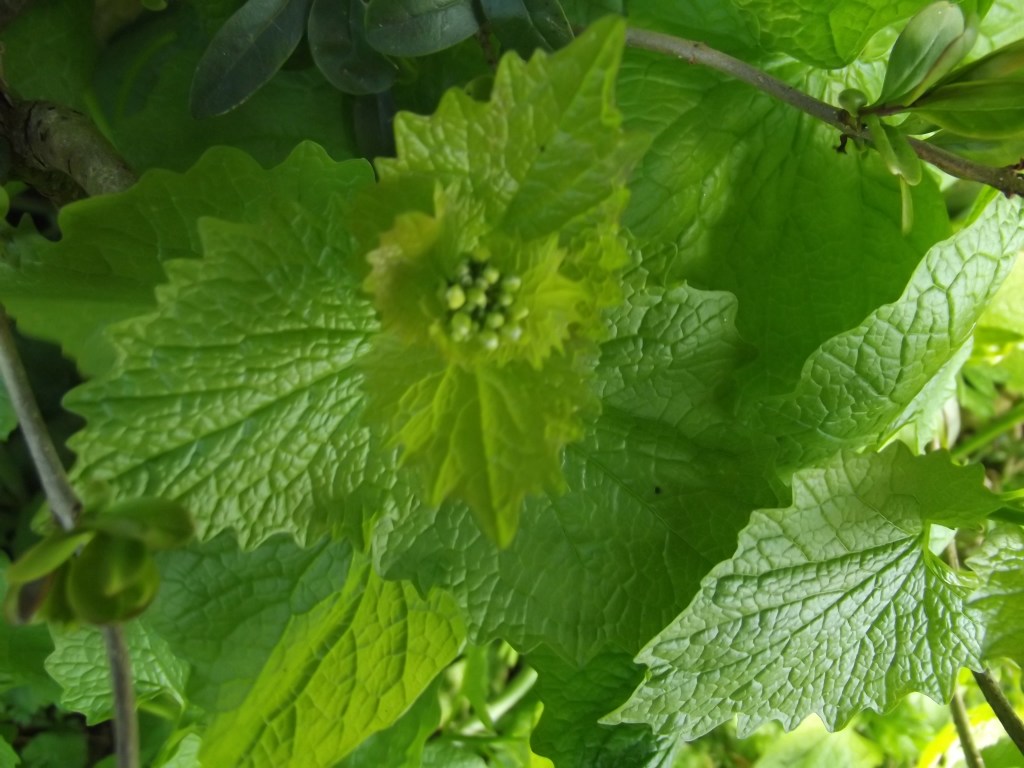
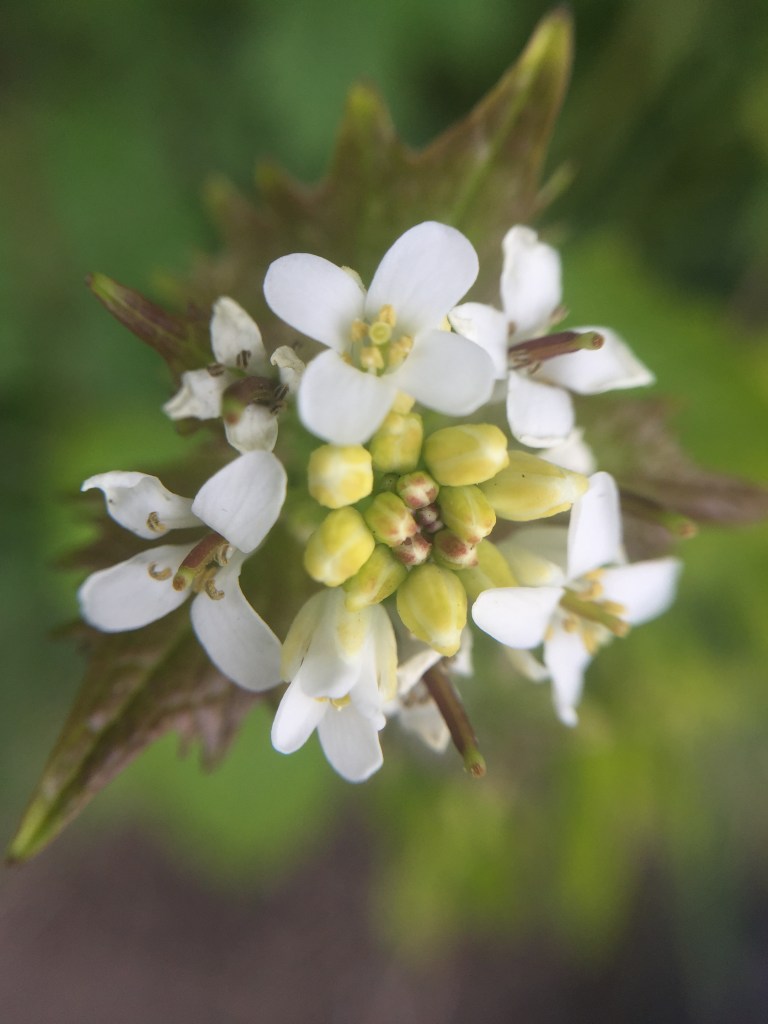
The flowers are tiny, each one with four white petals, arranged in a cross shape. The flower clusters form at the top of the stems and are followed by long seedpods.
Garlic mustard is native to Europe, Asia and parts of North Africa. Here in the UK it is an important food plant for both the orange tip and green-veined white butterflies, which lay their eggs on the plants and the caterpillars feed on the leaves. Introduced to the USA long ago, probably by early settlers for food the plant has become a serious invasive weed in some areas, with no natural predators to keep it in check.
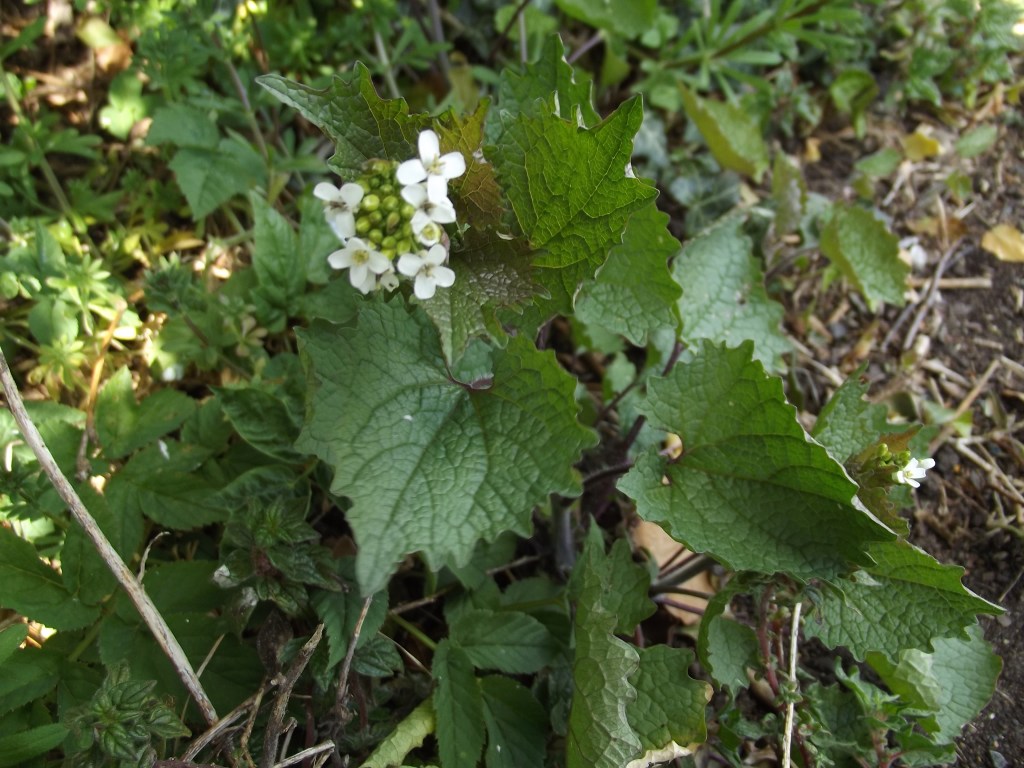
Garlic mustard totally unrelated to garlic (it is a member of the cabbage family. The leaves do smell faintly of garlic when crushed and have a mild garlic flavour. Interestingly, Some people report an unpleasant bitter aftertaste, completely undetected by others. For those who do like the flavour, the young leaves can be chopped and added to salads and used instead of mint to make an alternative sauce to serve with lamb. Historically it was used to make a sauce to accompany sea fish – this gives another old name: sauce-alone. The seeds are mildly peppery and can be used as a mild alternative to commercial mustard.

Herbal and folk medicine has employed garlic mustard to treat asthma and other lung complaints and as an antiseptic. As with all foraged wild plants, it is important to follow some common sense safety guidelines

  • Don’t touch or pick any plant unless you are ABSOLUTELY CERTAIN that it is safe to use, and not poisonous.
  • Don’t pick anything unless it is abundant
  • Only pick small amounts and no more than you need
  • Don’t pick if there is a risk of pesticide/weedkiller or other contamination, including from traffic or other forms of pollution.
  • Always get permission from the landowner.
  • Avoid areas which may be soiled by animals (wild or farm animals or pets)
  • Wash plants thoroughly

One of my favourite sights on a sunny Spring day is to see the shoots of garlic mustard standing to attention in front of a hedge or on a woodland edge, with a pair of orange-tip butterflies fluttering overhead.
Posted in Uncategorized

Wildflower of the week: Dandelion

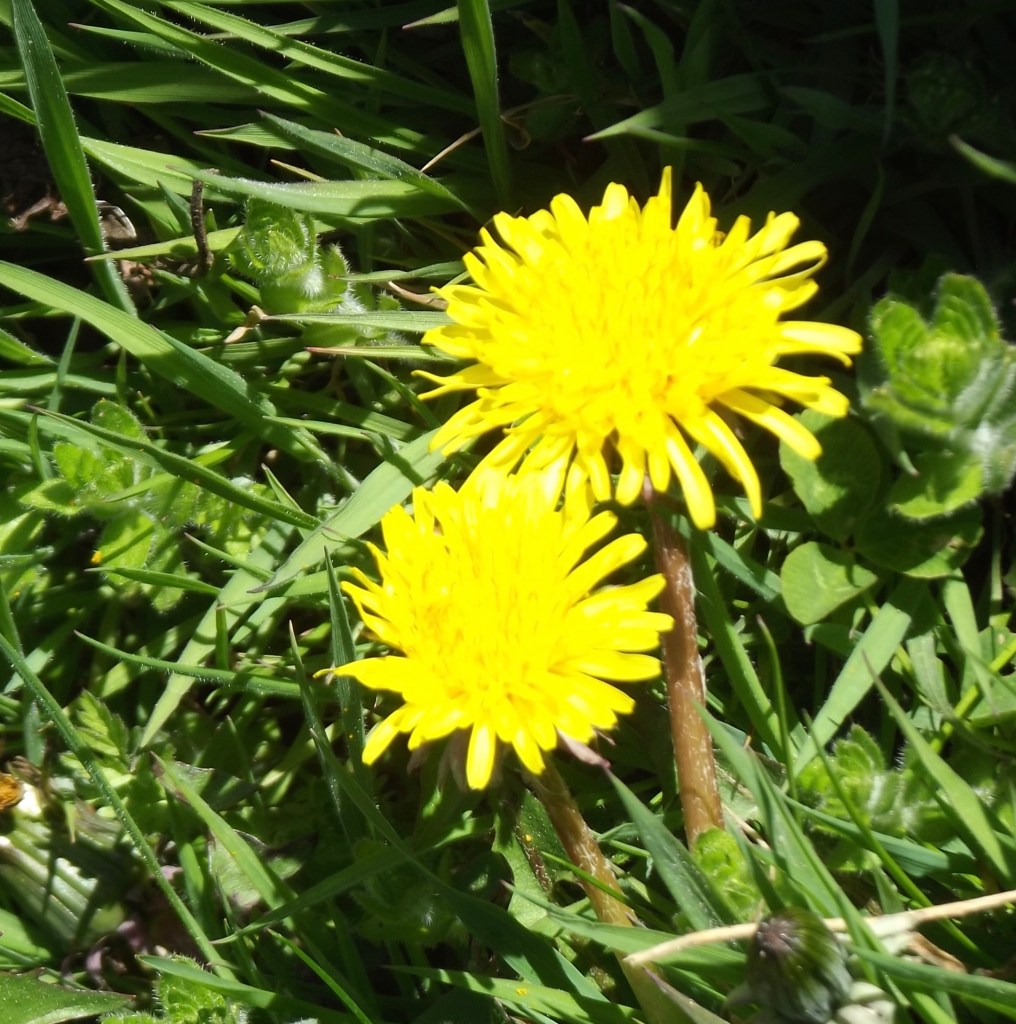
The grass verges are scattered with the shaggy mops of bright yellow dandelion flowers right now. That’s not such great news for gardeners. They are perennials that will grow back every year. The plants have long tap roots, that are difficult to dig out and can regrow from any fragments left behind. If that wasn’t enough, they are also great at dispersing their seeds, which will grow just about anywhere. But there is a lot more to the humble dandelion than meets the eye.

The deep tap roots will root in the tightest spots, like here between concrete and fence.

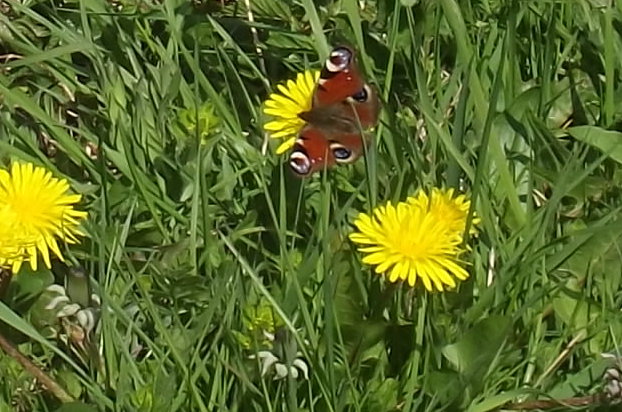
Although listed as a single species, there are actually over 200 hundred micro-species of dandelion, virtually indistinguishable from each other apart from being genetically distinct. The plants form a rosette of heavily toothed leaves – which gives them their name (dents-de-lion: lion’s teeth). The familiar flowers are carried on fleshy stems filled with with white sap. The flowers appear from early spring right through summer, and provide a source of nectar for insects, including bumble bees and butterflies, which is especially welcome early in the year when little else is in flower.

Peacock butterfly feeding on dandelion nectar

Flowers are followed by the fluffy round clusters of seeds (dandelion “clocks”), which are just starting to appear now. Each seed has a fluffy “parachute” attached, which carries it away on the wind. As children, we always used to pick the heads and blow away the seeds – it was supposed to act as a clock – the number of breaths it took to blow away all the seeds would match the time (allegedly)! Some believe that if all the seeds are easily blown away then you will have true love; if some stick behind then your lover has some doubts and reservations!

I was also told recently that children were once warned not to pick dandelions or they would wet the bed! This could have been parental scare tactics to avoid messy sap-stained little hands, although this may come from past use in folk medicine as a diuretic . That gives rise to some of the other old names for the dandelion: piss-en-lit and tiddle-beds. The sap is a folk remedy for warts, though it can irritate the skin too.. Traditionally it had many other culinary and medicinal uses, I’ve never eaten them myself, but the leaves are said to have a bitter flavour becoming stronger with age. Some people use fresh young greens in salads, pasta fillings, pesto and many other dishes. The dried roots have been used as a coffee substitute. Dandelions are also used to make country wines and still used commercially to make the dandelion and burdock soft drink. I’ve only ever fed them to childhood pet rabbits and guinea pigs! Fashionable as foraging is, it’s important to stay safe, use common sense. and respect the countryside.

  • Don’t touch or pick any plant unless you are ABSOLUTELY CERTAIN that it is safe to use, and not poisonous.
  • Don’t pick anything unless it is abundant
  • Only pick small amounts and no more than you need
  • Don’t pick if there is a risk of pesticide/weedkiller or other contamination, including from traffic or other forms of pollution.
  • Always get permission from the landowner.
  • Avoid areas which may be soiled by animals (wild or farm animals or pets)
  • Wash plants thoroughly

Do you know any other old names, folklore or uses of the dandelion? I’d love to hear about them.