
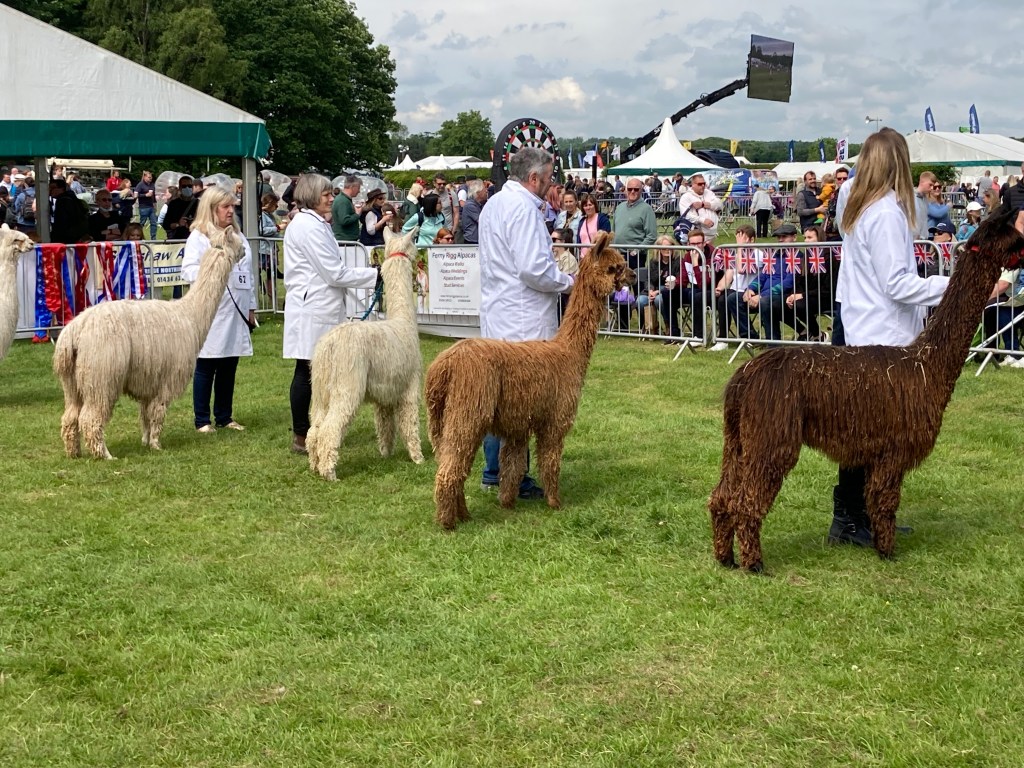
As I mentioned in a post last week, we went to the County Show last Friday, the first time this event has been held for three years. I spent quite a while watching the alpaca competition.
Since the last time the show was held I learnt to spin yarn and was lucky enough to be gifted a large quantity of raw alpaca fibre, much of which has been prepared, spun and knitted up into various items. For this reason I’ve developed a bit of an interest in these charming animals so it was really interesting to watch some of the classes.
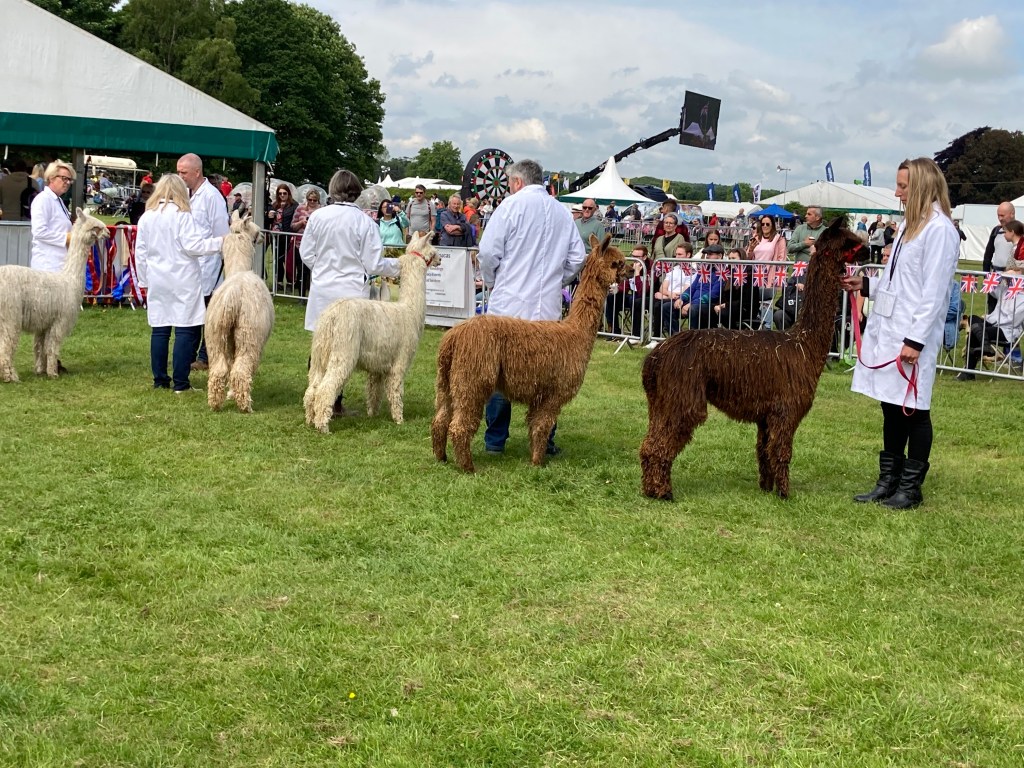
It’s always fascinating to hear an expert share their knowledge and that certainly happened here. The judge took to the microphone after giving the results of each class and explained the reasons for his choices in detail. He described the good (and less good) points on each of the animals. He began by saying what he thought of he conformation of the animal (its basic shape and proportions, as with all animal judging): he wanted to see a straight back, strong legs and good build for the age of the alpaca (youngsters will still be growing). He was also judging the alpaca’s fleece: its length, density, fineness and condition. Some animals seemed to like the process better than others. some were happy being led into the ring by their owners and stood beautifully still while the judge felt their body shape through that lovely thick blanket of fibre. Others protested a bit!
I got chatting to one of the exhibitors who had won an earlier class. Her small herd is a fairly recent venture. She was absolutely delighted to get such a result at her very first show and didn’t quite believe it when the judge placed her animal first.
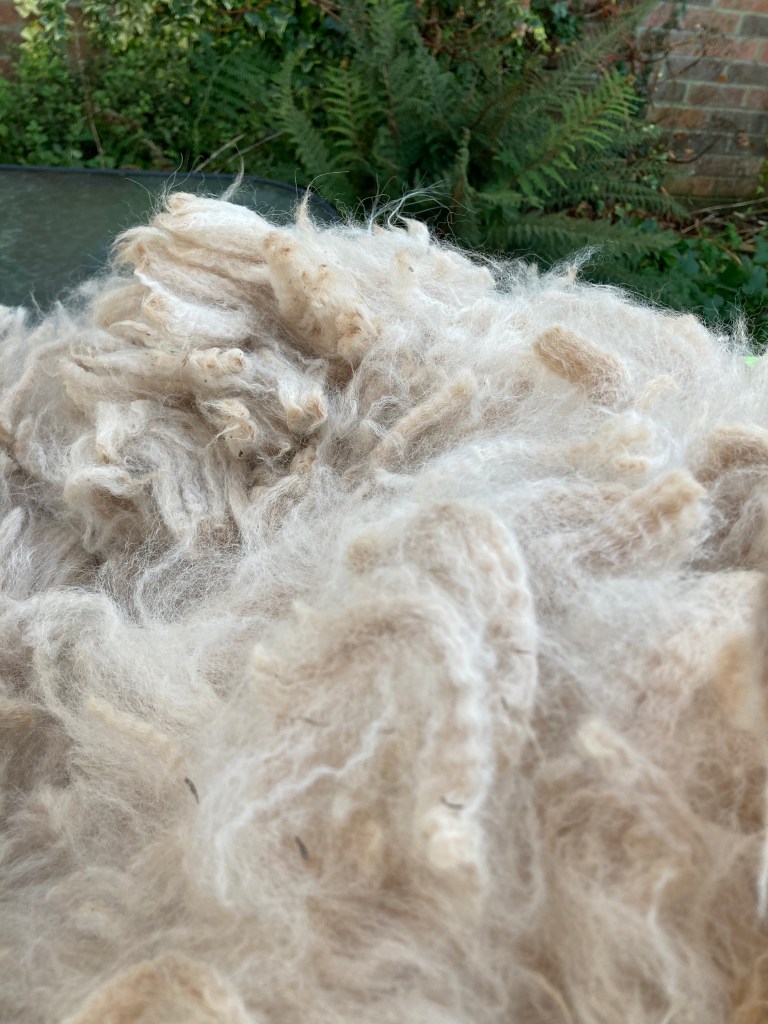
I have been spinning and knitting with Suri alpaca for a while since some was given to me by some lovely friends of my brother and his wife – it’s quite different in texture to the much more common Huacaya alpaca. Having got to know the fibre well, I was delighted that there were some classes for Suri – I had never seen one of these alpacas in the flesh so I waited around to watch them in the ring.
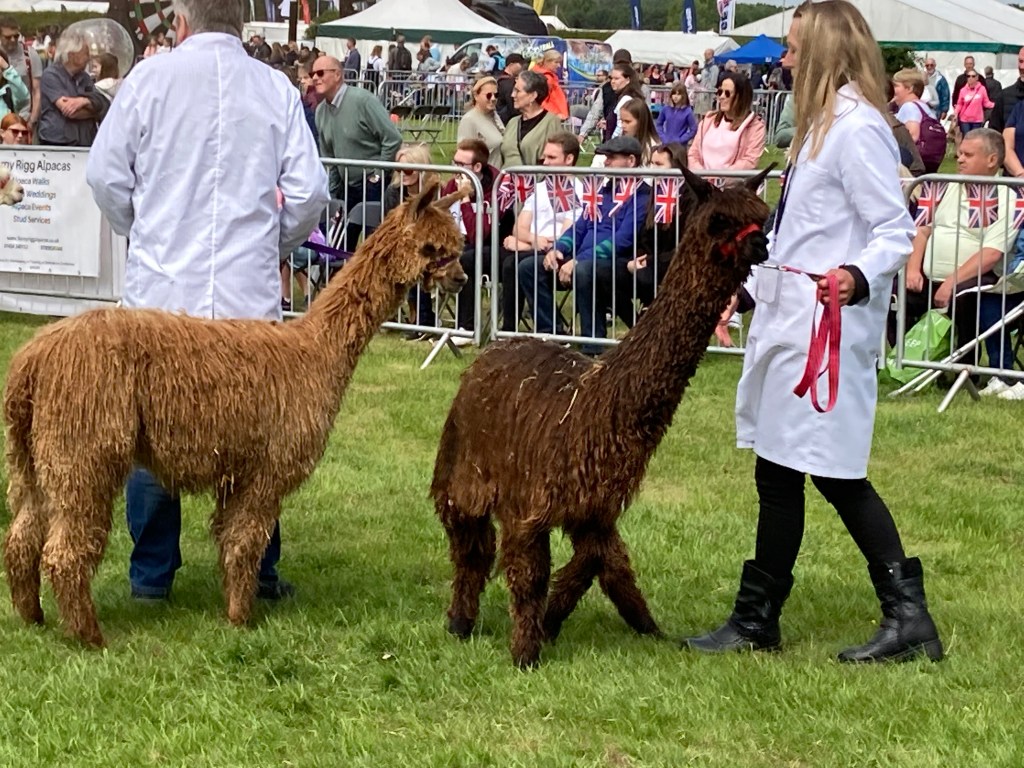
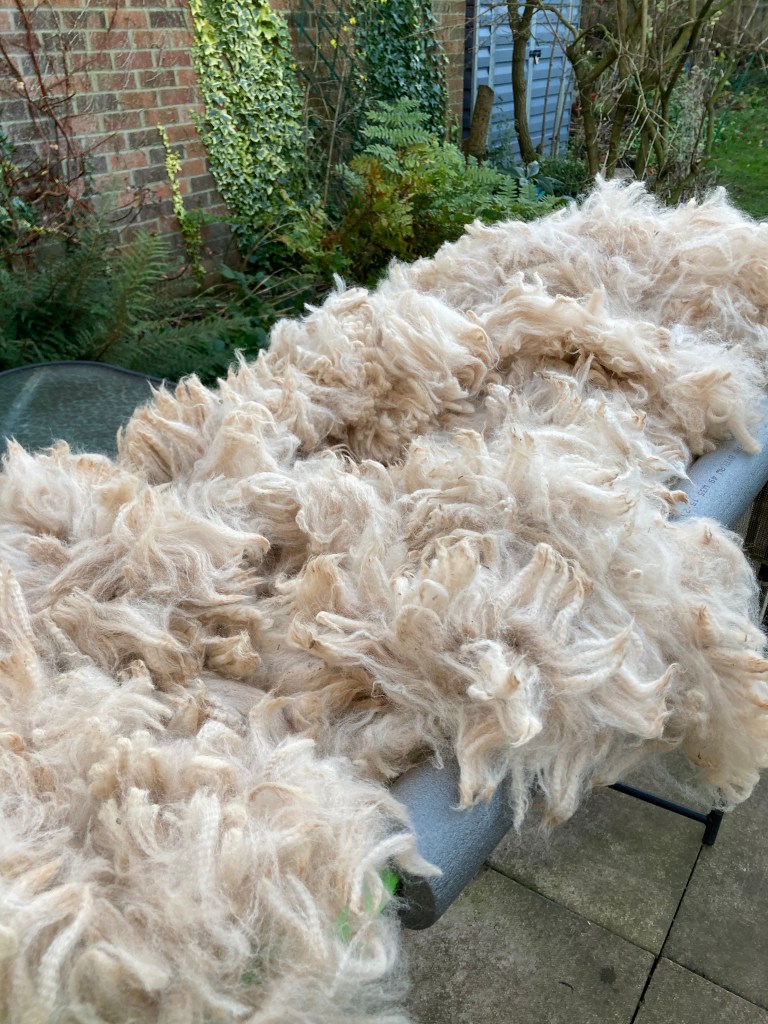
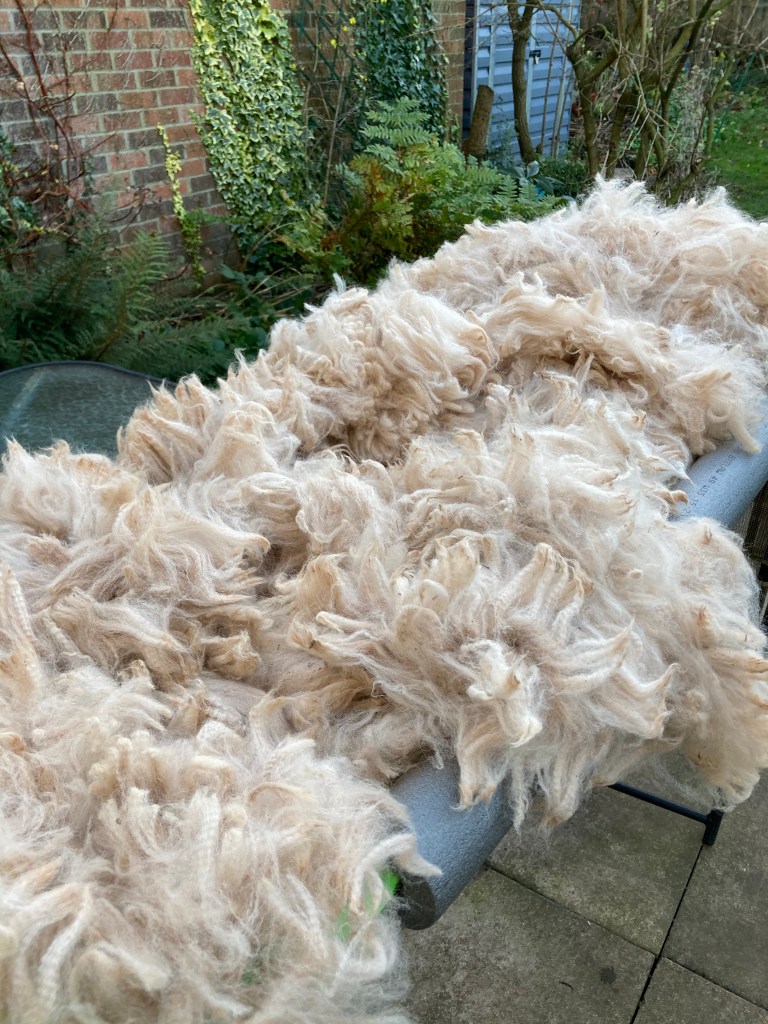
They look quite different from the fluffy Huacayas, . The locks of fibre hang down like dreadlocks. The Suri breed are quite rare, making up only about 10% of the population.
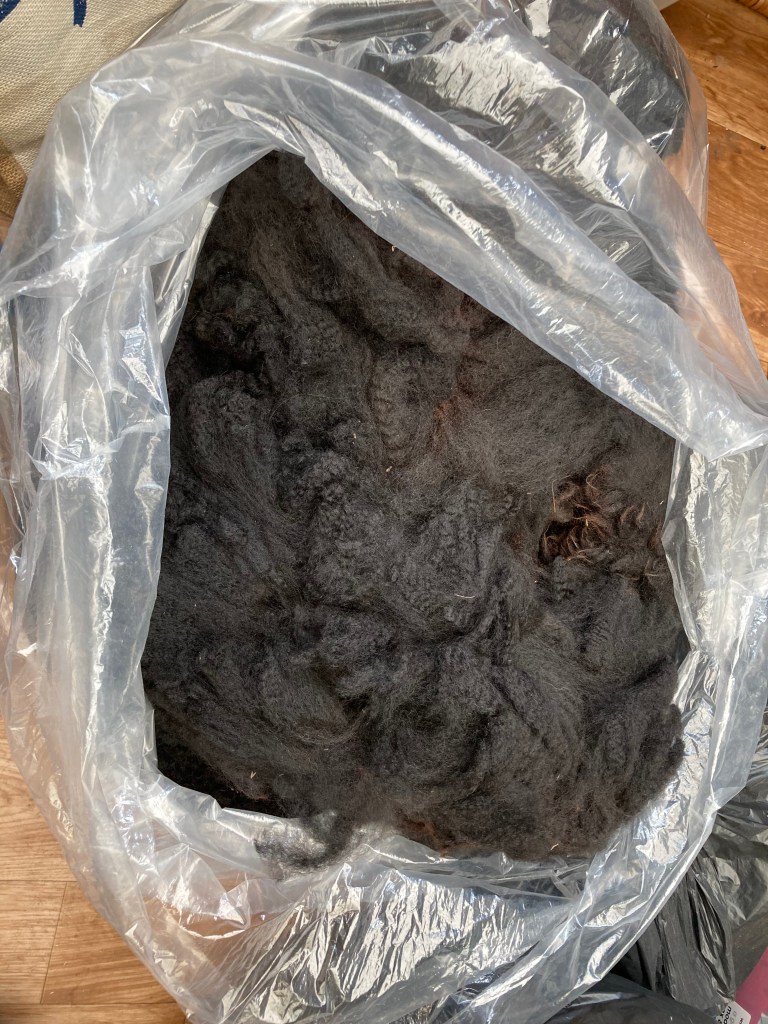
My other reason to visit the alpaca tent was to pick up a fleece. I’ve previously plied hand dyed alpaca singles with black sheep wool and I love the effect when it’s knitted up. At some point I’d like to do a bigger project like a sweater on similar lines in pure alpaca. I have used black acid dye but it seemed a better idea to use a natural black fibre. A couple of weeks back I picked up some grey alpaca for one of my online knit and Natter Group from someone who keeps a small herd near here. She had no black fibre herself, but put me in touch with Debbie Rippon from Barnacre Alpacas. There is a large established herd of some 300 at Barnacre, including black animals. Debbie was exhibiting at the show and agreed to bring a couple of fleeces with her for me to have a look at.
A corner of the marquee was set up with a few stalls selling knitted items in alpaca, made by some of the exhibitors. I’d arranged to meet Debbie there and she showed me what she’d brought – two gorgeous fleeces, one brown-black and a stunning blue-black which I chose. This came from a female names Hippolyta, her first fleece as a youngster.

I’m looking forward to prepping and spinning this beautiful black cloud of fluff!
Also located in the alpaca tent were members of the Tynedale Guild of Weavers, Spinners and Dyers, demonstrating their work. It was lovely chatting to some fellow spinners and they invited me to come along to a future meeting, which I hope to at some point over the next few months.
Considering the alpaca were only one small part of the show, I certainly got a lot out of spending some time there.
 Stitches by the Sea