
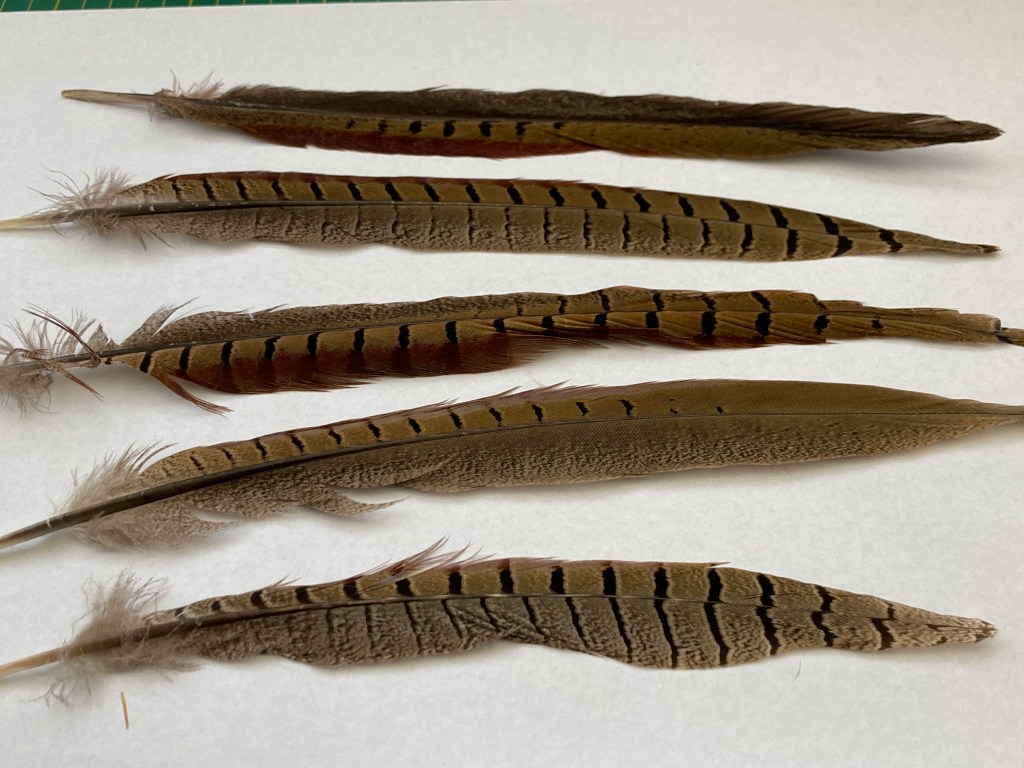
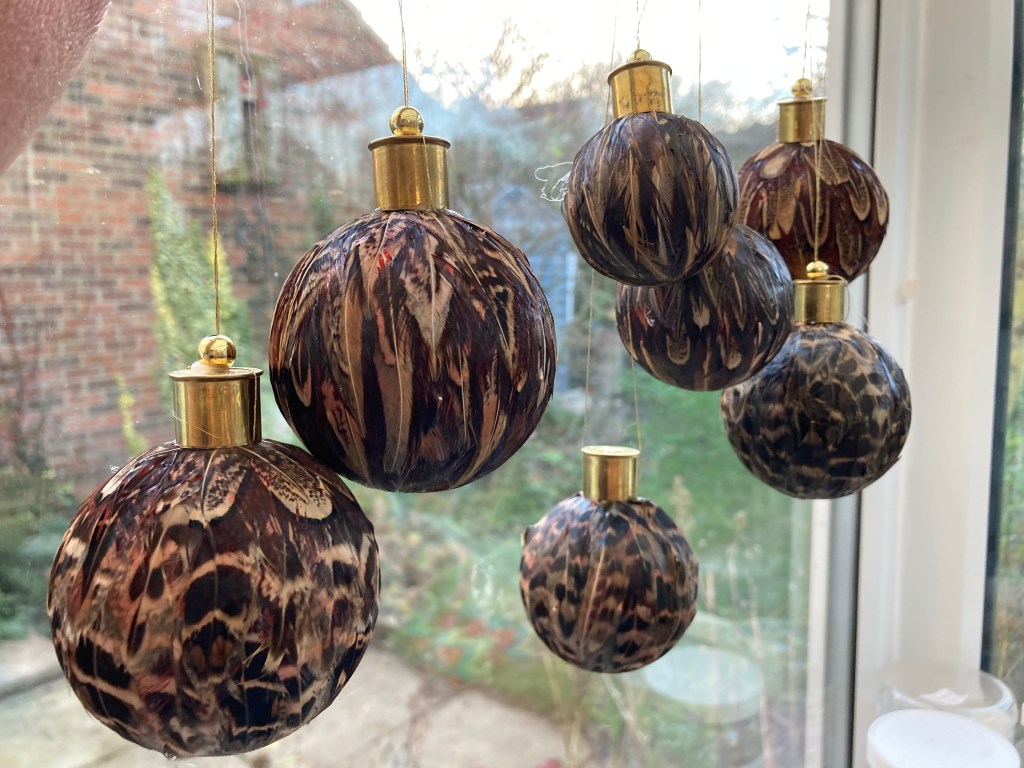
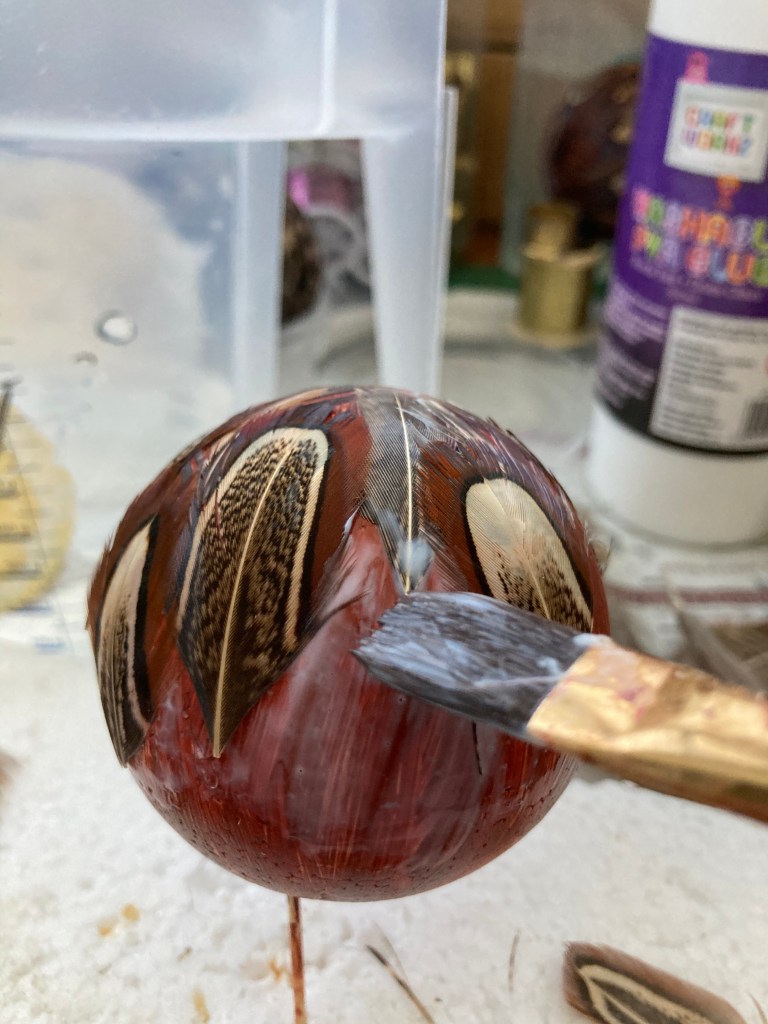
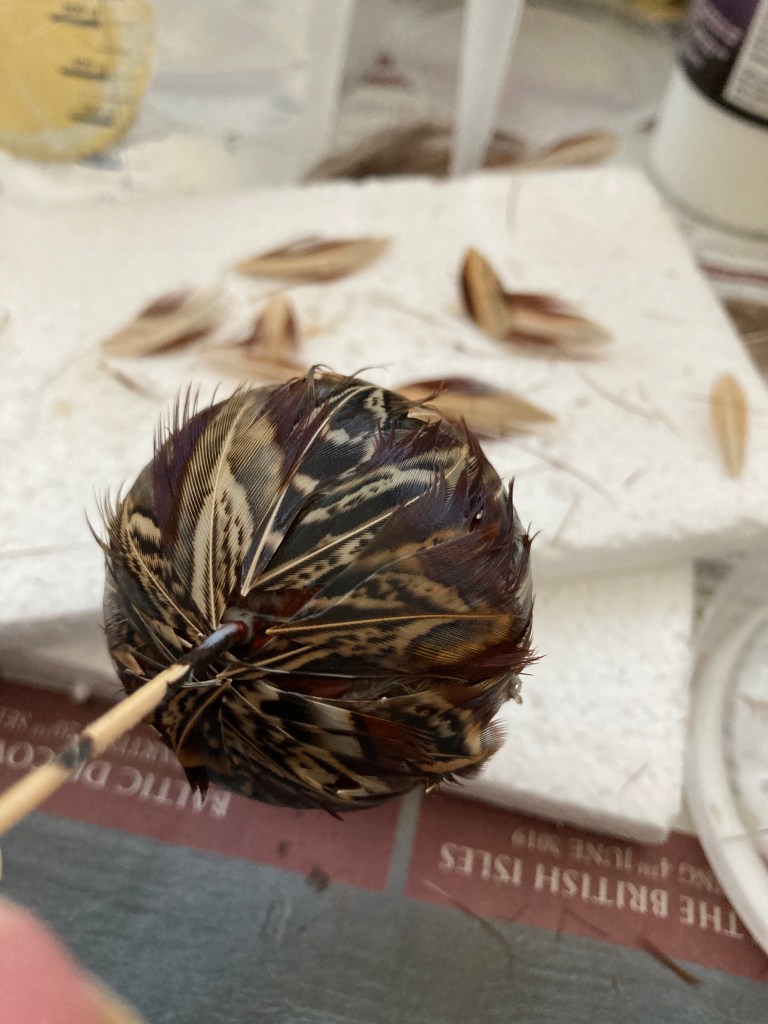
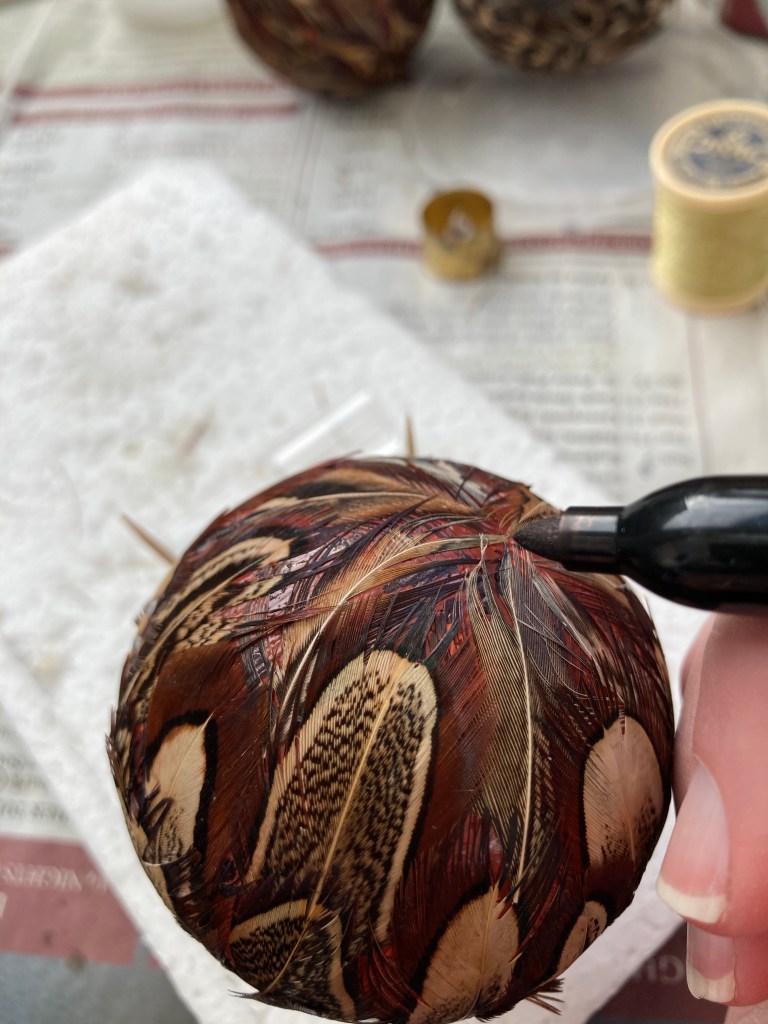
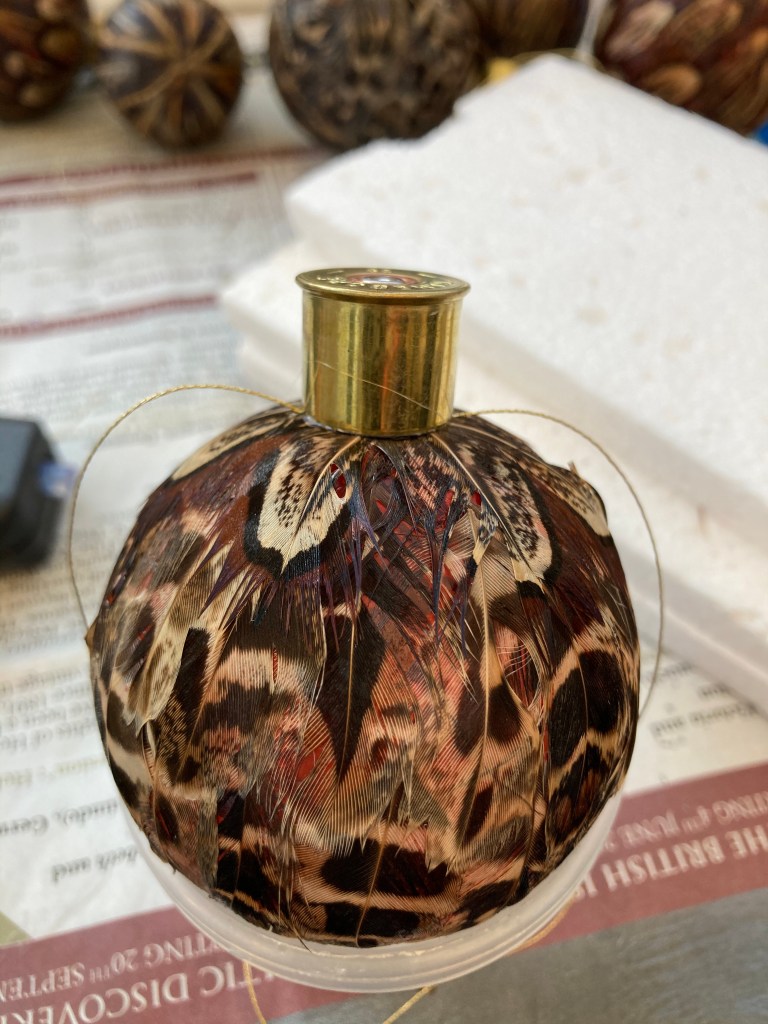
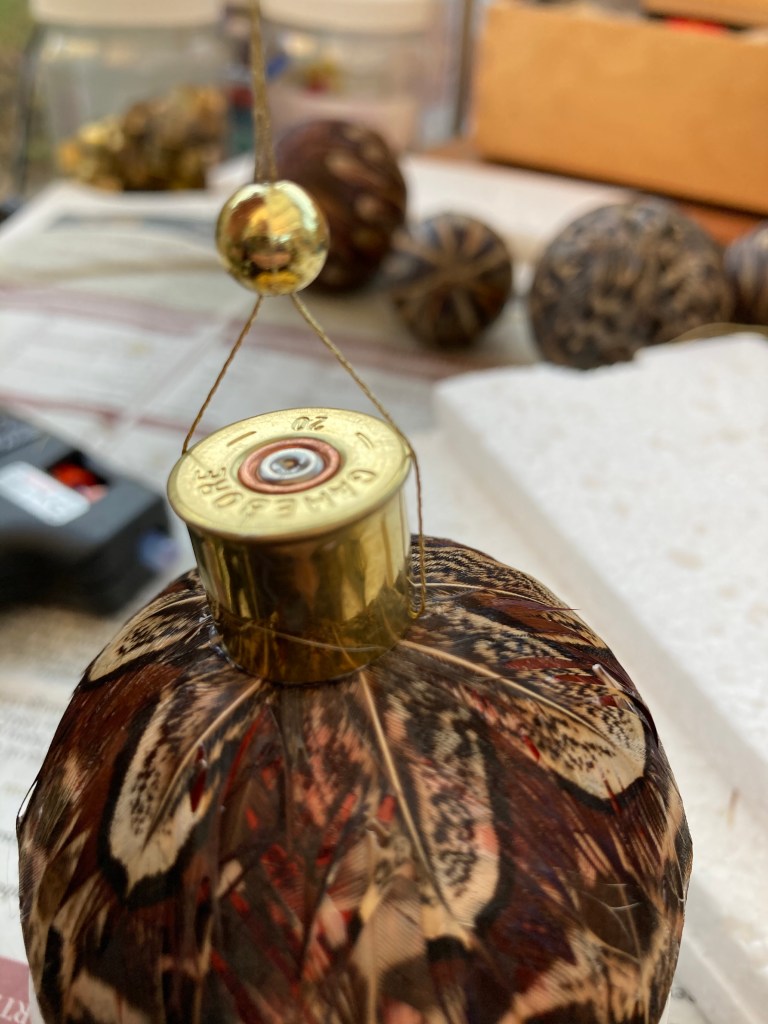
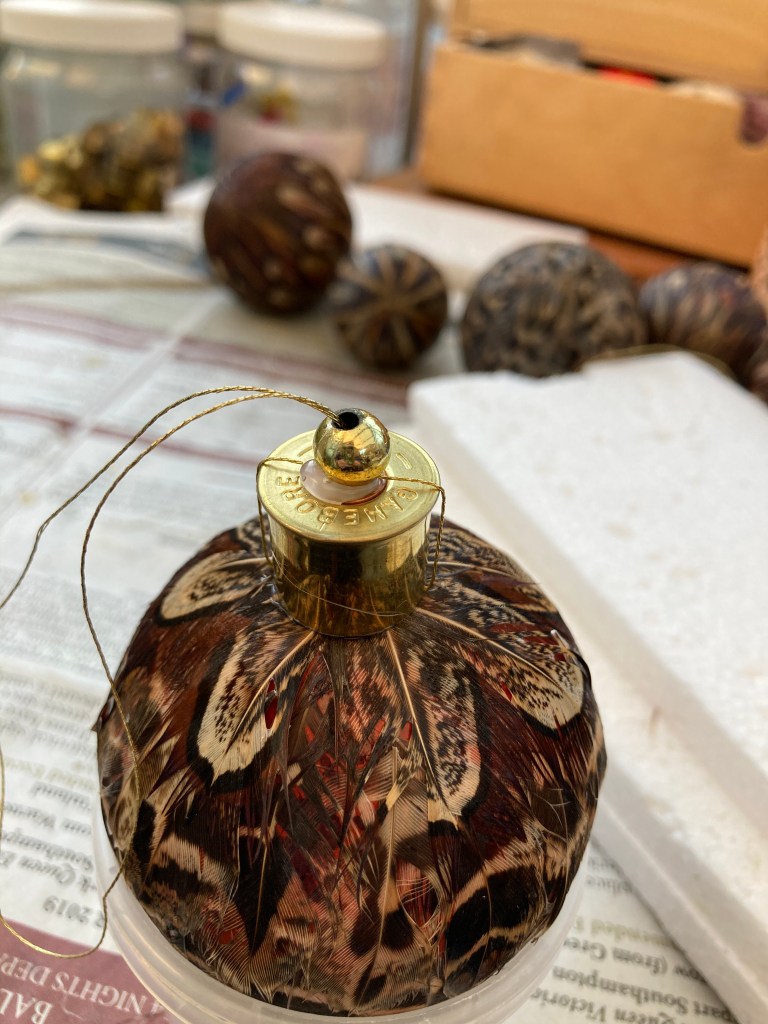
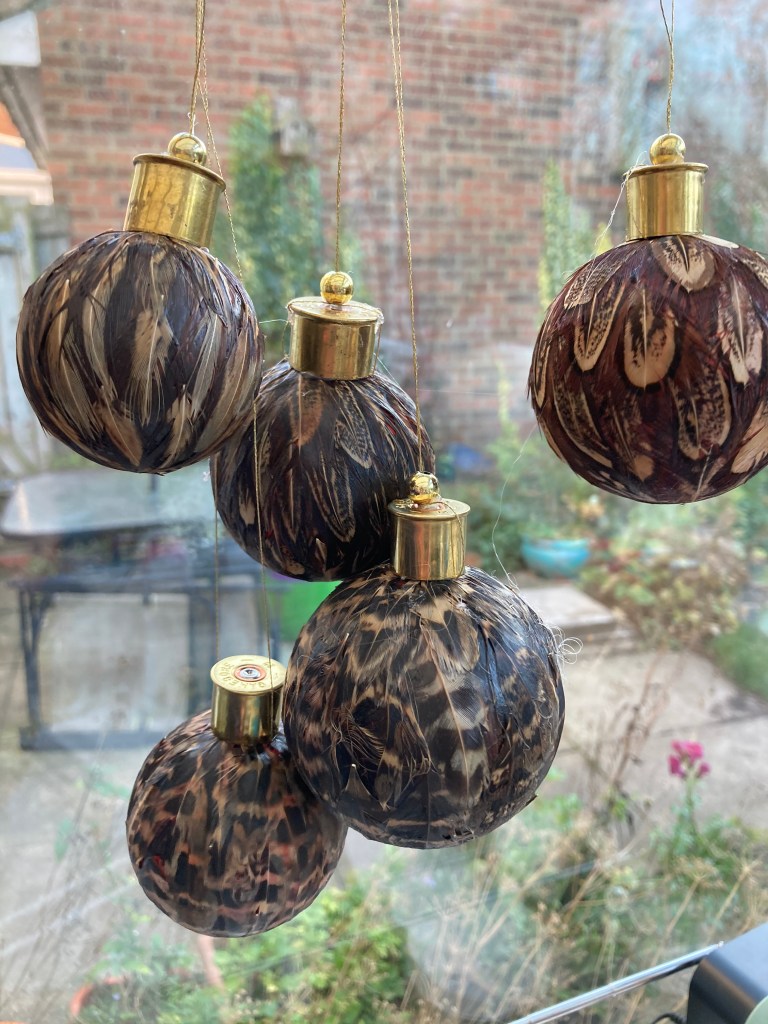
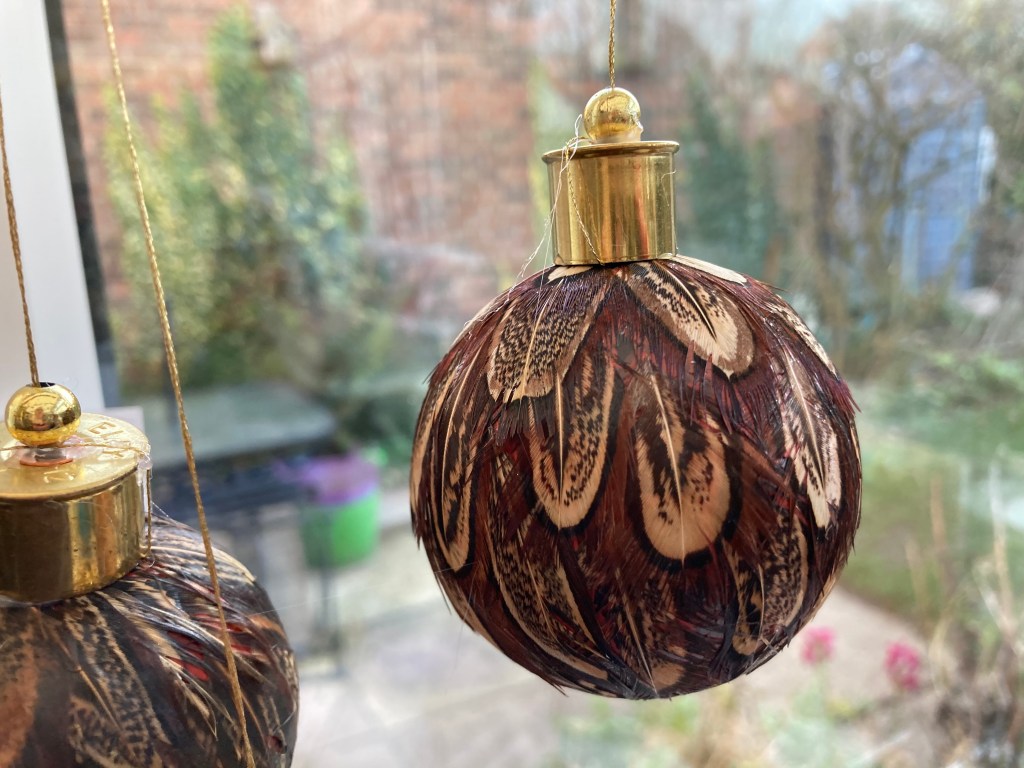
After I posted about the pheasant feather Christmas tree baubles that I made, Tinaor from handmadehomemadeknitstitchdesign.wordpress.com asked how I had so many feathers. Before I come to that, I have to say that I do think feathers are pretty amazing.
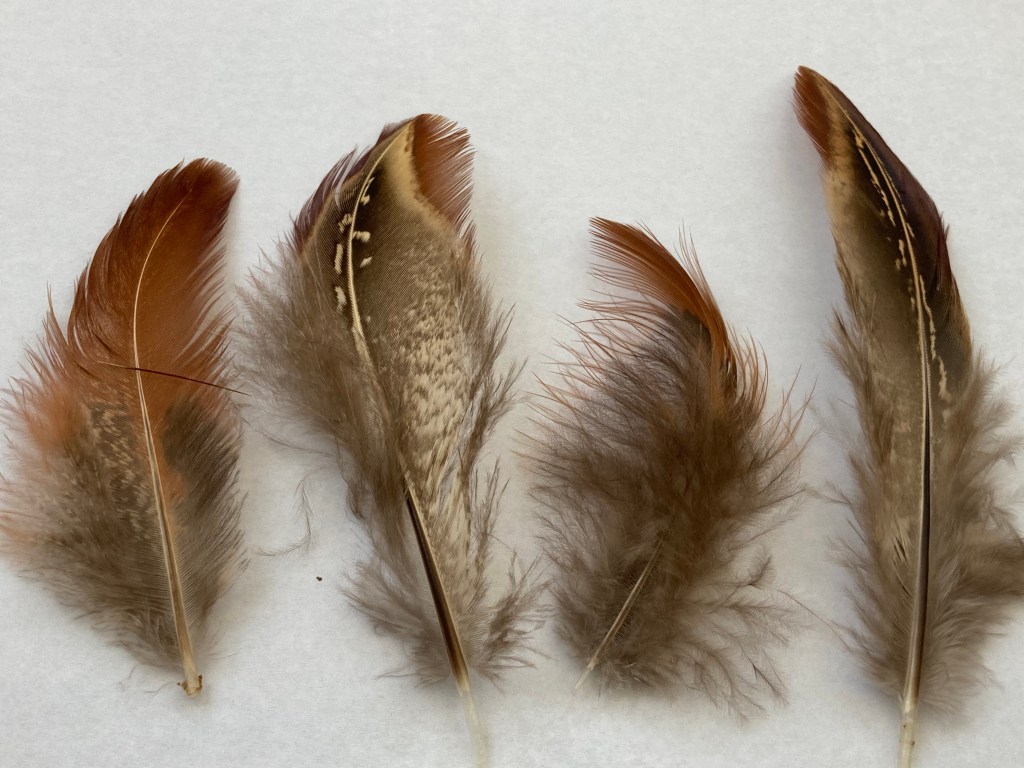
Feathers are pretty multifunctional. First of all, they keep birds warm. The soft fluffy down at the base of the feather traps air to provide an insulating layer. by fluffing up the feathers in cold weather, more air is trapped and the bird stays even warmer. This is particularly important in chicks – they are covered in warm down when very young and their proper feathers grow in later.
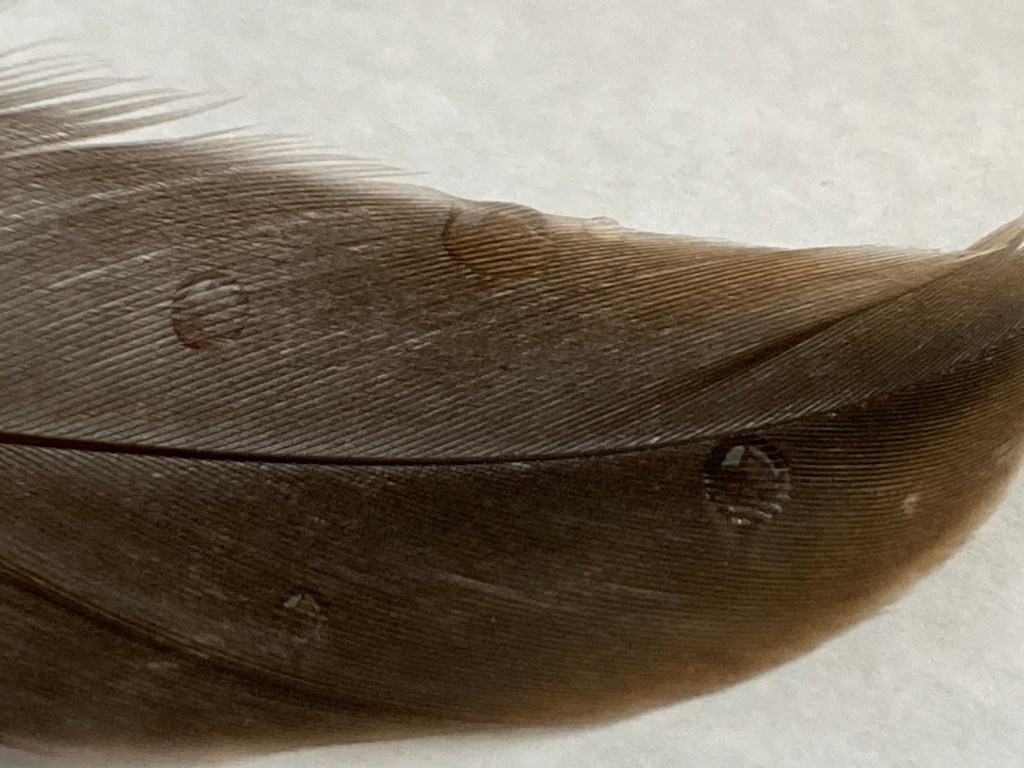
They can also keep the bird dry – waterfowl have an oil gland at the base of the tail. The bird spreads the water-repellent oil over the feathers so any water landing on them simply runs off – water off a duck’s back!
Feathers enable flight. They have a central hollow stem – the vane, with hair-like barbs growing out the sides. each barb has a line of tiny hooks known as barbules that hold the barbs together, rather like velcro. We’ve all played with feathers as children, zipping and unzipping them.
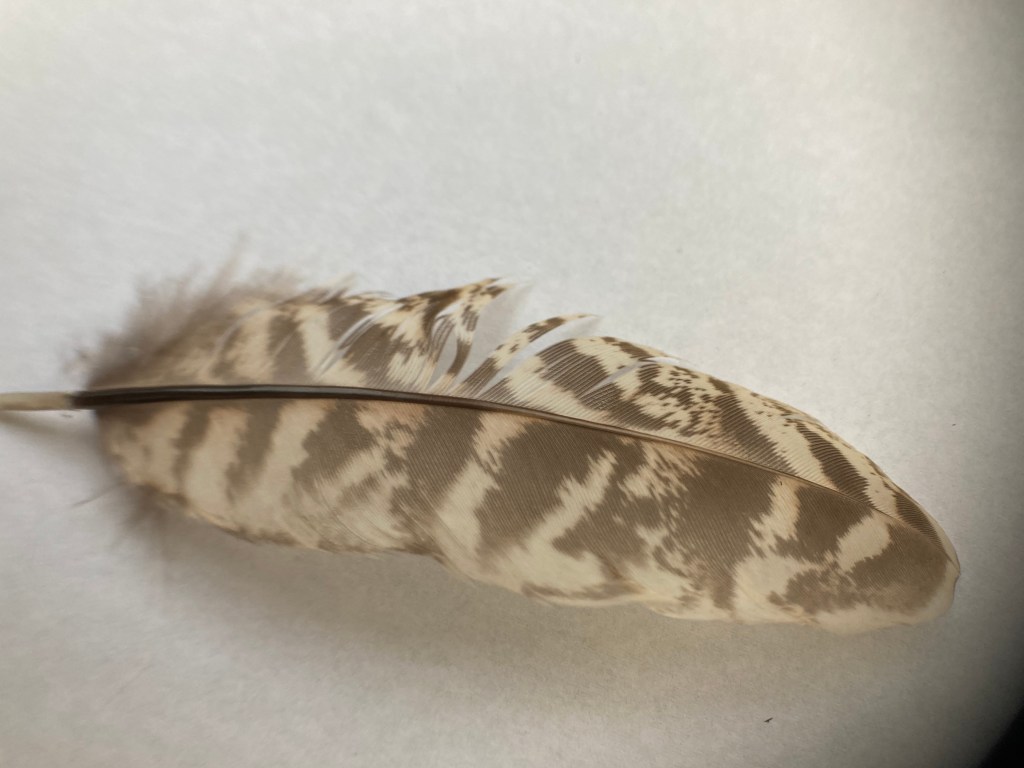

This structure is strong but very light. The flight feathers, on wings and tail are the strongest of all – they overlap to form the thin rear edge of the wing, angled to gain lift and steer the bird.
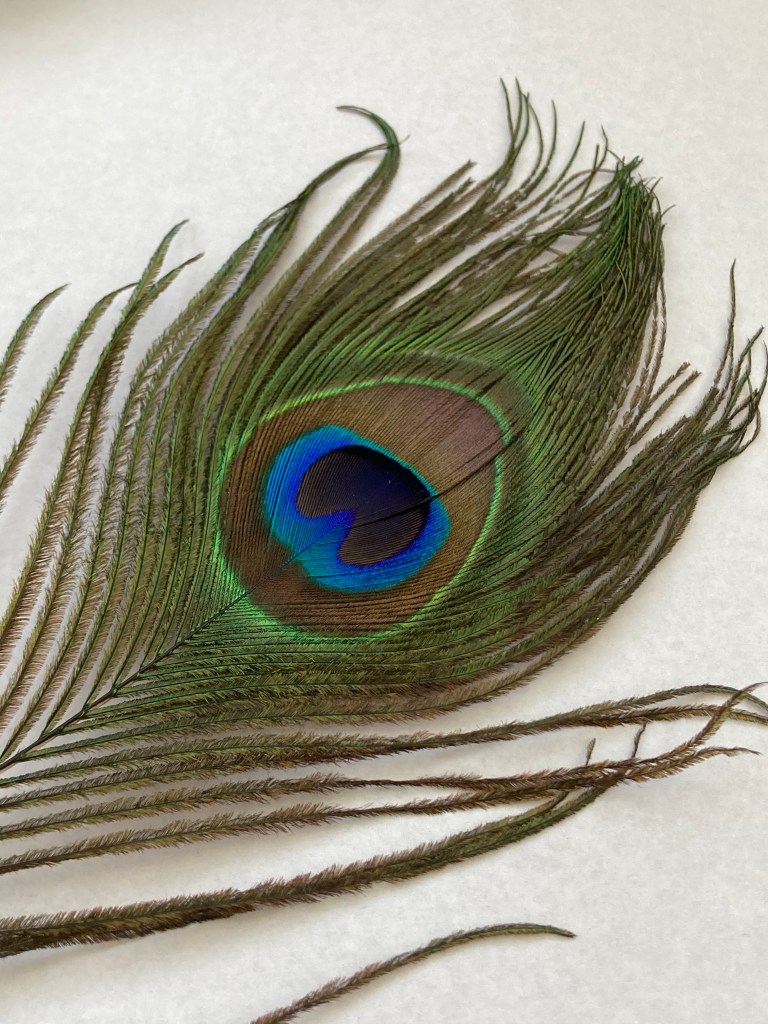
Feather colour varies enormously. It may be dull to camouflage the bird against its background habitat. This is vital to ground nesting birds, to protect them and their eggs and from predators when on the nest. In many species the sexes are different, with the males’ more colourful plumage used to attract a mate. In some cases the feathers might be structurally different too for use in courtship displays. The spectacular fanned tail of the peacock , with shimmering “eyes” is a prime example of this.
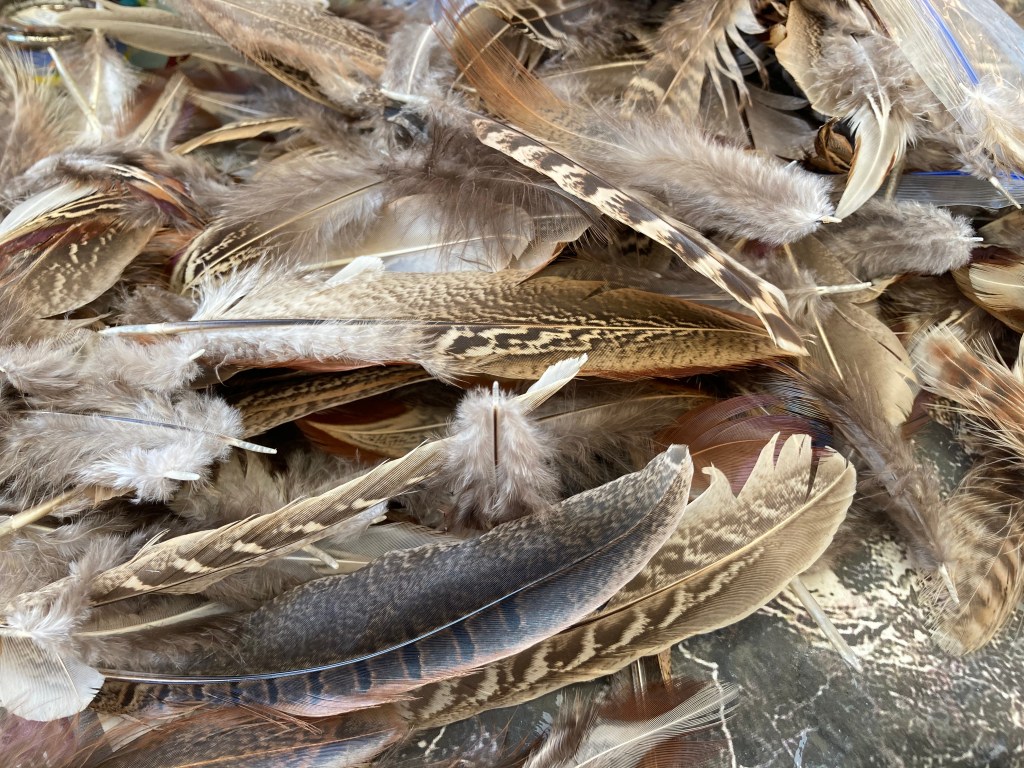
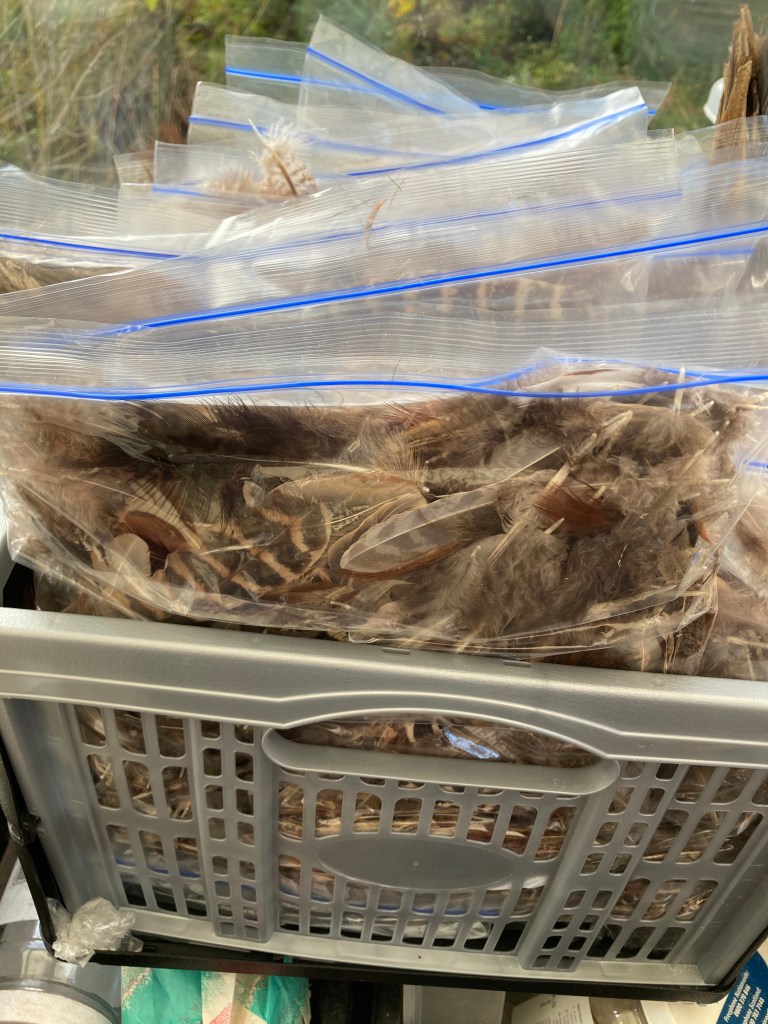
Pretty remarkable really. But it doesn’t explain why I have so many!. Well, a few years back I went on a one-day course about making fascinators. I thought I’d make some with pheasant feathers. Now I knew that a local farmer friend has a pheasant shoot on his land, so I asked him if I could have some feathers. He explained that someone comes in after a shoot and plucks and dresses the birds, after which they go off to a game dealer/butcher but he’d be happy to save some tails for me. A while later he told me he had them and brought three sacks full of pheasant and duck tails and wings out of the back of his Landrover! I spent three days cleaning the feathers!
I did make some nice hats and fasinators though.
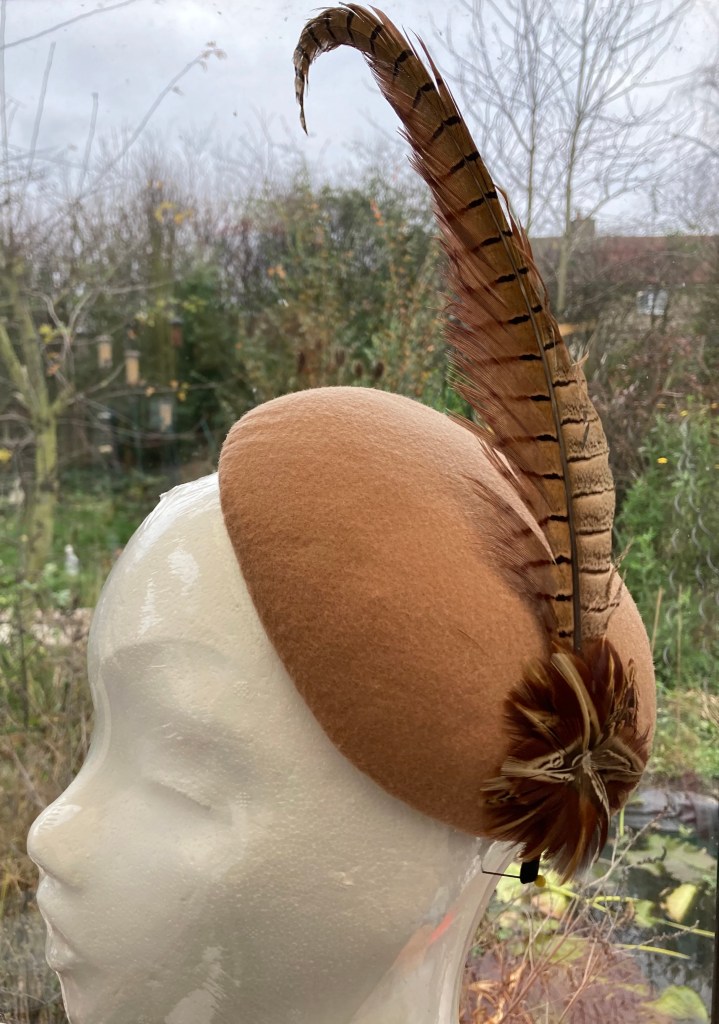
I wore this one for a friend’s wedding.

My conversation with the farmer was overheard by a lady who asked me if I could make use of peacock feathers too. She explained that there were peacocks living wild where she walks her dog. Apparently someone who used to live nearby had kept them as pets and they escaped – the owner moved away but the peacock colony had become established in a patch of woodland nearby. She was always finding moulted peacock feathers on her dog walks and gave me a few she’d found the next time I saw her. I didn’t see her for a few months, then she phoned me. She’d collected a load more and wondered if I could collect them , which I did. There was a massive armful of them, some almost four feet long!
I have some really generous friends. I will of course never ever be short of feathers for craft projects!



 Stitches by the Sea