Posted in Uncategorized

Wildflower of the Week: Blackthorn

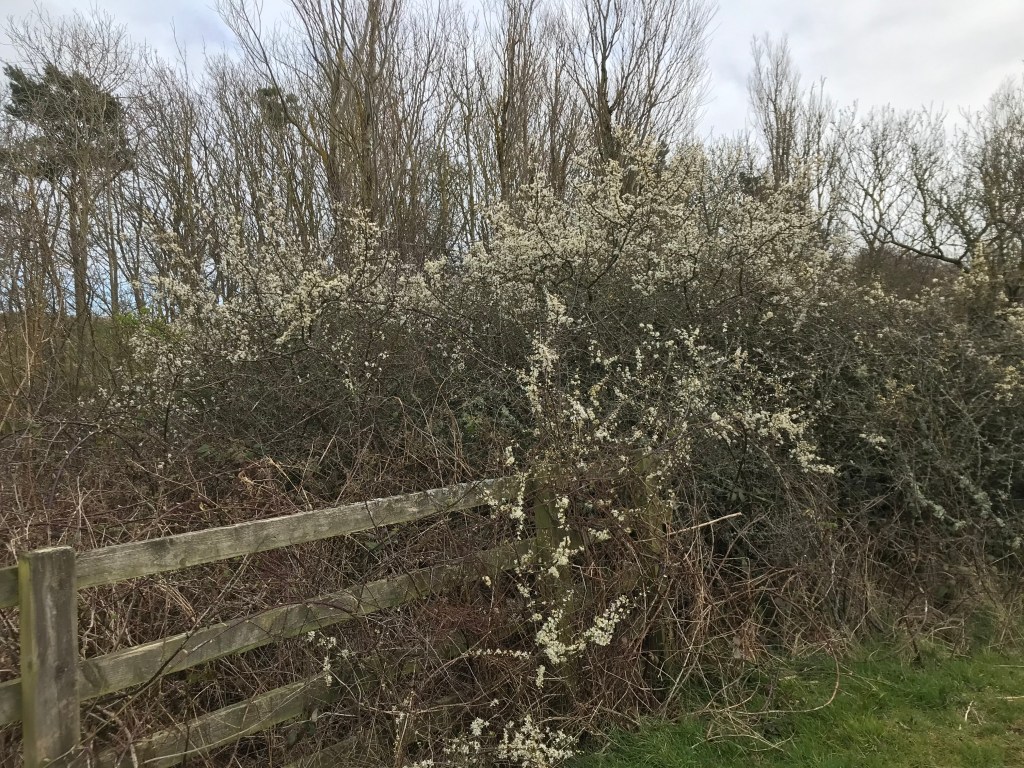
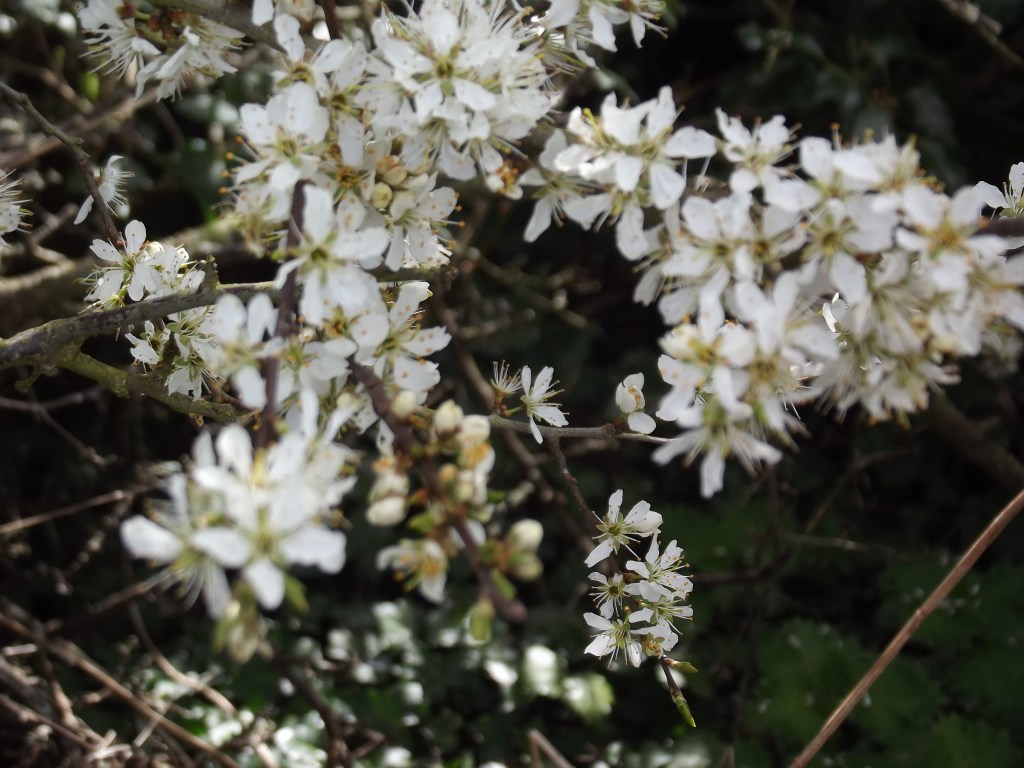
The frothy white blossom of the blackthorn has been in flower for the last month, standing out against the blackish twigs and branches, which have yet to come into leaf.

This shrub can grow to 4m or more and can be found in woodland or scrub, practically anywhere that the soil is not acid, but mainly grows in hedgerows, where the dense, thorny growth makes it an impenetrable barrier and protective nest sites for birds.
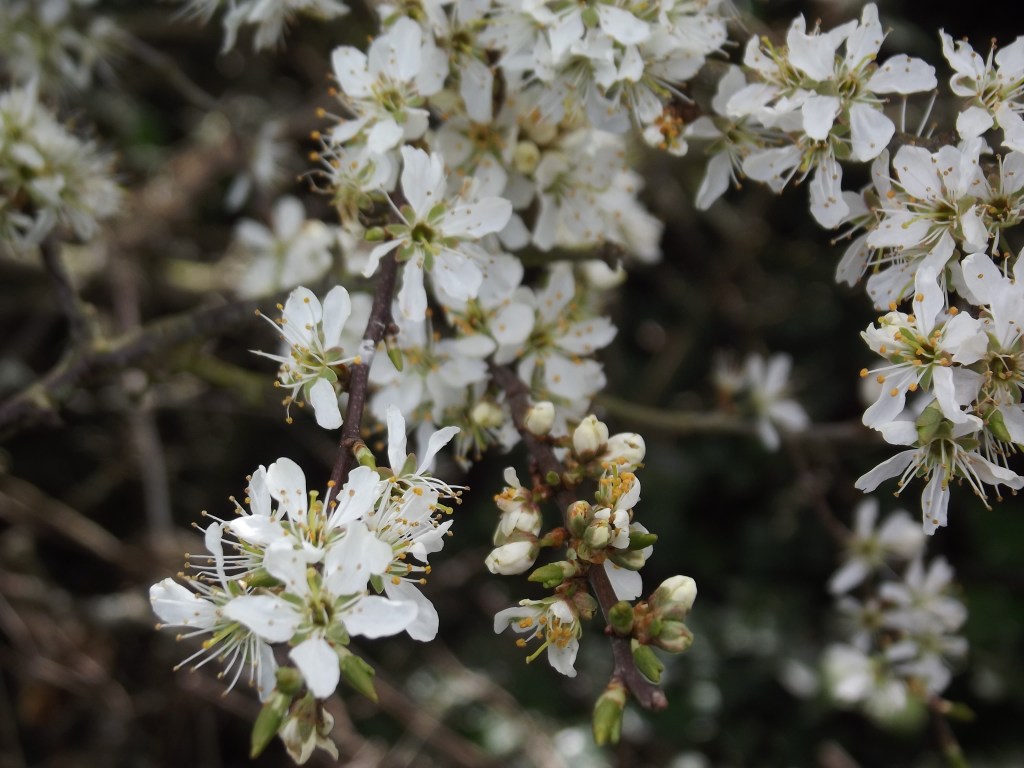
A member of the rose family and closely related to the plum and damson, the blackthorn is a native to Europe and Western Asia.

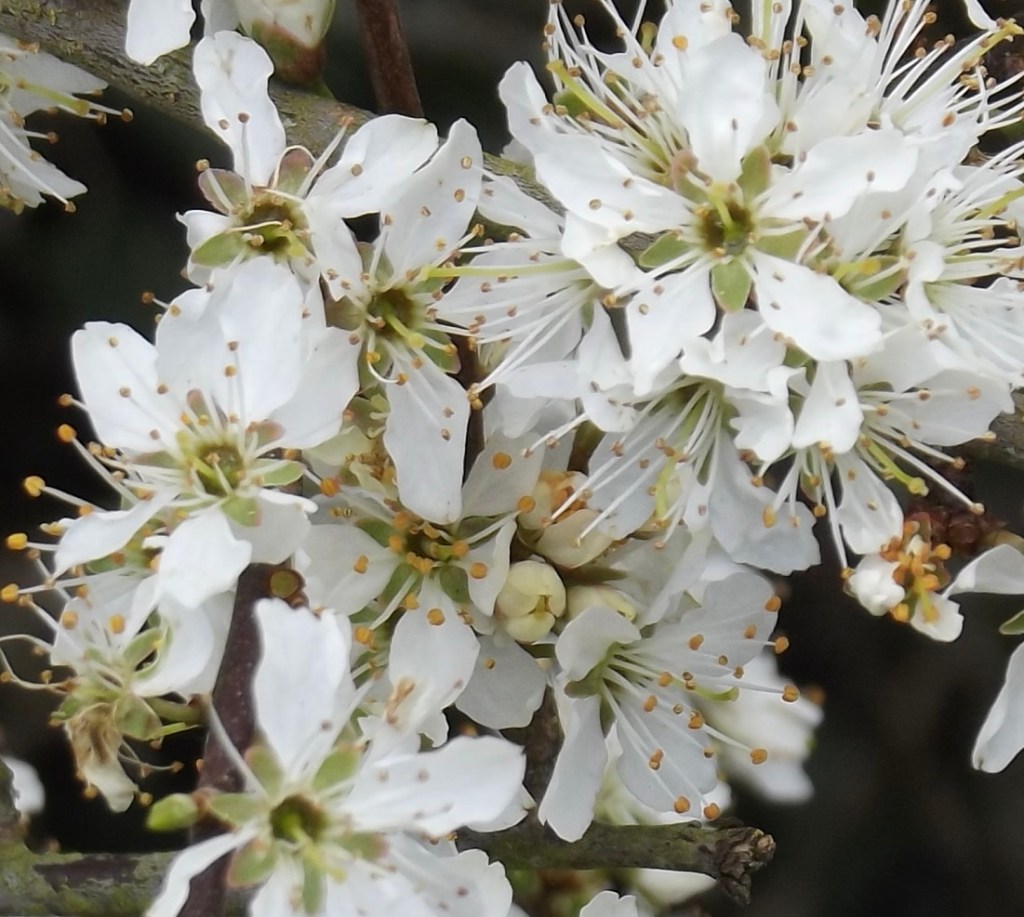
The flowers are hermaphrodite, each bearing both male and female parts and with five petals. They are the first flowers to appear in our hedgerows, arriving before the leaves and a welcome source of pollen and nectar for bees and other insects early in the year.
The small leaves are narrow and oblong shaped, tapering to a point and with toothed edges. They are the food plant for the caterpillars of several species of moths and butterflies, including the rare black hairstreak butterfly. In autumn they turn bright yellow.
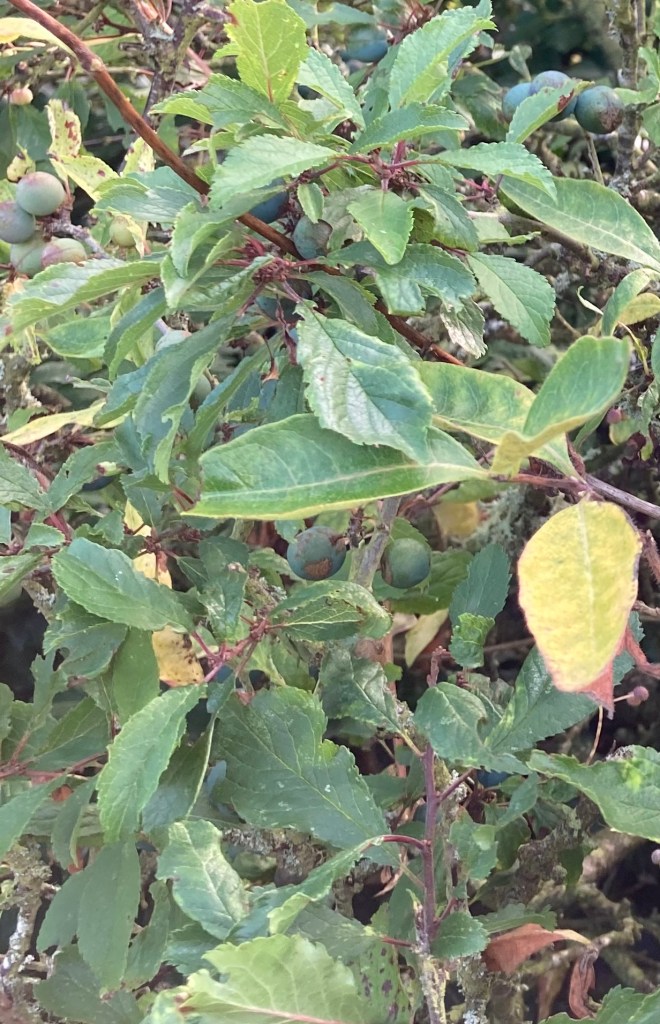
Also appearing in autumn are the sloes, round purple-black fruit with a bloom that gives them a blue tinge, each about 1cm in diameter. The sloe has a large stone and little flesh, but they do provide a valuable food source for birds, particularly for members of the thrush family.
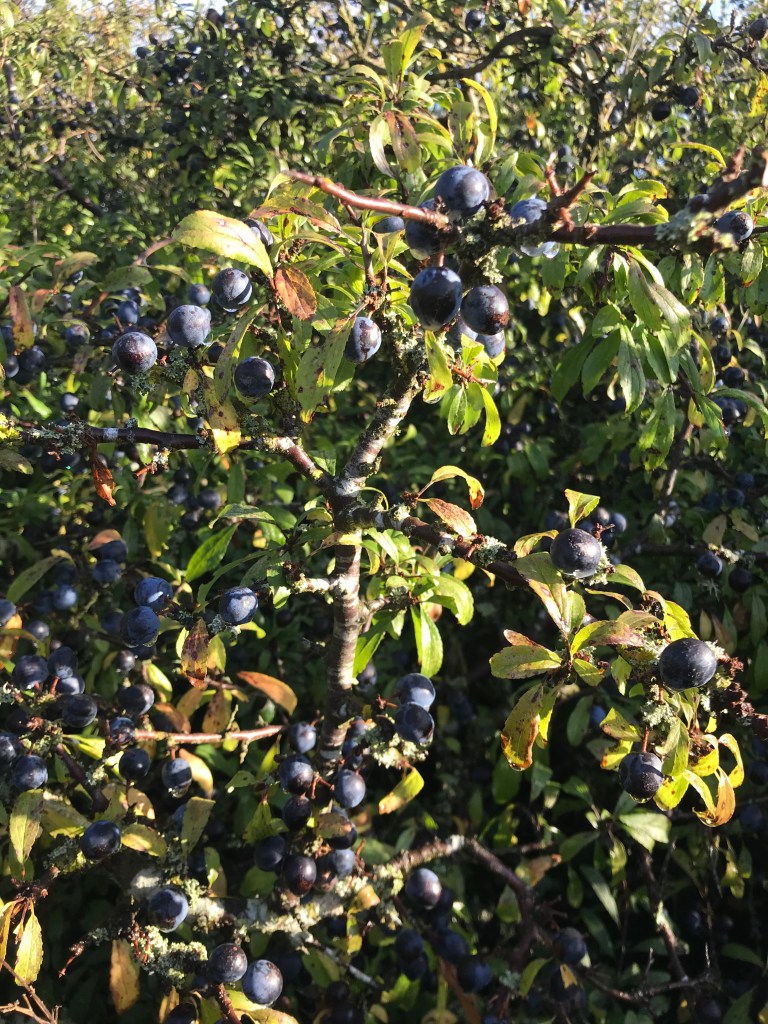
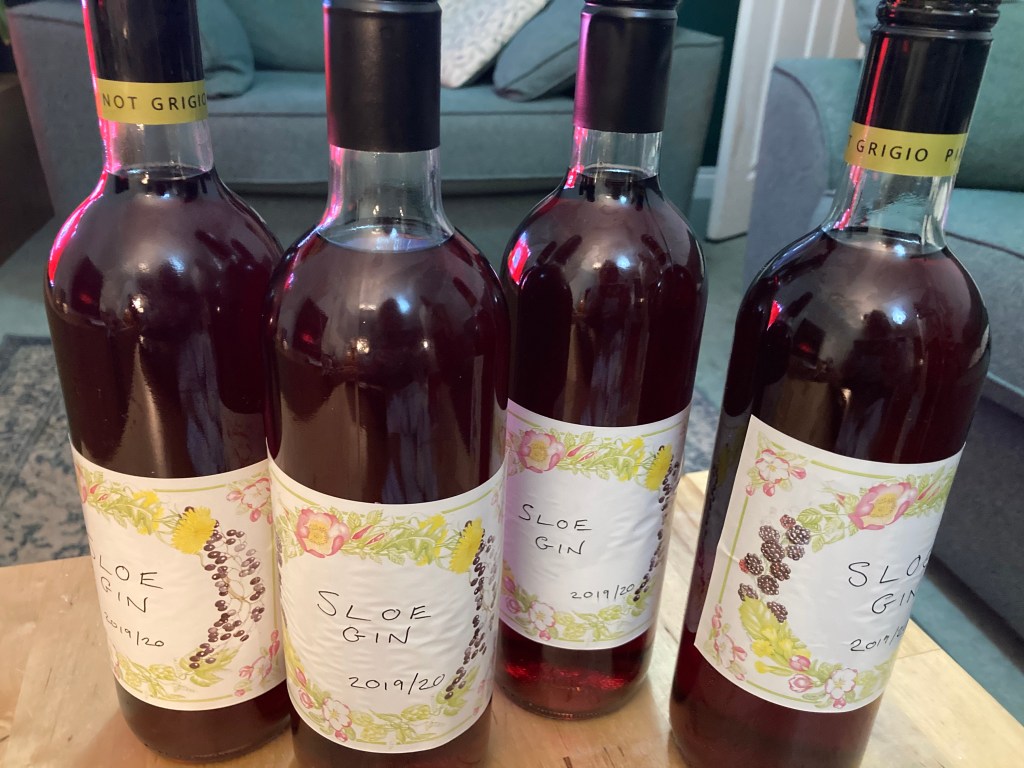
Sloes are incredibly sour, but sweeten slightly after the first frosts. In years where frosts damage the flowers and prevent the fruit from setting (or it is too cold for pollinating insects) the sloe crop is scarce. The fruit are used in sloe gin and can also be made into jams and jellies. You can read about how we make our own sloe gin here . If you have the patience to remove the stones from the fruit after they have been strained out of sloe gin (by which time they have absorbed a fair amount of alcohol, the flesh can be stirred into melted chocolate and left to set on a baking tray: delicious!
The wood of the blackthorn burns well and as it grows straight is used for walking sticks and tool handles. It was also said to be the wood of choice for witches’ staffs and wands and had an association with witchcraft.

Traditional medicine has used preparations of the plant used for cleansing the blood, for digestive disorders and rheumatism.

I always look out for the first blackthorn blossom to appear every spring, with the hope of a good crop to make sloe gin later in the year.
Don’t forget the following when picking any parts of a wild plant.

  • Don’t touch or pick any plant unless you are ABSOLUTELY CERTAIN that it is safe to use, and not poisonous.
  • Don’t pick anything unless it is abundant
  • Only pick small amounts and no more than you need
  • Don’t pick if there is a risk of pesticide/weedkiller or other contamination, including from traffic or other forms of pollution.
  • Always get permission from the landowner.
  • Avoid areas which may be soiled by animals (wild or farm animals or pets)
  • Wash plants thoroughly

	
Posted in Uncategorized

Druridge Bay in May

We often meet Daughter for a walk at Druridge Bay Country Park. The weather was lovely the other day so off we went, accompanied by Buddy the Labrador of course!

Spring flowers are everywhere and I spotted one I haven’t seen in ages. This is doves-foot cranesbill.

The little pink flowers resemble those of Herb Robert, another member of the cranesbill family, but that has fern-like leaves. Doves-foot craneshill has clumps of round, lobed leaves.

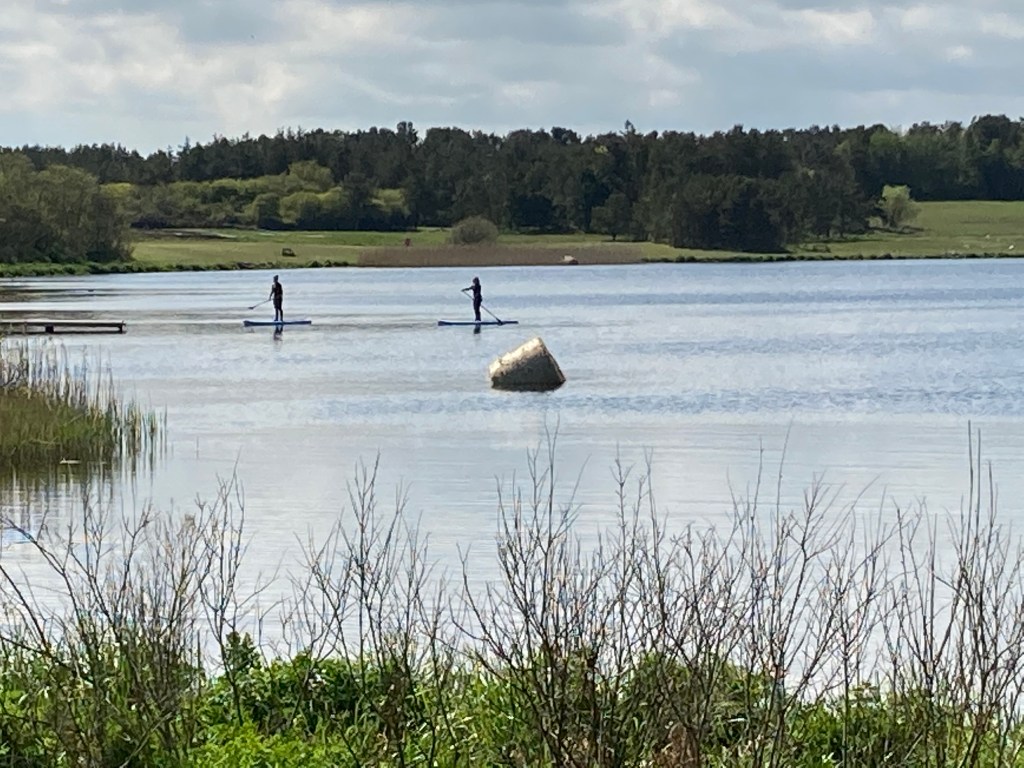
On the lake the paddle boarders were out in force and and a lone windsurfer sailed by . We noticed a straw bale floating in the water. Our first thought was that it had been dumped there, but then we spotted another, then another across the other side. . They had been deliberately placed in the water all around the lake.

We suspect this is being done to control the growth of algae. Straw, especially barley straw, produces substances as it breaks down and these inhibit algal growth. This form of control is preferable to less environmentally friendly chemical herbicides. In the past we’ve seen warning notices posted in the park about toxic blue-green algae. During such an algal bloom people are advised to stay away from the water. Algal toxins can be fatal to dogs so pets should also be kept out of the water. These blooms usually occur in hot dry weather.

Although there were quite a lot of people about, they were spaced out in the park. The only exceptions to this were the children’s play area and the car park. Some people were having their picnic right by their vehicle, which seemed rather sad when there are so many other lovely spots across the park.

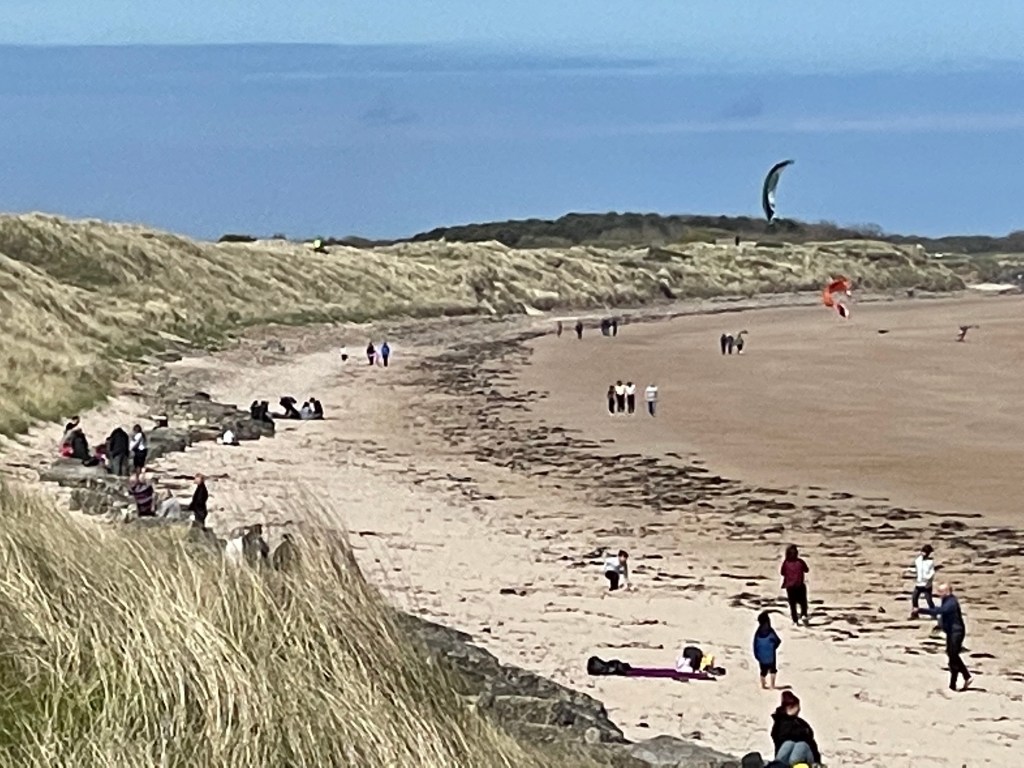
The beach had more people than I’d seen in a while, but was not exactly crowded!

In the visitor centre there was an exhibition of wildlife paintings by local artist Diane Patterson. She paints on wood and the grain inspires the picture, often forming the background landscape. I particularly liked her portraits of hares.

We stopped for a takeaway hot chocolate and then continued on around the lake.

The cowslips have been flowering for a while but we found a huge patch of them which looked quite spectacular.

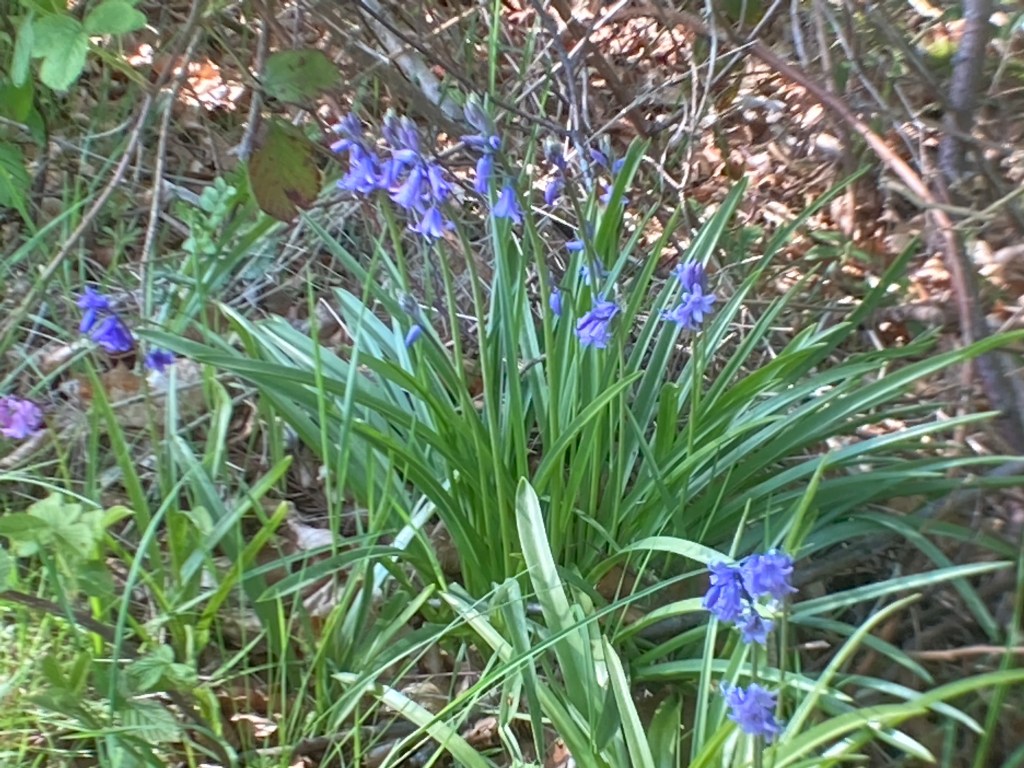
Bluebells are in full bloom on the edge of the wooded areas.

I love our walks at Druridge Bay!Drurid

Posted in Uncategorized

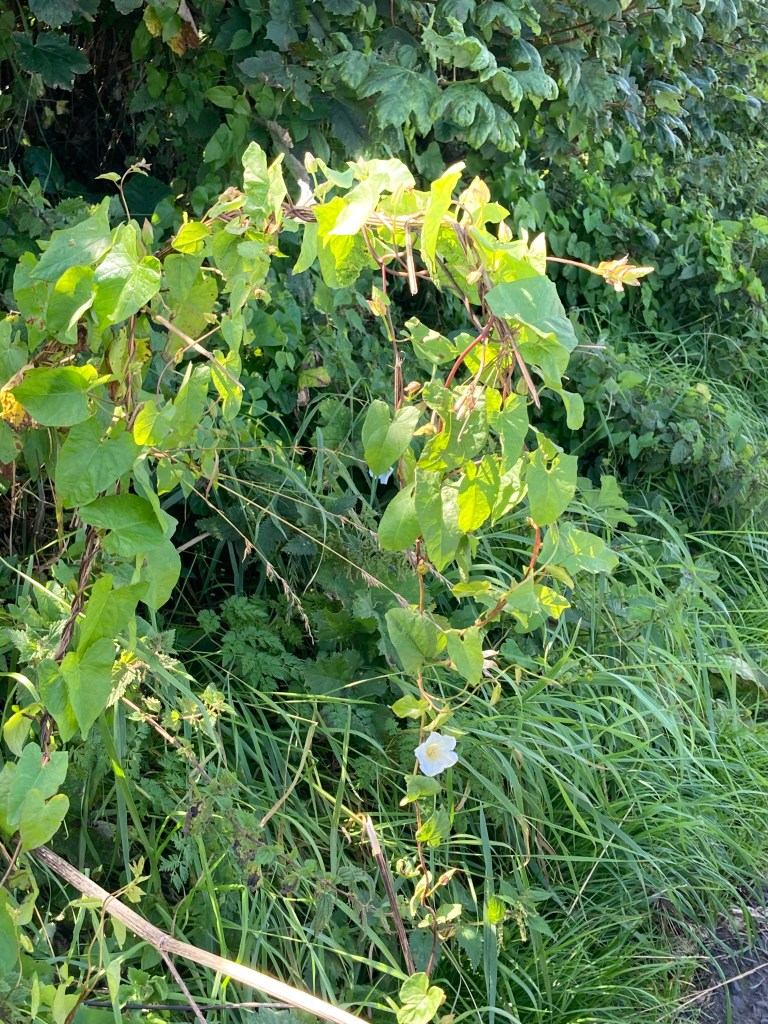
Wildflower of the Week: Hedge Bindweed

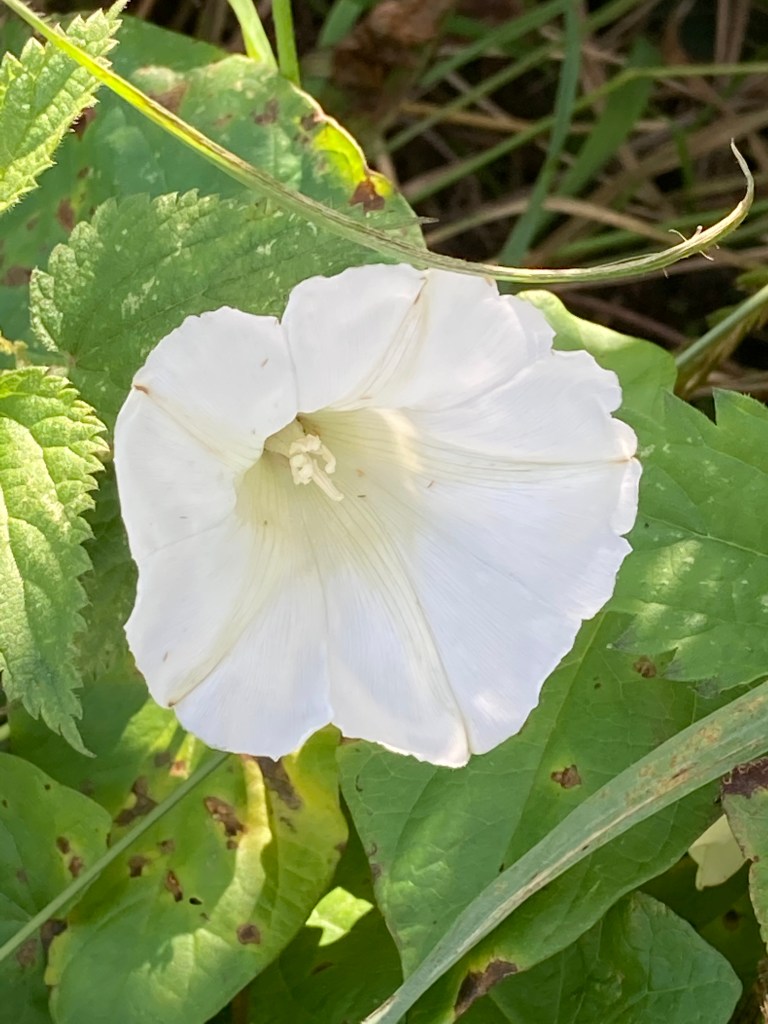
I haven’t written a Wildflower of the Week post for a while as there are not too many wildflowers in bloom at this time of year. There is still Hedge Bindwood in flower however.

Hedge Bindweed grows rapidly, twining anti-clockwise as it grows upwards, smothering out other plants. On a warm day when it is growing rapidly, it can twine a complete revolution in an hour. It’s not popular with gardeners being a pernicious perennial weed. If you try to dig it out and leave the tiniest fragment of root behind it will grow back!

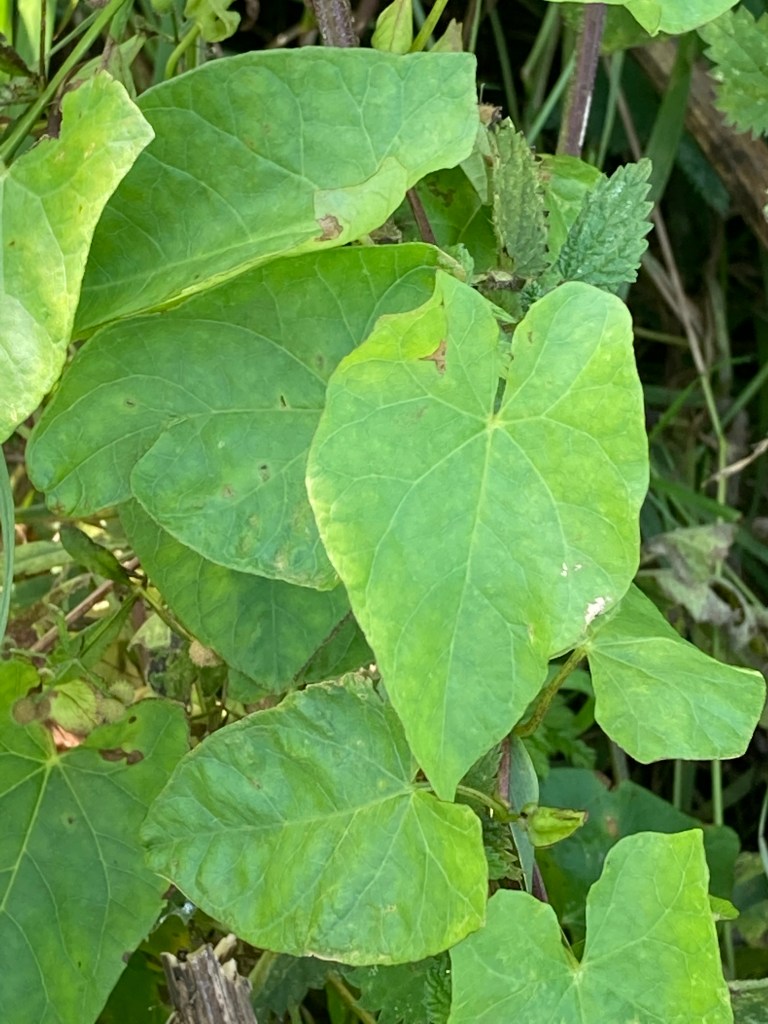
The plant is hairless with arrow or heart-shaped leaves.

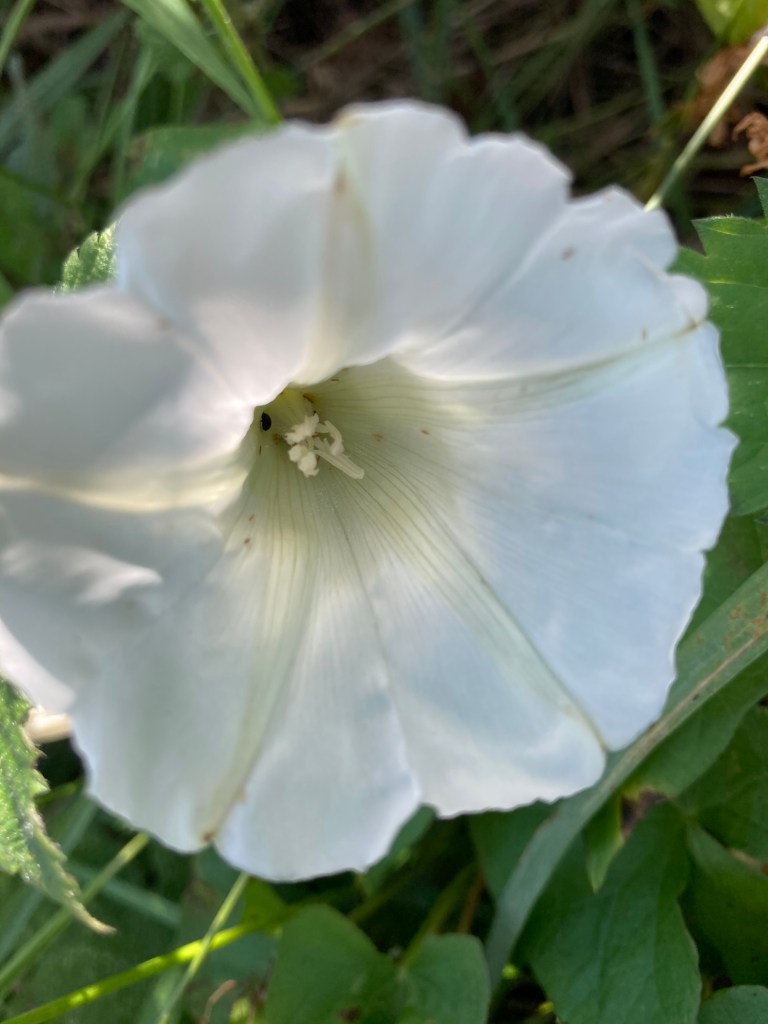
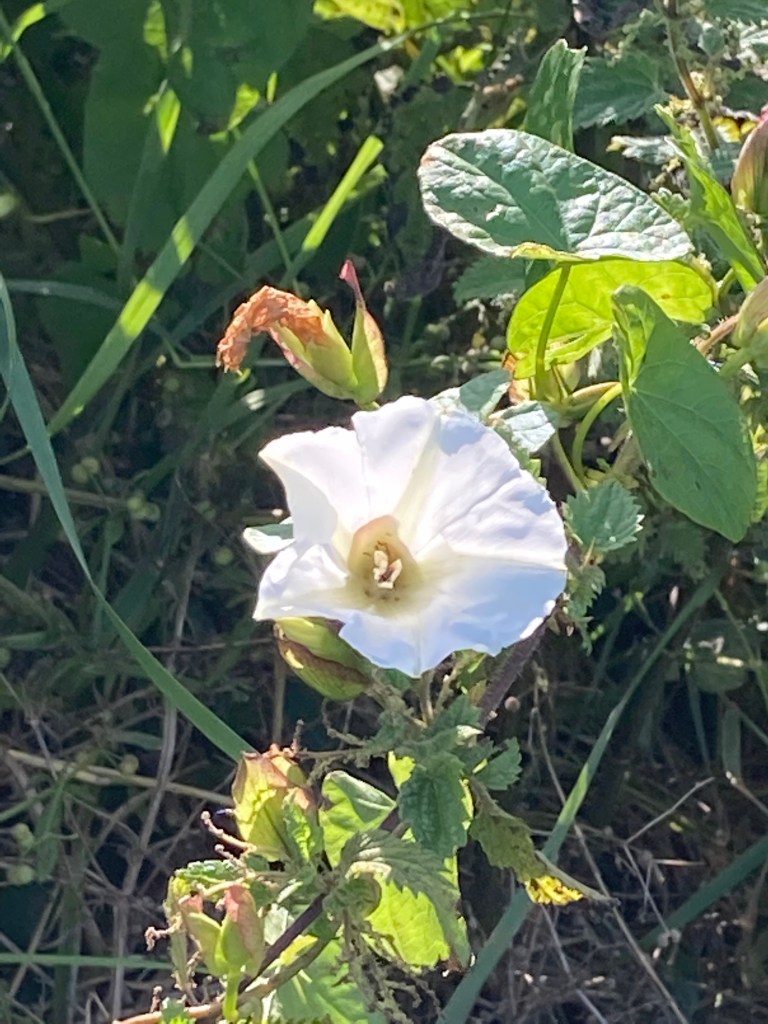
The large white flowers are trumpet shaped, formed from five fused petals.

The flowers are popular as a source of nectar for bees, butterflies and moths, including night-flying moths as the flowers do not shut at night. Hedge bindweed is the food plant of the Convolvulus Hawkmoth.

The plant is toxic, containing alkaloid chemicals that have a purgative effect. It is also considered harmful to livestock and thought to cause colic in horses. The stems are tough so can be used as string in an emergency.

The plant has many country names including Windweed, Devil’s guts and Granny-Jump-Out-of-Bed. Children played a game, squeezing the calyx and making the flower “jump” off the end, giving rise to that name.

As one of the few wildflowers still about in October (and quite an exotic looking one) Hedge Bindweed is quite a welcome sight….unless you are a gardener!

Posted in Uncategorized

Wildflower of the Week: Bramble

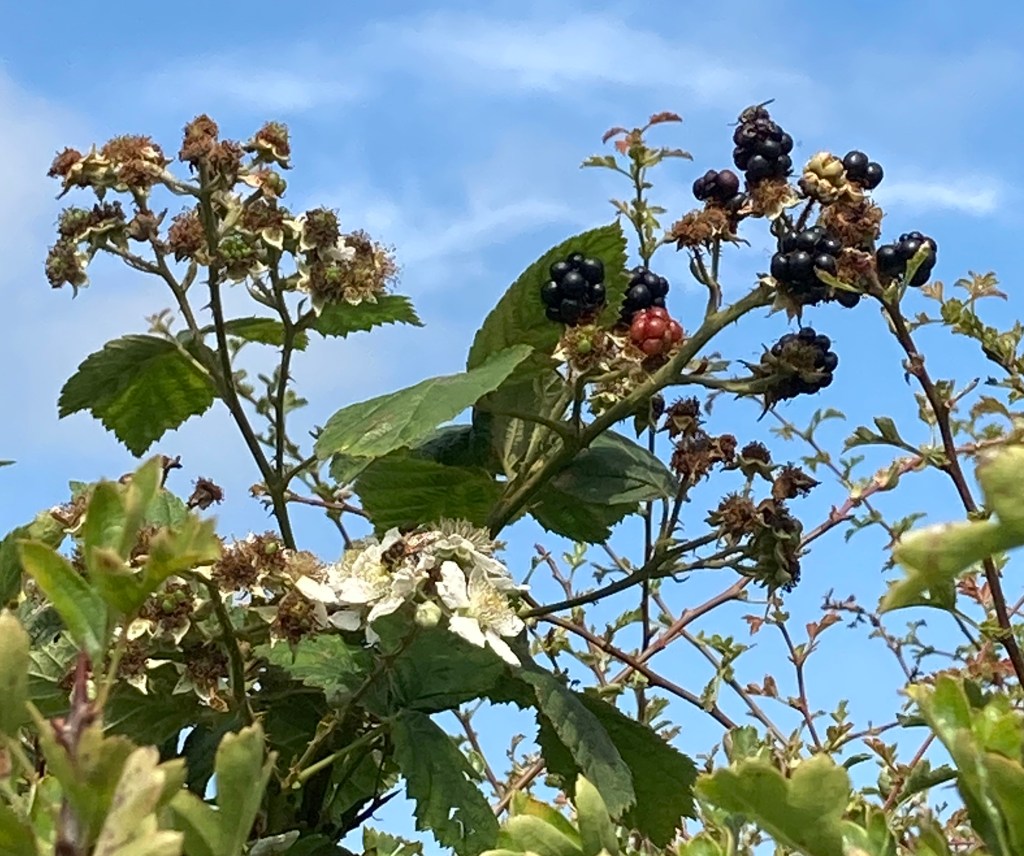
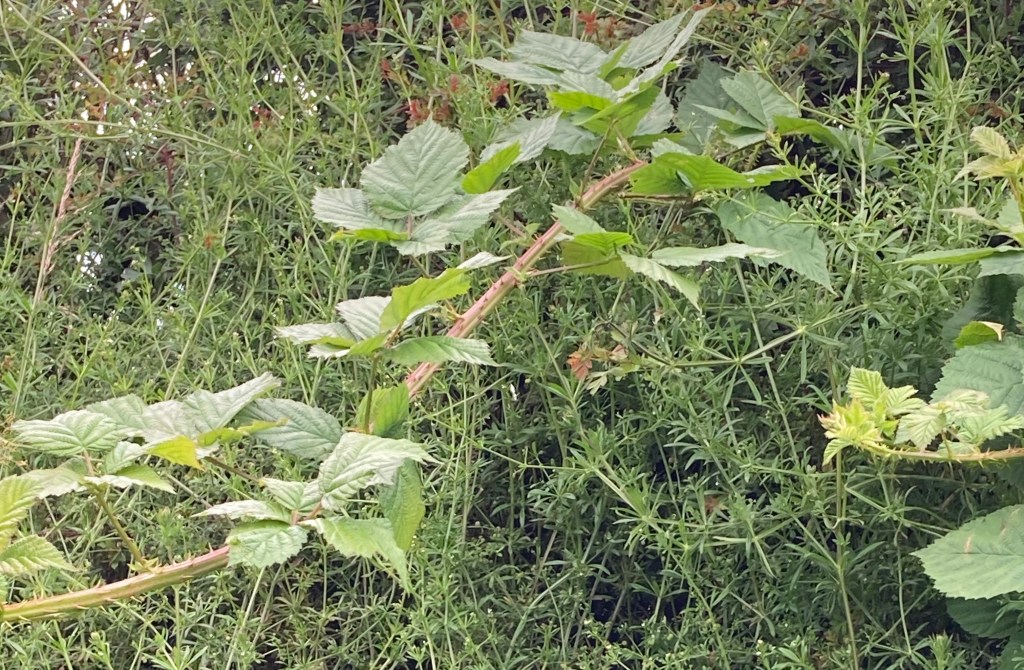
The bramble or blackberry is a member of the rose family and not actually a single species, but an aggregate of some 2000 very similar micro species. It is a scrambling perennial shrub that is commonly found in hedgerows, woodlands and waste ground. It is happy in poor soil and quickly colonises untended or ungrazed land and is difficult to eradicate from a neglected garden. The shoots may grow to 6m long or even more.

The plant sends out viciously prickly biennial arching shoots that grow vigorously without flowering in their first year, bearing prickly toothed leaves, comprising 5-7 toothed and heavily veined leaflets. The shoots take root wherever they touch the ground.

In the shoot’s second year it does not grow in length, but produces flowering side shoots and smaller leaves comprising 3-5 leaflets.

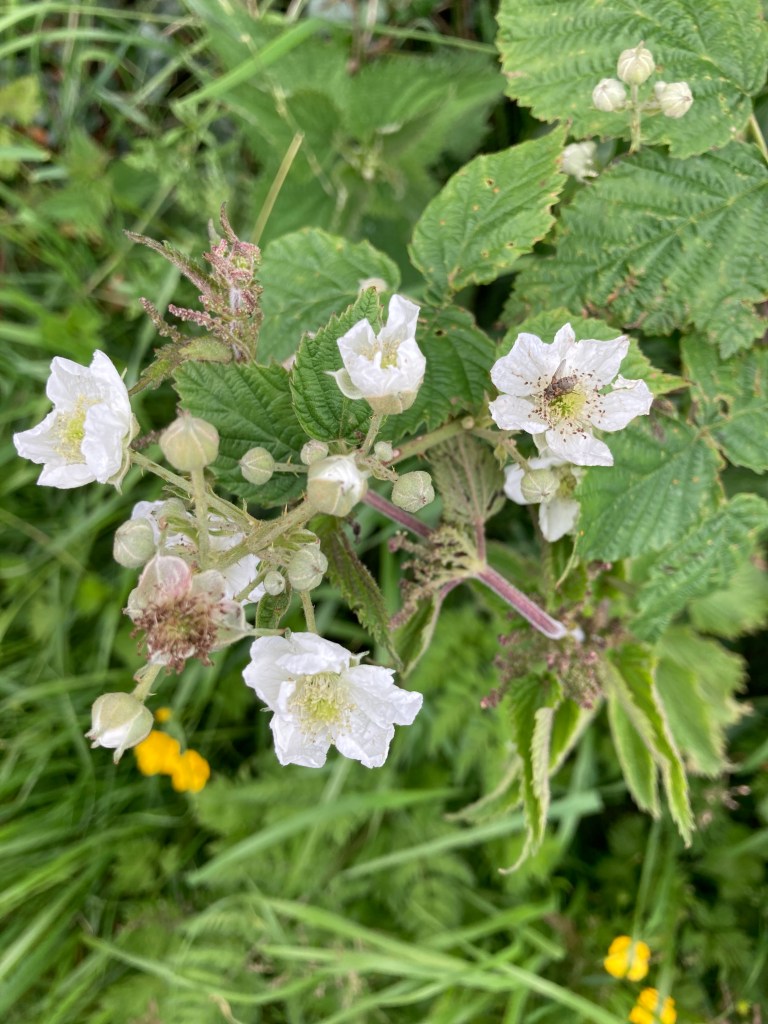
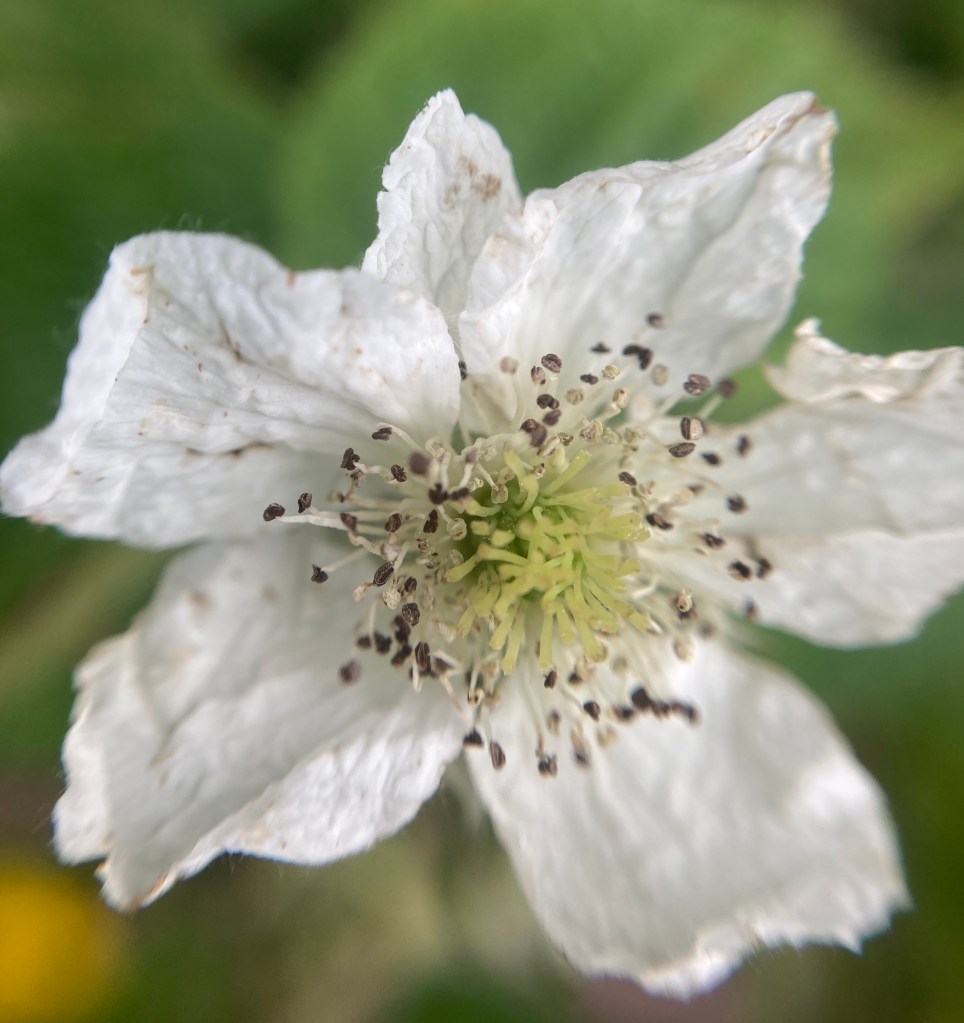
The flowers, which appear from June onwards in groups on the side shoots, usually have 5 white or pale pink petals.

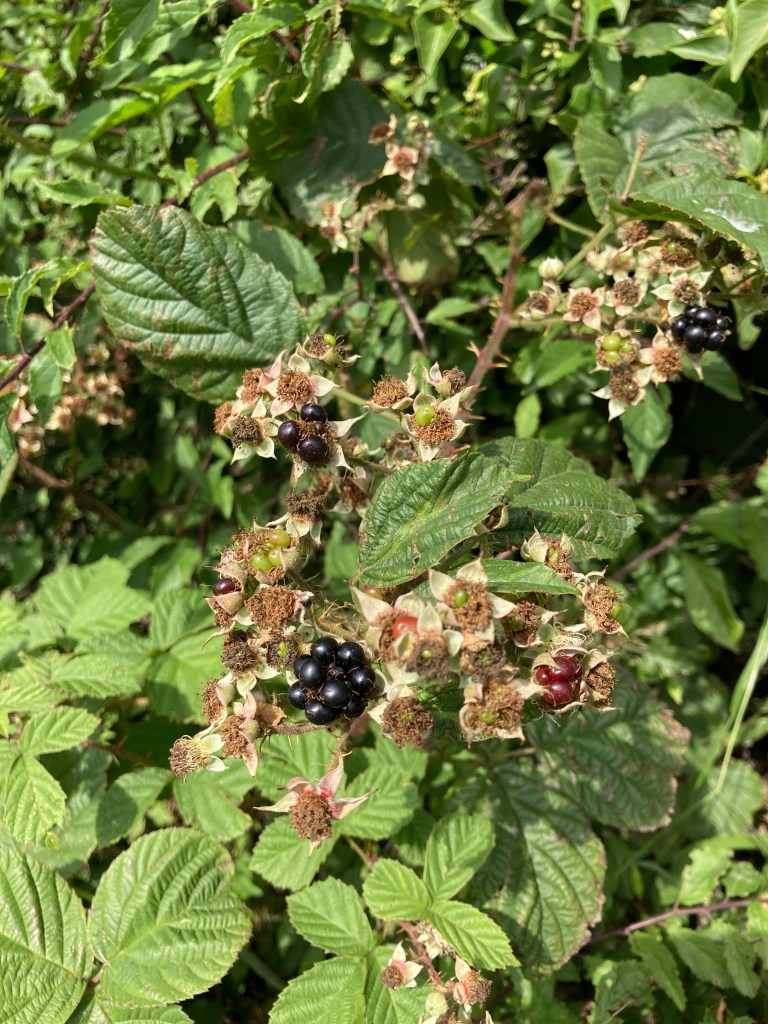
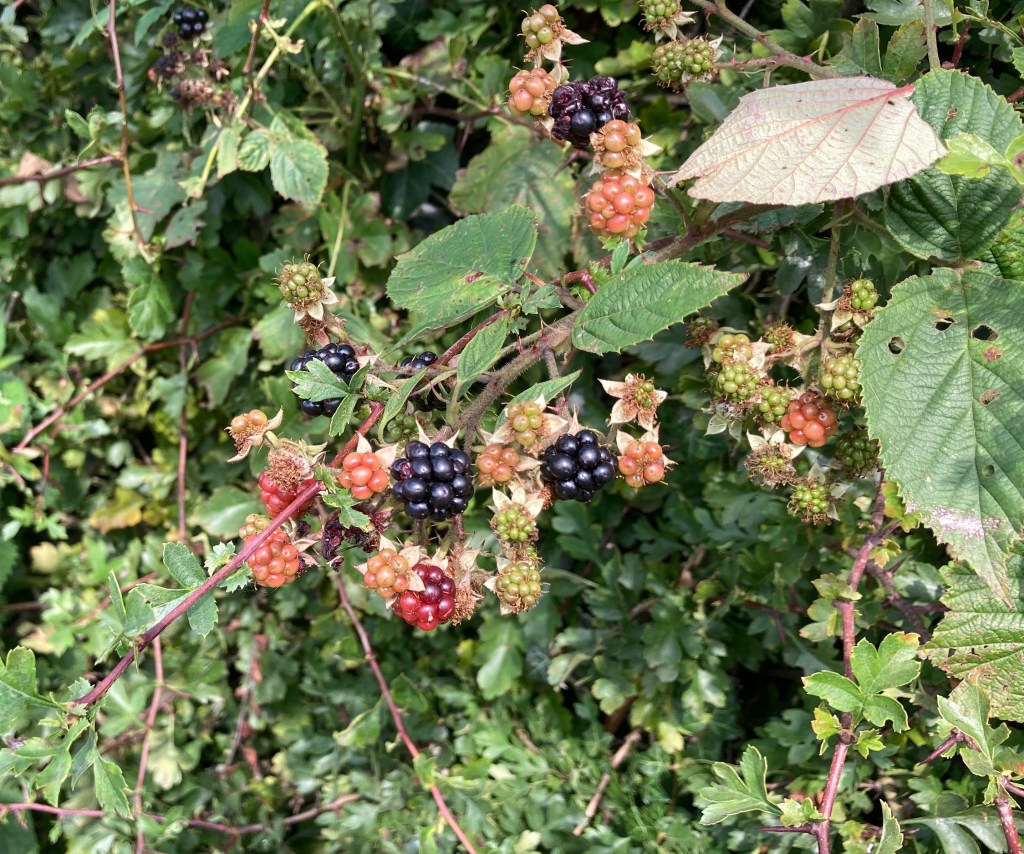
These are followed by the blackberries – technically not a fruit, but a cluster of drupes. These are green as they begin to develop, turning red through purple to black as they ripen. The ruit are easy to distinguish from the raspberry when they are picked – the raspberry detaches from the plant leaving its core behind on the plant so each picked berry has a hollow centre. The white core or torus of the blackberry detaches with the the fruit.

The plant is very important to wildlife. The flowers are popular with bees and the leaves are food for several species of caterpillars and deer enjoy grazing on them. The fruit are eaten by many species of birds and mammals who disperse the seeds in their droppings. The dense bramble thickets provide valuable cover and nest sites.

Man has used the bramble extensively too. Though we enjoy gathering the wild berries from our hedgerows, cultivated varieties have been developed to produce larger fruit with better flavour and without those vicious thorns. Preparations of the plant have been used in folk medicine for all manner of ailments: the leaves have been chewed to relieve bleeding gums; a tea made from all parts of the plant has been used to cure whooping cough and the roots used to cure dysentery and diarrhoea. The Ancient Greeks used it as a cure for gout. It has also been used to treat stomach ulcers. The fruit is rich in vitamin C and has been used against scurvy.

The berries leaves and shoot tips can be used for dyeing. Native Americans have used the stems to make rope. The plant also provides an impenetrable barrier to protect stock and property and keep large animals and enemies out.

Blackberrying, or foraging for the berries in late summer or early autumn is a popular pastime – at one time the autumn half-term school holiday was known as Blackberry Week. The fruit makes delicious jams, jellies, pies and crumbles, often in combination with apples. It is also used to make the French liqueur Creme de mur, which is the key ingredient of a bramble – a cocktail which also includes gin, lemon juice and sugar syrup.

Folklore decreed that blackberries must not be picked after Michaelmas Day (October 11th). After this the devil was believed to have spoilt the berries by trampling, fouling or spitting on them. After this time the fruit would often be mouldy or beginning to decompose. It was also traditionally planted on graves, to stop sheep grazing (or some believed to keep the dead in!)

As the blackberries ripen on our local hedgerows I’ll have to pick some. But what to make….jam? jelly? pies? I might even try making blackberry and apple gin liqueur – I tried it a few year back and it was delicious!

Have you picked any blackberries yet this year? What have you made with them?

Posted in Uncategorized

Wildflower Of The Week: Meadowsweet

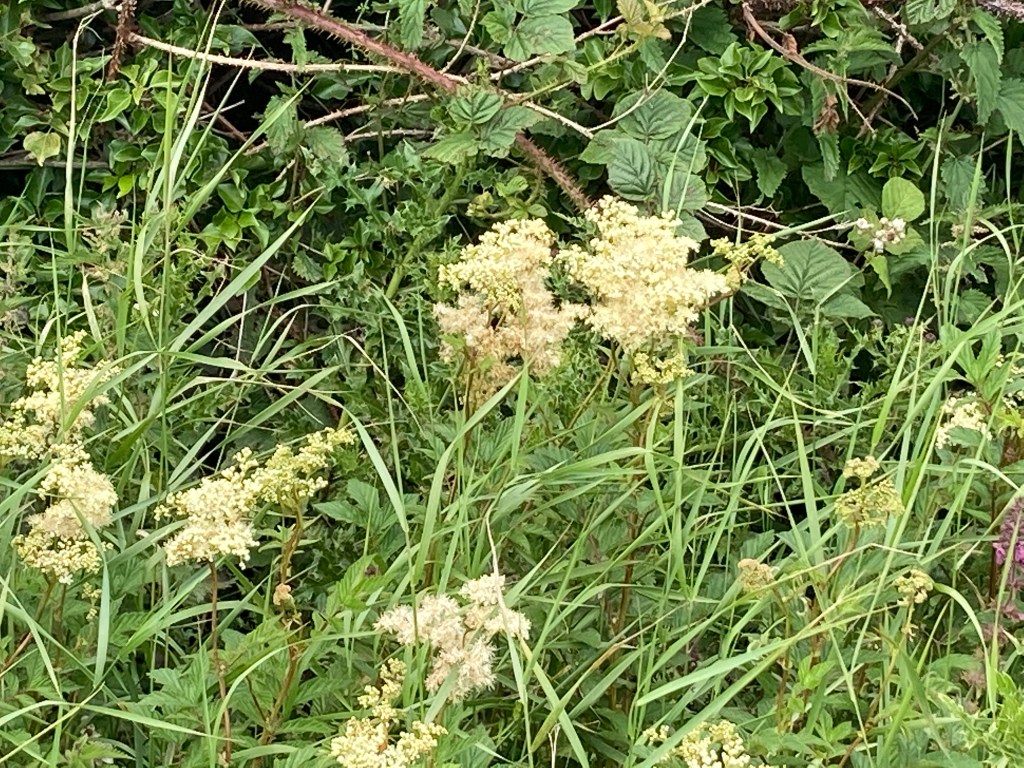
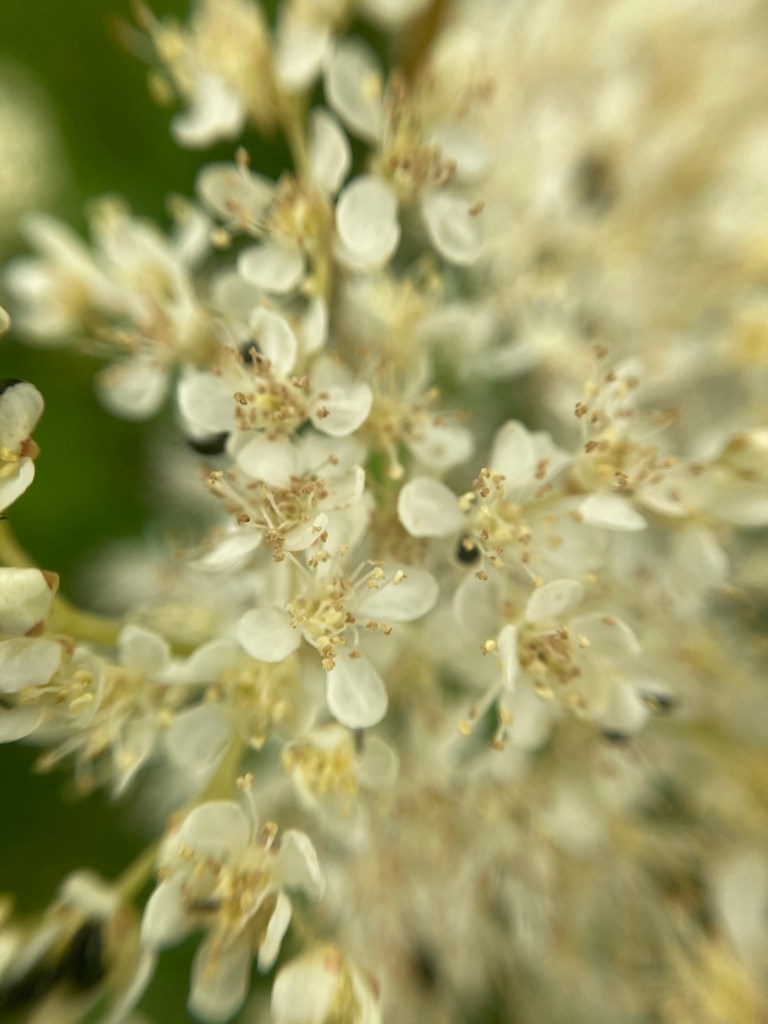
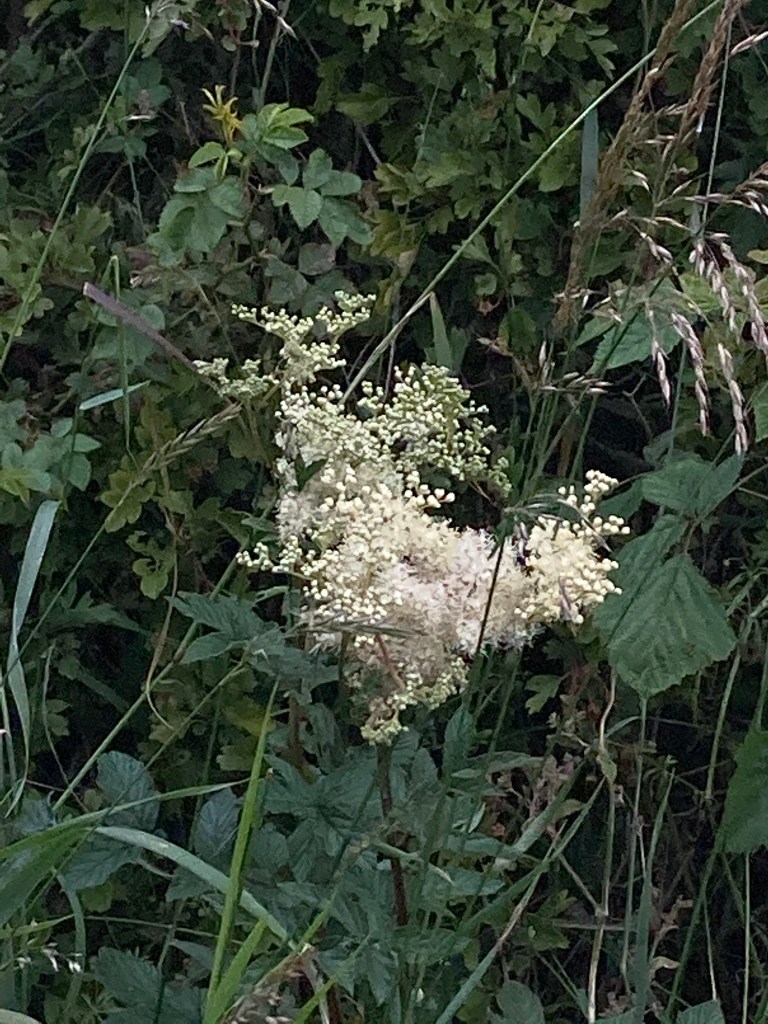
At it’s peak now, Meadowsweet (Filipendula ulmaria) flowers from June to September, and is common in damp meadows, ditches and road verges, by rivers and streams, growing to about 1.5m on reddish stems. . It is actually a member of the rose family, though the frothy clusters of cream-coloured flowers give no clue to this. Each tiny flower has 5-6 petals and male or female flowers are on separate plants. the flowers smell faintly of almonds and are an important pollen source for insects.

Found from Europe to the Middle East, the plant was introduced to America, where it has become naturalised.

The dark green leaves however are, more like those of the rose, set in pairs along a leaf stem, toothed and more heavily veined, with a silvery underside. When crushed they can have an antiseptic smell on top of the same almond notes of the flowers.

The plant has many names, some of which indicate it’s many uses through the ages. It was used as a strewing herb, thrown on the floor to cover the mud, provide insulation and a pleasant scent when trodden underfoot. The flowers were used to decorate banquets and for bridal garlands, giving rise to the name bridewort. The herbalist Gerard said that the scent “make the heart merrie, delighting the senses without headache or putting off meat”. Meadowsweet was said to have been a favourite of Elizabeth I.

Although the name Queen of the Meadow or Pride of the Meadow, would suggest that the plant is named for its habitat, the alternative of meadwort is thought to derive from the use of the flowers to flavour mead. It has been used to add flavour to port, claret and beer, gin, sloe gin, jam and various desserts – some sources recommend using it in the same way as elderflower to make cordials, liqueurs and “champagne”.The flowers and leaves retain a scent and flavour even when dried, enabling use all year round. The roots yield a black dye.

Herbalists have also found many uses for this plant. Culpeper used it for fevers, wounds and eye irritations. It has also been used for colds, bronchitis, upset stomachs, joint problems and for bladder infections. Modern science has found one of the reasons for its useful medicinal properties: it contains salicylic acid, also known as aspirin.

This really is a versatile plant with a fascinating history.Wildflower

Posted in Uncategorized

August Wildlife Walk

During this crazy year, when time has either been standing still or passing us by, it’s quite reassuring to go for a walk and see the passing of the seasons. Whatever else happens, the wild plants still come into flower around the right time and the swallows migrate here. The farm year continues too and we see fields change as crops grow and reach harvest and spring lambs grow bigger.

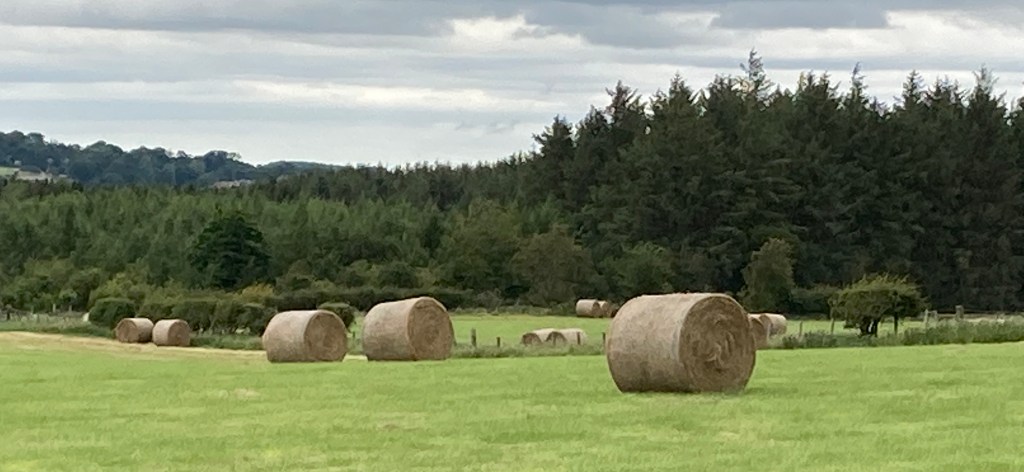
Today I took my usual walk near the village and the first thing I spotted was that some of the meadows have been cut – the warm wet weather has really encouraged grass growth and hay and silage making.

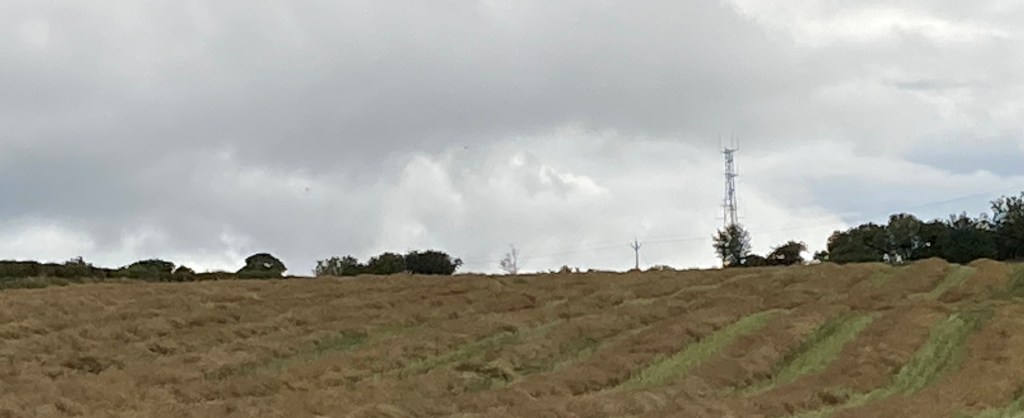
The oilseed rape crop is ripening. The acid yellow flowers of spring have now been replaced by brown stems and seed pods.

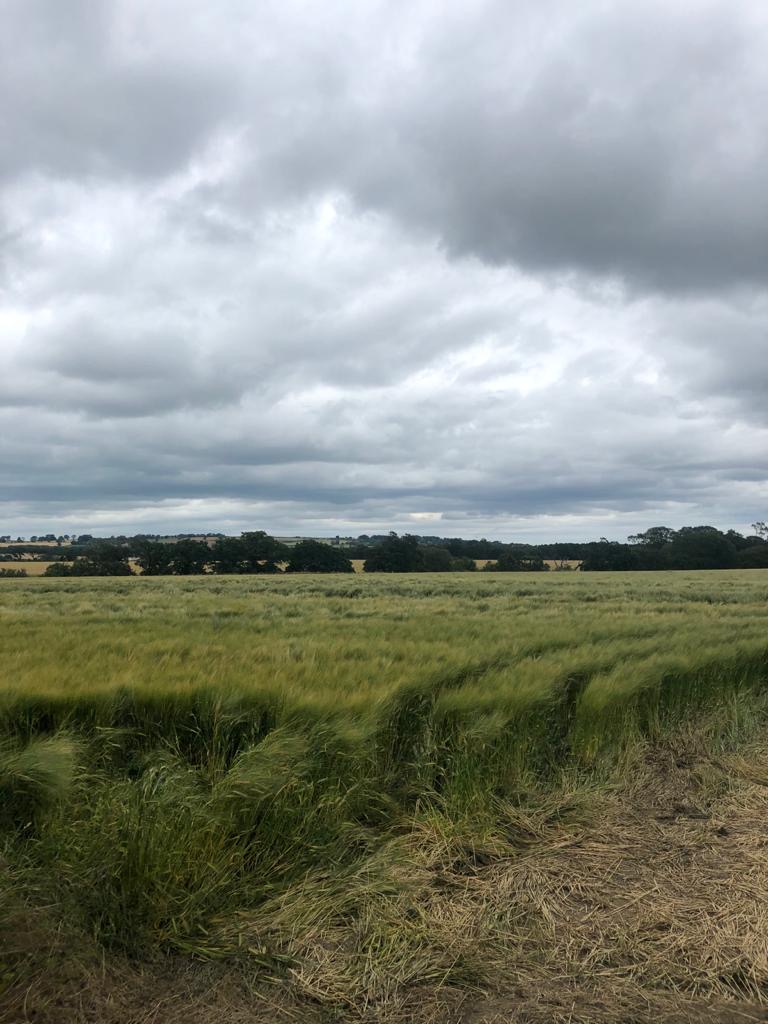
The grain crops are ripening fast and combining has already begun in some places. This barley still has a greenish tinge. I love to watch it swirl about and ripple in the breeze.

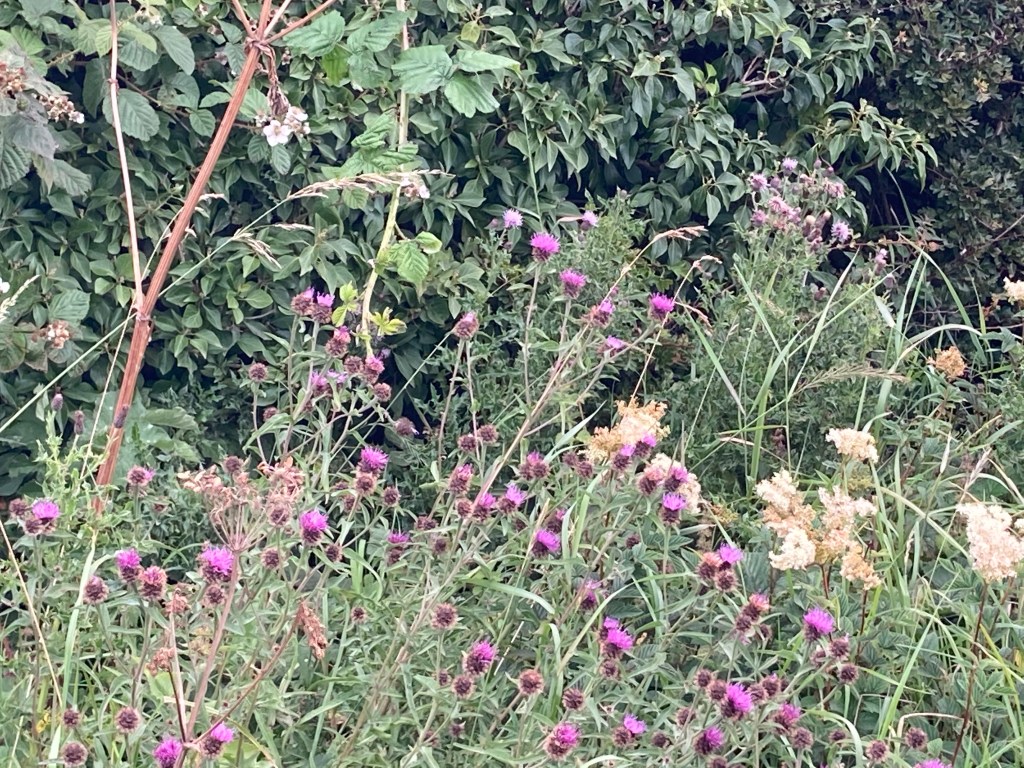
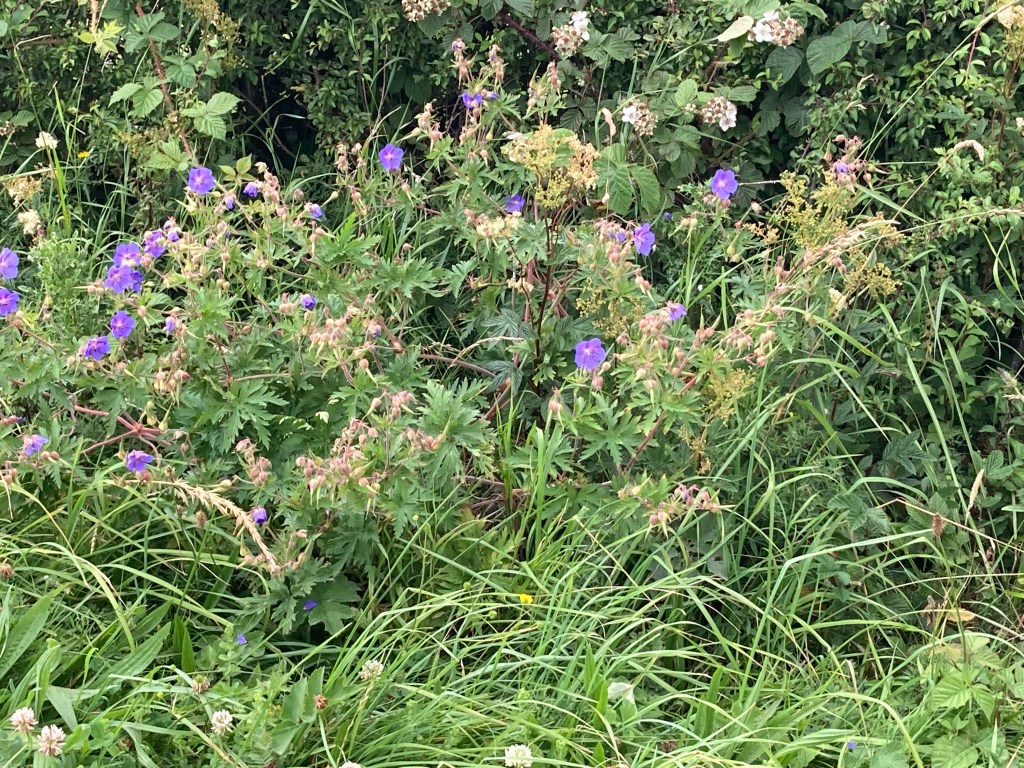
The verges and hedgerows are now a dustier, darker green, with the creamy grass seed heads, thistledown and meadowsweet flowers and accents of purple from thistles, knapweed, meadow cranesbill and woundwort.

Purple Knapweed and Milk Thistle (top right) with creamy Meadowsweet (bottom right)
The brilliant blue-purple flowers of Meadow Cranesbill

The most dominant birdsong I heard today was that of the yellowhammer: a rising sequence of notes followed by a single, lower, longer one. They seemed to follow me and every so often I’d catch a glimpse of one on top of a hedge.

There were lots of butterflies today, mainly whites, including green-veined whites and also small tortoiseshells and red admirals. I also saw this beautiful pale moth – so far I can’t identify it.

As we turned, a roebuck crossed by the bridge. They are very common round here, but mostly keep themselves well hidden in woodland, especially during summer, so it was lovely to see one.

What aspects of nature characterise this time of year where you live?