Posted in Uncategorized

Wildflower of the Week: Blackthorn

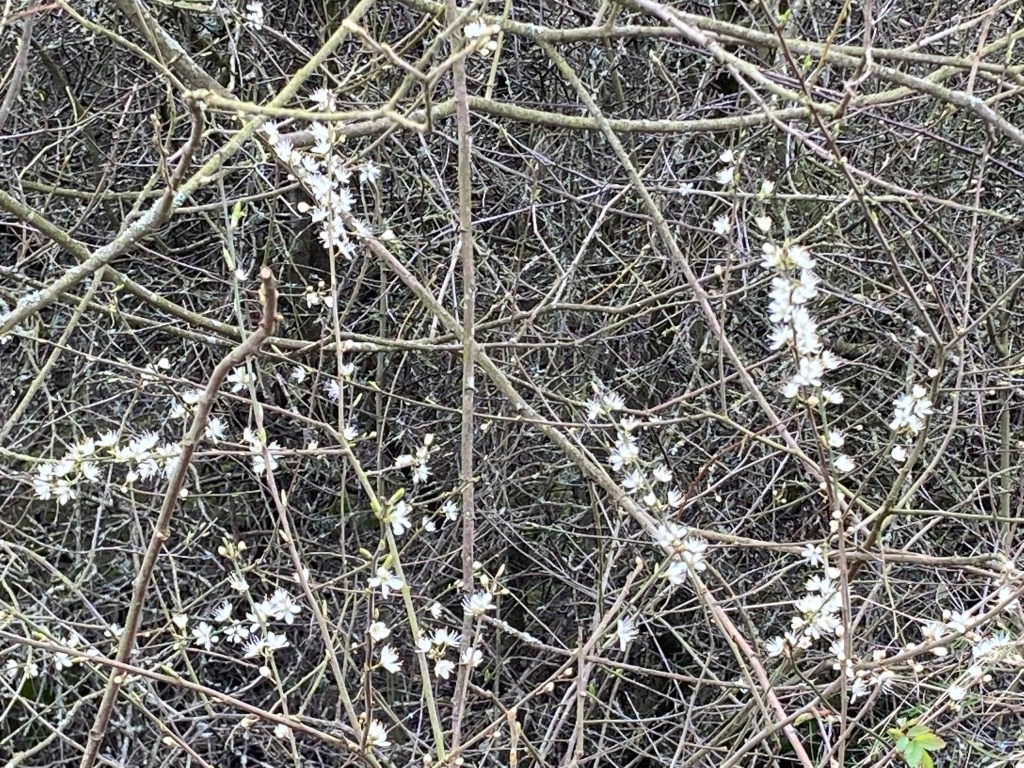
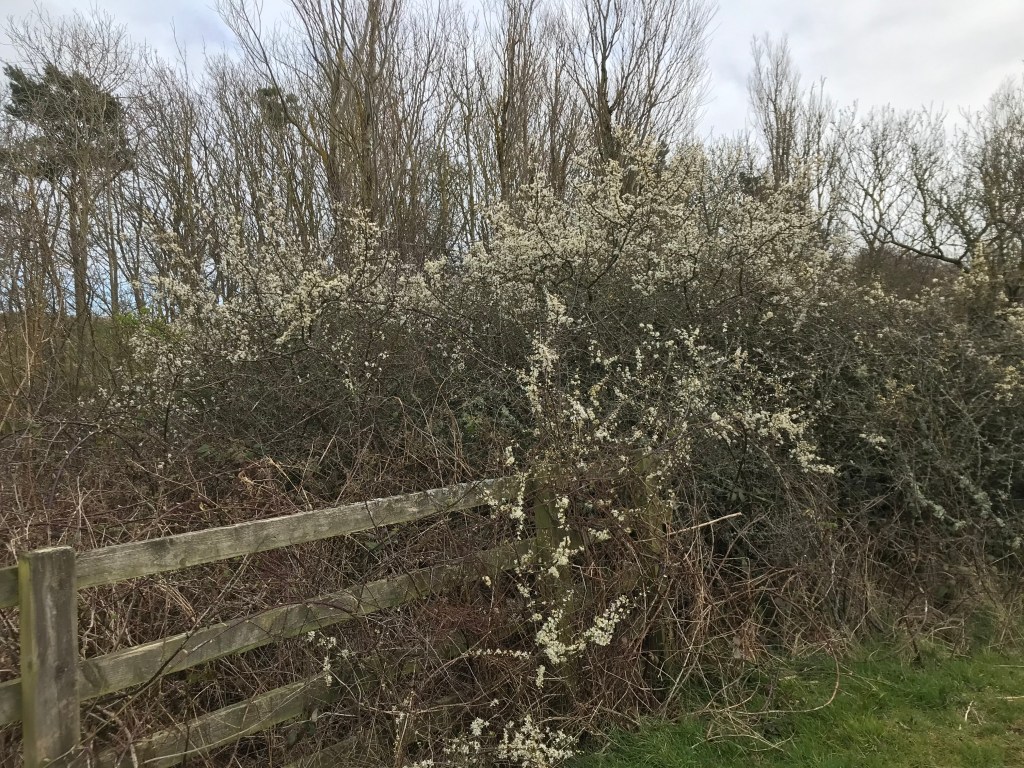
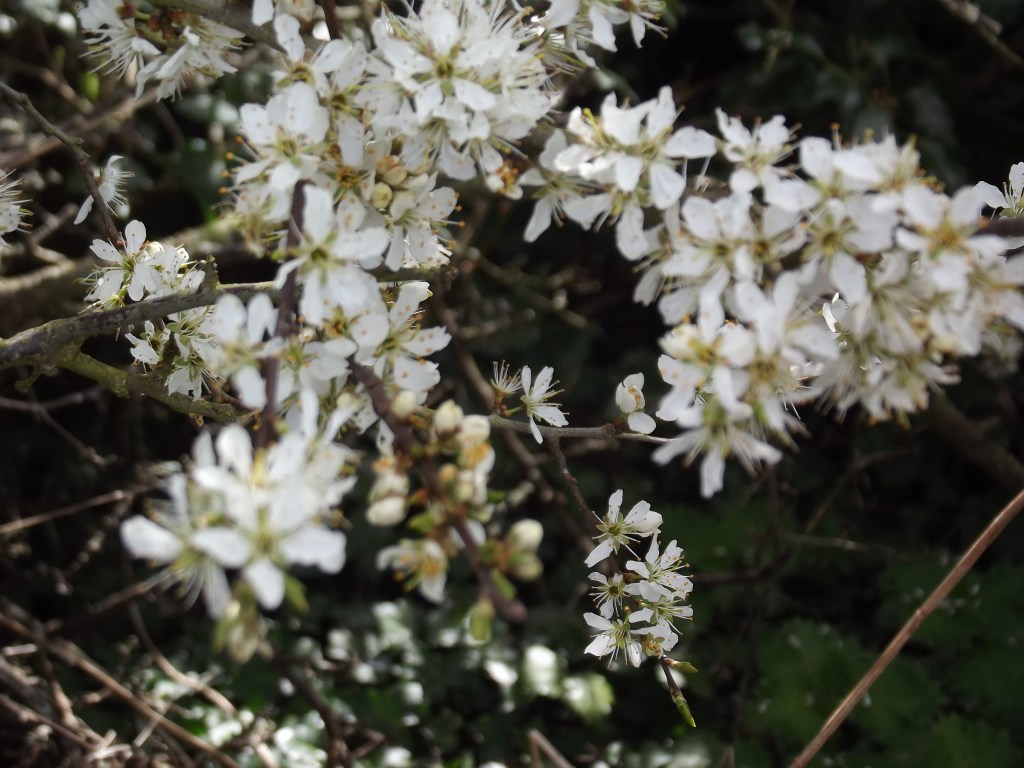
The frothy white blossom of the blackthorn has been in flower for the last month, standing out against the blackish twigs and branches, which have yet to come into leaf.

This shrub can grow to 4m or more and can be found in woodland or scrub, practically anywhere that the soil is not acid, but mainly grows in hedgerows, where the dense, thorny growth makes it an impenetrable barrier and protective nest sites for birds.
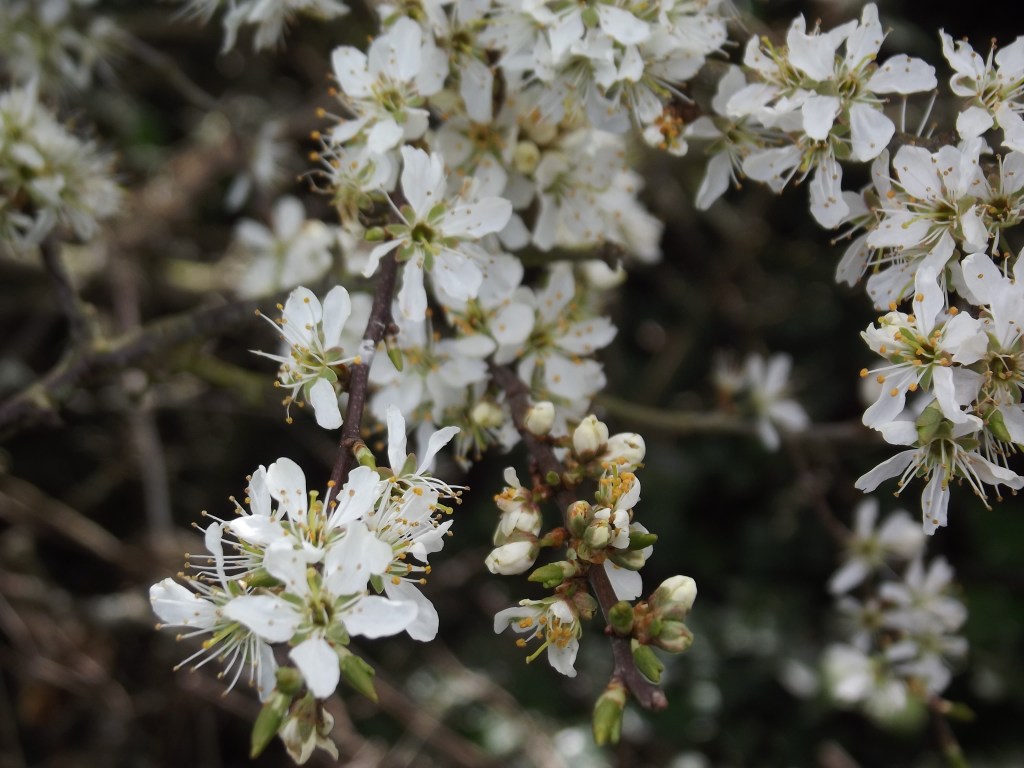
A member of the rose family and closely related to the plum and damson, the blackthorn is a native to Europe and Western Asia.

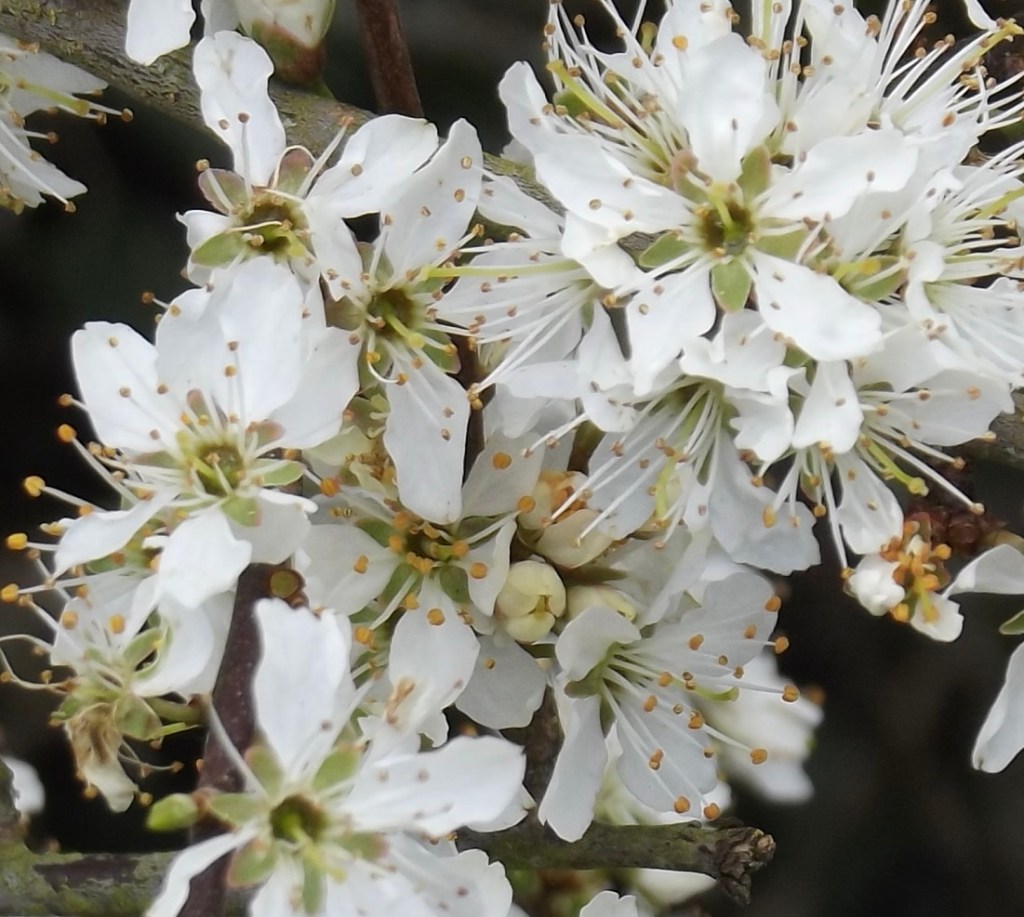
The flowers are hermaphrodite, each bearing both male and female parts and with five petals. They are the first flowers to appear in our hedgerows, arriving before the leaves and a welcome source of pollen and nectar for bees and other insects early in the year.
The small leaves are narrow and oblong shaped, tapering to a point and with toothed edges. They are the food plant for the caterpillars of several species of moths and butterflies, including the rare black hairstreak butterfly. In autumn they turn bright yellow.
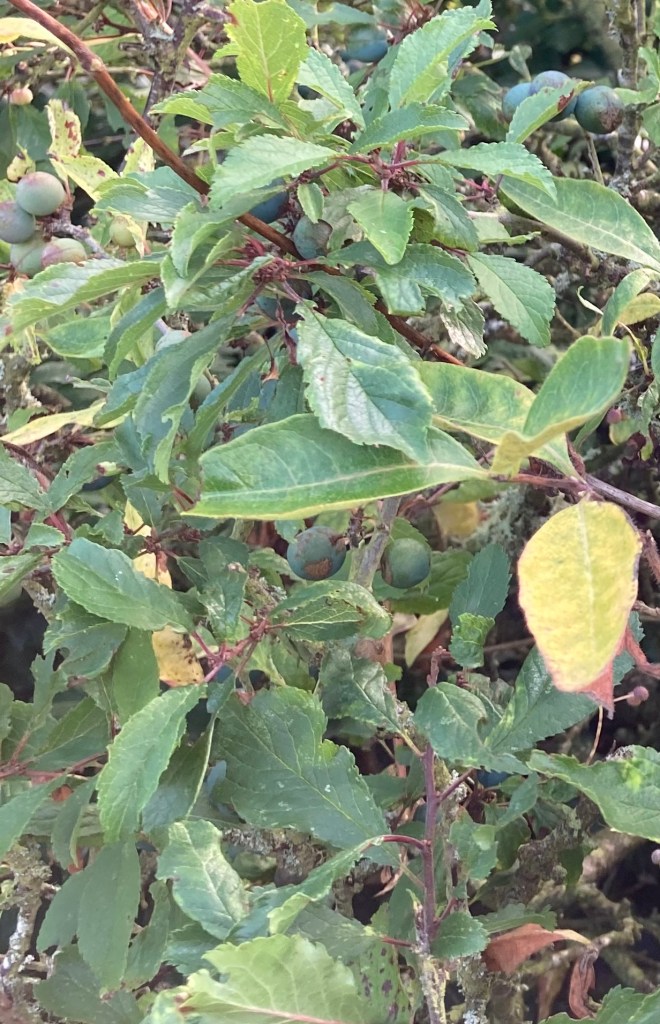
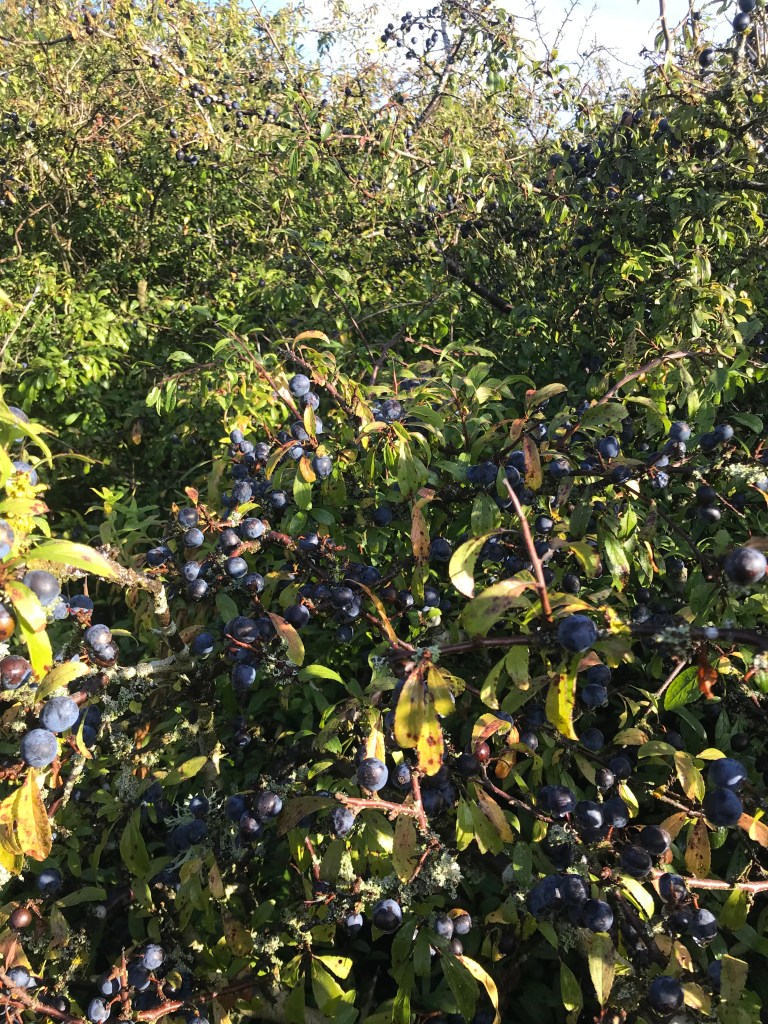
Also appearing in autumn are the sloes, round purple-black fruit with a bloom that gives them a blue tinge, each about 1cm in diameter. The sloe has a large stone and little flesh, but they do provide a valuable food source for birds, particularly for members of the thrush family.
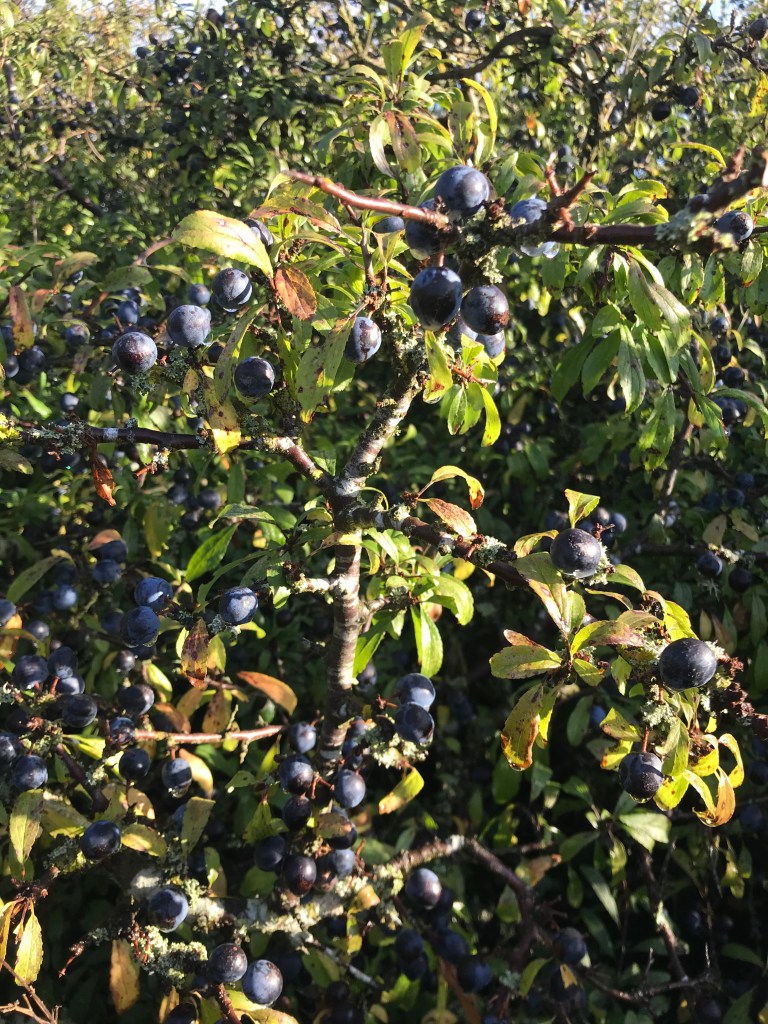
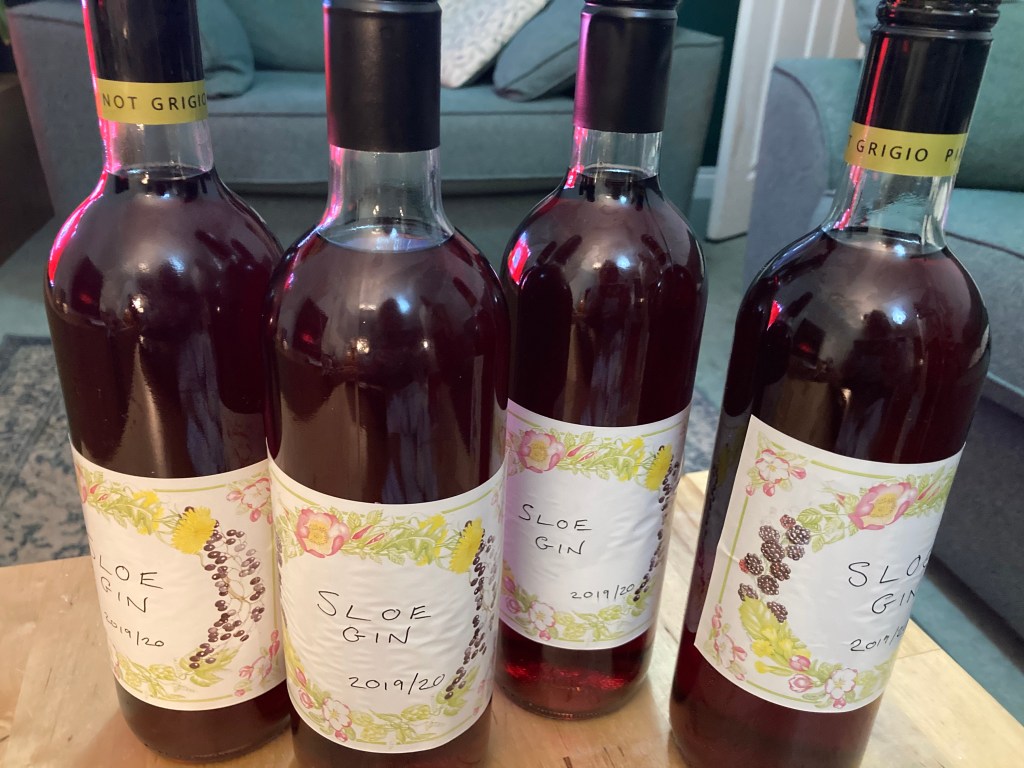
Sloes are incredibly sour, but sweeten slightly after the first frosts. In years where frosts damage the flowers and prevent the fruit from setting (or it is too cold for pollinating insects) the sloe crop is scarce. The fruit are used in sloe gin and can also be made into jams and jellies. You can read about how we make our own sloe gin here . If you have the patience to remove the stones from the fruit after they have been strained out of sloe gin (by which time they have absorbed a fair amount of alcohol, the flesh can be stirred into melted chocolate and left to set on a baking tray: delicious!
The wood of the blackthorn burns well and as it grows straight is used for walking sticks and tool handles. It was also said to be the wood of choice for witches’ staffs and wands and had an association with witchcraft.

Traditional medicine has used preparations of the plant used for cleansing the blood, for digestive disorders and rheumatism.

I always look out for the first blackthorn blossom to appear every spring, with the hope of a good crop to make sloe gin later in the year.
Don’t forget the following when picking any parts of a wild plant.

  • Don’t touch or pick any plant unless you are ABSOLUTELY CERTAIN that it is safe to use, and not poisonous.
  • Don’t pick anything unless it is abundant
  • Only pick small amounts and no more than you need
  • Don’t pick if there is a risk of pesticide/weedkiller or other contamination, including from traffic or other forms of pollution.
  • Always get permission from the landowner.
  • Avoid areas which may be soiled by animals (wild or farm animals or pets)
  • Wash plants thoroughly

	
Posted in Uncategorized

Spring at Druridge Bay Country Park

I took my scooter round the park last weekend, along with K, Buddy, Daughter and her dog, Wren. It was a dull day, but not too cold and it was good to see some signs of Spring.

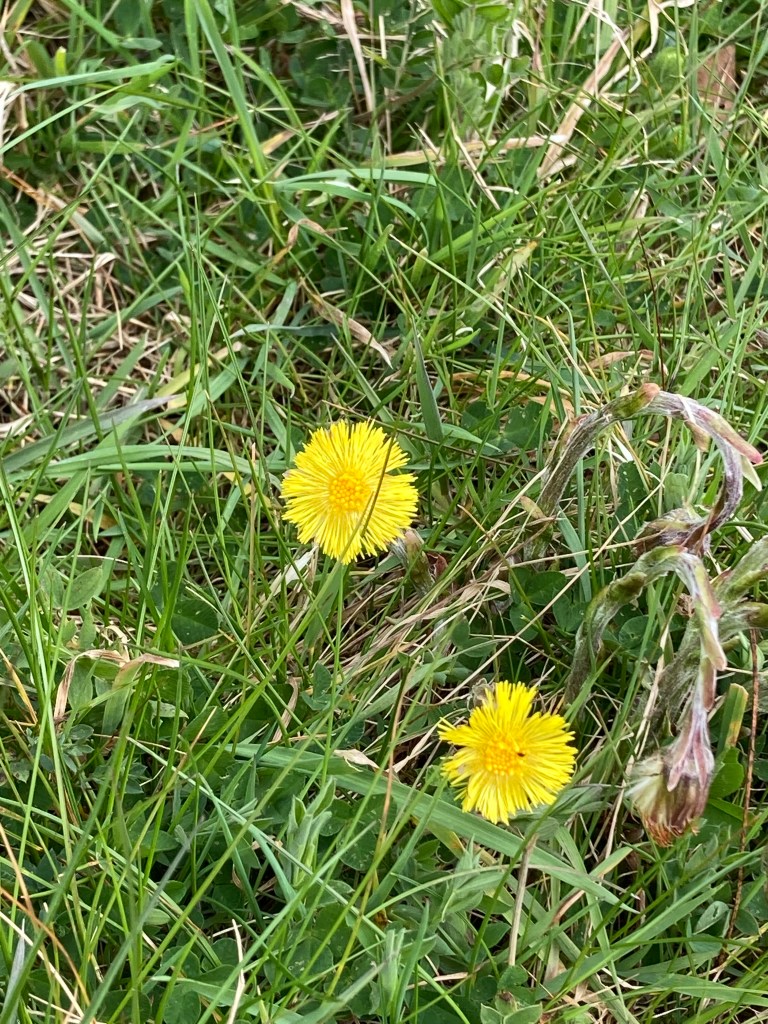
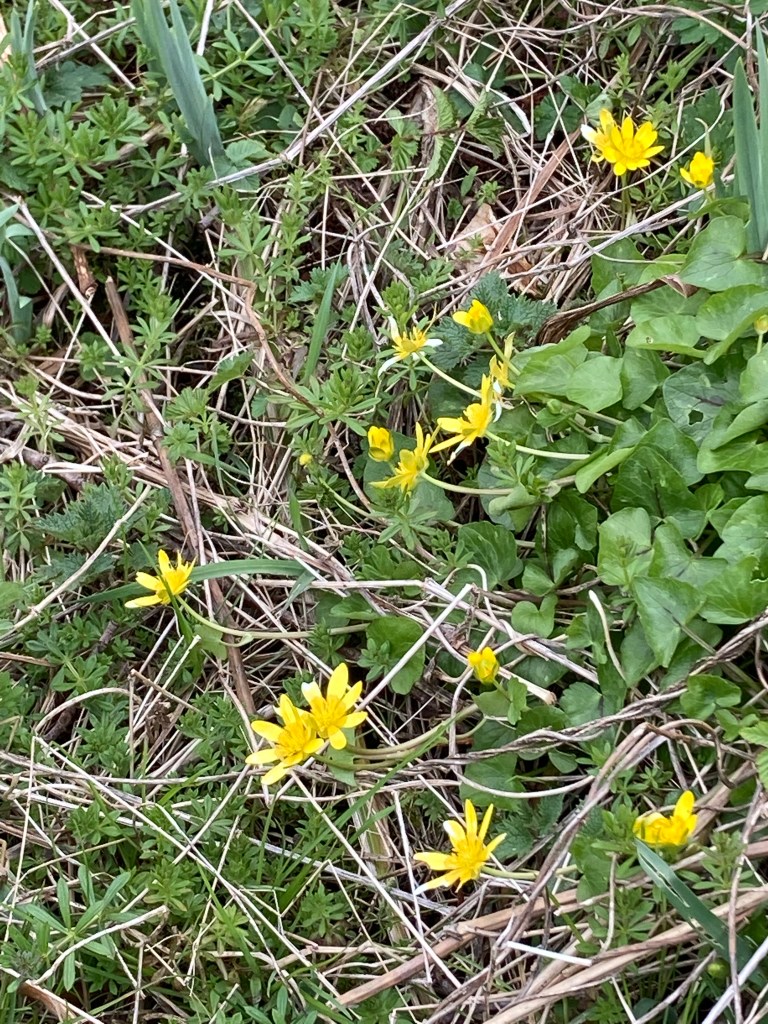
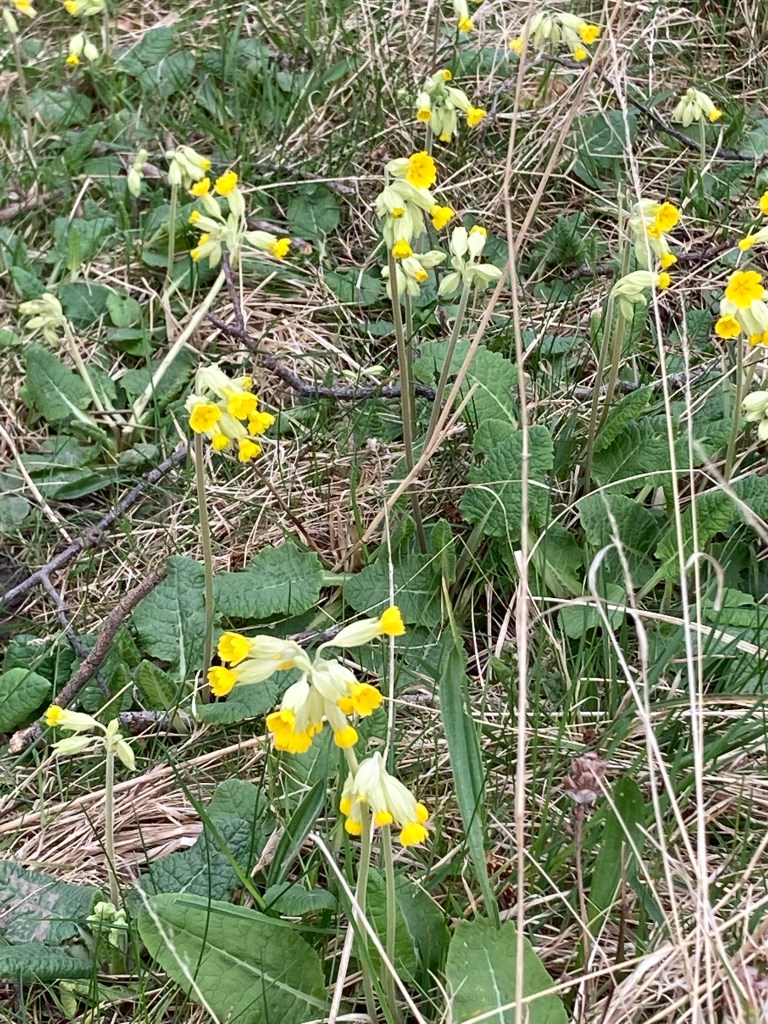
Coltsfoot, Lesser Celandine and the first Cowsllips I’ve seen this year were all in flower.

The Blackthorn is in blossom. Hopefully the frost won’t damage the flowers before they set fruit and we will get a good crop of sloes this autumn. The Hawthorns are covered in new lush green growth and will flower next month.

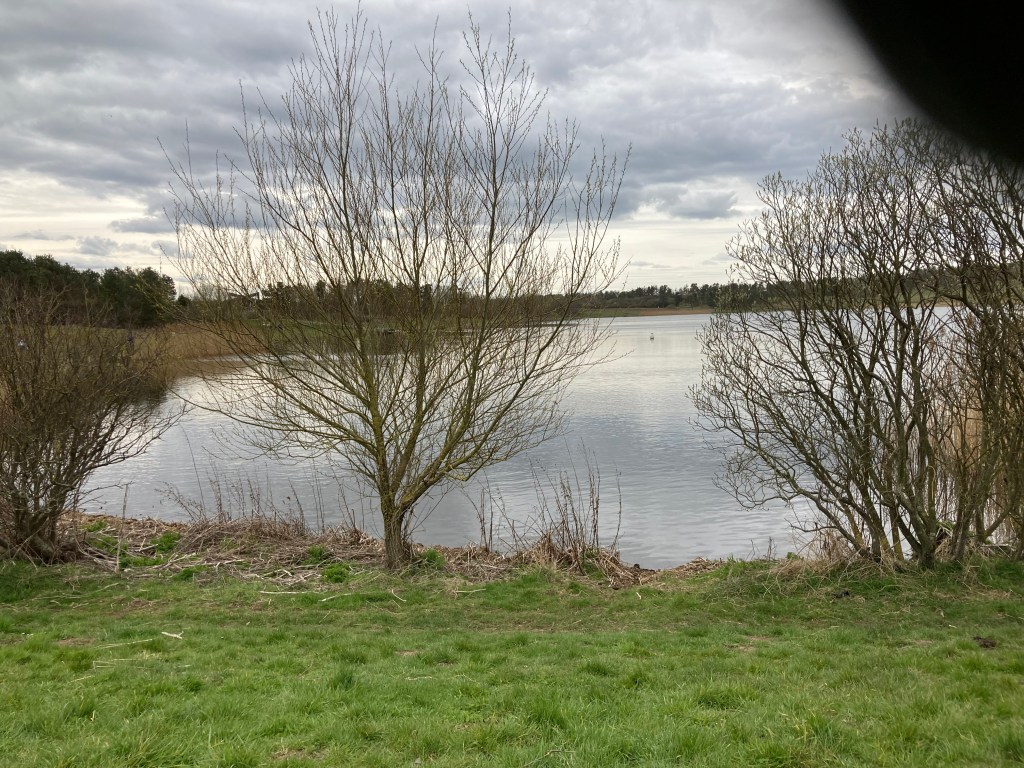
There were lots of waterfowl on the lake, mallard and tufted duck are breeding now as are coots. There were also mute swans and a solitary Canada goose on the water.

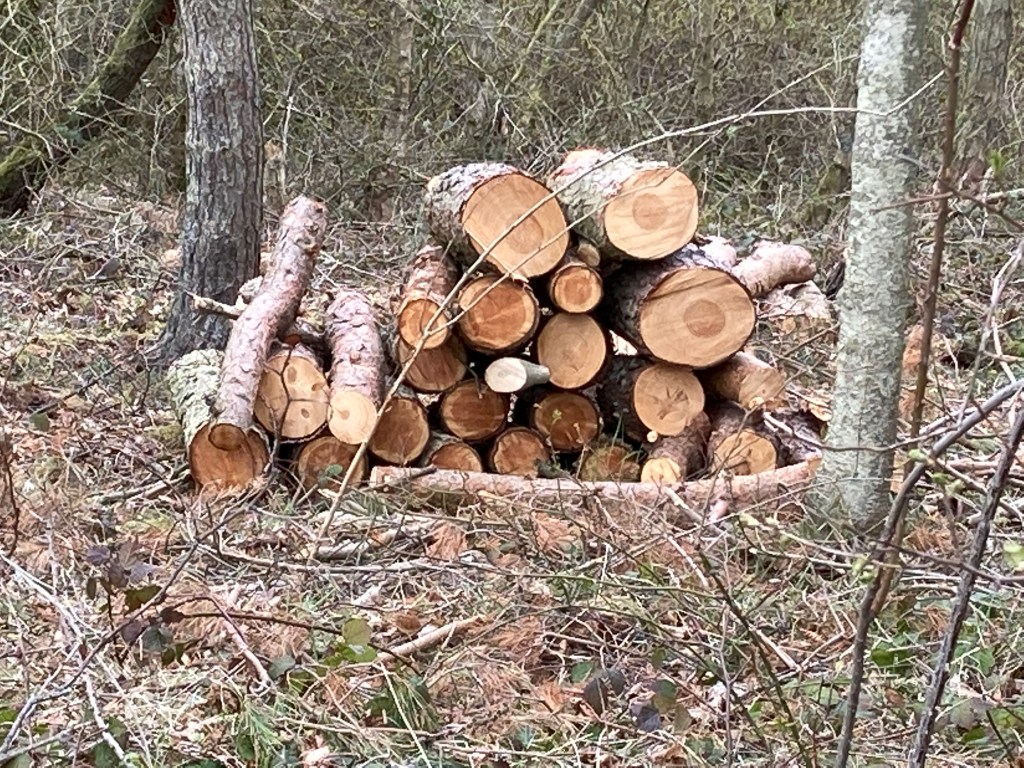
The park suffered extensive storm damage over the winter and was briefly closed to make it safe for visitors and to clear fallen trees from paths. The damage can still be seen in some areas but in others the cut logs have been stacked to form ‘habitat piles” providing shelter for insects and other creatures.

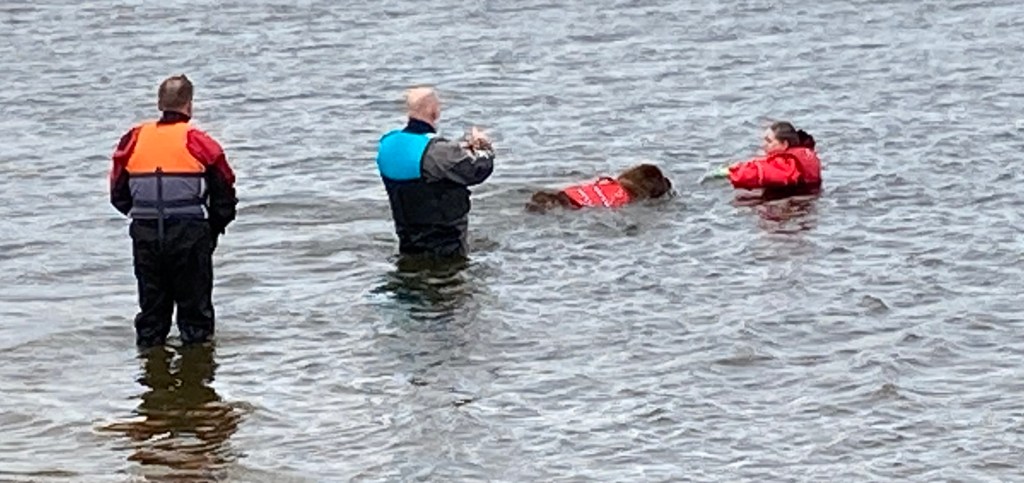
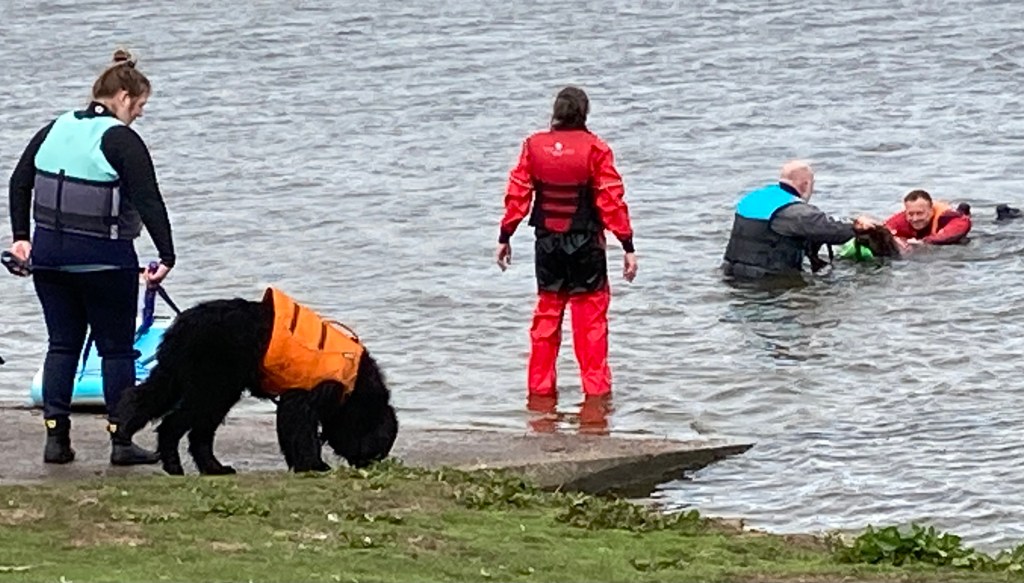
We spent a while watching some Newfoundland dogs in training. These huge but gentle animals were traditionally used to tow fishing boats ashore – they are strong swimmers with webbed feet and a thick double coat. They are now being trained for water rescue.

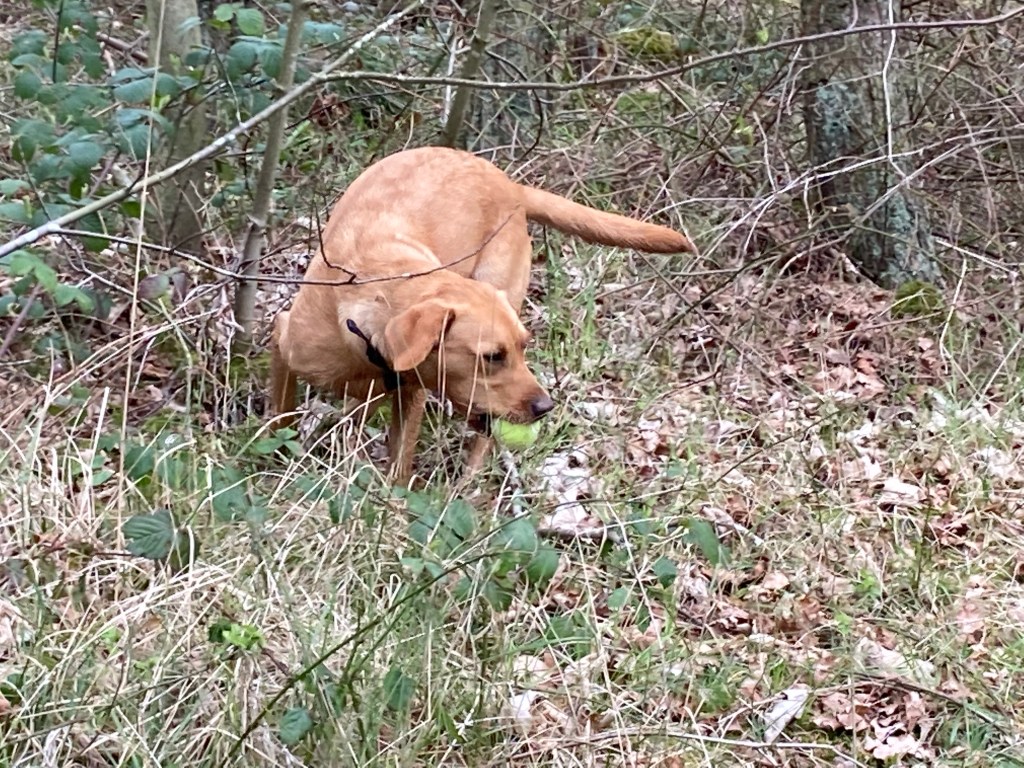
Wren’s training continues and Daughter has been taking her to gundog classes. She’s been working with tennis balls, finding them in deep undergrowth. Wren willl follow Daughter’s directions to find the ball and will retrieve up to two balls after memorising their position, walking away, then returning to the spot. It’s quite impressive to watch her work.

She’s still a playful pup most of the time but when it’s time to do her retriever training she instantly focuses on the job. She’s so good at it that she regularly finds balls left behind by other dogs, She’ll certainly never run out! –

Good girl, Wren!

Posted in Uncategorized

Making the Most of Nature’s Harvest: Sloe Picking (With a Bit of Knitting)

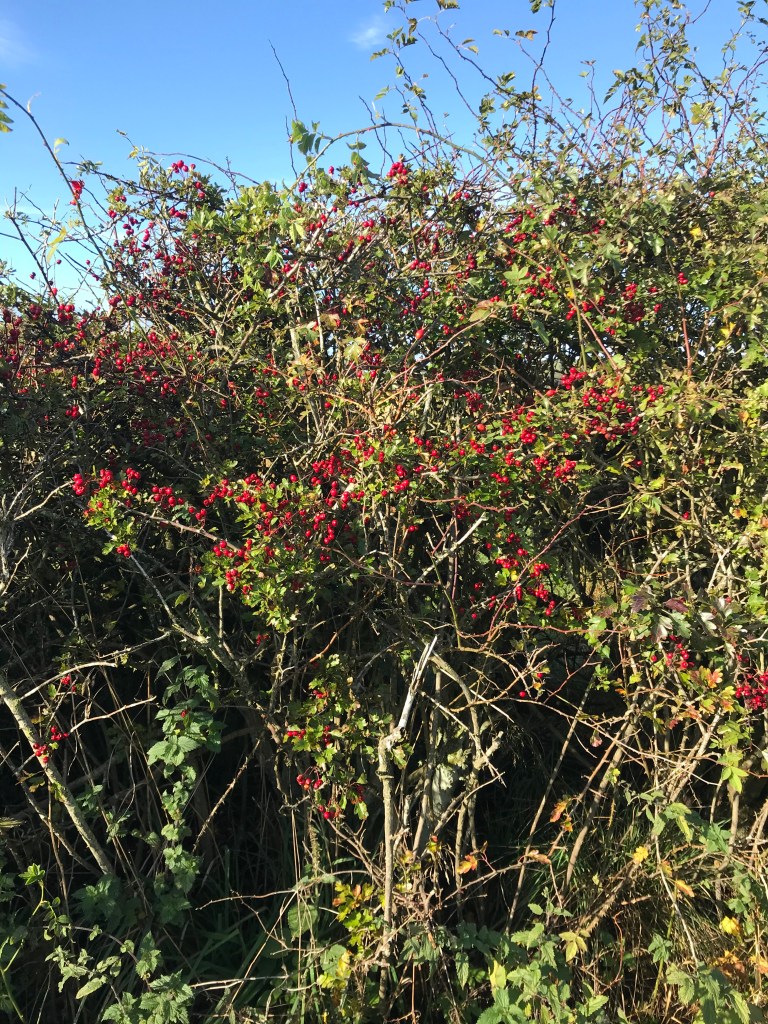
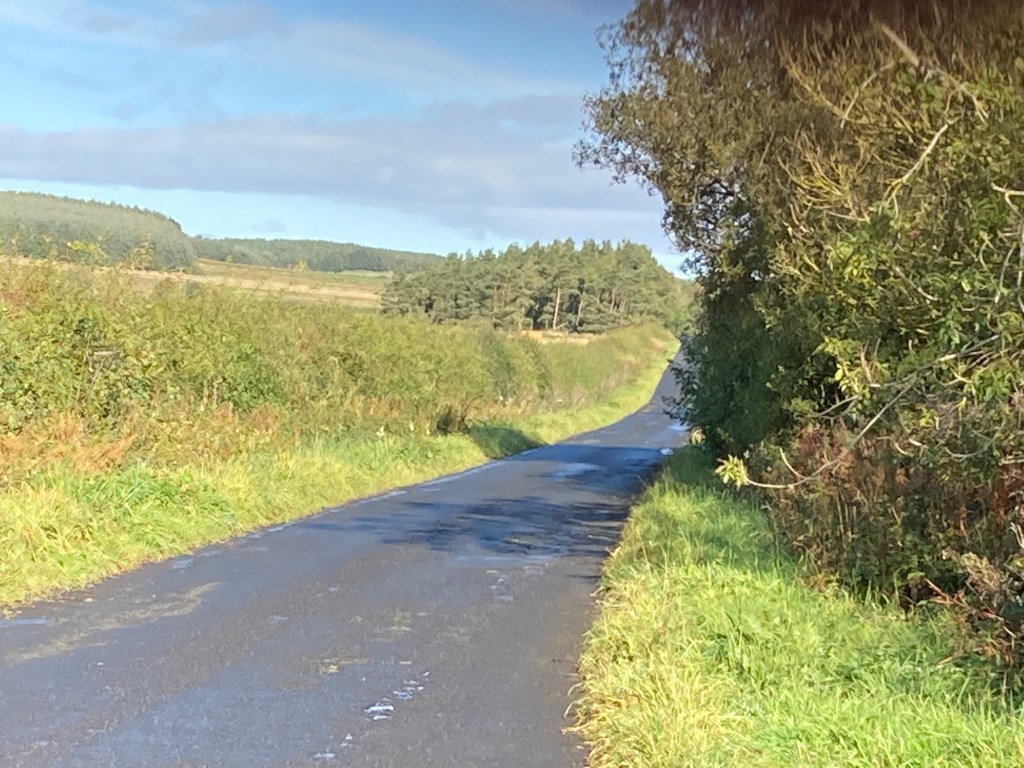
Yesterday morning was beautiful. We found ourselves close to what we refer to as The Sloe Motherlode. On a quiet lane up to a farm, there is a wide verge full of blackthorn bushes. Autumn berries have been profuse everywhere. Down here there were also spectacular hawthorn bushes…

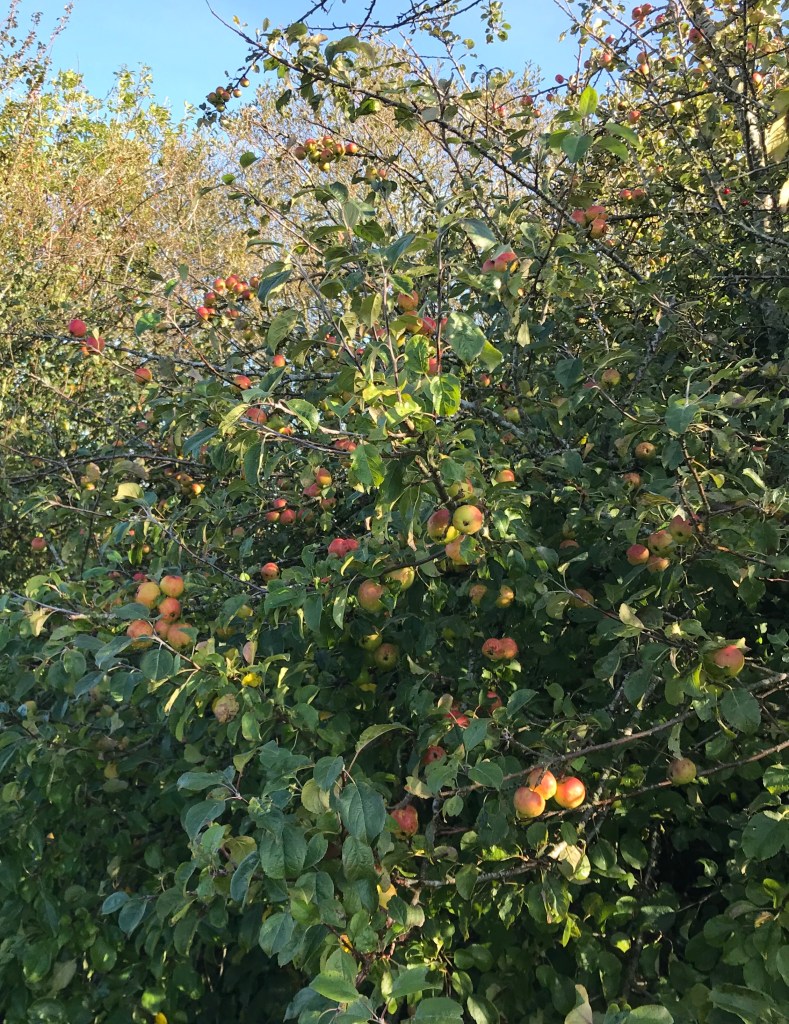
… a tree laden with crab apples…

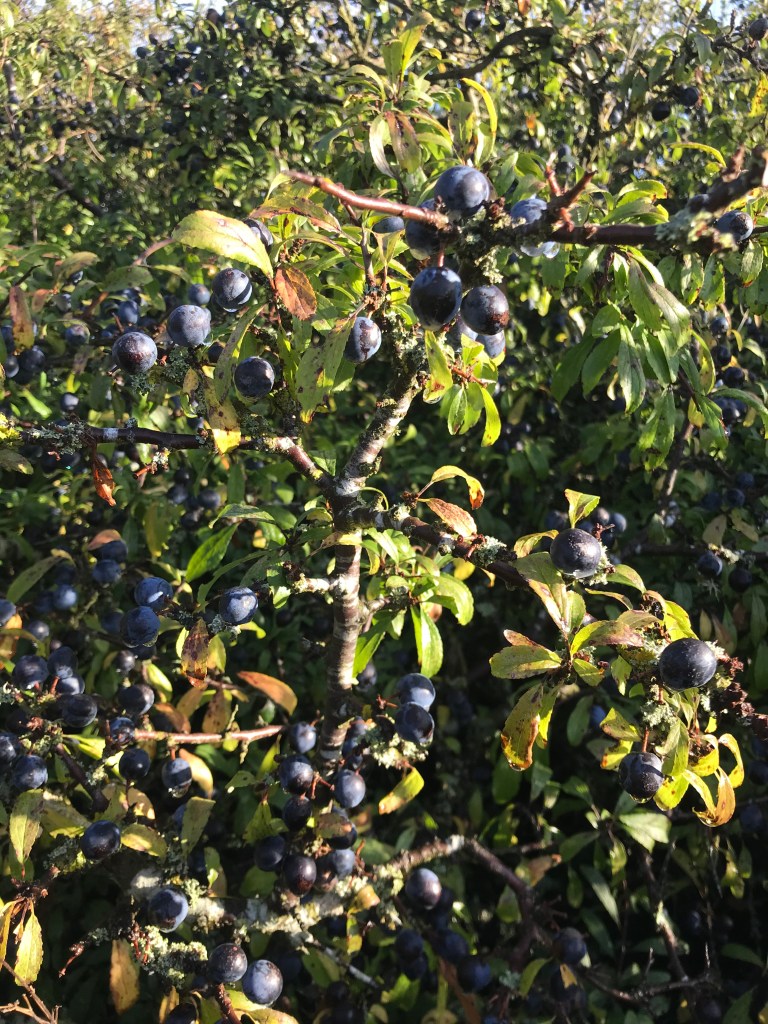
…and a massive crop of sloes

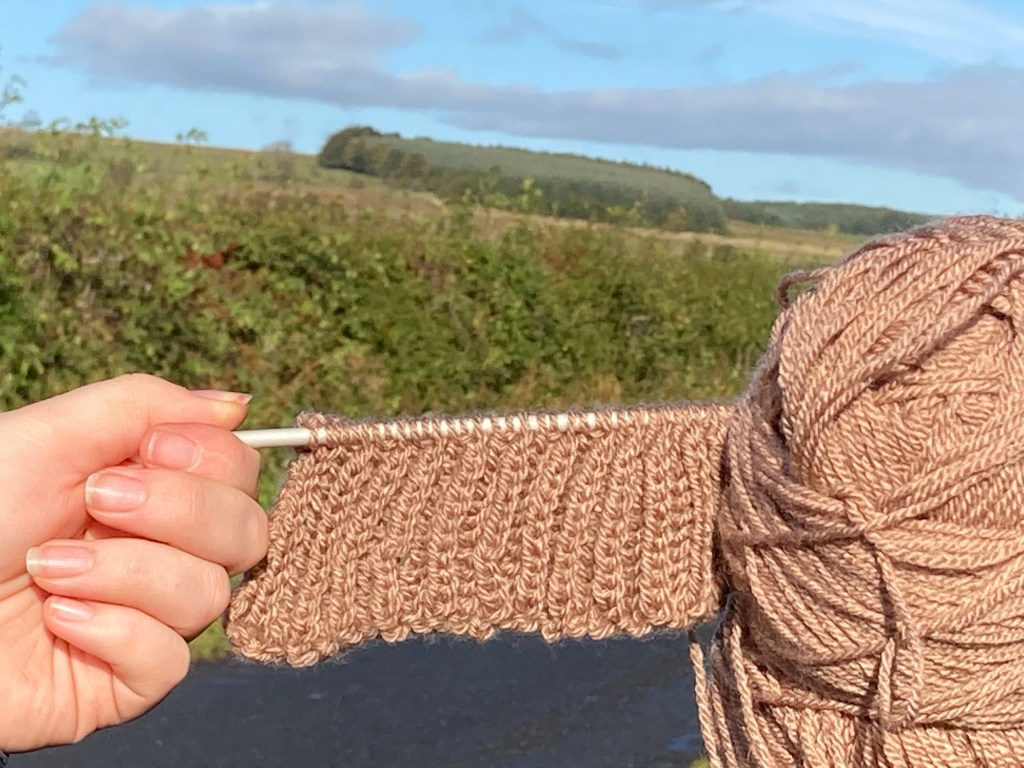
K went off to pick fruit while I sat in the car with my knitting. I made some 2 colour brioche hand warmers for myself earlier this year. With winter approaching, K has requested some to keep his hands warm when he’s sea fishing – he needs to keep his fingers free to tie lures. I chose a machine washable acrylic yarn in a neutral fawn shade. I think the soft squishy texture of brioche will be really cosy. I cast on this project at the beginning of the week so I have something portable for knitting on the go.

The view was great. Of course I can’t disclose the location. Friends in the area know where it is but we have to protect our sloe source!

In a matter of minutes, K had returned with over 3 pounds of sloes. He got most of them standing on the same spot as the bushes were covered with fruit. I didn’t get much knitting done at all!

The sloes have gone in the freezer, ready to make sloe gin. Some say that sloes shouldn’t be picked until after the first frosts. Ironically there was a frost this morning., Ripeness is not an issue but freezing causes the berry skins to split so they give up their juice easily when they steep with the gin and sugar. We’ve only just bottled the drink we made with last year’s harvest. You could say it’s a sloe process!

Not a bad way to spend a morning!

Posted in Uncategorized

Enjoying the Spring Sunshine

I’ve been struggling with the blog recently. Regular blog subjects, like visiting the beach, eating scones at local cafes and taking part in knit and natter groups have all stopped. I threw myself into some knitting and craft projects, but it didn’t seem the same. I’m not a walker – I use a disability scooter to get about, and have other health issues so I hadn’t been leaving the house. This week I reached the point when it was time to pull myself together and, as the weather was so good, I got the scooter out and joined K on a couple of walks with Buddy, the Labrador. I’m so glad I did.

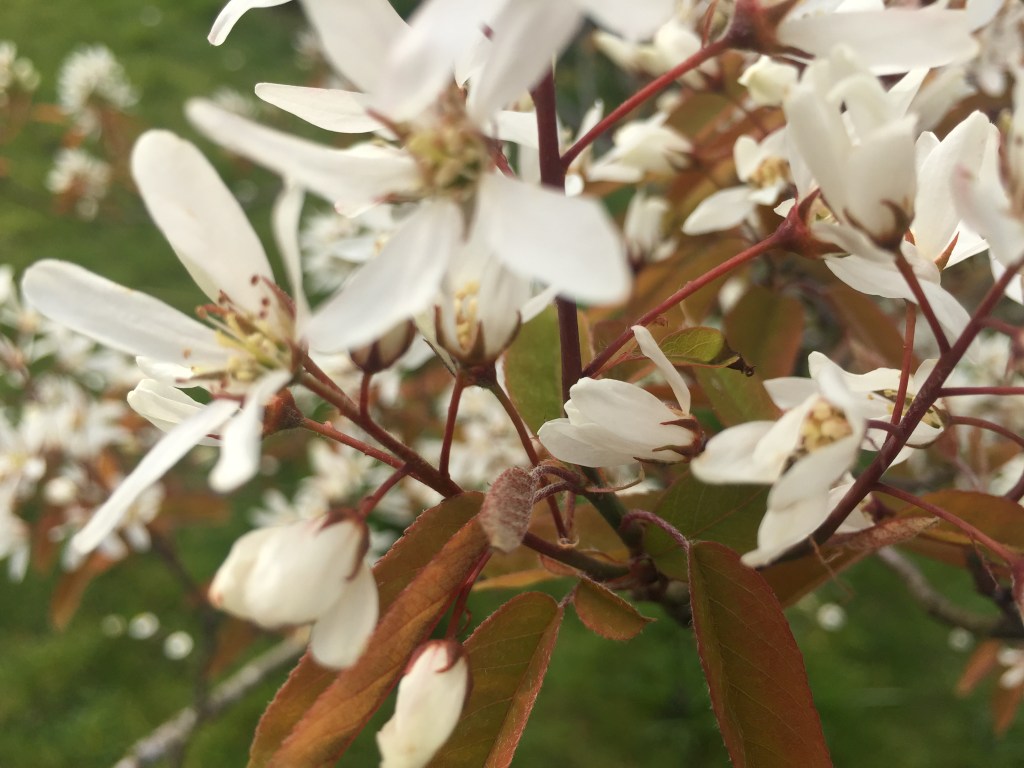
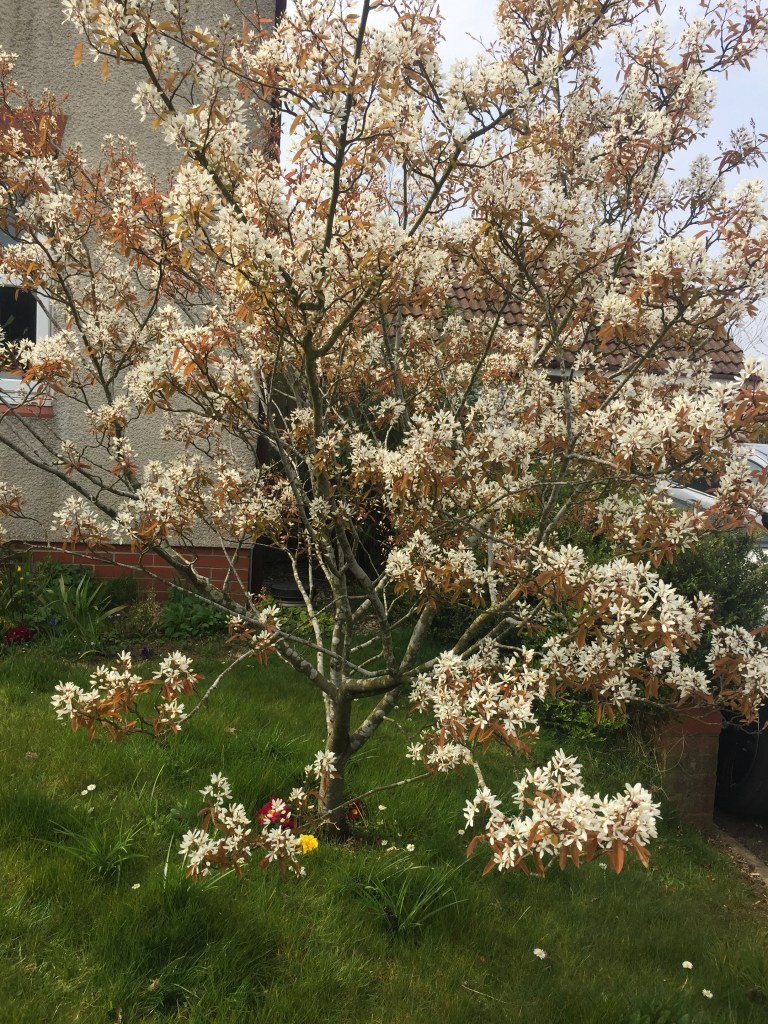
The little Amelanchier tree in the front garden has finally come in to flower and is looking stunning

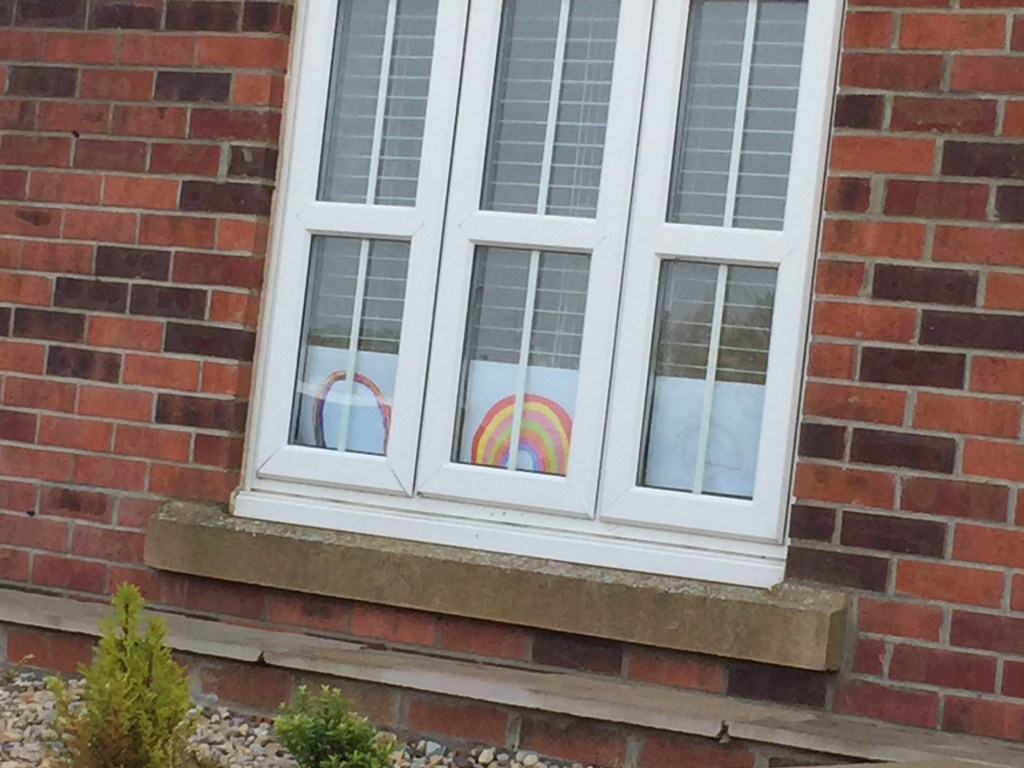
As we walked through the village I saw a few rainbows, painted by children and stuck in windows.

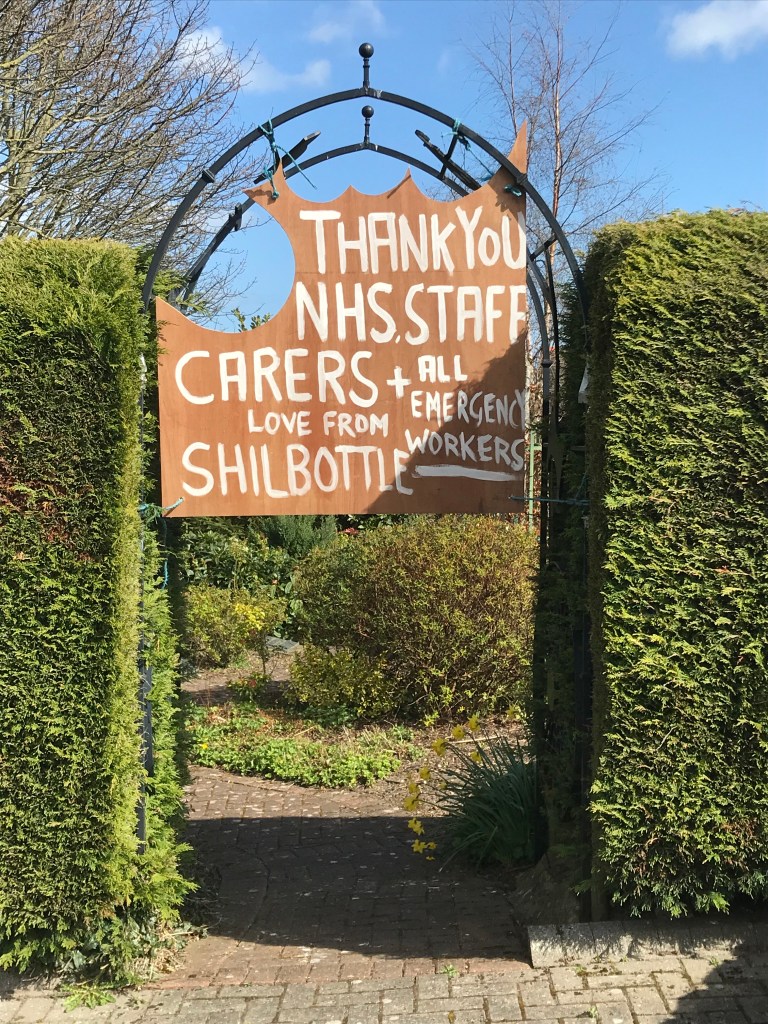
There’s also this sign, which has been placed at the entrance to the little garden of remembrance, which is known as Green Hut Corner.

It’s a lovely gesture – the village has applauded loudly for NHS staff and other key workers every Thursday night – there were even fireworks last week!

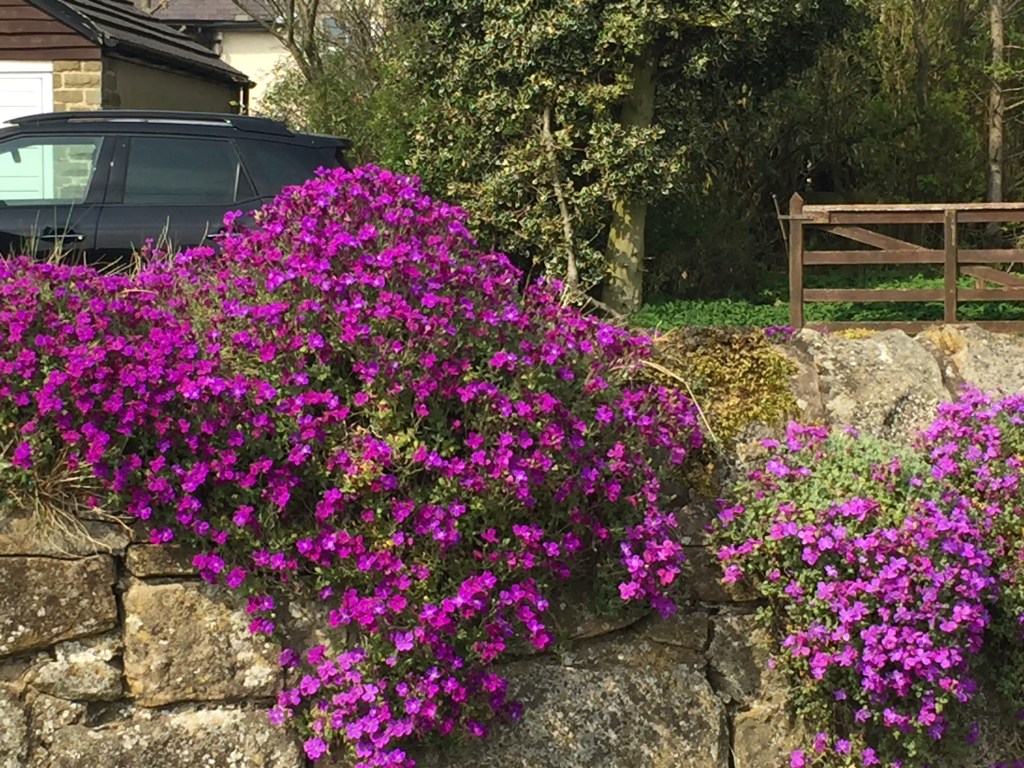
I enjoyed seeing all the spring flowers. This garden wall was festooned with aubretia.

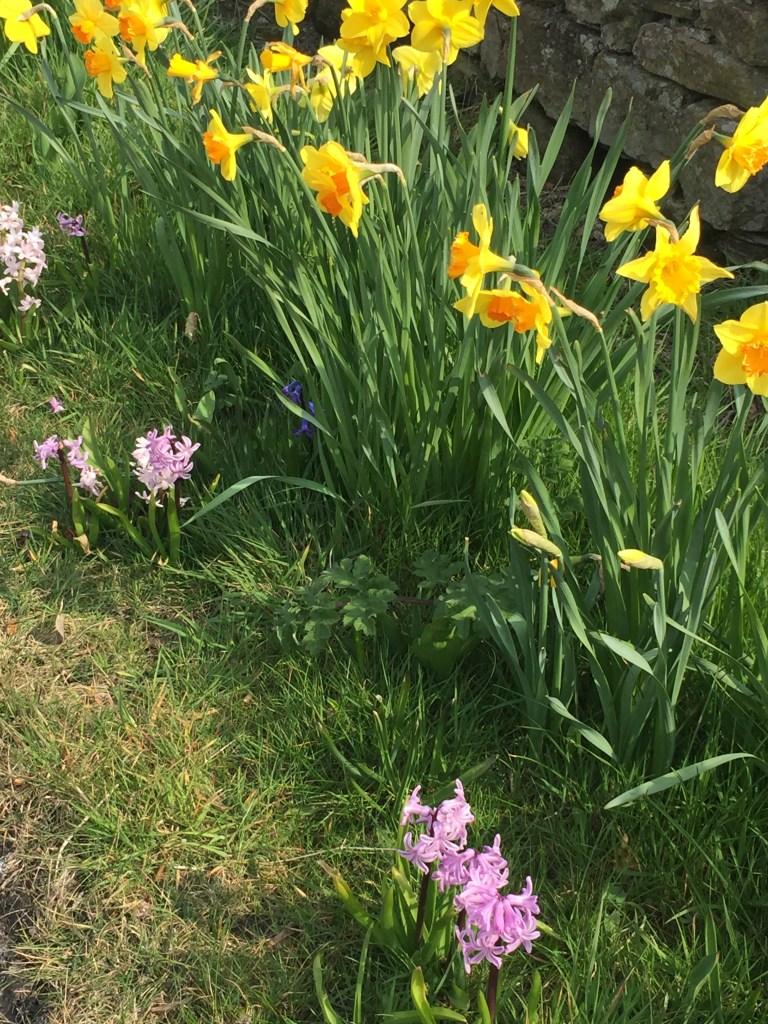
Here in Shilbottle, the grass verges are full of daffodils in Spring. Until now I hadn’t noticed that some hyacinths had been planted with them in one spot. I wondered if they had originally been indoor ones that someone had planted out after they finished flowering. They had a beautiful fragrance that we could smell as we went past.

There’s a really quiet lane that winds through farmland – we can let Buddy off his lead there. He’s not bad at avoiding other dogs and people if you tell him to “leave” . We met several people out for their daily exercise or walking dogs but all were cheerfully observing distance guidelines. We are lucky to live here where there is the space to get out safely.

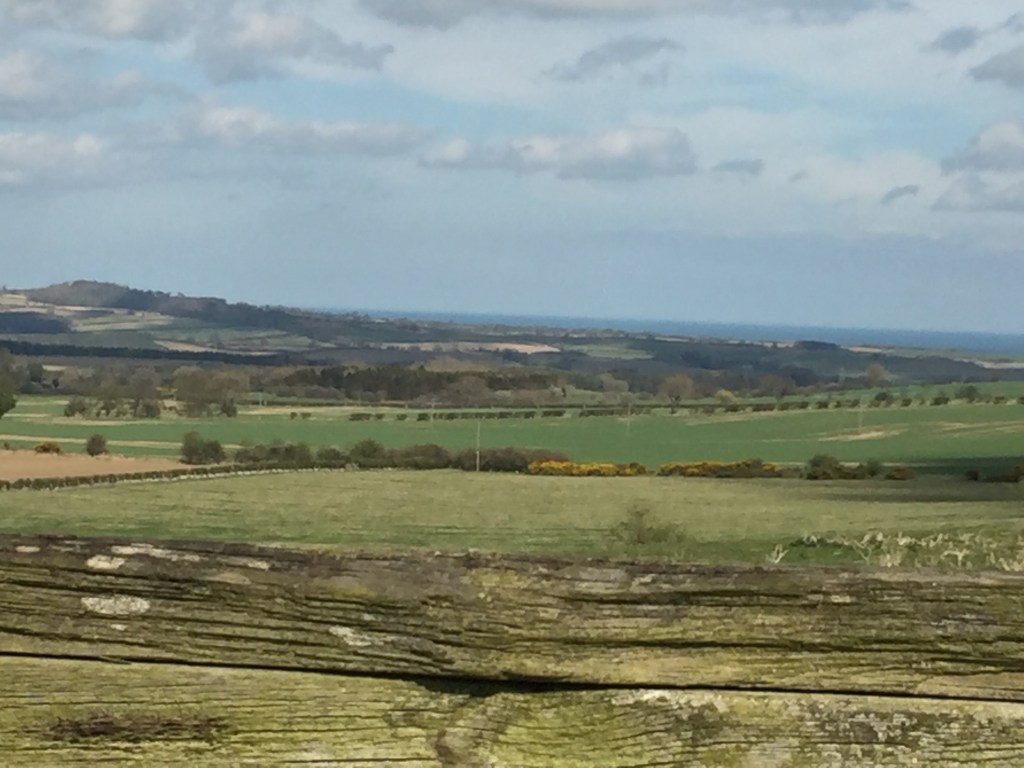
One of my favourite spots on this route is a by a gate at the top of a bank- there’s a wonderful view towards the sea from here. It was very hazy on one of my walks this week but yesterday was beautifully clear.

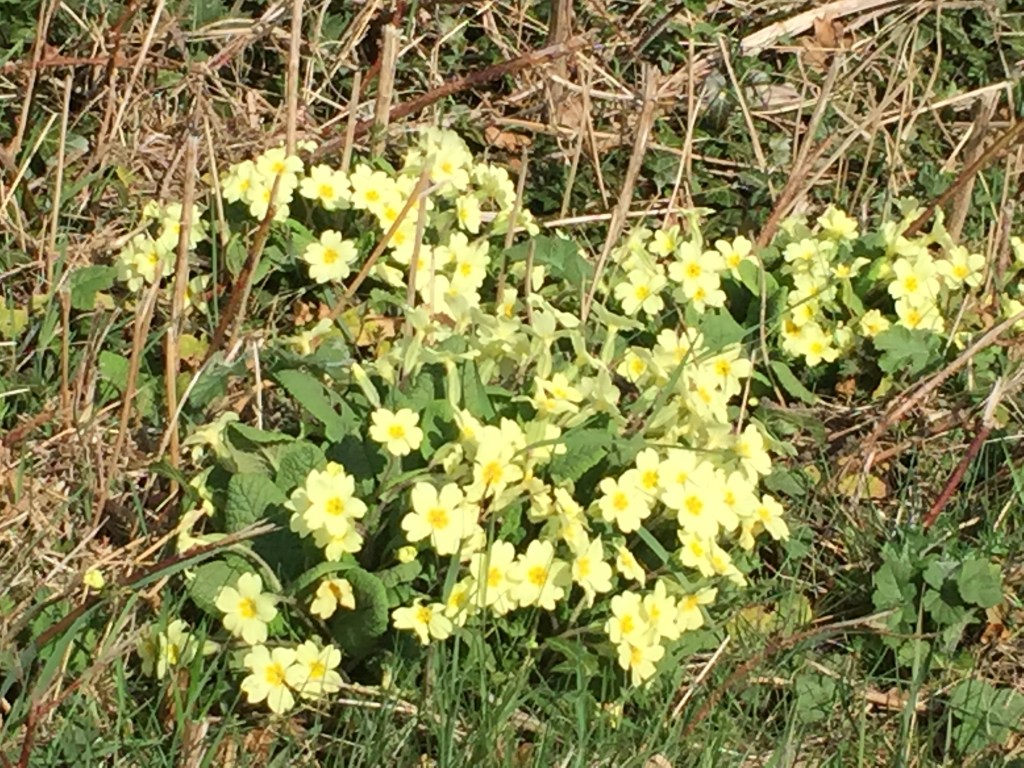
It was good to see the wildflowers in bloom as well as the garden plants. These primroses are one of my favourite signs of spring.

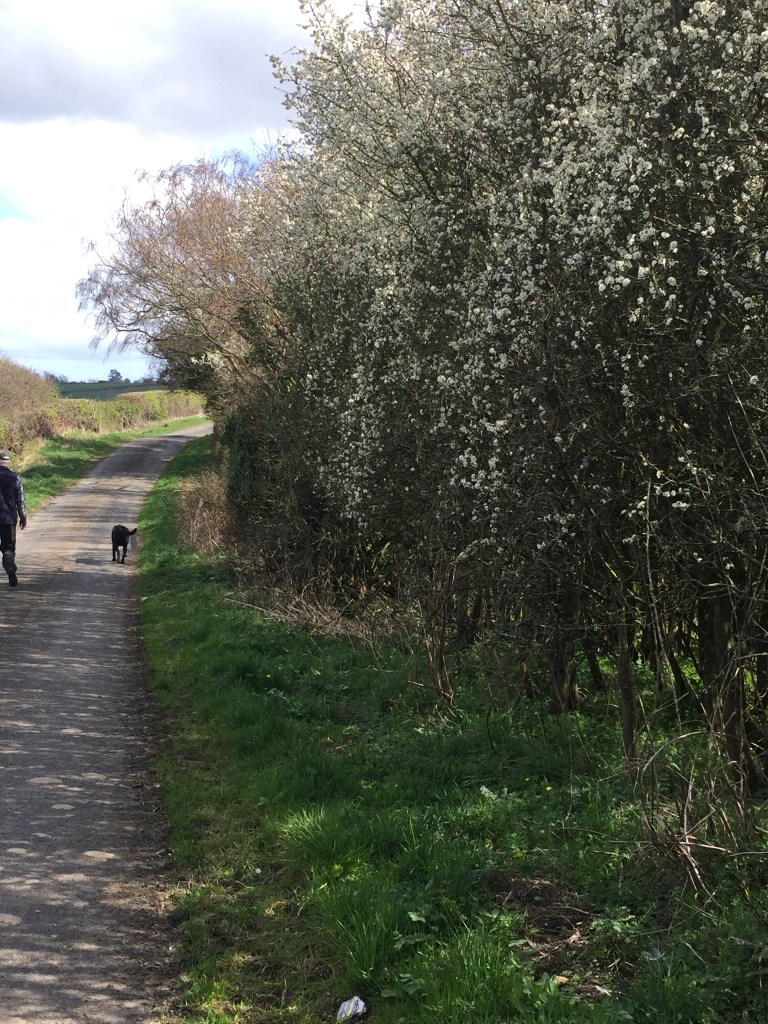
The blackthorn is also in full bloom. We hope that the sloe berries this autumn are as profuse as the flowers – we always make a batch of sloe gin if we can pick sloes. Some years, if there are late frosts that stop the fruit forming, there are none to be found.

Of course the newborn lambs are one of the signs of spring we love to see and there were plenty in the fields.

We doubled back and came back up the hill, stopping for a little while to take in that view again. Buddy seemed to be glad of the break. I had forgotten just how important it is to get our in the fresh air and I felt so much better for it.