Welcome to my blog. I live, knit, crochet, spin and craft near the Northumbrian Coast (but not too near – the waves won't be splashing my yarn!).There's a story in every stitch, every grain of sand, every blade of grass. I thought I'd blog about it…
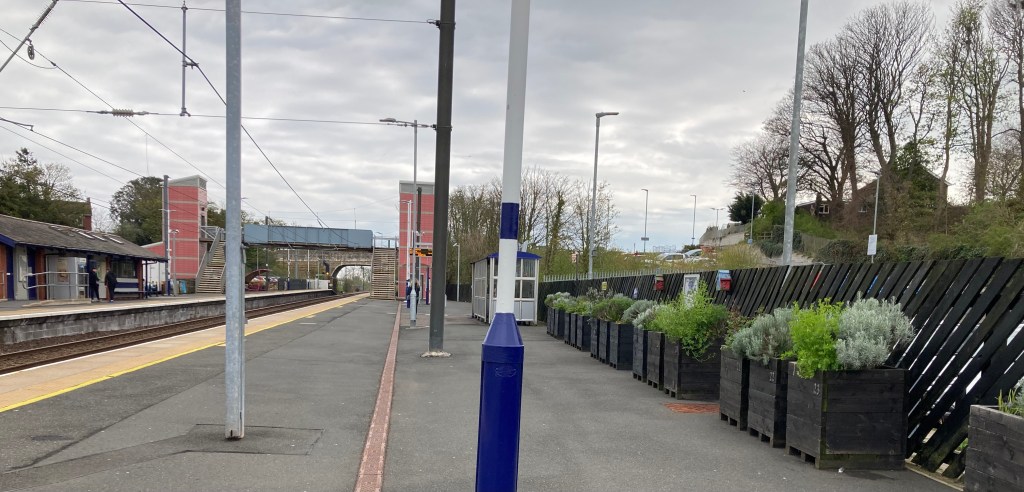
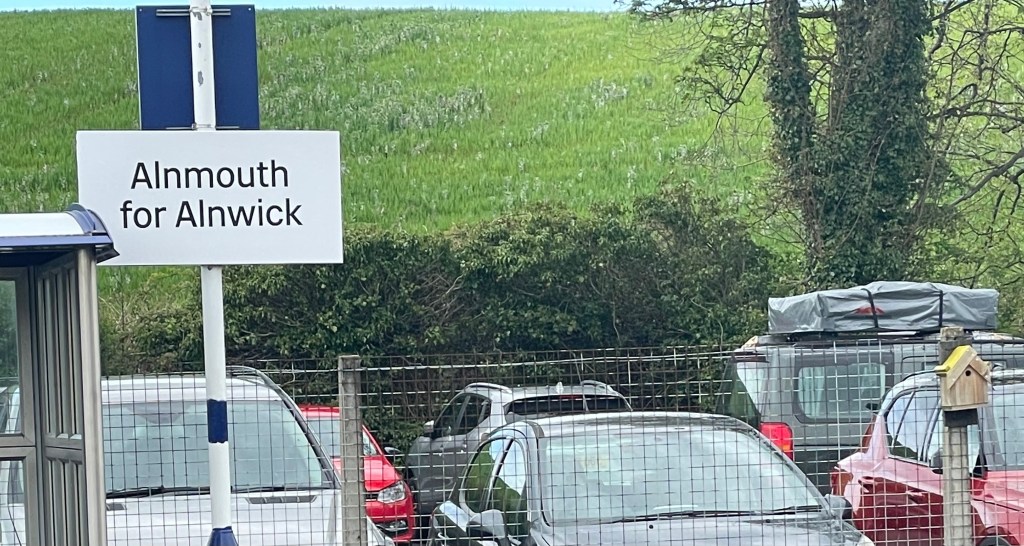
We had a little overnight trip to Edinburgh last weekend. Our train was delayed for about half an hour so we spent more time waiting on the platform at our local station, Alnmouth, than we would have done normally.
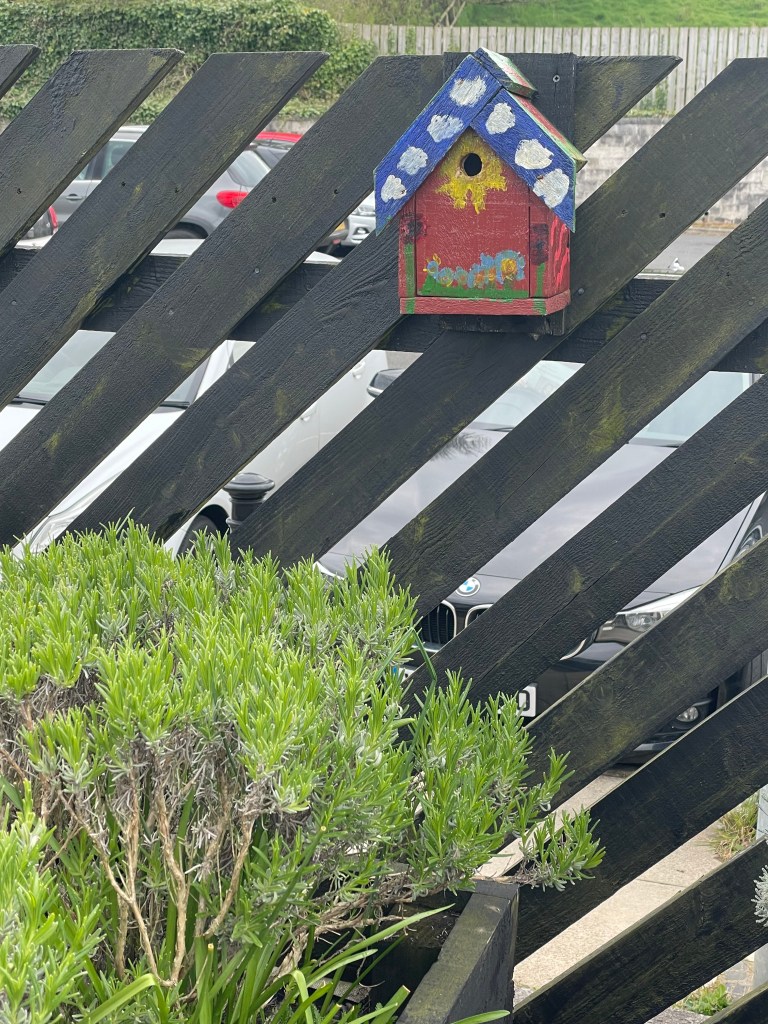
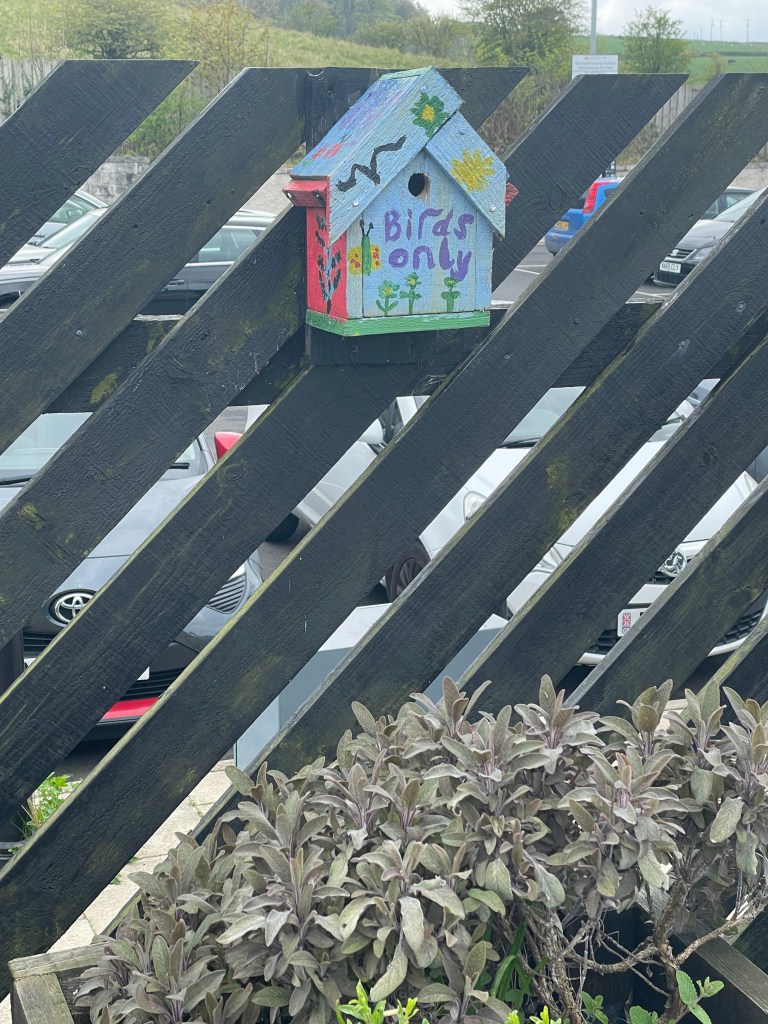
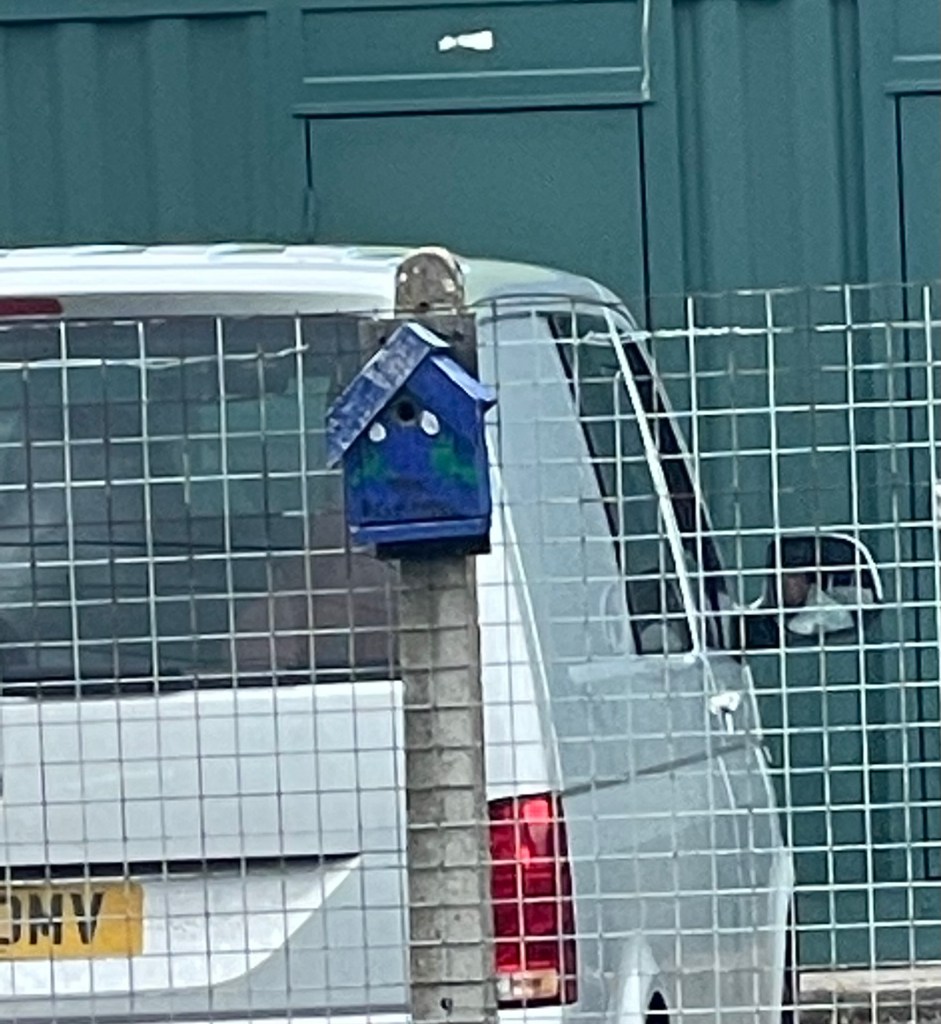
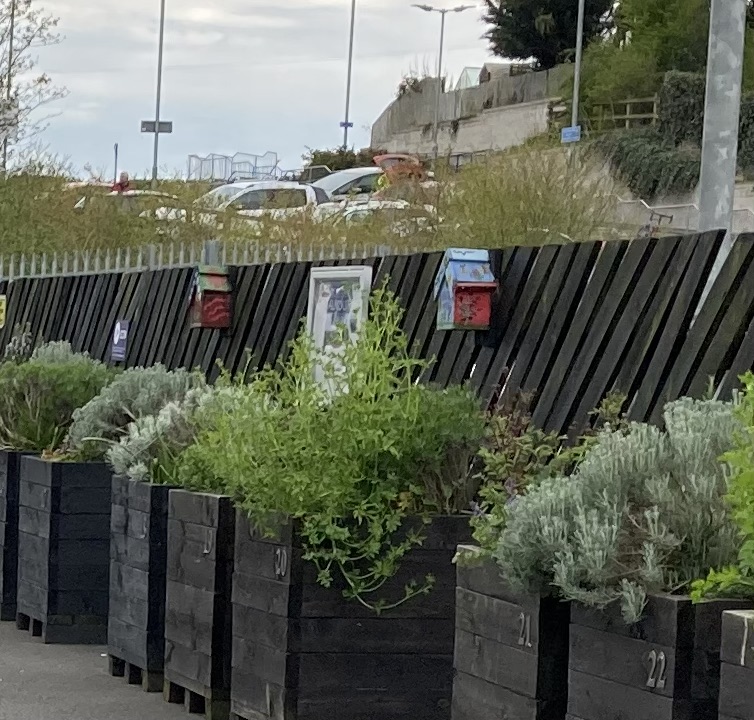
I noticed that some brightly coloured bird boxes have been put up on the fences that run along the side of the platform.
I’m not sure who put them there. Maybe it’s a project by a local school.
All the boxes are painted in different colours and designs.
In the short time I was there didn’t see any birds using them, but I hope they do.
They certainly add a bit of colour to the station, and what a lovely way to encourage our nesting birds.
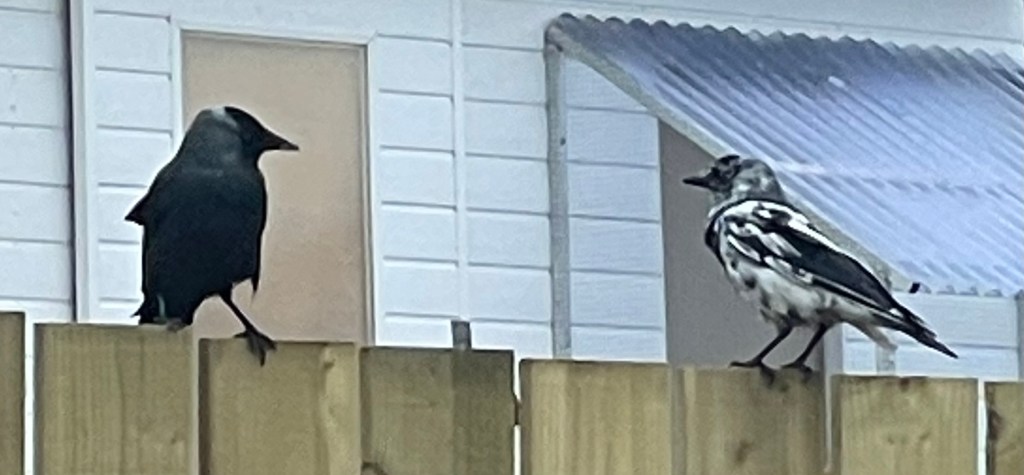
I saw a very unusual bird in my village last week. K had seen it around the area when he’s been out with the dog. A couple of days later he managed to take this photo.
It’s a leucistic jackdaw (normally they are all black with grey at the back of the head like the other bird in the picture). Leucism is a mutation that affects the production of melanin , the pigment in the feathers. It can result in anything from just a few white feathers to a completely white bird. This individual is speckled all over, with a mix of black and white feathers.
Some people refer to this condition as partial albinism, but there is actually no such thing. It’s rather like saying someone is partially pregnant!. An animal can be either albino or not! True albinism is characterised by having no pigment anywhere , including the eyes, giving them a pink appearance. Leucistic birds’ eyes are of normal colour. Such creatures rarely survive in nature. The lack of eye pigment impairs their sight, making it harder to find food or spot predators (to which they are a very visible target).
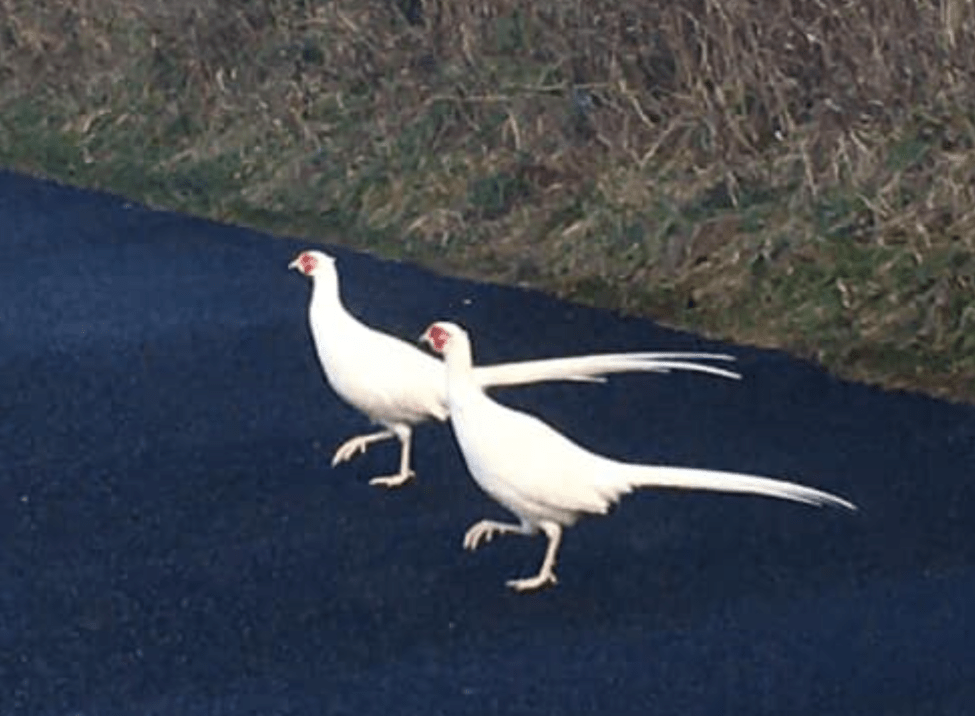
Our local speckled jackdaw is not the only unusually coloured bird in the area. There have been sightings of white pheasants in neighbouring villages and I saw one a couple of weeks back. I wasn’t quick enough to photograph it, but it looked just like these, posted on Facebook recently. These pheasants may be captive-bred ornamental escapes.
Photo credit M D Ashby
The red wattles really stood out against the white plumage: it was a very beautiful bird indeed. I felt quite privileged to have seen it. I didn’t get quite close enough to see the colour of its eyes though so I’m not sure if it was a true albino or leucistic.
Have you ever come across a wild bird with leucism or albinism?
During this crazy year, when time has either been standing still or passing us by, it’s quite reassuring to go for a walk and see the passing of the seasons. Whatever else happens, the wild plants still come into flower around the right time and the swallows migrate here. The farm year continues too and we see fields change as crops grow and reach harvest and spring lambs grow bigger.
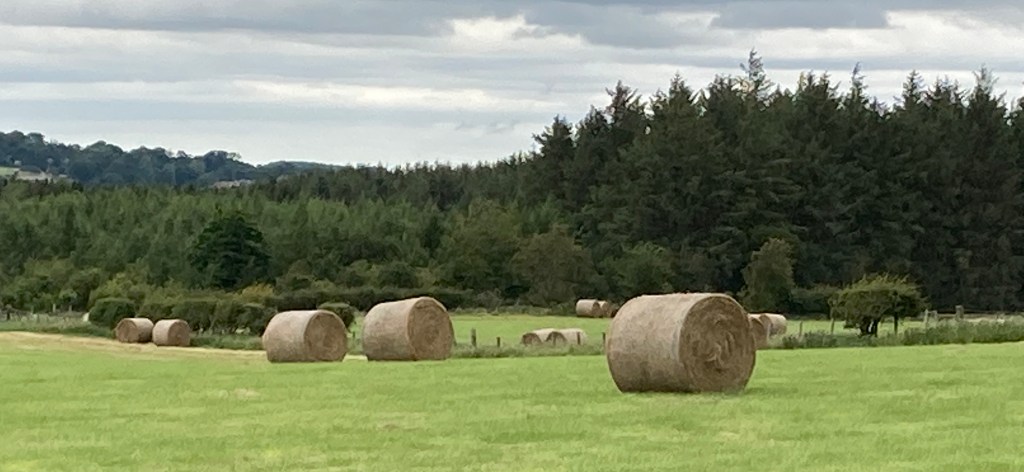
Today I took my usual walk near the village and the first thing I spotted was that some of the meadows have been cut – the warm wet weather has really encouraged grass growth and hay and silage making.
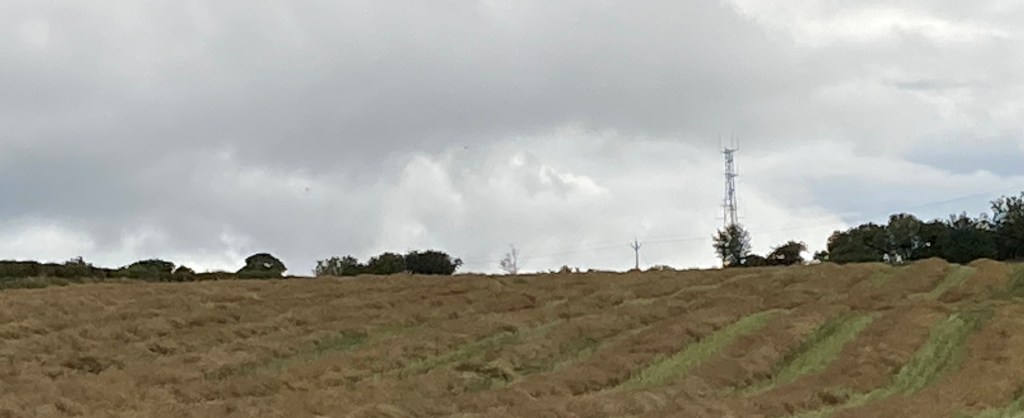
The oilseed rape crop is ripening. The acid yellow flowers of spring have now been replaced by brown stems and seed pods.
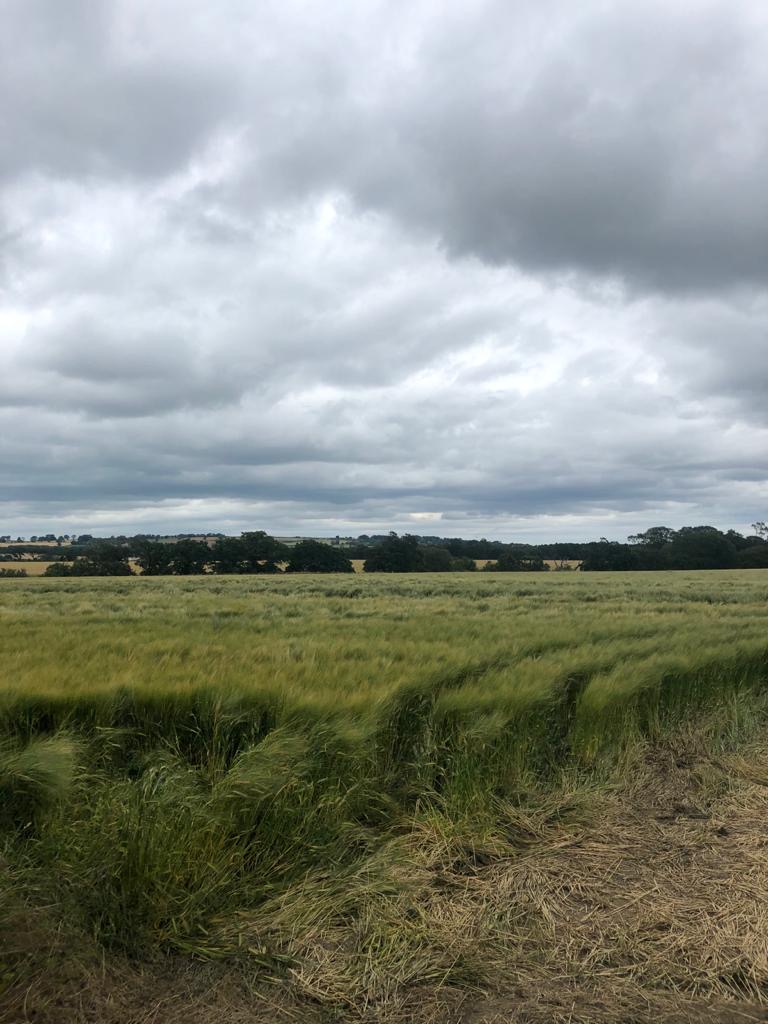
The grain crops are ripening fast and combining has already begun in some places. This barley still has a greenish tinge. I love to watch it swirl about and ripple in the breeze.
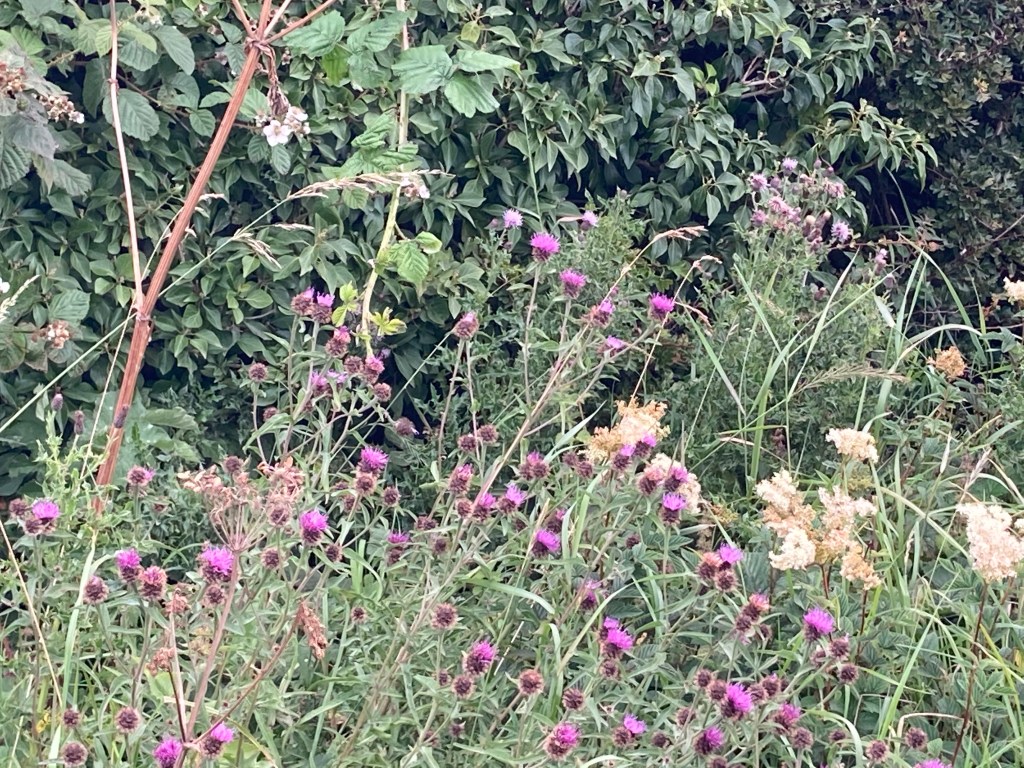
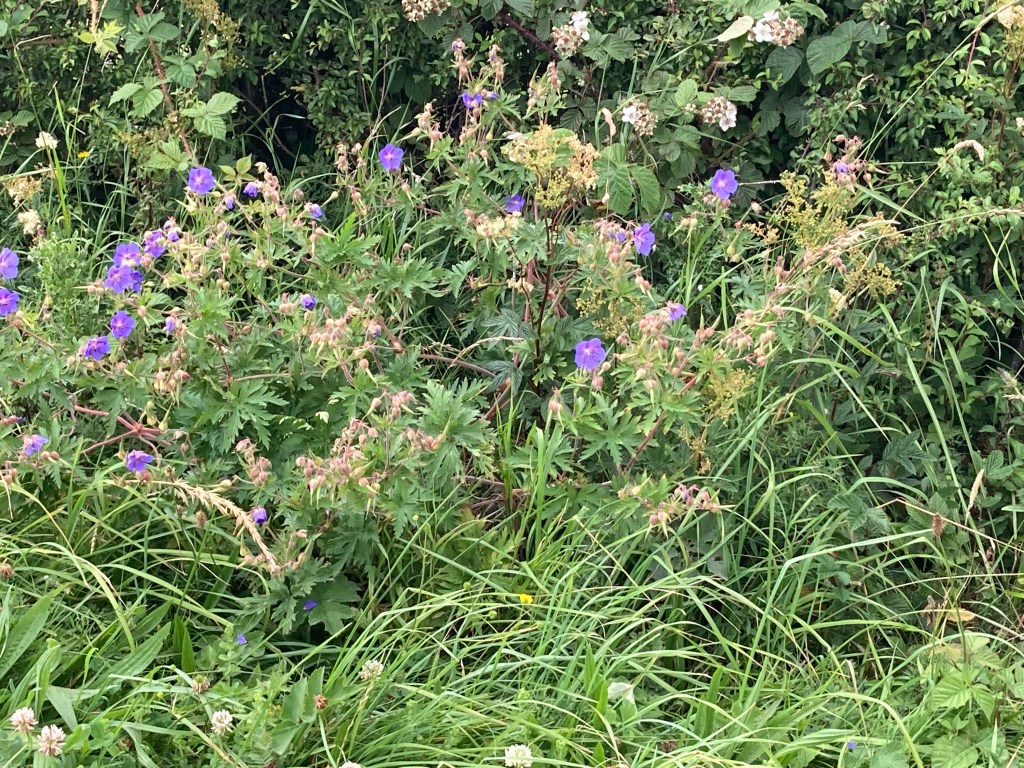
The verges and hedgerows are now a dustier, darker green, with the creamy grass seed heads, thistledown and meadowsweet flowers and accents of purple from thistles, knapweed, meadow cranesbill and woundwort.
Purple Knapweed and Milk Thistle (top right) with creamy Meadowsweet (bottom right)The brilliant blue-purple flowers of Meadow Cranesbill
The most dominant birdsong I heard today was that of the yellowhammer: a rising sequence of notes followed by a single, lower, longer one. They seemed to follow me and every so often I’d catch a glimpse of one on top of a hedge.
There were lots of butterflies today, mainly whites, including green-veined whites and also small tortoiseshells and red admirals. I also saw this beautiful pale moth – so far I can’t identify it.
As we turned, a roebuck crossed by the bridge. They are very common round here, but mostly keep themselves well hidden in woodland, especially during summer, so it was lovely to see one.
What aspects of nature characterise this time of year where you live?



 Stitches by the Sea