

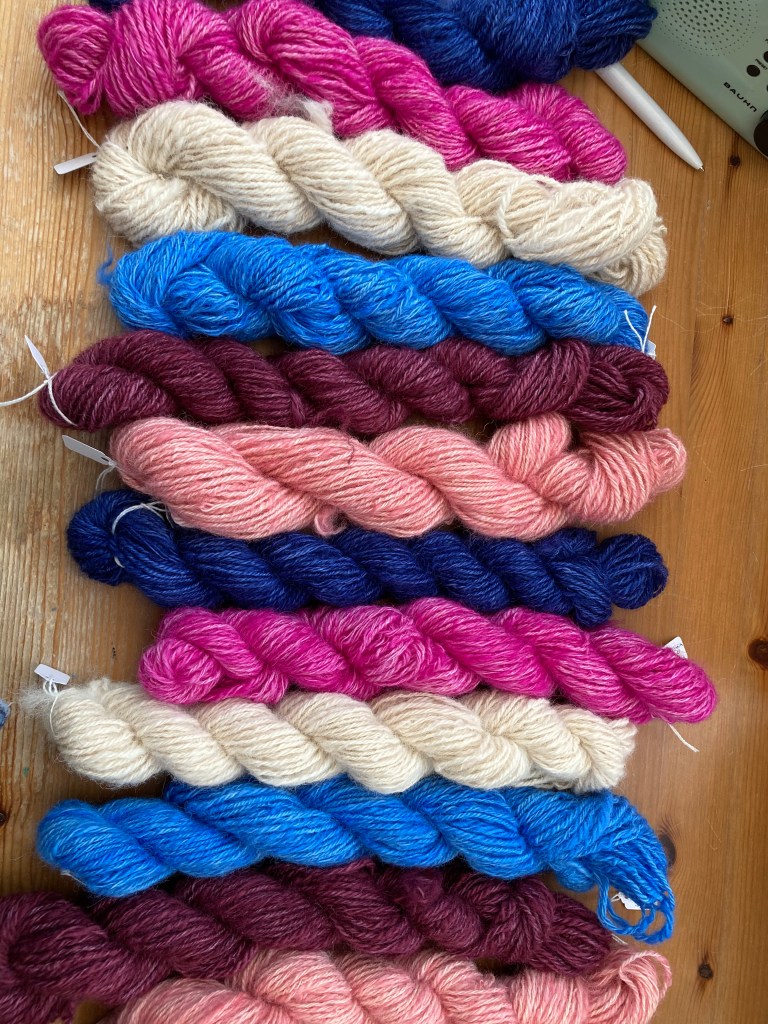
Since my first attempt with acid dyes the other week I’ve been immersion dyeing some of my handspun alpaca fibre. The plan is to make a striped jumper for myself in pink and blue shades. had one in these colours years ago and although it was acrylic and mass produced I always loved those colours so I tried to copy them. I’m using a Drops pattern for the sweater but changing the stripe pattern – I worked out the total yardage needed for the pattern and divided it by the number of colours (6 including natural/undyed to get the amount for each batch (plus more of the colour I’m using for welt, cuffs and neckband). I hope I’ve been generous enough with my estimates!
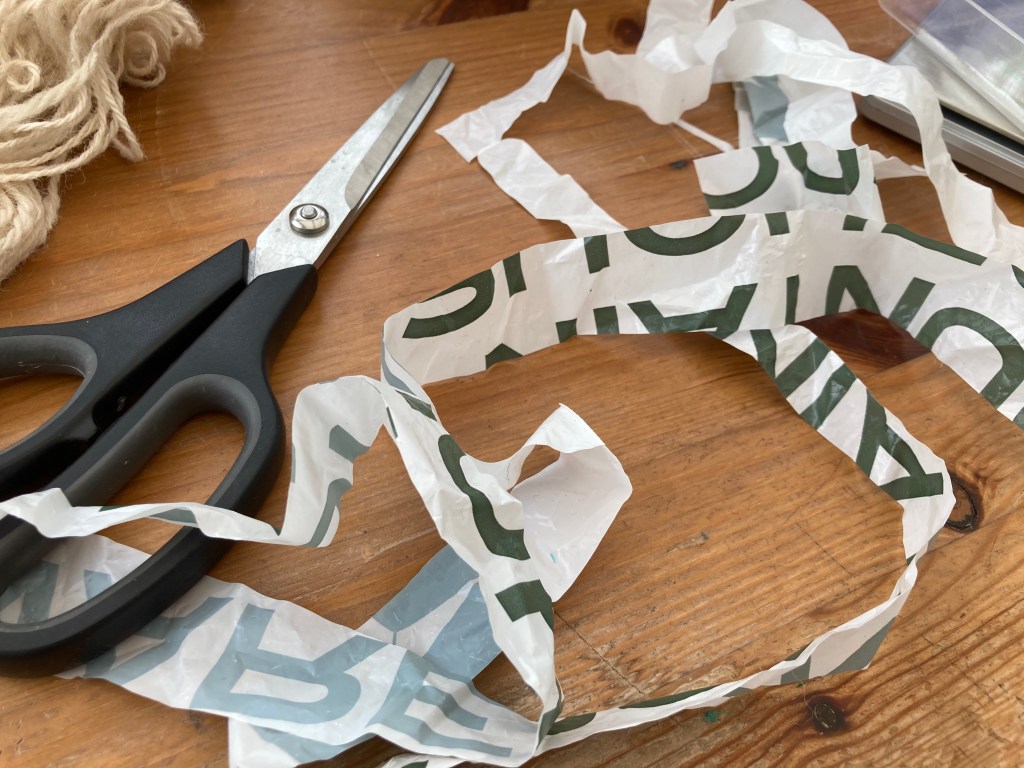
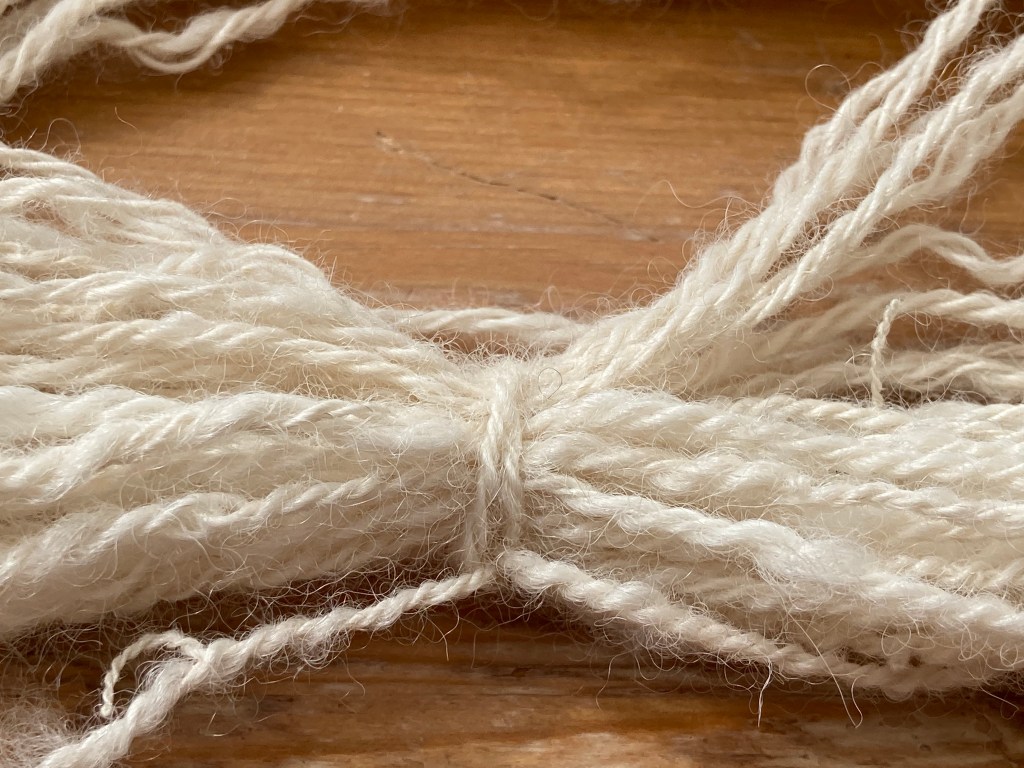
Never one to throw anything away and always trying to find a second life for single use plastics I cut up plastic carrier bags to loosely tie the skeins of undid yarn using a figure of eight – this stops the strands bunching together so the dye reaches them.
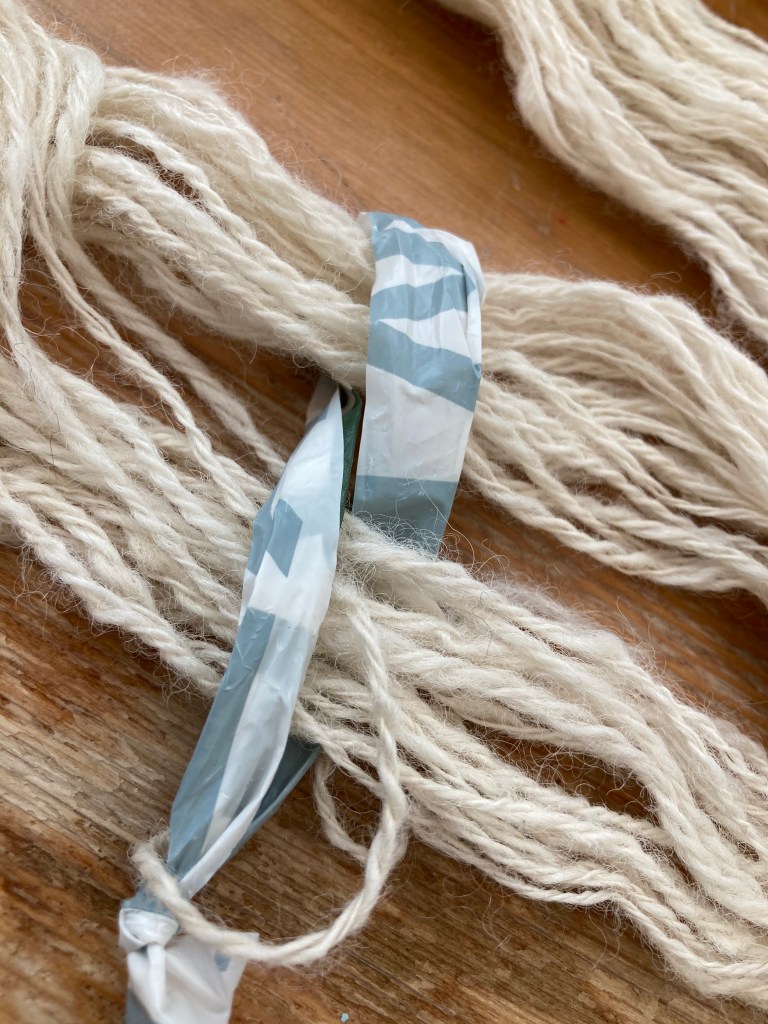
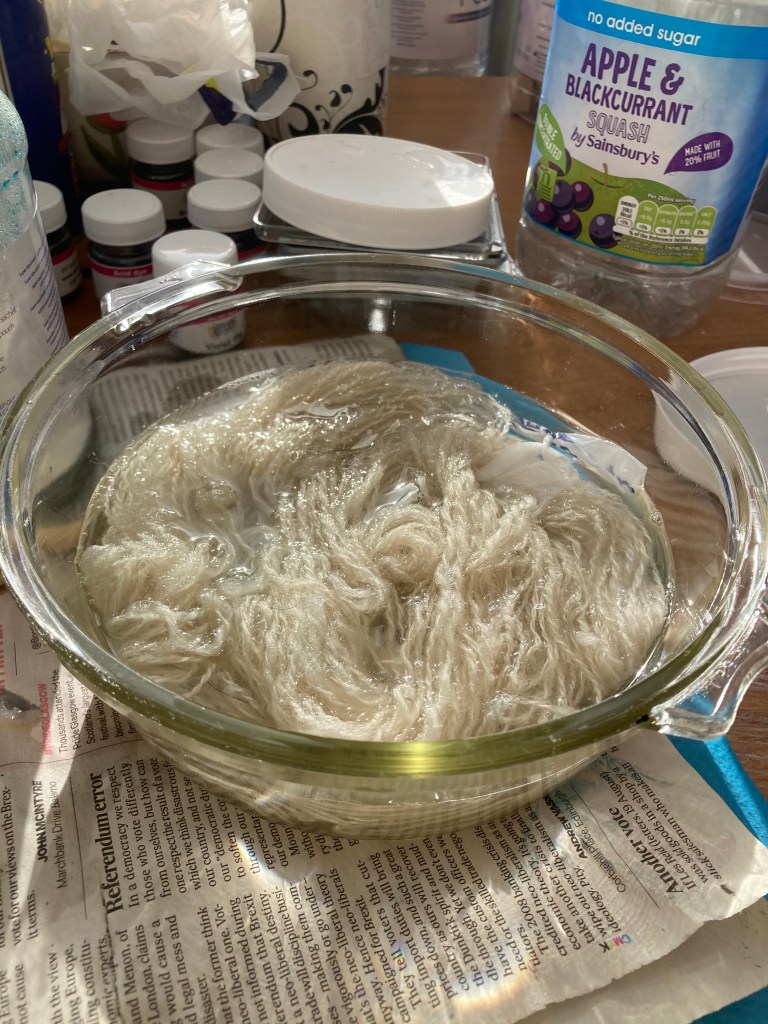
Each batch was weighed to calculate the amount of dye needed and soaked for an hour in plain water.
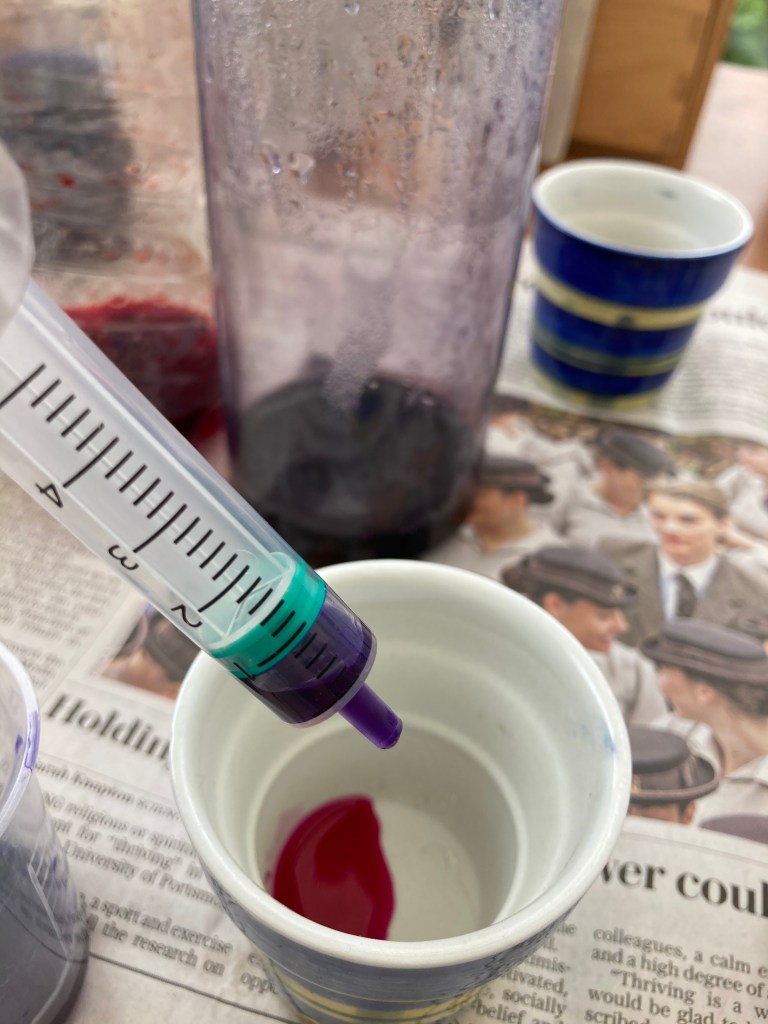
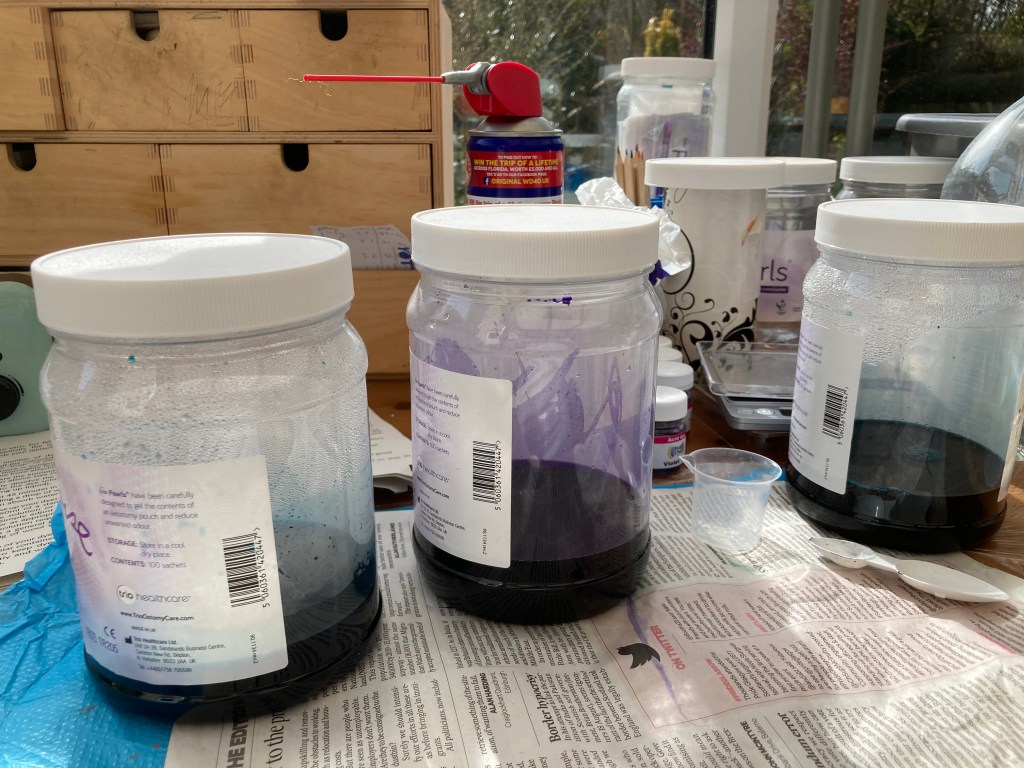
Immersion dyeing seems to give the best solid colour. I I followed the instructions in the dye kit I have from DT Crafts to mix 1% dye solutions with citric acid. The dye baths were prepared with about 4l water plus the dye solution measured out for each batch of yarn dry weight and heated in the hob to just under a simmer for 20 minutes or until the dye cleared.

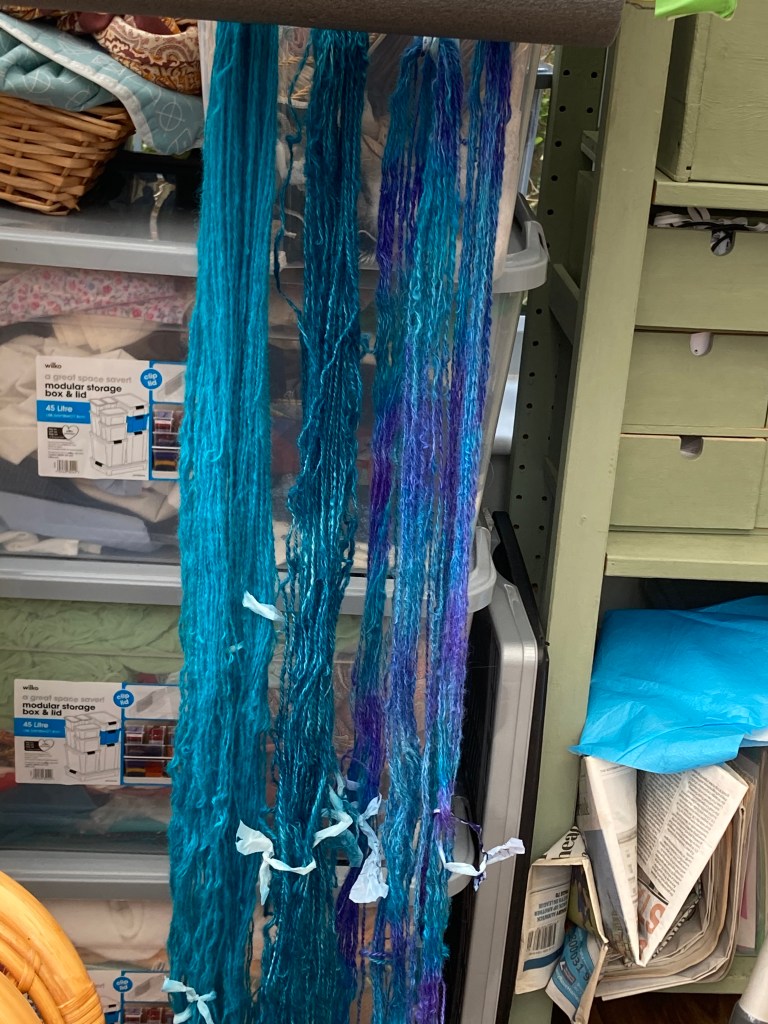
The pan was then left to cool and then the yarn rinsed, gently squeezed in a towel and hung to dry. I hook the skeins over the back of a clothes peg so it dries easier and without kinks.

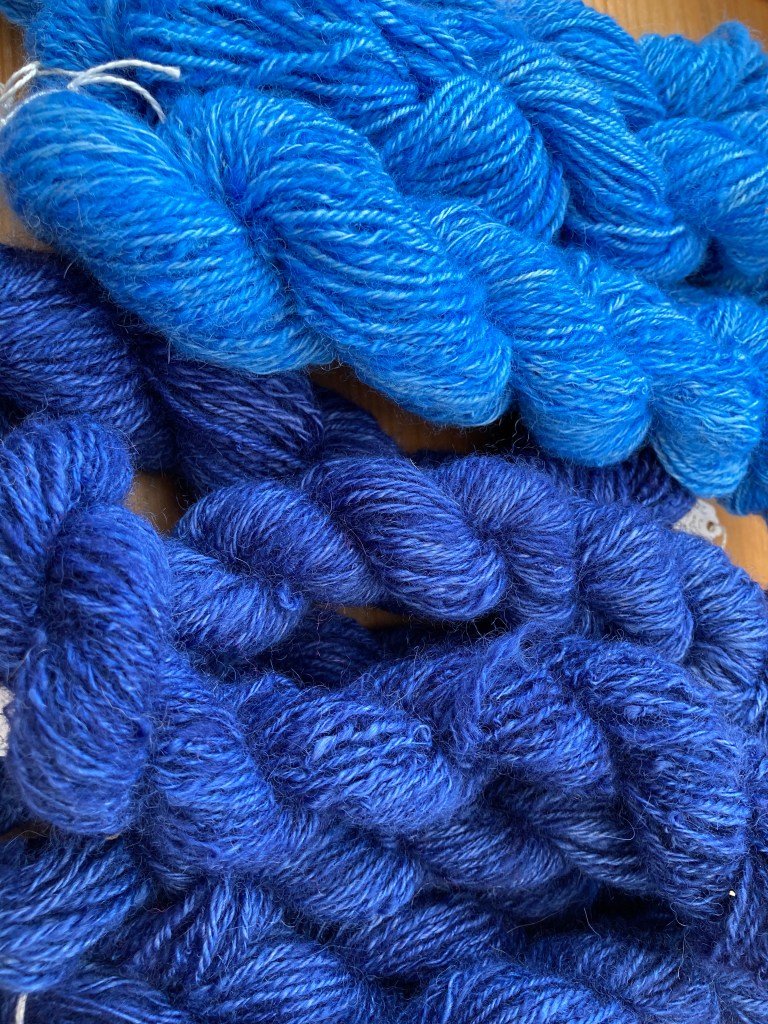
The first batch used Hue and Dye blue, in a 1% solution 100mls for every 100g dry weigh yarn and it gave a lovely cornflower blue – exactly what I wanted. The navy dye in the kit had a hint of purple and I wanted it bluer so I mixed my navy and blue 1% stock dyes 50:50 – the colour needed to be darker so I used twice as much (200mls per 100g dry weigh yarn)
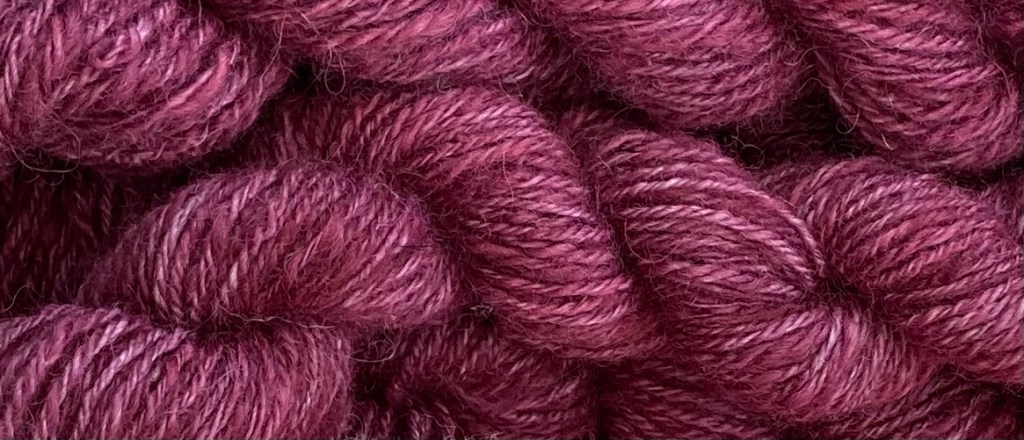
For the deep burgundy colour I used 5 parts red to 2 parts blue with a tiny drop (less than 1ml) of 1% black, at 200mls per 100g – the double strength gave a good deep colour.
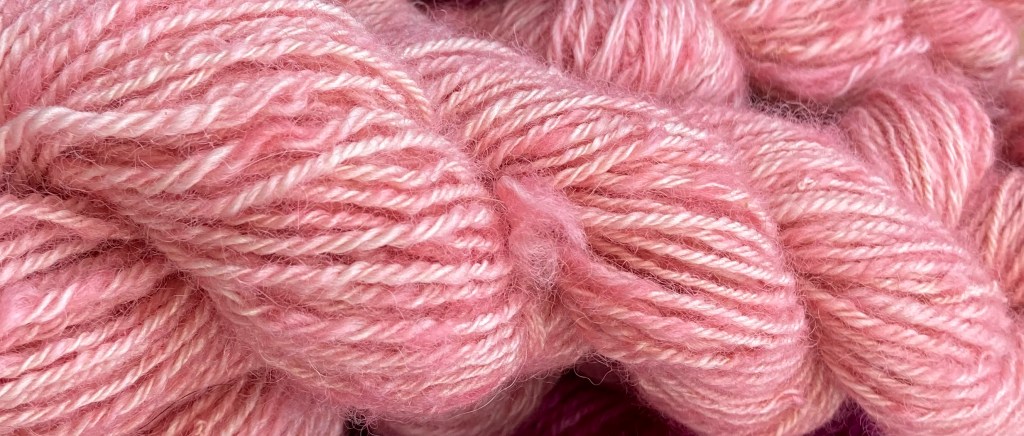
The blush pink needed to be very pale – I mixed 5 parts red to 1 part blue and diluted the mix to 0.1% (a tenth of the original stock solution this came out rather deeper than expected, almost salmon rather than pale blush
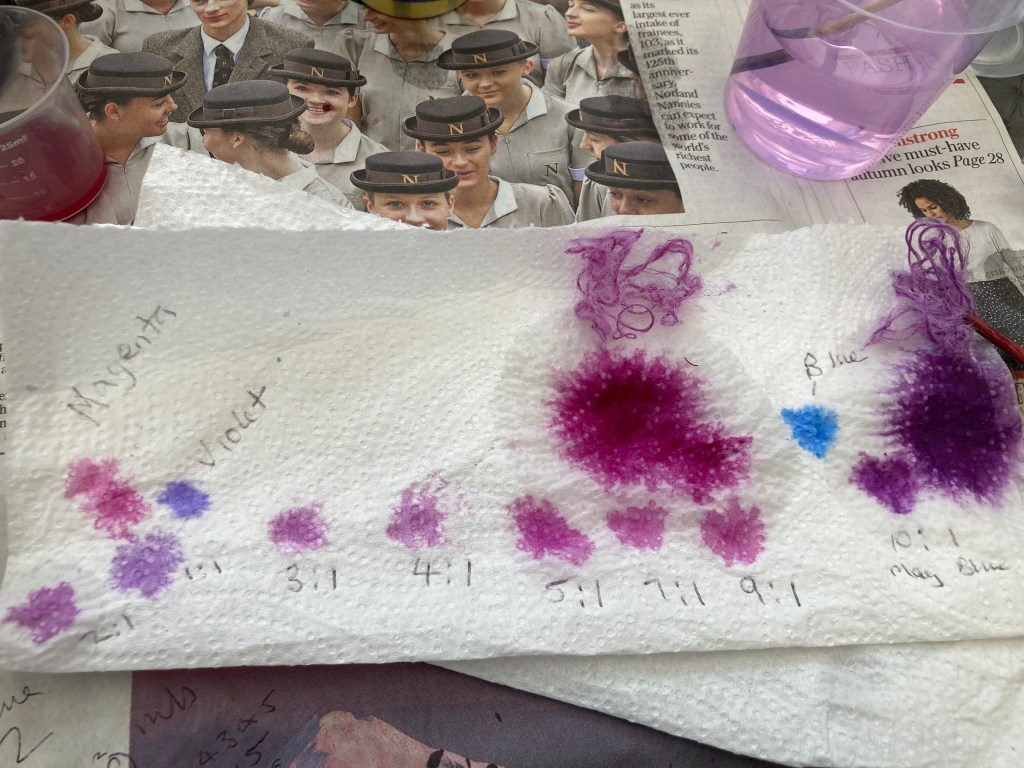
The final dye lot was supposed to be a fuchsia pink with a violet hue – I experimented with different proportions adding a drop onto kitchen paper to compare samples. In the end I mixed 9 parts magenta to 1 part violet. – it looked perfect on the paper but came out more of a cerise pink – it seemed that the red pigment took to the yarn more intensely than the blue pigment.

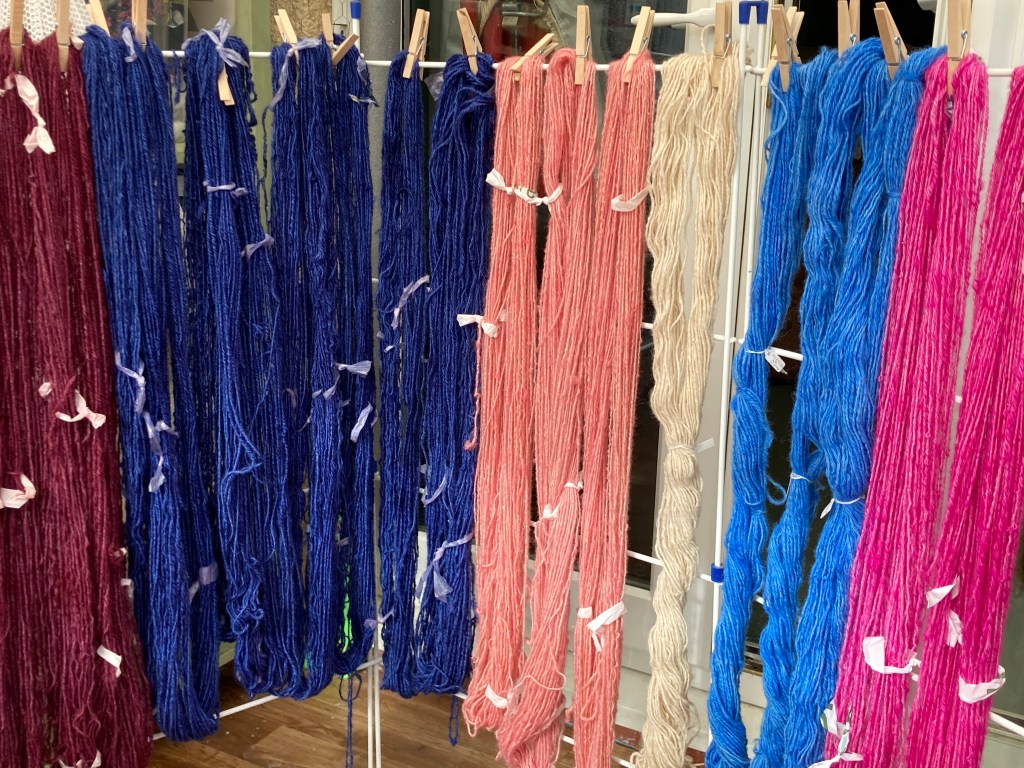
My only worry was the two pink shades (I’m very fussy about colours). I could have spun more yarn and done another batch with a more dilute dye mix to give a paler version. I could have overdyed the cerise pink with a dilute blue/violet to give the desired result. I actually love both the pinks I dyed, so I decided to keep them and just make sure that the knitted stripes of these shades are not adjacent to each other. After trying various combinations I decided on this sequence, starting with the navy for the ribbing.
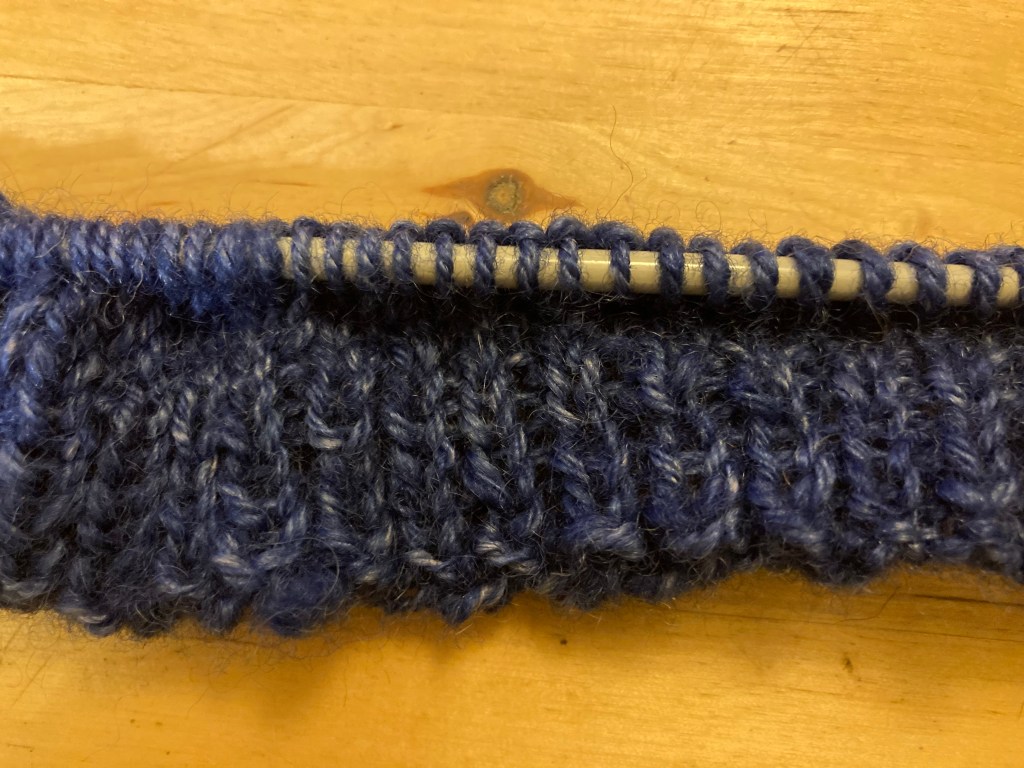
And now I’m cast on! With sweaters and other large items I tend to knit them on and off over several months so it will be a while but I will post updates, This will be the first Item I’ve made for myself from the raw alpaca I got last year – I have done several small Items as gifts – it’s also my first hand dyed garment – so quite a landmark project.
Have you made something from animal (in my case friends’ alpaca) to finished garment? I’d love to hear about it.






 Stitches by the Sea