Welcome to my blog. I live, knit, crochet, spin and craft near the Northumbrian Coast (but not too near – the waves won't be splashing my yarn!).There's a story in every stitch, every grain of sand, every blade of grass. I thought I'd blog about it…
A few weeks ago we spend a very enjoyable evening sipping cocktails at Tigerlily in Edinburgh and it crossed my mind that I should make my occasional foray into cocktail making more of a regular occurrence. Friday night cocktails have become a highlight of the week since then.
Last week it was cocktails for two as Daughter was staying over. Scottish strawberries are in season at the moment and I had some in the fridge so the strawberry daiquiri seemed like a good choice. Its a fruity, refreshing but potent mix of strawberries, white rum and lime juice, perfect for summer evenings.
The original daiquiri (without the strawberries) is named after an iron mine and beach in Cuba, where an American mining engineer, Jennings Cox, is said to have invented it. When the mine was purchased by US congressman William A Chanler in 1902, he introduced the drink to New York. The Daiquiri has similarities with 18th Century British sailors’ grog, which combined the rum ration with lime, rich in vitamin C to prevent scurvy, and sugar.
A mixologist once told me that a good cocktail should include strong and weak, sweet and sour elements. This gets its alcoholic strength from the rum, diluted with fruit and fruit juice. Lime provides the sour element, sweetened with strawberries and added sugar.
Ingredients (to serve one)
A handfuls of strawberries (4-5 large ones plus another for garnish)
2 tsp white sugar (more if you prefer a sweeter mix)
1.5 oz white rum
1oz lime juice
Method
Blend all the ingredients then add to a cocktail shaker with ice. Shake until chilled, then strain (to remove seeds) into a martini glass. Garnish with a strawberry.
I didn’t strain the strawberry seeds out, but that doesn’t affect the taste!
Daughter’s Labrador, Wren, is now going on for 11 months old and doing really well with her gundog training. She is now doing marked retrieves (when she sees the target being thrown) and unmarked retrieves (where see seeks out a target that was planted unseen). She’ll also observe a target being thrown and remember its position until told to fetch it later. It’s all very impressive to watch her do this out on walks. She has such a strong drive to retrieve and it’s great to see her doing something that she not only enjoys but is exactly what retrievers were bred for.
On Friday Wren got a chance to show off her skills. We were at Northumberland County Show. COVID restrictions cancelled the previous 2 shows so it was lovely to be back among the food and craft stalls, and watching breeders and owners show their animals. There was a dog show and all sorts of livestock classes: cattle, sheep, goats, alpaca, even chickens and rabbits. We watched a friend ride in one of the many equestrian classes. Wren’s chance to shine was the gundog scurry.
This involves a series of marked retrieves against the clock and requires the dog to jump obstacles both approaching the target and when fetching it back to the handler.
Daughter was quite nervous – the scurry always attracts quite a crowd. Wren loves her work though, and despite all the distracting sights, sounds and smells all around her she immediately focussed on the job. Wren waited at the start with Daughter, watching the target being thrown, then Daughter gave the command and the clock started. Wren was off like a rocket! She leapt the straw bales heading straight for the target, then brought it back almost as quickly, and presented it to Daughter.
She had a few tries, going perfectly every time and was lying in second place. She went back to try and improve her time later in the day, ending up only 2 seconds behind the leader. There were many older, more experienced gundogs competing. What an impressive scurry debut for young Wren! We are all very proud of her. She’s really a credit to Daughter and all the hard work they have put in with the training.
Here in the UK we’ve had an extended bank holiday weekend to celebrate The Queen’s Platinum Jubilee. With televised events every day and street parties going on up and down the country, It’s been impossible to miss.
Where I live we’ve been planning our own street party for weeks.
Part of my role was to set a quiz, with questions connected with Her Majesty and the Jubilee. I thought I’d share it with you, so here it is!
1
The Queen is our longest serving monarch. Who had the second longest reign?
2
What is the chemical symbol for platinum?
3
Where was Princess Elizabeth when she learned of her father’s death.
4
What was Queen’s biggest-selling UK hit song?
5
Who is 5th in line to the Throne after the Queen
6
Who was Dookie?
7
Who played the lead role in The Queen’s Gambit (award winning Netflix drama series)?
8
Where exactly was The Queen born?
9
Who had a hit with the song ‘Royals’ in 2013?
10
How did The Queen ‘arrive’ at the 2012 Olympic Opening Ceremony, surprising everyone?
11
Who was the second actress to play The Queen in TV’s ‘The Crown’?
12
If you wear purple with gold braid, red sleeves and a black hat, what is your job?
13
What are The Queen’s middle names?
14
Who designed Elizabeth’s wedding dress?
15
When is the Queen’s actual birthday?
16
What or who was ‘Burmese’?
17
How many British prime ministers have there been during the Queen’s reign so far?
18
What is Cullinan II and what is it part of ?
19
The Queen’s coat of arms includes two animals. Which one is on the right of the shield?
The North East Coast is dotted with fishing villages, which have had fluctuating fortunes over the years. Today they are popular holiday destinations, with many a former fisherman’s cottage renovated into an expensive holiday property. Small commercial fishing boats remain, especially in the larger ports, along with pleasure craft, but the former herring industry , formerly a major employer, has all but disappeared.
Over the Scottish border in Berwickshire, the herring industry was virtually destroyed overnight. On 14th October 1881 the fleet set out in calm waters. Following a week of stormy weather when they couldn’t sail, money was tight and bait was beginning to rot so the fishermen were anxious to work, even though the barometric pressure was very low.
The wind changed and a hurricane force storm blew up. Fishing lines were abandoned and the ships raced home but only a handful made it to port. The rest of the fleet was not so lucky. Some boats were smashed on the rocks nearby, others capsized. The families of the fishermen looked on in horror, powerless to help. 189 lives were lost, leaving 78 widows and 182 fatherless children.
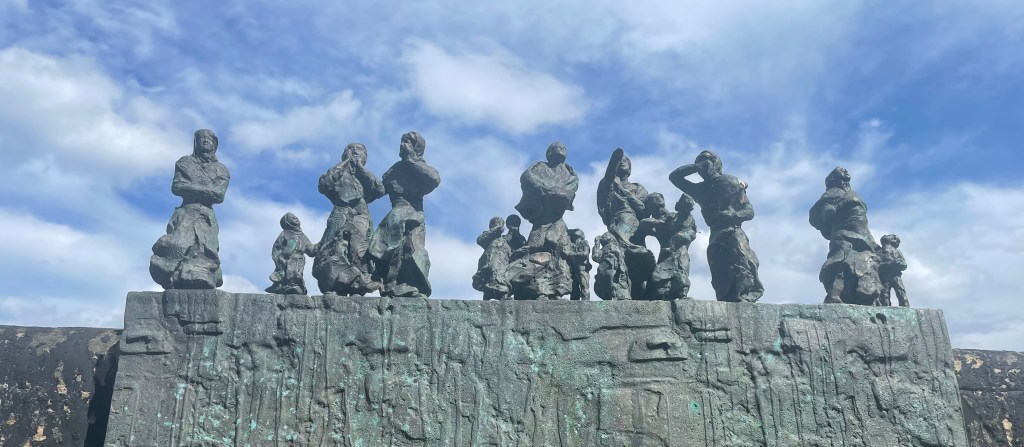
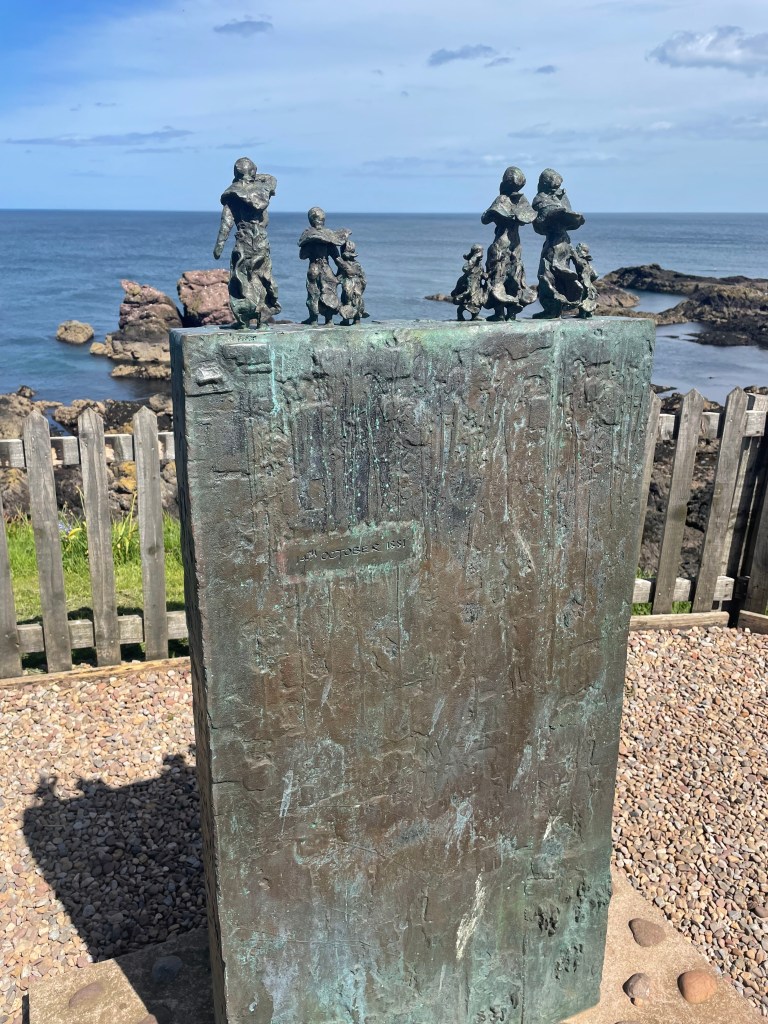
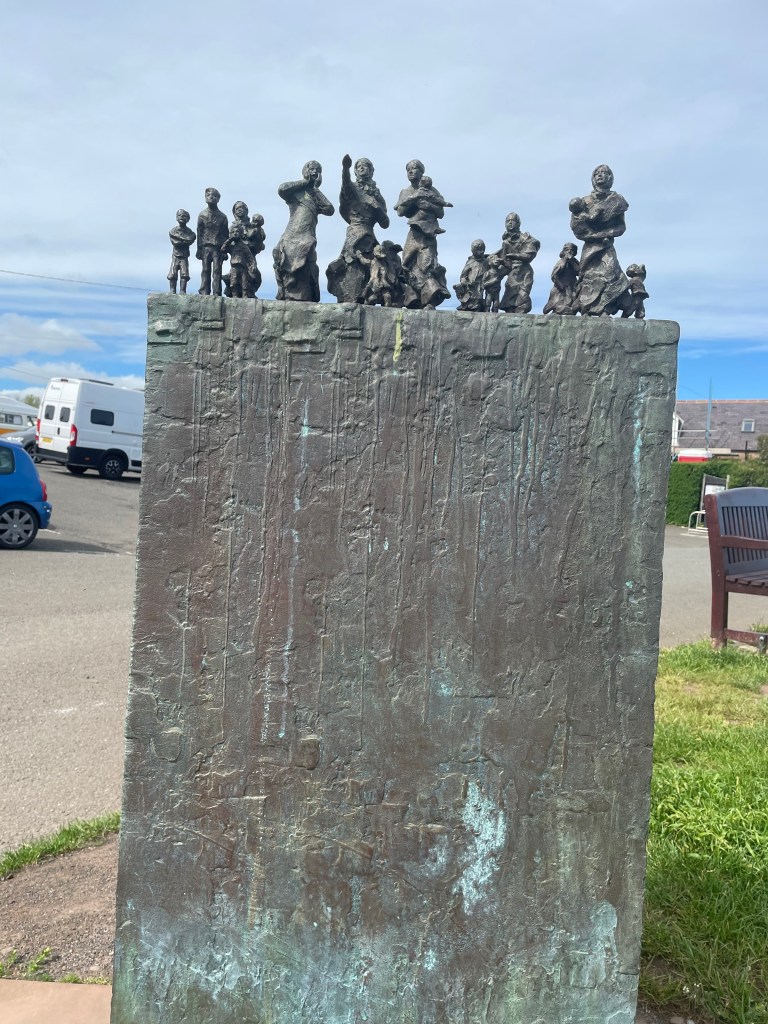
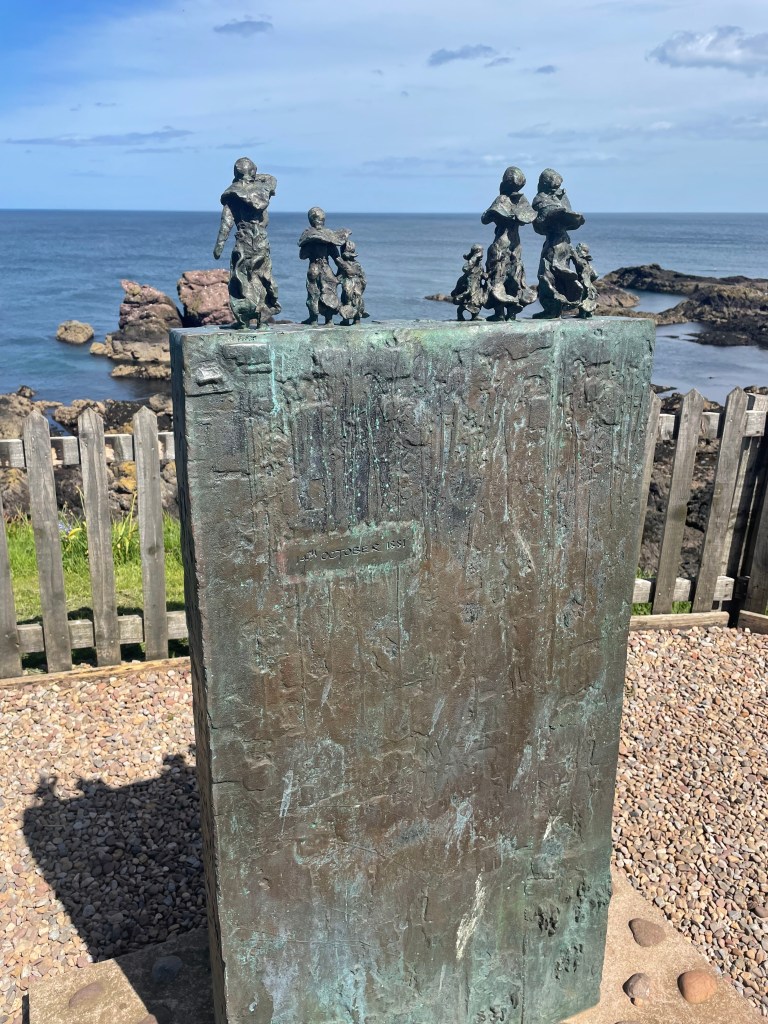
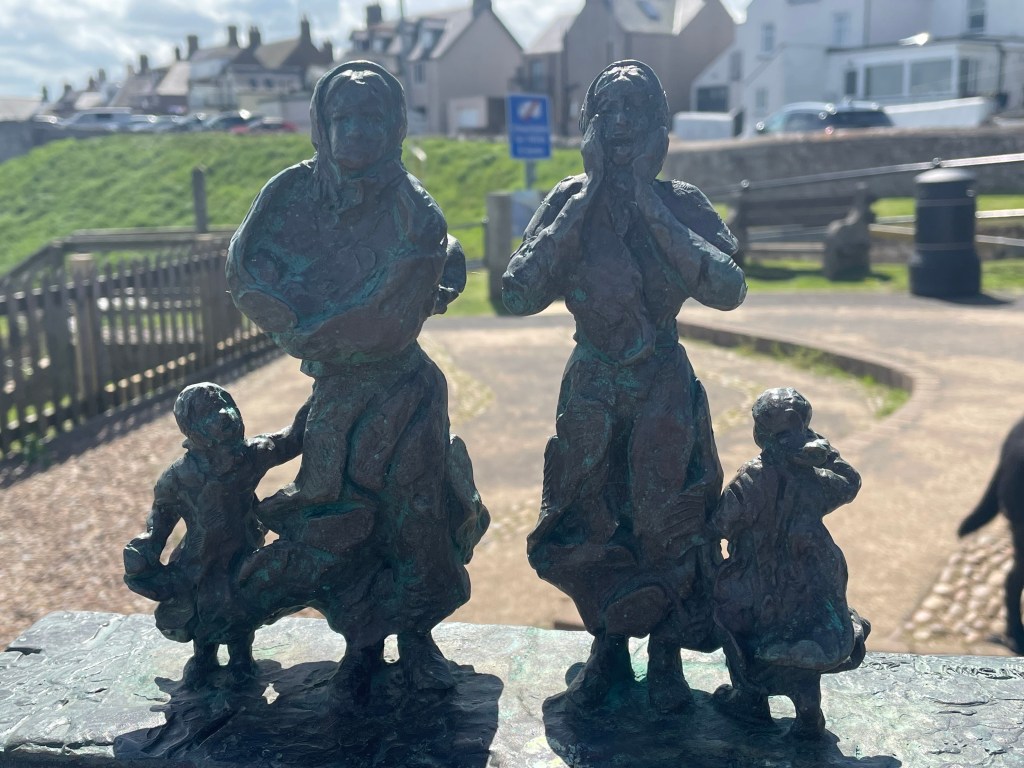
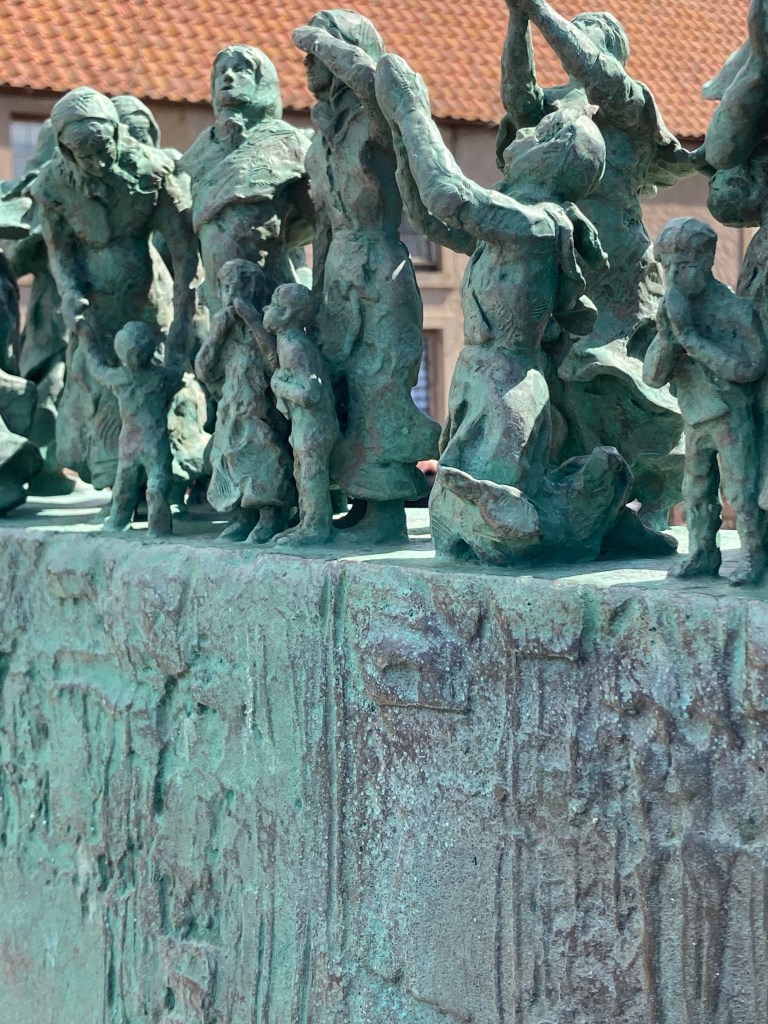
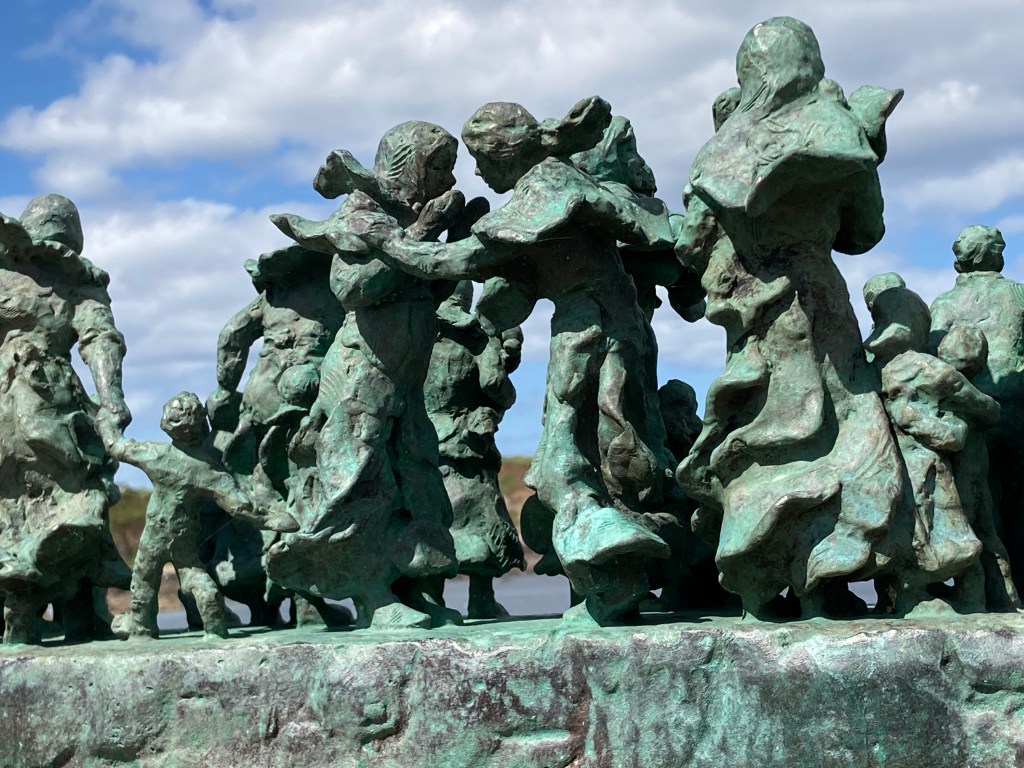
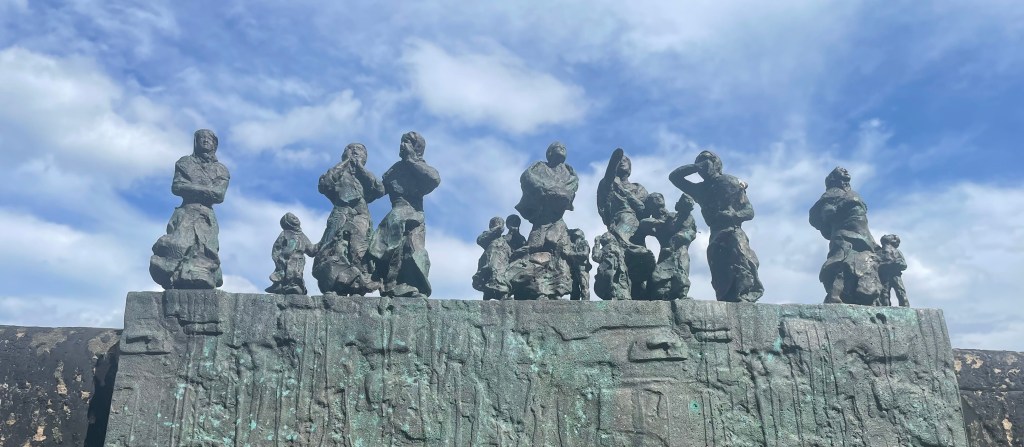
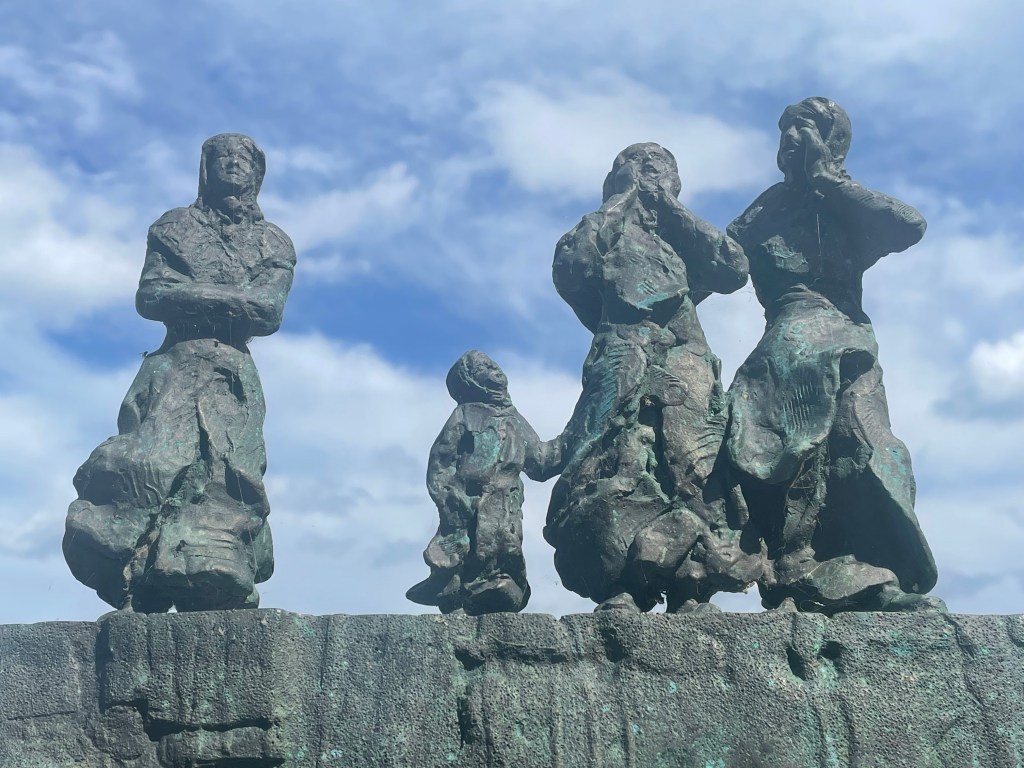
A series of four sculptures by Jill Watson were dedicated in 2016, on the anniversary of the storm, to commemorate the disaster. They depict the widows and bairns of the stricken fishermen looking out to sea overlooking the harbours of four fishing communities on the Berwickshire coast.
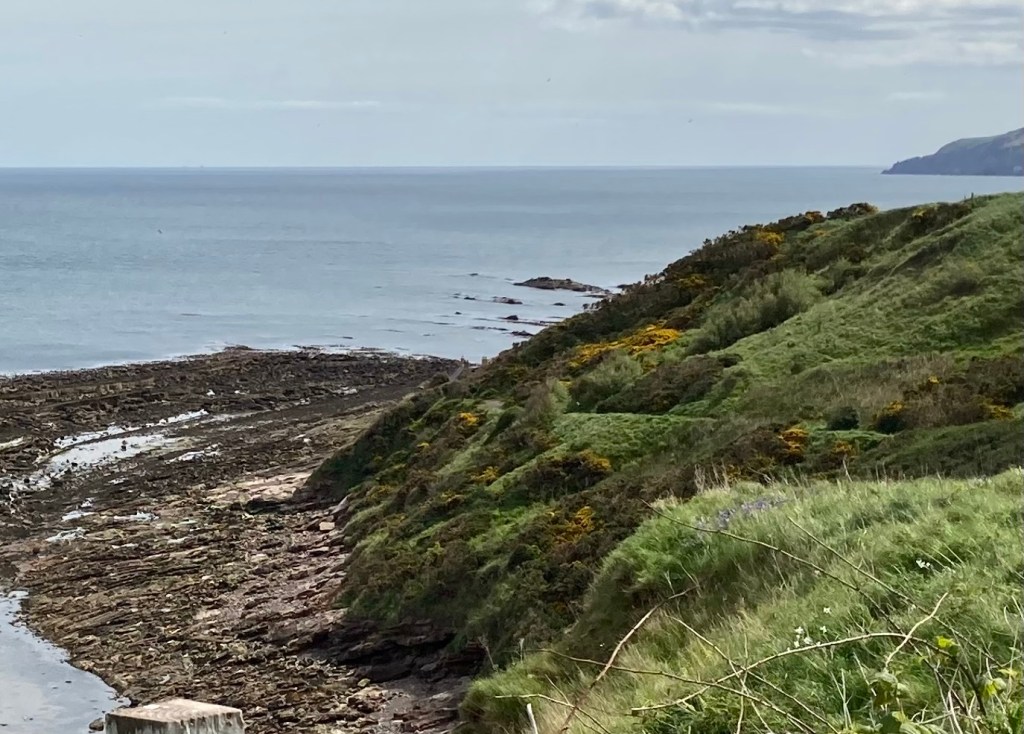
The northernmost of the artworks is in Cove, which lies north of St Abbs and south of the Torness nuclear power station. The village is tiny, situated at the top of the cliff. The harbour is privately owned, accessed by a steep gated path, which goes through a tunnel in the headland to the reach beach and harbour. Cellars leading off the tunnel, were once used to store fish but are now sealed off for safety. The landowners request that photos of the harbour are not published to maintain the unspoilt character of the place, but here you can just make out the buildings at the edge of the hidden bay and harbour.
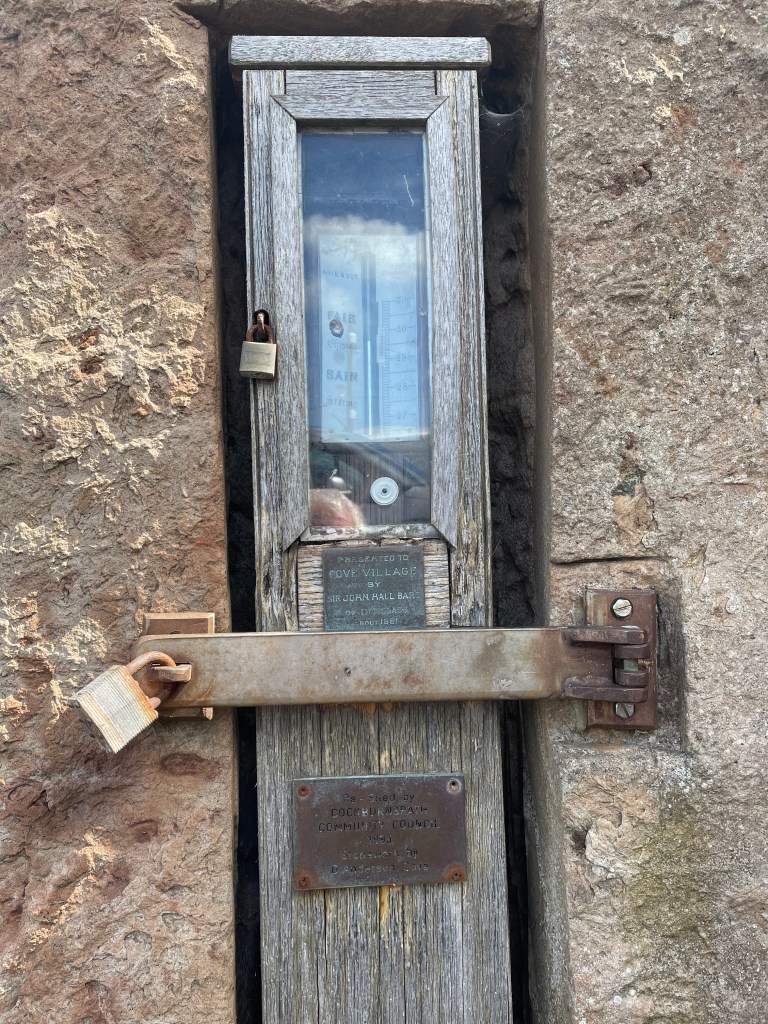
A barometer stands set into a rock at the corner of Cove car park. This was restored and resited there in the 1990s. The plaque indicated that this was presented around 1861, predating the fishing disaster. There is a cruel irony that this provided the means to predict the fatal storm.
The bronze cast sculpture overlooks the sea as the wives and children of the fishermen did. The adult figures stand about 20cm high. Each one represents a real person , the families of the 11 men of Cove who were lost that night.
The next sculpture is in St Abbs. This attractive village is popular with divers, both for its abundant marine life and the wrecks offshore.
The road leads down the hill to the harbour car park but the sculpture is at the top, again overlooking the harbour.
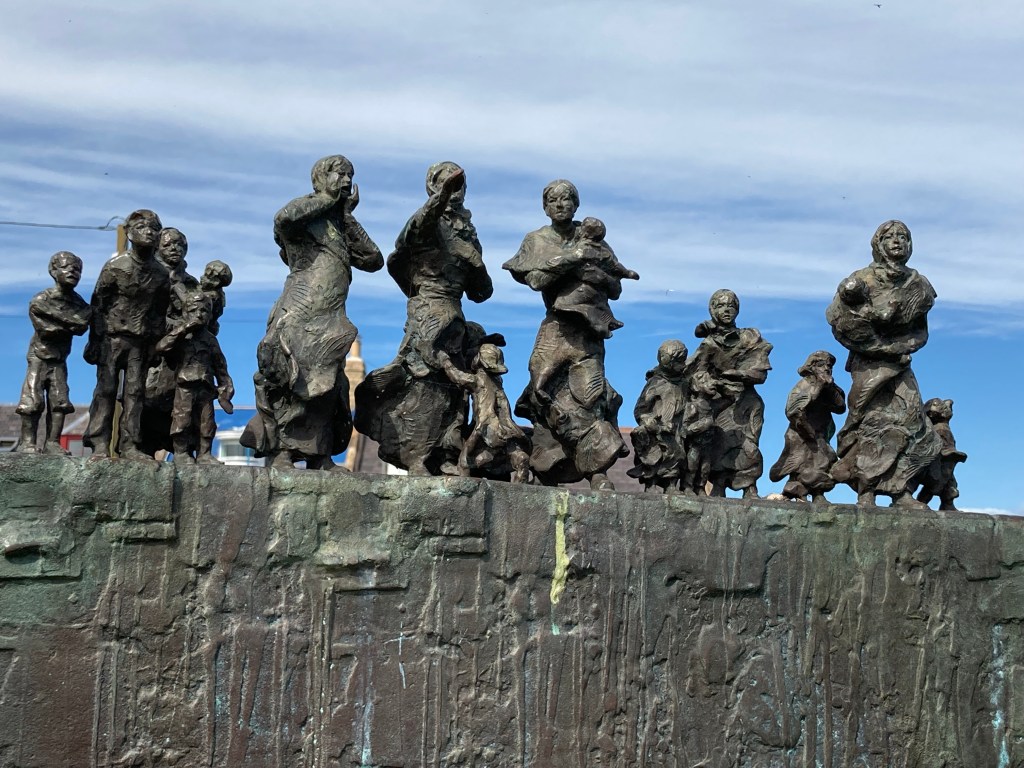
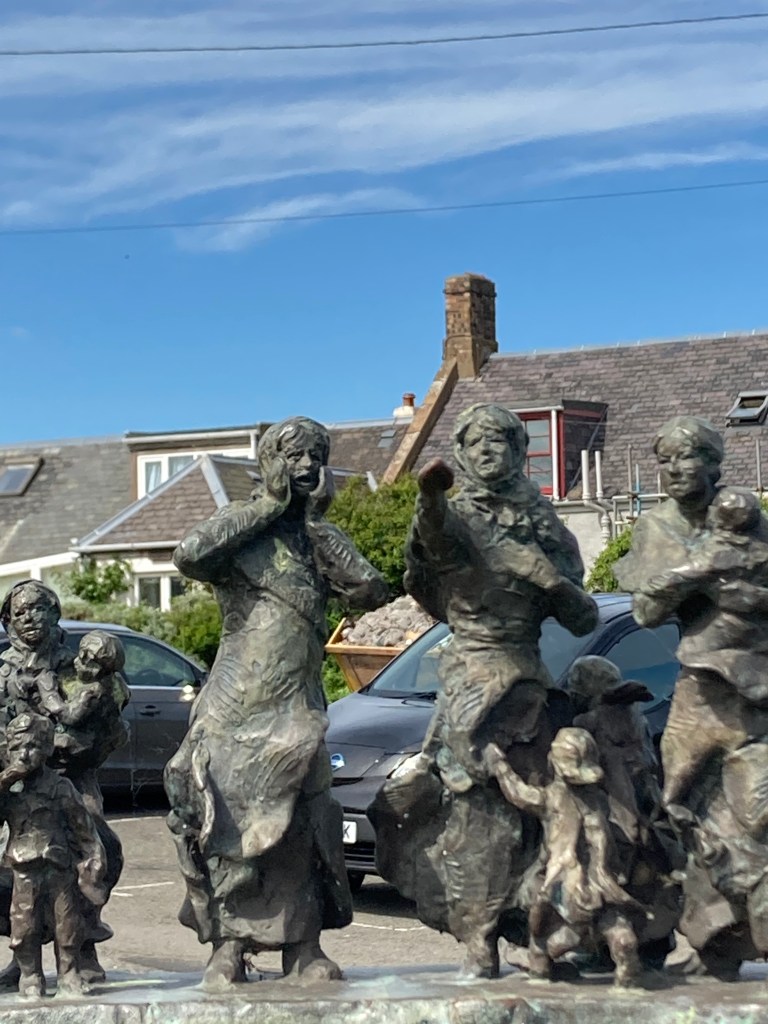
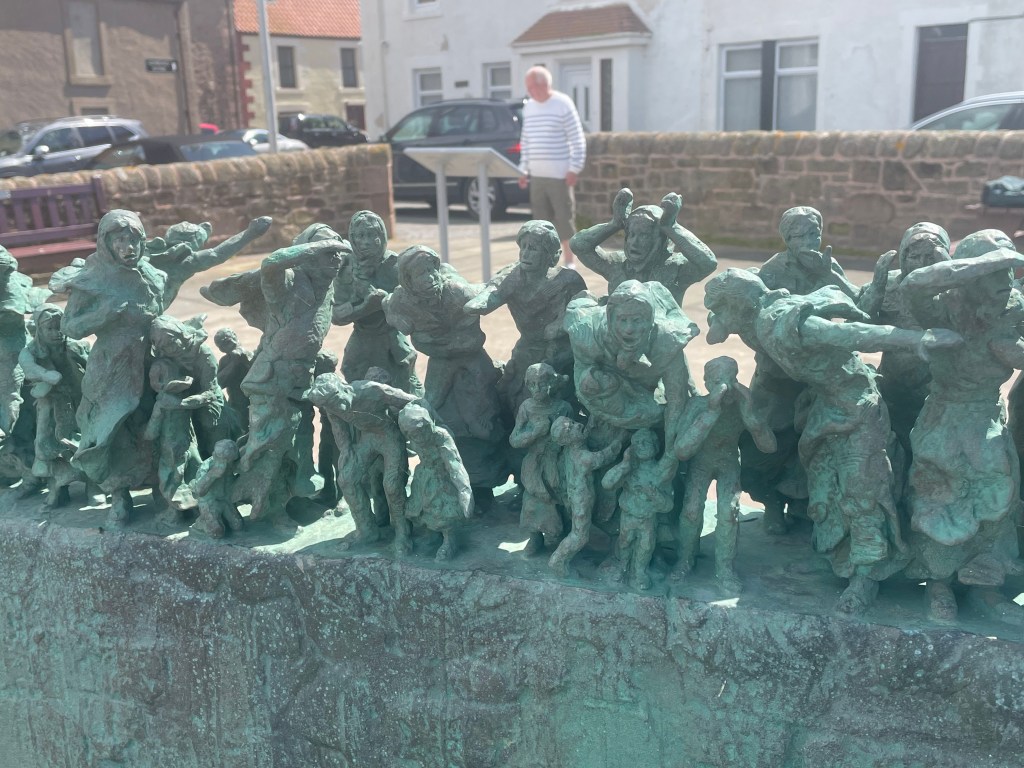
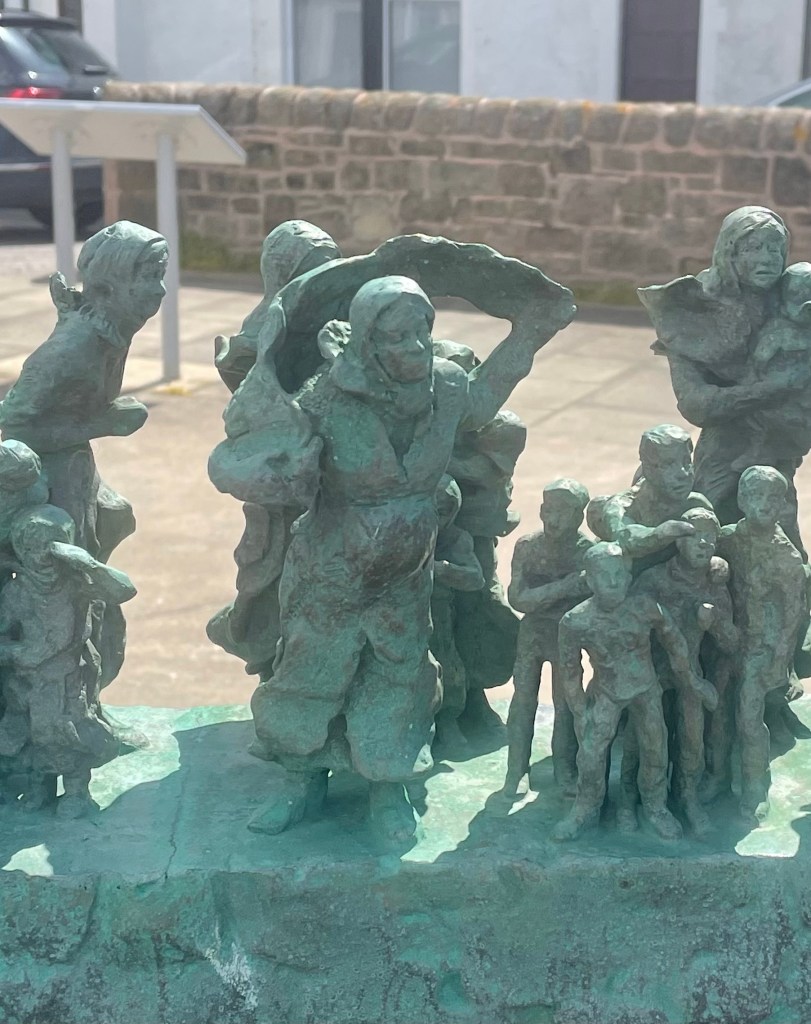
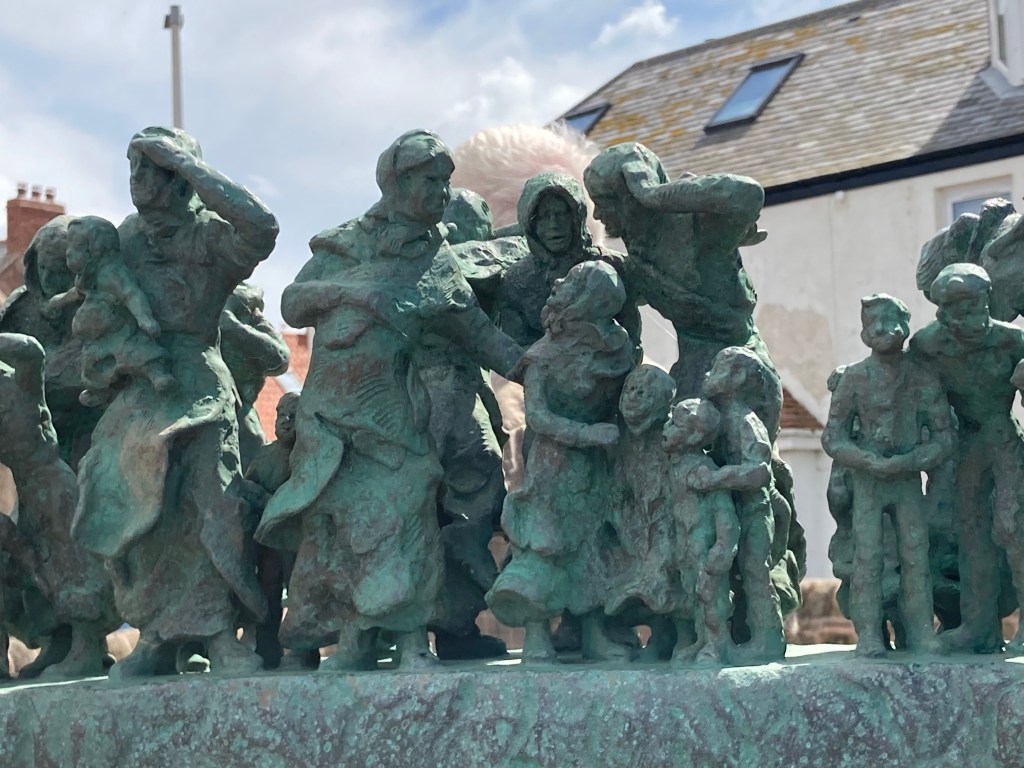
Moving south to Eyemouth there is a much larger artwork in the series, appropriate to the size of this small town and that it suffered the greatest loss of life in the storm of 1881: 129 of the 189 who died. This represented some 10% of the male population and there are more figures depicted here to represent larger numbers of family members affected.
Looking closely at the figures, the detail is quite remarkable. Some look out to sea, others’ faces are contorted with grief.
Some of the women battle with their shawls as they are caught by the wind.
Some have babes in arms and try to comfort their children or each other. Still others pray.
Though most of the figures stare out to sea, at the back of the sculpture the detail is still as perfect. A pair of women hug to console each other.
Confused tiny children are comforted by an older sibling..
It is incredibly moving, a perfect memorial not just to the fishermen who died but the families who suffered as a result of that loss. An appeal raised a large sum to support the widows and children, the equivalent of over £4m in today’s money. Queen Victoria was one of the contributors.
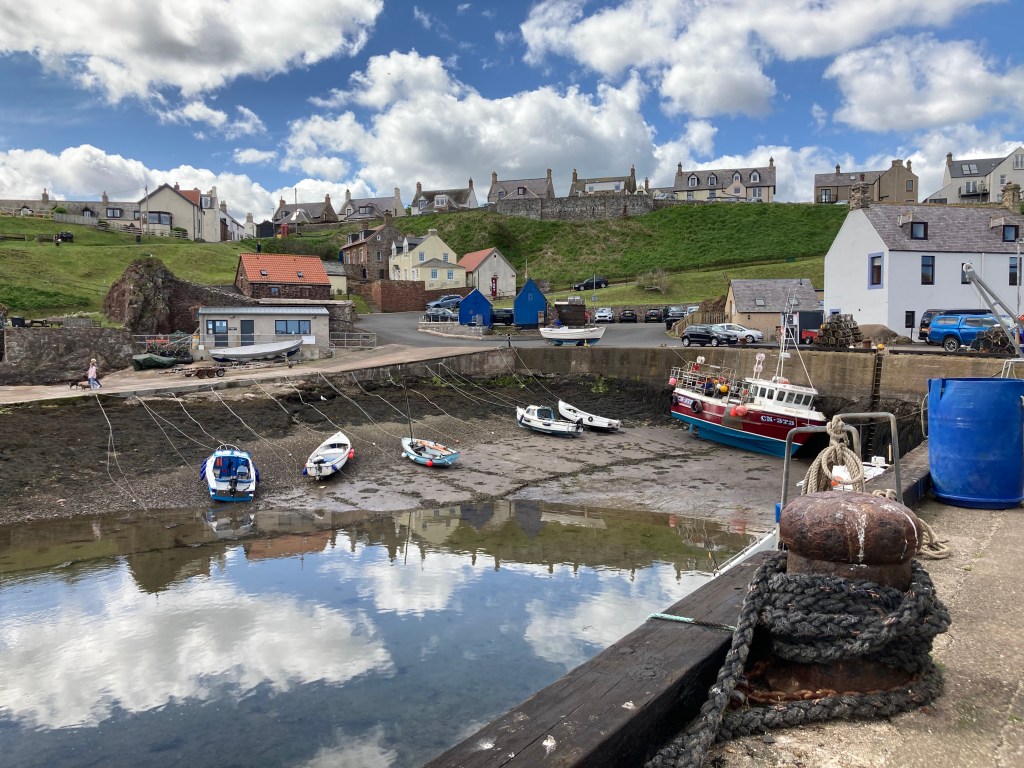
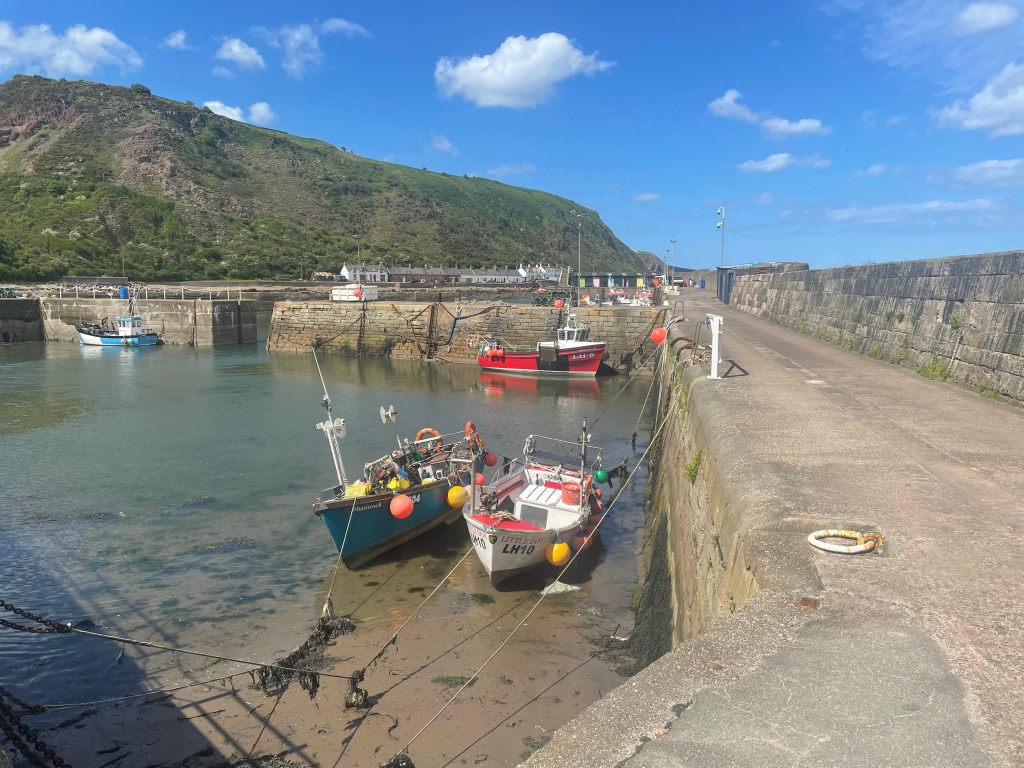
The final sculpture is at Burnmouth. The village sits at the foot of cliffs down a precipitous road.
The artwork is on the harbour wall.
This small village lost 24 men in the storm, a huge loss for such a small village.
I’m glad to have seen all four pieces, which are a credit to the artist and make a truly poignant memorial to those lost on that fateful October day.ove
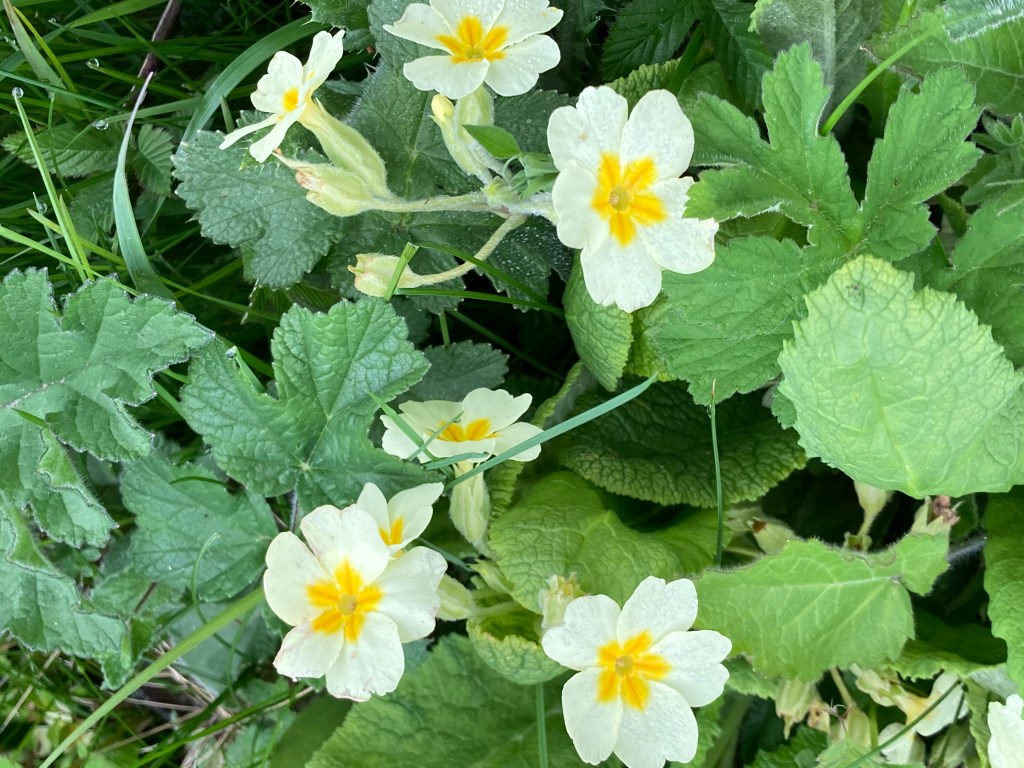
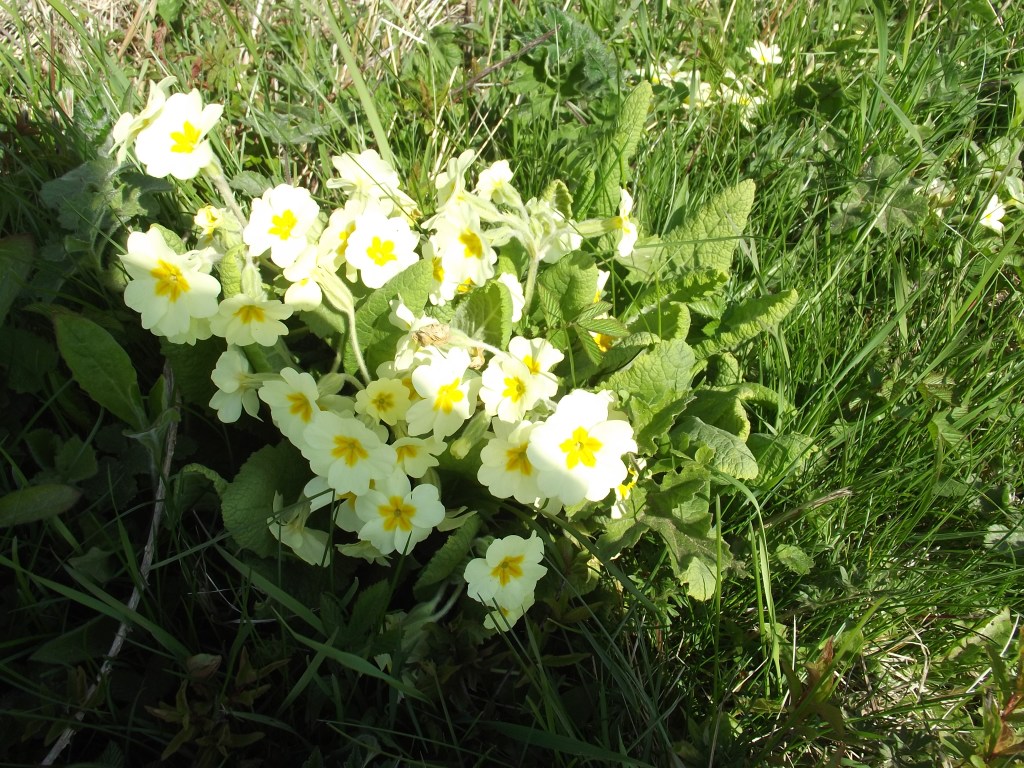
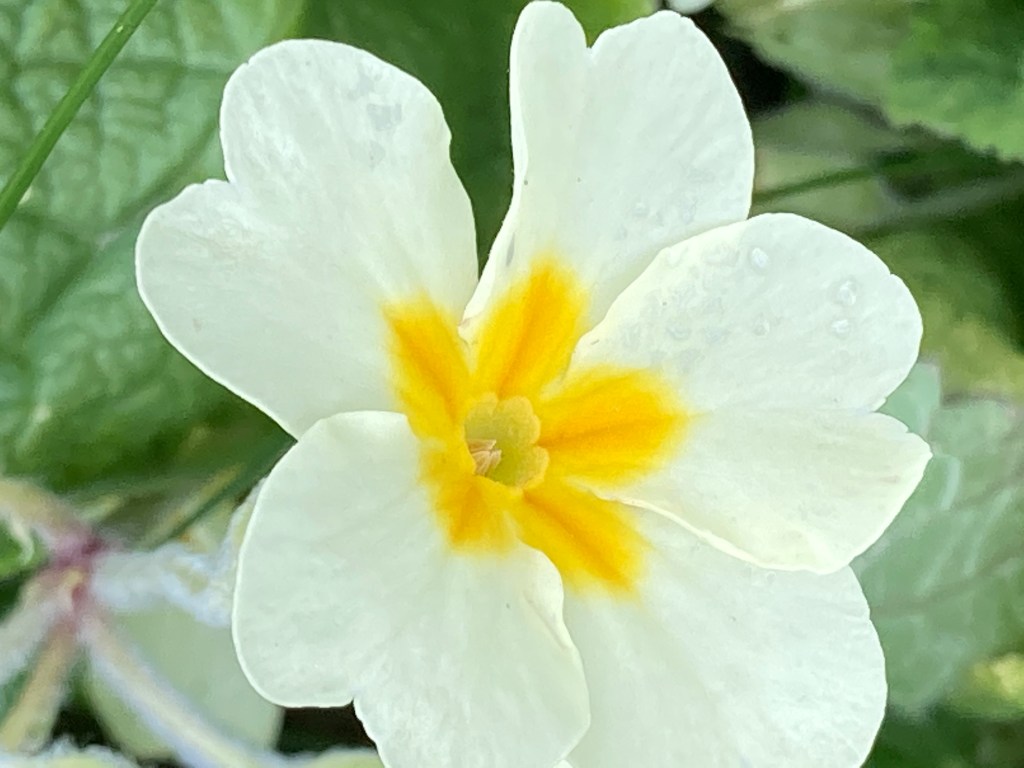
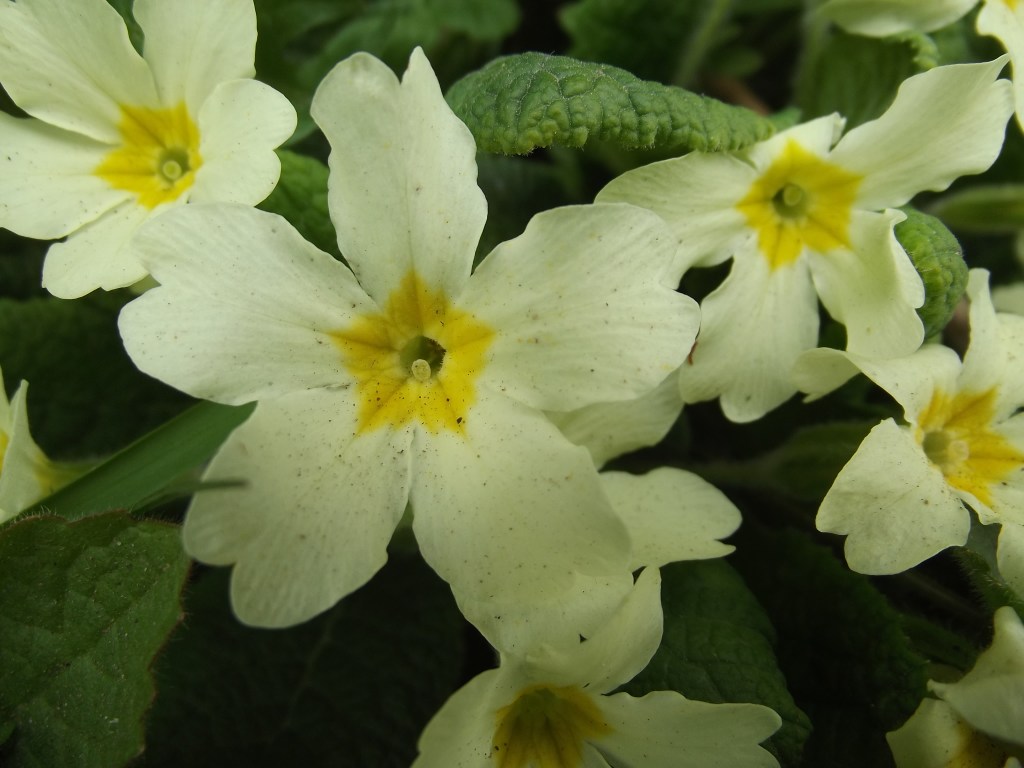
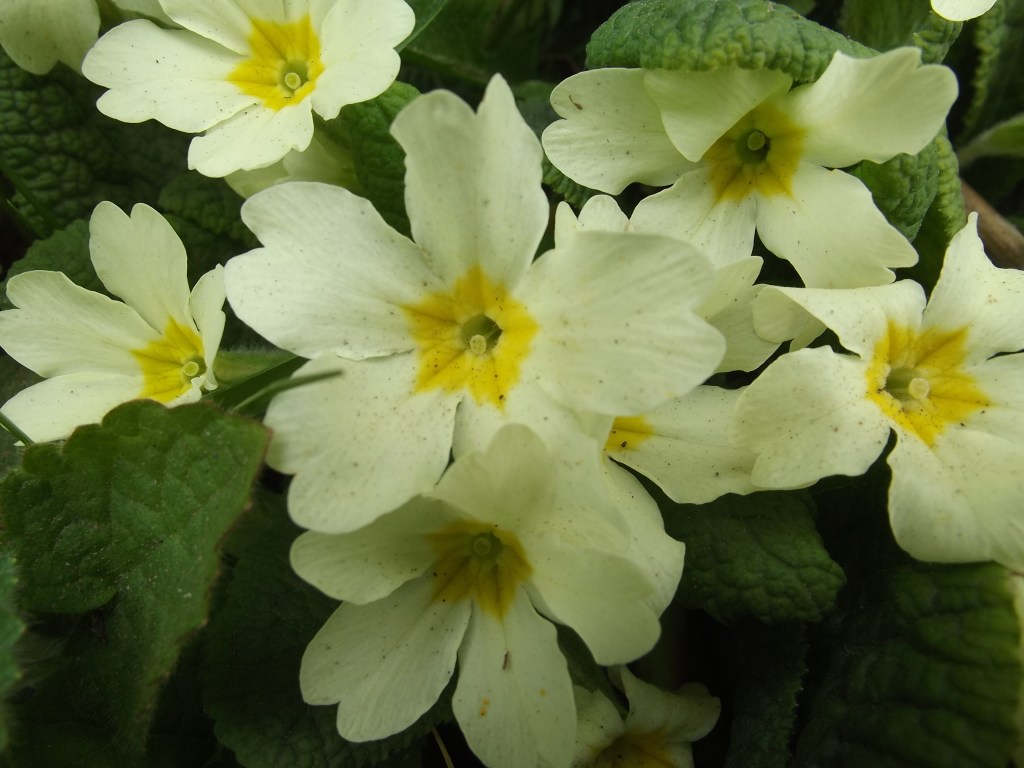
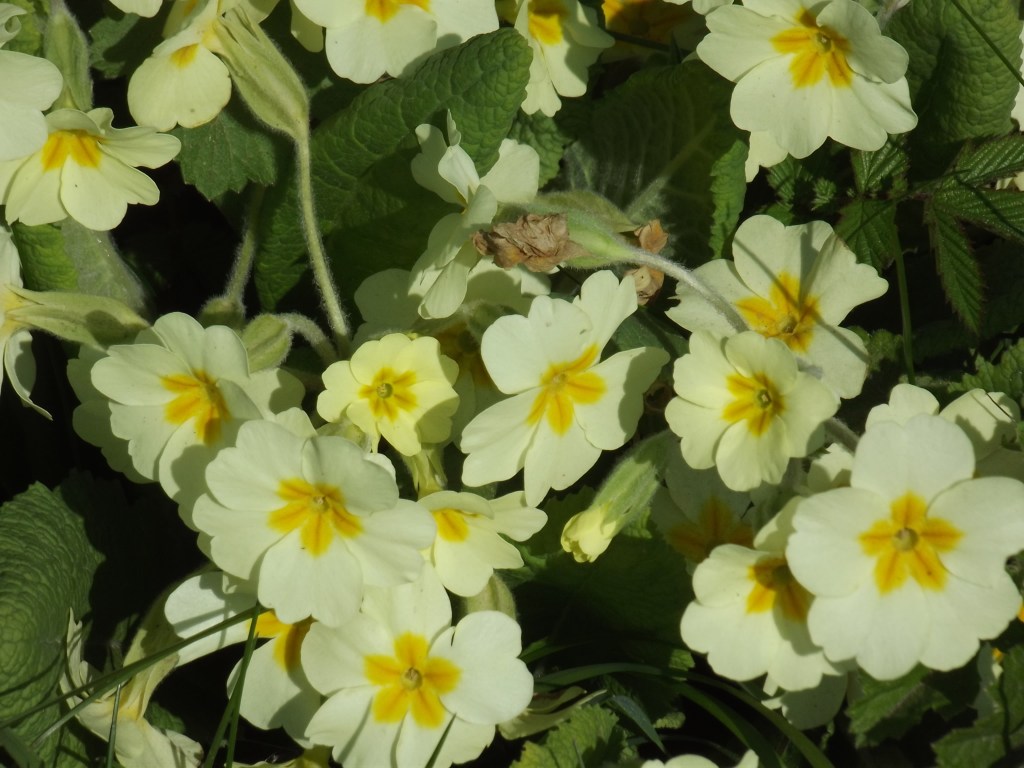
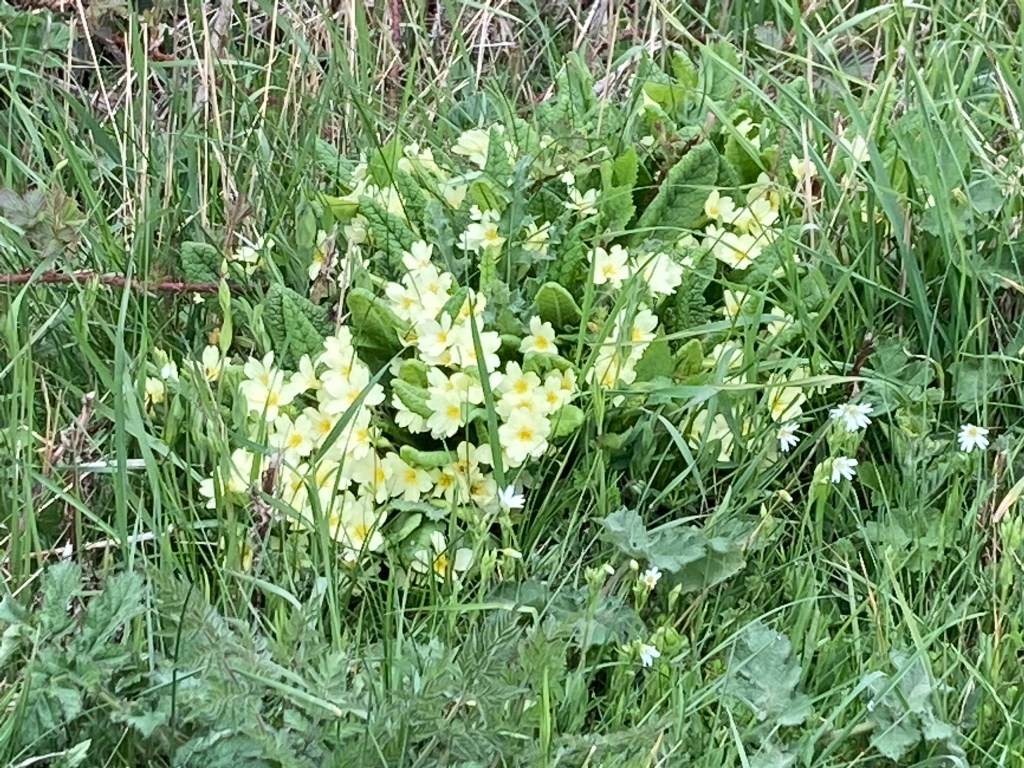
The primrose (Primula vulgaris) is my favourite sign of Spring and the last of the flowers are now beginning to fade as Summer approaches.
This perennial plant is native throughout Europe and can be found in woodland, under hedges and on steep road verges. Though the flowers may appear as early as December in milder areas, in most places they flower from February/March to May.
The pale lemon yellow flowers are 2-3cm in diameter and each has five notched petals.and deeper yellow centres. The flowers are carried singly on hairy stems above a rosette of oval leaves, wrinkled and heavily veined, each leaf up to 30cm long. The flower gives way to a capsule containing many small brown seeds. These require a cold spell to stimulate germination.
The nectar of the primrose is a valuable food source for long-tongued insects like butterflies, including emerging hibernating small tortoiseshells. It is also the food plant for the caterpillars of the rare Duke of Burgundy Fritillary butterfly.
The name primrose is derived from the Latin prima rosa: first rose, as an early Spring flower. Other names include Lent rose, butter rose,Easter rose, though not a member of the rose family at all. In folklore the flower was associated with fairies. A patch of primroses marks a portal into the fairy realm. Placed on a doorstep the flowers bring a fairy blessing. Druids used primroses for protection from evil during rituals. A primrose garland would be placed on the body of a young woman who had died ‘in the springtime in her life” . Primroses would also be used to decorate the bed of newly weds, probably because of the association with, Spring, new life and fertility.
The name Butter Rose may come from an old practice of rubbing the flowers on cows’ udders to ensure good butter production from the milk. A poor show of primroses was said to be a sign that hens would lay fewer eggs.
Thomas Culpeper, the 17C herbalist, recommended primrose for its wound healing properties. It has also been used to treat gout, rheumatism, paralysis, toothache and skin problems.
Queen Victoria was said to have sent primroses to her Prime Minister, Benjamin Disraeli regularly. On Primrose Day, April 19th, the flowers are placed on his grave and on the statue of him in Westminster Abbey.
It remains one of my favourite wildflowers and a true harbinger of Spring
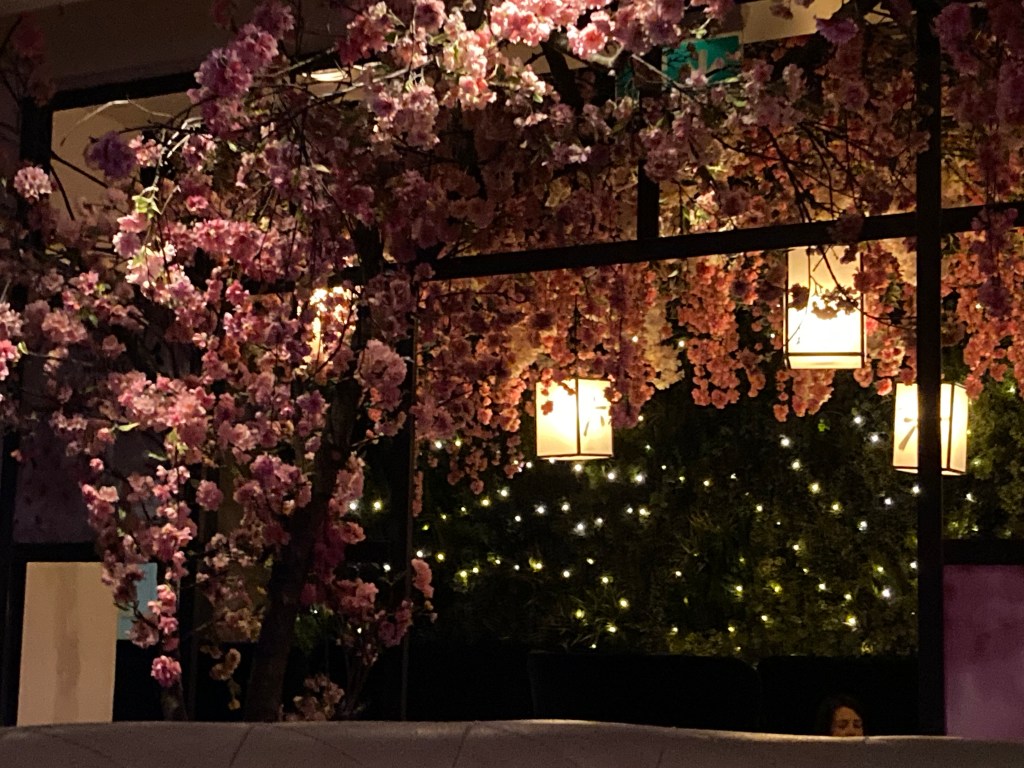
A couple of weeks back, K and I had another trip to Edinburgh. We were celebrating 40 years since we first got together. We took the train and checked into our favourite hotel, Tigerlily, where we got upgraded to a beautiful suite – this has happened before, but it’s always a lovely surprise. We had booked a table in the restaurant, but made time for a cocktail before dinner.
Tigerlily has always served great cocktails so trying some is part of the fun of staying there. In fact if I post a photo of a cocktail on Facebook with the question “Where am I?” all my friends immediately guess correctly. In the years we’ve been going there we’ve always enjoyed sitting up at the bar so we can watch the bar staff prepare the drinks. Of course sometimes it’s pure theatre. They don’t indulge in cocktail shaker juggling here, but bending a piece of orange peel next to a lighter flame so the oil sprays out, ignites and flares: that can look pretty spectacular.
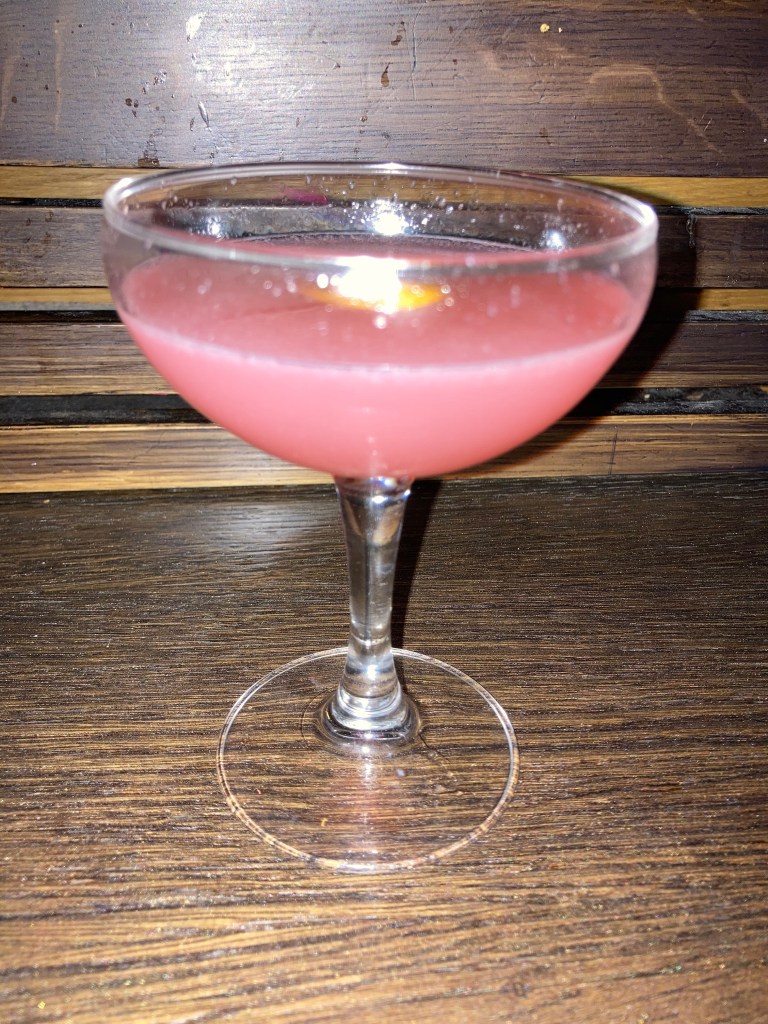
For my pre-dinner drink I chose my favourite cocktail – a classic Cosmopolitan. If you’ve never tried one it’s a fruity sweet/sour combination of vodka, triple sec, cranberry and lime – I love it.
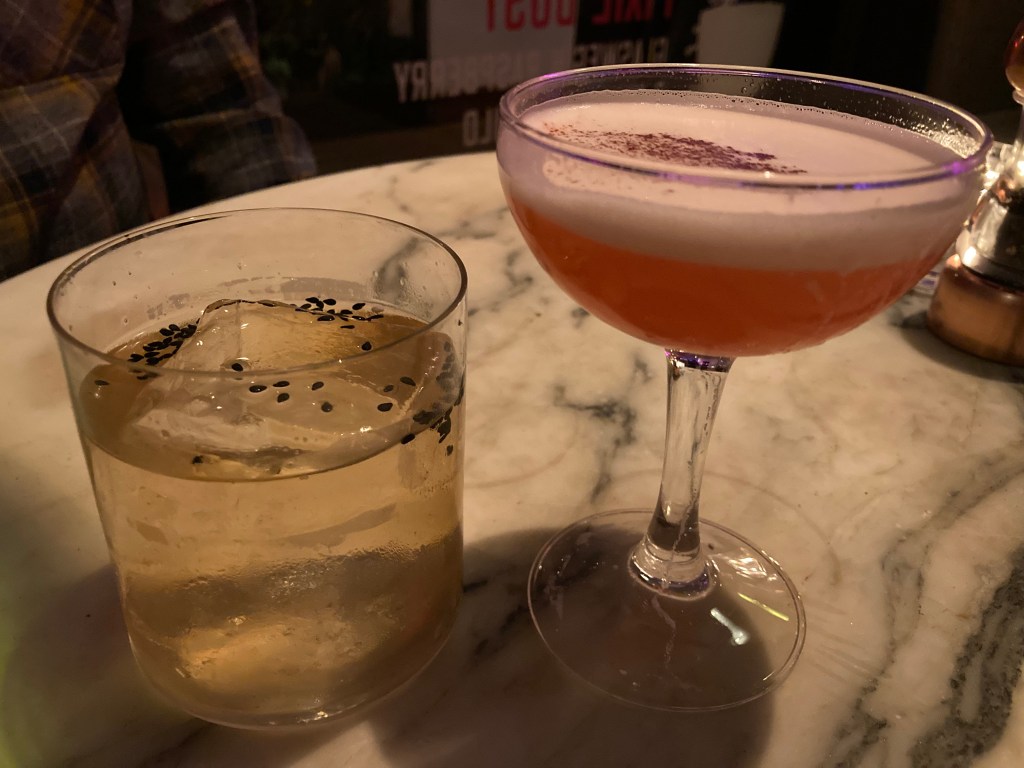
After dinner we were back for more. This time I opted for Pixie Dust, a combination of raspberry and rhubarb gin, wild strawberry, lemon juice and egg white. K had a cocktail too.
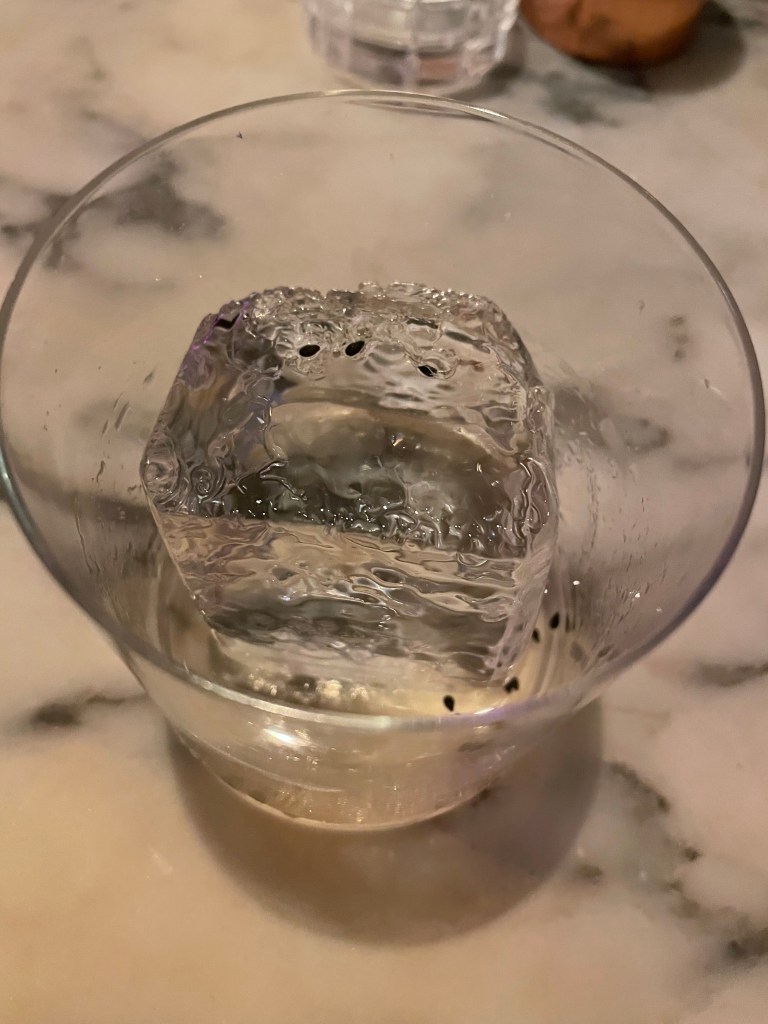
He’s a whisky man and sampled a Black Sesame Old Fashioned, served over ice, in this case one huge block of it
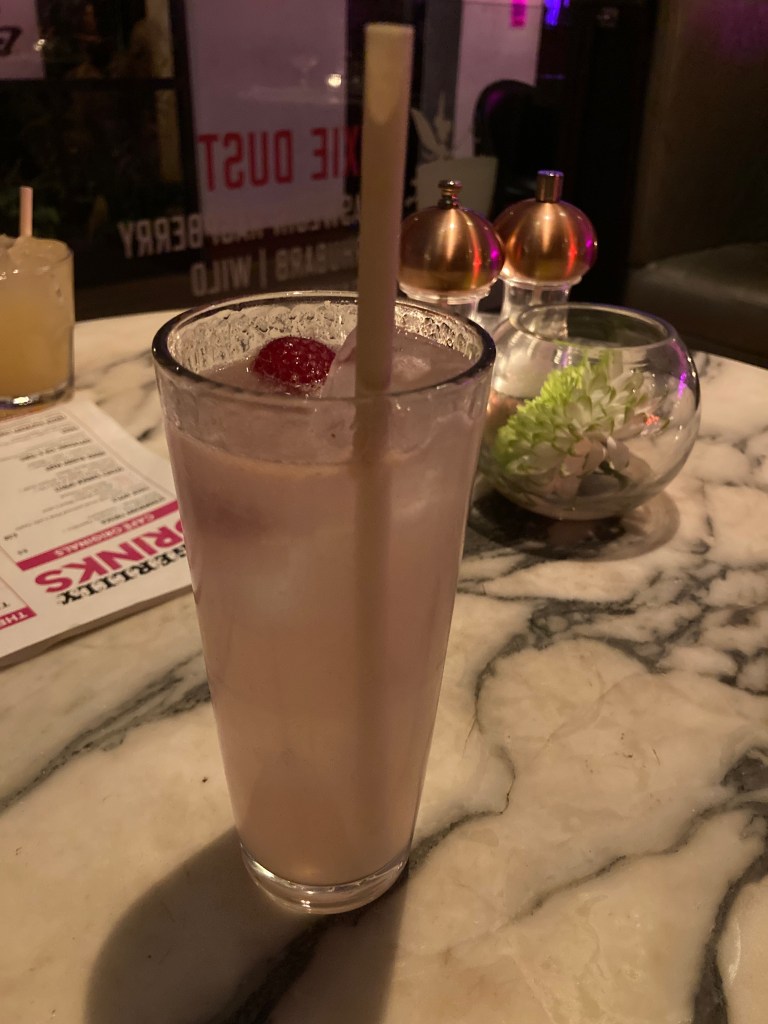
Next, Lemon Drizzle Flora Dora: a long drink comprising lemon drizzle gin, lime, ginger and raspberry.
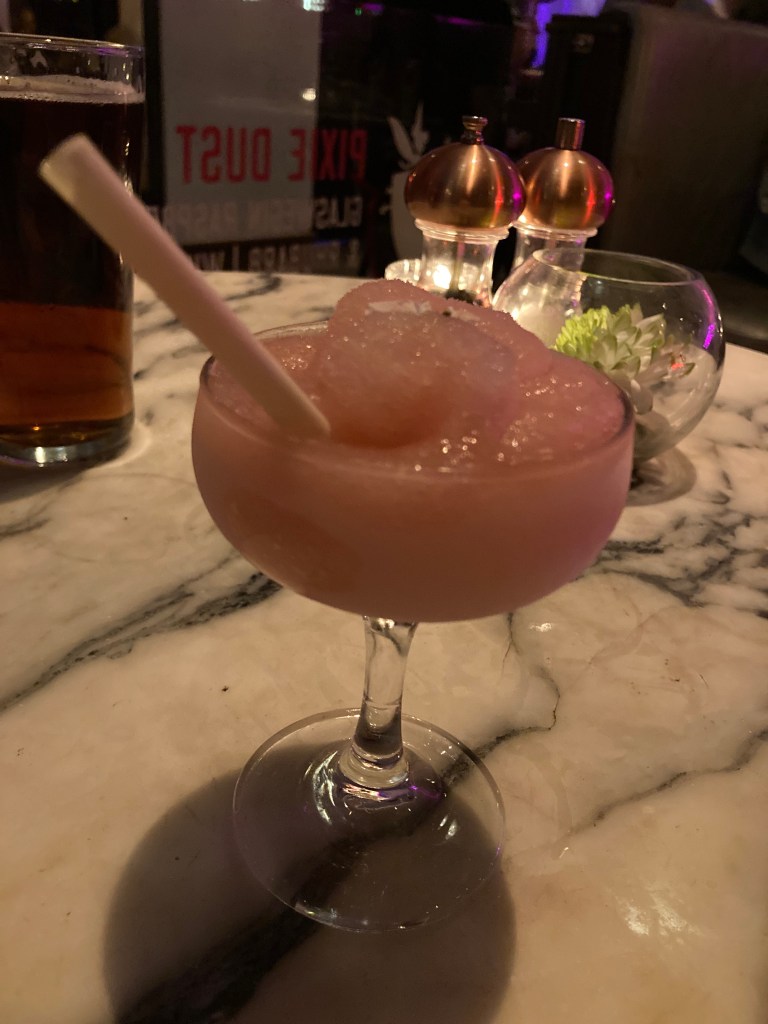
My final drink of the night was the Frozen Raspberry Charlie Chaplin, a gorgeous slushy mix of raspberry gin, apricot, raspberry and lemon.
The following evening we found a little Mexican restaurant and I was still in cocktail mood so it had to be a frozen margarita. I got to thinking that I should get the cocktail shaker out at home, Friday night cocktails anyone?
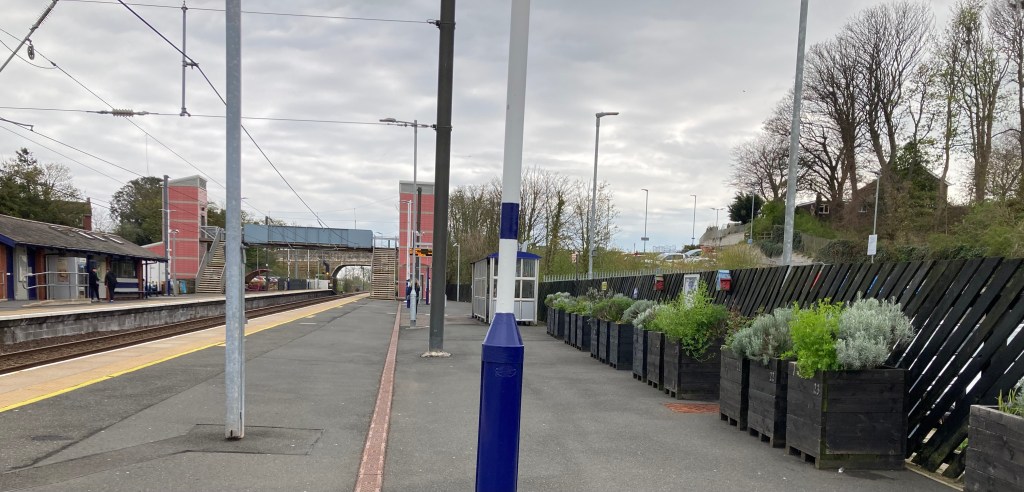
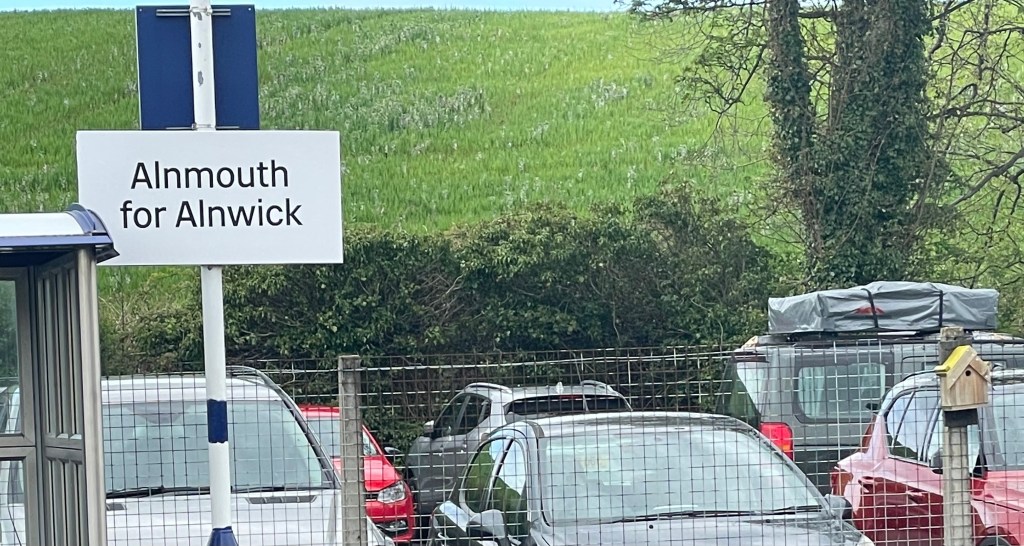
We had a little overnight trip to Edinburgh last weekend. Our train was delayed for about half an hour so we spent more time waiting on the platform at our local station, Alnmouth, than we would have done normally.
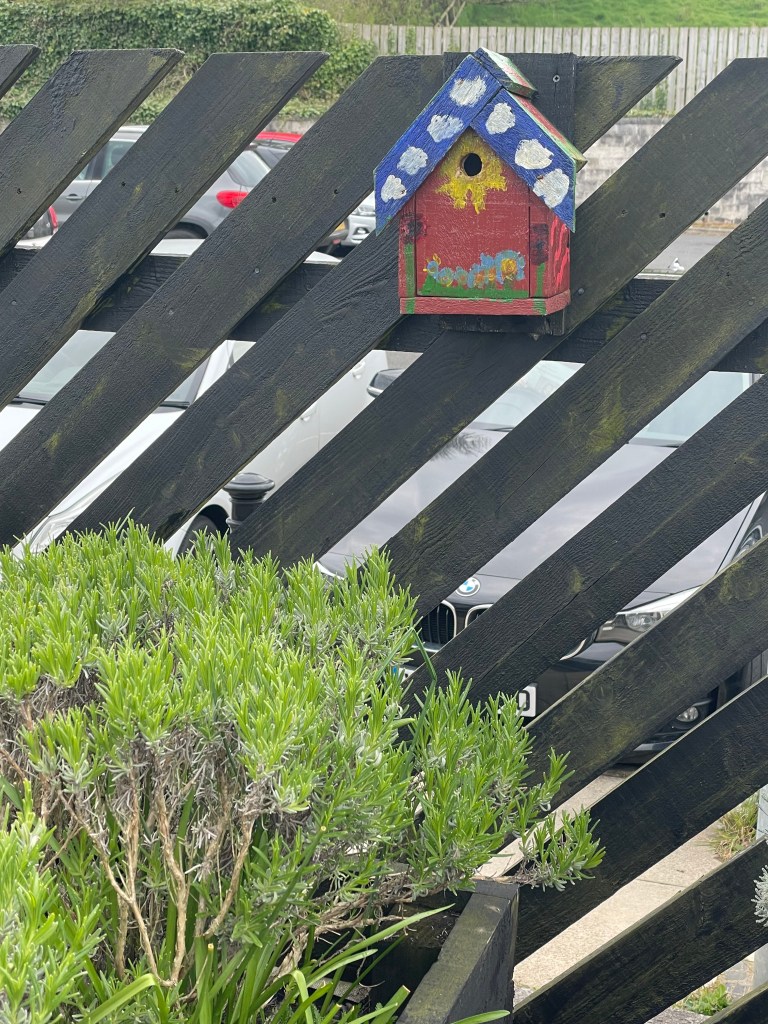
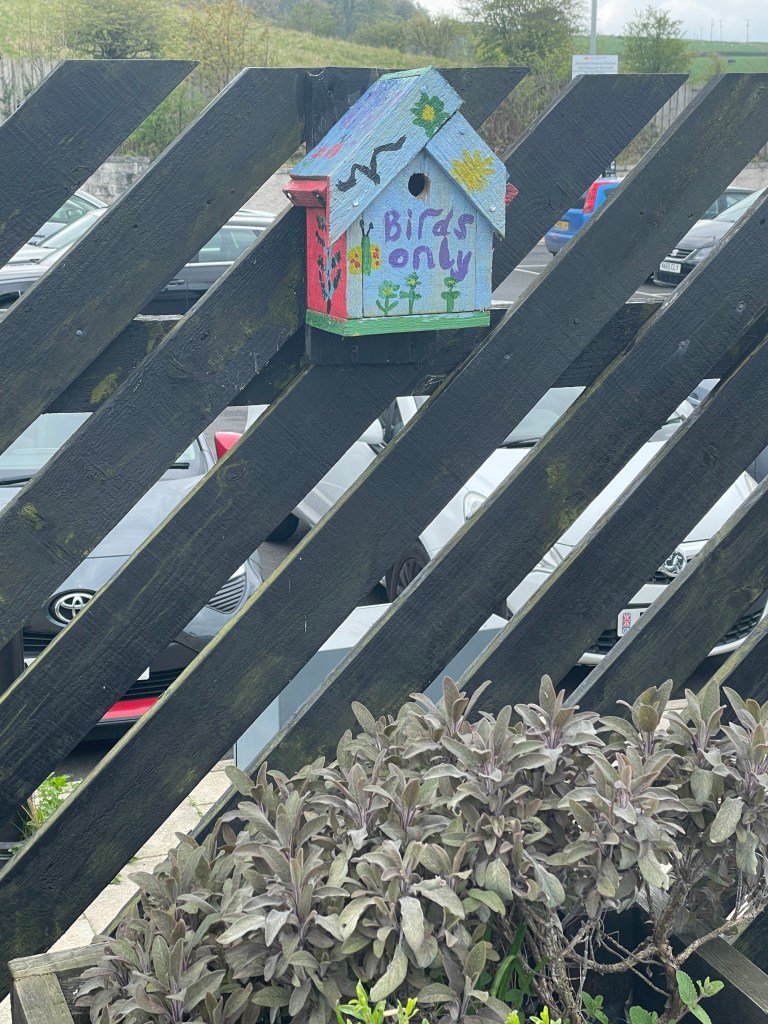
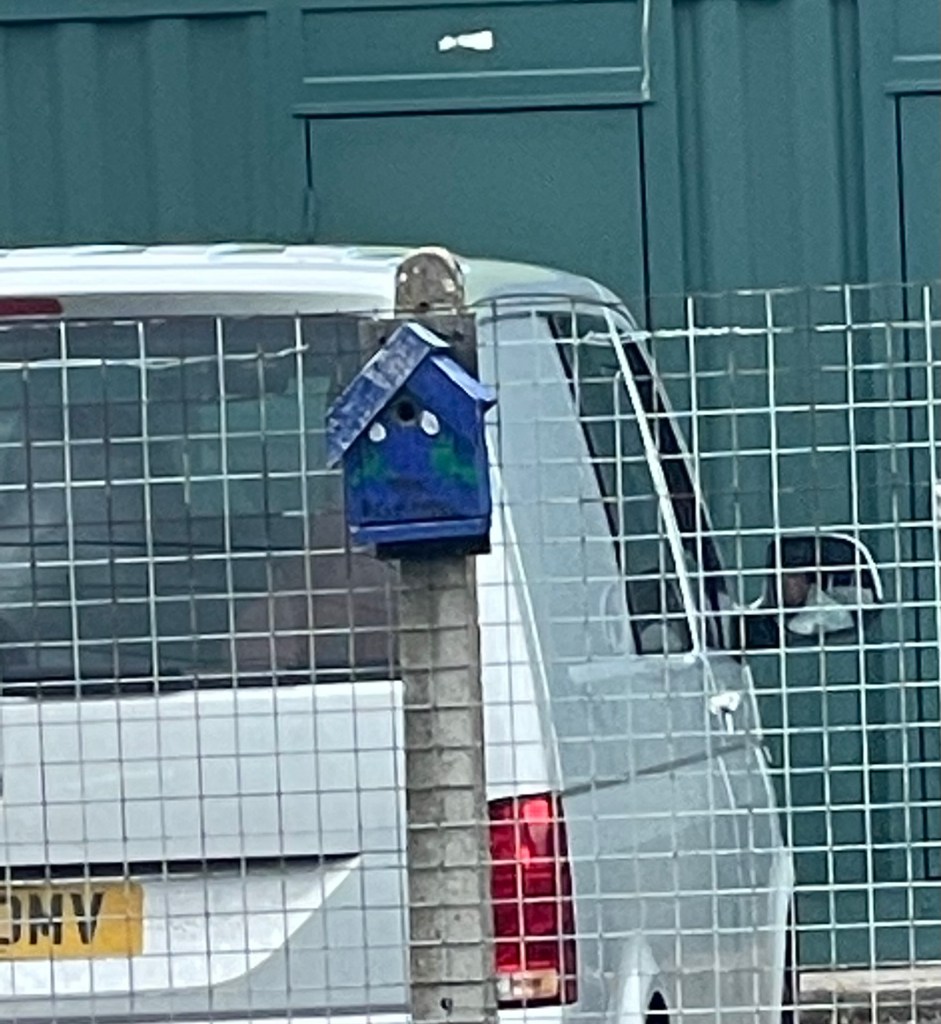
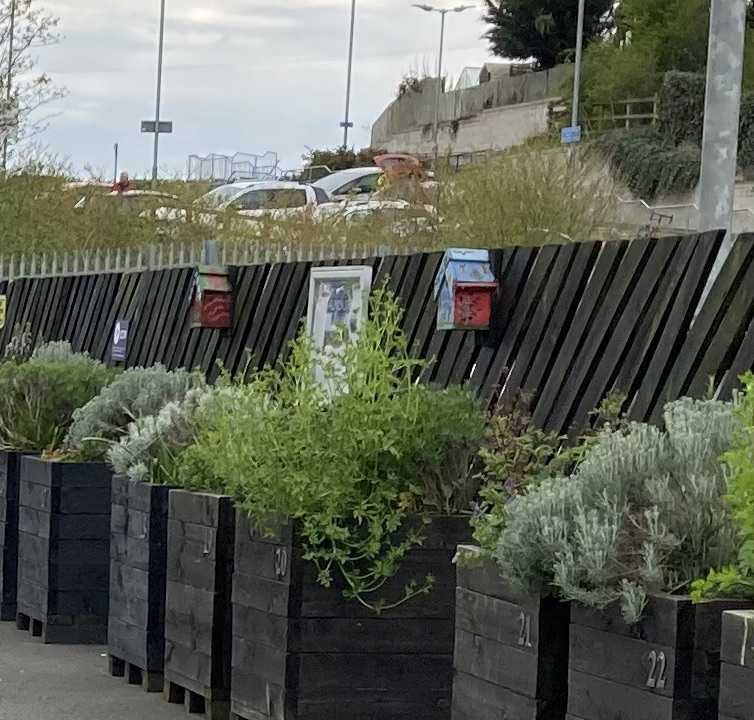
I noticed that some brightly coloured bird boxes have been put up on the fences that run along the side of the platform.
I’m not sure who put them there. Maybe it’s a project by a local school.
All the boxes are painted in different colours and designs.
In the short time I was there didn’t see any birds using them, but I hope they do.
They certainly add a bit of colour to the station, and what a lovely way to encourage our nesting birds.
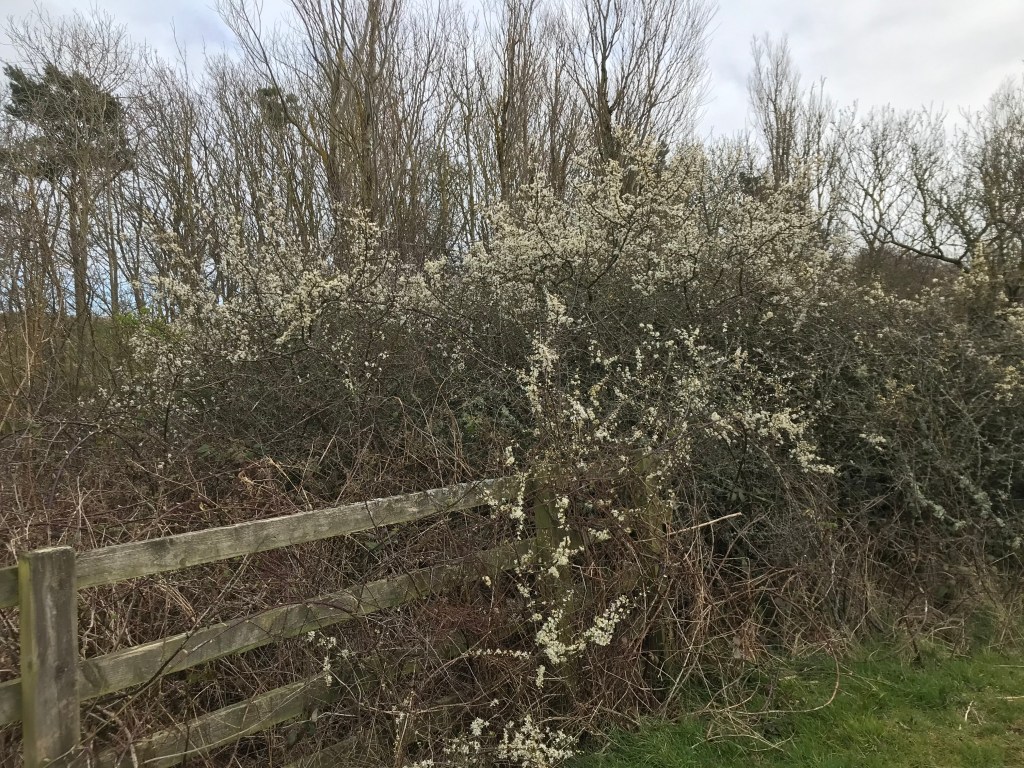
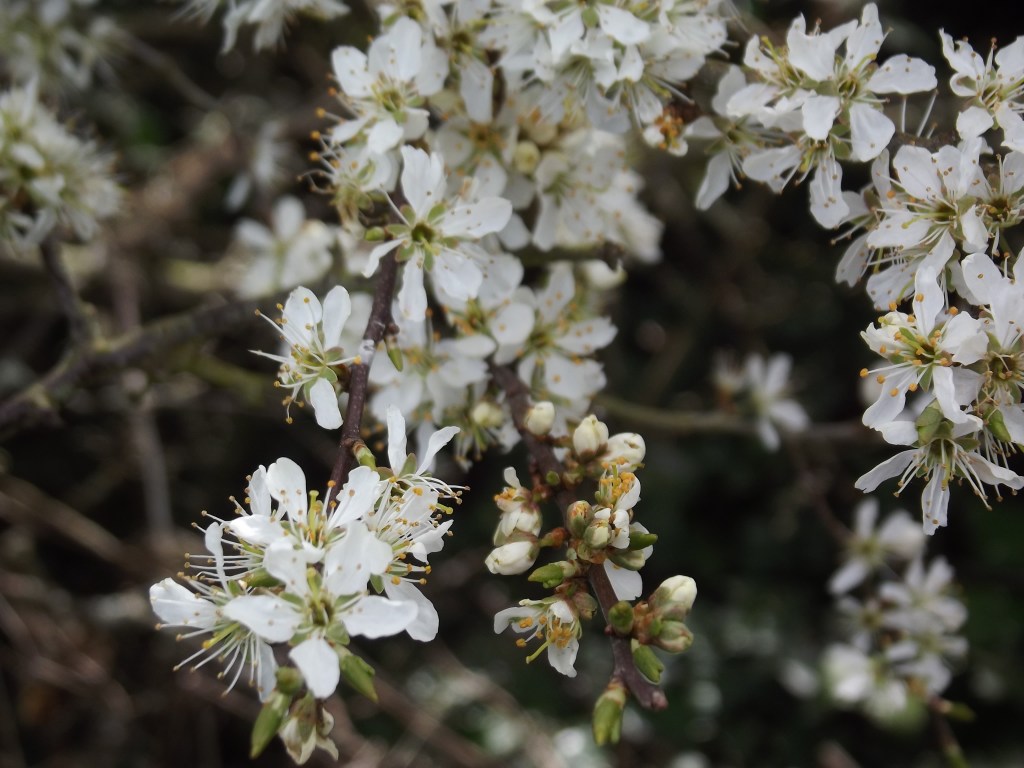
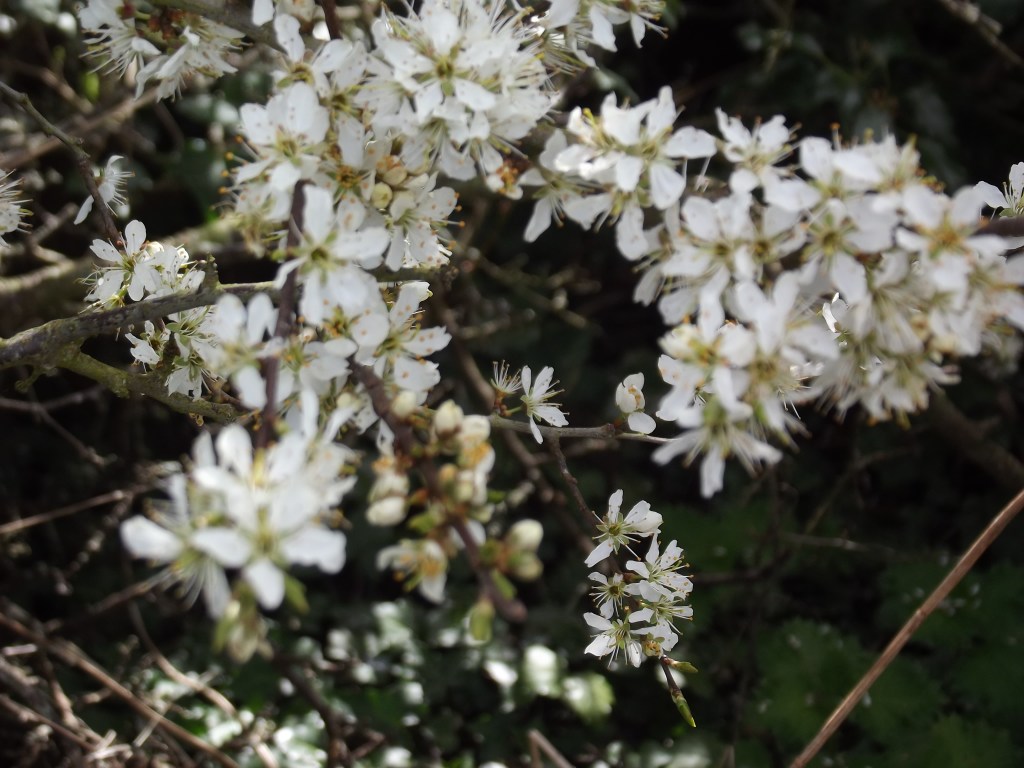
The frothy white blossom of the blackthorn has been in flower for the last month, standing out against the blackish twigs and branches, which have yet to come into leaf.
This shrub can grow to 4m or more and can be found in woodland or scrub, practically anywhere that the soil is not acid, but mainly grows in hedgerows, where the dense, thorny growth makes it an impenetrable barrier and protective nest sites for birds.
A member of the rose family and closely related to the plum and damson, the blackthorn is a native to Europe and Western Asia.
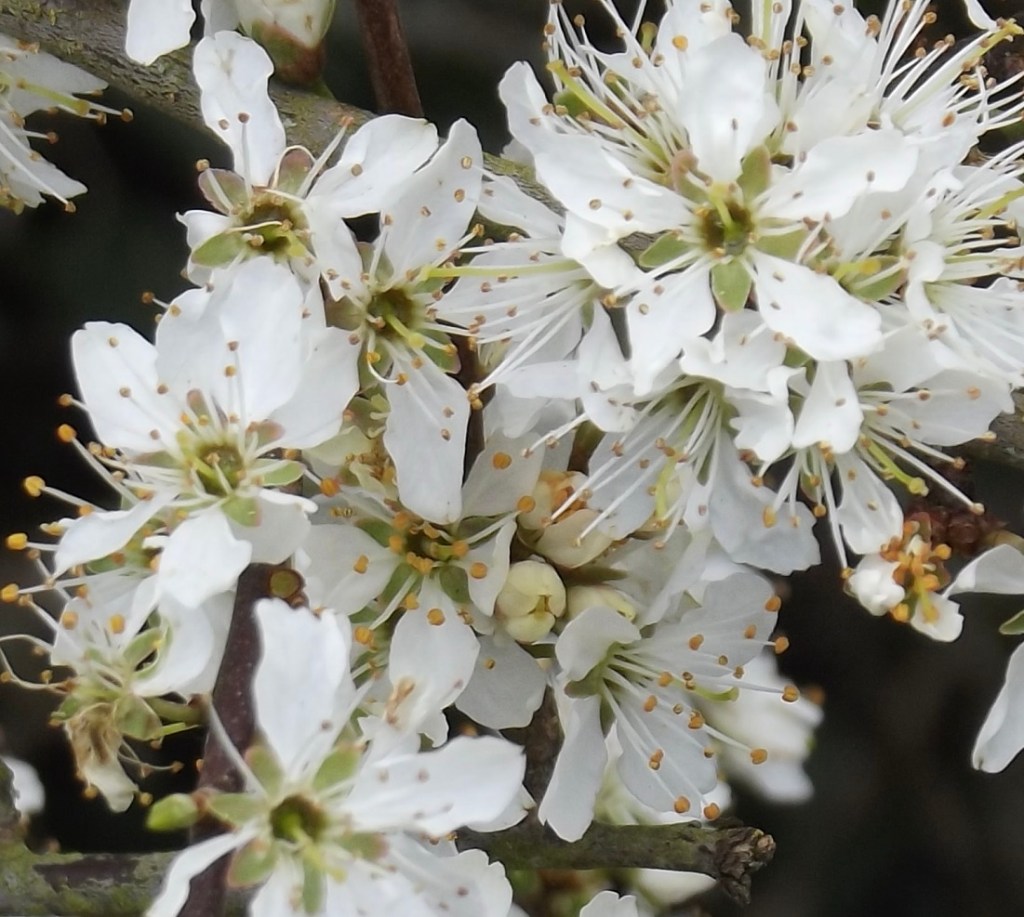
The flowers are hermaphrodite, each bearing both male and female parts and with five petals. They are the first flowers to appear in our hedgerows, arriving before the leaves and a welcome source of pollen and nectar for bees and other insects early in the year.
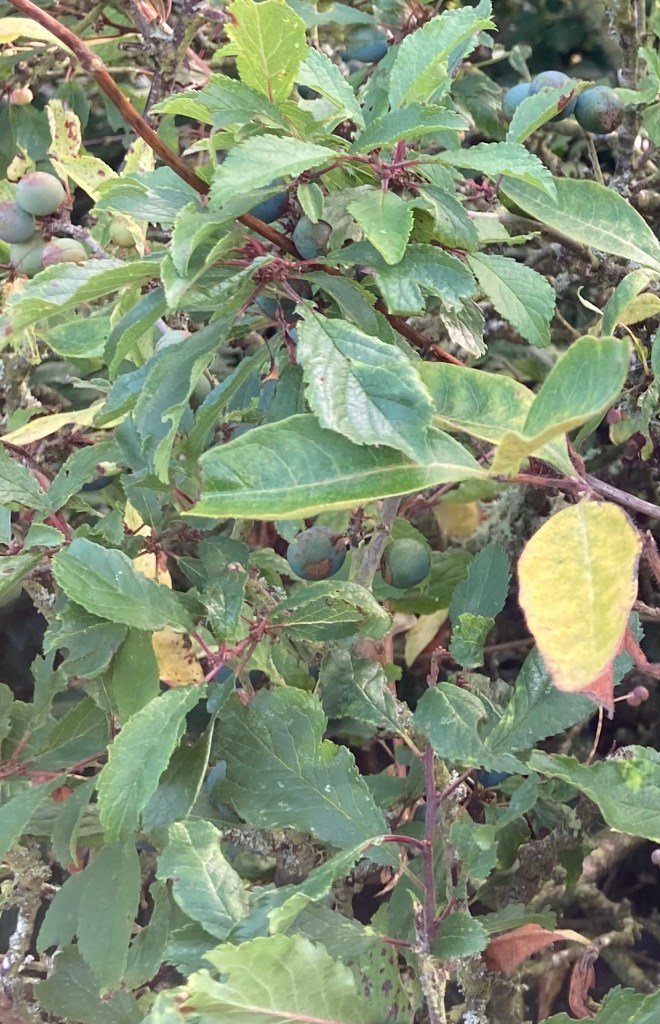
The small leaves are narrow and oblong shaped, tapering to a point and with toothed edges. They are the food plant for the caterpillars of several species of moths and butterflies, including the rare black hairstreak butterfly. In autumn they turn bright yellow.
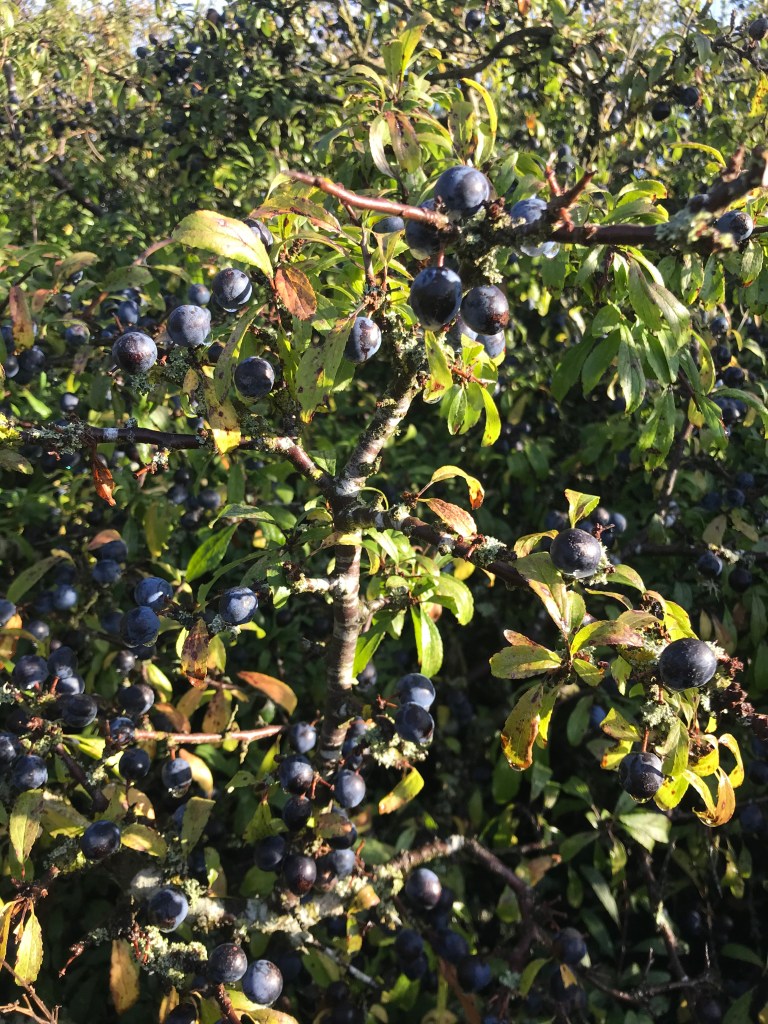
Also appearing in autumn are the sloes, round purple-black fruit with a bloom that gives them a blue tinge, each about 1cm in diameter. The sloe has a large stone and little flesh, but they do provide a valuable food source for birds, particularly for members of the thrush family.
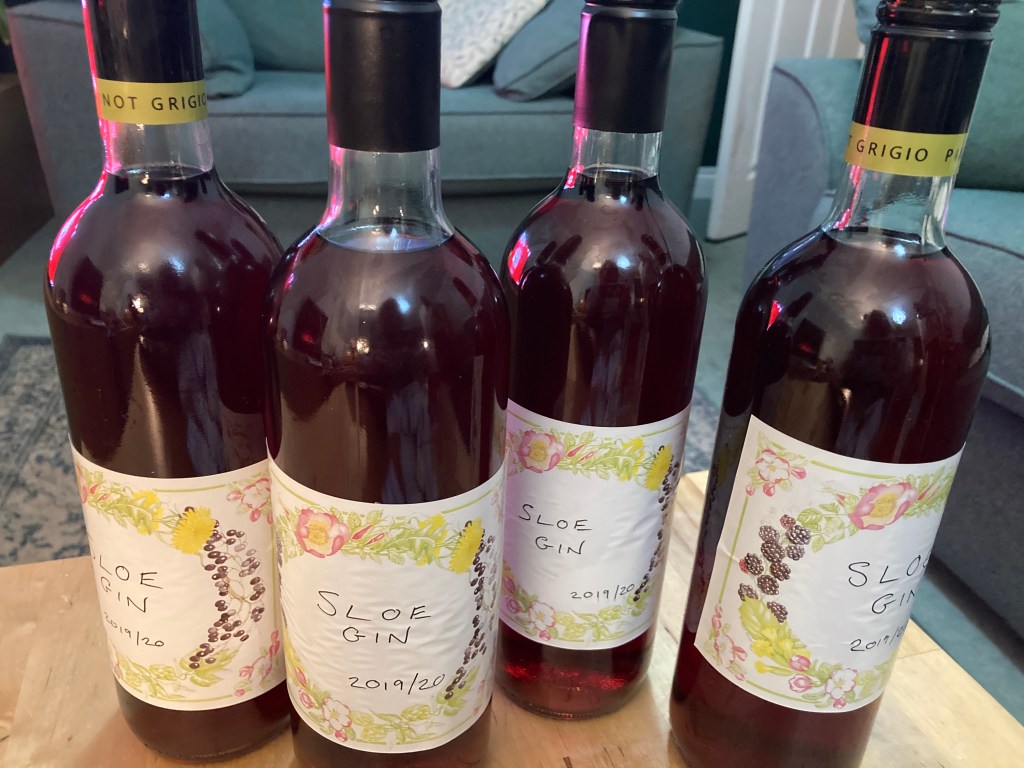
Sloes are incredibly sour, but sweeten slightly after the first frosts. In years where frosts damage the flowers and prevent the fruit from setting (or it is too cold for pollinating insects) the sloe crop is scarce. The fruit are used in sloe gin and can also be made into jams and jellies. You can read about how we make our own sloe gin here . If you have the patience to remove the stones from the fruit after they have been strained out of sloe gin (by which time they have absorbed a fair amount of alcohol, the flesh can be stirred into melted chocolate and left to set on a baking tray: delicious!
The wood of the blackthorn burns well and as it grows straight is used for walking sticks and tool handles. It was also said to be the wood of choice for witches’ staffs and wands and had an association with witchcraft.
Traditional medicine has used preparations of the plant used for cleansing the blood, for digestive disorders and rheumatism.
I always look out for the first blackthorn blossom to appear every spring, with the hope of a good crop to make sloe gin later in the year.
Don’t forget the following when picking any parts of a wild plant.
Don’t touch or pick any plant unless you are ABSOLUTELY CERTAIN that it is safe to use, and not poisonous.
Don’t pick anything unless it is abundant
Only pick small amounts and no more than you need
Don’t pick if there is a risk of pesticide/weedkiller or other contamination, including from traffic or other forms of pollution.
Always get permission from the landowner.
Avoid areas which may be soiled by animals (wild or farm animals or pets)