Welcome to my blog. I live, knit, crochet, spin and craft near the Northumbrian Coast (but not too near – the waves won't be splashing my yarn!).There's a story in every stitch, every grain of sand, every blade of grass. I thought I'd blog about it…
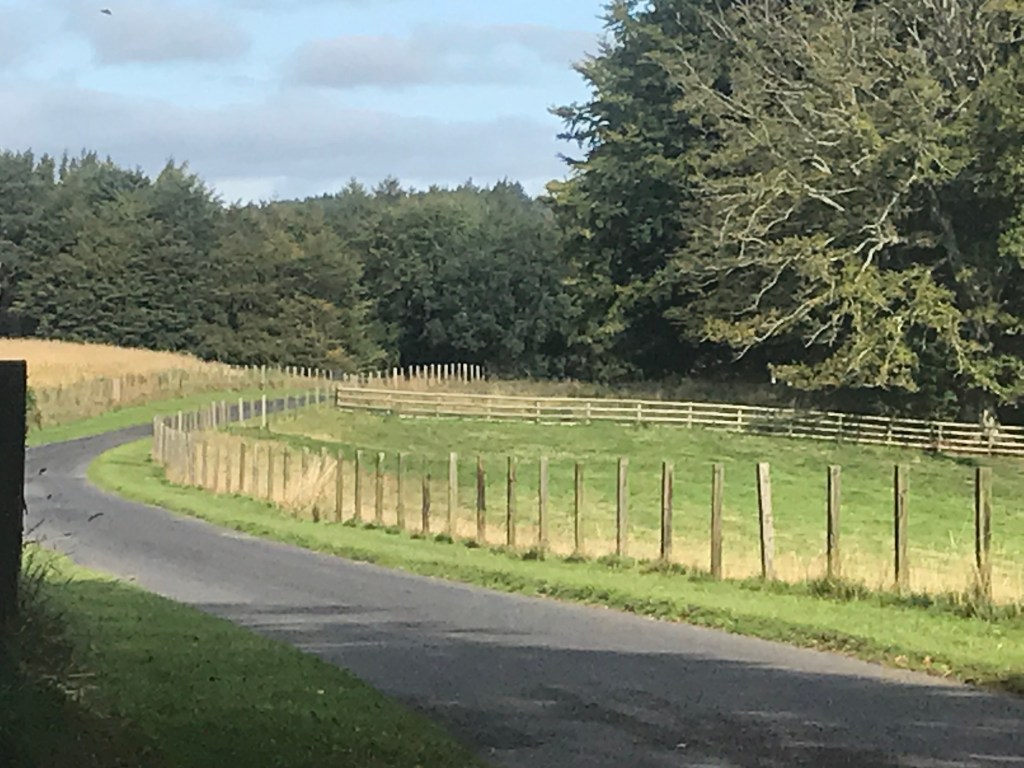
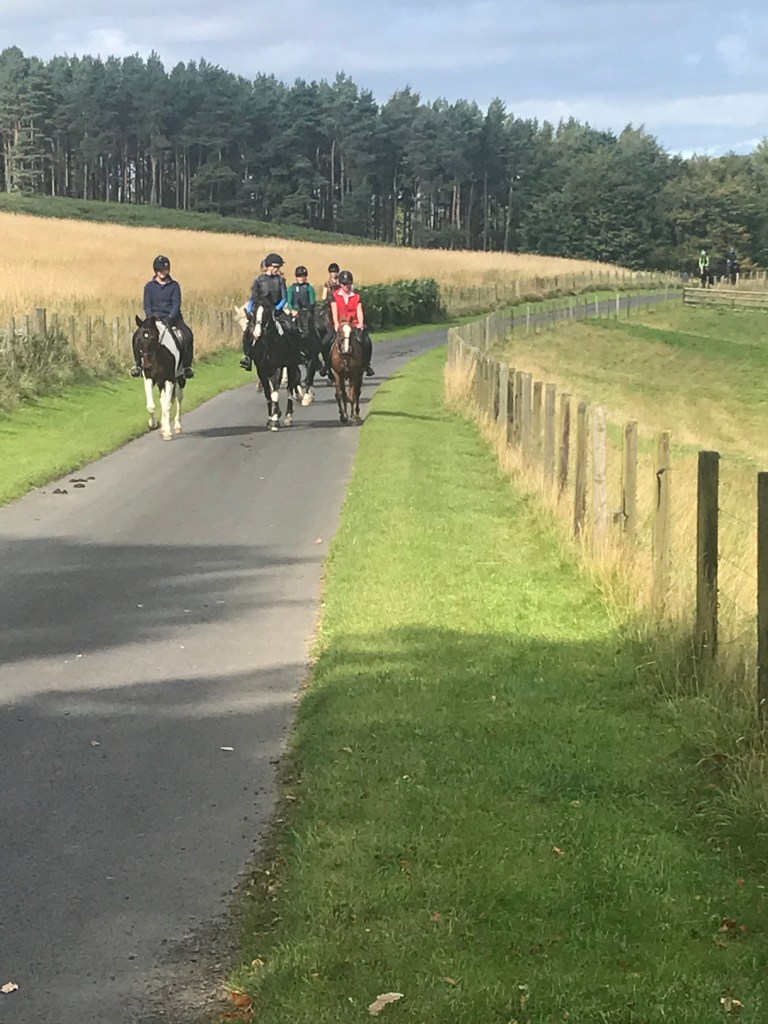
This was my view for most of today. We were stewarding at a pleasure ride in Hulne Park. Horse riders were able to ride a set route through the Duke of Northumberland’s Estate here at Alnwick, either a shorter route of about 7 miles, or with an additional loop across the moors to give them a 10 mile ride. I mainly sat in the car and knitted while K pointed the riders in the right direction!
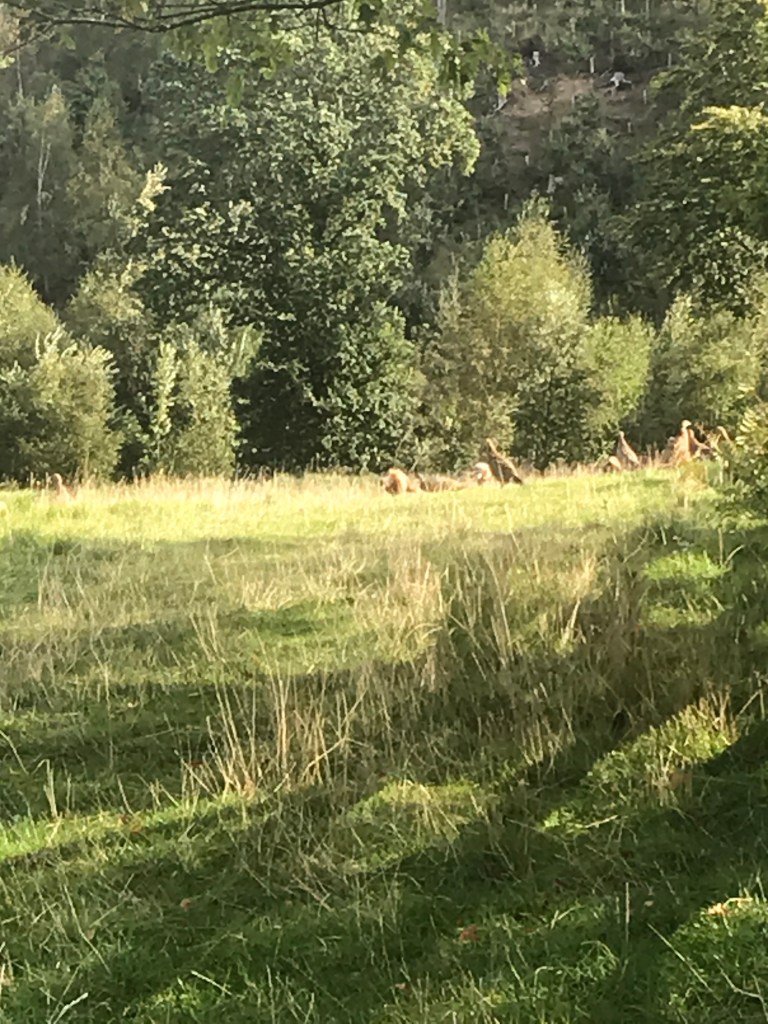
The estate is kept in pristine condition, with perfectly maintained fencing and immaculately mown verges. Some is kept as farmland with grazing sheep, but much of it is used for shooting: there are pheasants everywhere.
The park is open most days from 11am for visitors on foot. No vehicles (including cycles) are allowed (we had special permission) and no dogs are permitted (in case farm stock or game is disturbed) There are marked trails to follow. The park is occasionally closed to the public but details of closures are on the website.
Sometimes the views are just a little too perfect to be natural, then you remember that in the 18th Century the park was redesigned by Lancelot “Capability” Brown, who was famous for exactly that! There are beautiful specimen trees and well-constructed stone walls hidden in dips so they can can enclose farm stock without obscuring the view. The buildings are pretty special too, including Brizlee Tower, an 87 ft high, six storey gothic folly, designed by Robert Adam, and completed in 1783.
We were stationed at the point where riders had to decide on whether to take the long or short route. Apart from gusty winds, it was a lovely day, so most opted for the longer ride.
We saw everything from tiny children”s ponies to a massive Shire horse taking part, and everyone seemed to enjoy themselves.
There are worse places to spend a Sunday!
Have you visited anywhere interesting this weekend?
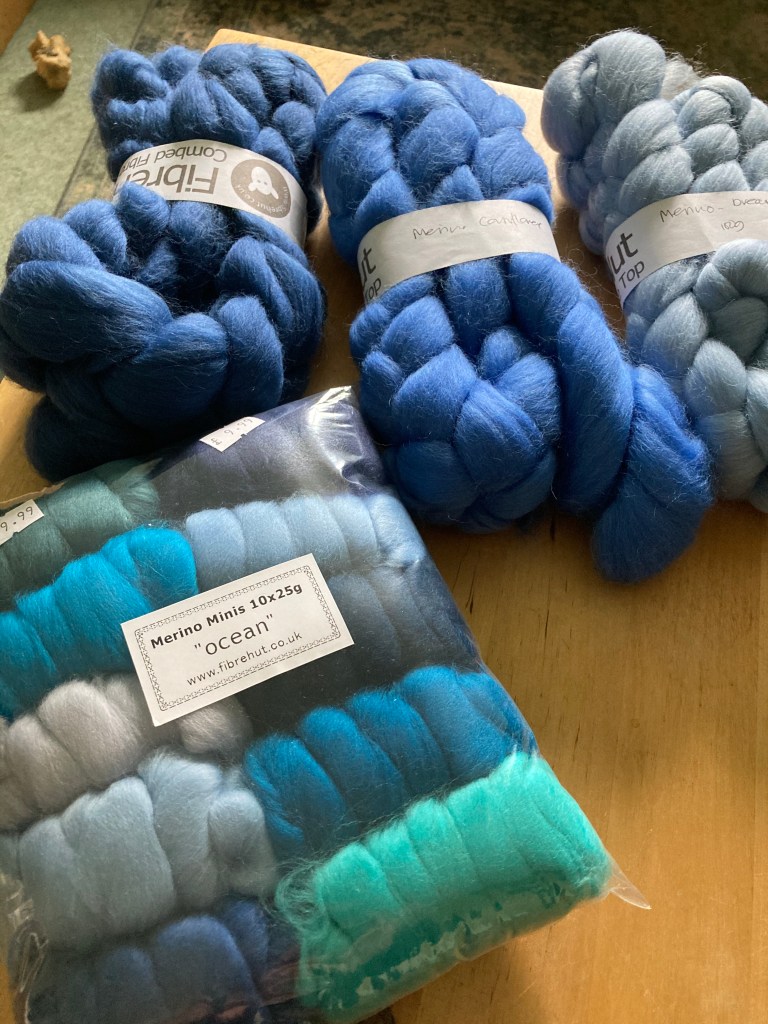
Yesterday I said I was excited about getting some fibre to spin and my online order from Fibre Hut arrived today: all these gorgeous blue shades of combed merino: 100g each of Denim, Cornflower and Dreamy (a light baby blue) and a collection called Ocean – 25g in each of ten blue and aqua shades.
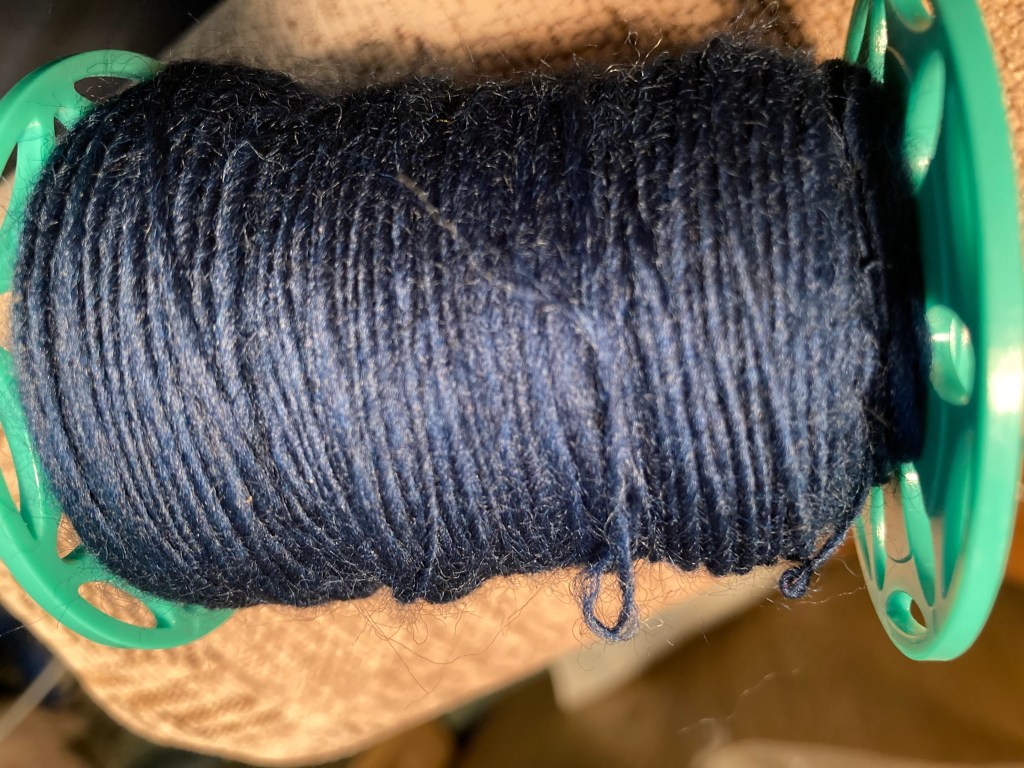
I chose one of the minis in navy and spun this bobbin. I think it’s much more consistent than yesterday’s attempt.
I got really into spinning this – the minutes just melted away. Spinning is just so relaxing!
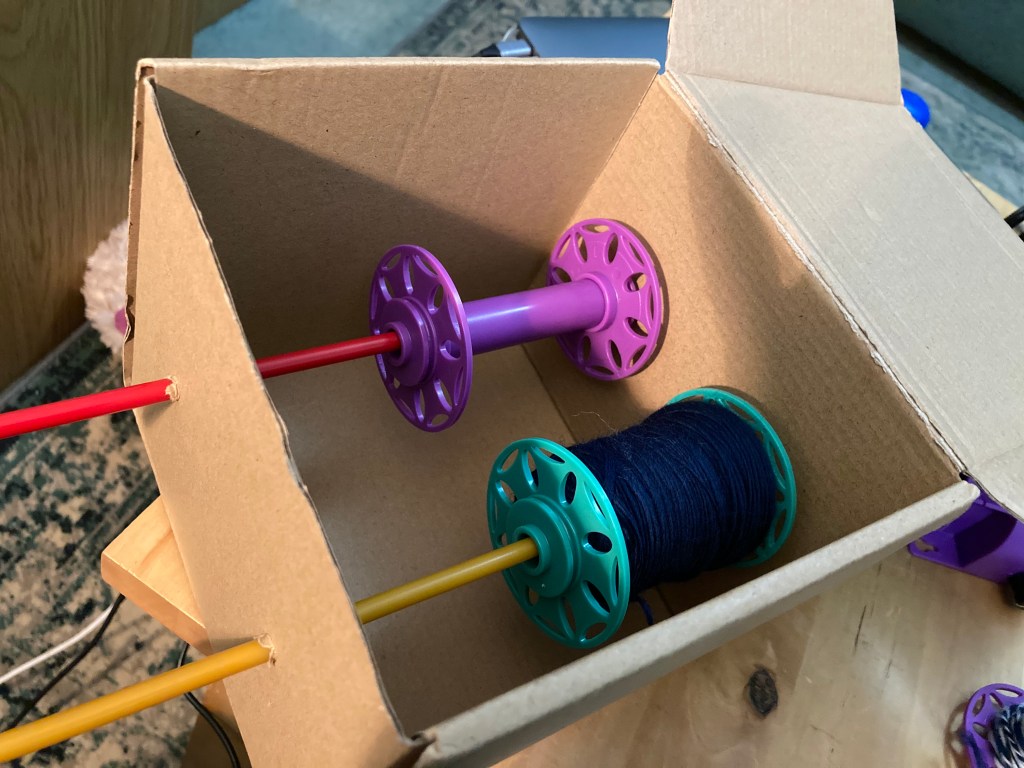
When I’d finished spinning this fibre I decided to try plying it with the white I spun yesterday. For this I needed to improvise a Lazy Kate (something to hold the bobbins) – I used a couple of old knitting needles pushed through the box the Electric Eel Wheel Nano came in.
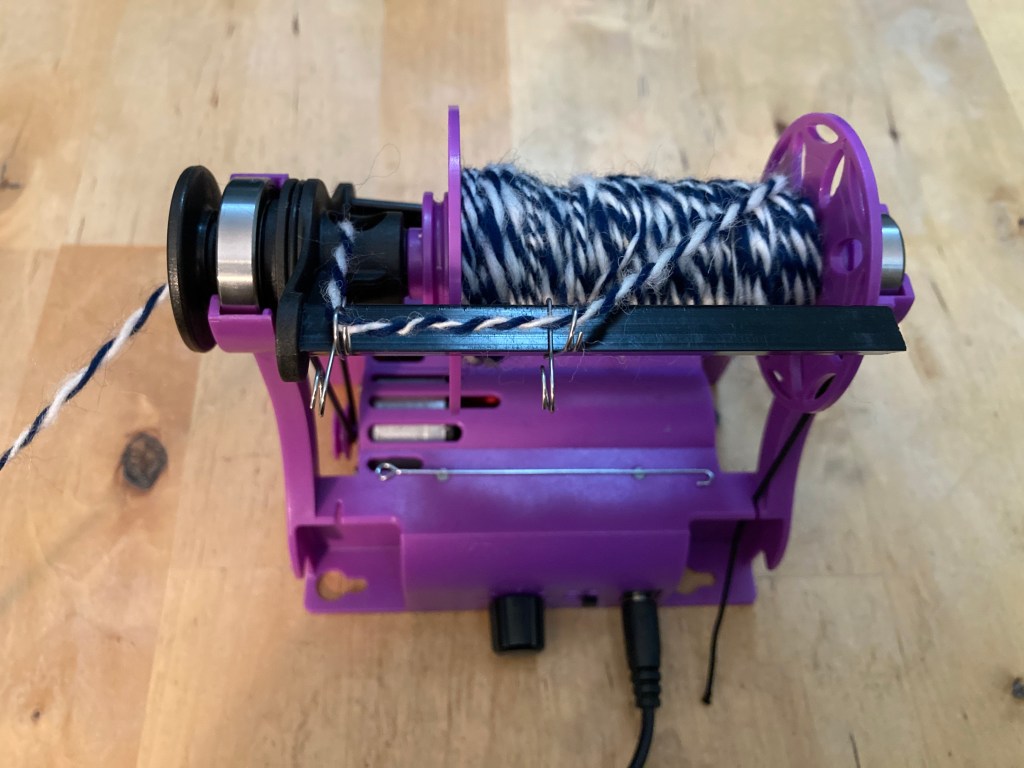
Plying the two yarns together involves the wheel turning in the opposite direction from spinning – you just flick the switch on the the machine.
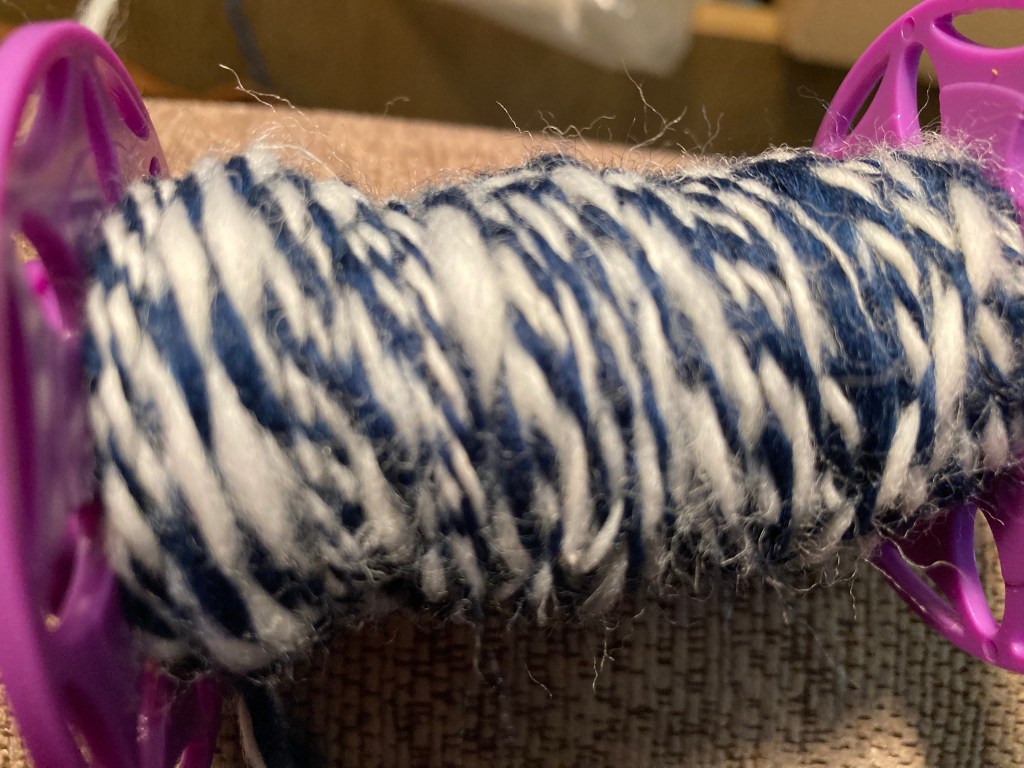
This is the result. Stripy yarn!
My first mini skein of hand spun yarn……and a great sense of achievement!
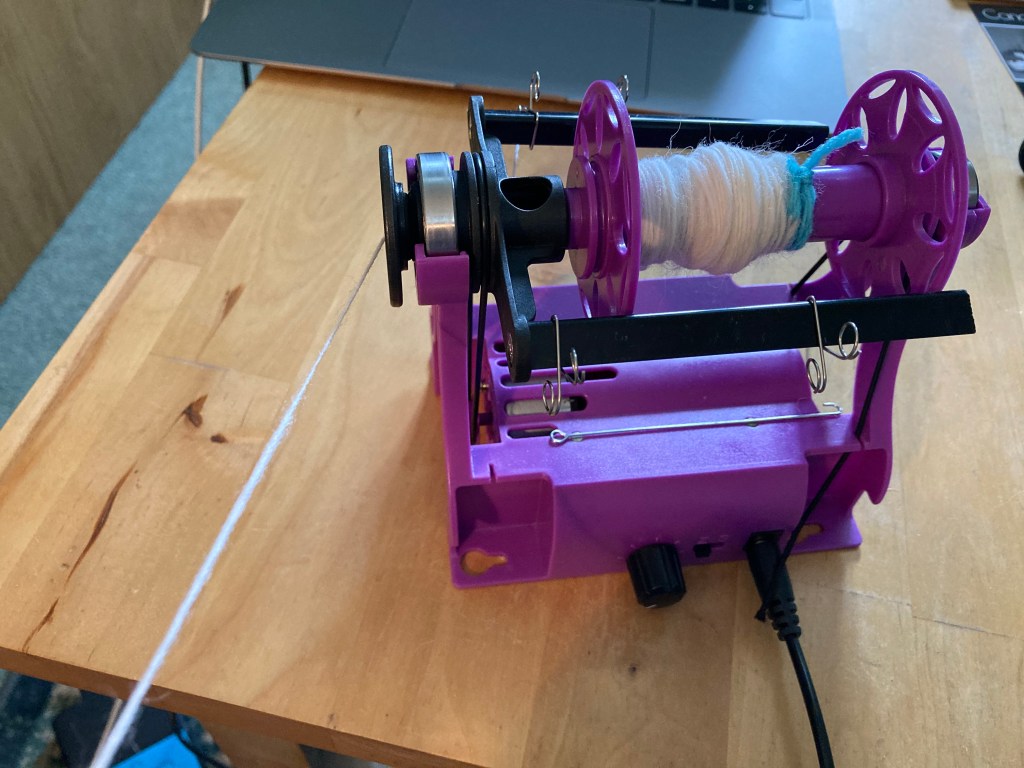
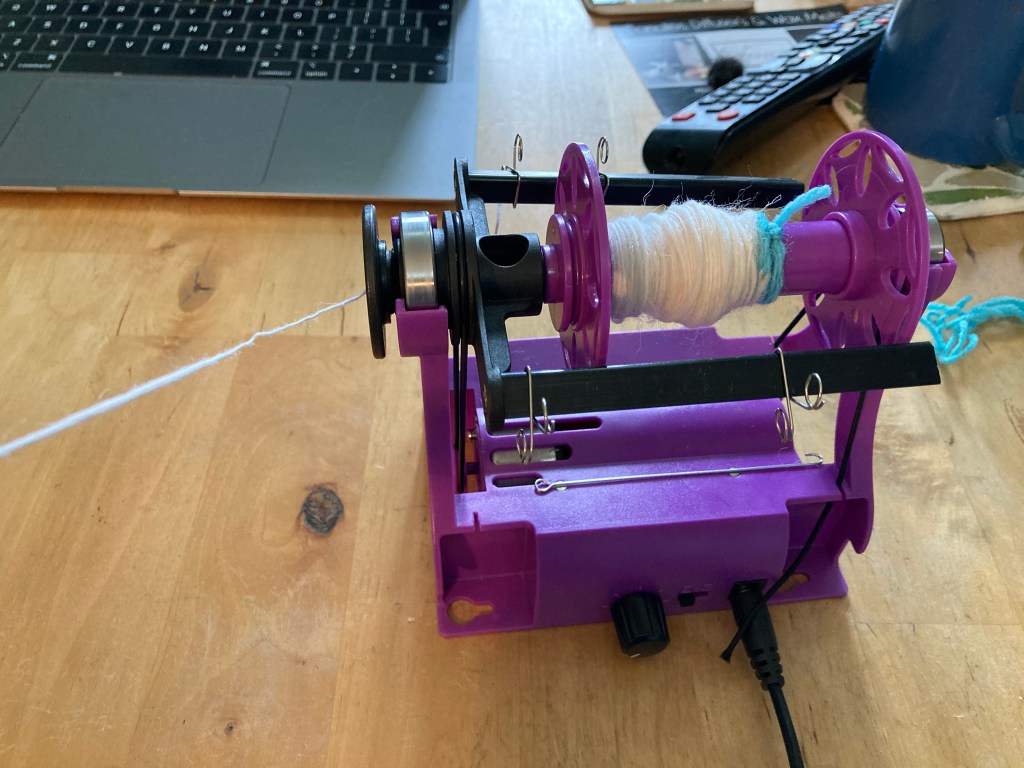
I’ve been playing with one of my birthday presents. Having expressed an interest in learning to spin yarn a while ago, I was given this for my birthday. It’s an Electric Eel Nano: a portable spinning wheel. Less expensive than the traditional type and tiny: only about 14cm long.
It comes with a 2 power cables (UK and US plugs), a USB power cable and spare bobbins. There is no instruction manual, but a card with a link to online video tutorials and a yarn guide.
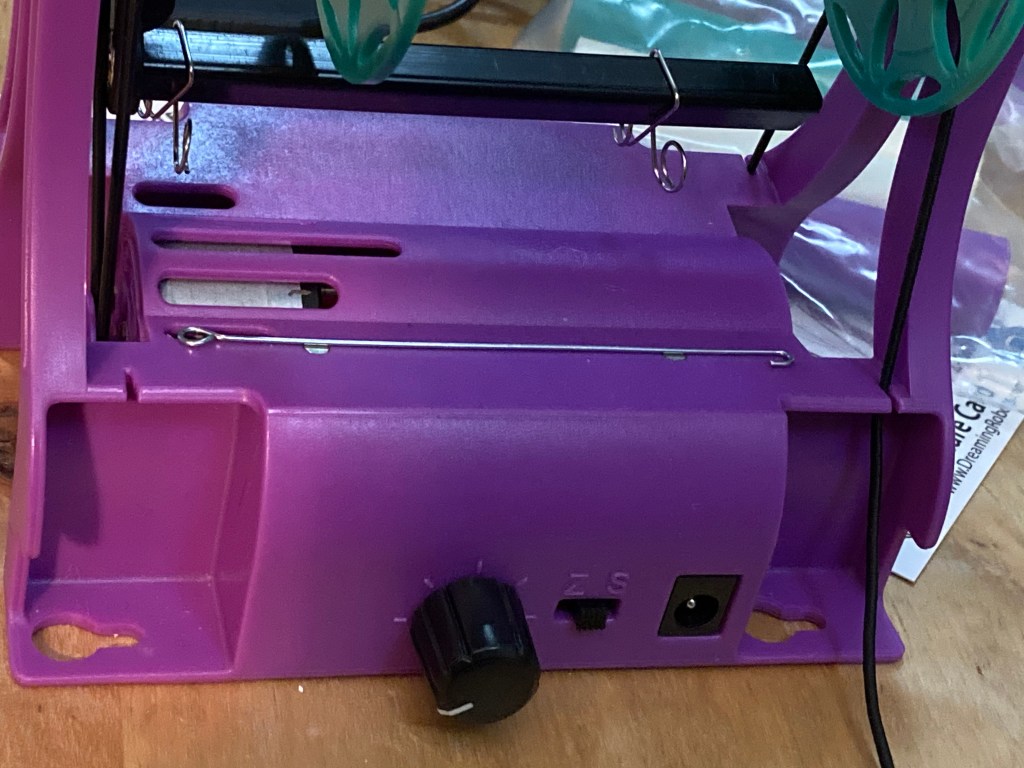
There’s an orifice hook that I have no excuse to lose, as it stays attached to the machine with a couple of tiny magnets. There is a speed control and a switch for on/off, clockwise/anticlockwise rotation.
I’ve ordered some fleece online, but I did have some roving that I use for needle felting, so I couldn’t resist having a go. I followed the instruction videos which were very clear and found the Nano quite easy to use.
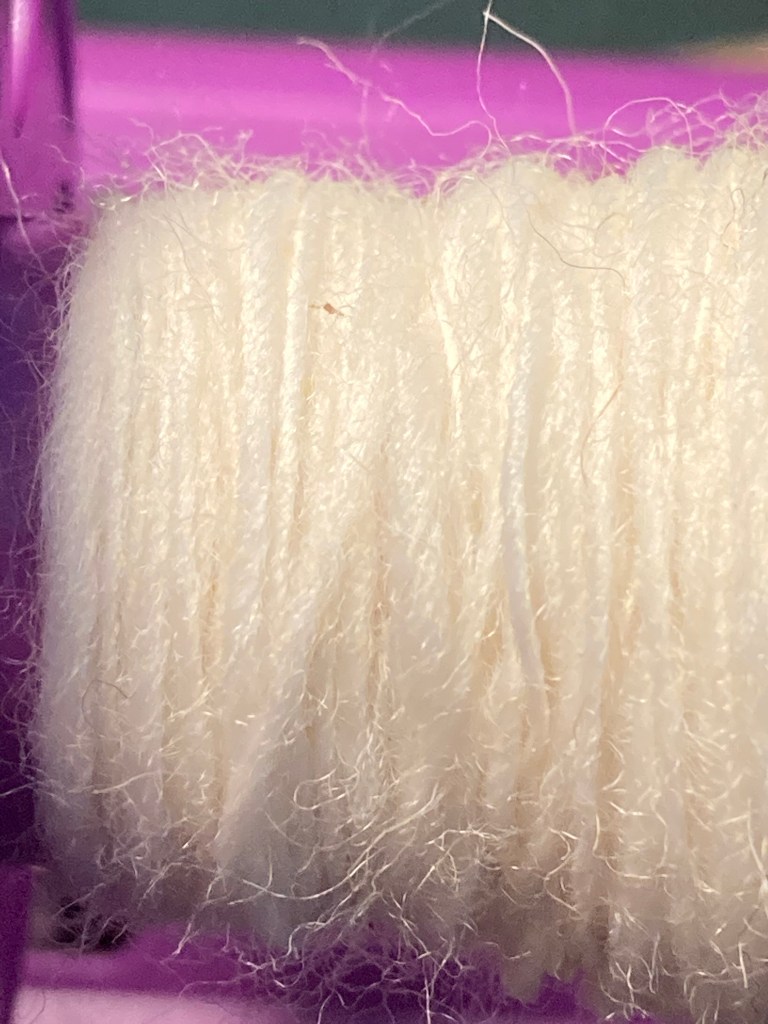
This is the result. – not the most even of yarns but I’m quite pleased with my first attempt at spinning.
The next thing I need to do is try plying it.
Hopefully my online order will arrive this week and I can do some more. I can see myself getting quite addicted!
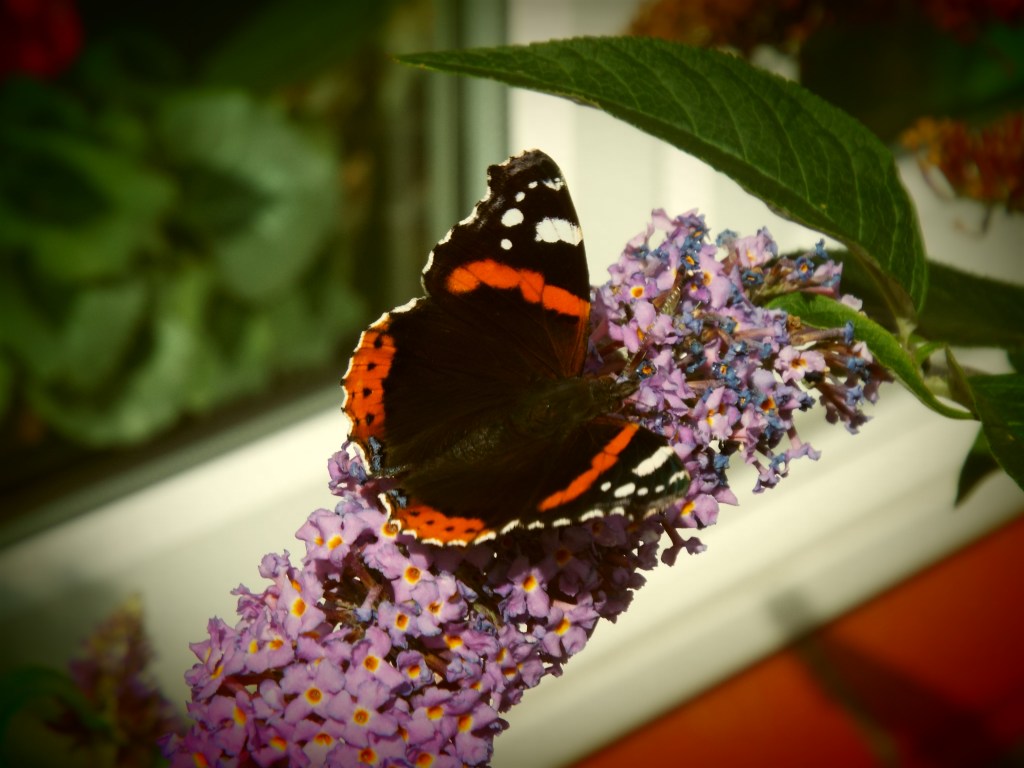
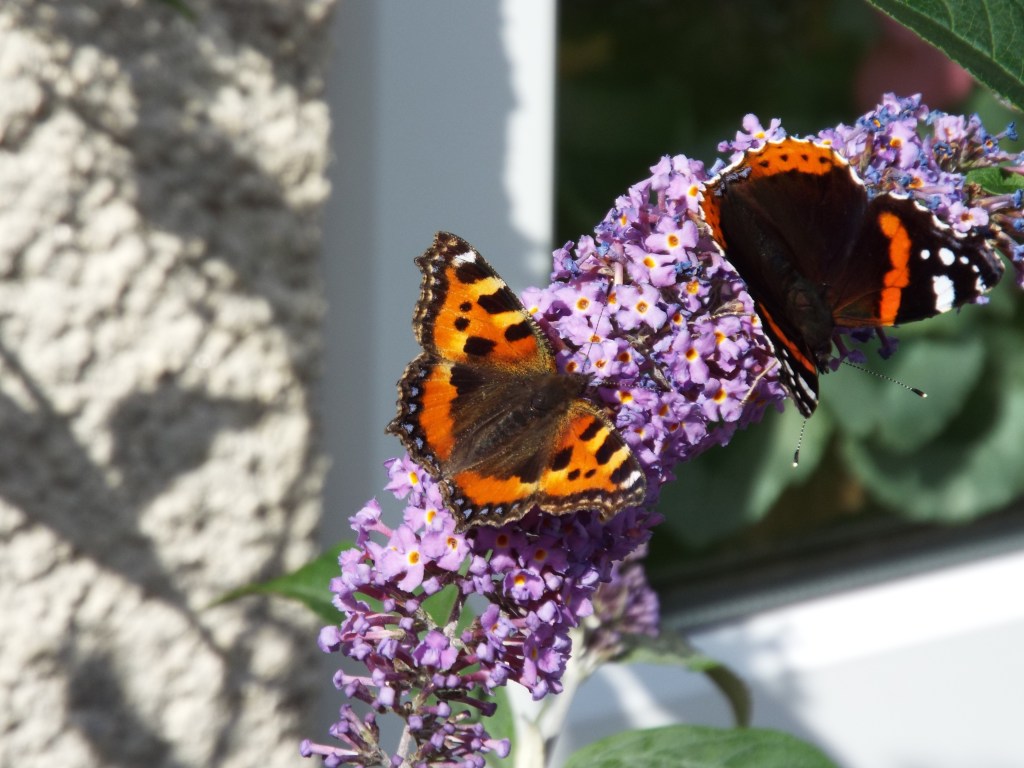
We have a buddleia outside our dining room window and the sunshine this week has brought the butterflies out to bask while they drink from the nectar-rich blooms. K went out to take some photos.
The first one he saw was this red admiral.
Then it was joined by a small tortoiseshell……
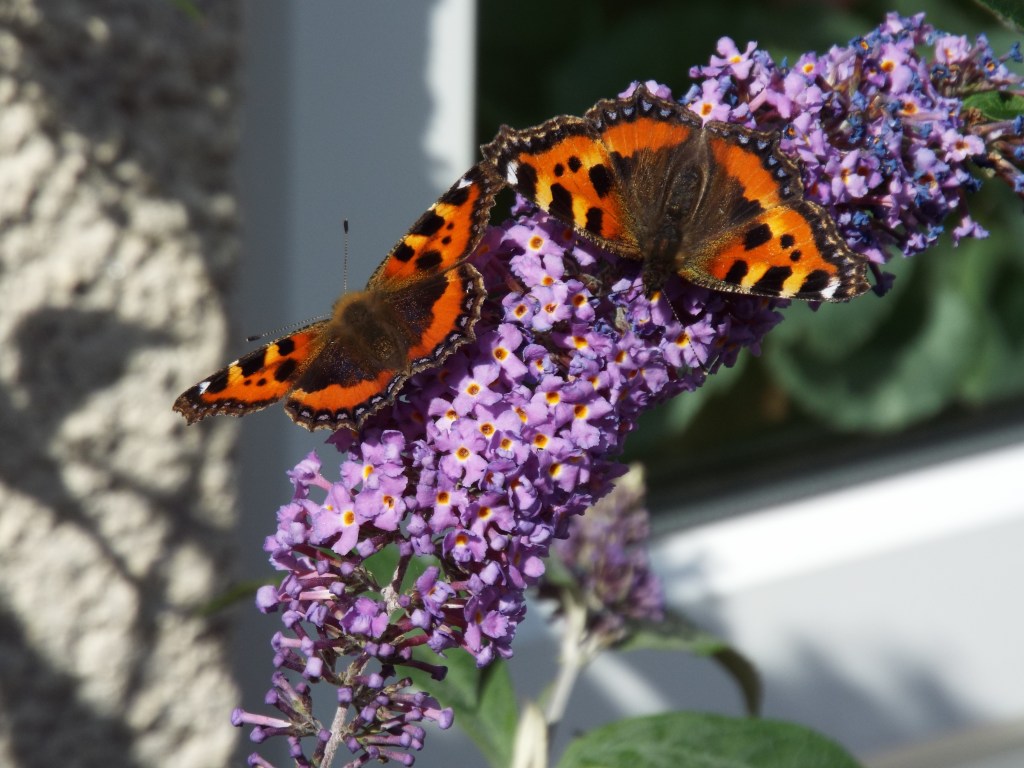
….and another.
W
It’s lovely that two of our most common butterfly species are also among our most colourful.
The plant self-seeded and is not in a great position to be honest, but I’m reluctant to remove it when the butterflies love it so much and I enjoy watching them from the window. It will get cut right back, almost to ground level, after the flowers have finished. The common name of Butterfly Bush is very appropriate!
Have you had any interesting wildlife visitors to your garden recently?
One of my favourite things to do is drive to the beach and sit with my knitting while K takes the dog for a walk. It’s been a while. The beach is just too far to walk to from home so when lockdown began we stuck to dog walks round the village. Then when the restrictions were lifted the world and his wife seemed to arrive in Northumberland for a staycation. The coast was basically full! The surge in domestic tourism has helped the local economy and kept our local hospitality industry going which is great, but now the school term has begun and many of the holiday makers have gone it’s lovely to reclaim our beaches.
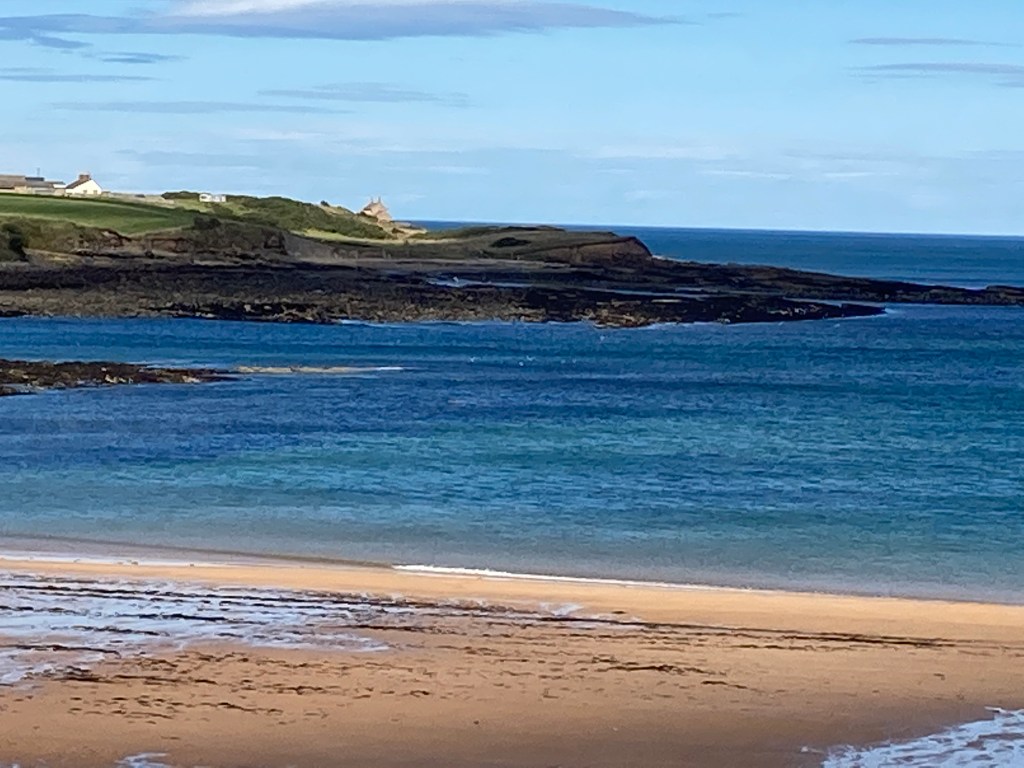
Today we went to Sugar Sands. It’s a bit off the beaten track and getting there involves a gated single-track road through a farm (with an honesty box – you pay £1 to park by the beach and it all goes to local church funds.) It’s been one of the few places we’ve been able to park on the coast, until August Bank Holiday, when it appeared on a list of “Britains’s top secret beaches” somewhere and got overrun. There were still quite a few people about but as you can see there was nobody sat on the beach.
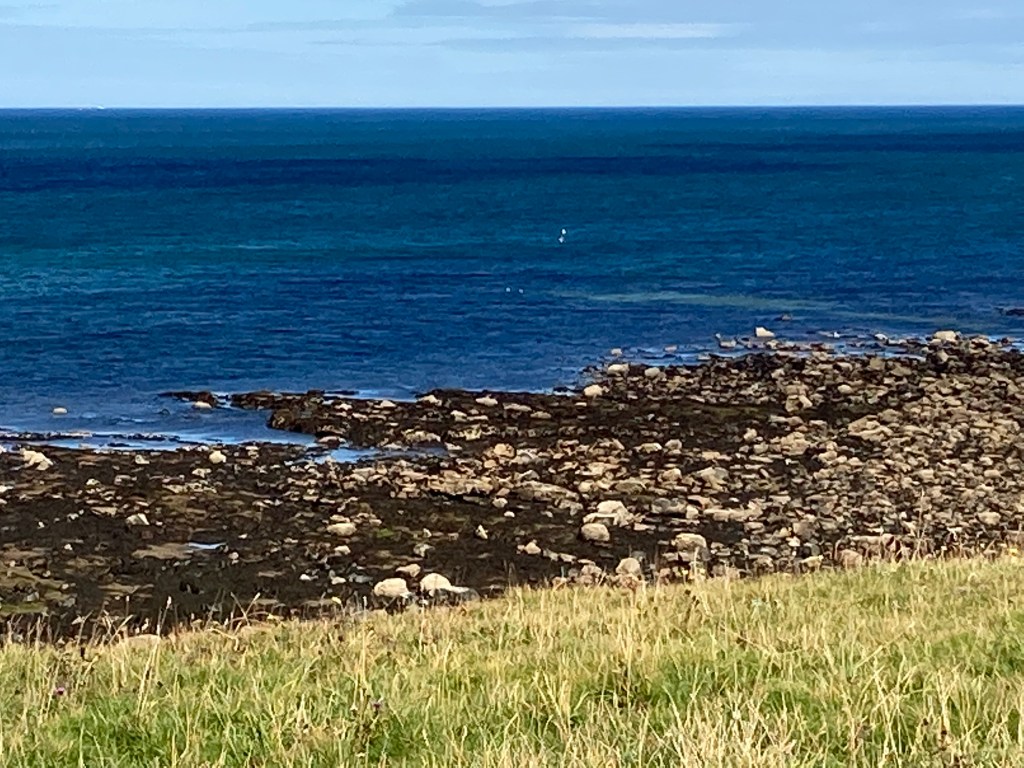
The parking area is at the top of a steep bank , so the view over the beach and out to sea is wonderful. It was such a beautiful day, if a bit breezy, and the sea was the most brilliant blue.
There were still some sand martins about (they nest in holes in the bank). Some tiny wading birds (sanderling I think) were trotting about the shoreline like clockwork toys. A pair of gannets were hunting quite close to shore, unmistakable when they turned into the sun to show pure white plumage and black tips to those long straight wings. They would soar to gain height then fold their wings and plummet into the water with a splash, catching small fish with that dagger beak. It’s always spectacular to watch.
I love to knit with a view. Do you have a favourite knitting spot?
I just celebrated a special birthday – one with a zero in it. I had a lovely day, though our celebrations were a perhaps little more low key than they might have been if it hadn’t coincided with the pandemic. We plan to take a trip somewhere interesting when travel is safer and less prone to restrictions. I did get some lovely presents, including some totally unique ones that K commissioned especially from some very talented people we know.
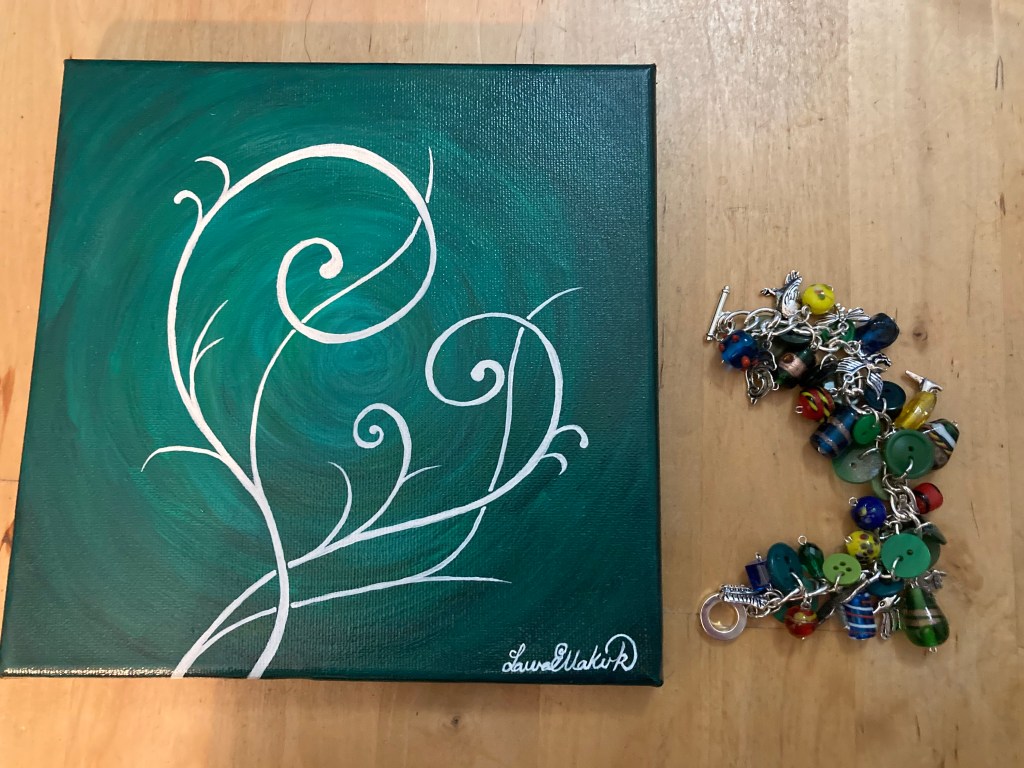
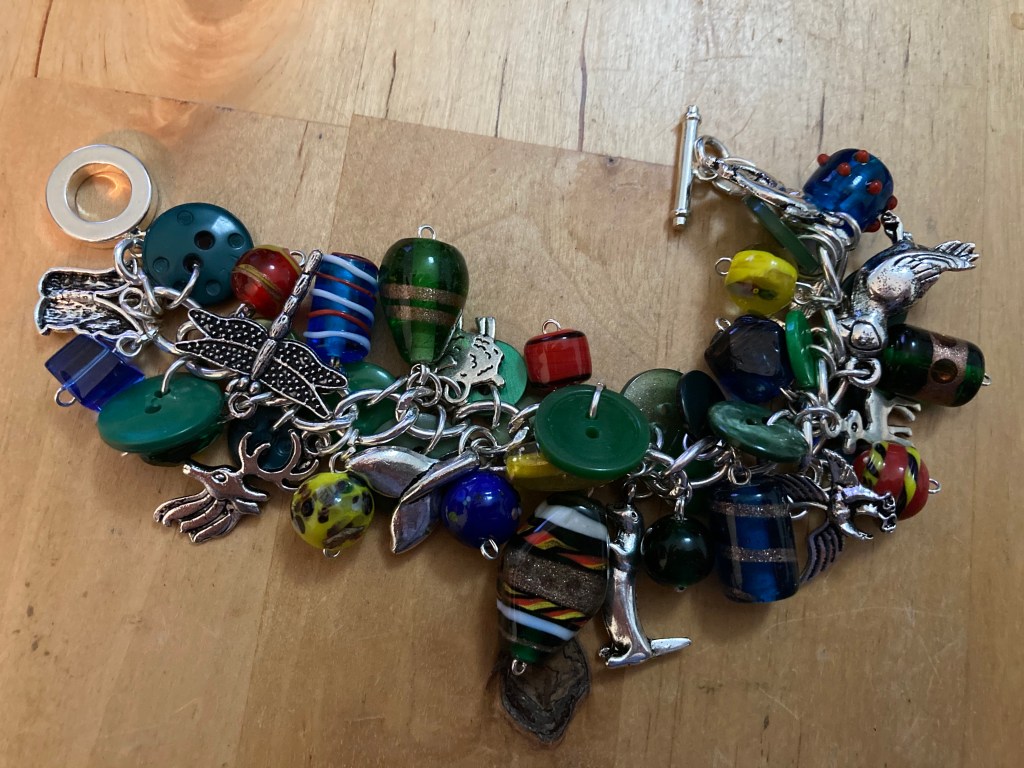
This charm bracelet was made specially for me by Alison Rushbrooke of the Button Bothy. Alison is based in Poolewe, in scenic Wester Ross in North West Scotland. We’ve been spending holidays in that part of the world since the children were small and we love it there. Sadly we had to cancel this years trip but will return in 2021. Over the years we’ve seen Alison’s business grow, selling her unique button jewellery in local craft galleries and markets, then getting her own studio/shop in the village. We always call in in at the Button Bothy to stock up on buttons for projects (I’ve never seen such an amazing selection of buttons in one place) or to buy greetings cards or gifts. Her work is also available online at Highland Hiddle and Numonday
The bracelet includes beads and buttons in tartan colours to represent Scotland and the charms are all examples of the amazing wildlife we’ve seen while on holiday there, including otter, golden eagle, whales, dolphins and red deer. I love it .
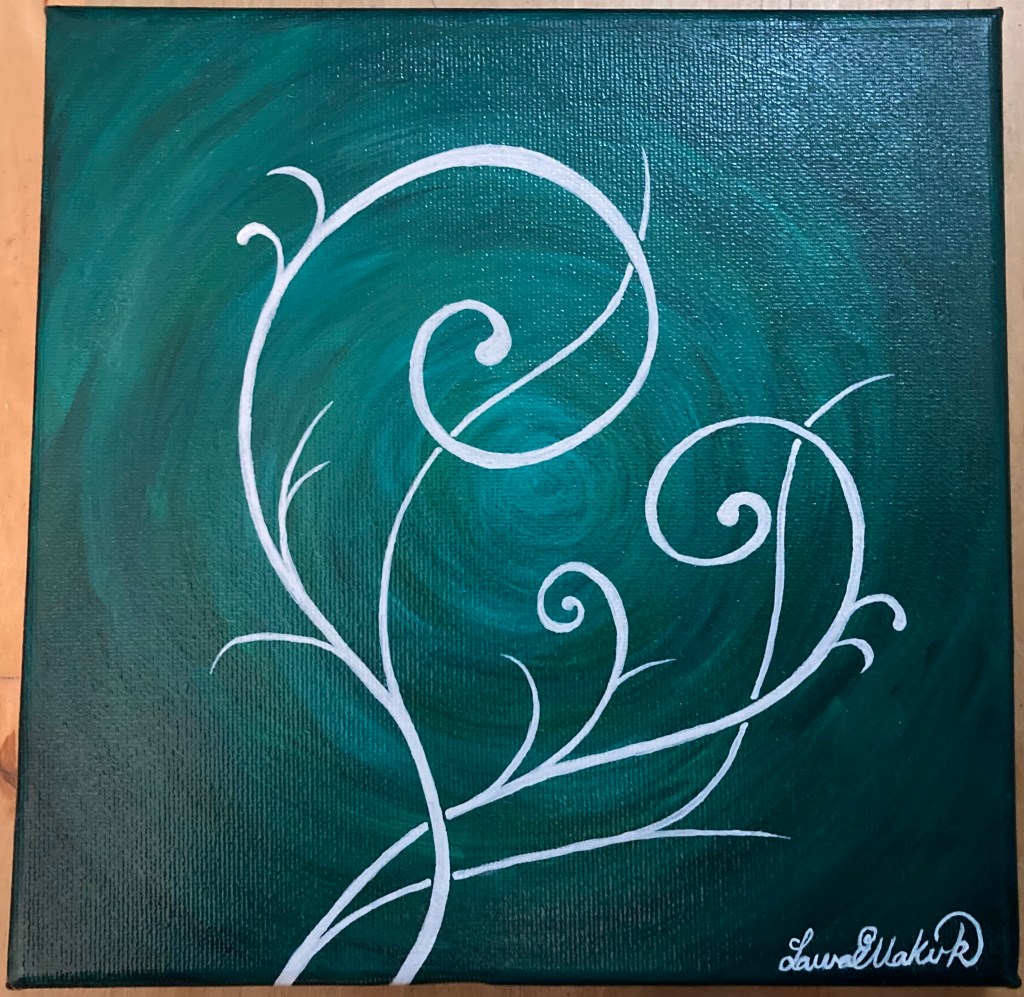
I also got this abstract original art work by Laura Ella Kirk. We know Laura from Poolewe too. She sell her art, greetings cards from her original designs and items in resin, fused glass and wood at the local market in Poolewe and online on Etsy. I love the organic swirly design and the colours were picked to go with our lounge. It is perfect!
K really enjoyed the collaborative process. There were a lot of messages and photos going back and forward in the run up to my birthday to pick colours and check that he was happy with what they’d come up with. The painting even arrived with a birthday card from Laura. It is so special to have two totally unique pieces made just for me, to celebrate my milestone birthday.
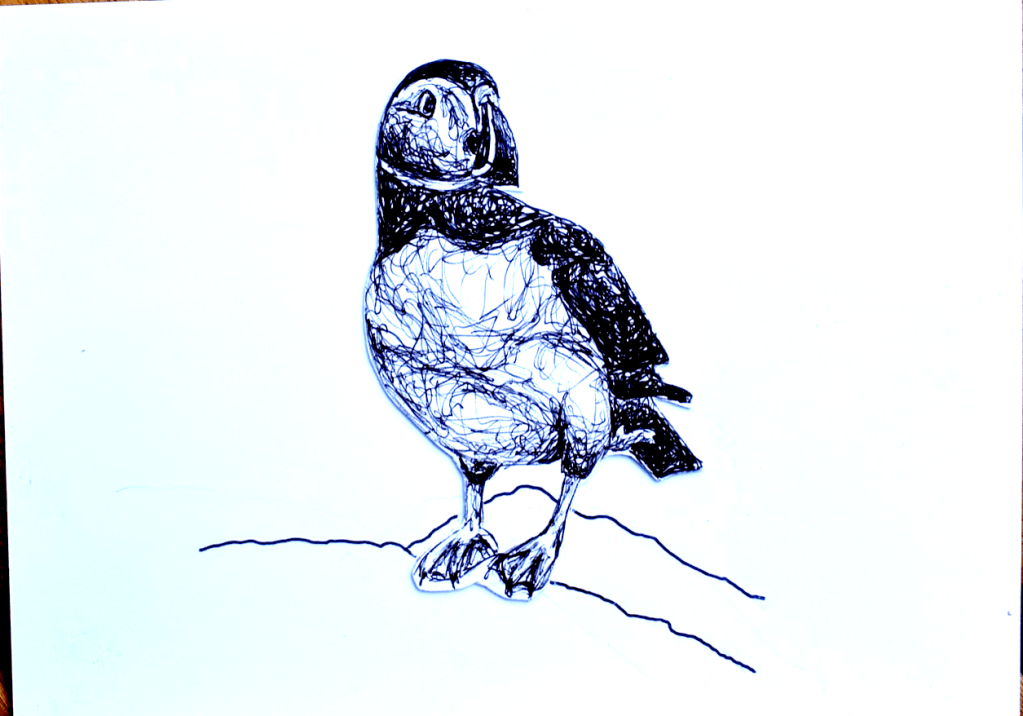
This card from K is pretty special too. It’s from Elizabeth Chrisp Art – we’ve known this talented young artist and her family for many years and she’s recently started her own line of greetings cards using her wildlife designs…..and what’s not to love about this delightful puffin!
I love my presents!
Have you ever commissioned something to be specially made for yourself or as a gift?
The bramble or blackberry is a member of the rose family and not actually a single species, but an aggregate of some 2000 very similar micro species. It is a scrambling perennial shrub that is commonly found in hedgerows, woodlands and waste ground. It is happy in poor soil and quickly colonises untended or ungrazed land and is difficult to eradicate from a neglected garden. The shoots may grow to 6m long or even more.
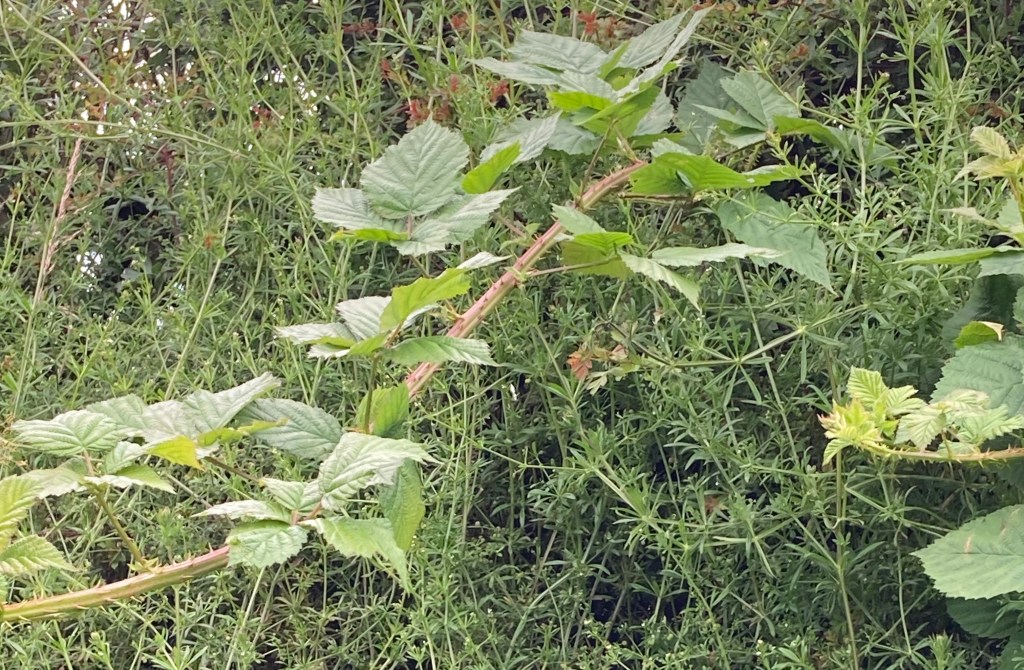
The plant sends out viciously prickly biennial arching shoots that grow vigorously without flowering in their first year, bearing prickly toothed leaves, comprising 5-7 toothed and heavily veined leaflets. The shoots take root wherever they touch the ground.
In the shoot’s second year it does not grow in length, but produces flowering side shoots and smaller leaves comprising 3-5 leaflets.
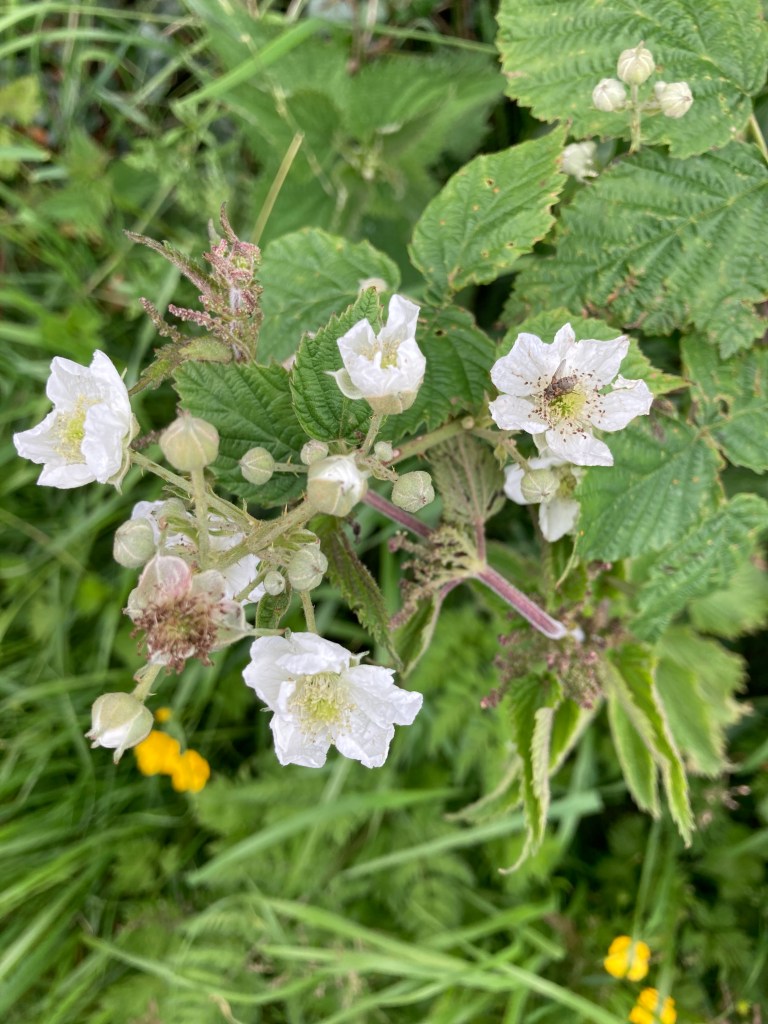
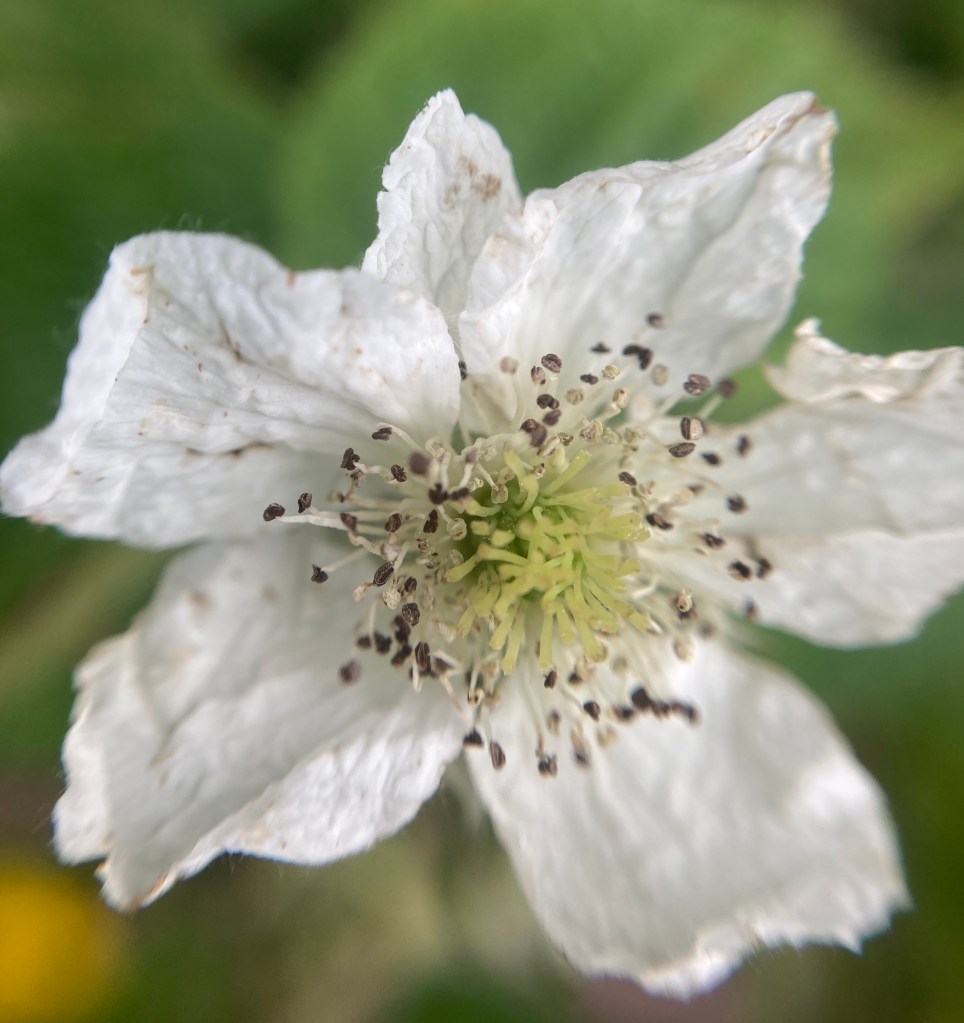
The flowers, which appear from June onwards in groups on the side shoots, usually have 5 white or pale pink petals.
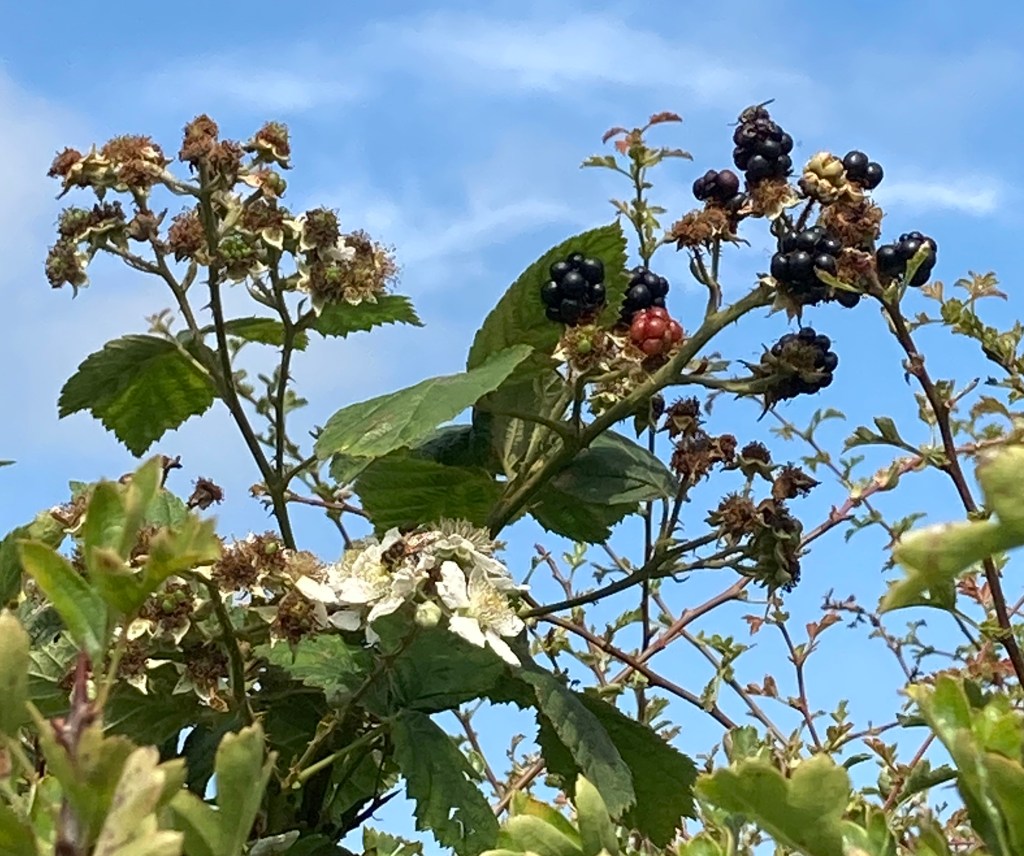
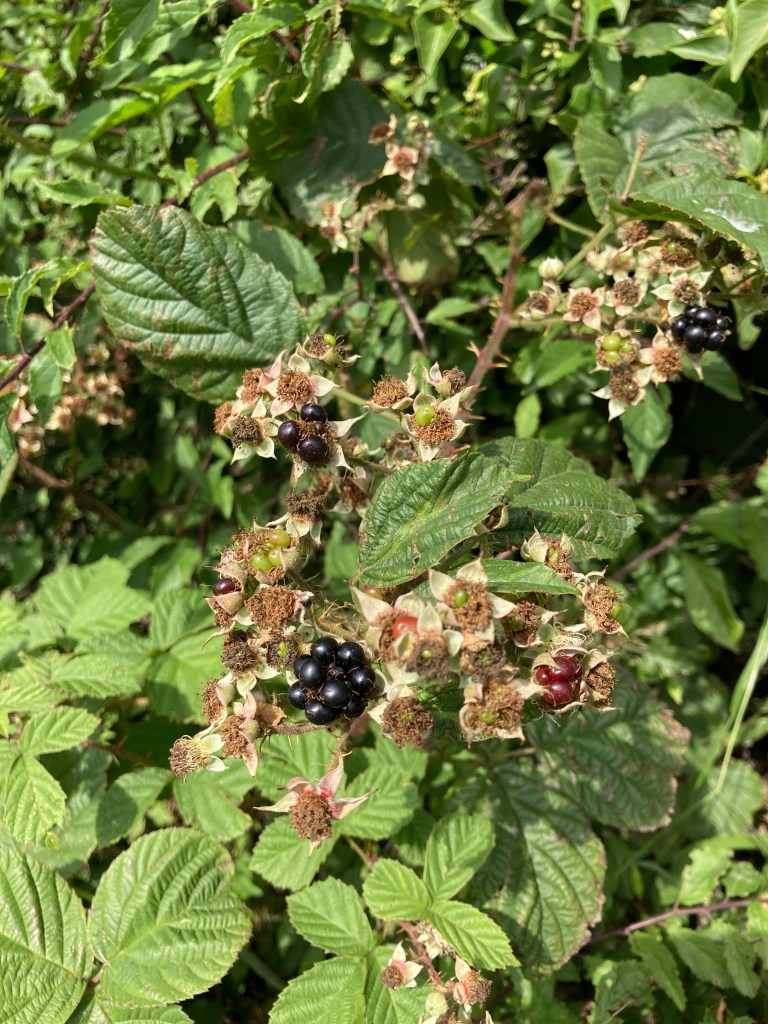
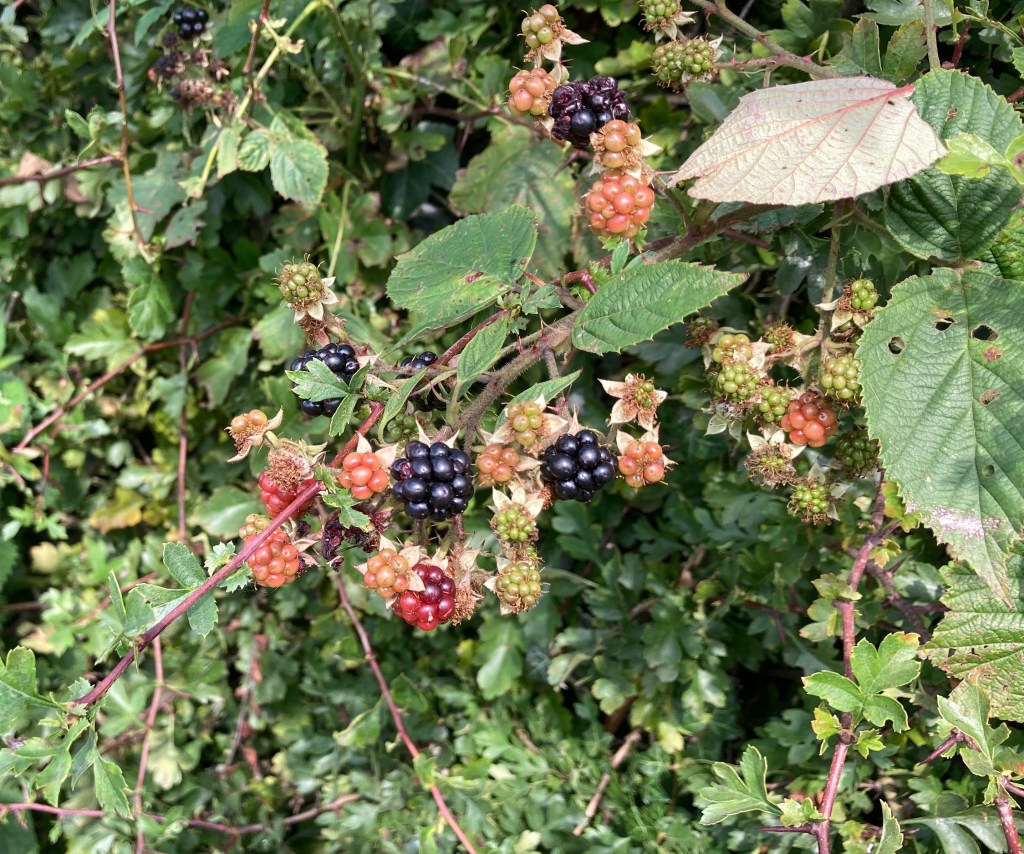
These are followed by the blackberries – technically not a fruit, but a cluster of drupes. These are green as they begin to develop, turning red through purple to black as they ripen. The ruit are easy to distinguish from the raspberry when they are picked – the raspberry detaches from the plant leaving its core behind on the plant so each picked berry has a hollow centre. The white core or torus of the blackberry detaches with the the fruit.
The plant is very important to wildlife. The flowers are popular with bees and the leaves are food for several species of caterpillars and deer enjoy grazing on them. The fruit are eaten by many species of birds and mammals who disperse the seeds in their droppings. The dense bramble thickets provide valuable cover and nest sites.
Man has used the bramble extensively too. Though we enjoy gathering the wild berries from our hedgerows, cultivated varieties have been developed to produce larger fruit with better flavour and without those vicious thorns. Preparations of the plant have been used in folk medicine for all manner of ailments: the leaves have been chewed to relieve bleeding gums; a tea made from all parts of the plant has been used to cure whooping cough and the roots used to cure dysentery and diarrhoea. The Ancient Greeks used it as a cure for gout. It has also been used to treat stomach ulcers. The fruit is rich in vitamin C and has been used against scurvy.
The berries leaves and shoot tips can be used for dyeing. Native Americans have used the stems to make rope. The plant also provides an impenetrable barrier to protect stock and property and keep large animals and enemies out.
Blackberrying, or foraging for the berries in late summer or early autumn is a popular pastime – at one time the autumn half-term school holiday was known as Blackberry Week. The fruit makes delicious jams, jellies, pies and crumbles, often in combination with apples. It is also used to make the French liqueur Creme de mur, which is the key ingredient of a bramble – a cocktail which also includes gin, lemon juice and sugar syrup.
Folklore decreed that blackberries must not be picked after Michaelmas Day (October 11th). After this the devil was believed to have spoilt the berries by trampling, fouling or spitting on them. After this time the fruit would often be mouldy or beginning to decompose. It was also traditionally planted on graves, to stop sheep grazing (or some believed to keep the dead in!)
As the blackberries ripen on our local hedgerows I’ll have to pick some. But what to make….jam? jelly? pies? I might even try making blackberry and apple gin liqueur – I tried it a few year back and it was delicious!
Have you picked any blackberries yet this year? What have you made with them?
Every December I think how lovely it would be to have a hand knitted Christmas jumper, by which time it is or course far too late to do anything about it. I set some knitting-related New Year resolutions back in January and making a Christmas jumper was one of them. I cast the Frosty’s Christmas jumper on early on in the lockdown and wrote a blog post about it at the time.
Since then I’ve fallen in and out of love with knitting a few times, so progress has been sporadic, but I finally finished it tonight! I love it!
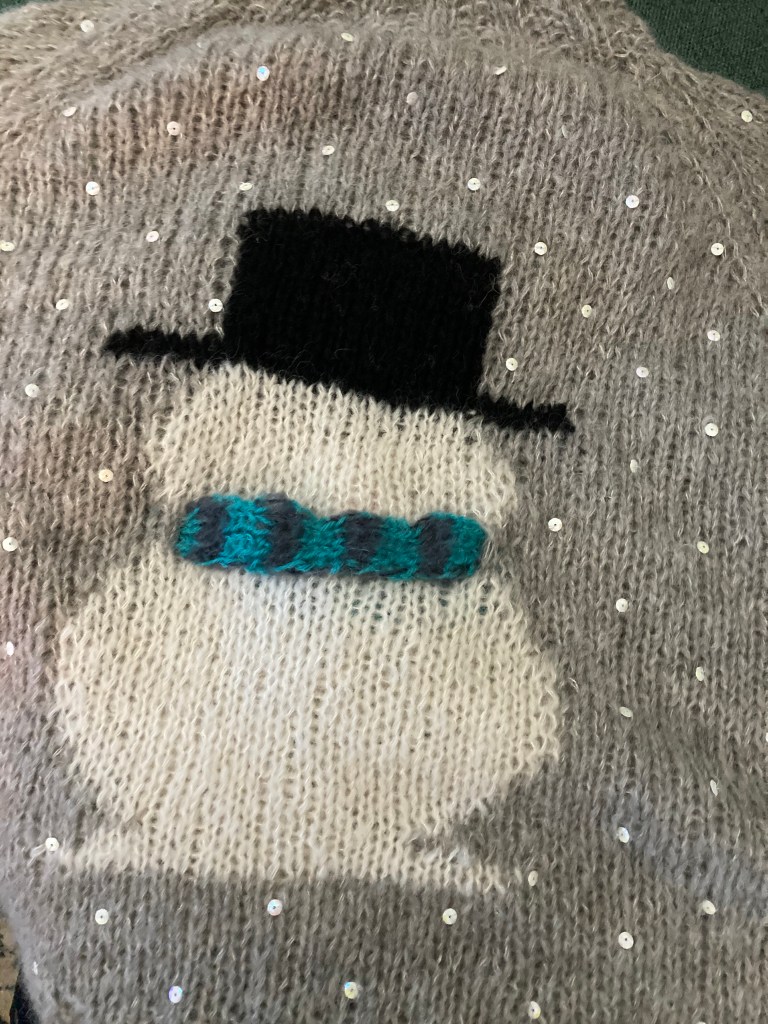
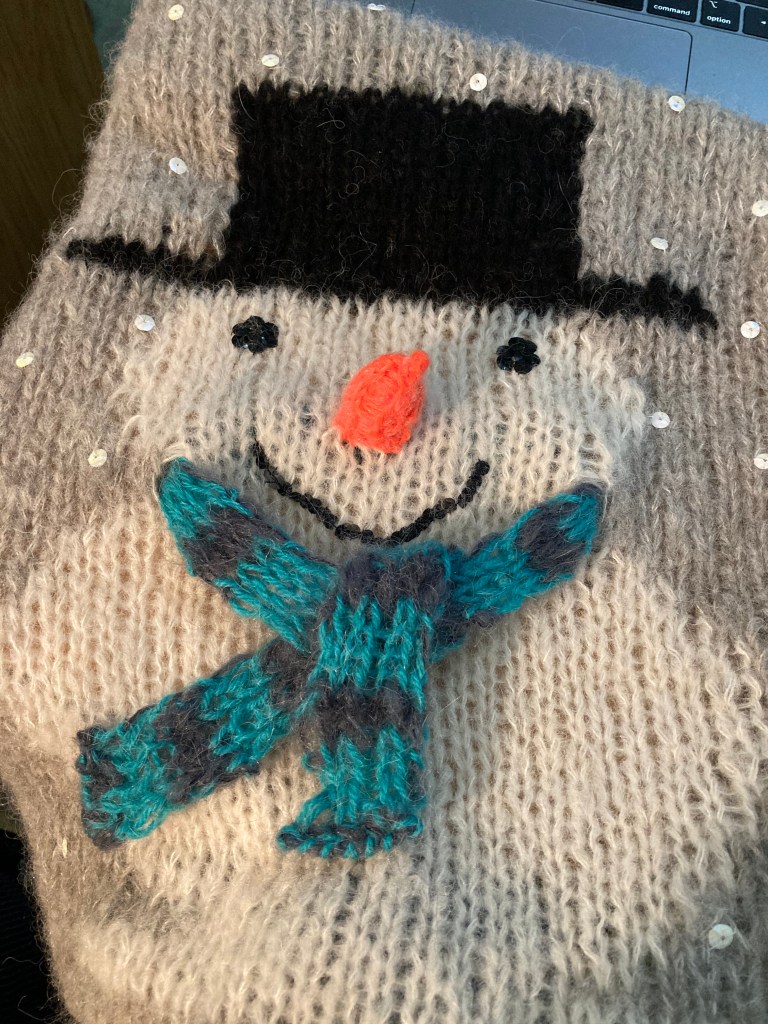
It’s knitted in a gorgeous light fluffy alpaca/silk mix, which has been lovely to work with and as well as the cute snowman design it features this moss stitch rib on lower edge, cuffs and neck.
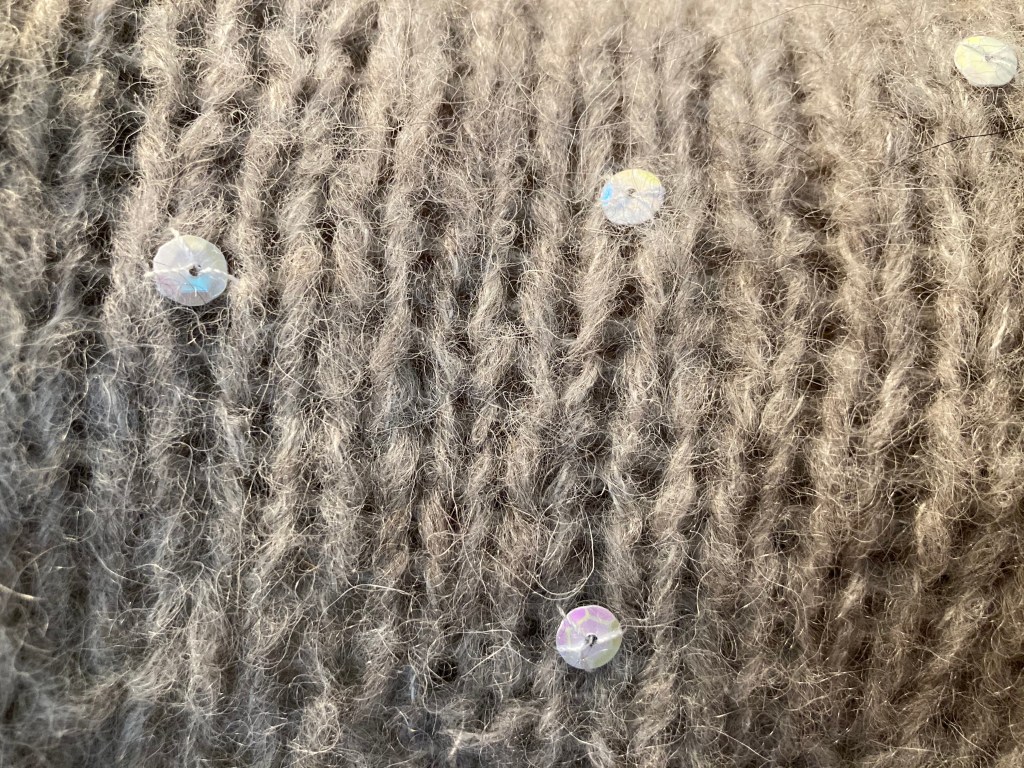
I decided that it needed something more to add a bit of Christmas sparkle (because a Christmas jumper needs bling). I found these iridescent white sequins and sewed them on to add a snowstorm, which took a while! I’ve had clothes with sequins on before and they always seem to come off so I made sure these were sewn extra securely……all 300 of them!
I love that the back view of the snowman is on the back of the jumper
Snowman’s face includes a knitted carrot nose and black sequin eyes and mouth. he also has a cosy scarf.
I’m rather looking forward to wearing him this December!
Have you started making anything for Christmas yet?
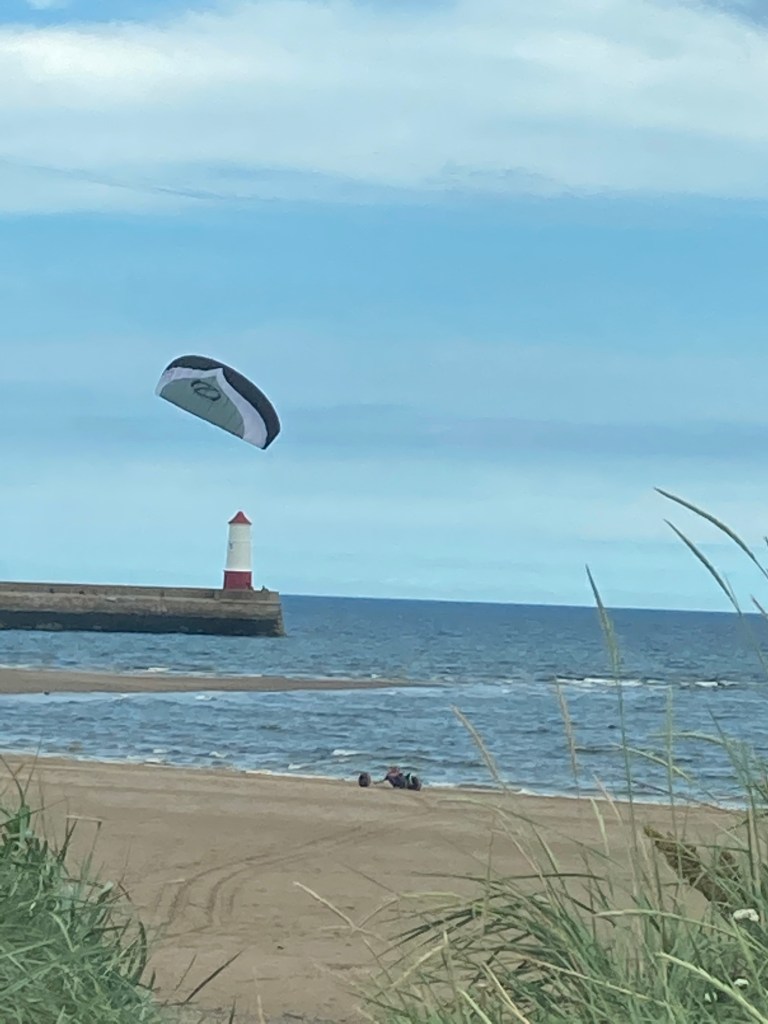
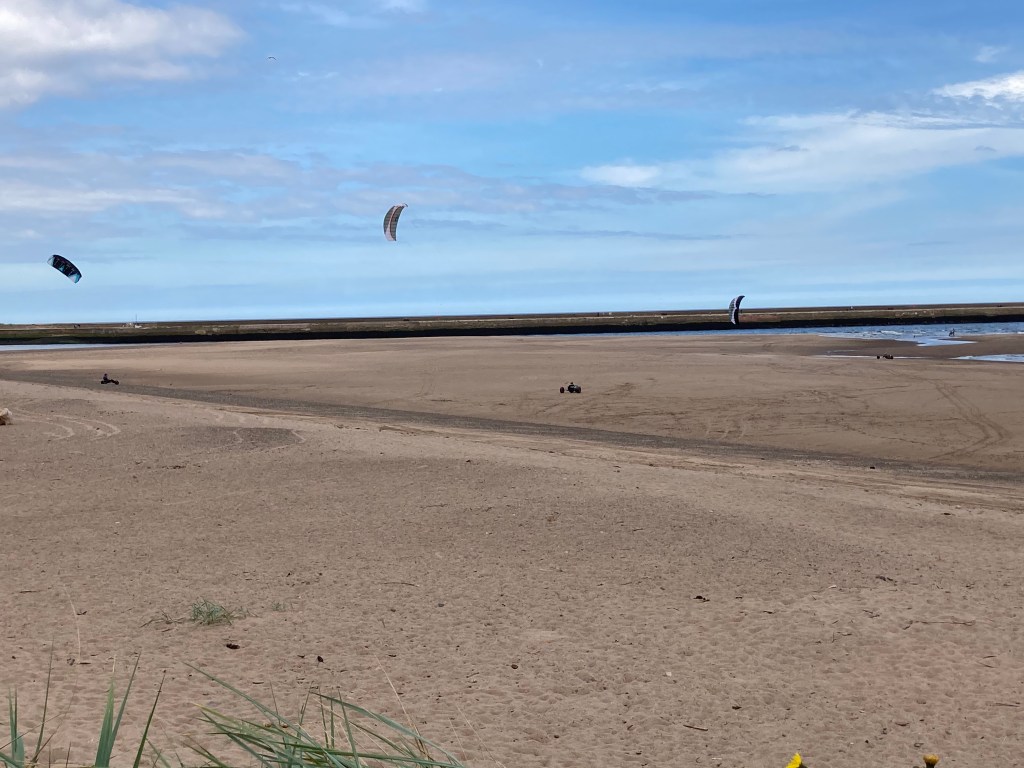
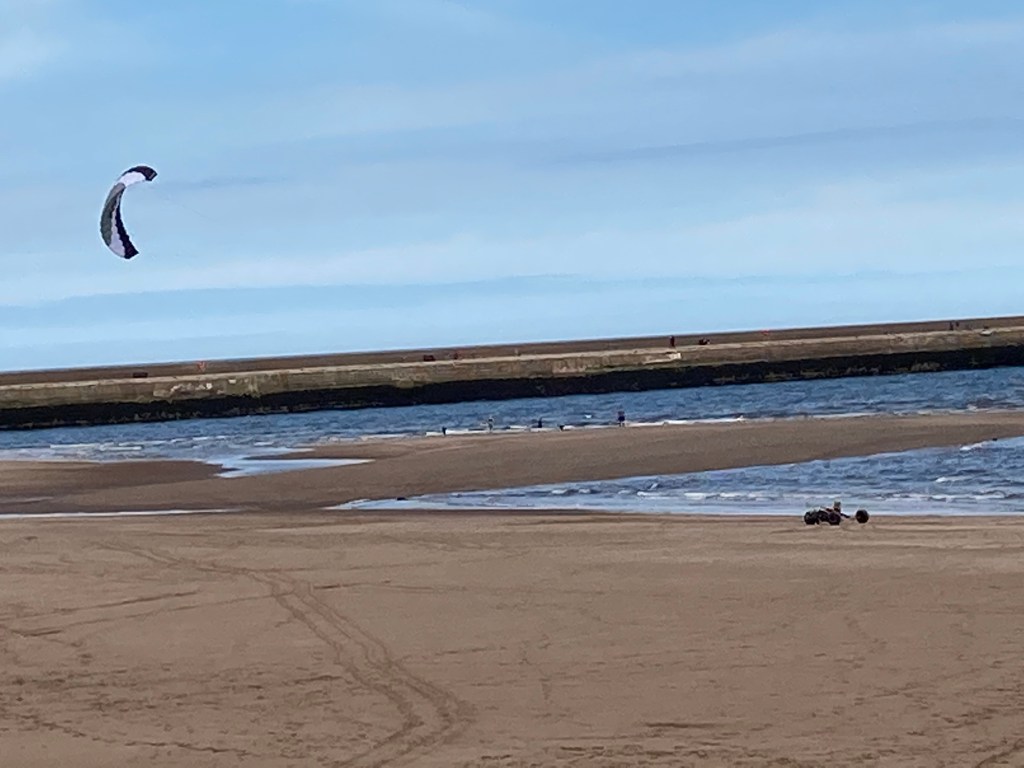
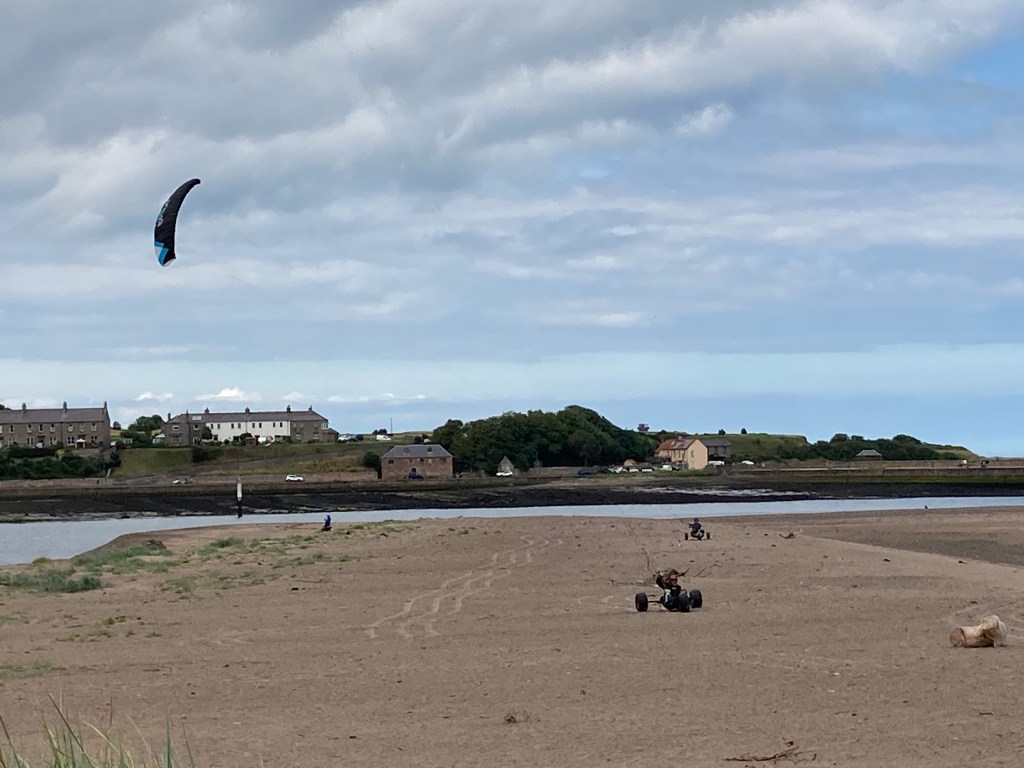
A few weeks ago, we headed up to Spittal, which is at the mouth of the River Tweed, on the south side of the river (South of Berwick-on-Tweed). We had gone there in search of Bottle-Nosed Dolphins as they had been been seen there on most days during the early summer. There were no dolphins to be seen, but I ended up watching three people doing an extreme sport I’d never come across before.
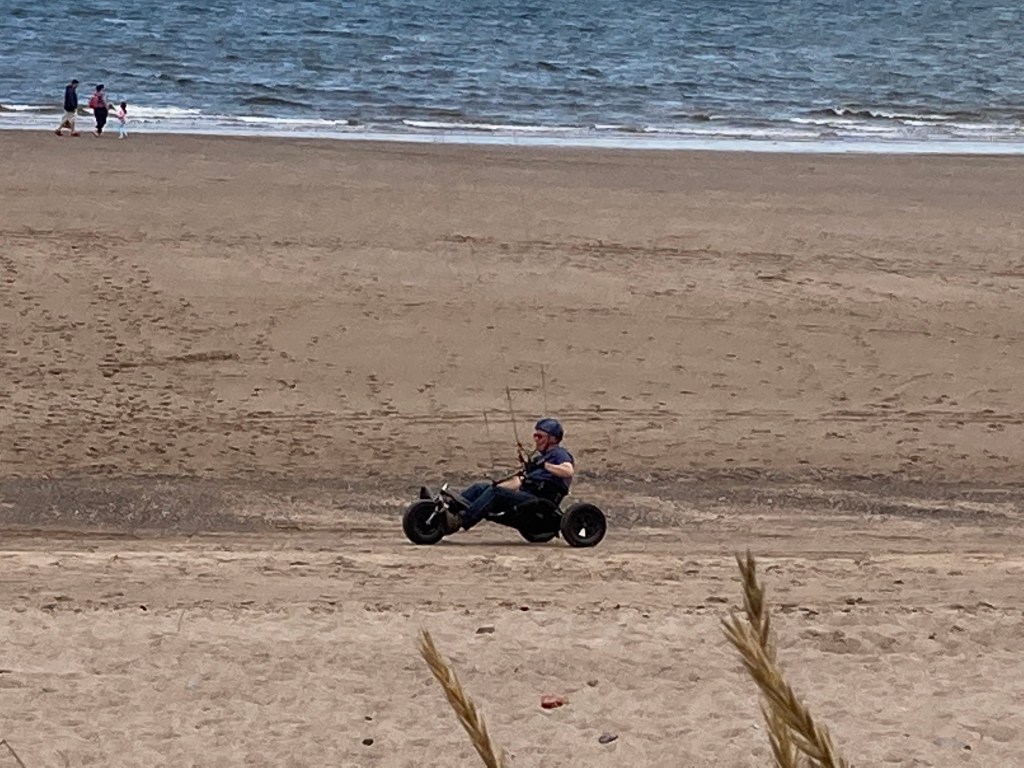
I’ve since discovered on the internet that these are kite buggies, vehicles, usually with 3 wheels, propelled by the wind using a power kite and steered with the feet.. It looks rather like a cross between sand yachting and kite surfing. I’ve seen the kite surfers at Bamburgh many times and that looks pretty spectacular, but this was something new for round here.
The big beach at Spittal was pretty quiet (even though the car park was busy), so they had plenty of space. I’m not sure how easy it is to control speed and direction!
There was a bit of a breeze, so they were zipping along pretty quickly. I suppose one of the advantages is that you don’t need to have quite such a good sense of balance as you would with kite surfing.
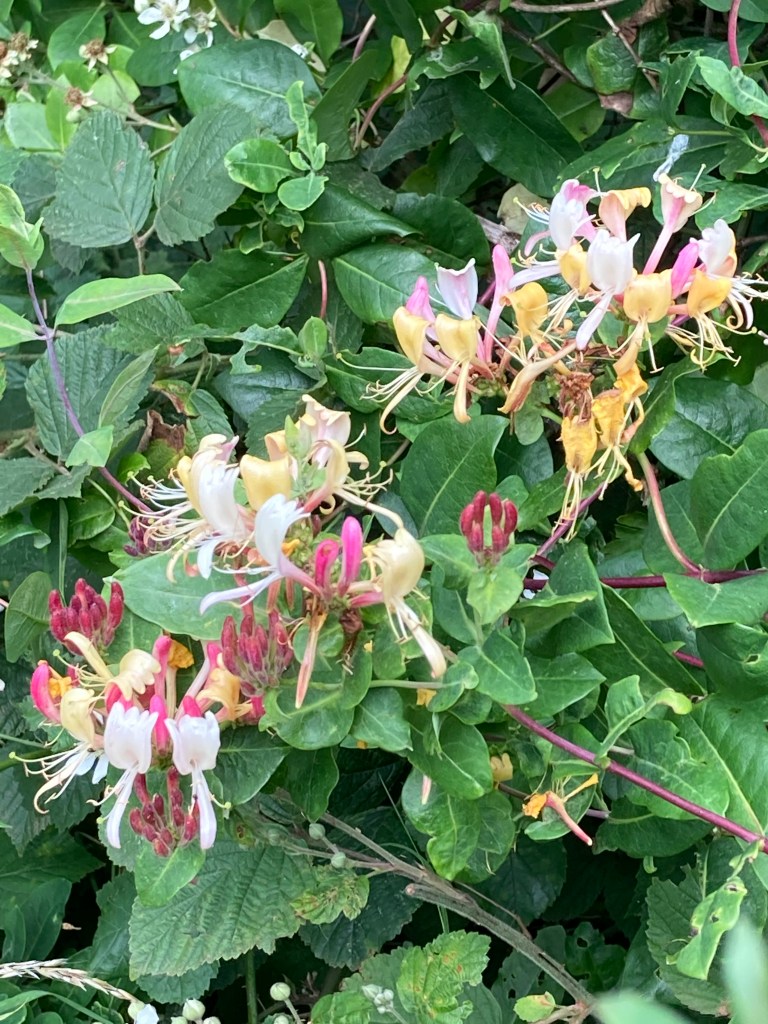
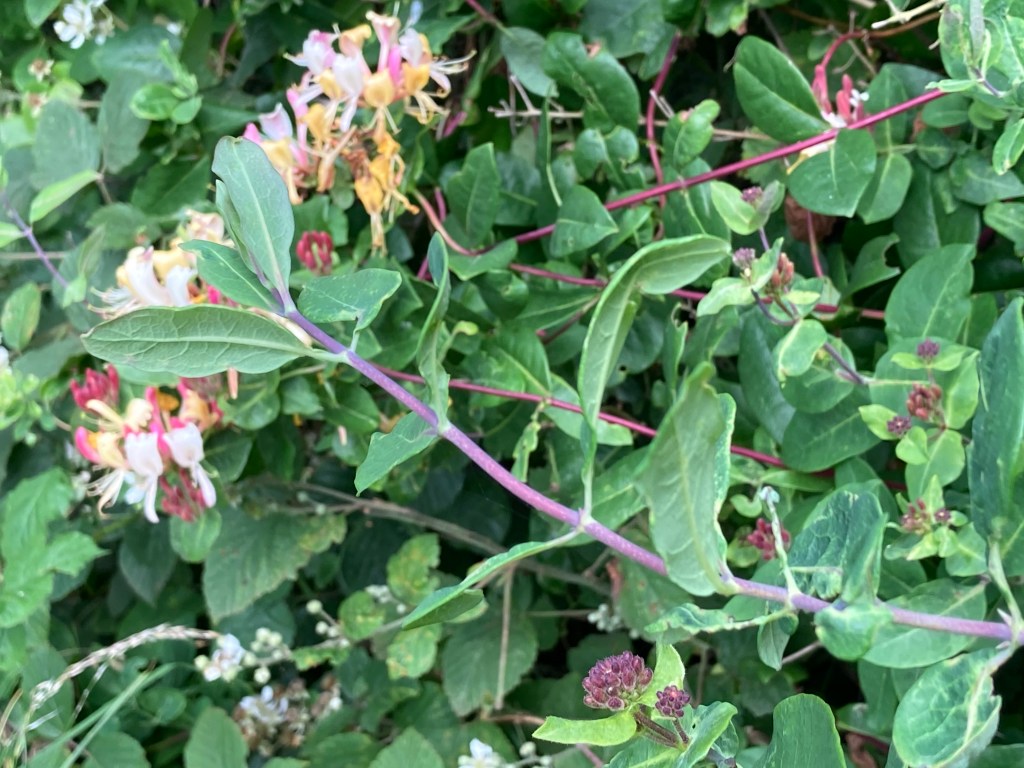
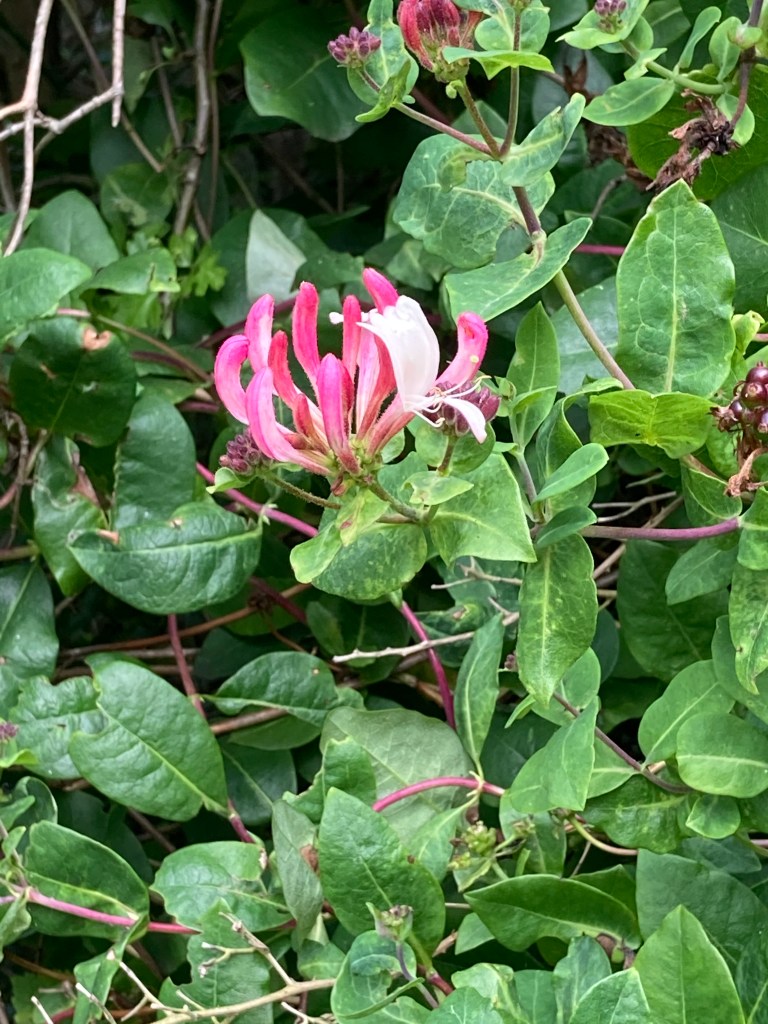
The Common Honeysuckle (Lonicera periclymenum)is a vigorous perennial climber, that twines itself around hedgerow plants, shrubs and trees to a height of up to 7m.
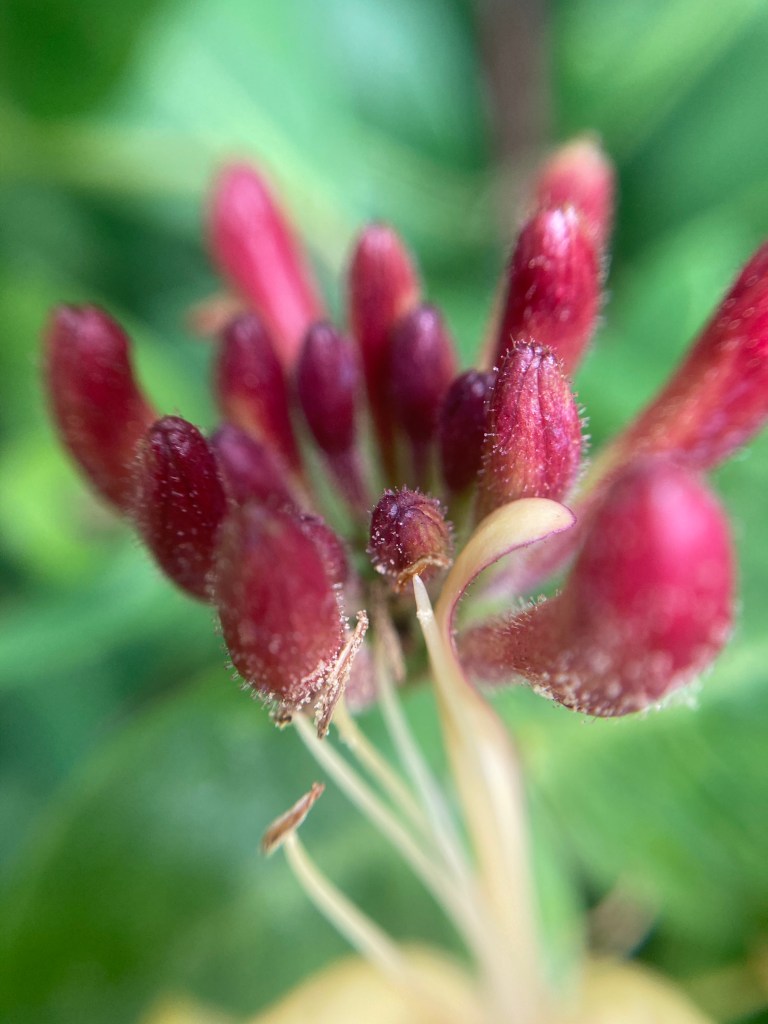
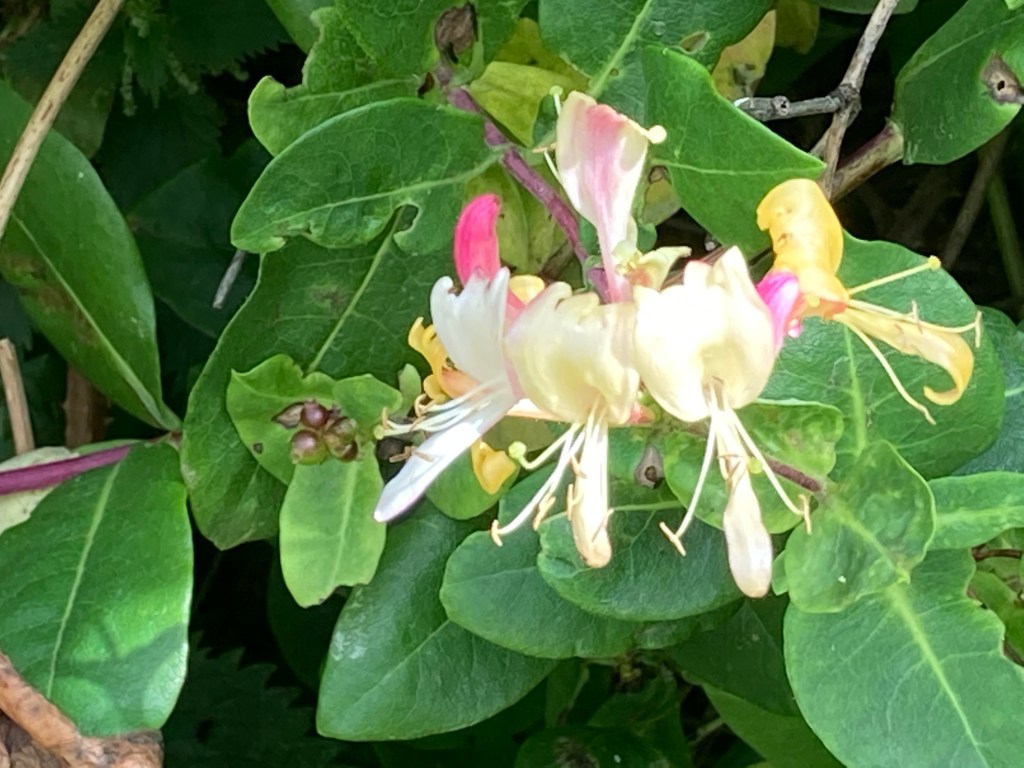
Clusters of finger-like pink-red buds open into exotic creamy yellow blooms, tinged with pink and red. These appear from June to September and have a strong sweet fragrance, especially at night when the flowers open. The dark red-brown stems carry oval, pointed leaves in pairs and the flowers form at the shoot tips. They are tubular with upper and lower lips. These are followed by clusters of berries.
It is one of many species and cultivated garden varieties, including the very invasive Japanese Honeysuckle. The Common Honeysuckle is however a useful plant to both man and wildlife.The flowers provide a rich source of nectar for insects, especially bees, butterflies. Night-flying moths, attracted by the scent, in turn attract bats to prey on them. The tangle of growth provides valuable nesting cover and the bark strips away from the mature stems providing nesting material for several bird species and also for dormice. The berries provide food for many bird species, though are toxic to humans.
The honeysuckle is named for the custom of picking the blooms and sucking the honey-like nectar, but it has a number of other names, including woodbine, eglantine, fairy trumpets, sweet suckle, goats leaf and trumpet flowers. Shakespeare mentions it in A Midsummer Night’s Dream.
So doth the woodbine the sweet honeysuckle gently entwist…
Honeysuckle was said to protect against evil and, when grown around the door of a house, would prevent a witch from entering. The plant is said to symbolise loving affection and faithfulness and wearing it would make someone dream of their true love and bring luck in courtship. The Victorians were less approving, and forbade young girls from bringing the flowers into the home, believing that it would give them unsuitably erotic dreams!
The plant has many uses. Tree branches will take on a twisted form when honeysuckle entwines around it, making an interesting shape for carved walking sticks. The flowers are used in pot pour and perfumes and also to add a sweet honey flavour to jams and jellies, teas, country wines and flavoured liqueurs and gin.
in folk medicine it has been used to make a soothing remedy for coughs and sore throats, and to heal woulds and infections.. It is said to have anti-imflammatory properties, though these are as yet unproven.
At this time of year, honeysuckle provides a colourful and fragrant addition to our hedgerows and woodlands.














 Stitches by the Sea