Posted in Uncategorized

Fun With The Fig Harvest

You wouldn’t think it possible that here in North Northumberland you can actually grow figs. I suppose most of us associate figs with a more Mediterranean climate. Our fig tree was bought as a cutting at a garden show some years ago. It is planted in a sunny sheltered spot between the conservatory and a garage and it has now grown to cover the side of the garage with it’s large lobed leaves.
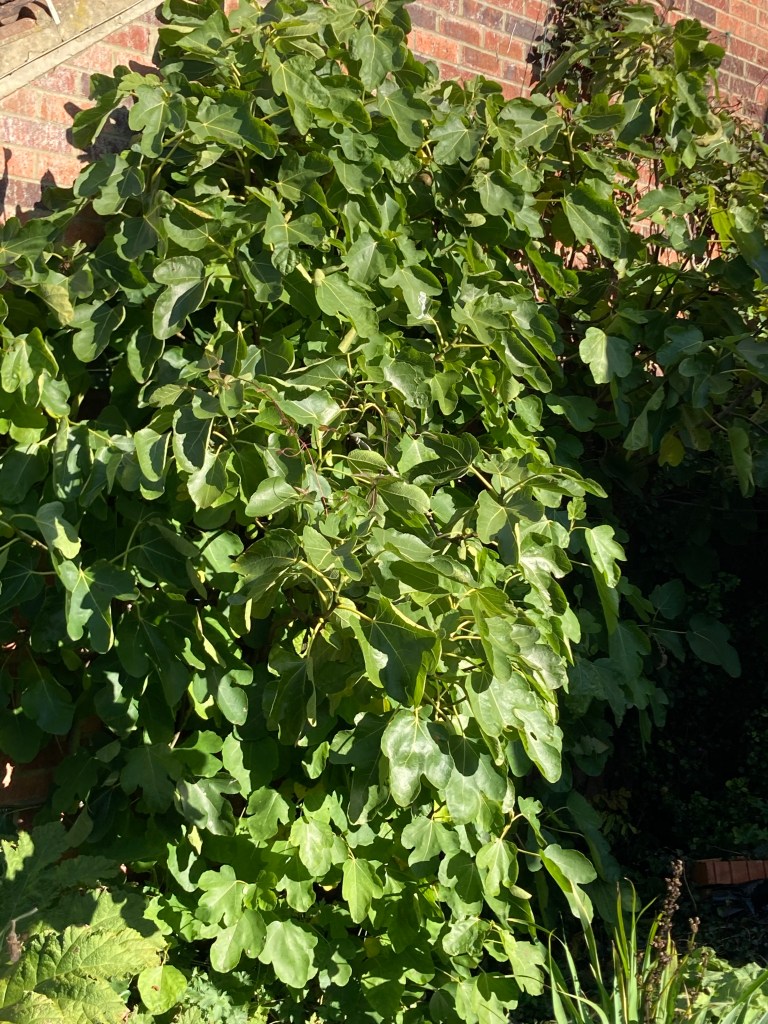
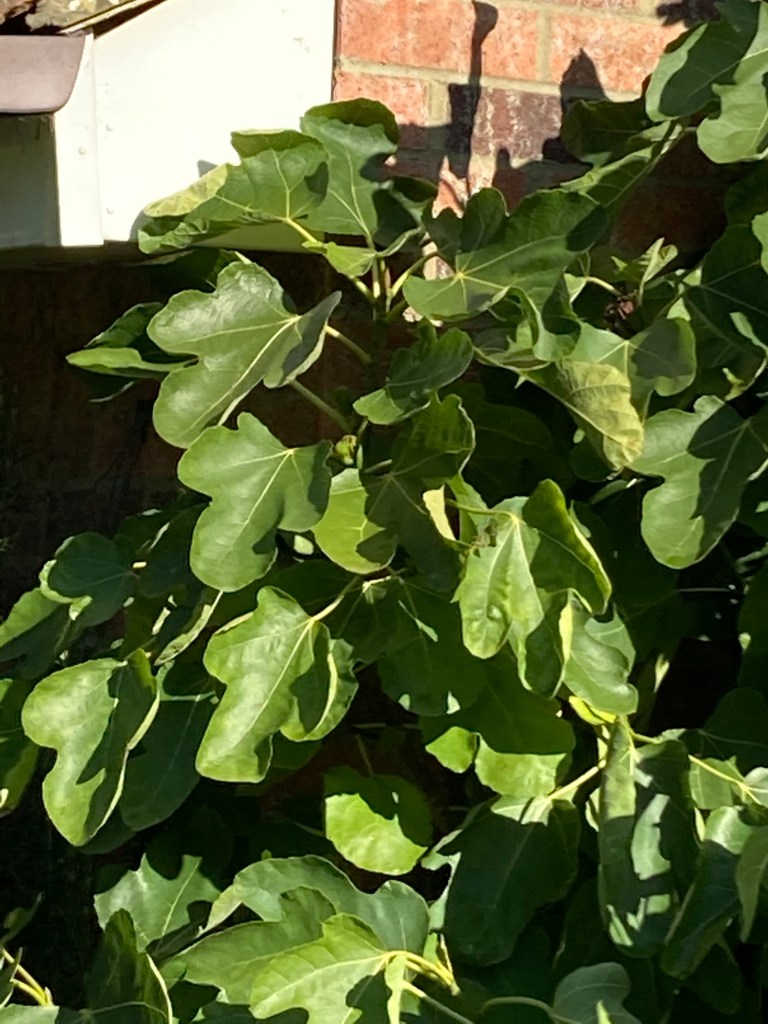
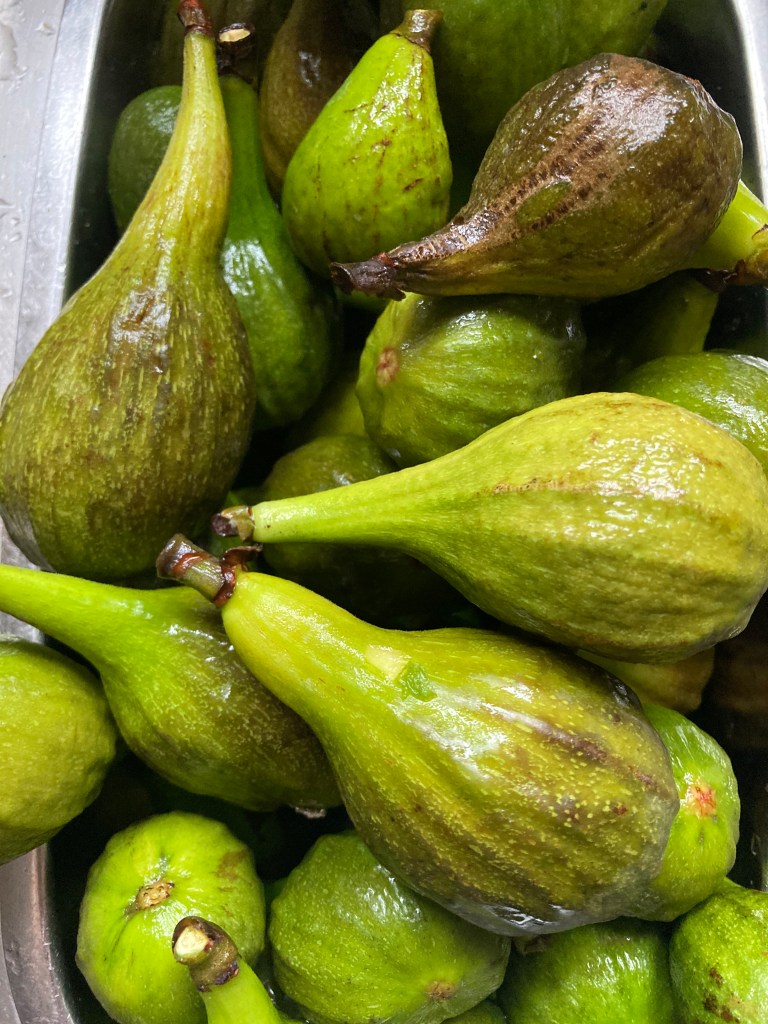
I’d noticed that there were a lot of fruit and they were starting to ripen so K picked a large bowlful – almost 4 pounds weight, and almost half were ripe and ready or almost ready to eat. I’ve really enjoyed eating them – they are absolutely delicious – I even added them to a smoothie,
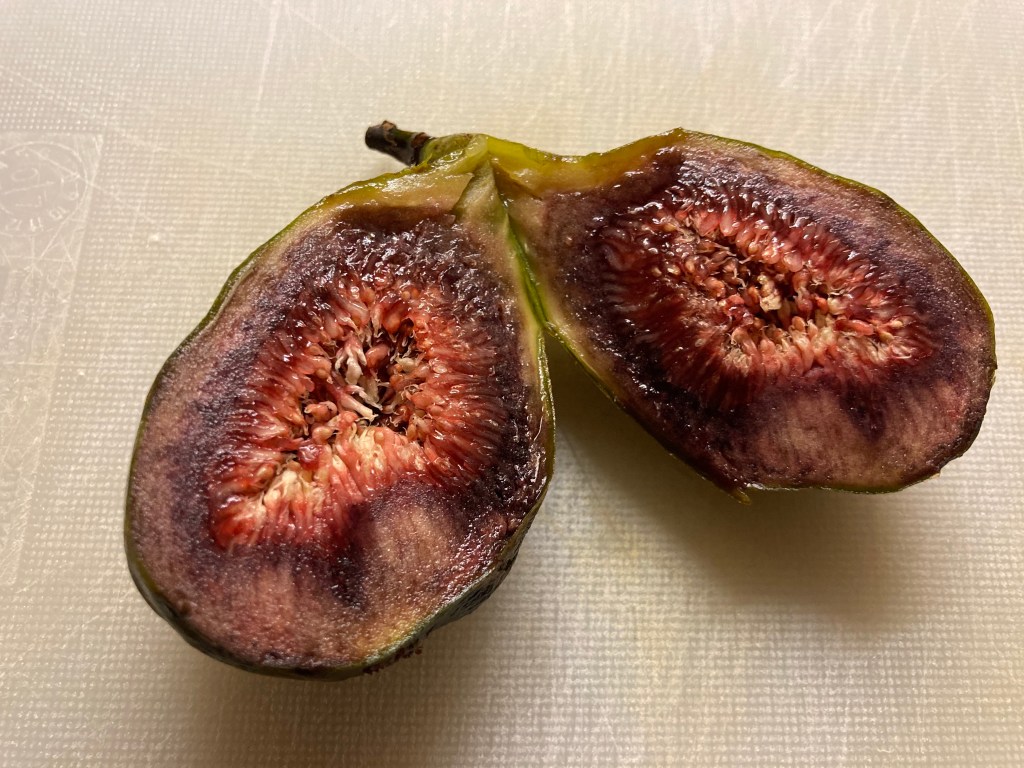
I wondered if it would be possible to ripen the rest. I once managed to get all our green tomatoes to turn red at the end of the season by putting them in a drawer with a ripening banana. The banana produces a gas, ethylene, which accelerates the ripening process. After a bit of research I discovered that this would work with the fruit that was just starting to ripen , but not the hard green fruits. I did however find several variations on a Turkish recipe for preserved unripe figs.

It took quite a while to prepare the unripe fruits for this. They contain a bitter white sap, that somehow disappears as the fruit ripens, so it had to be extracted so it wouldn’t spoil the flavour. The sap is also an irritant. Even though I don’t have particularly sensitive skin, my hands were itching after a few minutes of preparing the fruit. If I do this again I will definitely wear gloves!
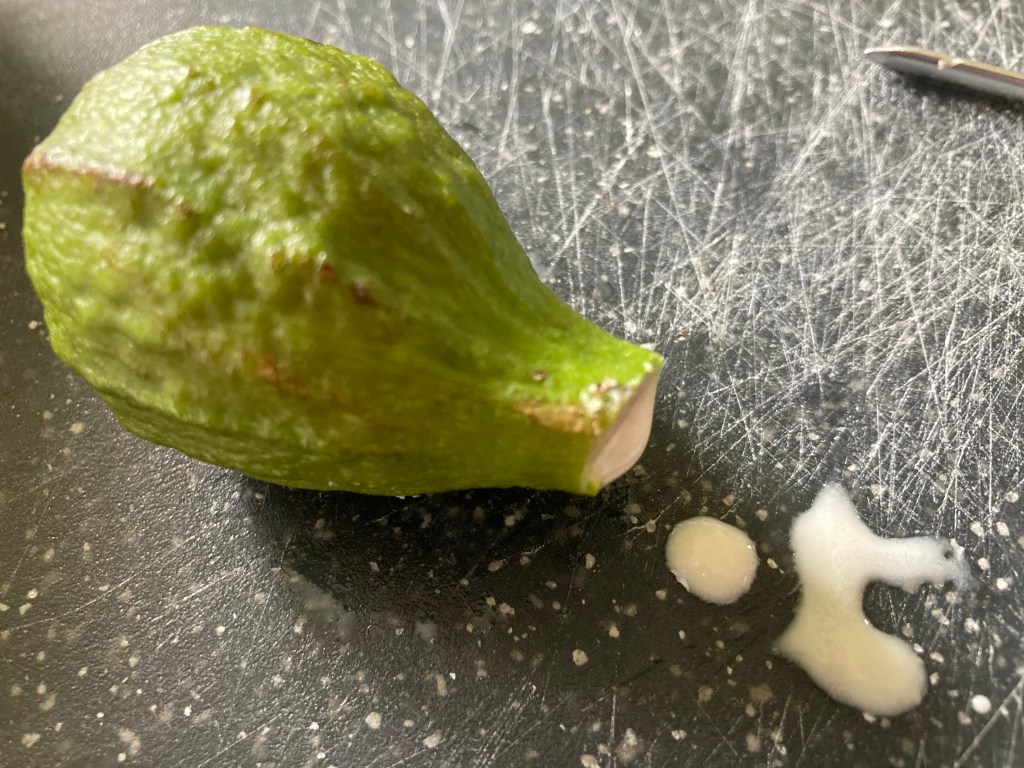
I began by removing any blemished patches of skin and cutting off the fruit stems, then piercing the base of each one with a skewer.

To remove the sap put the figs in a large pan, cover with water, bring to the boil and simmer for 15 minutes, then drain and cool under running water.

When cool enough to handle I squeezed each fig to remove as much liquid as possible. I then repeated the whole process, by which time there was no more bitterness when a tasted a piece (you can repeat the process again if necessary) I dissolved 1000g sugar in a litre of water over a low heat and added the figs along with about 4 cloves and the juice and rind of a lemon. I brought the mixture to the boil, simmered for five minutes then, picking them out with a slotted spoon, packed the fruit into sterilised jars, topped up with the hot syrup and sealed the lids.
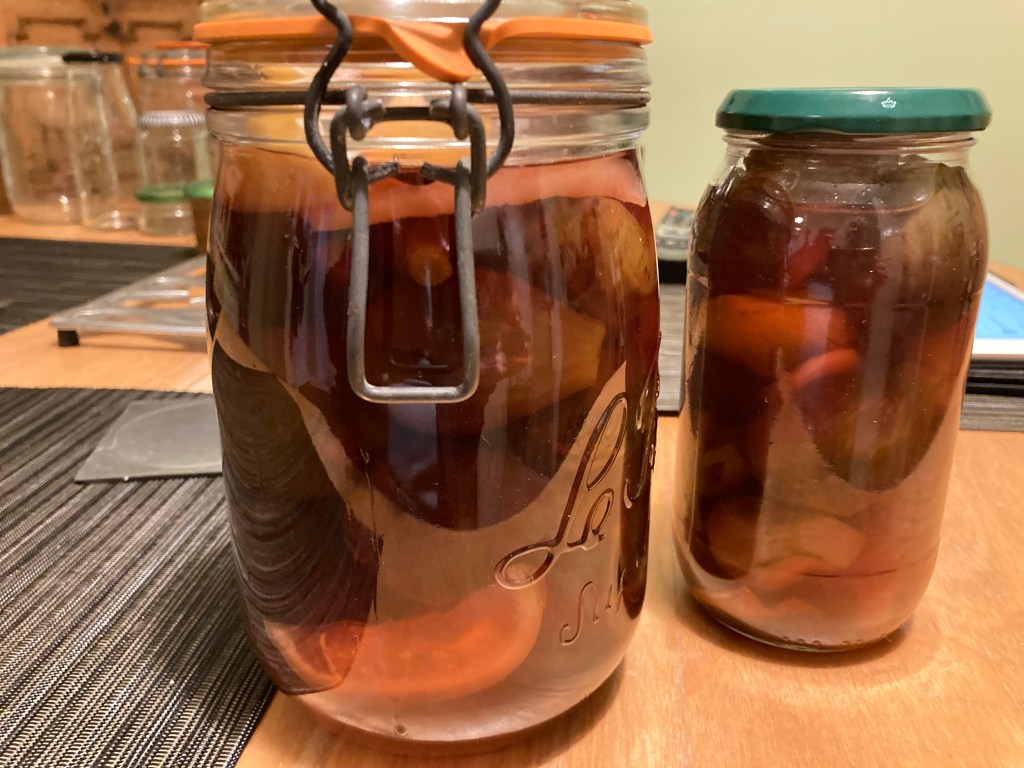
The syrup was darker than I’d intended as I only had golden caster sugar left after using the white sugar in all my other preserving this week! The fruit and syrup can be used on top of ice cream, or served on toast or pancakes or with yoghurt. I think it will taste better when the flavours have developed for a few days, so I’ll try it then and report back!

Have you tried fresh figs?
Posted in Uncategorized

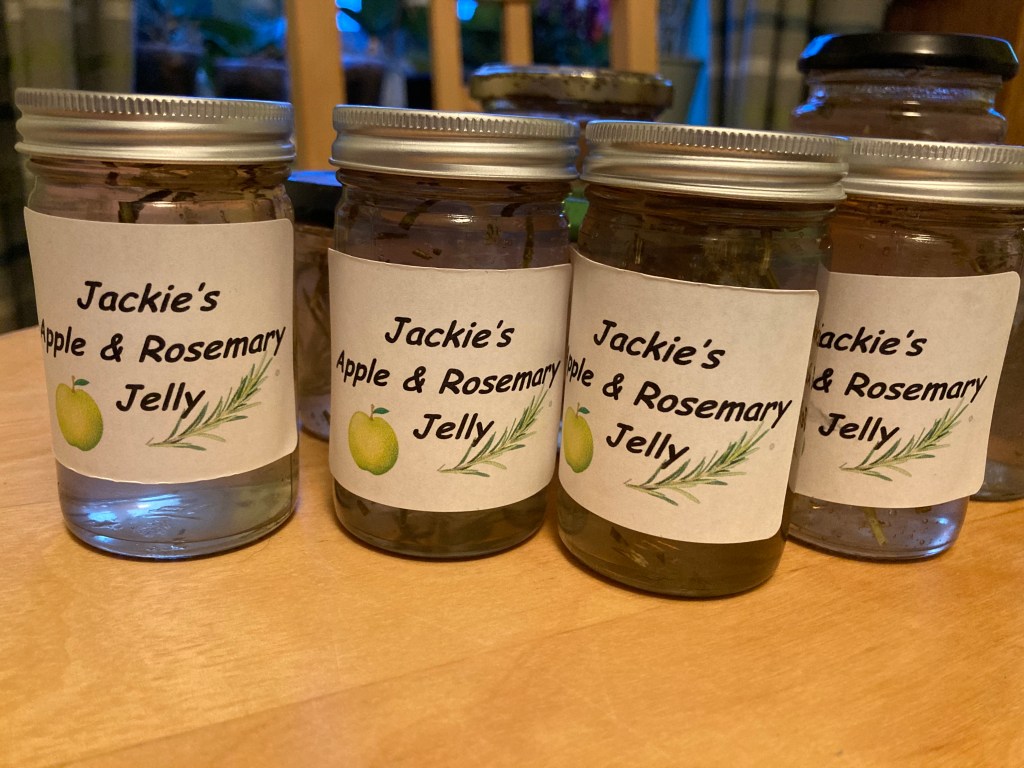
Making The Most Of Nature’s Harvest: Apple And Rosemary Jelly

Question: what do you do when you have a glut of cooking apples and the rosemary bush needs cutting back?

Answer: Make apple and rosemary jelly.

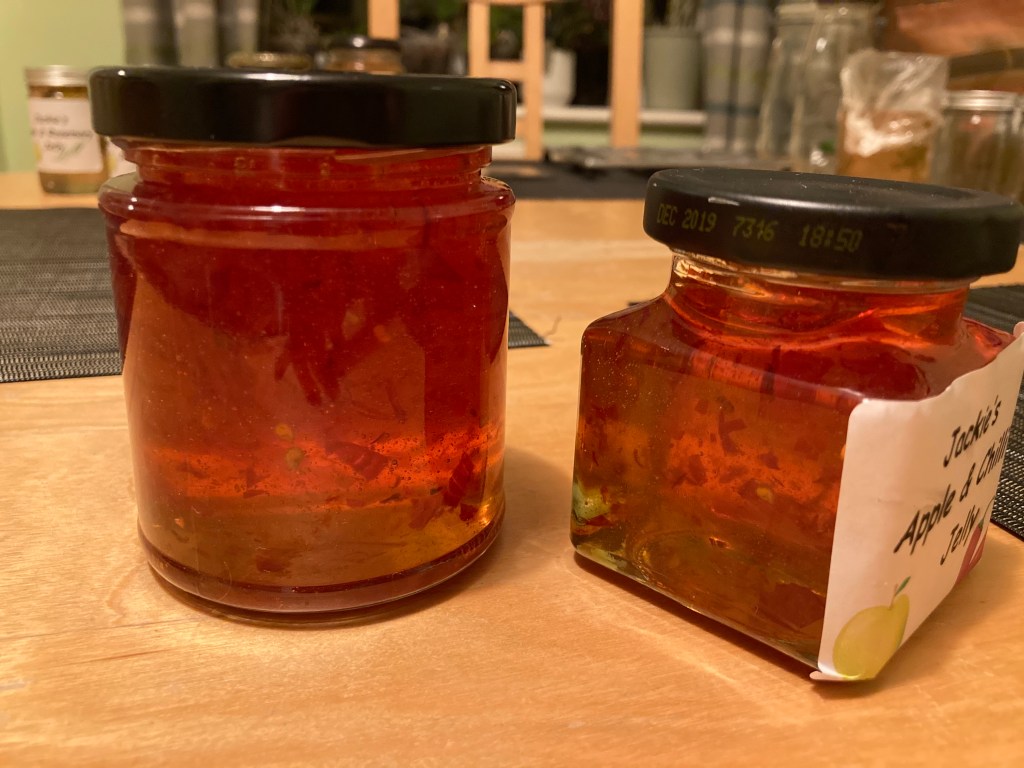
That’s exactly what I did this week, along with apple and chilli jelly. Apples are so full of pectin that they make wonderful jellies – I tried apple and mint jelly last week and that worked well too.

Ingredients

  • 1200g apples, roughly chopped, including cores and peel, which are rich in pectin
  • 1 litre water
  • A bunch of rosemary sprigs
  • White sugar, 800g per litre of juice
  • 2 tablespoons lemon juice
  • a handful of rosemary sprigs

The first stage was to make the rosemary and apple juice. I added the apples, bunch of rosemary and water to a large pan, brought to the boil, then simmered for about 30minutes, by which time the apples had all broken down to a soft pulp. I then strained the mixture through a jelly bag over a bowl overnight, adding a weighted plate to press out as much juice as possible from the apple/herb pulp. You could use a muslin-lined colander or sieve.

Before I began making the jelly I put a couple of plates in the freezer and sterilised jars in the dishwasher. I then measured the juice into a heavy based pan and added sugar (I wanted to reduce the sugar slightly from what I used in the mint jelly) I used 80g sugar per 100 mls liquid. I added the lemon juice, and heated gently, stirring until the sugar had dissolved then brought to a boil, allowing it to continue boiling, testing until setting point was reached (when a drop is rapidly cooled on a plate out the freezer and pushed with a finger, wrinkles start to form) – I did this every five minutes and it only took about 15-20 minutes. I turned off the heat and skimmed all the scum off the surface. Placing a small sprig of rosemary in each jar, I waited until the mixture had cooled a little before filling the jars. I found the easiest way to do this was to ladle the liquid into a glass jug (not plastic – this stuff is very hot) and pour it into the jars. Then I sealed the jars firmly.

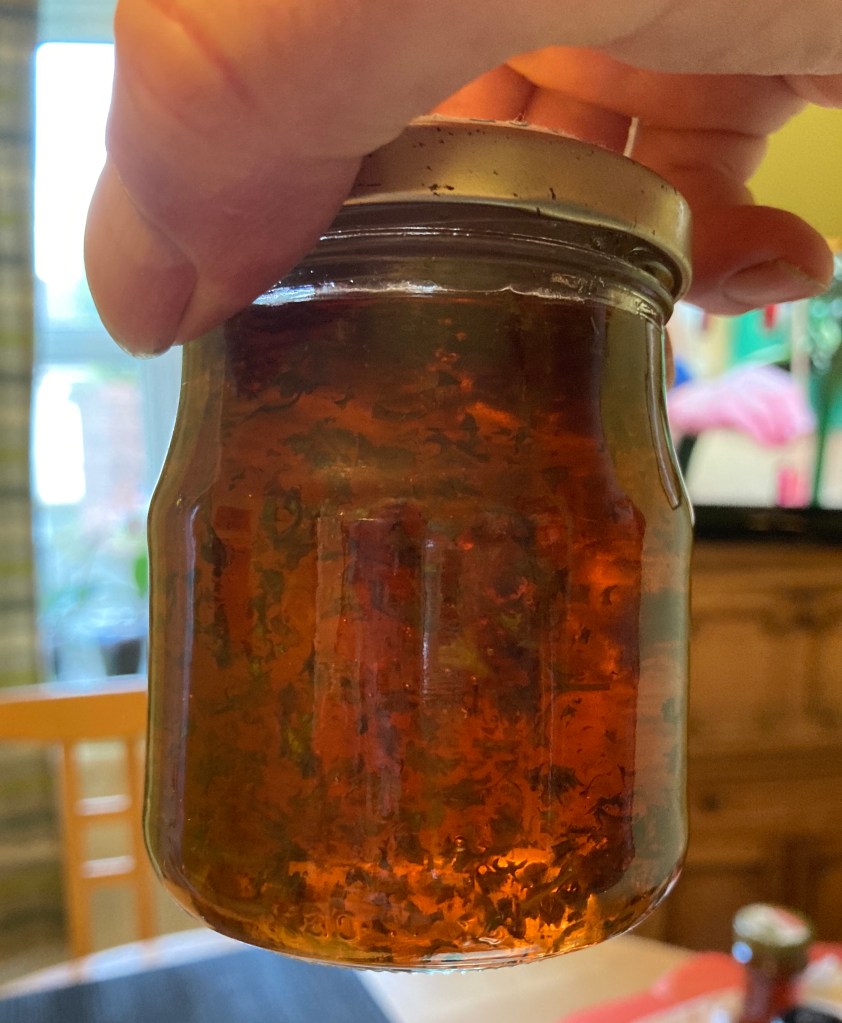
If you keep an eye on the jars as the liquid sets and invert them briefly when they are almost there you can suspend the rosemary sprig in the middle – otherwise it floats. When I did this I added chopped fresh rosemary at the end too, but the leaves are quite hard so next time I’ll leave these out .

The jelly is beautifully clear, even though the juice extracted at the first stage is quite cloudy. As you boil it up with the sugar it clarifies and the impurities that cause the cloudiness form a scum on the surface which you skim off. The sweet apple has a delicate hint of rosemary – it would be good served with cold meat or as a glaze on lamb.

I also made apple and chilli jelly, following the same recipe, omitting rosemary and adding 70g whole red fresh chillis, each split in two, to the apples in the initial boiling stage to flavour the juice , then in the second stage, as setting point is reached stirring in about the same amount of chillis, this time with seeds removed and finely chopped, and 8 dried birdseye chillis, also finely chopped. Again, you allow the liquid to cool, stirring again before filling the jars and agitating them as they set to ensure the red chilli fragments are evenly distributed. This is deliciously hot and sweet and would be great with all meats or cheese – or even seafood.

You could say I’m on a bit of a jelly roll!

Posted in Uncategorized

A Woodland Ride in Autumn

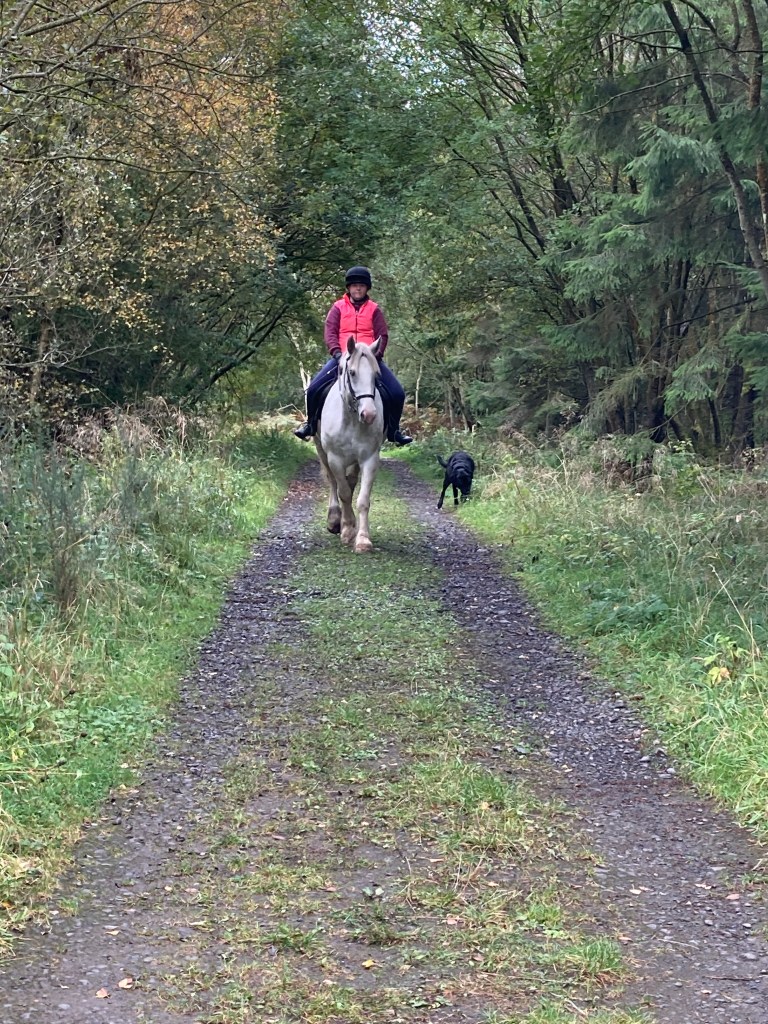
Yesterday Buddy the Labrador and I joined Daughter when she went riding in Swarland Woods. There are some lovely trails through this mixed woodland, which skirts a golf course.

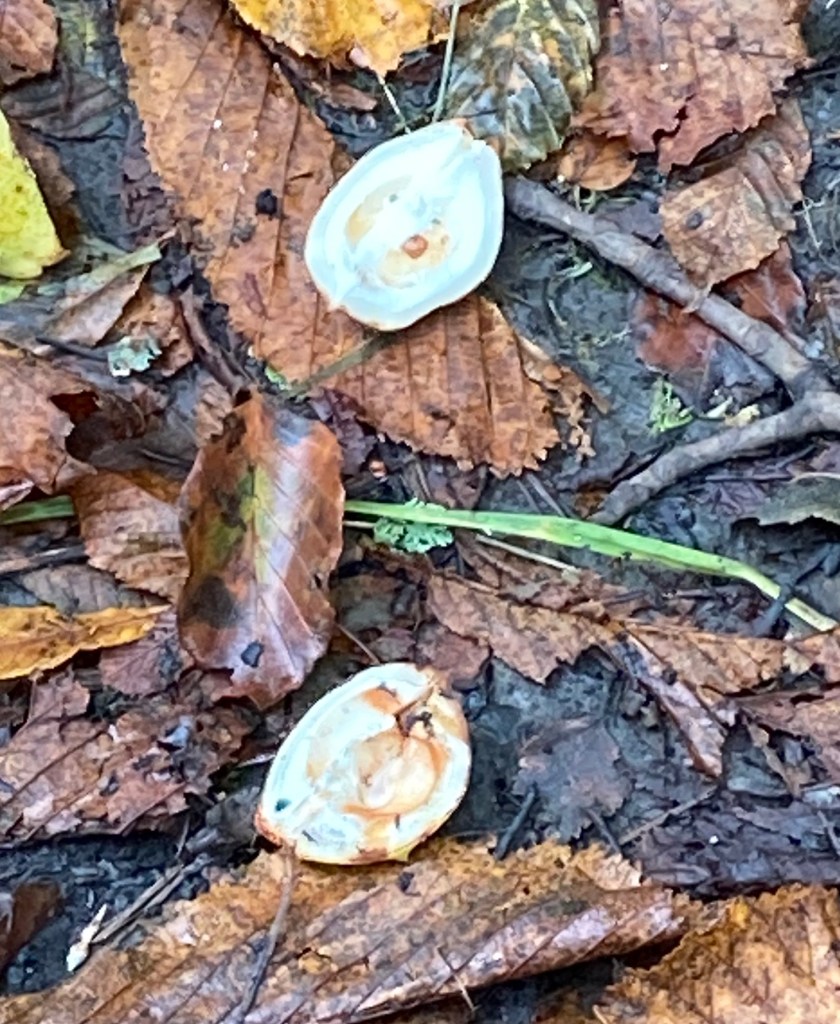
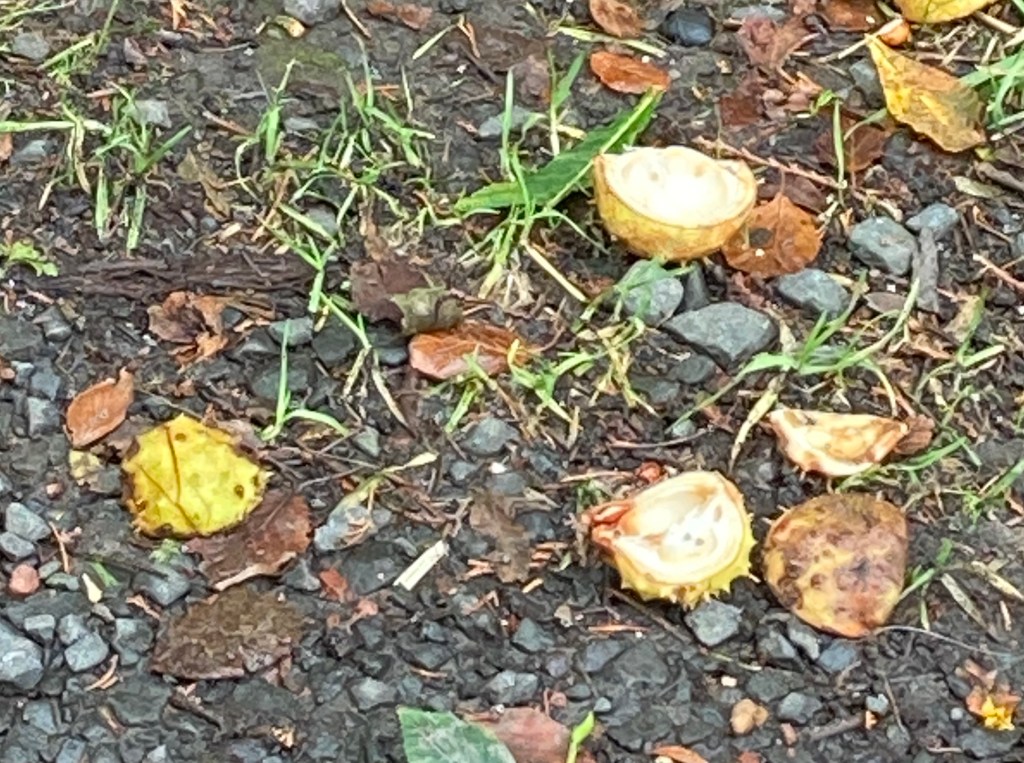
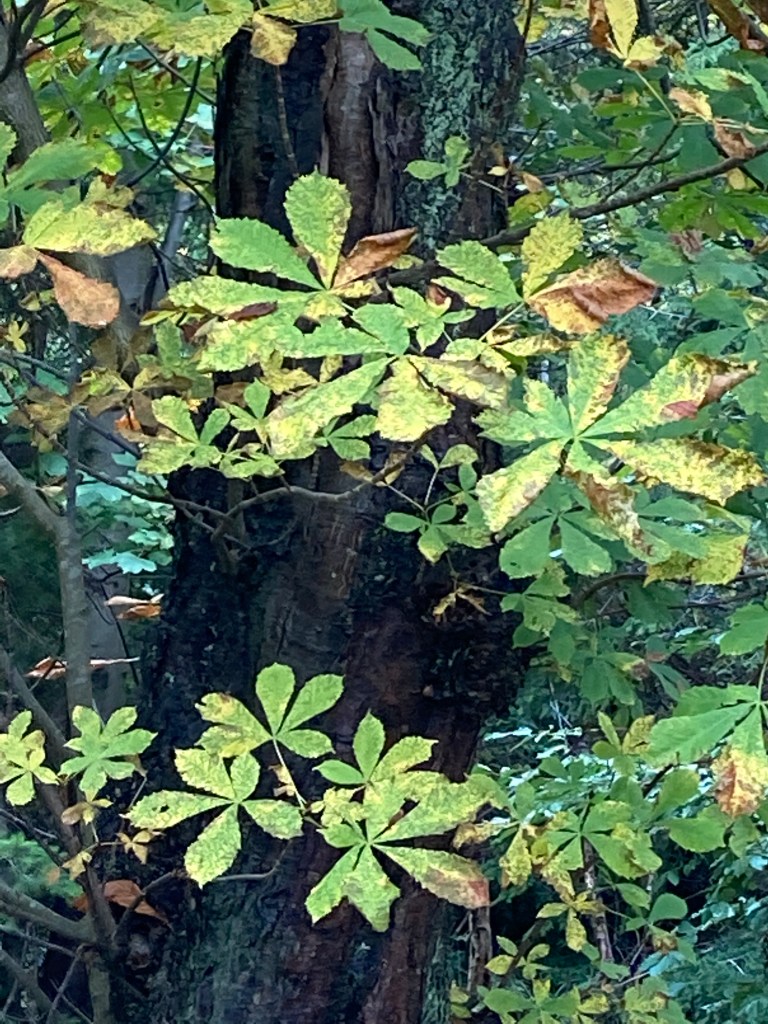
There is an avenue of horse chestnut trees, which are currently dropping their fruit (conkers). There were plenty of shells but none of the smooth brown conkers they protect. Maybe people had collected them. Apparently if you put piles of conkers around your home they deter spiders. When I was a child we played the game of conkers. This involved drilling a hole in the conker and threading it onto a knotted string. Players would take turns flicking their conker at that of their opponent until theirs shattered. There were all sorts of tricks like pickling your conkers in vinegar to harden them.

c

The beautiful fan-shaped leaves of the horse chestnut are just beginning to turn gold for autumn.

T

There were plenty of ripe blackberries, but I didn’t stop to pick any or I’d have been left behind by dog and horse! My scooter keeps up ok, but not if Misty breaks into a trot!

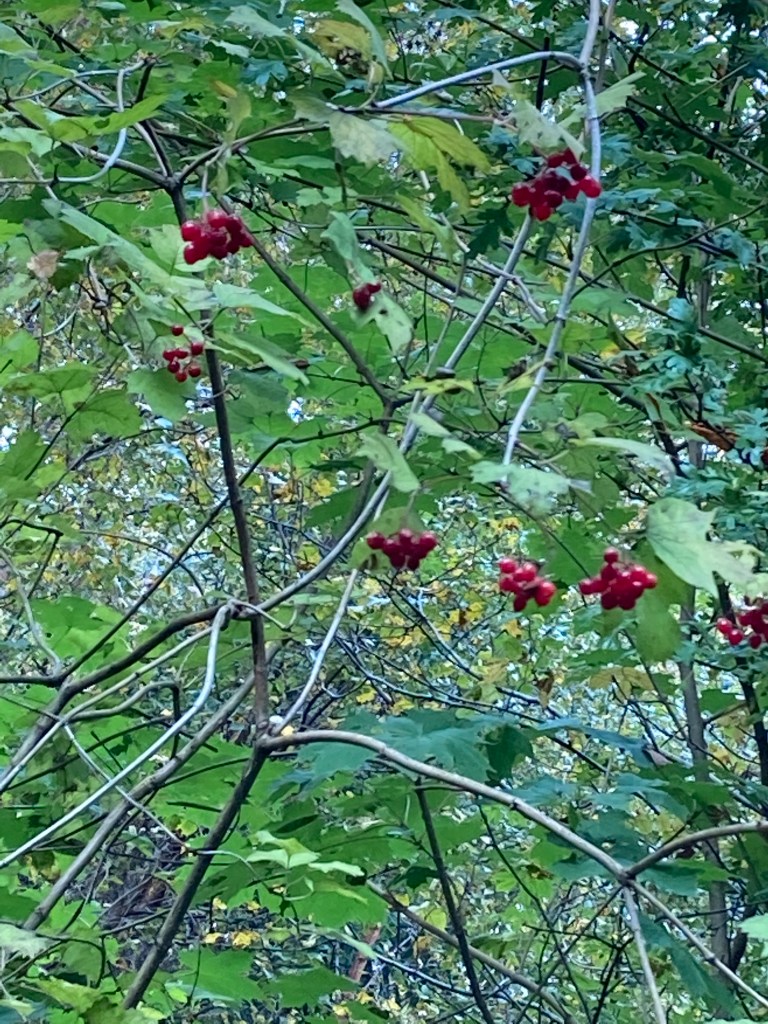
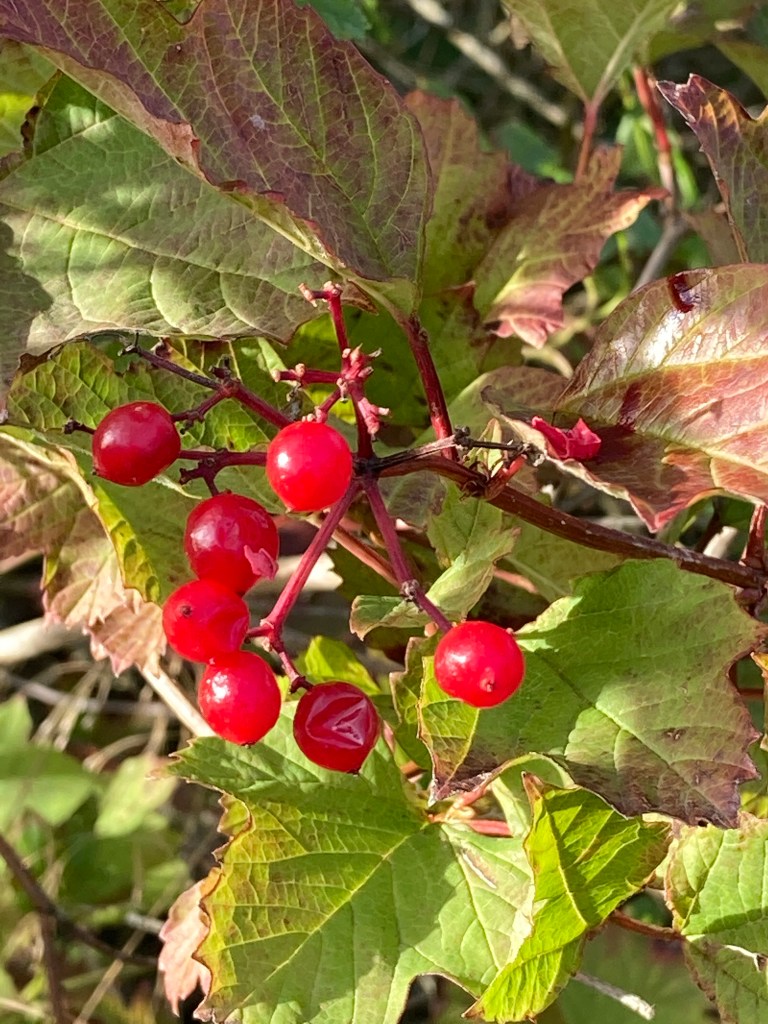
There were other berries on show like these glowing red ones on the guelder rose….

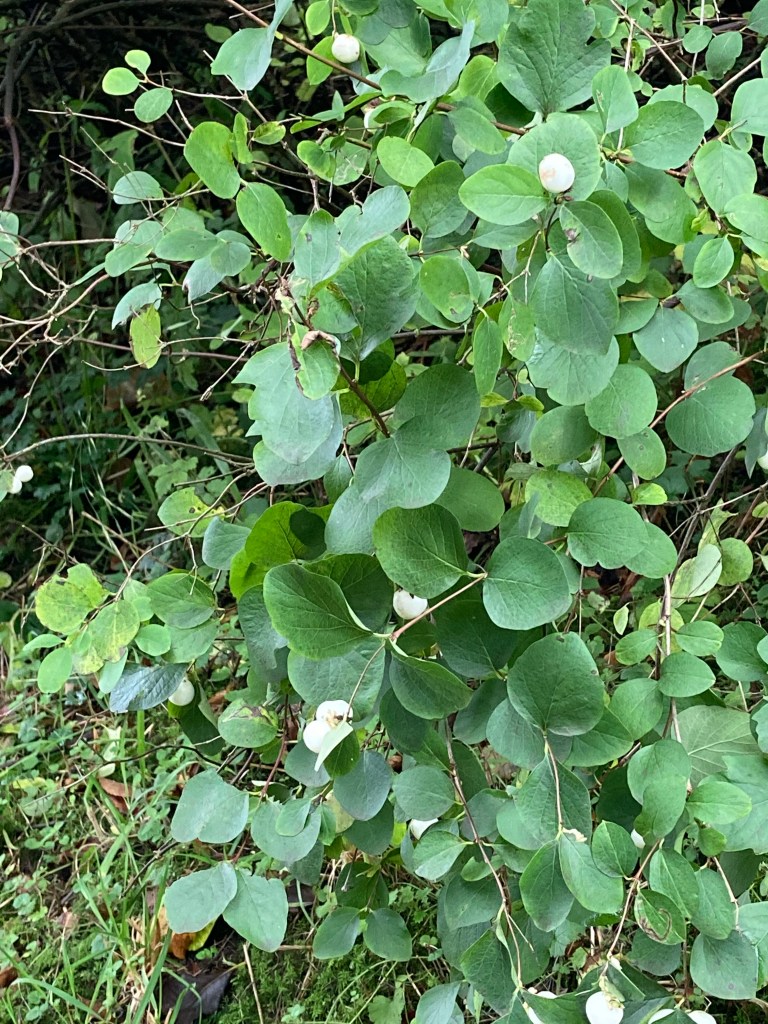
…and the startling white fruits of the snowberry, an introduced non-native species. Neither plant’s berries are edible by humans, though are a good food source for birds.

I also saw this beautiful devil’s bit scabious. There are fewer wildflowers about as autumn sets in so this is a welcome splash of colour.

Misty is quite happy with Buddy walking by her side.

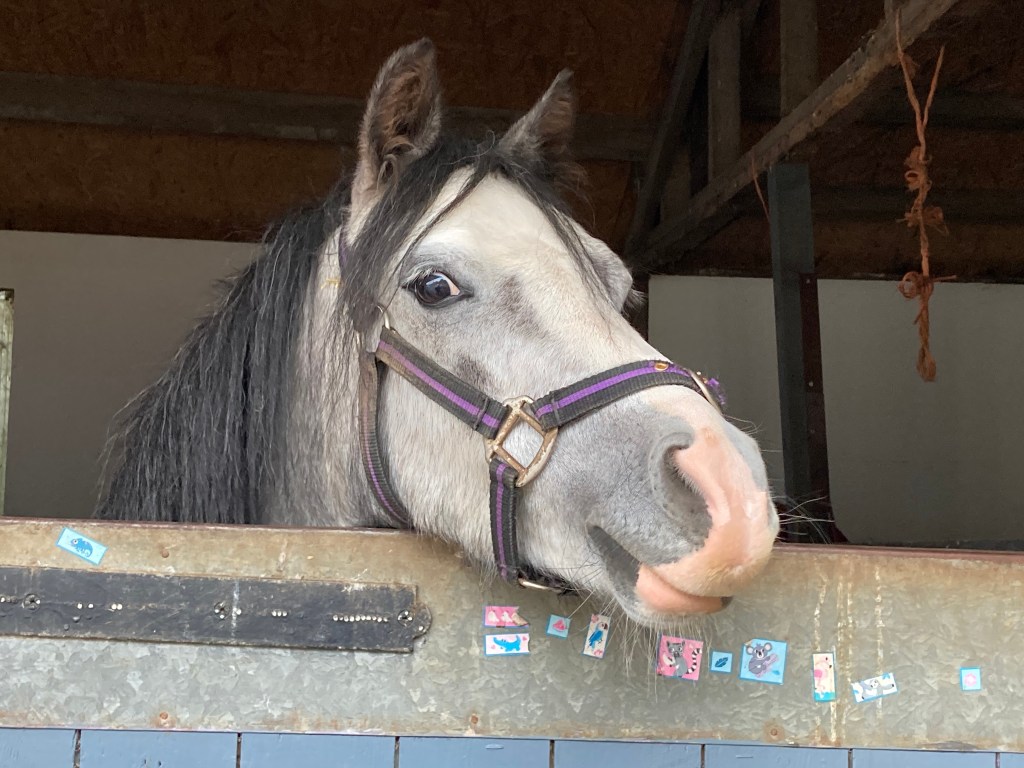
As we were almost back at the stables Misty neighed loudly at her two friends and they answered her. They seemed really glad to see us when we got back and posed for pictures.

Of course Misty had to pose too!

What a lovely afternoon we had!

Posted in Uncategorized

Making The Most Of Nature’s Harvest: Spiced Apple Chutney

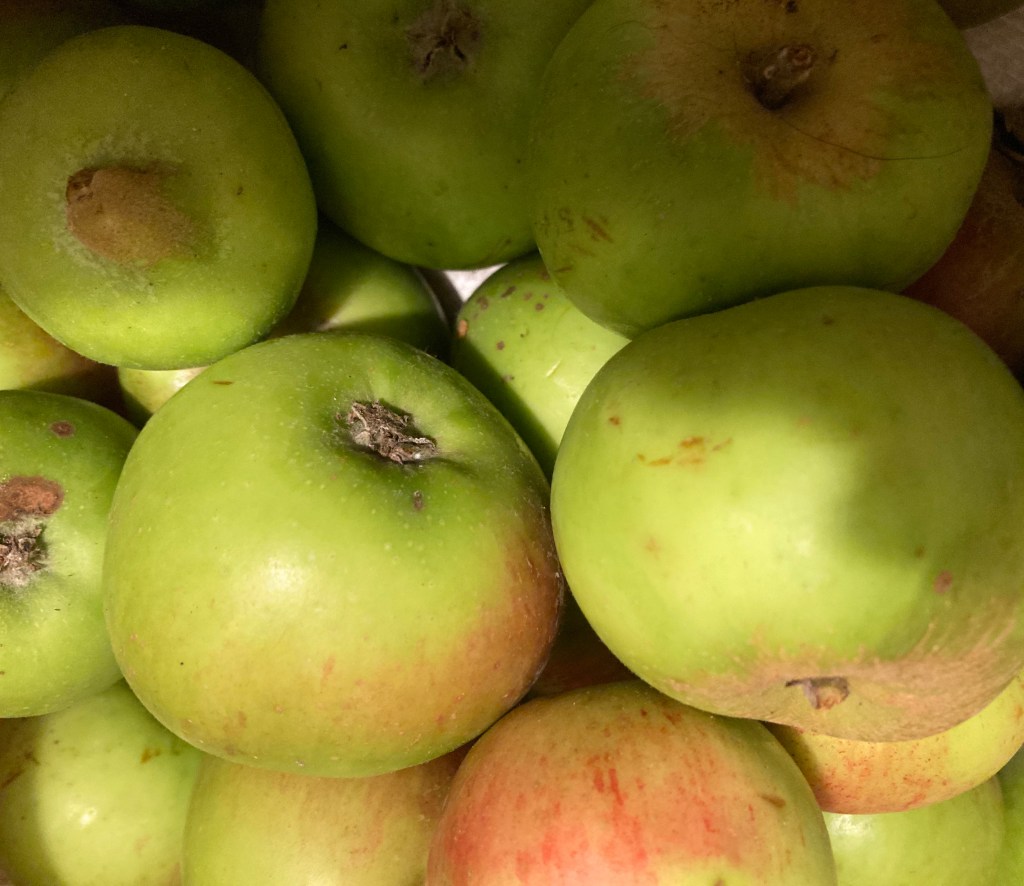
I’m working my way through the huge bag of apples from my mothers overladen tree. The next project was this spiced apple chutney. I used this recipe from the BBC Food website. I realised that I had no sultanas or raisins so just left them out.

We have this apple prep tool that is supposed to peel, core and slice the apples. It’s fiddly and the peeling blade is lethally sharp: it gave K a nasty cut a while back, but he nobly set to work preparing the apples.

Ingredients

  • 225g/8oz onions, chopped
  • 900g/2lb apples, cored and chopped
  • 110g/4oz sultanas, raisins or chopped dates
  • 15g/½oz ground coriander
  • 15g/½oz paprika
  • 15g/½oz mixed spice
  • 15g/½oz salt
  • 340g/12oz granulated sugar
  • 425ml/¾ pints malt vinegar

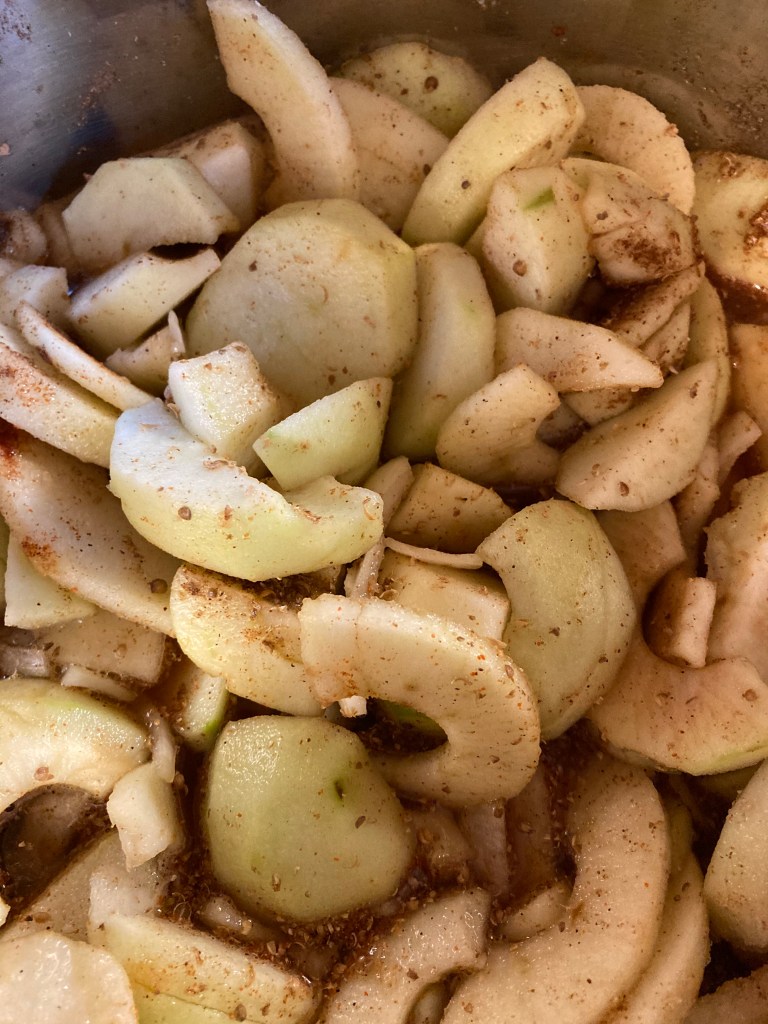
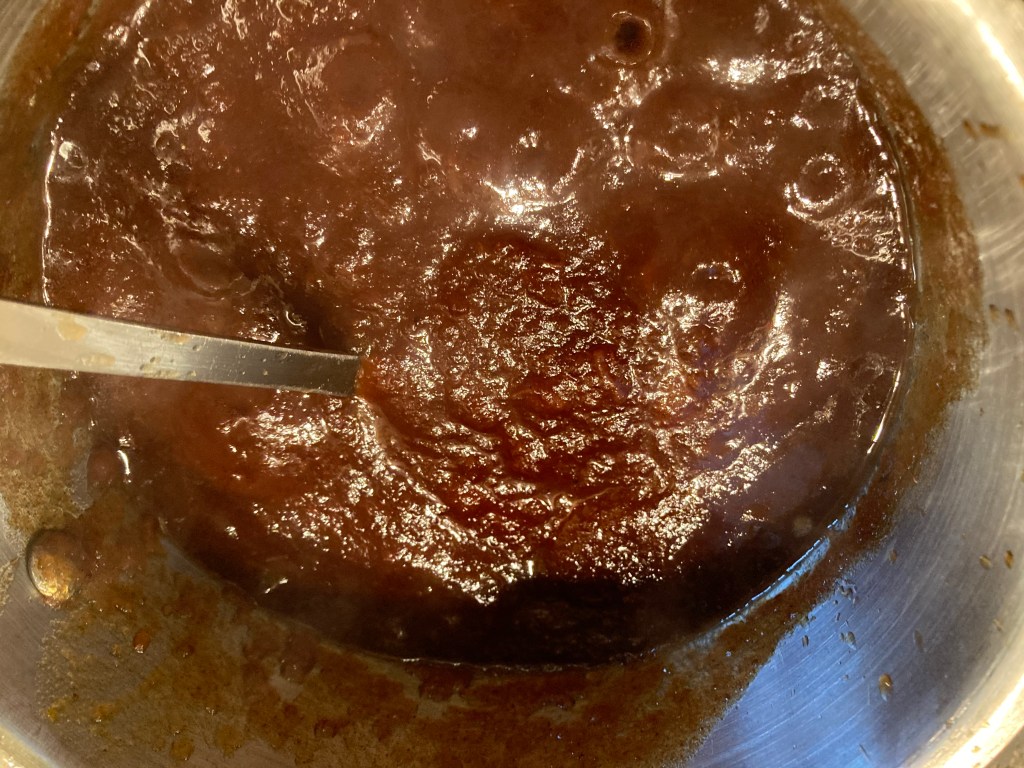
I doubled the quantities (there are a lot of apples to use) and simply simmered all the ingredients together for a couple of hours, stirring occasionally.

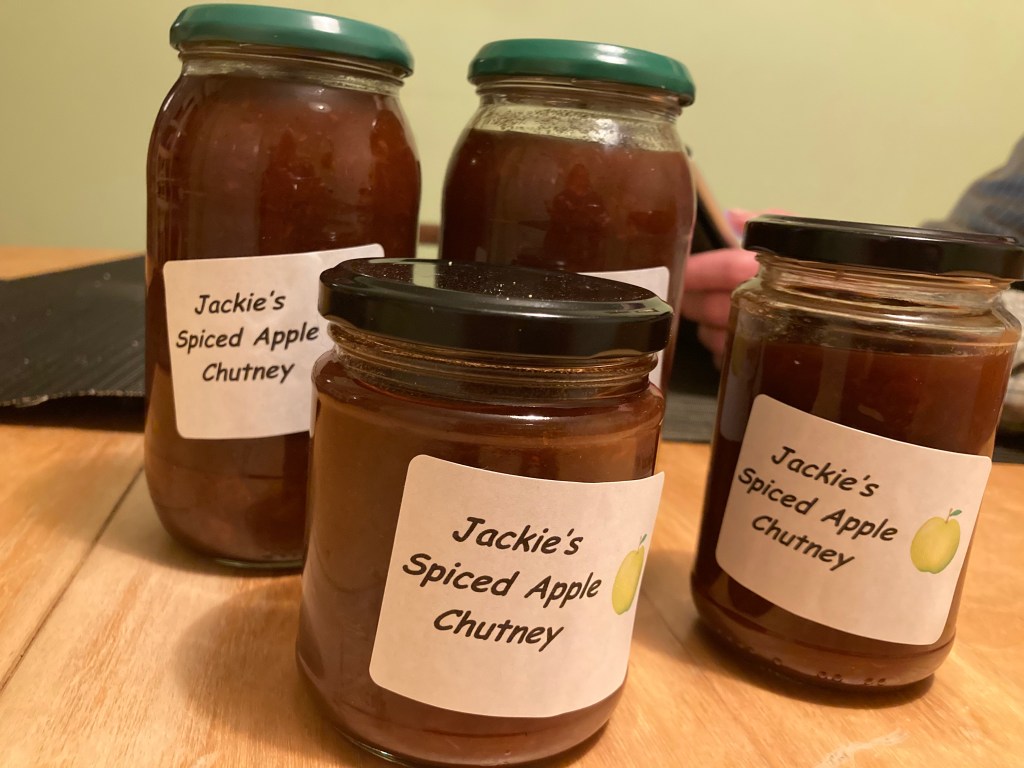
By this time the apples had all broken down and the onions were very soft, but there was still a lot of liquid to reduce down. The recipe specified a thicker mixture at this stage but I figured there was enough pectin from the apples to help the chutney set a little bit, so went ahead and poured it into sterilised jars. I ended up with far less than the amount the recipe said: I’d made the equivalent of about 6 jars instead of 8-12. It tastes ok. not over-spicy and the flavour will improve. It really needs a couple of months for the flavour to develop.

This recipe is a good one with cheese. I use a lot of chutney – especially with cheese in a sandwich, so this should be perfect.

What’s your favourite chutney recipe?

Posted in Uncategorized

Knitting At The Beach Again

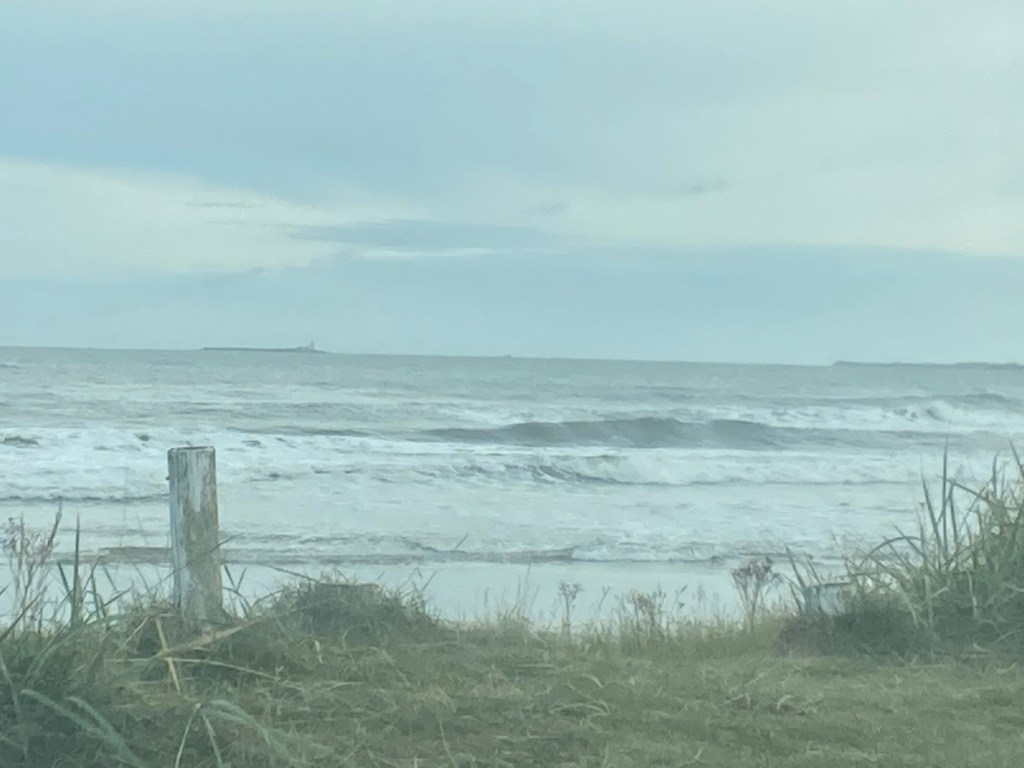
As autumn has arrived and the holidaymakers have gone home, our lovely Northumbrian beaches are quieter again. We were at Alnmouth yesterday for the first time in ages and it was so good to be back with my favourite knitting view of Coquet Island.

For a while it’s been too busy to find a parking space. Also, when the weather is good and the picnickers are about, Buddy the Labrador thinks the beach is one massive buffet for his personal enjoyment! Not that I really resent the tourists. They have given the local businesses, including cafes, restaurants, pubs and hotels, such a boost since the COVID lockdown, hopefully enough to continue trading, so we can support them during the coming months. Not that that is happening much. We are in a local lockdown here in North East England, following a surge in Coronavirus cases, so we can only visit such places with the people we live with.

One change I did notice was that there is now a gate on the car park at Alnmouth Beach. Locals reported that a number of camper vans were “wild”camping there and leaving large amounts of rubbish behind. The same was happening at nearby Buston Links. The landowner has installed bollards to block the lane there to vehicles , which has not gone down well with people who go there to walk their dogs.

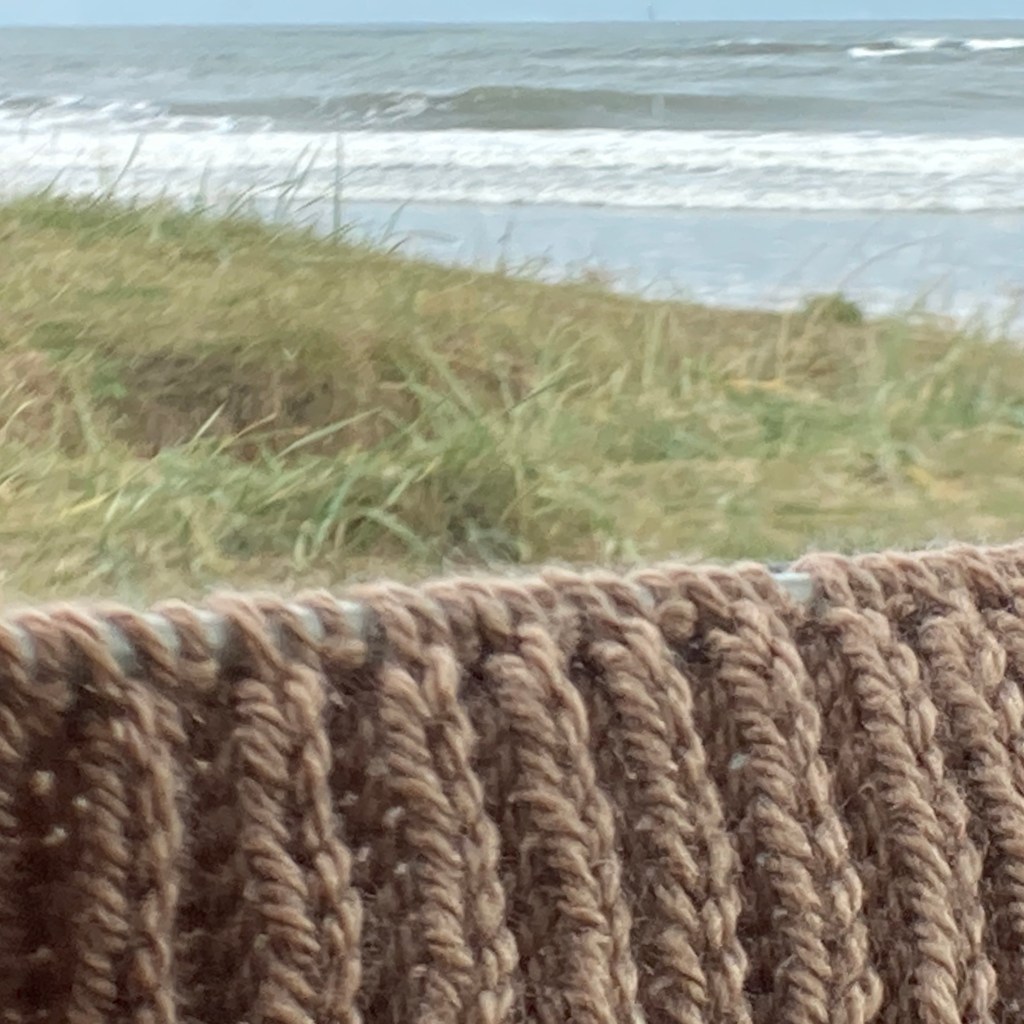
While K, son and Buddy went for a walk I got on with the brioche hand warmers I began to knit earlier in the week.

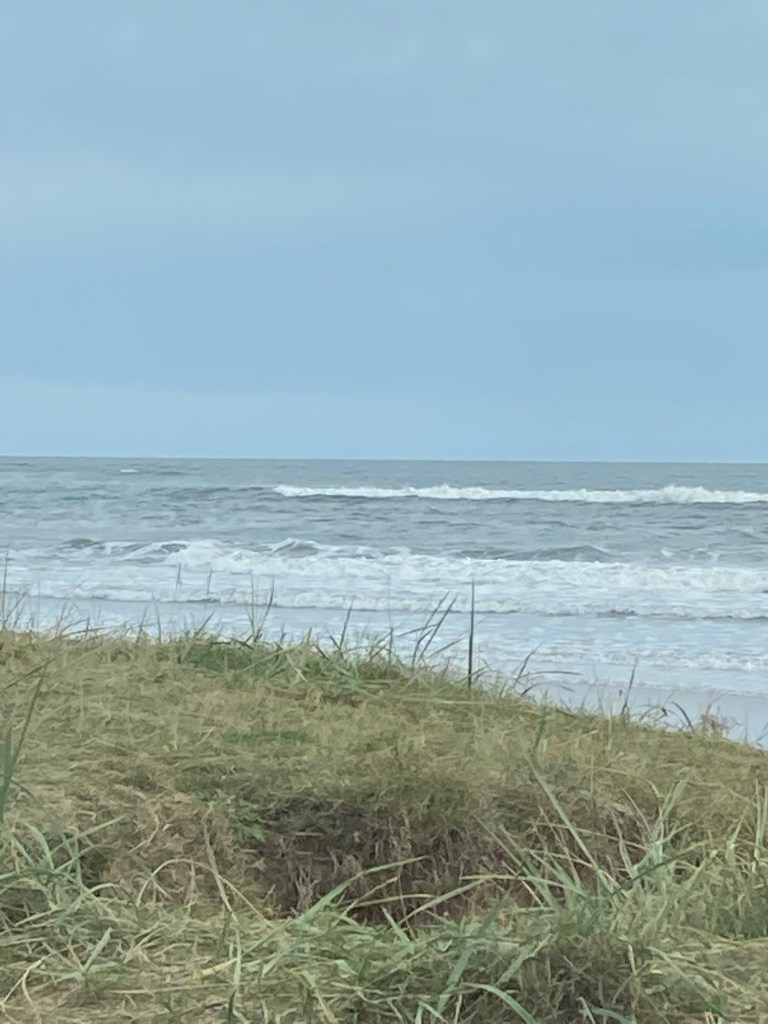
The sea was quite rough, so it was distracting watching the breaking waves. I am always mesmerised by the sea.

There were still lots of people about, but it wasn’t picnic weather so Buddy got a good run off his lead. When the boys returned at the end of the walk we treated ourselves to an ice cream from Gwen’s van. I do love knitting with a view, especially a sea view.

Posted in Uncategorized

Making the Most of Nature’s Harvest: Sloe Picking (With a Bit of Knitting)

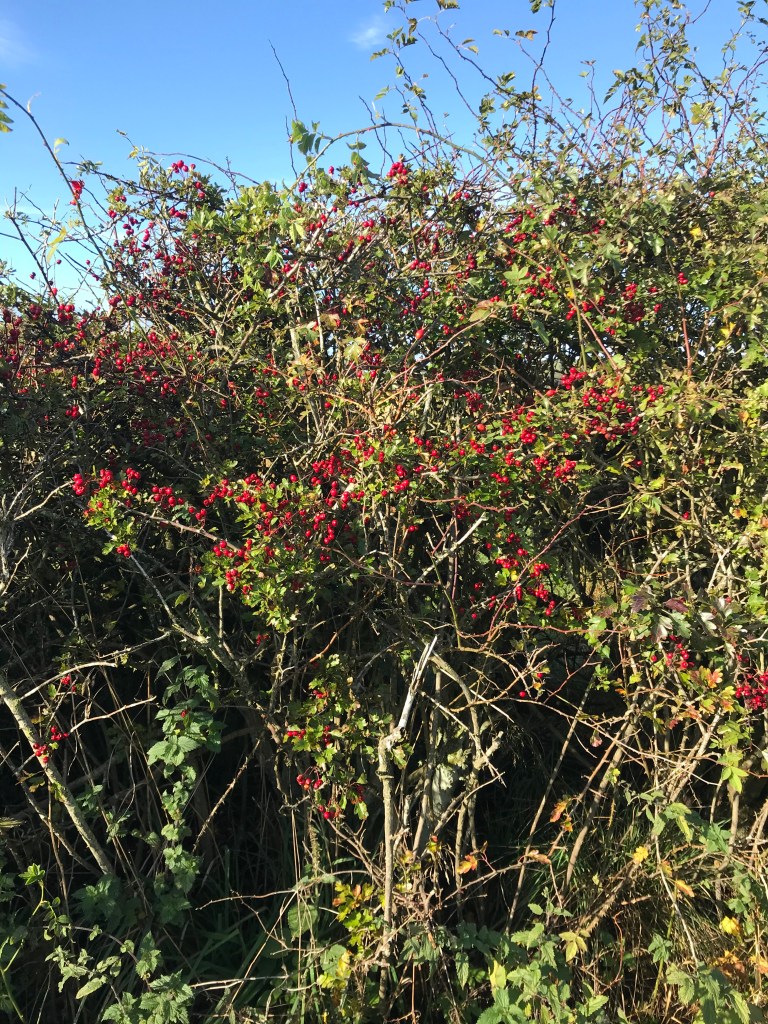
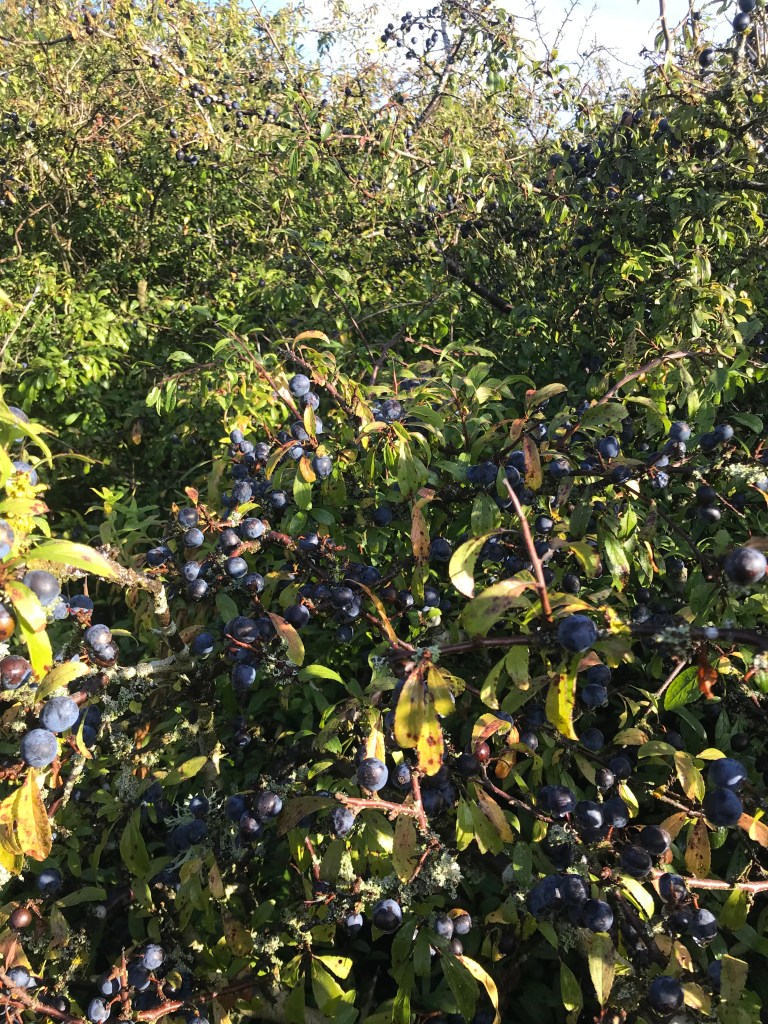
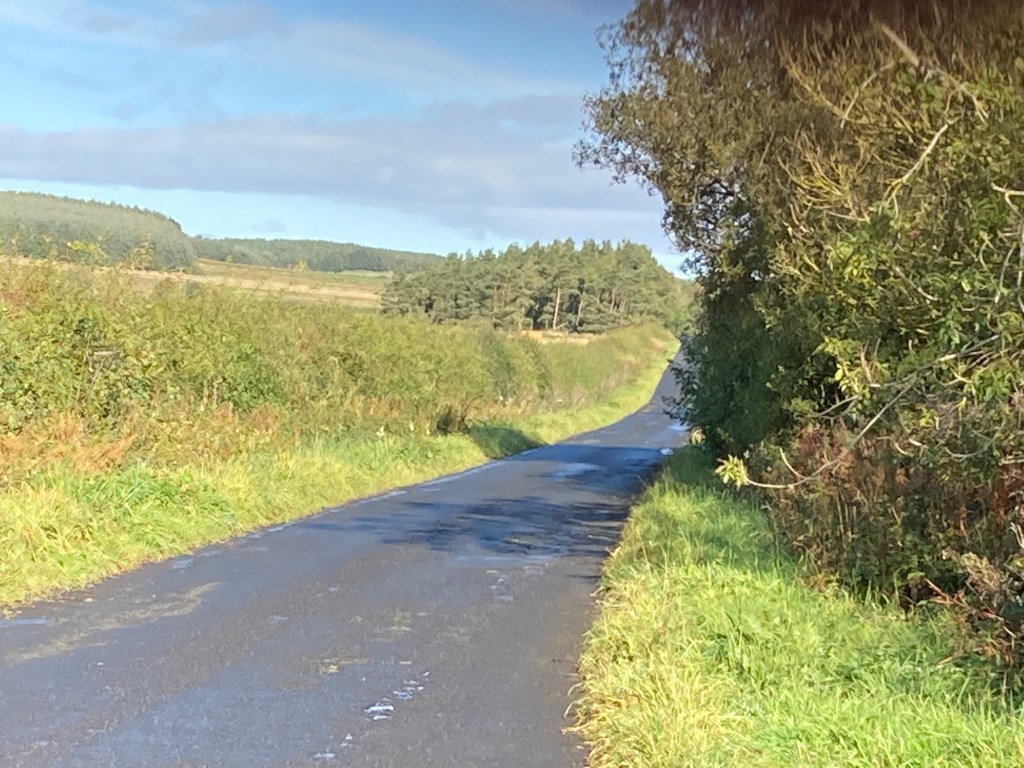
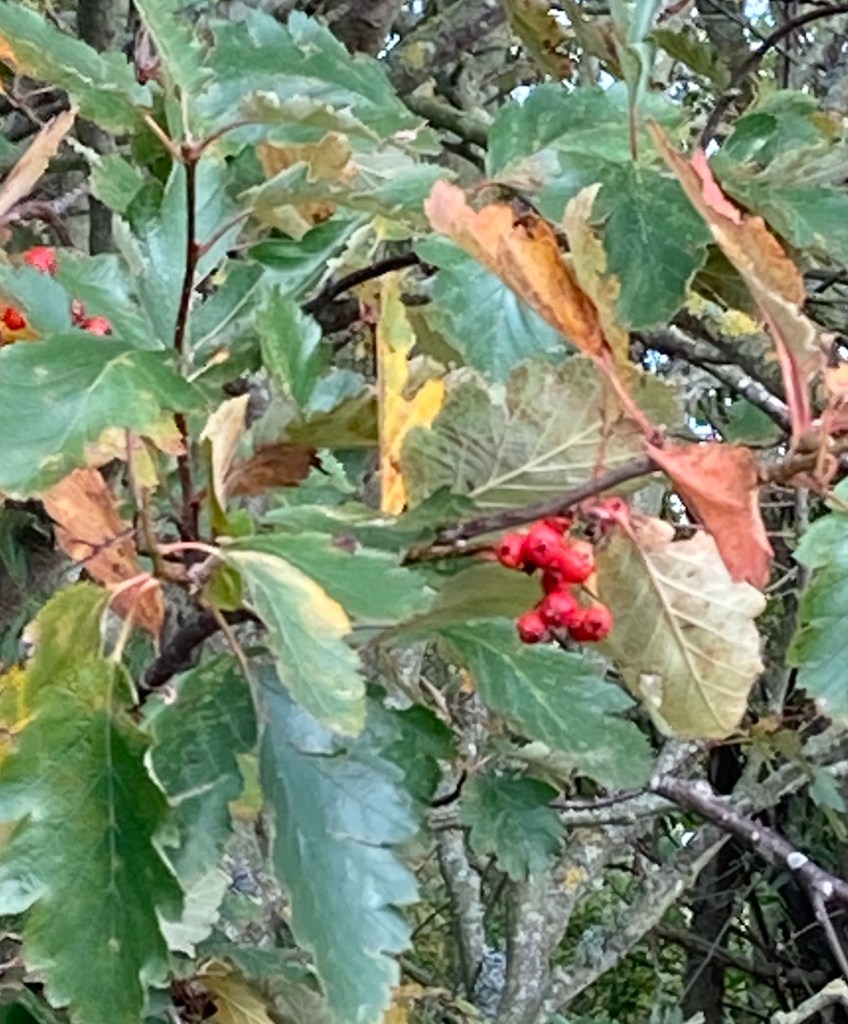
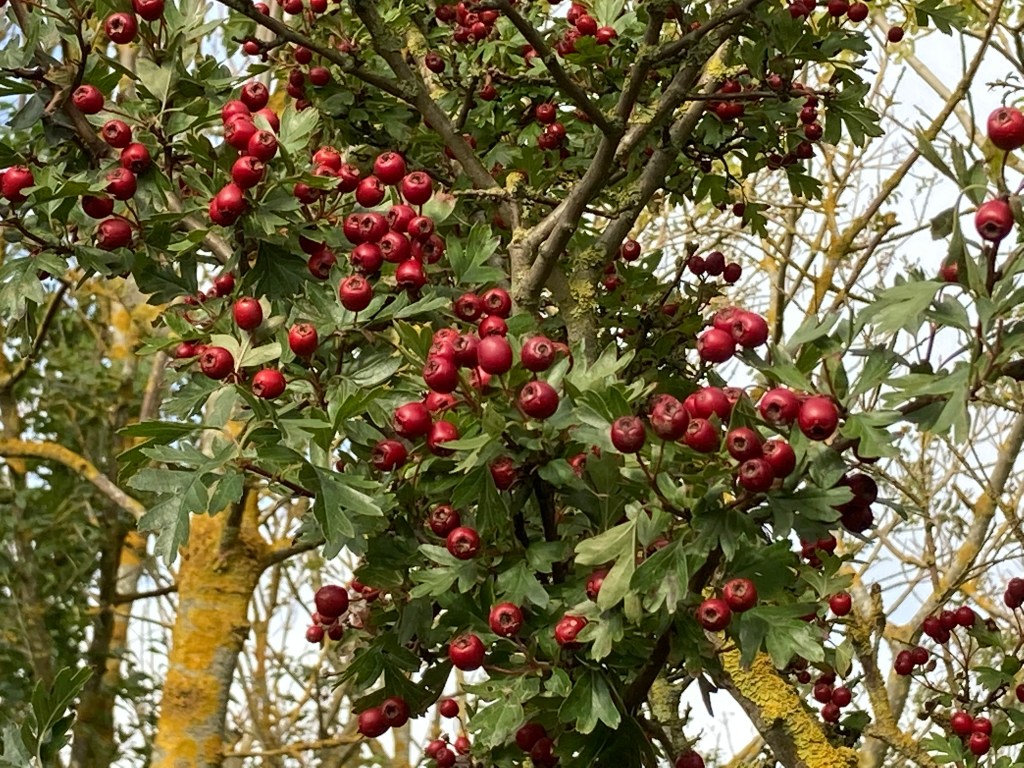
Yesterday morning was beautiful. We found ourselves close to what we refer to as The Sloe Motherlode. On a quiet lane up to a farm, there is a wide verge full of blackthorn bushes. Autumn berries have been profuse everywhere. Down here there were also spectacular hawthorn bushes…

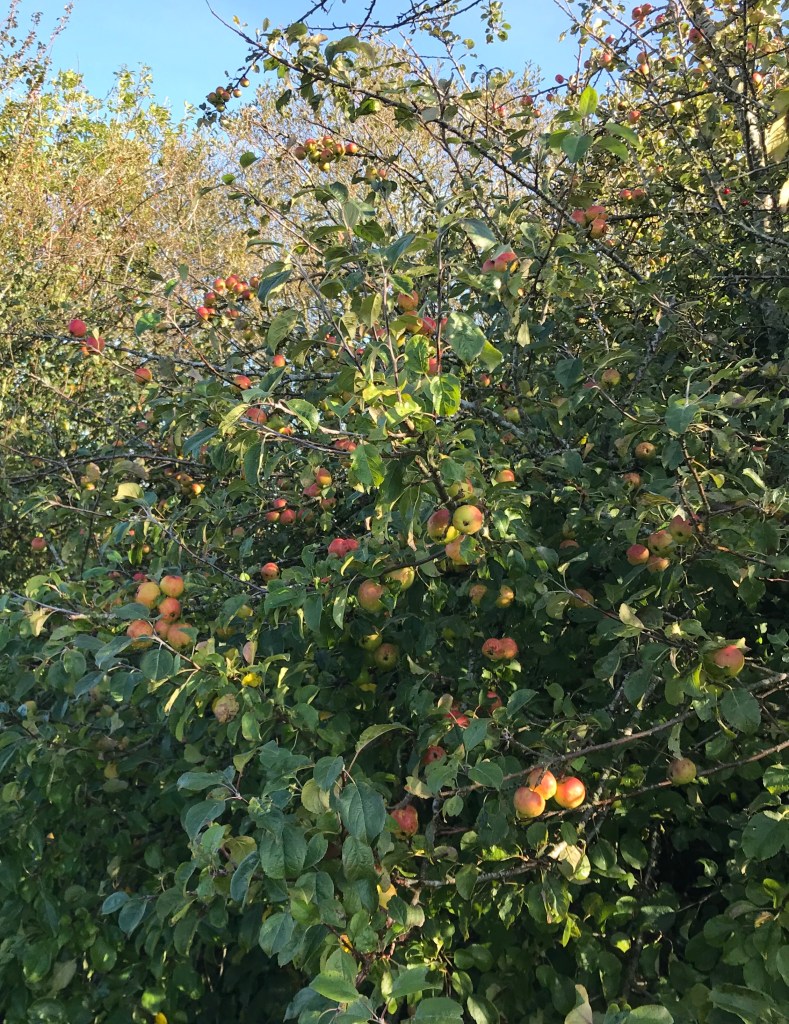
… a tree laden with crab apples…

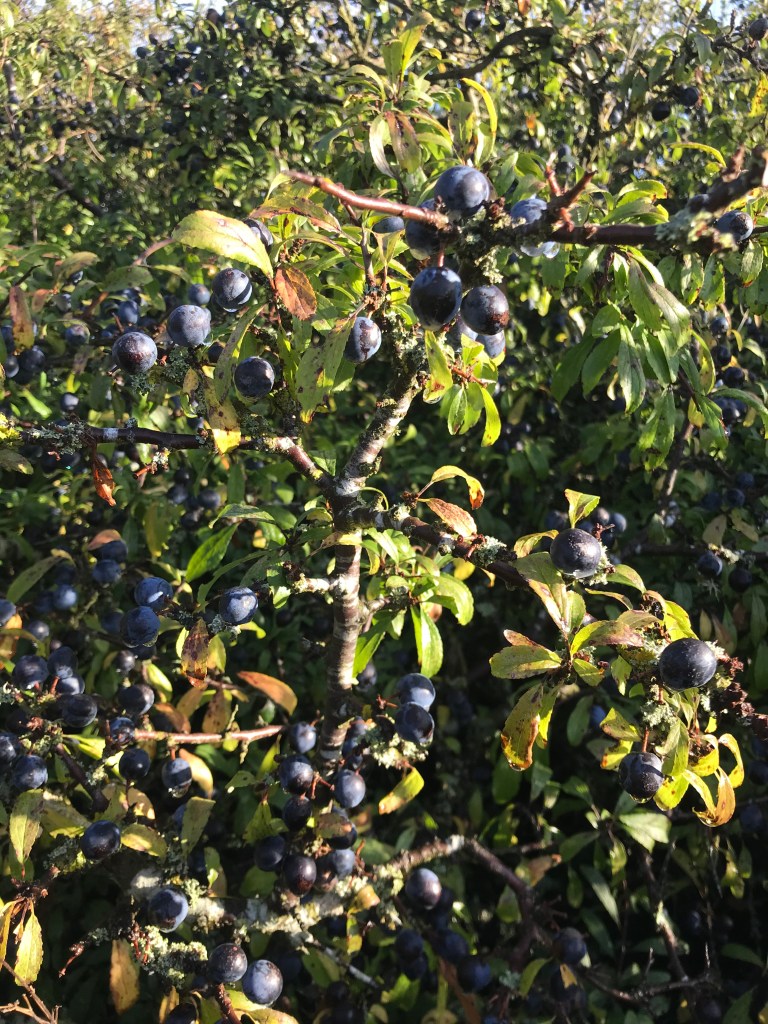
…and a massive crop of sloes

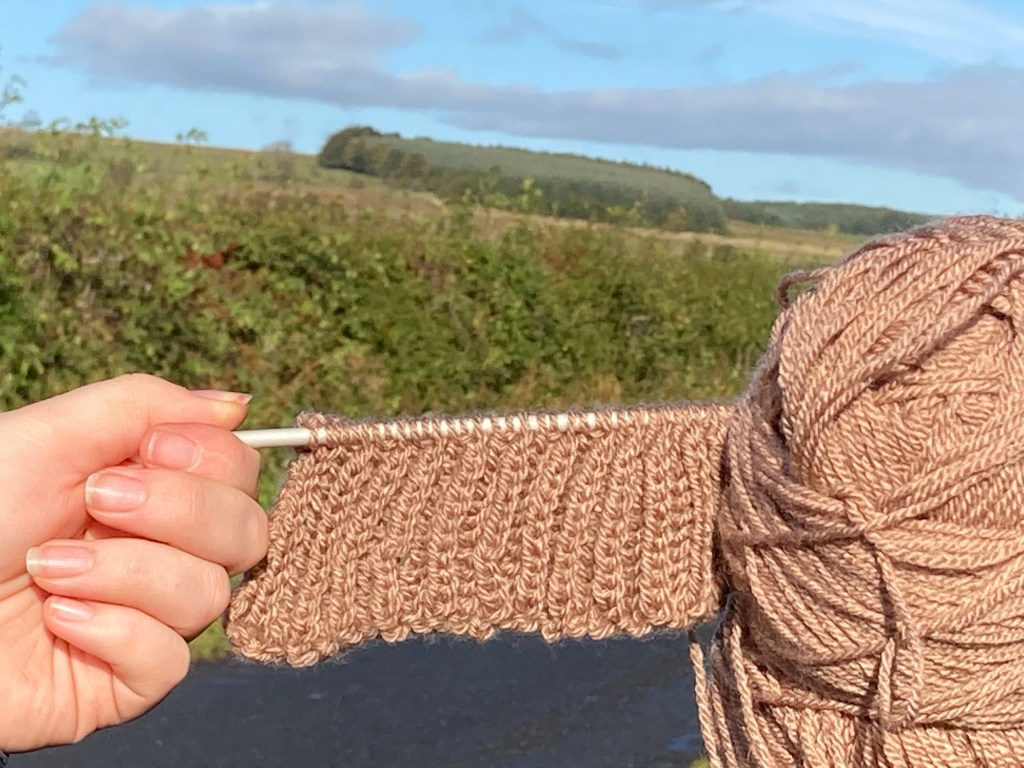
K went off to pick fruit while I sat in the car with my knitting. I made some 2 colour brioche hand warmers for myself earlier this year. With winter approaching, K has requested some to keep his hands warm when he’s sea fishing – he needs to keep his fingers free to tie lures. I chose a machine washable acrylic yarn in a neutral fawn shade. I think the soft squishy texture of brioche will be really cosy. I cast on this project at the beginning of the week so I have something portable for knitting on the go.

The view was great. Of course I can’t disclose the location. Friends in the area know where it is but we have to protect our sloe source!

In a matter of minutes, K had returned with over 3 pounds of sloes. He got most of them standing on the same spot as the bushes were covered with fruit. I didn’t get much knitting done at all!

The sloes have gone in the freezer, ready to make sloe gin. Some say that sloes shouldn’t be picked until after the first frosts. Ironically there was a frost this morning., Ripeness is not an issue but freezing causes the berry skins to split so they give up their juice easily when they steep with the gin and sugar. We’ve only just bottled the drink we made with last year’s harvest. You could say it’s a sloe process!

Not a bad way to spend a morning!

Posted in Uncategorized

Making the Most of Nature’s Harvest: Apple and Mint Jelly

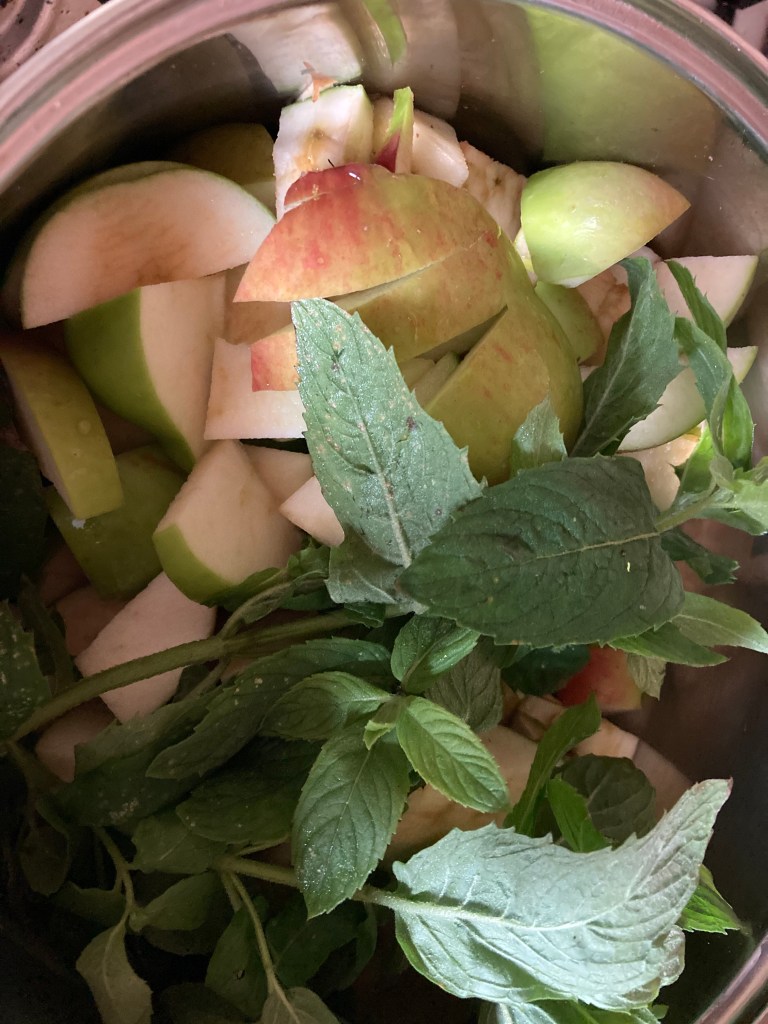
I had another go at using up some of glut of cooking apples this week. With pies in the freezer and Bramble and Apple Gin infusing, it was hard to decide what to do next (I still have bramble and apple jam left from last year so no point in doing that). Apples are rich in pectin, which is what makes jams and jellies set, so going down the jelly route seemed like the obvious thing to do. With large clumps of apple mint in the garden, ready to be cut back, I decided to go for apple and mint jelly. Apple mint has a more delicate flavour than garden mint (we have none of that!), I was hoping that the mint flavour wouldn’t be lost altogether.

I used this recipe from The Cottage Smallholder.

  • 1.8 kilos (4 pounds) of cooking apples (Bramleys are ideal).
  • 20g (3/4 ounce or 3/4 cup) bunch of mint tied with string
  • 50g (1 3/4 ounces or 2 cups) of mint leaves chopped fine
  • 570ml / 1 UK pint (2 1/2 cups) of water
  • 570ml / 1 UK pint (2 1/2 cups) of white wine vinegar
  • Sugar at a ratio of 454g (1 pound) to 570ml of liquid – a pound to a UK pint of liquid (2 1/2 cups)

There’s a bit of maths involved in calculating the exact amount of vinegar and sugar involved after the juice is extracted. The online recipe gives instructions for both using a fruit steamer and a jelly bag to extract the juice. I used my trusty, bramble-stained jelly bag.

You start off roughly chopping the apples. No coring or peeling is needed as those parts of the apple have loads of pectin – I just removed the stalks and any bruised bits. The apple went into a big pan with a load of mint springs.

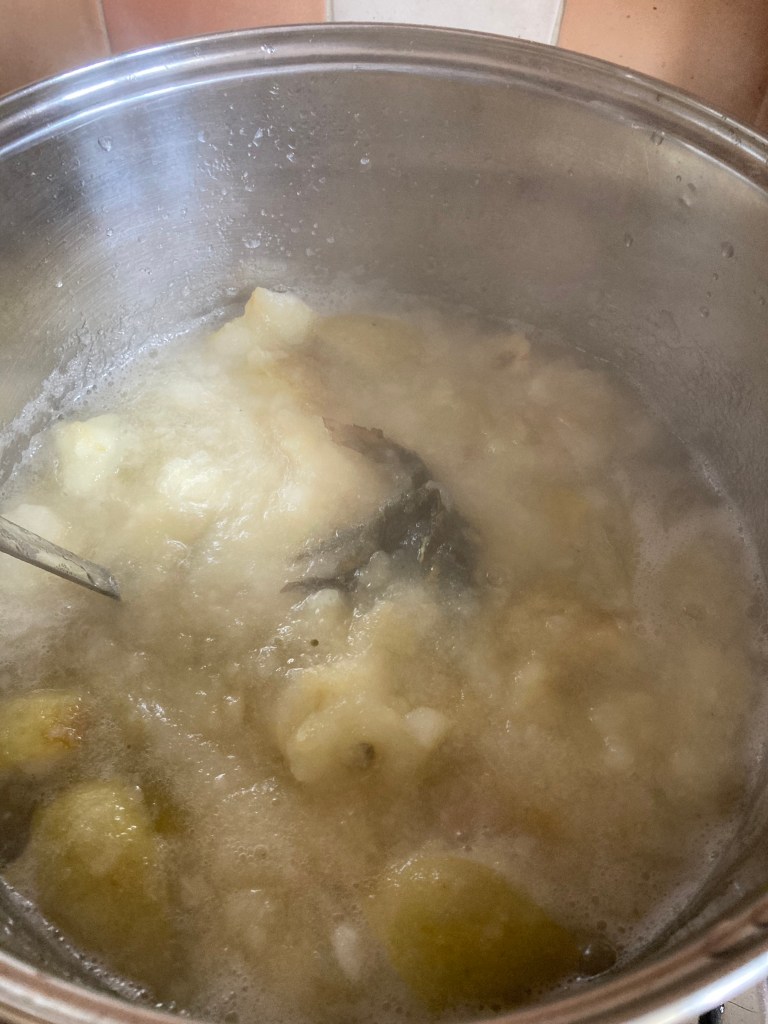
I added a pint of water, brought to the boil and simmered until the apple had all reduced to a fluffy pulp.

The pan contents were poured into the jelly bag, suspended over a bowl to catch the juice. I weighed the pulp down with a saucer and a bottle of vinegar, to press out as much of the juice as possible and left it to drip through overnight.

I’d used a little more than the prescribed amount of apples and managed to extract just over a litre of juice. I added 4/5 of this quantity in vinegar and calculated the amount of sugar in line with the recipe. The liquid and sugar were added to a large pan and brought to a rolling boil for 20 minutes, then I began checking for a set. I had been concerned that the juice I’d extracted was quite cloudy, but during the boiling stage I skimmed of any scum that formed on the surface – the resulting liquid was very clear.

I use the cold saucer method – a couple of saucers go in the freezer when you start, then you keep dropping a little of the hot mixture on a cold saucer until it wrinkle slightly when you push it with your finger. I repeated the test every couple of minutes, alternating the saucers and replacing them in the freezer. It took another 10 minutes of boiling before I got a set. After 10 minutes I stirred in the finely chopped mint. I also added some green food colouring, but this was making so little difference to the colour of the liquid that I gave up. I poured the jelly nto sterilised jars and sealed them.

I really should have left the liquid a little longer. The mint floated to the top in the jars. I waited a little longer then shook the jars – this time setting had started just enough to keep the mint evenly suspended. The set jelly seems to gather round the mint fragments. If I’d left it any longer the air bubbles from shaking would have stayed in the jelly rather than floating to the surface.

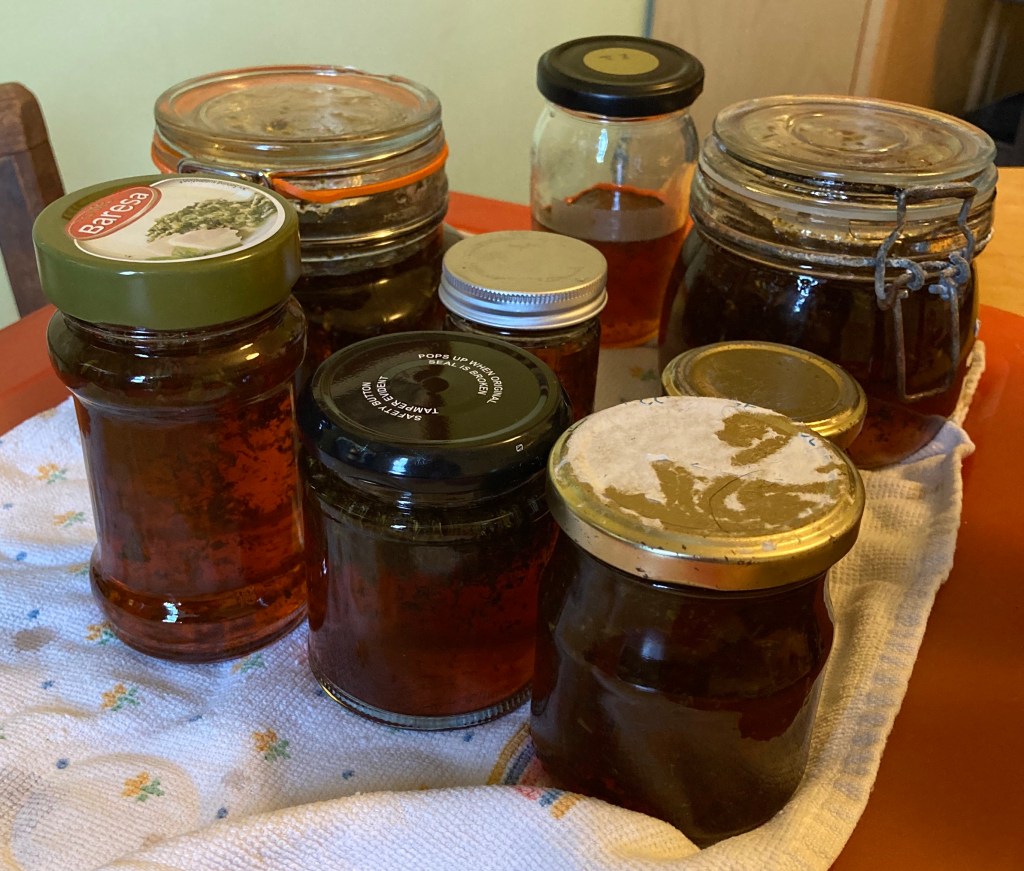
I ended up with 12 jars of various sizes. Some of these I’ve already given away to neighbours in return for their empty jars for my next preserving project. As I predicted, the jelly is not strongly minty, but still tasty. What’s your favourite jelly recipe?

Posted in Uncategorized

Goodbye Guitar

We’ve been trying to have a clear out. I’m a bit of a hoarder so it’s hard. My old guitar is a case in point

I got it for Christmas one year when I was a child. I’d had piano lessons but thought that guitar was a much cooler instrument to play. Although I tried, I never got away with it. My hands are small and I don’t have a lot of movement in my left wrist so I struggled with the frets, even though the guitar was only 3/4 size. I did get a feel of the basics though: how to tune the guitar and so on, which has stood me in good stead for learning the ukelele, which I find so much easier: the neck is smaller and there are only four strings to think about. I still find some ukulele chords virtually impossible to play, but I improvise and somehow it works and I enjoy it.

For much of the time I was growing up, the old guitar became little more than a fancy dress prop for various family members. Remember that scene in A Shot In The Dark when Inspector Clouseau is making enquiries at a nudist colony, wearing nothing but a strategically-placed guitar? I remember my brother re-enacting that with my guitar. Hilarious!

A generation later, our son learnt how to play ukelele at school and then picked up my guitar and taught himself to play that. He graduated to the full size guitar he got as a birthday present and has become a lovely player, although seldom outside his bedroom. It was wonderful that the old instrument got a new lease of life, but since Son outgrew it, it had been gathering dust so it was time for it to go. I advertised it on our street Facebook page and quickly got a reply from a neighbour. She arranged to pick it up today and I left it by the front door for socially distanced collection.

I downloaded Marie Kondo’s book “The Art of Tidying” a while ago when it was on special offer. I probably wouldn’t have done so otherwise, but I wanted to see what the fuss was about. I found some of the techniques useful but a lot of it was a bit to extreme for me. Getting rid of items that no longer “bring you joy” is hard enough, but the idea of thanking those things for their service and saying goodbye to them, seemed very weird to me, but I suppose that’s exactly what I’m doing here, paying tribute to my old guitar as it leaves for its new home as it helps another person learn to play. Goodbye old guitar!

Do you find it difficult to shed old possessions?
Posted in Uncategorized

Autumn Walk at Druridge

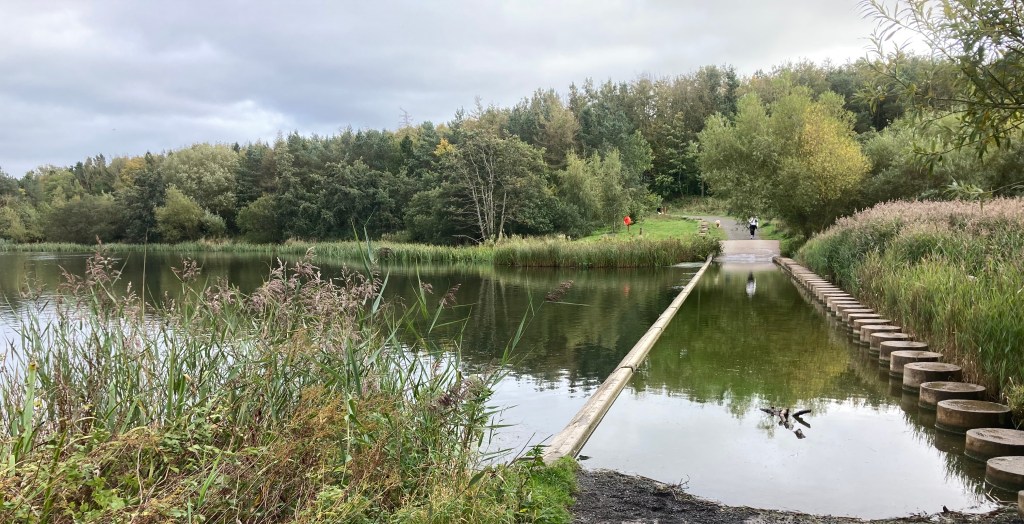
Yesterday turned into a lovely day so we arranged to meet daughter for a walk at Druridge Bay Country Park, close to where she lives. The last time I posted about a family walk there it was January and freezing cold. This time is was mild and we were treated to a little early autumn colour.

There were all sorts of berries on the trees and bushes.

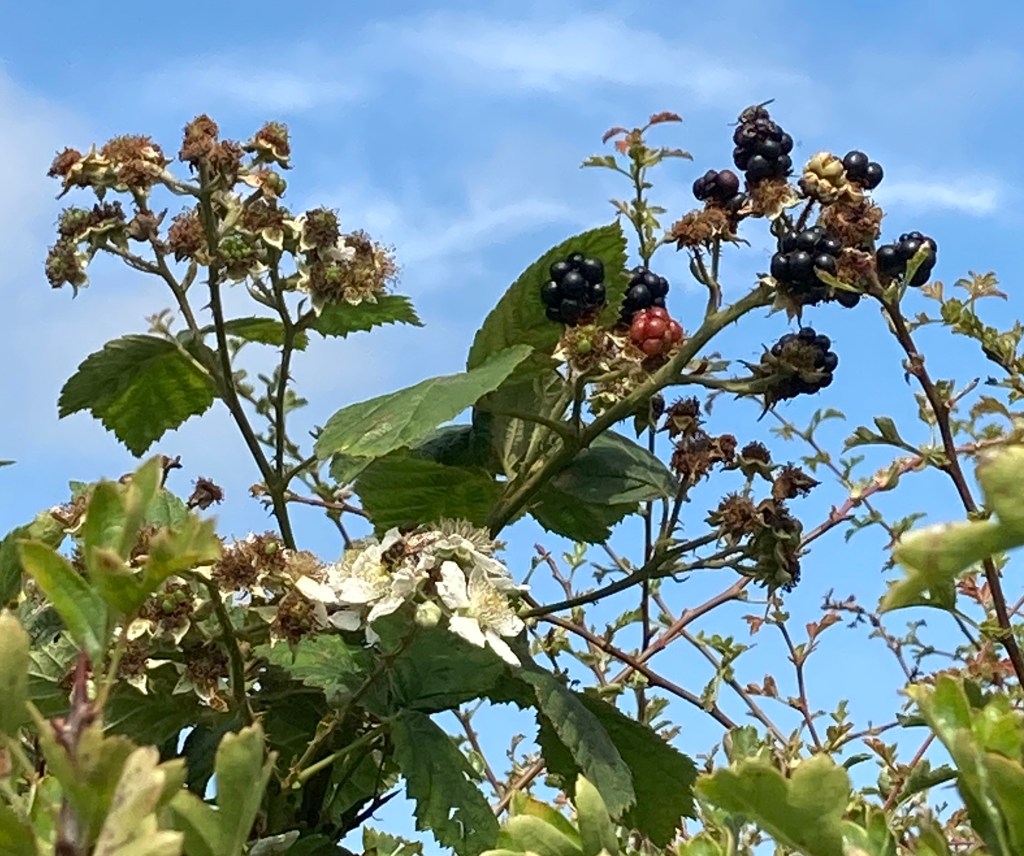
There were loads of lovely ripe blackberries – daughter was keen to pick some. She has some apples from my mother’s tree, which has cropped very heavily this year, I’m not sure whether she will make bramble and apple gin or add the brambles to a crumble with the apples – she had a good bagful in a short time.

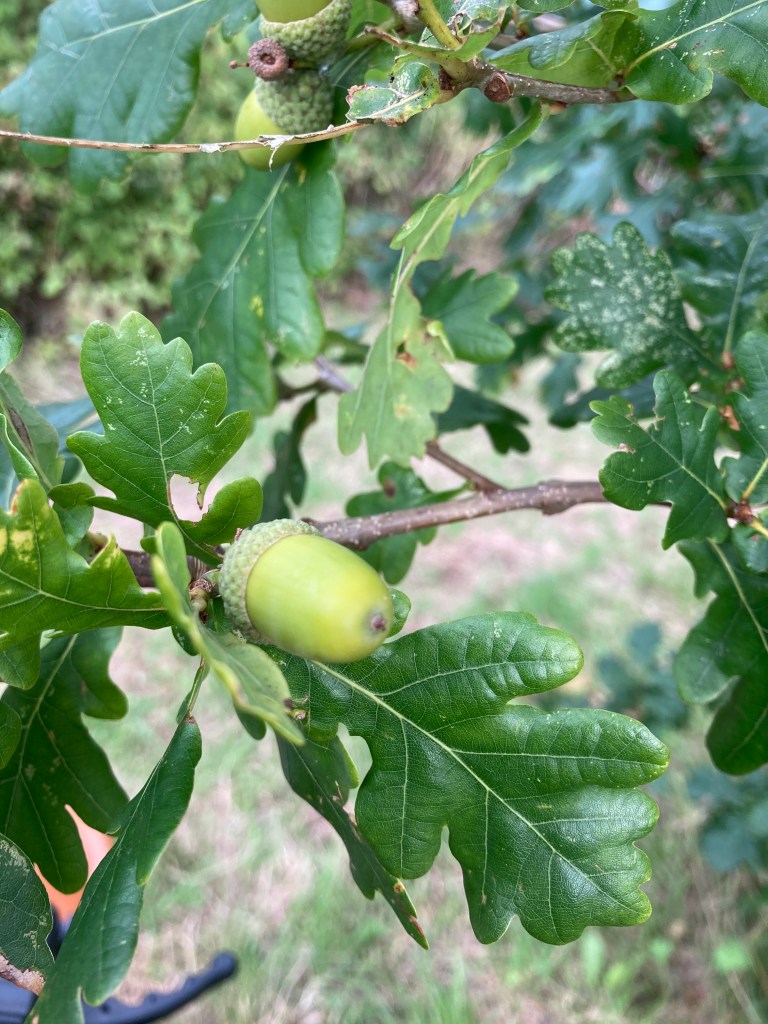
But berries are not the only way that trees and shrubs produce their seeds. This little oak tree was covered in acorns.

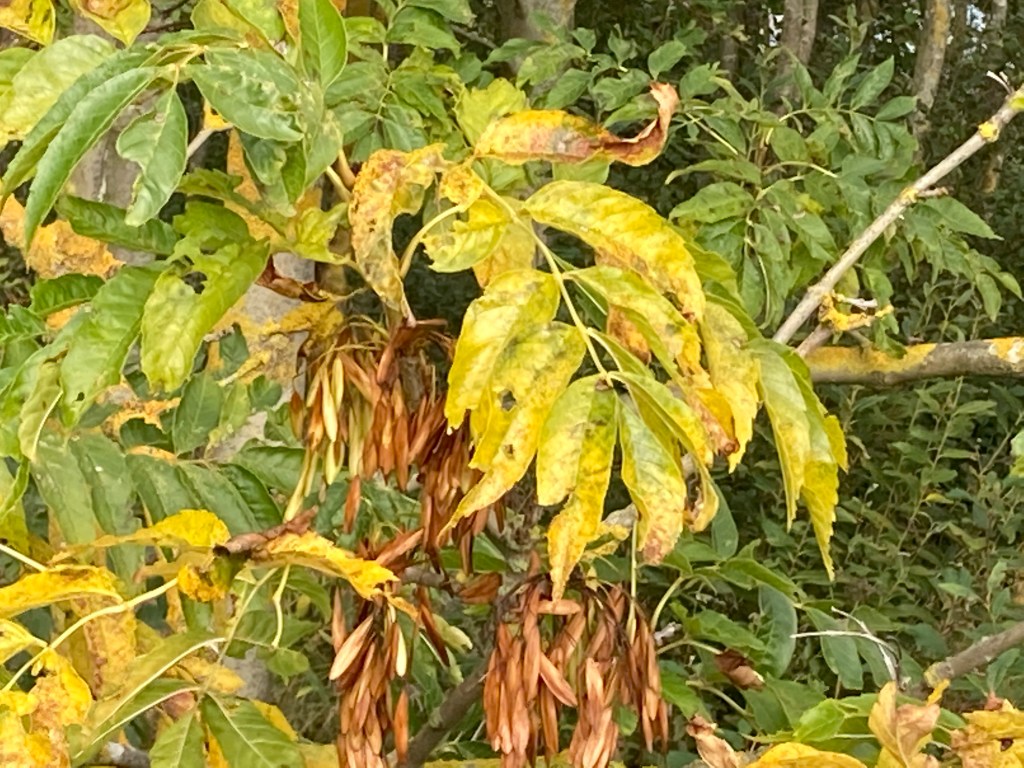
The Ash has elongated winged seeds, known as keys, that hang in bunches.

T

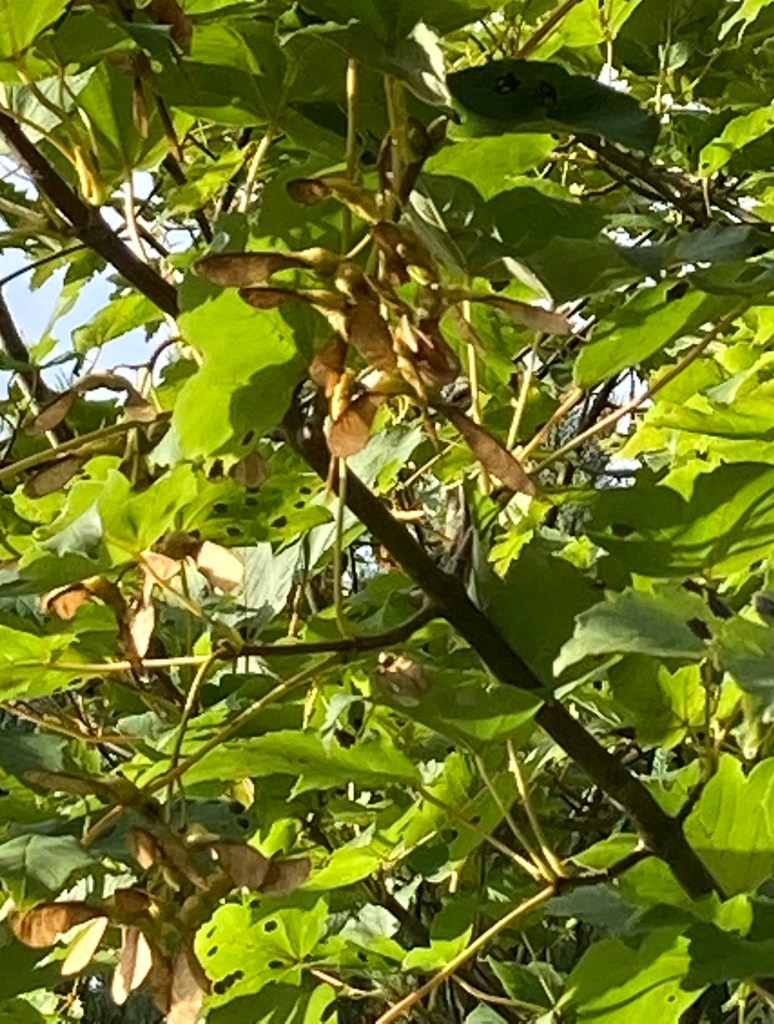
The field maple bears pairs of winged seeds.

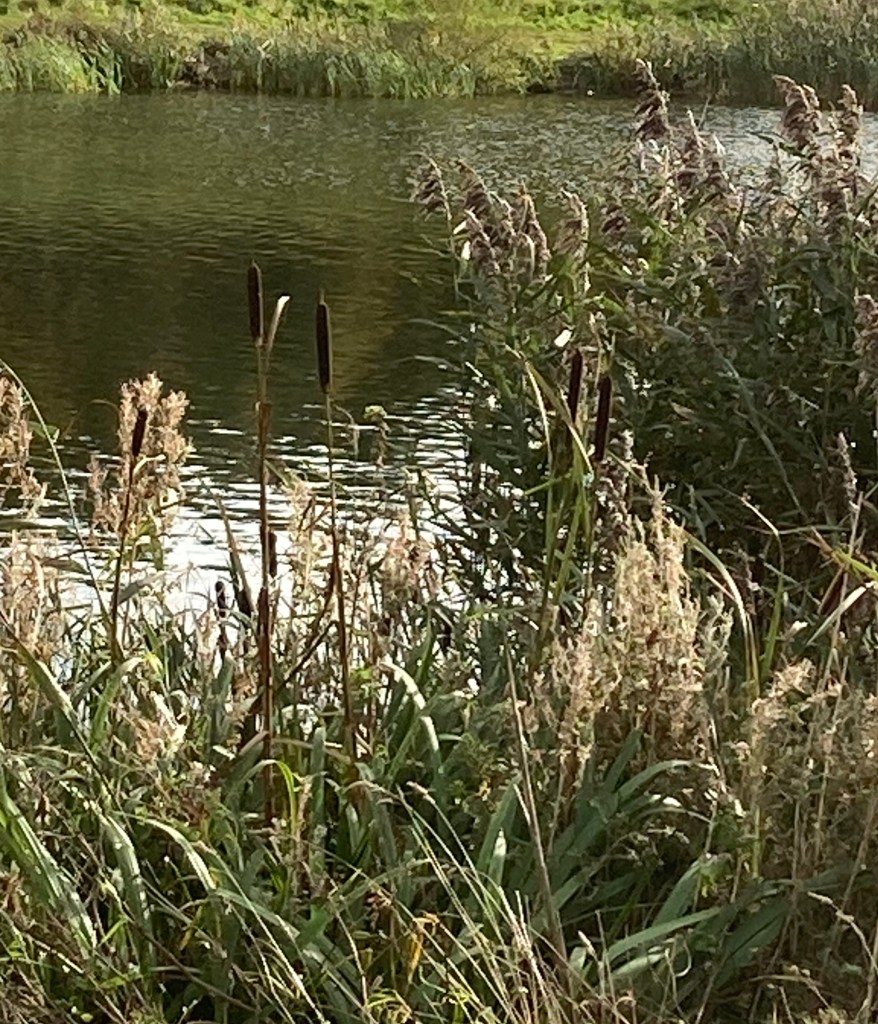
Down by the lake there was a clump of reedmace, with distinctive velvety brown spikes.

The swans, ducks and gulls gathered by the boat ramp, waiting to be fed, while a lone paddle boarder floated by.

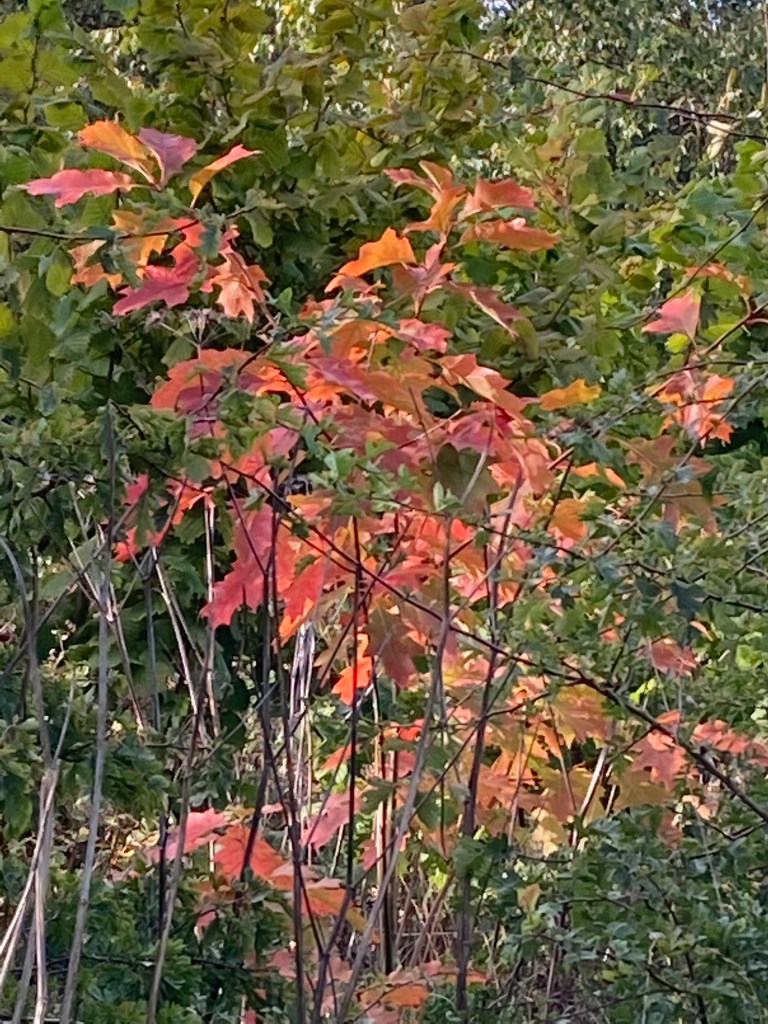
I was just beginning to think that despite all the colourful berries, there was very little autumn leaf colour, then I saw these beauties.

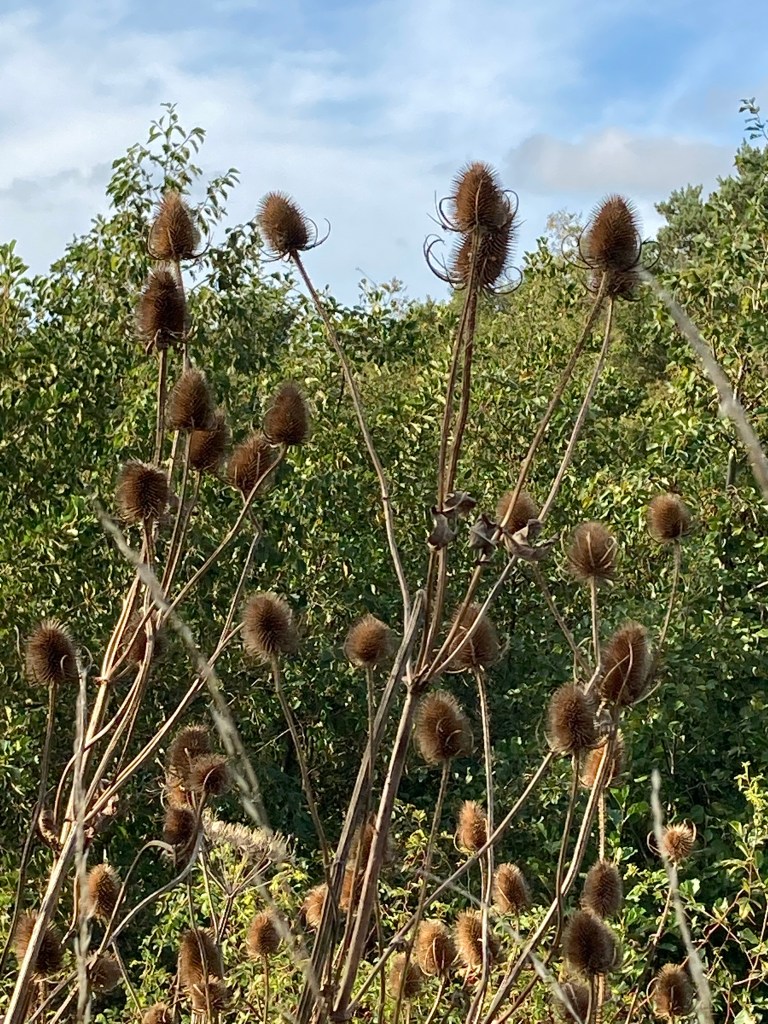
Close to the park exit there was a large stand of teasels. The spiky seedheads looked stunning in the late afternoon sun. We have some in our garden that I hope will attract flocks of hungry goldfinches.

What a lovely way to spend an afternoon!

What signs of autumn have you noticed?
Posted in Uncategorized

Making the Most of Nature’s Harvest: Bramble and Apple Gin

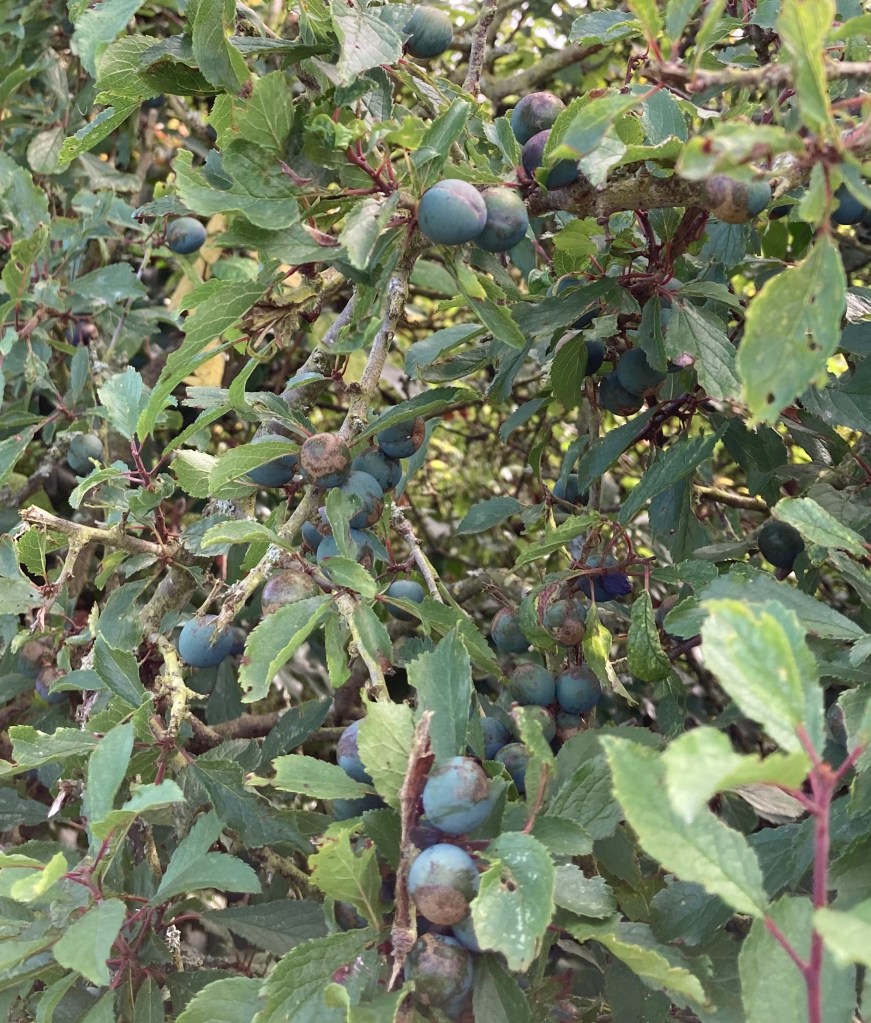
Bottling up the Sloe Gin the other day reminded me of some photos we took a few weeks ago. Even in late August the beginnings of a bountiful hedgerow harvest were in evidence. Back then the sloes were turning from green to blue-black.

They seem to briefly take on an interesting turquoise shade when they are half ripe

It doesn’t seem that long ago that the blackthorn bushes were laden with blossom rather than fruit. In this strange year time has passed in an odd way. Somehow the hours pass slowly and the days pass quickly. This was taken in March.

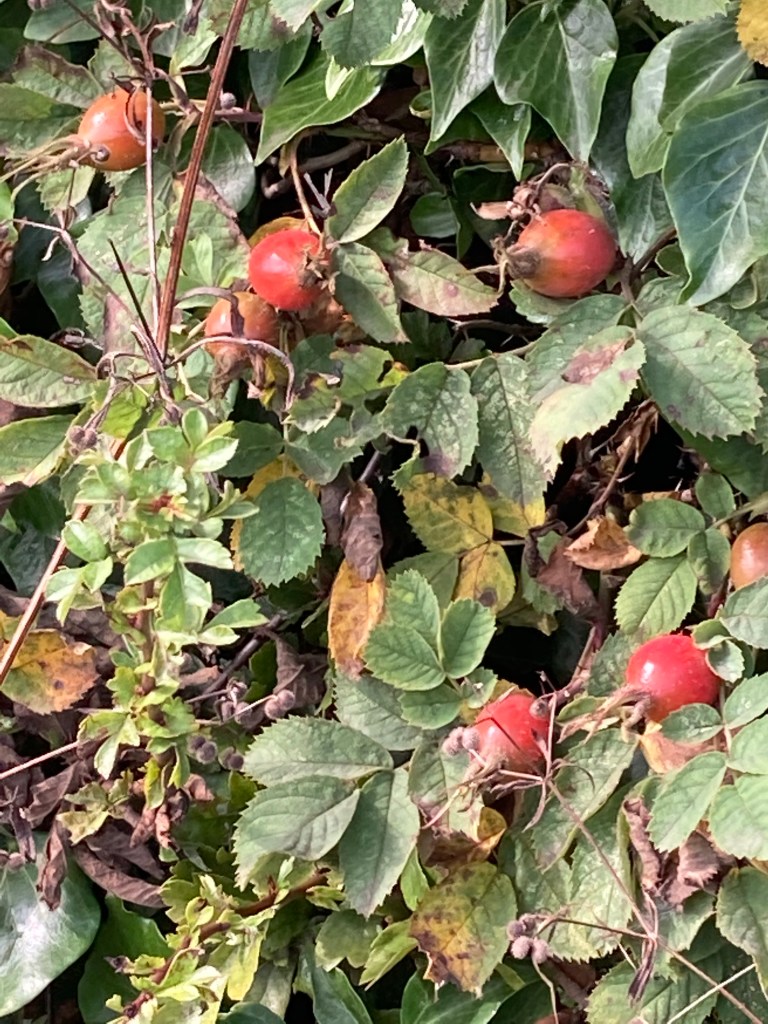
Dog rose featured in one of my Wildflower of the Week posts . The roses were replaced by bright orange hips.

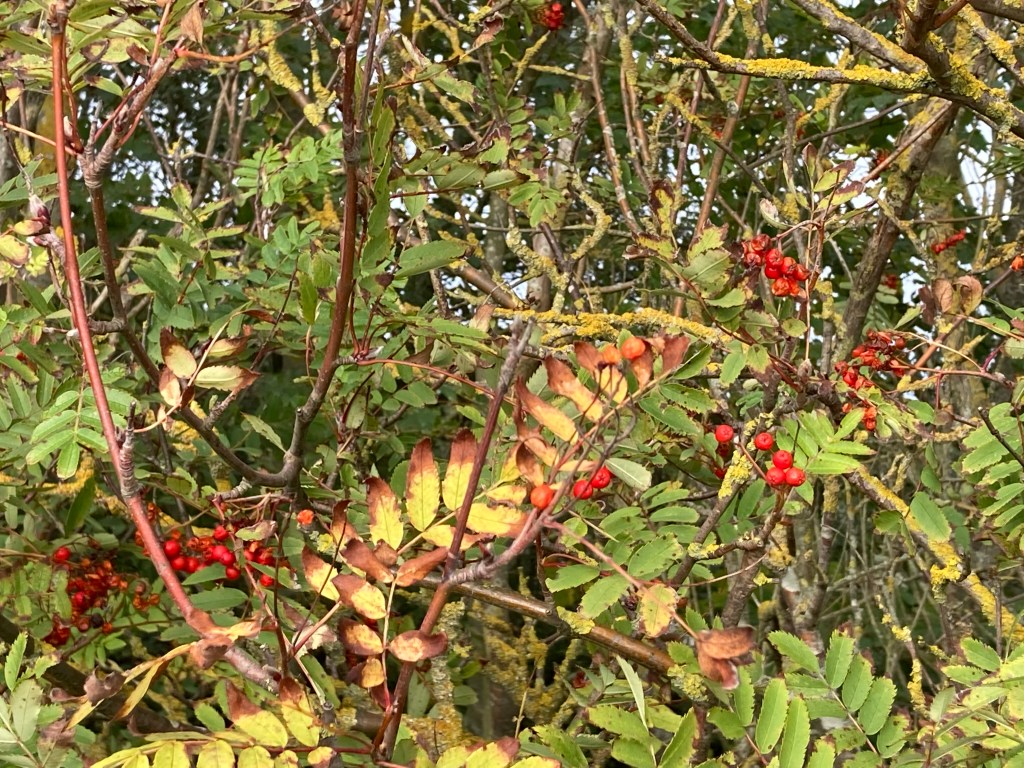
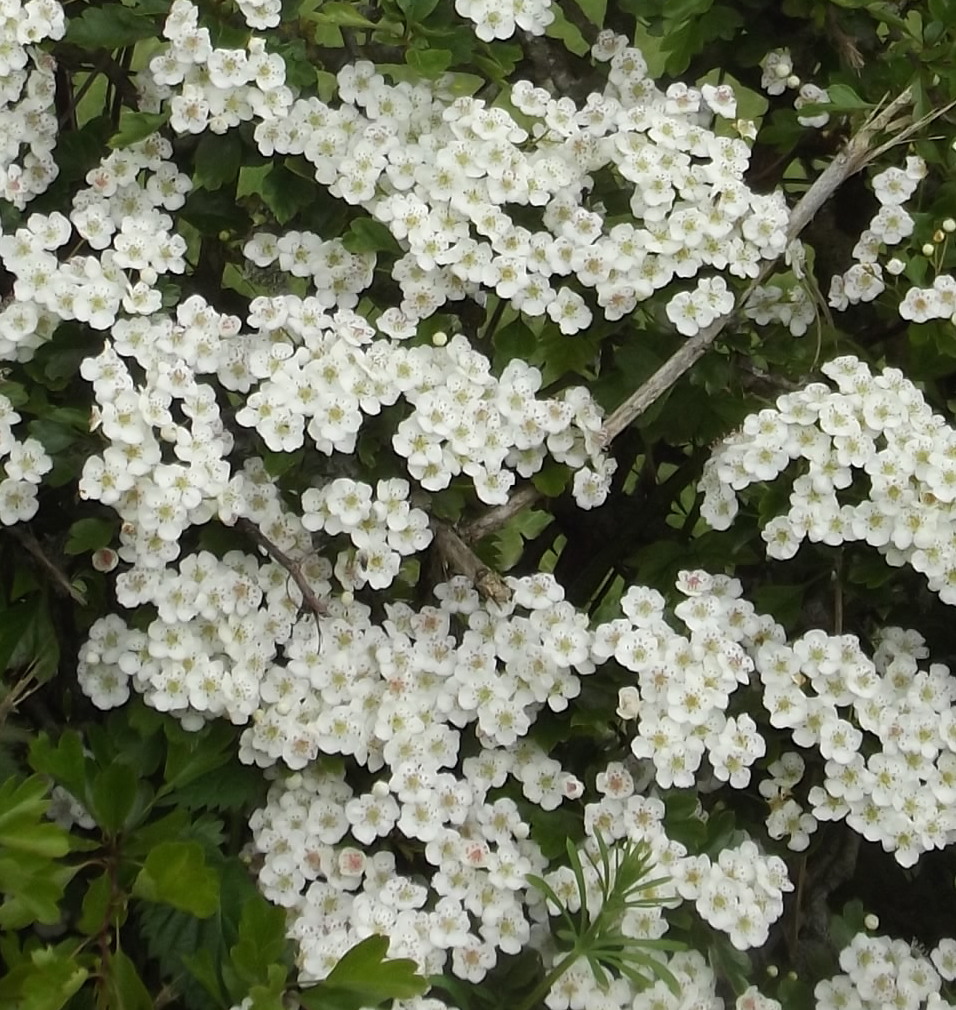
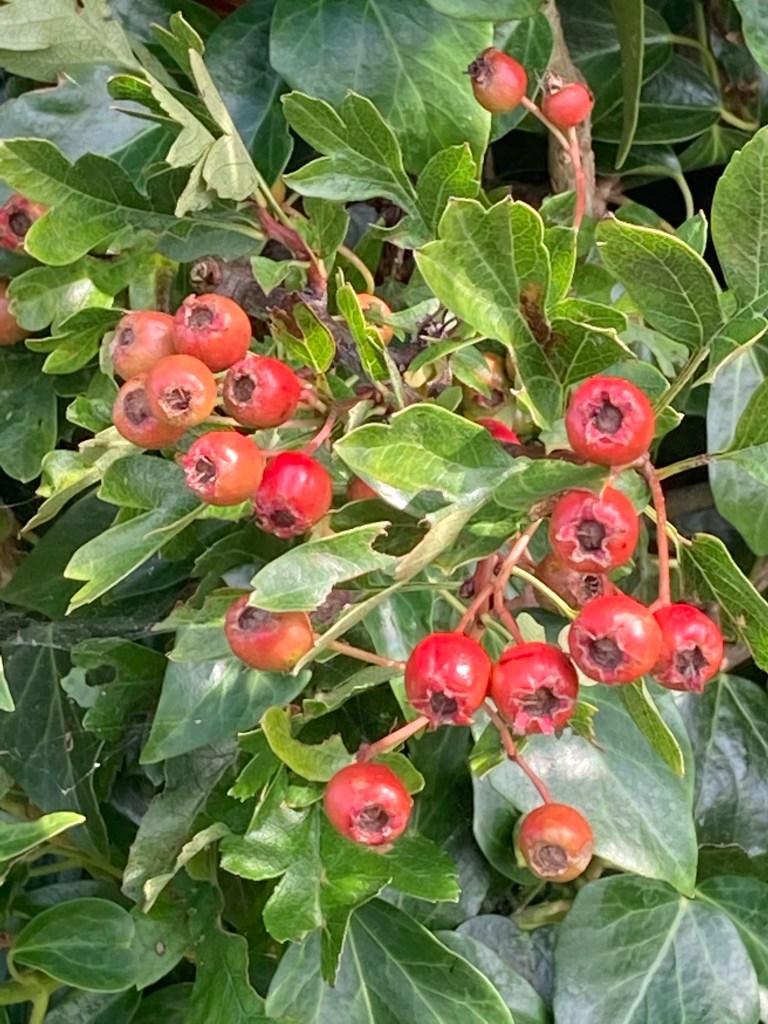
In the same way, the hawthorn blossom of May has given way to berries that will be enjoyed in the weeks to come by the birds, especially hungry new arrivals migrating here for the winter. In August the hawthorn berries were just starting to ripen and are now turning a darker red.

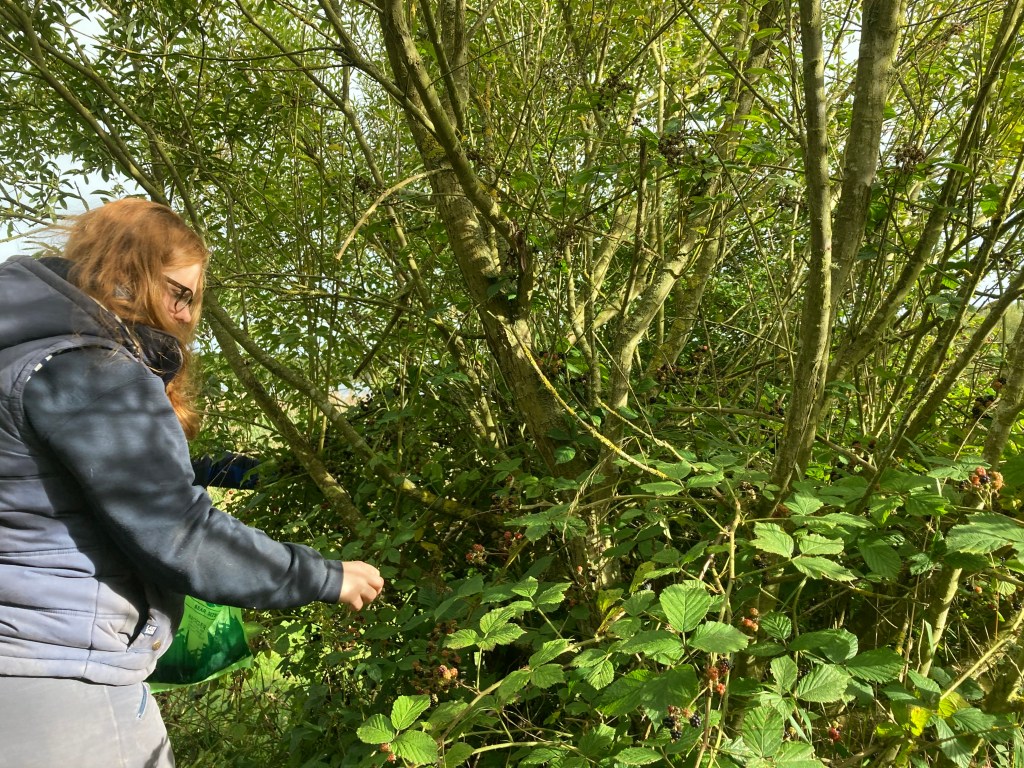
The blackberries/brambles have been amazing too. We pick some every year, but the crop seemed particularly prolific. We picked almost 3 pounds of fruit in a relatively short space of time, getting our fingers stained in purple juice and covered in tiny prickles. The fruit has been in the freezer since then.

It’s not just the hedgerow fruit that is abundant right now. The apple tree in my mother’s garden is so laden with fruit that the branches are drooping under the weight, even though several bags of apples have already been picked. We have an apple tree with plenty of fruit too, but they all seem to be near the top, well out of reach!

With last year’s sloe gin bottled, that freed up some Kilner jars. With this in mind and such a plentiful supply of apples and blackberries, I decided to make some bramble and apple gin.

There were quite a few recipes online. Some had added vanilla, but this one from Larder Love involved bayleaves. It made me think of the Jo Malone Blackberry and Bay fragrance which is rather nice. The apples didn’t need peeling or coring either – I’m all for that!

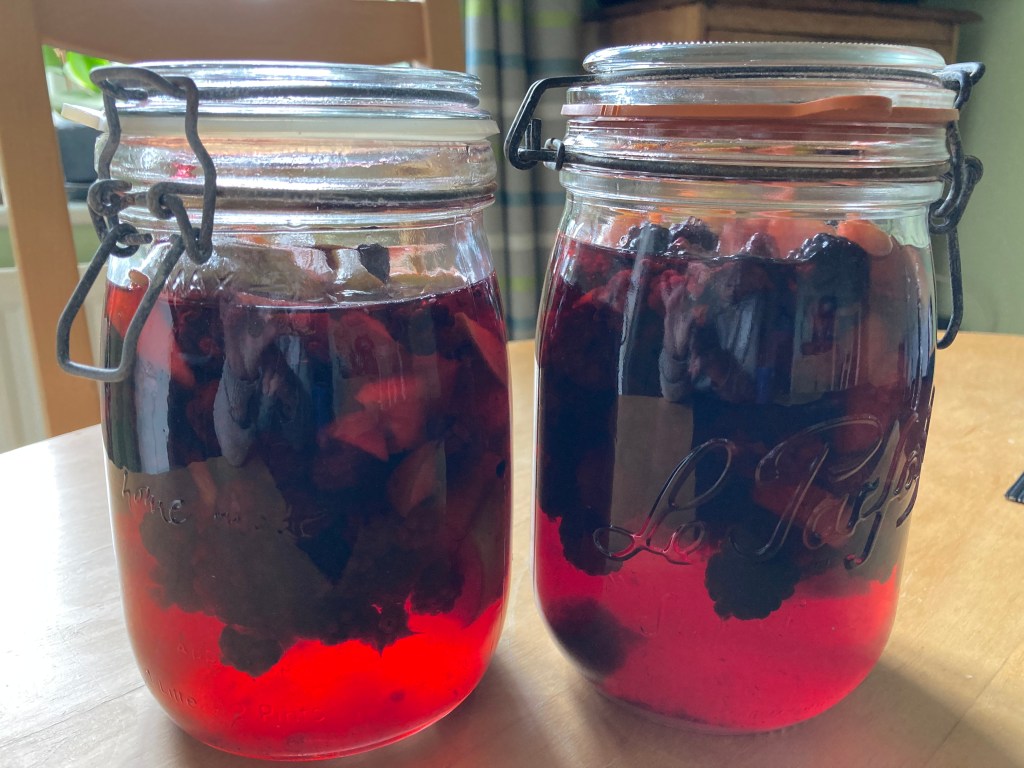
I increased the quantities proportionately as I had a litre of cheap gin instead of the standard (750mls) bottle used in the recipe.. This was enough to fill two 1 litre Kilner jars, which had been sterilised. I used

  • 300g blackberries (mine were straight from the freezer)
  • 300g apples, unpeeled, uncored, roughly chopped
  • 266g sugar
  • 2 small bayleaves
  • 1litre cheap supermarket own brand gin

I split the fruit and sugar between the two jars and added a bayleaf to each, then topped up with the gin. Then I sealed the jars and shook them to dissolve the sugar, repeating every so often until fully dissolved. Within a few hours the brambles were releasing their juice into the mixture, turning it red. The jars will now stay in a cool dark place, to be shaken up every so often (light makes the gin turn brownish). In a couple of weeks it will be ready to strain, bottle and drink – much much quicker than slow sloe gin!

I’ve already made some apple pies, frozen some and given a couple away. But what else shall I make? Chutney? Jelly and jam? All suggestions welcome!