
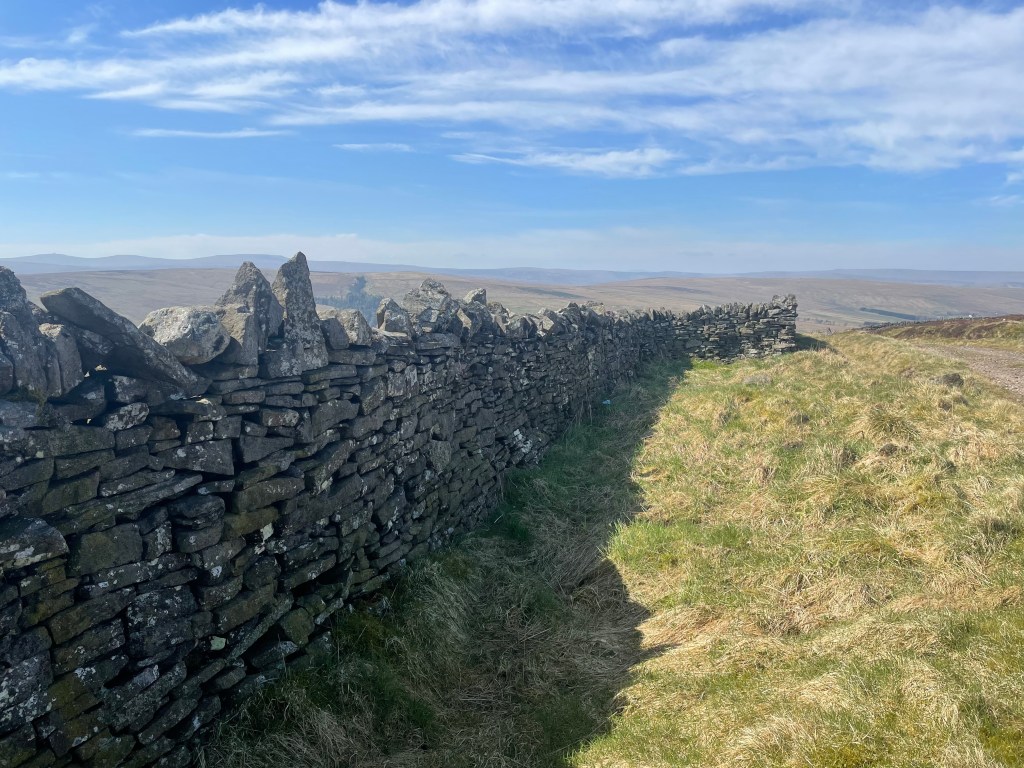
Today was a “because we can” day: a midweek day out simply because we are retired and we can. After a bright start at home a fret came in (that’s the local name for coastal fog). It seemed like a good idea to drive inland search of clearer weather, so we packed a picnic and headed to Alston and on to Nenthead, Allendale, Hexham, then home again.
As we reached the summit beyond Nenthead the views were stunning. It was a beautiful day to be up in the hills. We heard the eerie call of a curlew and one flew past.
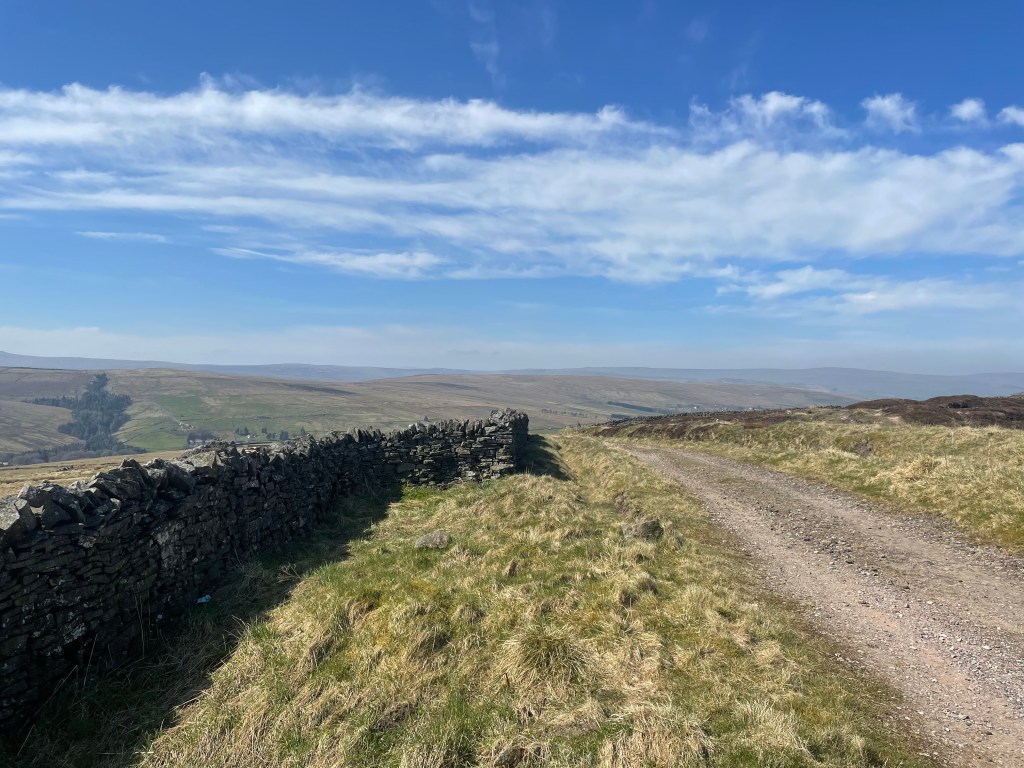
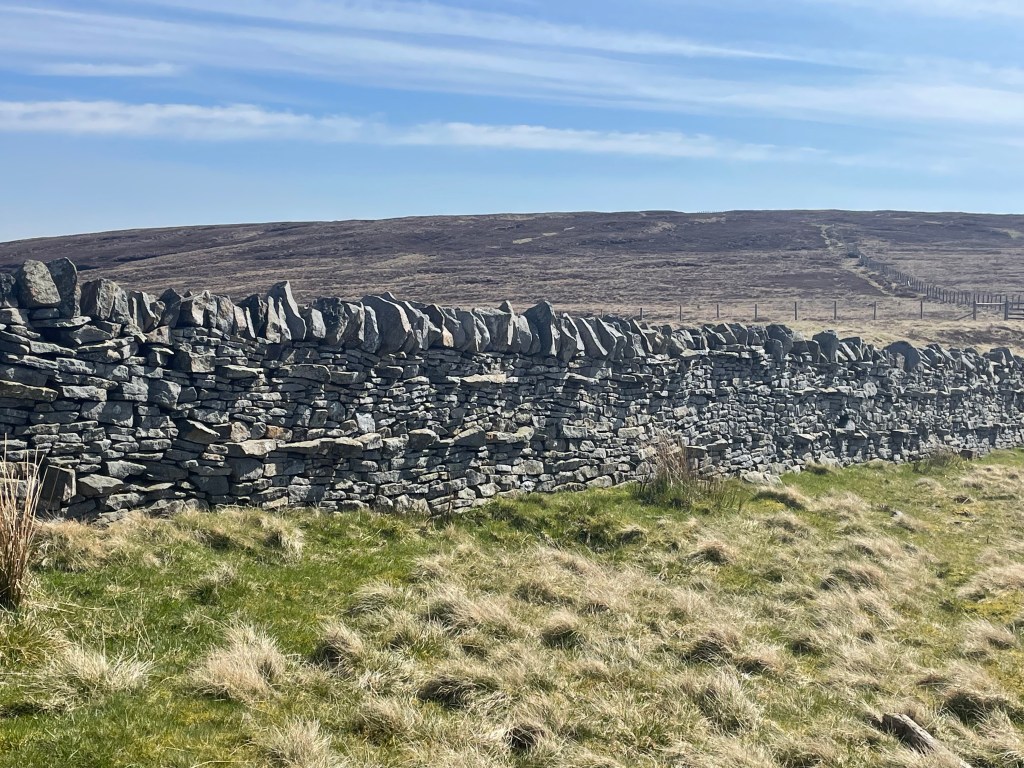
One of the most striking features of this upland landscape is the dry stone walls and there was a good example where we stopped. It took me back some years to when we were both involved in the British Trust for Conservation Volunteers and learnt this ancient craft.
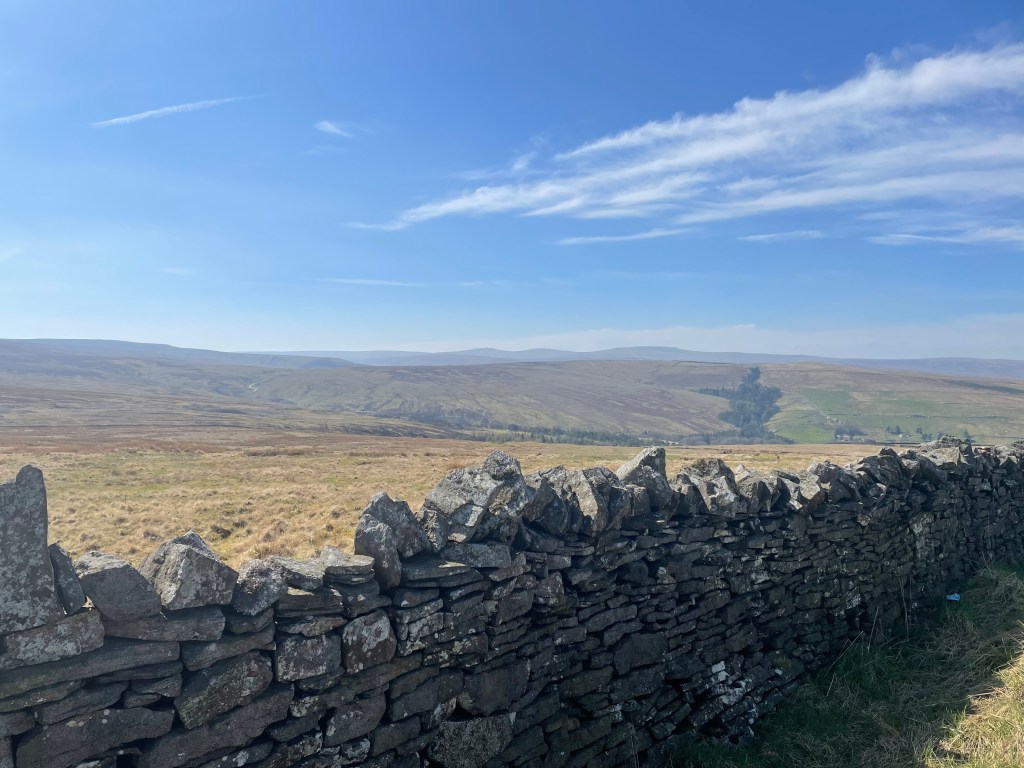
Dry stone walls are built without any mortar but when properly constructed can last for hundreds of years. They are typically wider at the base than at the top. Using an A-shaped wooden frame to act as a guide for the height and width of the wall and keep it even, courses of stone are laid along the outer edges (with the larger ones nearer the base). The stone used on this wall was split into easy to lay, flat pieces. Each stone is laid carefully over the join of the layer below, ensuring that it is perfectly stable and does not move or rock. Small stones are used to fill in the space between the two outer walls as it is built. Every so often a larger stone is placed across both courses to add strength. Stiles can be incorporated into the structure by adding extra-long slabs that protrude from the sides of the wall, forming steps.
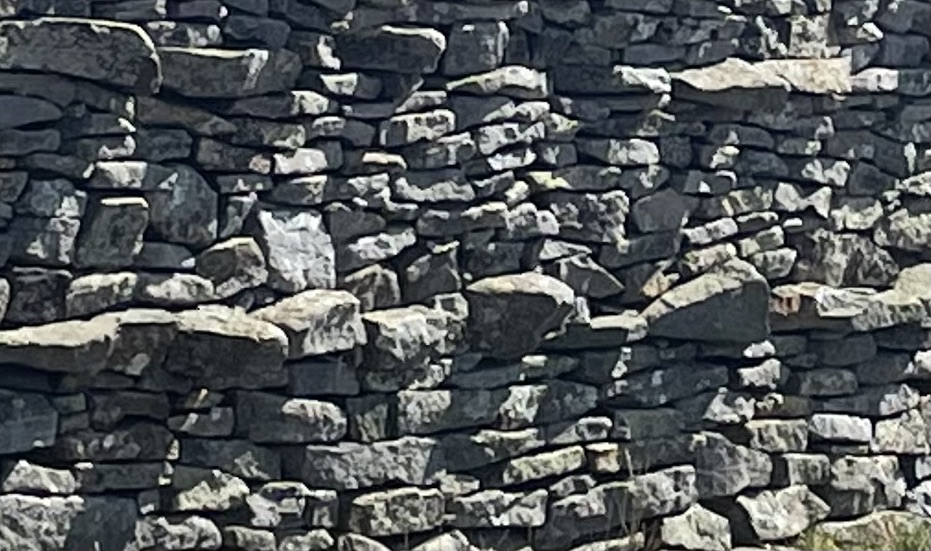
Finally, a single row of large cap stones is added, packed together along the top.

The gaps between the stones provide shelter for wildlife: insects and even lizards hide in the crevices and small birds can nest in the larger spaces.. As well as being a stock-proof barrier, they act as a windbreak and sheep can often be found sheltering by a wall in stormy weather.
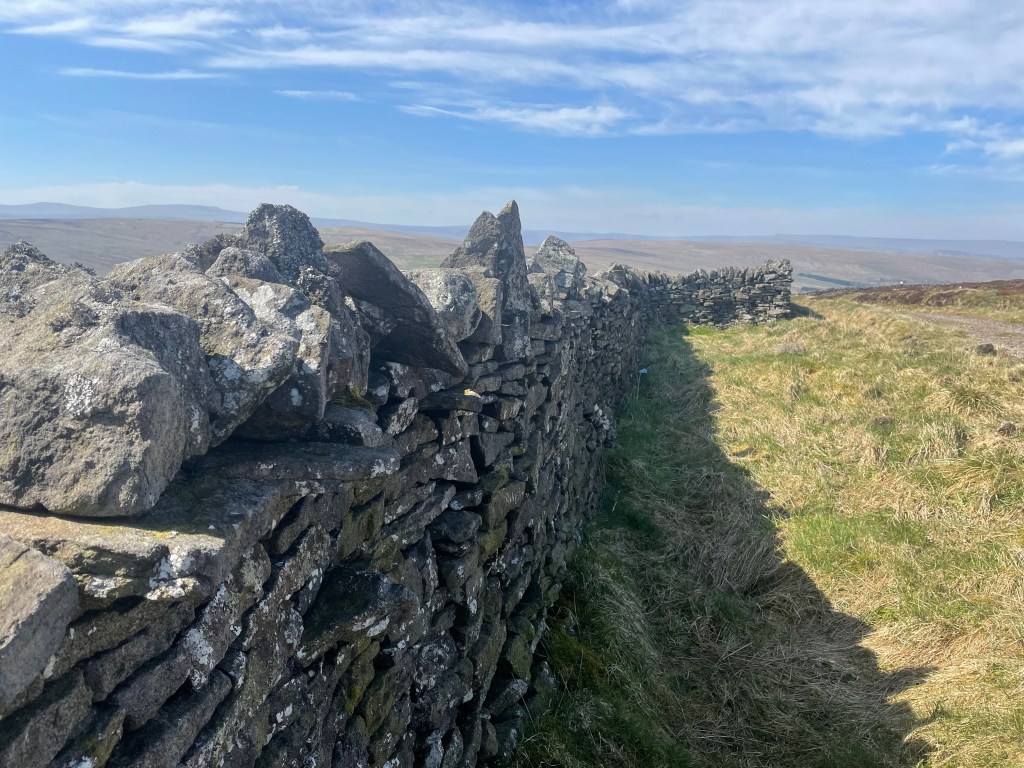
These hills would not be the same without their magnificent dry stone walls.
 Stitches by the Sea