
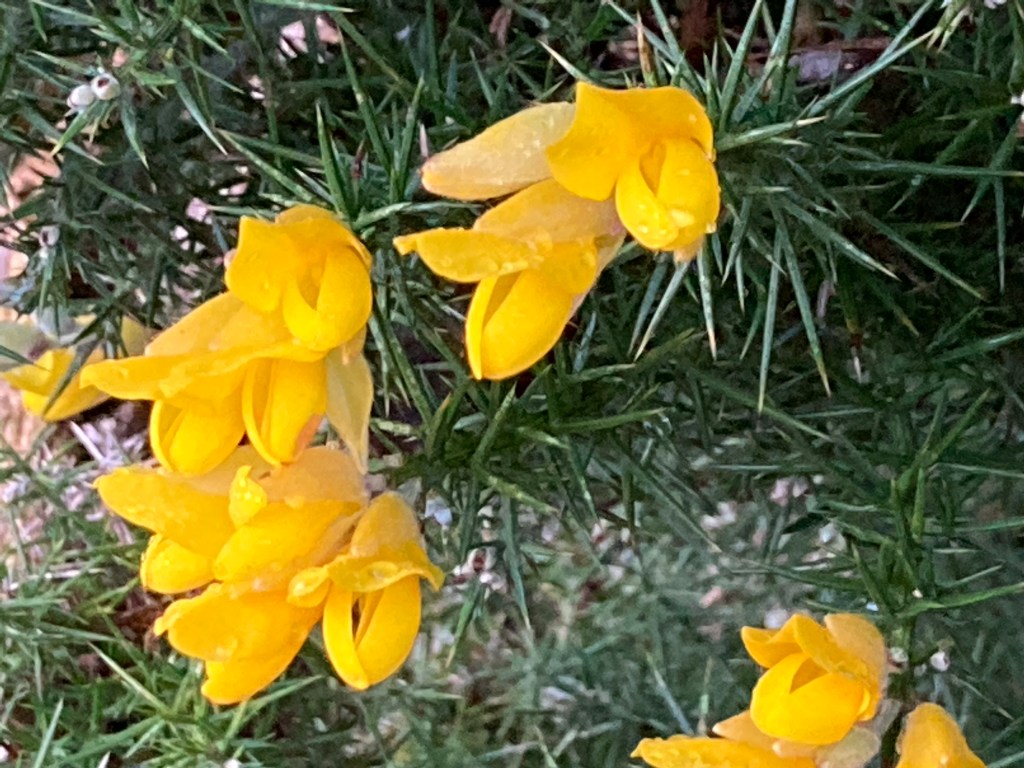
Gorse (Ulex europaeus) is a member of the pea family that grows as a shrub up to 3m tall, and is found on rough ground, moor, heathland and coastal areas. The plant is native to Europe and North Africa, but has become an invasive weed in parts of the USA, Australia and elsewhere. It is also known as furze or whin.
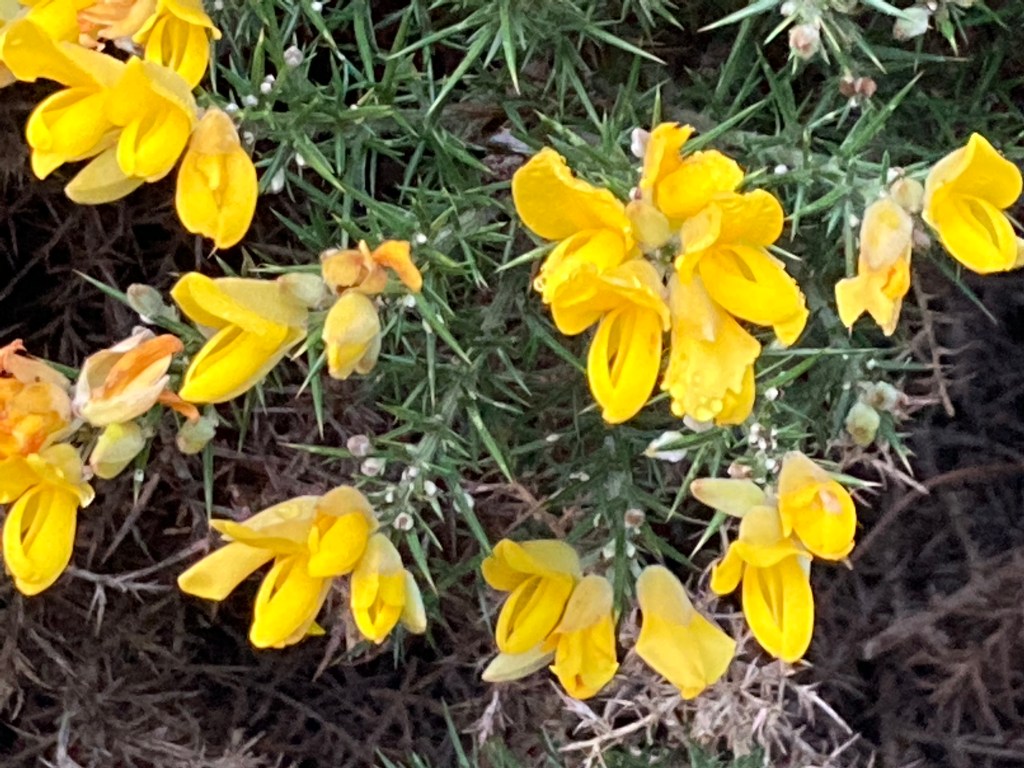
The plant is covered in sharp spines up to 3cm long and can be seen in flower all the year round but is at its peak right now, covered in golden yellow blooms with a keeled structure typical of the pea family. They have a sweet coconut scent and are a valuable source of nectar for bees, butterflies and other insects.
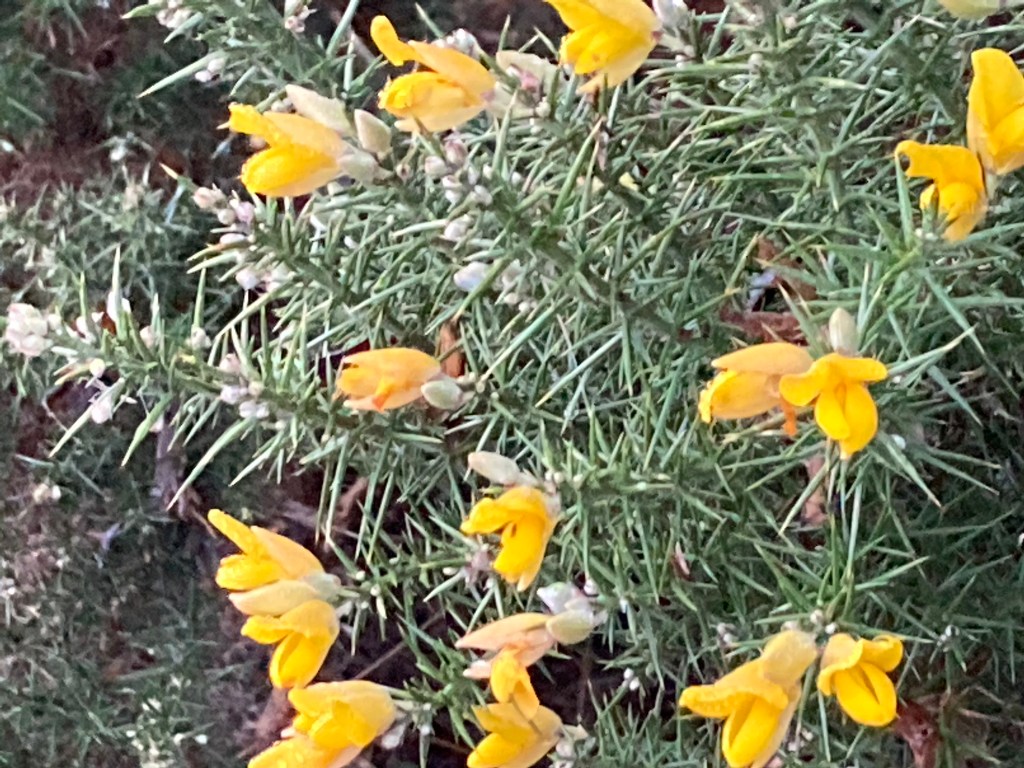
The country saying “When gorse is out of blossom, kissing’s out of fashion” comes from the year-round flowering habit. A sprig added to a bridal bouquet symbolises fertility.
The flowers are followed by dark brown hairy pods, each carrying about three seeds, which are ejected as the pod splits open.
The spines (which are modified leaves) make gorse an effective hedging plant, forming a dense impenetrable barrier to livestock, but also protective cover for wildlife including nesting birds.
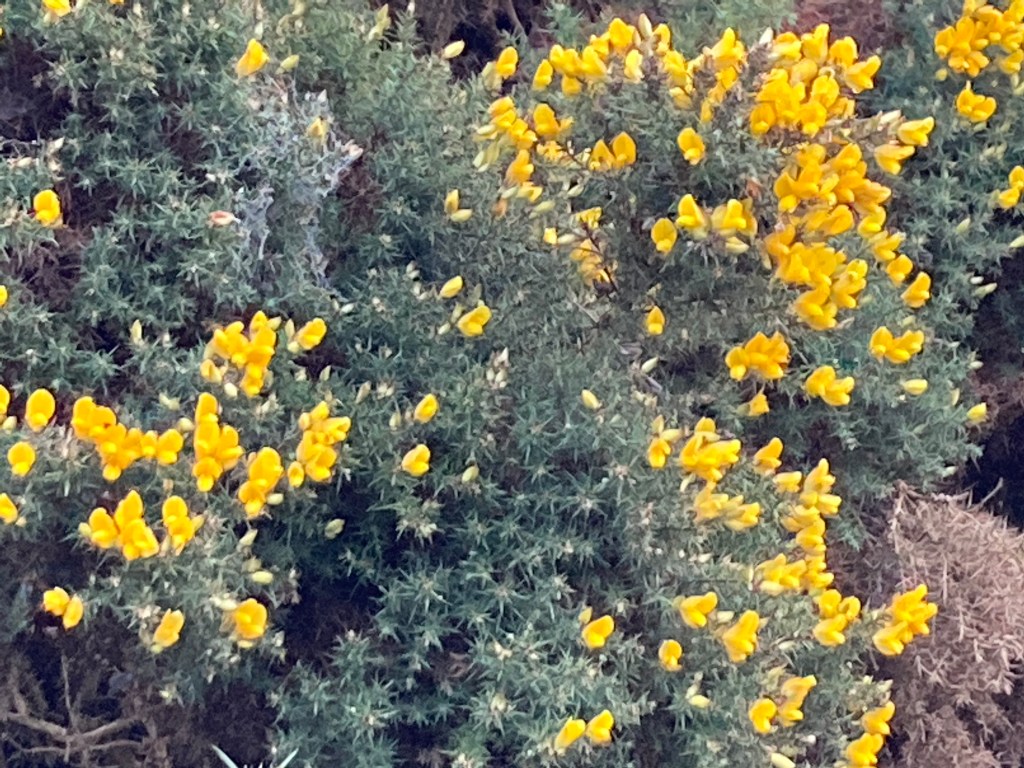
In traditional medicine a tea made from gorse flowers has been used as an antidepressant. 17th Century herbalist, Thomas Culpepper described a decoction of the flowers as effective against jaundice and as a diuretic and cure for kidney stones. The flowers also yield a bright yellow dye. Being edible they can be used in salads and to make a tea or syrup.
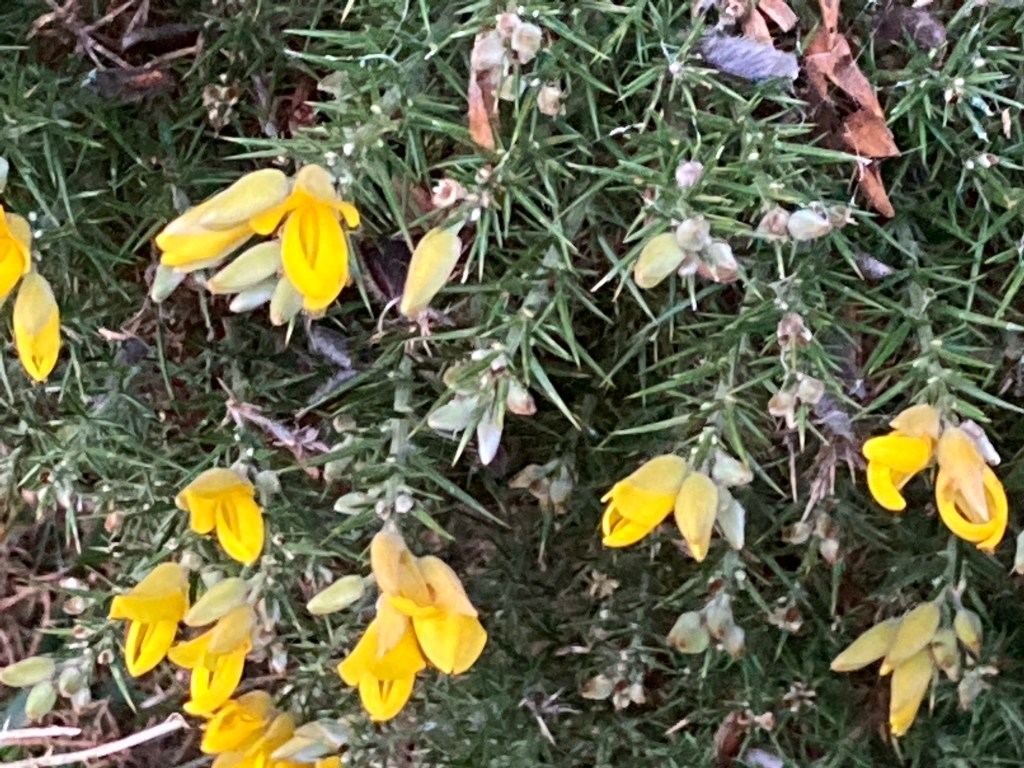
The straight stems of gorse wood make good walking sticks. it has also been used to make brooms and chimney sweeping brushes.
The plant burns fiercely with a great heat and was popular for firing bakers ovens and kilns. Gorse fires spread quickly but even when burnt to the ground will regenerate quickly from the roots.
On warm spring days a walk past a gorse hedge certainly fills the senses, with those vivid yellow flowers alive with buzzing bees and the air suffused with that coconut fragrance.
 Stitches by the Sea