
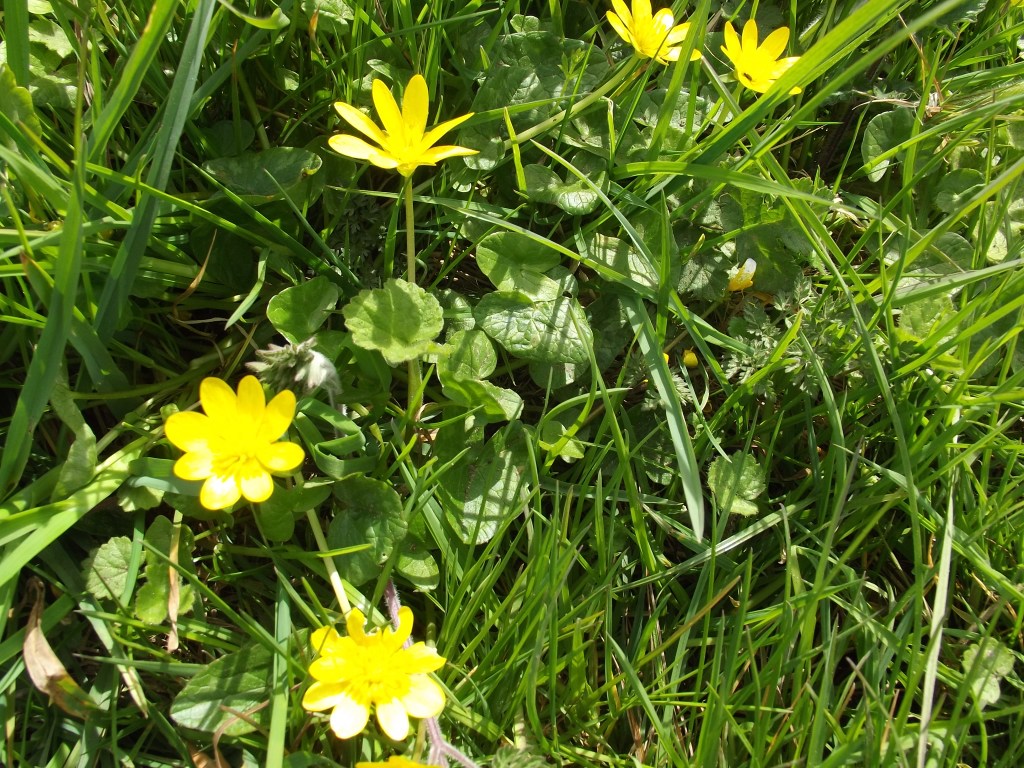
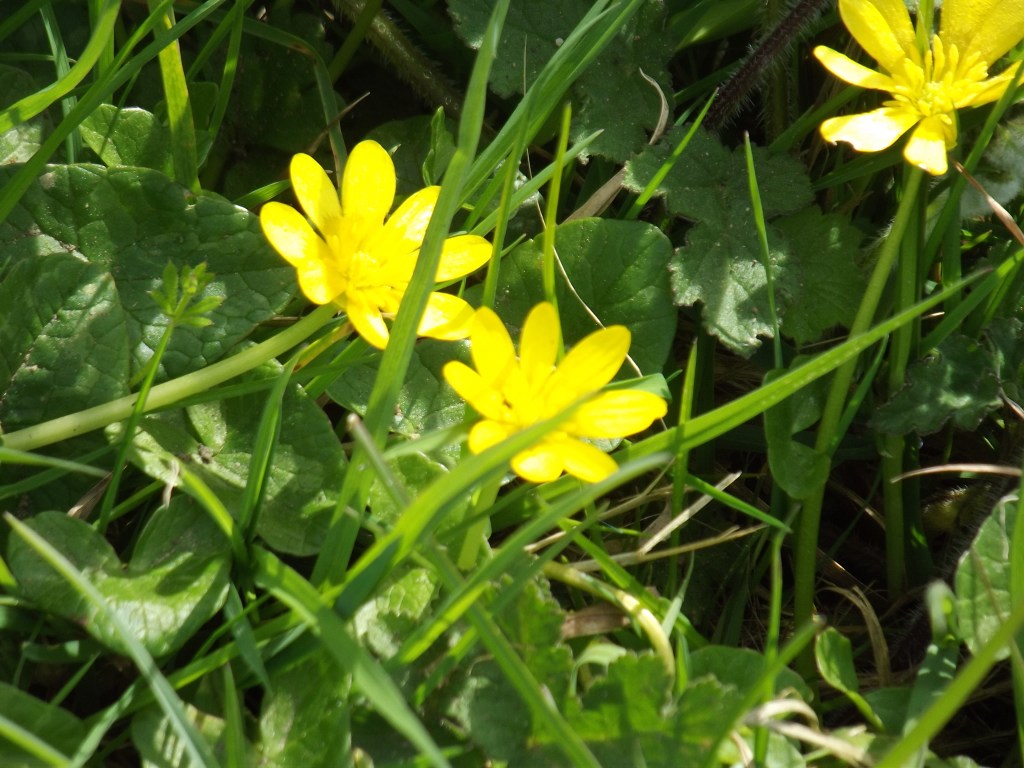
The Lesser Celandine (Ficaria verna) is a true harbinger of Spring, carpeting shady damp places with with starry bright yellow blooms during March and April. The blooms pale and whiten as they age.
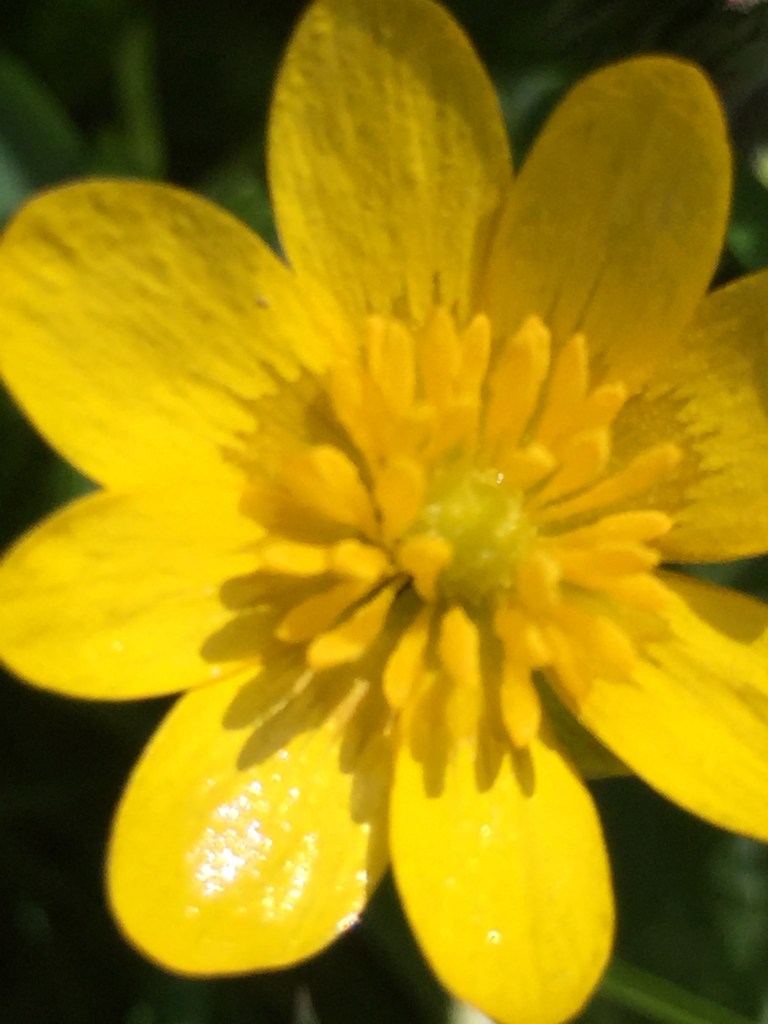
The flowers are 2-3 cm across, each with 8-10 glossy narrow petals, and are carried above rosettes of fleshy heart shaped leaves, growing up to about 15cm tall. Although the flowers produce seed, the plant mainly reproduces vegetatively. Bulbils form at the stem bases and these and the tubers easily break off to form a new plant.
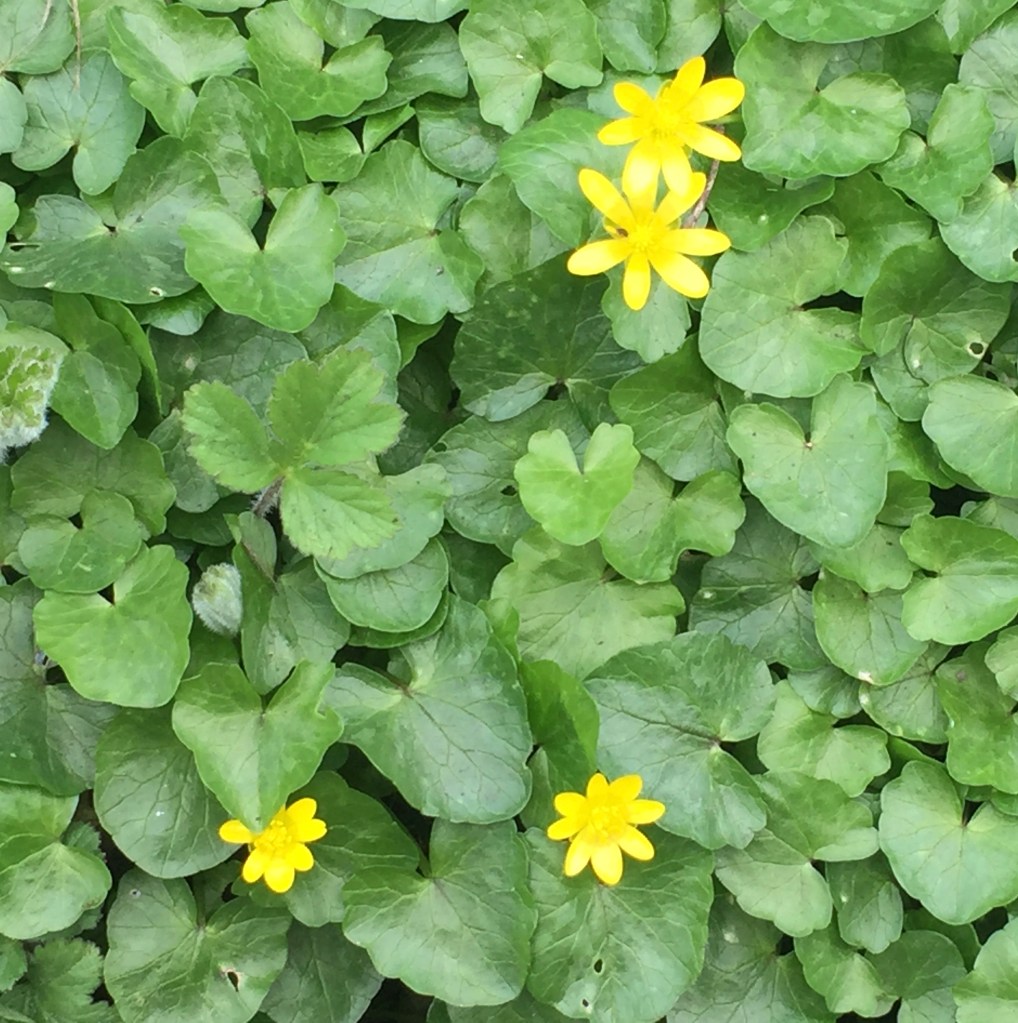
This perennial is a native of Europe and North Africa and is a relative of the buttercup.A number of cultivated varieties with white or orange flowers, double blooms, bronzy foliage and so an have been developed as ornamental garden plants. In North America however it is seen as a serious weed. It outcompetes and smothers out native ground cover plants and, as it dies back to spend six months of the year in dormancy, it leaves bare earth, vulnerable to soil erosion.

The plant is toxic, causing skin irritation on contact with crushed plant material and nausea, with possible paralysis and liver damage if eaten. it is also harmful if eaten by grazing livestock. The toxins disappear with cooking and the plant has been used in herbal medicine for centuries.
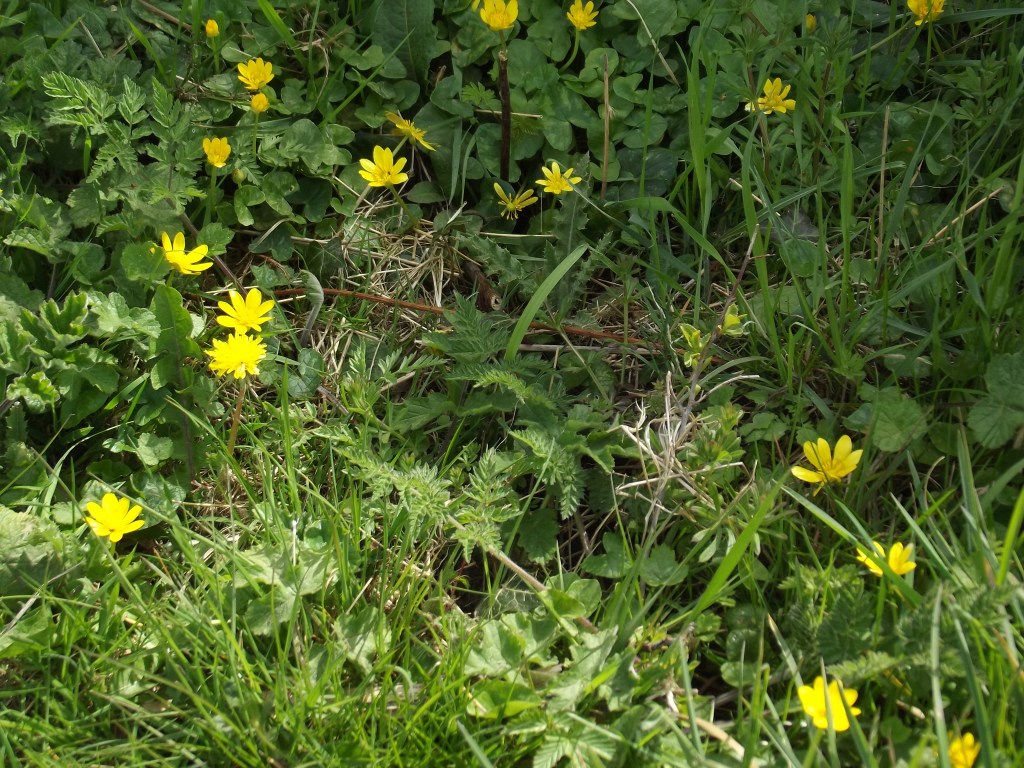
Historically, herbalists used the “Doctrine of Signatures” , believing that if a plant (or part of a plant) resembled a part of the human body, then it could be used to treat disorders of that body part. As such, the tuberous roots of Lesser Celandine were thought to resemble hemorrhoids or piles. This gave rise to the plant’s other name – pilewort. Thomas Culpeper describes in his 17th century herbal how he cured his own daughter of the Kings Evil (scrofula or tuberculosis of the neck) using a decoction of Lesser Celandine. He writes that it “broke the sore, drew out a quart of a pint of corruption, cured without any scar in one week’s time.”
The plant and its associations with Spring give rise to its place in literature. William Wordsworth wrote an ode to to the flower.
There is a Flower, the Lesser Celandine,
That shrinks, like many more, from cold and rain;
And, the first moment that the sun may shine,
Bright as the sun himself, ’tis out again!
The Lesser Celandine is also mentioned in CS Lewis’s “The Lion, The Witch and the Wardrobe” and D H Lawrence’s “Sons and Lovers”.
The Lesser Celandine is certainly a welcome sight after the cold drab winter months.


 Stitches by the Sea
Lovely, our gardens full of them at the moment. Xx
LikeLiked by 1 person
They are so pretty!
LikeLike