

It began with Arwen…..then Barra, Corrie, Dudley, Eunice and Franklin. This winter the UK has suffered some horrendous storms. Here in Northumberland the first was the worst.
Arwen struck northeast England at the end of November and the highest winds were recorded near hear at Brizlee, registering 93mph. Our roof was undamaged but we had a couple of trees down and they brought fences with them. A length of drainpipe turned up in a neighbour’s garden and our shed needed repairs.
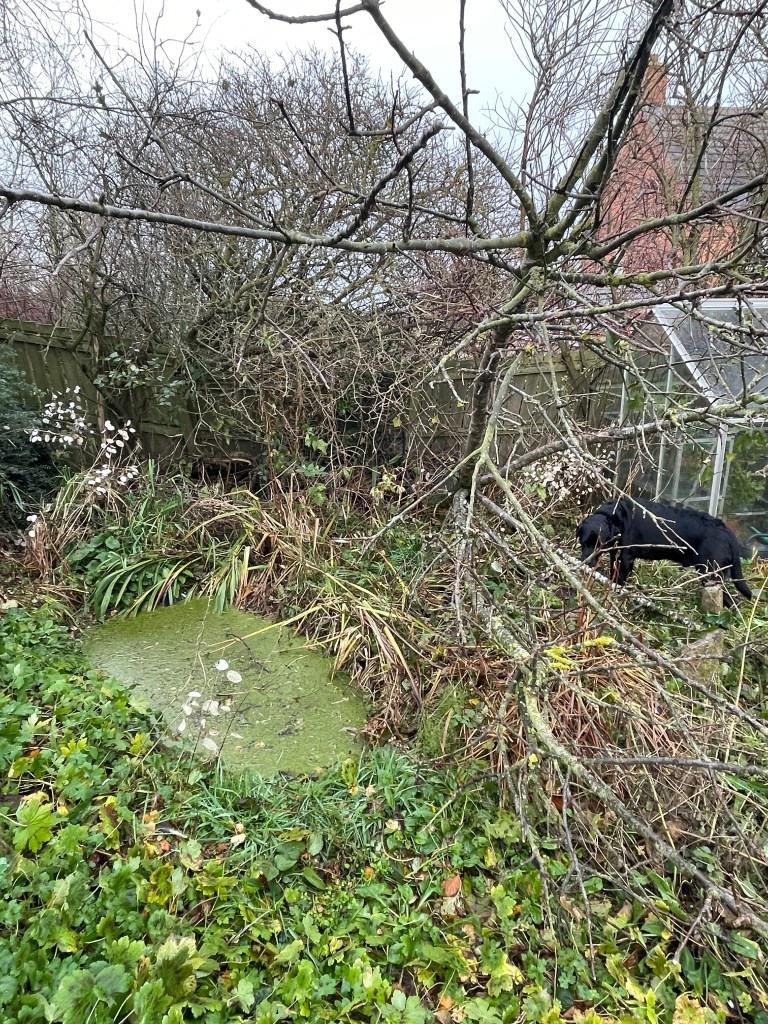
Our village got off lightly as far as power outages went, but others nearby had no electricity for 5 days – some areas were affected for a week or more, with power lines down and trees blocking the way for engineers trying to restore power. Access to some villages was cut off for some time until trees were moved.
Driving around in the days that followed, the scale of the damage wreaked by Arwen became startlingly clear. Many buildings had sustained roof damage. Almost every house along the sea front in Seahouses and Beadnell had slates blown off or holes in the roof. Some had entire sections ripped away.
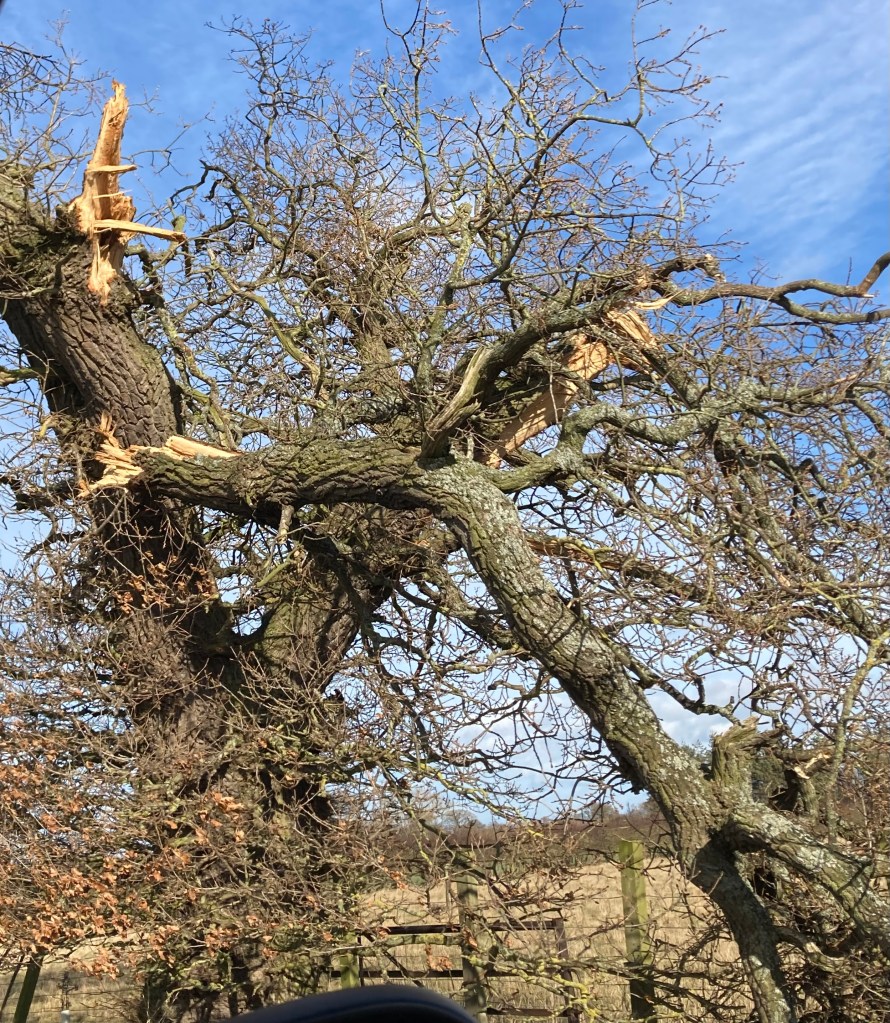
Great gaps had appeared in hedgerows where trees had come down damaging the surrounding hedges. Huge boughs had been ripped off some of the trees.
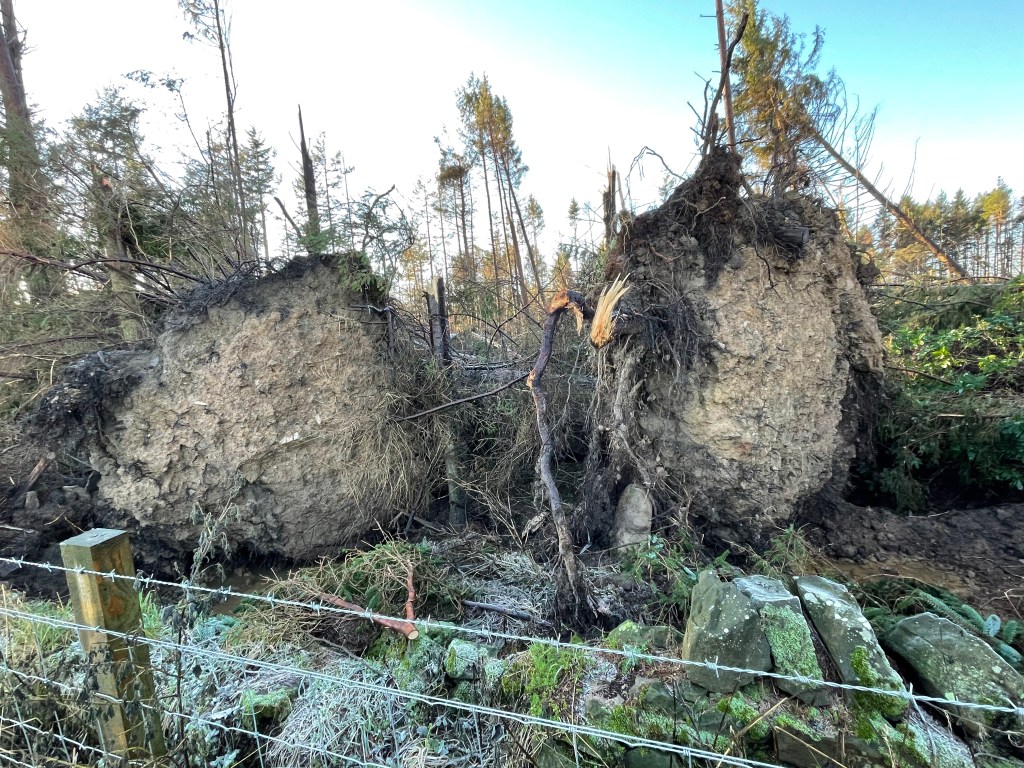
Enormous areas of woodland have been devastated, with trees uprooted, exposing massive root plates.
Others had simply been snapped off, a stark reminder of the sheer power of the storm.

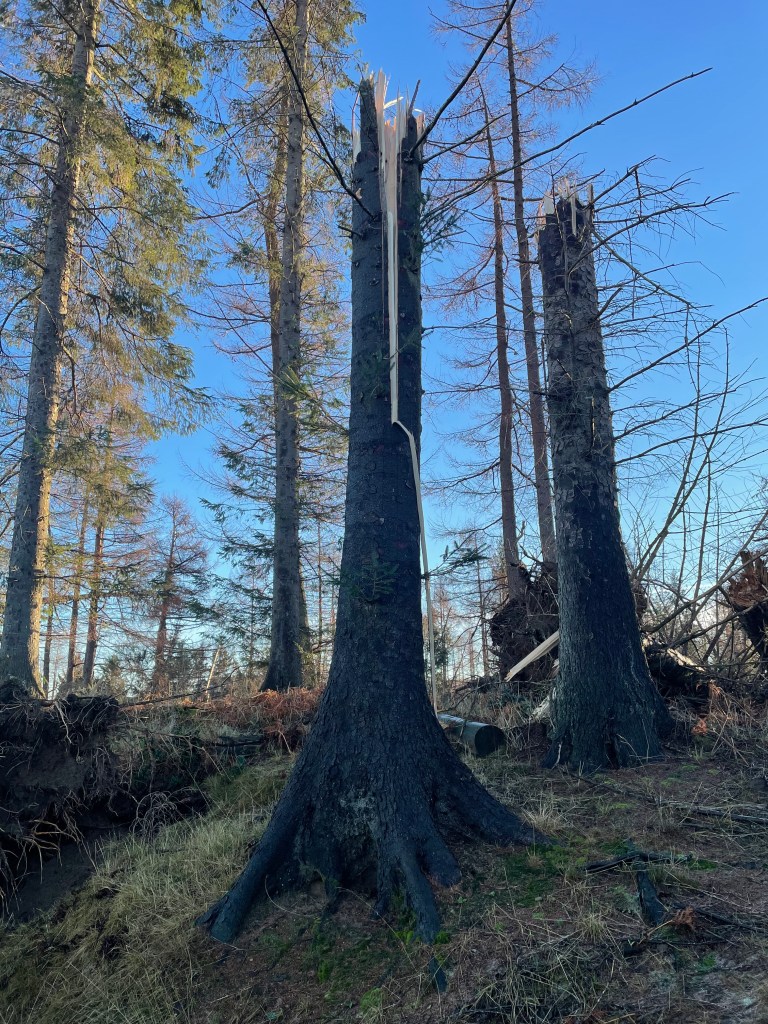
It’s not just commercial forestry that has been lost, though the shallower root systems must make conifers more vulnerable.

Many beautiful native broad-leafed trees have fallen victim of the storms too, including ash, beech, sycamore and oak.
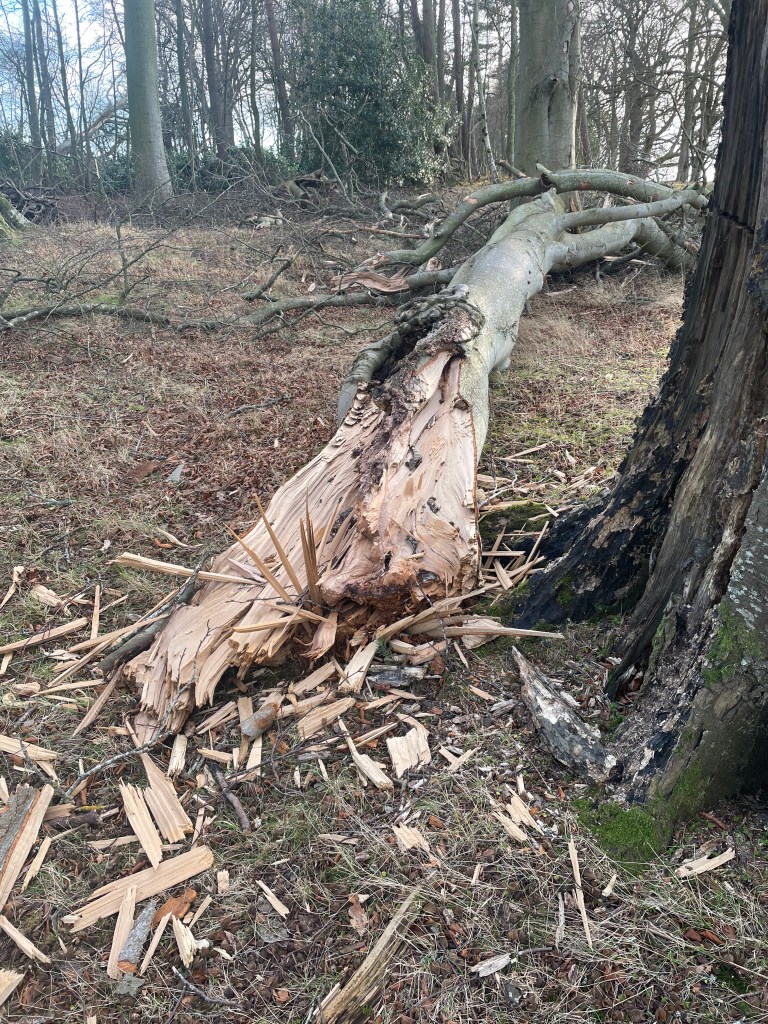
Ornamental trees have been lost too. The arboretum at Howick Hall has suffered severe damage. Ornamental trees in the grounds of Newcastle Civic Centre also fell and there was an appeal for furniture makers to take the timber, which included an unusual walnut tree. I’ve lost count of the number of times I’ve heard people say they have a lifetime’s supply of firewood!.
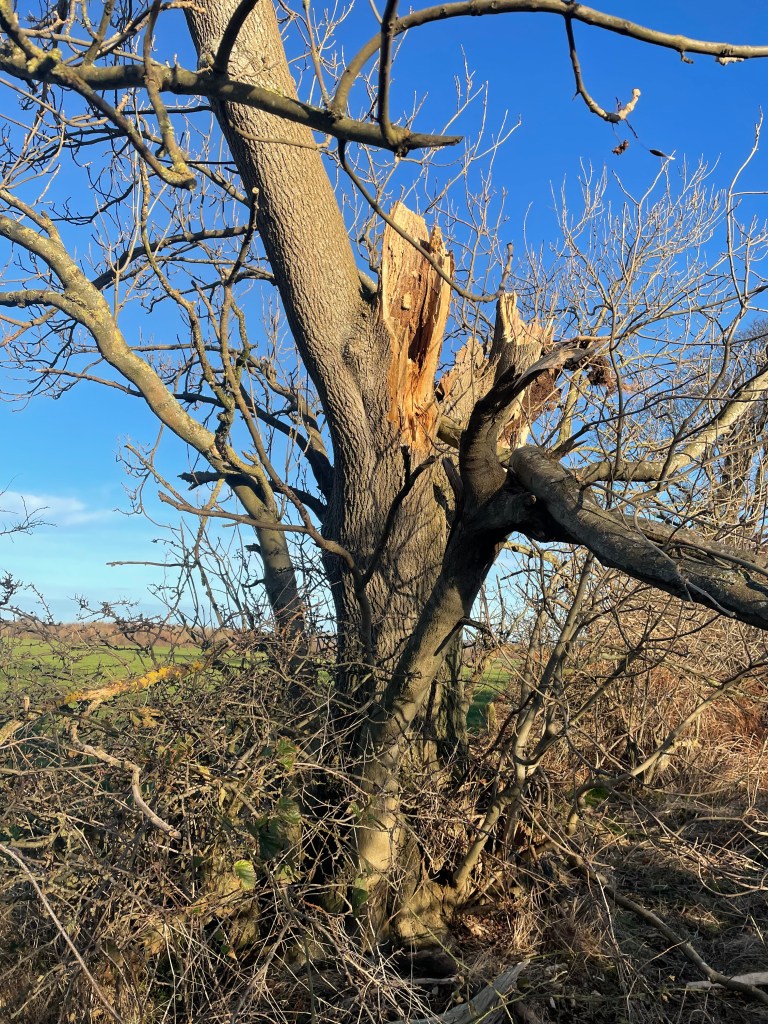
Some three months (and several more storms) later, much of the windblown woodland remains uncleared. Some of the commercial forestry has been clear felled and paths and trails through amenity woodland have been cleared to provide safe access. Much will be left to lie where it fell. It will provide cover for wildlife and become colonised by fungi and wood boring insects.
Repairs continue. I know of at least two families who have had to move out of their homes so that extensive roof repairs can be carried out. Scaffolding surrounds many buildings as the work goes on, though subsequent storms have caused delays.
Before long the damaged properties will be prepared, but the scars left on the landscape will be there for generations.












 Stitches by the Sea